TIFF19: The Laundromat

“Based on actual secrets,” the screen tells us. Based on the trailer, I sort of expected The Laundromat to be the Erin Brockovich of money laundering. It was not. It was actually just a weak and poor copy of The Big Short.

The Big Short was about the Wall Street crash of 2008, more or less, precipitated by the housing bubble. And how all that lending, and then speculating against those bad mortgages, really fucked a lot of good people over. That film wove together a narrative interspersed with attempts to break down financial concepts to the audience. A celebrity – cameos by Margot Robbie or Selena Gomez, for example – would break the fourth wall to address the audience directly, and explain textbook concepts, like subprime mortgages, to us in a way we could easily grasp. It was celebrated for its unconventional techniques, which helped secure it the Oscar for adopted screenplay.

You can’t really blame The Laundromat for trying to capitalize on its success, but when your success is based on novelty and innovation, you pretty much inherently can’t replicate it. To even try seems…lazy.

Meryl Streep stars as an old lady who goes on a pleasure cruise with her husband, played by James Cromwell. An errant wave hits them and the boat capsizes, killing 21. In the wake of the accident, it is discovered that the cruise company is without insurance. Not that they didn’t have any – they thought they did – but that their policy was bought by another company, and another, and possibly another, until all there were were shell companies and no real policy, no real insurers, and definitely no money for the victims of the accident.

But Meryl Streep’s portion of the film is just one third of what we’re ultimately presented with. The other stories are only loosely connected by a law firm that exists just to hide money for its obscenely wealthy companies. The lawyers, played by Antonio Banderas and Gary Oldman, serve not just as characters, but also as narrators who get to skip through all the scenes, breaking the fourth wall and revealing the film’s sets to be just that: sets. It’s all very meta. And while these characters are a lot of fun, it stinks so badly of The Big Short you can never quite forgive it, even when it’s entertaining.

Based on the Panama Papers leak, the movie tries to reveal even just the tip of the iceberg when it comes to the rich getting richer: tax evasion, bribery, fraud, offshore accounts. But it’s sloppily assembled and is such a weak photocopy you can’t help but resent it outright. This is actually a very important issue that absolutely deserves our attention. But Steven Soderbergh just can’t pull this together, and in fact confuses the matter with his weird, episodic vignettes and title cards that just don’t add up. I’m just a lowly 99-percenter who pretends saving is optional and credit is use it or lose it. What do I know? Besides, you know, wanting my money back for this movie ticket.

TIFF19: The Aeronauts

James Glaisher (Eddie Redmayne) was a scientist and an aspiring meteorologist in a time when that field did not yet exist (1862, to be precise). So, he decided to invent it. To do that, he tapped balloon pilot Amelia Wren (Felicity Jones) (actually a balloon widow with a tragic backstory) to ascend toward the heavens, or at least beyond the clouds, in a historic balloon flight higher than any other.

Up they go, to dangerous heights. In the pursuit of science, Glaisher urges them higher still. With her husband’s death still fresh in her mind (and his blood perhaps still on her hands), Amelia prefers caution. Still, when they inevitably meet up with trouble, it is she who will save them both while he is basically just cargo, a useless man looking at his instruments.

It’s a dizzying and inspiring story, full of rah-rah, girls can do anything chutzpah that is of course completely fabricated. James Glaisher is in fact a real-life scientist, but the man who took him up in his balloon and ultimately saved his life was pioneer Henry Coxwell, who got written out of the story in order for these two The Theory of Everything costars to reunite. In truth, it is Amelia and not James who is the colour in the story. She is the one we naturally gravitate to. Would the story be as compelling without her?

Confusingly, IMDB lists the character as a Ms. Wren while the film itself seems to prefer Rennes. I suppose it doesn’t matter since she’s fictional, and perhaps it’s nearly fitting since Amelia is not just a fearless balloon pilot but a bit of a showgirl as well. Crowds have paid for the privilege of watching their launch, which funds their research, and she understands the value of putting on a bit of a show – which of course her stodgy scientist partner doesn’t get. He’s more into his pigeons, which he plans to throw from the balloon at different heights. The pigeons have no idea what’s in store for them.

The balloon ultimately reaches about 37 000 feet, which is roughly the cruising height of a jumbo jet. Up there, the air is cold, and there is less and less oxygen. Glaisher is the immediate victim, having brought along many thermometers but no warm clothes. For “authenticity,” director Tom Harper had Jones and Redmayne actually filming about 2000 feet in the air, which he captured via helicopter. In the olden days, an air balloon worked by 2 mechanisms. The basket was weighted with sandbags; to go higher, you let out some sand. To go lower, you let out some air. Today we have hot air balloons, which use fire to heat the air, and of course hot air rises. Allowing the air to cool means you drift down. I got to go up in a hot air balloon once. I am not overly fond of heights, or more specifically, of falling to my death from one, so I worried a lot about what the ascent would be like, and if I’d feel sick, or scared, and if the basket would bounce around, or if I’d have to hold on for dear life. In fact, the ascent was smooth, so utterly without event that I forgot to be scared at all and just completely enjoyed the ride. But then you have to get back down. That’s the part I’d failed to worry about, or even picture. And of course, that’s the bumpy part because the basket doesn’t just touch down gracefully, kissing the earth. It smacks it, hard, then jumps back up, then smacks down again, the basket getting drawn along jaggedly, thumping away while you assume the ‘crash’ position, huddled on its bottom, trying not to fall out.

There was something very satisfying about the movie, which is told within the framework of their historic 90 minute flight, with flashbacks telling the story of how they came to dance among the clouds together. Even from the sky, the film has a very strong sense of time and place. I was struck by the injustice of James presenting his findings to the Royal Society alone, because Amelia’s being female disqualified her from even being on the property. Of course since she never actually existed, the point is kind of moot, but their pairing does make for a very compelling story, and The Aeronauts are not exactly the first to embellish history in the service of better storytelling.

Playing Hooky At The Movies?

Excerpt from a 4-way Snapchat conversation I have going with my sisters at all times. Note that two of the sisters are sane and go to bed at reasonable hours, and two of us are not. In this particular conversation, it’s just myself (Jay here!) and my little sister, LittleJ.

LittleJ: Well guys, it’s 4:30am and The Giants game just finished. Does anyone want to skip work and go see a movie with me?

Jay: Yes. Although it’s only 3:46am here. You’re in the future

[There is in fact a solid 1 hour time difference between us but I was obviously 16 minutes late to the party.]

LittleJ: Haha, I usually am.

Jay: The only movies I haven’t seen are IT and Rambo.

LittleJ: Rambo it is!! I read IT when I was like 12 and it has low-key haunted me since. Not because it’s super scary, just a very questionable plot what with the child orgy in a sewer.

Jay: Ha. Well great. I haven’t seen any Rambo movie ever but I always say the best time to start a new franchise is 40 years in.

[I have since done the math and turns out we’re only 37 years in…but still.]

[I actually never say that, but I probably should: I also watched Star Wars for the first time about 40 years in.]

LittleJ: Haha nice. In that case, I feel like we should also watch an Alien and/or Predator. Though I usually prefer my Sylvester Stallone movies to have subtitles because I can barely understand the man.

Jay: Yeah, he’s not remotely understandable. I assume that’s why all his movies are 65-92% training montage.

LittleJ: Very good point.

At which point, my sister presumably fucked off and went to bed. But the thing is: I WISH middle of the night movies were possible. And early morning ones. And mid-afternoon.

When I first met Sean a decade ago, I worked the night shift, and we’d often find ourselves at a matinee with a few senior citizens (who ALWAYS buy the child size popcorn-drink combo!) but I find that those early shows are becoming increasingly rare.

Perhaps the rise of Netflix has made me greedy: movies on demand! When and where you want them. All the time! But it’s also that cinemas have become cineplexes have become multiplexes: it’s a rare theatre that doesn’t have 20 screens or more now. So when I show up at 8:36pm it makes me irrationally irate that I can’t simply waltz into the movie of my choice.

When I was a kid, you could see a movie at 7pm or 9pm. Those were the choices. You had to decide whether to grab dinner before or after. On Tuesdays there would be a special password hidden in the movie listings (we had 3 screens in town at the time) that you’d offer up to the box office in exchange for “cheap night” rates. Are Tuesdays still cheap at the movies? Do theatres even have box offices anymore? I’ve been buying tickets from an app for so long I haven’t noticed – and before that, it was from the ATM-style machines. I guess humans have been out of the equation for longer than I can recall.

But even though with multi-theatre cineplexes there are a lot more start times, they still tend to cluster around good old 7 and 9, which are basically useless to me. I may not work overnight anymore, but I still have the poor sleeping habits of a chronic insomniac. And movie theatres like to be able to close up shop by midnight, I’ve noticed. Which is garbage.

Theatres in this area are doing everything they can to compete with Netflix (in fact, recently at TIFF, the Cineplex chain refused to screen any Netflix or Amazon titles – we had to go elsewhere for those): theatres near us are converting entirely to recliner seating, spacious, comfortable, and clean, and tickets offer reserved seating, so you can show up last-minute and still get the best seat in the house. You can even get booze at the movies now! What will they think of next? Midnight movies, perhaps?

Actually, there used to be midnight movies too. I remember various nerdy boyfriends wanting to line up to see the latest comic book movie first. And so, as a movie typically was released on a Friday, the theatres would show the film at 12:01am and we’d line up late on a Thursday to make sure we got in to see Man of Steel or whatever monstrosity was on offer. But since studios got a whiff of our willingness to do that, they’ve capitalized by making those movies available on Thursdays now, usually as early as 7pm. Which is great, I suppose, to get a jump on your weekend viewing, but it’s really taken the special-ness out of it.

And it’s not like Netflix is totally exempt. Sure they have hundreds or perhaps thousands of titles ready to stream at the touch of a button, but when they’ve got a hot new release, they usually release at 12am San Francisco time (which is where their HQ is located). That’s 3am here, and 8am if you’re in London, and annoying pretty much everywhere. So I suppose the lesson is: I should have gone to bed when my sister did.

TIFF19: Knives Out

Every year there are a few TIFF titles that have everyone buzzing, and those tickets become nearly impossible to get our popcorn-greasy hands on. This year, those titles were Jojo Rabbit, Joker, and Knives Out. I saw all 3 because I am very, very fortunate, but I was the only Asshole to see Knives Out, which also means that I have a pretty big responsibility to get this right.

Harlan Thrombey (Christopher Plummer) is a highly successful mystery writer. His family gathers under the roof of his mansion to celebrate his 85th birthday, after which, they all retire to bed. The next morning, Harlan is found on his sofa with his throat slit. Initially ruled a suicide, both the local police and a private investigator are suspicious. As they start interviewing the family it becomes clear that each and every one of them has a motive, and that they’re all pretty enthusiastic about pointing the finger at someone else.

First, let’s get the cast of characters out of the way.

Marta (Ana de Armas) is Harlon’s nurse, and the last to see him alive. She put him to bed after administering his meds. As an outsider, she becomes P.I. Benoit Blanc’s (Daniel Craig) go-to source for all the family secrets.

Linda (Jamie Lee Curtis) is Harlon’s daughter, a successful businesswoman. She is married to Richard (Don Johnson) who is perhaps a bit of a leech. They have a son, Ransom (Chris Evans) who is way too old to never have worked a day in his life. He is supported by Grandpa Harlan because, though rebellious, Harlan sees a lot of himself in Ransom.

Joni (Toni Collette) was married to Harlan’s now-deceased son. She and daughter Meg (Katherine Langford) are still quite close to the family, and are supported by Harlan. Joni is a bit of a free-spirit and doesn’t quite fit in with the rest of the more conservative clan, though she may not realize it. She’s also at the other end of the political spectrum from brother-in-law Richard, and of course the two butt heads.

Walt (Michael Shannon) runs Harlan’s publishing empire, though with one hand tied behind his back as Harlan has no interest in selling movie rights or any other of Walt’s money-making suggestions. His wife Donna flies under the radar while his teenage son Jacob is a known weirdo and gossiped about as the family masturbator (does every family have one?).

That’s it. Those were all the people in the house the night Harlan died. It’s up to Blanc (a Poirot type, and not a little flamboyant) and police detective Elliott (Lakeith Stanfield) to sift through the pieces to try to assemble the puzzle. One helpful hint: nurse Marta is incapable of lying without barfing. It’s a tell that’s going to come in handy.

The movie is a lot of fun. First, there’s the fact that Harlan himself wrote murder mysteries. His house is full of mementos and artifacts – a display of knives behind the interview chair feels particularly ominous. But the ensemble cast makes it what it is. The script feeds them all some pretty snappy lines. I really loved Lakeith Stanfield’s referring to the Thrombey mansion as a “Clue board” – thanks for that, Rian. In fact, though the trailer bills Knives Out as a “whodunnit like no one has ever dunnit,” the truth is, plenty of murder mysteries came before it, and Johnson is not afraid to reference them. Johnson is a movie lover, a genuine movie lover, which makes his own movies so goddamn much fun to watch. He’s winking at us from the director’s chair. Going to a Rian Johnson movie is like taking my 5 year old nephew to a frozen yogurt place. He fills his little bowl with the first flavour, then a second, and probably a third. His eyes are bigger than his little belly. But he’s just getting started. Next come the toppings, which are his favourite part: cherries, chocolate chips, sprinkles, bigs of sugary cereal, broken up pretzels, strawberry flavoured boba, chunks of chocolate bar, pieces of cookie, bits of brownie. Next come syrups. Just one? Ha. That’s for amateurs. Then you cover it in whipped cream. Then a few more sprinkles, for the colour. More is more. Every spoonful digs up a new layer of goodness. He (both my nephew and Johnson) delights in every bite. There’s a sumptuous deliciousness to Rian Johnson’s films. And I don’t even worry about the belly ache: Rian Johnson is the one time you can eat every last bite and you never quite get enough.

Which is not to say this movie is unsatisfying. Johnson elevates the whodunnit by throwing in timely social elements that take a bite out of the wealth and class systems that literally allow people like this to get away with murder.

Ad Astra

Space is a lonely place. Cold, dark, and endless, it is described as the final frontier for good reason. Still, for as long as mankind has understood that the stars are bright balls of gas billions and billions of miles away, we have dreamed of exploring the darkness, and solving the many mysteries that must be there, waiting to be found.

MV5BYmFmMDA1ZTUtMmNlOS00ODc3LTkxYWEtMTA0OWM4MDQxMjEzXkEyXkFqcGdeQXVyNjg2NjQwMDQ@._V1_SY1000_CR0,0,1500,1000_AL_Roy McBride (Brad Pitt) has dedicated his life to space exploration. For better or worse, Roy has also spent his life living in his father’s shadow.  Roy’s dad, H. Clifford McBride (Tommy Lee Jones), was a legendary astronaut best known for disappearing somewhere near Neptune while searching for extraterrestrial life.  Roy never really knew his dad, so when he learns his father may not be as dead as was previously assumed, he’s not exactly jumping for joy.  Though to be fair, Roy has clearly never jumped for joy in his life. He’s detached, completely closed off from everyone around him, dedicated only to the missions he’s given, and his next mission is to try to make contact with his long-absent dad, who is now believed to pose a threat to all life on Earth.

The audience gets to accompany Roy on his journey, but of course we provide no company to him. Roy is alone, and while he mostly seems not to mind (indeed, he is really more comfortable in the solitude), Ad Astra weighed heavily on me. The mystery of space has fascinated me for as long as I can remember, and accordingly I have dragged Jay to more sci-fi films than can be counted. Of those countless films, Ad Astra is the first to ask me to examine my curiosity and ask what, exactly am I looking for? What is it about space that draws our dreams away from our home and into the endless void?

There are no easy answers in Ad Astra, and plenty of time to think about the many big questions raised by writers James Gray (who also directed) and Ethan Gross. Space is very quiet, and Roy’s journey is a satisfingly slow one. The journey feels even all the more important because of the slow pace. It becomes more an emotional, and even spiritual, journey than a spatial one, and an exploration of what really matters to us, both individually and as a species.  And it’s a wonderful trip.

Downton Abbey

Downton Abbey told the story of the Crawley family – Lord and Lady Grantham, their daughters, and the enormous estate on which they live. When we first met them, in our 2010 and their 1912, the Crawley family is despairing. The Crawley fortune has been diminishing for years; the Earl of Grantham has just barely held on by marrying a wealthy American, but the two have had only daughters, so there is no male heir to inherit his title or their home. Of course, that’s not their only obstacle, and they aren’t the show’s only characters. An enormous staff is necessary to keep the house running. And while the British aristocracy is declining, the lower classes are rising up, and the two are at an interesting and eventful crossroads. There is an important division between the upstairs and downstairs, one that made for an interesting watch throughout the show’s 6 seasons.

Cut to the movie, circa 1927. The estate is still limping along, although it has lost many of its original (and necessary) domestic servants (don’t worry: the ones you know and love from the show are all present and accounted for). The family are trying their best to economize where they can, but have just received news that’s sure to cost them a pretty penny: the estate is being honoured with a visit from the King and Queen. The enormous burden this presents for the staff is offset by the privilege of serving the royal family – but then the royal family sends ahead their own staff – cooks, butlers, footmen, maids, the whole kit and caboodle, and instead of being happy for some time off, Mr. Carson, Mrs. Hughes and the whole beloved staff interpret it as the a slap in the face. Will they take it sitting down? Hardly. They’re polishing the silver with mutiny in their hearts. Meanwhile, upstairs, the Dowager (Maggie Smith) is still plotting to save the estate and her son’s hereditary title. And the family’s black sheep, Tom Branson (Allen Leech) is being surveilled because the monarchy takes no chances with Irish republicans, even if they’ve married into the British aristocracy.

The show’s creator, Julian Fellowes, is on hand to write the perfect screenplay to throw all of the characters back into their country home. It’s everything a fan of the show could want: the stunning, sun-drenched rooms are made spic-and-span, the servants are scheming, the ladies are asserting themselves, the lower classes are rebelling, times are a-changing, and there are plenty of reasons to motivate several costume changes.

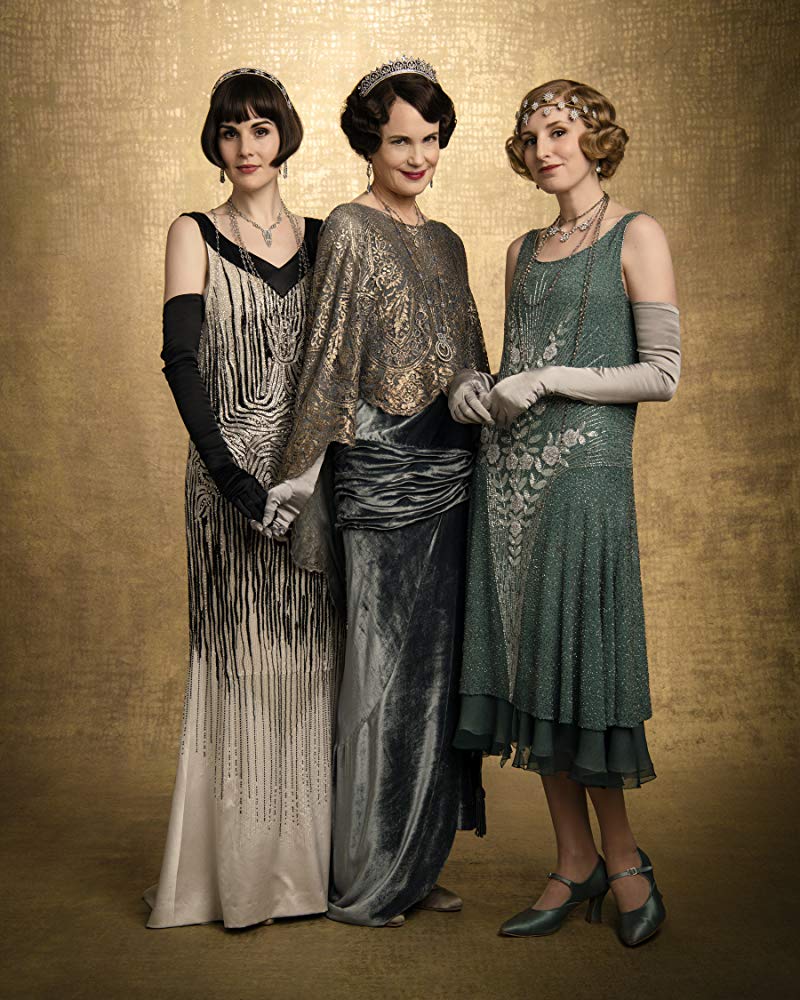
And just for a moment, can we talk about those costumes? Costume designer Anna Mary Scott Robbins worked with John Bright of the costume company COSPROP, which has some of Queen Mary’s actual gowns that could be studied for authenticity. The dress made for the movie was made using actual material from one of the Queen’s original dresses. For the ball scene both Lady Mary (Michelle Dockery) and Lady Grantham (Elizabeth McGovern) wear vintage dresses embellished by the film’s costumers. Dame Maggie Smith’s character, also in vintage, sports a real 19th century platinum tiara with 16.5 carats worth of actual diamonds on loan from Bentley & Skinner of Piccadilly, jewelers by Royal appointments. La-di-dah.

While the film pays respect to the past, it also has an eye to the future, with the Countess Dowager passing the baton, as it were. There’s a certain resolve within the family to keep the estate going for as long as possible, but you and I know the writing’s on the wall, so while the fixtures gleam under the staff’s careful attention, there’s a slight tarnish to it too.

Literally everyone is back, an ensemble impressive in both quantity and quality. And though I wouldn’t have had it any other way, their sheer number means we don’t get a whole lot of time with any one of them. It’s just a taste, really, an amuse-bouche, enough to leave your mouth watering for the main course, but alas, we skip straight to dessert. Still, it’s so nice to catch up with our old pals and considering the film’s success, it needn’t be for the last time either.

Between Two Ferns: The Movie

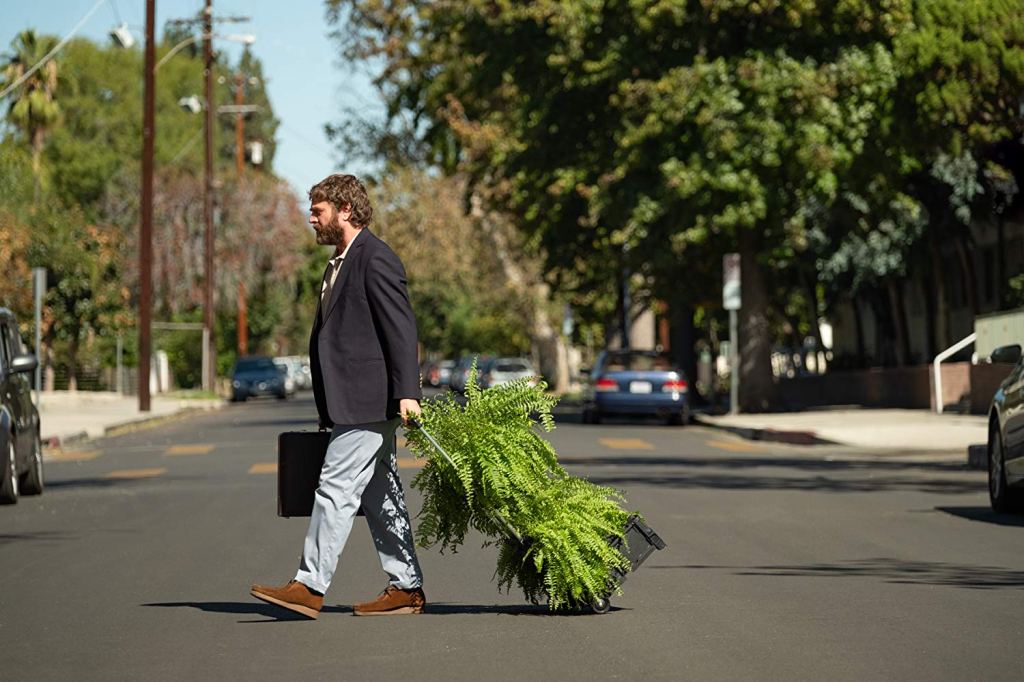
Zach Galifianakis is our tour guide as we enjoy a behind the scenes look at the set of his wildly successful talk show, Between Two Ferns. It’s completely fake of course. And wonderful.

Zach’s “show” is a series of web videos you can find literally anywhere on the internet but most of all on Funny or Die. It looks like a bit of amateur public access television that somehow manages to book very high profile celebrities and seat them betwixt the eponymous two potted ferns. He has interviewed the biggest names: Brad Pitt, Justin Bieber, even Obama, but the thing that makes people seek out his videos is that he uses it as an excuse to insult celebrities to their face. He uses his own name but the interviewer character is extremely antagonistic and recklessly inappropriate. As Will Ferrell states, we’re laughing at him, not with him.

The movie’s premise, which is as thin as they come, is just Zach hitting the road in order to film 10 rapid-succession shows in order to achieve his ultimate goal of a network late night show. The plot, if you want to call it that, is flimsy because it’s just a vehicle for random acts of bizarre humour. You either like it or you don’t. It’s on Netflix so it’s low risk, but this is not going to win over any new fans and isn’t trying to. It’s just a 10 course dinner rather than its usual light snack. Can you take that much fern? Can anyone?

“People find you unpleasant,” this according to David Letterman, and he’s putting it lightly. This version of Zach Galifianakis is an asshole, but that’s the fun of his little show: it subverts the usual softball style of celebrity interviews. It looks Jon Hamm straight in the eye and asks whether Bradley Cooper’s success “will open doors for other hot idiots?” If you think it must be hard to get those insults out while remaining deadpan, stay tuned through the credits for proof.

TIFF19: The Cave

Director Feras Fayyad has proven himself a bold and brave film maker with the multi-award winning Last Men In Aleppo. Although the Syrian crisis is so far the absolute worst atrocity of the 21st century, very little gets out besides shaky cellphone footage since so much is under constant siege. The Cave instantly sets itself apart.

Shot between 2016-2018 in Ghouta, a Syrian city near Damascus which faces near-constant bombing, the film takes us underground, to a secret network of tunnels filled with hungry, dusty-faced survivors. Underground we also find The Cave, which is what the people call their underground hospital. The Cave is low on supplies, some days lacking power, but it is brimming with resilience. The doctors there, mostly women, rely on each other to provide the camaraderie and the fortitude necessary to keep going in the face of such unimaginable, unabating conditions.

Dr. Amani is the hospital chief, a doctor of pediatrics who agonizes over her young patients. A little girl dying of cancer cannot be evacuated by Red Cross because of paperwork. Babies born in this subterranean unit fail to thrive and children arrive scrawny, malnourished – the medicine they need is food, but both medicine and food are scarce in a city so war-torn that neither can get in or out. Still, she takes a moment to connect with each child, and makes an effort to tell each little girl that they are born so they can live to be “something important” (a doctor, perhaps?), even though Dr. Amani still somehow faces constant sexism in her own work. Because no matter how grateful patients should be that there are any doctors left, any doctors willing to risk heartbreak, risk their lives to keep treating people every time a bomb falls or chemicals are released in the air, some of those patients will still use some of their last breaths on earth to berate her, telling her women should stay in the home. And still she saves them.

It’s a much more beautiful documentary than it has any right to be, both visually and thematically. Filmed in the rubble, in the darkness and debris and constant, choking dust, Fayyad manages some artful cinematography. But most remarkable is the dedication of these doctors who encourage each other and boost each other’s spirits in the face of harrowing hardship every single day.

TIFF19: Harriet

Harriet Tubman was born a slave named Araminta “Minty” Ross in Maryland. She suffered all the usual indignities and violence inflicted upon slaves, but one injury in particular left her with permanent brain damage, which gave her, as she described “premonitions from God.”

According to a legal will, she was supposed to have been freed long ago, but when she eventually went to plead with her owner, it wasn’t for her own freedom but that of her unborn child. She had married a freeman who visited her frequently, but he didn’t want to have a baby who would be born a slave, and I suppose you can guess how her masters answered her.

So that’s when Harriet got it in her head to run away. I mean, it must have been in every slave’s head every day of their lives, but finding the courage and the opportunity to do it was prohibitive. Runaways were brought back and tortured before being put to death, to set an example for others. It would have been a powerful motivator for staying put, to say nothing of having to leave behind your loved ones. Of course, when your loved ones can be sold away without notice, it is perhaps not such a big risk after all.

At any rate, Harriet did leave one night, alone. She traveled to Philadelphia on foot, 145km, evading slave catchers and bounty hunters, hiding by day, guided by the north star at night. Eventually she made it to freedom: she survived.

In the film, Harriet (Cynthia Erivo) arrives in Philadelphia and meets William Still (Leslie Odom Jr.), a member of the Pennsylvania Anti-Slavery Society and conductor on the Underground Railroad. He is a meticulous record-keeper and Harriet’s is but one of many, many entries in his logbook. She then meets Marie (Janelle Monae), a black woman born free, who owns the rooming house where Harriet lives. Marie teaches Harriet a different kind of life. Of course, posing as a free woman is an improvement, but not exactly without risks or complications. People are still looking for her. Harriet could spend her whole life looking over her shoulder. But she doesn’t.

Instead, Harriet chooses not only to look back, but to go back. To rescue family, friends, and in fact dozens if not hundreds of strangers. To go back for others, and free them as well. If it’s hard enough to understand how someone could endure so much pain and torment, and then find the courage to escape, it’s darn near impossible to picture the kind of person who would risk it all to go back. But she does.

In fact, she went back 13 times over a period of 11 years, though each trip only put her more at risk. She became an esteemed conductor on the Underground Railroad, never having lost a soul on her midnight runs. Every successful conductor had a network of friends and allies, and though some were white abolitionists whose participation was a great risk, there were also many black people along her route who risked much more but did it anyway.

It’s about time someone put Harriet Tubman up on the big screen for all to admire, and director Kasi Lemmons seems to understand the weight of her responsibility. The incredible thing is, she chooses to do it without the usual trappings of the slave film. Of course, those are largely understood by now, and their threat is still heavily felt. Instead Lemmons focuses on Harriet’s repeated runs, and though their repetition does make each one feel less of a thrill, their sheer number begins to impress. Harriet is not a slavery movie. Harriet is a freedom movie. It is a showcase for resilience, and hope. It’s also a reminder of the kind of impact one single person can have.

To that end, Cynthia Erivo shines as its star. Harriet may not be a complete biopic, but it is a fascinating origin story for one of history’s greatest super heroes. If Erivo isn’t talked about at Oscar time, it would be a crime.

TIFF19: Blackbird

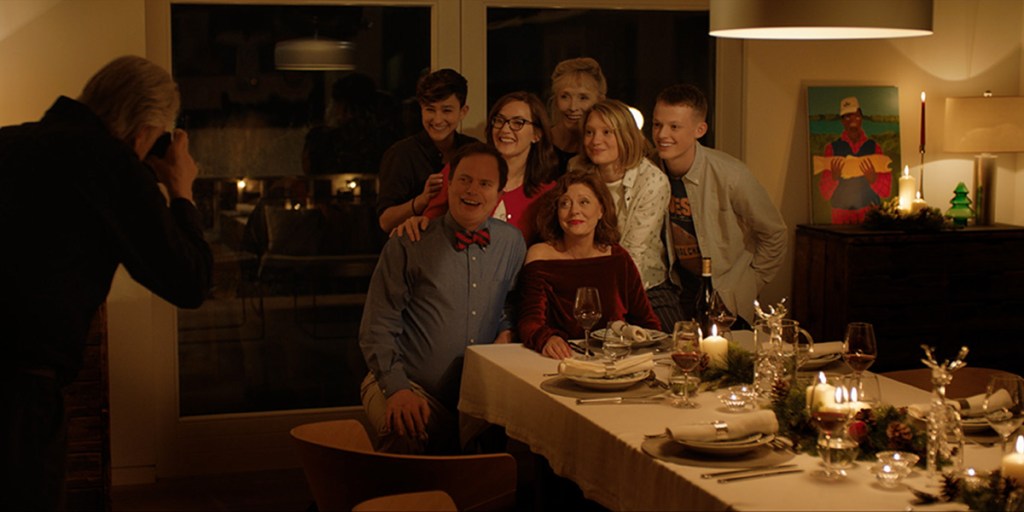
Lily (Susan Sarandon) and Paul (Sam Neill) have called their loved ones over for a very important occasion – Lily’s death.

Oldest daughter Jennifer (Kate Winslet) arrives first, early, with salt and pepper shakers, a gift she immediately questions, and regrets, but feels compelled to give anyway, and a cake she made from scratch, because that’s what she does. Husband Michael (Rainn Wilson) and son Jonathan (Anson Boon) trail in behind her, at a slight remove from her chipper wake. Younger daughter Anna (Mia Wasikowska) arrives late, of course, empty-handed and with meagre excuses for having missed the last several family gatherings. She’s accompanied by unexpected/uninvited Chris (Bex Taylor-Klaus), her on-again/off-again girlfriend. Also on hand: Lily’s best friend and indeed lifelong family friend Liz (Lindsay Duncan). And that’s it. These are all the people Lily wants to say goodbye to before she takes her own life before an unnamed degenerative disease can do it for her, in a likely prolonged, painful, and undignified way.

Everyone knows of Lily’s intentions and everyone tries to put on a brave face despite their own personal feelings – for a while. Lily wants to revisit some old haunts, drink some good wine, host one last Christmas dinner (despite its not being Christmas), and give out some precious heirlooms while she’s still alive to see the recipient’s face. Lily is exceptionally happy to have this last time together, but she’s the only one who can truly enjoy it. Everyone else is just sort of grimly bearing it while having private breakdowns, until one wine-fueled dinner leads to all kinds of family secrets breaking open.

This movie isn’t going to win major awards or draw major box office. It’s a remake of the 2014 Danish film ‘Silent Heart’ which I have not seen. But despite it not being particularly ground-breaking or excellent film making, it is perhaps the single movie out of the 40 or so I saw at TIFF that I’ve thought about the most.

This family believes itself to be, prides itself on being, close-knit. And it might have gone on that way forever, untested, if not for this incredibly stressful time that they’re sharing. Surrounded by her family, Lily proclaims how proud she is of her daughters – a lovely sentiment that would normally be quite harmless, but in this pressure-cooker of a weekend, daughter Anna can’t help but wonder out loud if that can really be true if her mother’s really never known her. Not her true, inner self. And if you’re the introspective type of moviegoer, I suppose you can’t help but reflect on your own family situation. These people, who are supposed to know you and love you best, are often the source of the most conflict and pain. Your own mother, who made you and cooked you in her belly, who birthed you and bathed you and cared for you – does she know you? Do you hide any part of yourself from her? Are you comfortable knowing everything about her? Are any of us truly knowable by any other?

I confess, this movie sent me into a tailspin. And to be honest, that’s exactly what I love about going to the cinema. It’s the chance, albeit a pretty slim one, that I will leave the theatre thinking. Feeling. Questioning. Considering. I did not need a movie to remind me that my mother doesn’t truly know me, but it did leave me wondering what, if anything, I would reveal of myself if I knew her time was limited.

Lily is someone to each person at her table: wife, mother, best friend, grandma, in-law, trusted confidante, role model, judge. Everyone has something different to lose, and it’s figuring out exactly what that is that makes this process so difficult. Life is an equation. Lily feels her good days are up and craves the control to prevent too many bad ones. Anna feels she isn’t ready to lose her mother. Is anyone, ever? I think both sides of this equation are reasonable, but only one can prevail. These are the seminal relationships of our lives and we are born knowing that they will end. Are we ever really ready?

Susan Sarandon is self-assured and brave. Sam Neill is a stoic, steady silver fox. Kate Winslet is anxious and authoritative. Mia Wasikowska is wounded and fragile. They are not a perfect family, which is to say: they are a family. And they’re about to break.