
I was in the right kind of mood to fall in love with a movie, and Mank was it for me.
Sean and I were at the cottage last weekend celebrating his birthday, and it was the first 48 hours I’d spent movie-free all year. Which is weird, considering 2020 will be known, among so many other things, as the year without movies. And yet, if you’re devoted to movie views and reviews, there were actually plenty of films to watch (this is my 428th review this year, not including some of Halloween and Christmas content that I backdate). Still, a lot (most) of the big releases have been delayed and there were perhaps fewer films to really get excited about – most markedly at this time of year, as Christmas is usually the big awards kick-off. So I was ripe to be swept away, ripe to appreciate something big and intentional, thoughtful and well-crafted. Mank was a cinematic gift under my tree this year, and the tag reads ‘With Love from David Fincher.’

Herman J. Mankiewicz (“call me Mank”), having just survived a car crash, is laid up in bed with a broken leg. Recovering in seclusion, and bedridden due to injury, he is perhaps in a wonderful position to do some serious writing, or that’s what Orson Welles is hoping. Orson Welles is a hot shot young director who’s just been given the Hollywood golden ticket, a rare opportunity to have complete creative control over his films. Welles has selected notorious drunk Mankiewicz as his screenwriter, leaving him with a stack of pristine white pages, a nurse, and a typist to get the work done in just a few weeks. What Mank eventually turns in will be a whirlwind, and long-winded, but beautifully written script for what will turn out to be the greatest film ever made: Citizen Kane. David Fincher’s movie takes a closer look at the duress under which that screenplay came to be written, and the Hollywood experiences that inspired it.
1930s Hollywood had a lot of stuff going on: a great depression, a looming war, rising anti-Semitism, the demonization of socialism…it was the Golden Age of Hollywood, but if you rubbed at the gold plating just a little, you could easily expose an awful lot of ugliness. Mank was a skeptic and a scathing social critic. Before he wrote for movies, he wrote for newspapers; he was the Berlin correspondent for the Chicago Tribune but really sharpened his wit as the drama critic for The New York Times and as the first regular drama critic at The New Yorker. When he made the move to Hollywood, Mank was often asked to fix the screenplays of other writers, with much of this work going uncredited. Ultimately he worked on The Wizard of Oz, Man of the World, Dinner at Eight, Pride of the Yankees, and The Pride of St. Louis, and dozens more. He became one of the highest-paid writers in the world, audiences gobbling up his new style of “fast” and “immoral” characters and plot. He wasn’t the most important man in Hollywood but he knew the ones that were – studio head Louis B. Mayer, for example, of whom Mank was not a fan.

David Fincher’s film sees Mank (Gary Oldman) laid up in bed, reflecting on his time in Hollywood, and digesting it into a movie that Welles (Tom Burke) would immortalize, critics would applaud, history would remember, and Hollywood insiders revile, for they knew the man Mank was referencing behind a veil so thin it left very little doubt. The man was of course frenemy and newspaper tycoon William Randolph Hearst (Charles Dance).
As typist Rita (Lily Collins) races to keep pace, turning his volumes of scrawls into something legible, Mank writes feverishly and drinks furiously. He has clearly been holding on to a lot of resentment as we flashback to specific events that are easily related to characters and scenes that we know and love from Citizen Kane. Hearst’s mistress, for example, Marion Davies (Amandy Seyfried), an actress for whom Hearst co-founded a movie studio, and to whose career he devoted many headlines throughout his vast media empire. And Mayer (Arliss Howard) at the studio, shamelessly churning out propaganda that would be mistaken for news (fake news, we’d call it in 2020) in order to sway elections. Mank has contempt for them all, and yet he’s able to turn into a script about spiritual corruption into, well, an enjoyable movie about spiritual corruption. It’s beautiful, in its way, in its insight and compassion.
Fincher’s film attracts my attention, my whimsy, and my admiration from the very first frame – from the opening credits, even. It looks and feels like a movie made during the period in which it’s set, and yet it also looks and feels as though it has every benefit that modern 21st century film making has to offer. With the help of cinematographer Erik Messerschmidt, Fincher straddles a line of his own making, and manages to lay down on film the very best of both worlds. Mank is textured and technically brilliant. It is a love letter to cinema, to the greatest movie ever made, and to film making itself, by brilliant film maker himself, an auteur, a highly skilled visual storyteller who eschewed film school and cut his teeth instead on Rick Springfield music videos (true story). After making his way through the very best (Madonna, Aerosmith, Iggy Pop, George Michael, Michael Jackson, the Stones), he made the leap to the big screen with 1992’s Alien³ (which also starred Charles Dance, fyi), which wasn’t a critical darling but did take some admirable risks with the franchise’s mythology. Ice broken, Fincher never looked back, and if you’re any kind of cinephile, chances are pretty good at least one of his films is in your top 10 (Se7en, Fight Club, Zodiac, The Social Network, Gone Girl), yet he’s never won an Oscar for direction, nor have any of his films landed the coveted Best Picture award, though The Curious Case of Benjamin Button seemed a shoo-in with 13 nominations that year (it lost to Slumdog Millionaire). Will this be Fincher’s year?

Mank‘s cast is not to be forgotten, the film’s success in large part thanks to an extremely talented ensemble who really work the material. The razor-sharp dialogue can be a lot of fun, and some of the drunken soliloquies are absolutely the stuff Oscar clips are made of. Gary Oldman of course deserves top credit for portraying a cynic with a secret soft heart, but he’s surrounded by people able to rally, particularly Charles Dance who is most hypnotic as a titan outraged by criticism. The quasi-betrayal between these two men is a magnetic source of conflict and intrigue.
The script too, is something to behold, and it’s perhaps the component that fascinates me most, credited to a Jack Fincher. Any relation, you might ask? Indeed, Jack Fincher is David’s father. David’s dead father, in fact, dead since 2003 in fact. Mank is his only screen credit. Clearly this script has been languishing in a drawer somewhere for quite some time, perhaps its only companion a screenplay about Howard Hughes that never got made once Scorsese chose John Logan’s version for The Aviator. Still, Mank must have been the favourite, since David recalls that as a budding child cinephile shepherded mostly by his father, there was no question which was “the greatest movie ever made.” Of course, that was very much nearly fact for a very long time, the film beloved and admired from the 1950s on (especially once it started being screened on television). It has been the watermark against which all other film is measured, and has informed an entire generation of film makers. Jack Fincher’s script is a clever way to let us celebrate the film once again, and perhaps appreciate some of its most personal influences. The senior Fincher gets lone credit for the script, though the way it proficiently draws such incisive parallels to present day makes it clear that Junior has had a hand in it is well. I wouldn’t be bothered one bit to see Jack Fincher receive an Oscsar nomination for his work, and I do wonder who holds the record for (forgive me) most posthumously awarded recipient.
Mank manages a send up to an entire era of film making while also saluting the man who gave so many favoured films of the time their unique flavour and identity. It’s a peek behind the scenes that isn’t necessarily pretty, but incredibly fascinating, an homage to an undisputed classic that just may turn into a classic itself.

 three dads (Colin Firth, Pierce Brosnan, Stellan Skarsgard), Mom’s best friends (Christine Baranski, Julie Walters) – even Grandma (Cher)! But because one party full of old people is pretty lame (could someone tell Sophie that?), the movie is 80% flashback. Meryl Streep’s character is now played by the lush and nubile Lily James, and we get to watch her have all the unprotected, close together sex with three different men (at least!) alluded to in the first movie, which resulted in all the daddy confusion.
 And Michael’s question “Can God forgive us for what we’ve done to this world?” messes him up even more. He defends god, but struggles privately. He takes up Michael’s obsession but continues to pollute his own body, as we watch his physical and mental health spiral downward.
 The second thing he notices is Preacher. This has just ruined Preacher for Sean. Dominic Cooper is 100% lame in this movie, there’s no getting around it. He plays Amanda Seyfried’s love interest, and Meryl’s soon to be son-in-law, but mostly just a floppy-haired wanker who can’t wipe that shit-eating grin off his face. And Preacher NEVER grins. His character’s name is Sky so it’s official: twat.
 Uh oh. “Luckily” Richard (Joel Edgerton) “knows a guy”, so they’re not going to pay the kidnappers so much as send in an “extractor” named Mitch (Sharlto Copley) who claims he’s out of the business, straight as an arrow. Right. But while Harold (David Oyelowo) is awaiting ransom or extraction or escape in Mexico, he gets into even more trouble in the form of drug cartels (notice the plural).
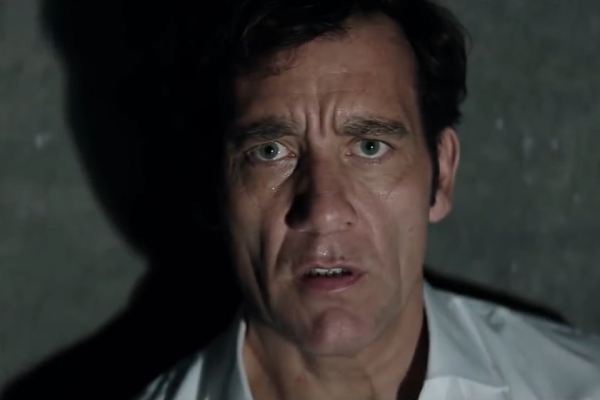 “Done before and done better.” I could probably leave that as my comprehensive review of Anon, last week’s Netflix original movie, but what fun would that be?
 until he catches the eye of a shameless late night talk show host who creates a nation-wide manhunt to find The Clapper. This little bit of notoriety embarrasses Eddie until it downright starts to ruin his life. When Judy suddenly disappears from the gas station, he agrees to ride his 15 minutes of fame, but only in order to find her. But he’s going to discover that late night television doesn’t exist to make love connections: this is going to be a shit show.
 Yet just ten seconds in, someone’s shouting “Pussy!” – a term I’m sure was used very sparingly in the western novels by Louis L’amour her father always read. Then there’s the death by flatulence, and Oscar winner Charlize Theron’s fat ass, and Sarah Silverman’s sore asshole. And MY MOTHER WATCHED THIS.
 The sheep penis? No, wait. It was the pooping in hats, wasn’t it? I bet it was the diarrhea-filled cowboy hats that really got you giggling. A Million Ways to Die in the West will cost you 116 minutes of your life, but finding out your mother has a dirty, disgusting sense of humour? That’s priceless.
 ASSHOLES WATCHING MOVIES