Tag Archives: biopic

Testament of Youth

See Alicia Vikander before she was famous, Dominic West in his authentic accent, and Emily Watson being stellar as always in increasingly diminished roles.

Vera Brittain was a real-life independent spirit. She vied for and won a spot at Oxford and vowed “never to marry”, even if those sounded like famous last word when uttered just as a very cute boy enters the picture. Turns out, he has Testament-of-Youth_3141581ka thing for sharp and feisty young women, and the two are a love match and plan to be at Oxford at the same time (unchaperoned, even). But every great love story needs an obstacle and feminism wasn’t enough, so along came The Great War to shake things up.

Tag line: Divided by war. United by love. Did you just puke a little in your mouth?la-et-mn-testament-of-youth-review-20150605

Luckily the tagline writer was an aberration and the film itself is quite good. Vera’s mind expands and excels at Oxford, and no one is less grateful for her education than she. Women still have to prove themselves worthy of degrees and now she’s feeling left behind again, when her brother, her friends, and her love are all leaving for the front. But Vera’s not one to take a back seat – soon she’s giving up her beloved scAlicia-Vikander-as_3141524bhool to become a nurse.

Vikander (who replaced Saoirse Ronan) is every bit the revelation that Ex Machina proved she was. She’s poised and luminous, and while the movie doesn’t contribute much that is new to the war genre, Vikander makes it more than worth a look.

Her The Danish Girl co-star, Eddie Redmayne, also starred in his own WW1 eddieepic, called Birdsong (based on the Faulks of the same name). He plays a young man who goes off to war remembering the affair he had with his French (married) sweetheart. Clemence Poesy is beautiful as ever, but this one may leave you feeling faintly unsatisfied.

Race

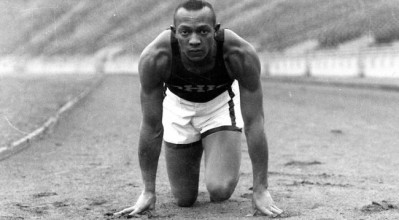
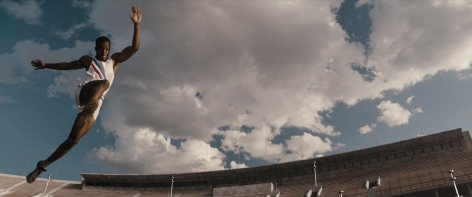
Jesse Owens deserved better.  Race is a movie that hits the points you’d expect but does it so mechanically that it has no momentum.  Rather than having the power of its Olympic sprinter protagonist, Race is soft and lumbering, like a darts competition at the local dive bar.

The only time Race really shines is during the one-on-one exchanges between Owens (Stephan James) and his coach, Larry Snyder (Jason Sudeikis).  Those conversations are funny, warm and real.  Unfortunately, those moments are few and far between.  It’s too bad that the film didn’t put those interactions into the foreground as that would have made for a much more
enjoyable movie.

Perhaps the problem is there was simply too much ground to cover.  Race’s story follows Owens through the course of several years during the peak of his career.  We flip back and forth between Ohio, New York, Berlin, Nebraska, Michigan, Los Angeles, and probably more places that I’ve forgotten.  We hit the athletic highlights, like Owens setting three world records and tying a fourth in less than an hour in 1935, and Owens winning four gold medals at the 1936 Olympic Games.  We touch on the hypocrisy of the United States’ threat to boycott those Berlin games at a time when racism and segregation were the status quo in the “land of the free”.  We gloss over the rest of Owens’ life by way of end titles and some nice photographs of Owens and family at various stages of his life.

There is a good movie in here somewhere but the plodding delivery sinks it (and the important-sounding score doesn’t help matters).  Race seems to want to be a message movie highlighting the aforementioned hypjesse-owensocrisy by showing us the second-class citizenship of Owens even when he’s America’s hero.  If that was the aim, Race falls well short.  Painting Hitler and the Nazis as the bad guys is easy, and Race goes that route.  But the real story is more damning and I wish Race had told it as it happened.  At a political rally in October 1936, relatively soon after his triumphant return to the U.S. with four gold medals in hand, Owens said,  “Some people say Hitler snubbed me. But I tell you, Hitler did not snub me. I am not knocking the President….but remember that the President did not send me a message of congratulations because people said, he was too busy.”  Hitler reportedly shook Owens’ hand after his victories, while Franklin Delano Roosevelt couldn’t find the time to send Owens a congratulatory telegram.

The President’s indifference to Owens presumably lines up with the attitudes of white America at the time.  That may explain why Owens’ life after 1936 was a difficult one.  His amateur status was revoked when he tried to make some endorsement money from his Olympic success, and after loRACEsing his amateur status he was reduced to racing against horses for show.  Later, Owens got by as a dry cleaner and gas station attendant (though “got by” may be generous as he declared bankruptcy and was prosecuted for tax evasion).  All in all, it’s a very sad statement.  Today, Owens is rightfully regarded as a legend but it seems that during his lifetime he was not treated like one, to say the least.  Race hints at that fate but doesn’t focus on it, and that’s a shame.

That’s probably the biggest reason that Race seems like an opportunity missed.  Coach Snyder would have called it a natural that lacks the work ethic required to be truly great. For its half-hearted effort, Race gets a score of five medals out of ten.

Joy

Joy is joyless. There is nothing entertaining about watching Joy and her family of unsympathetic characters make bad decisions. And even when Joy eventually triumphs, it’s not fulfilling in the least because by then you are tired of her.

Apparently this is all based on a real person, Joy Mangano. According to Wikipedia, the real Joy is a big deal on the Home Shopping Network and invented the mop in this movie along with a bunch of other stuff. The real Joy is now a multimillionaire and an executive producer of Joy the movie. I didn’t know of her beforehand and in hindsight I would rather have kept it that way. I did not find Joy’s story interesting and it’s certainly not entertaining. The only way I can rationalize this movie’s existence is as an ego trip for the real Joy.

So naturally, I am surprised this is nominated for a Golden Globe in the Musical or Comedy category for two reasons. First, it’s not a good movie. Second, it’s not funny at all. I didn’t laugh once.

I’m surprised as well that Jennifer Lawrence is nominated for best actress. I don’t think she gives a bad performance but there’s nothing here worthy of recognition. Joy needed to be a sympathetic character in order for this movie to work, but she’s not. There’s nothing Lawrence could have done to change that, it’s an inherent flaw of the underlying character.  You don’t feel sorry for Joy because she’s letting her family (and ex-family) take advantage of her, so of course her life is shitty.  She keeps letting that happen over and over, and I quickly stopped caring whether she would have a happy ending.  All I wanted after about 20 minutes was for the movie to end.

But because of those Golden Globe nominations, I stuck with it. I felt obligated and I figured Joy must turn around sometime. Well, it doesn’t. Joy is a chore all the way through, which is ironic considering Joy is a movie based around a cleaning product. I give Joy a score of four Miracle Mops out of ten.

Concussion

Concussion makes you sick with guilt for being an NFL fan.  As the movie unfolds, the names and stories of these tormented souls bring back memories of news articles you’ve read, and you know that even if some of the details are fictionalized, all the important ones are true.  And even though Sony’s leaked emails reveal they toned down the movie to avoid kicking the “hornet’s nest” that is the National Football League, the watered down version is horrifying enough.  Concussion makes you feel dirty for ever having watched a Super Bowl, let alone having bought a ticket, because involvement as a fan means you actively contributed to the destruction of so many lives.

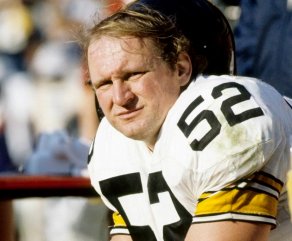
Mike Webster really died in his pickup truck.  Justin Strezelczyk really died in a fiery crash because he drove into oncoming traffic while being chased by the police.  Terry Long really drank antifreeze.  Andre Waters really shot himself in the head.  Dave Duerson really was an NFLPA executive who fatally shot himself in the chest so he could
US PRESSWIRE Sports Archive-Historical

The real-life Mike Webster.  RIP.

donate his brain to science (and Junior Seau really did the same).  All of these former players were 50 or younger when they died.  All have been diagnosed with chronic traumatic encephalopathy (CTE), which is a degenerative brain disease that causes symptoms of dementia including memory loss, aggression, confusion and depression.  The scariest thing is that these are just a few of the former players who have died from CTE, or are living with CTE-like symptoms (a CTE diagnosis cannot be confirmed until after death), and there are thousands more who almost surely are living with the same symptoms and/or other neurological conditions like Lou Gehrig’s disease, Alzheimer’s, Parkinson’s or dementia.

That alone would have been enough for Concussion to make me uncomfortable but a personal connection made these issues all too real.  Growing up, I was a good athlete but my brother Bryan was better.  He was good enough to be playing both basketball and rugby on provincial teams at age 16, and then it was time to make a choice.  He chose rugby because he loved hitting people (which makes sense because he’s kind of an asshole too).  Focusing on rugby made him even better at it, and after high school he went out west to play for the Canadian junior national team.

And then everything went south in a huge way.  His first concussion was well in the past, suffered at age 14 while playing quarterback.  We didn’t think of it at the time but as the hits piled up, every big hit hurt him more and took him longer to recover from.  By the time he was playing national-level rugby, and getting hammered repeatedly by other 6’5″, 240 pound monsters like himself, he was also experiencing blackouts, memory loss, chronic pain and who knows what else.  When he came to at the top of a mountain and had no idea how he had gotten there (turns out he ran the mile from his house then continued all the way to the top), it was a rude awakening in more ways than one.  That was the end of his rugby career but only the beginning of his suffering.  He lost years to pain, headaches, and nausea, he lost his desired career as a firefighter, and he almost lost himself.

Bryan’s story has taken a better turn lately, as he has found treatments and medications that help him manage his pain and live his life. But for me, Concussion was a terrifying reminder that Bryan could have been Mike Webster.  He may still be.  Bryan’s only 36, which is how old Justin Strezelczyk was when he drove into a tanker truck.  Mike Webster was still playing football at 36, so 50 is still a long way off for Bryan and countless others.

Will Smith is decent in the role of Dr. Bennet Omalu, the coroner who autopsied Mike Webster and brought a lot of these issues to light after so many years of darkness and denial.  His accent is not as distracting as in the trailer but I couldn’t escape the feeling that the script was designed to include the phrases that Smith was better at saying in an African accent (“Tell the truth.  Tell the truth!”).  The same accent probably would have been more palatable coming from an unknown actor but does this movie get made or seen if Will Smith isn’t starring?  So while I probably wouldn’t have nominated him for a Golden Globe, I can see how he got one.  He is obviously trying here and maybe that was the problem for me.  In my view Albert Brooks (as Dr. Omalu’s mentor) and Gugu Mbatha-Raw (as his wife) both gave better performances than Smith.

Concussion makes sure to note the similarity between the NFL’s treatment of concussions and big tobacco’s treatment of cancer, and the comparisons are apt.  They still ring true, especially when the class action settlement between the NFL and 4,500 former players was conditional on the NFL never having to admit what it knew about the danger of concussions, or how long it’s known.  It’s easy to read between the lines.

The hits these players took (and gave) are going to kill many of them.  And we watched and cheered.  For me, Concussion made me realize that I’m long overdue to stop cheering and stop pretending that any of this is okay.

For that, I’m glad I saw Concussion.  I’m not sure the movie works as well as it should, because it seemed at times to soften its message in an effort to not seem too preachy.  I’m thinking particularly of a speech Smith’s character gives where he says he doesn’t hate football after being persecuted by the NFL for his research, which to me rang false.  Still, despite that scene and a few similar missteps, Concussion got to me and made me think, and that’s worth something.

Concussion gets a score of seven (six for the touchdown and one for the PAT) out of ten.


Hits & Misses

Steve Jobs: This movie is underperforming at the box office right now so my expectations were tempered, but the truth is, I was the-intense-first-trailer-for-aaron-sorkins-steve-jobs-movie-paints-a-picture-of-an-egotistical-and-difficult-manriveted. Yes, riveted, for the entire 2 hours. Aaron Sorkin has crafted a film in 3 acts, all three covering the moments before big product launches and pivotal times in Jobs’ life. 1984: the Macintosh is launched just days after that historic Superbowl ad while Jobs is angry at having lost Time magazine’s Man of the Year to a computer in part because of his vehement denials of paternity to 5-year-old Lisa. 1988: after the failure of the Macintosh, Jobs has left Apple and is launching the NeXTcube with his eye on the bigger picture. 1998: back at Apple, he’s launching the iMac, computer of tomorrow. Jeff DBildschirmfoto-2015-07-03-um-11_47_44aniels plays the Apple CEO and Kate Winslet plays Jobs’ right hand woman; both exactly as brilliantly as you’d expect. Michael Fassbender is of course Jobs himself, and I have no qualms about his portrayal of an extremely complex man. He’s an egomaniacal dick, and yet we still see his humanity. The surprise for 11730-4866-2536097E00000578-0-image-a-27_1422709812751-2-xlme was Seth Rogen who plays Steve Wozniak, who is a very interesting character. He’s very much the affable, humble counterpart to Jobs’ mad genius, but is also the one who actually knows how to design and build computers (Jobs being more of an idea man). Rogen manages to strike a balance between being second banana, and also being the only one who can truly stand up to Jobs. Colour me impressed, Seth Rogen. Danny Boyle has a well-crafted beast on his hands – maybe a little too rigidly structured, but admirably made. I didn’t expect to love this, but I really did.

Truth: An icon playing an icon – Robert Redford portrays Dan Rather as he becomes embroiled in the journalistic snafu that would end his enviable career. In 2000, Mary Mapes (Cate Blanchett) was about to break the story of George Bush’s spotty military career. You may remember the highlights: that he pulled strings to be admitted to the National Guard in order to avoid service in Vietnam, then went AWOL and never really completed even that much. It was going to be a big deal inrather an election ultimately decided by just 500-odd votes, but that summer Mapes’ mother died and the story never aired. Four years later, though, the story is revived when someone comes forward with documents. Mapes and her team (Elisabeth Moss, Topher Grace, Dennis Quaid) bust it wide open after a lot of teasing and research and legwork, and Dan Rather presents the case on 60 Minutes. But of course Republicans were never going to let this 75story sit, and pretty soon the internet trolls are working feverishly to discredit whatever they can. Truth becomes not just a story about journalism, but about government corruption at the highest level. 60 Minutes is on CBS. CBS was owned by Viacom, a conglomerate that relied on government tax breaks. Can they afford to upset the presidency? Truth, the actual truth, gets lost somewhere in the shuffle. Sean felt it made a better story than a movie, and he may be right. Blanchett is note-perfect, and Redford surprised me – he doesn’t do an impression of Rather, but he does capture his cadence and persona in a way that felt convincing but not mimicky. The film, though, is pretty conventional, and it’s oddly paced. I absolutely believe that a journalist’s job is to ask questions,b ut that doesn’t mean I needed 18 different soliloquies on the topic. I have a headache from being hit over the head with this message. Relax, James Vanderbilt; your premise is solid and the movie is good if not great. No need to be so sanctimonious.

Jem: A complete defilement of my childhood, no 80s baby is going to have anything to do with this travesty. They’ve ruined everything that made the cartoon of our innocence great: the look is wrong (she used to be outrageous!), the sound is wrong, they’ve traded in a talJemMovie00-630x420king, hologramming computer for Youtube. I spent years as a little girl putting on Jem concerts in a neighbour’s garage, so I think I know what I’m talking about. Even the earrings were botched, for crying out loud. And where was the awesome rival band, the Misfits? Jem and the Holograms weren’t just rockstars, they were businesswomen, philanthropists, crime fighters, and foster mothers. While it aired during the mid-80s, it was in the top 3 most watched kids’ cartoons. Why then did the studios spit in the eye of the franchise by making a movie that was sure to fail? And isn’t even good enough to attract a new audience? How would jemaudiences have felt if the same was done to Transformers, a movie that, according to IMDB, had an estimated budget of $150M in 2007. A couple of years later, GI Joe was given $175M and even though the first one didn’t do all that great, they found another $130M to throw at the sequel. Jem, on the other hand, was given an estimated budget of just $5M. So let’s sit with that for a minute and ask ourselves why. Yes, the 80s version was goofy and over the top, but that beats the bland, paint by numbers crap this remake is offering. It’s trying so hard to appeal to millennials it completely denigrates any nostalgic appeal and alienates the people it was first made for. Epic fail.

Experimenter

As you may have noticed, we recently caught The Stanford Prison Experiment in a Bytowne double-bill.  As you also may have noticed, we are at the New Hampshire Film Festival this weekend taking in a ton of films and discovering we may not be festival-ed out yet!  It helps that the NHFF, in its 15 year, is a complete change of pace from the frenzied, big city, line-up centric, atmosphere of TIFF.  Here, you show up ten minutes before each movie and walk right in, and the program/map included with your pass (which I’ve looked at about a thousand times already) makes clear that at most it will be an eight minute walk between theatres, and so far we haven’t even had to go that far to catch four movies yesterday.

One of those four movies was Experimenter, which tells the story of Stanley Milgram, who will be familiar to anyone who has taken a post-secondary science course or two.  Dr. Milgram was the genius behind the obedience experiment.  To refresh your memory, or bring you up to speed, the experiment on its face purported to test the effect of negative reinforcement on learning.  Two subjects came in together, with one being randomly assigned the role of teacher and the other being the student.  Put in adjacent rooms, the teacher spoke through a one-way microphone and gave multiple choice questions to the student, who then got an electric shock for every wrong answer, with the strength of the shock increasing every time.  To give the teacher a taste of the effect, the lowest-level shock (of 45V) was given to the teacher before the test began.  Every teacher thought even that low-level shock was painful.  Throughout the test, the teachers could hear the student through the wall, howling in pain and begging to stop.  Though all teachers were visibly uncomfortable with the students’ anguish, 65% of them proceeded all the way through the test, with the last shock being administered to an unresponsive student (as a lack of response was considered a wrong response).  The teachers were never forced to administer a shock though they were told it was a necessary part of the experiment and asked to keep going.  And they did, even though the last shock was 450V!

Then the curtain was pulled back.  This was not a test of the student, it was a test of the teacher.  The student was always the same person, i.e., one of the experimenters.  He was not being shocked but instead had been recorded making anguished noises. The experiment was designed to examine why humans are so willing to give in to authority, as demonstrated particularly by the Holocaust.

It was a controversial study at the time and still remains so to this day.  For me, I think it’s fascinating and necessary.  The deception has to happen in order to get past the natural instinct that we all have, namely that if we were put in that scenario we would not shock the person.  But over and over this experiment and its successors have proven that more than half of us are lying to ourselves.

Experimenter is worth seeing for that experiment alone.  It’s a brilliant illustration of our latent defects and brings to light the evil even “good” (/normal) people are capable of, and what we need to fight against when we are subjected to authority, in order to keep our humanity.  That experiment is rightly where Experimenter puts its focus, but unlike The Stanford Prison Experiment, Experimenter looks at a lot of Dr. Milgram’s other work, which was equally brilliant (Six Degrees of Separation!).  That extra material was welcome to me but it’s just a taste of it, as there simply isn’t enough time to give the other experiments much attention.  Still, I think their inclusion was a good choice in order to show us Dr. Milgram was not a one hit wonder, and also give us a sense of the extent to which the obedience experiment monopolized Dr. Milgram’s professional and personal life despite his best efforts to move on.

I had some issues with the manner in which this story is delivered to us, though.  There are quite a few uneven parts of Experimenter, and some distracting choices made here in bringing the story to screen.  Two items stood out the most to me.

First, Dr. Milgrom speaks directly to us, which I think sped up the delivery of a lot of material to us but took me out of the cinematic experience and turned me into a student rather than a moviegoer.  Perhaps that was the intention but I think it detracted from the experience for me.

Second, there are several scenes with roughed-in backgrounds that clash directly with our foreground characters (e.g., a visit to a mentor’s house where our protagonists sit on furniture that has inexplicably been placed in front of a black and white 2D living room backdrop).  I could not figure out why this was happening during the movie and trying to figure out the reason distracted me throughout the movie (and that was not the only scene that had me thinking similar thoughts).  Afterward, Jay mentioned that maybe it was roughed in for the time being with the intention of being replaced, and I hope that is the case.

Despite those minor issues, this movie is so worthwhile.  I think you will find it fascinating and it does a great job of capturing the effect of the obedience experiment on everyone that it touched, whether directly or indirectly. and as a bonus gives us a bit of insight into a brilliant scientist who opened our eyes to a truth that is hard to for us accept, but an integral part of our nature that we need to know about in order to resist.

I give the Experimenter seven dangerous shocks out of ten.

The Walk

Film nerds will remember a documentary released some years ago called Man On Wire. A mix of footage, reenactment and present-day interviews painted the story of Philippe Petit’s 1974 high-wire walk between the twin towers. (I remember this film so vividly I described its Academy Award nomination as “a year or two ago” to Sean when it fact it won in 2008).

the-walk-2015-movieRobert Zemeckis has bravely adapted this story in The Walk, with Joseph Gordon-Levitt an inspired choice as Petit.

The achievement, the thing to see, is of course the walk itself. In dizzying IMAX 3D, the effects glorifying the height are so realistically rendered that audience members feel real vertigo. If you’re not big into heights, may I remind you that the World Trade centre stood 1,362 feet above the ground, and Petit made his walk without a net. This has induced nausea and even vomiting in some audience members, and while I felt fine in that respect, I did experience some spine-tingling anxiety when nearly the whole of the second half of the film is spent up in the clouds, perched extremely precariously, sometimes tauntingly so, upon a wire we know to be improperly installed.

Petit narrates the story to us from atop another of New York’s tallest destinations – the Statue of Liberty’s flaming torch. This narration lends a fairy-tale quality to the film that it didn’t need zz21or benefit from, and in fact it felt like an affectation. The first half of the film is slow-going. It takes an hour to get to the good part, but if you believe that things are worth waiting for, then you’re in for a treat.  I’ve had 3D fatigue for quite some time now, but here again is a movie that actually uses it (like Everest) not just to drive up ticket prices, but to stoke the feeling of soaring (or of falling, if you’re a pessimist) in the audience like no other image ever could. Dariusz Wolski’s cinematography is stunning and breath-taking in that very literal way of having stolen the wind right out of my lungs.

The walk itself, as Petit always delights in telling us, is completely illegal and planned in secret. This part of the story almost feels like a heist movie, between the planning and the recruitment of compatriots. But once Petit puts one foot to the Screen Shot 2015-09-30 at 10.05.24 AMwire, it becomes a work of art. Early morning commuters stop traffic to look up, look waaaaaaaaay up at these buildings newly erected, not yet a beloved part of the city’s skyline, and suddenly they’re injected with life and meaning.

Is this movie Zemeckis’ love letter to the twin towers? It’s quite a tribute, handled with love and respect. The movie may be uneven, and a little brainless, but it is without a doubt visionary, if only you dare not only to keep your eyes open, but to do what the wire walker must never do: to look down.


Anyone have a problem with heights? Has it stopped you watching certain movies before?

Straight Outta Compton

Finally!  It’s hard to say there was a downside to TIFF but it monopolized my movie-watching for its entire 11 days.  And since Jay and I were busy before that doing Amazing Races and Oddball Festivals and other summertime stuff, I didn’t get to see Straight Outta Compton until yesterday.  Which was making me itch a little because I had heard really good things, and I am happy to report that those good things were accurate.  Straight Outta Compton is a very enjoyable history lesson/tribute to some of hip-hop’s founding fathers, most notably Eazy-E.

Having been a 12 year old small-town Canadian kid whDr.DreTheChronic.jpgen N.W.A. broke, they were a little fuzzy to me at the time. But now I’m older and wiser, and since turning 13 I got into mid-90s hip-hop, Ice Cube made a lot of movies, and as my record collection grew I got Straight Outta Compton and The Chronic (and All Eyez on Me), so this movie brought N.W.A. into sharper focus.  It’s really staggering to think of how much talent was in this group and how soon it all ended.  It’s  also staggering to think about how much more to the story there is in the Aftermath, which gets hinted at in the end, and which was a nice touch.
I thought this movie flowed really well and was grounded enough in reality to feel authentic.  Again, since I was 12 at the time, I don’t know much about Eazy-E aside that he died from AIDS when AIDS was just becoming real for me because Magic Johnson had it.  So it was really neat to see him be the focus of this movie along with Ice Cube and Dr. Dre.  I expect that DJ Yella and MC Ren had more to do with the group than just being faces in the background but if you are fans of theirs, you will have to wait for their version of this story to get greenlit in order to learn anything about them.  Fortunately for me, I am a Dr. Dre fan primarily and Straight Outta Compton paid lots of respect to his genius.

It helped that O’Shea Jackson Jr. looks so much like his father, but a great casting job was done with the other roles as well.  Even cameos like Snoop Dogg and Tupac work, especially because the voices are eerily similar.  I felt like maybe there was some auto-tune trickery at play but whatever was done, it works to immerse you in this world if you are at all familiar with it.  And Suge Knight is well portrayed too, he’s a dead ringer for the real thing and comes off as bad as he should.  As Jay said while we were watching it, whoever thought it was a good idea to trust that guy deserved what they got.

If you like hip-hop at all, this is a must see.  And even if you don’t, this story is one that may grab you regardless.  It’s an enjoyable movie that captures a lot of N.W.A.’s ups and downs, and is more or less accurate as far as I can remember!  For that, Straight Outta Compton gets eight police brutality charges out of ten.

Love & Mercy

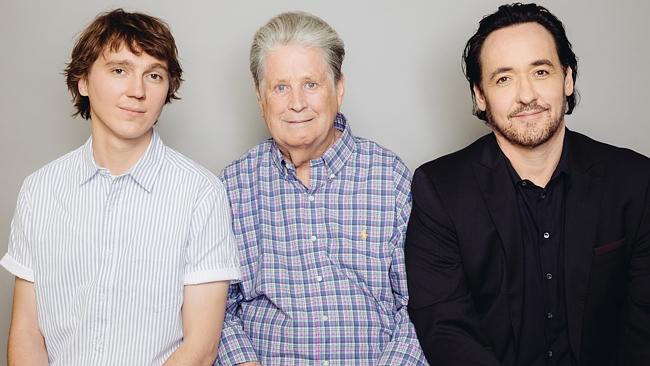
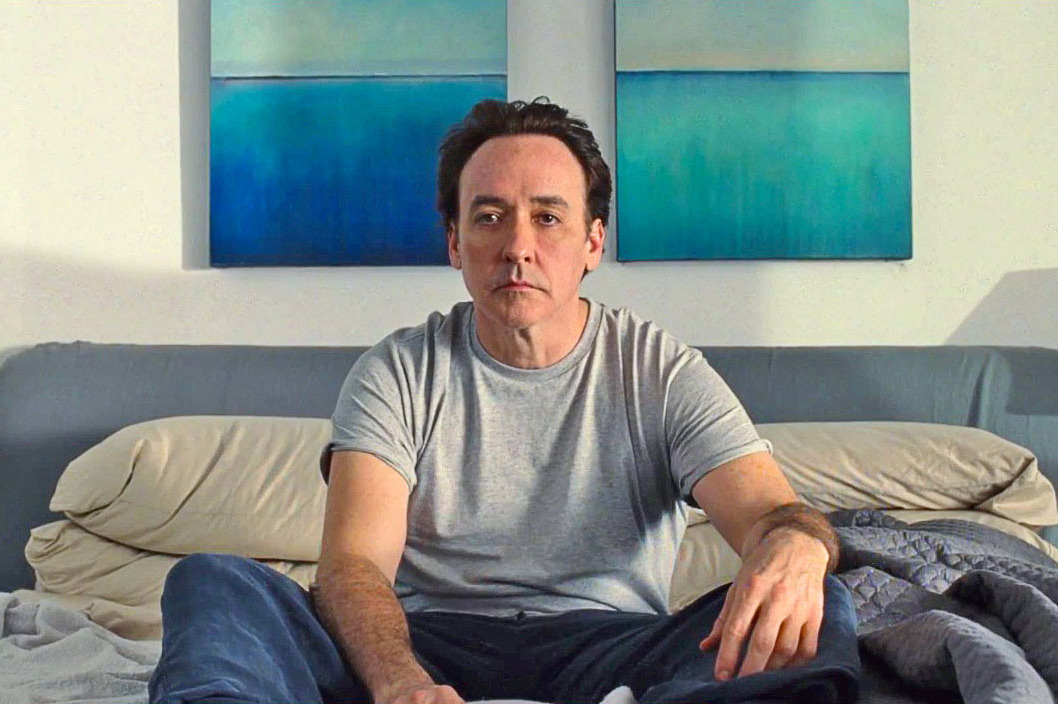
beachboysLove & Mercy tells the story of two Brian Wilsons (the heart and soul of the Beach Boys): 1960s Brian, portrayed by Paul Dano, at the height of his creative genius, working doggedly on a game-changing album that no one else believes in while fighting the ugly spectre of an abusive father, and 1980s Brian, portrayed by John Cusack, a broken shell of a man under the care of and heavily medicated by a shady, domineering psychiatrist.

Both Brians are sad to watch on-screen. No matter how much or how little you know about Brian Wilson’s life going in, you do know the Beach Boys, and you understand pretty quickly that the Beach Boys were nothing without him. The man was so talented that he took a harmonizing boy band in matching shirts and pushed them toward musical complexity to rival (and inspire) The Beatles. And he did it all while in the throes of a nervous breakdown.

The recording sessions in the film were some of my favourite. Sean has a nice little vinyl collection and of course Pet Sounds has always been part of it – Rolling Stone’s definitive list of the top 500 albums OF ALL TIME rates Pet Sounds at #2, only being eclipsed by Sgt. Pepper’s Lonely Hearts Club Band, the album The Beatles made in response to their hearing and adoring Pet Sounds. So it was really neat to see and hear the hard work and the many layers and the sheer creativity that went into producing a sound that had never been heard before. And even if you don’t know the album, I guarantee you’ve known some of these songs for nearly your whole life. They’re part of our cultural lexicon. And now you get to peek behind the curtain thanks to scenes that were mostly improvised with real studio musicians and shot in a documentary style with 16mm handheld cameras.

This is not a traditional biopic. It depicts two very specific times in Brian Wilson’s life, and this parallel narrative is very effective, contrasting the height of his career with his crashing mental 01-love-and-mercy.w529.h352.2xand emotional downfall. We see him change from vitality to despondency, and to heighten that disparity, director Bill Pohlad kept actors Cusack and Dano separate so that they would each develop their own organic understanding of Wilson in their respective time periods. In the second portion, the John Cusack years, Paul Giamatti plays Dr. Landy, the evil psychiatrist while Elizabeth Banks appears as a love interest. These two are of course at odds with each other and the battle over Brian Wilson, when Wilson is too traumatized and petrified to fight for himself, or to even recognize the need for it.

Tonnes of original Beach Boys recordings are featured throughout the movie, lots flawlessly mixed in with Paul Dano’s own voice. And I’m giving props to composer Atticus Ross who had a mountain of a task to compose a score that would flow in and out of all of these iconic songs, and yet he didn’t just do a competent job, he elevated things, drawing inspiration from such varied sources as The Beatles’ Revolution 9 to Jay-Z’s The Grey Album and it sounds exciting and alive and masterful.

boysThere are significant gaps in this film, which is narrow in its scope, but it is an otherwise mournfully accurate account. Lots of the characters and events feel larger than life but if anything, Wilson felt that perhaps some were treated “too fairly” and after all he’s been through, you can understand where that’s coming from. I thoroughly enjoyed this movie, from the recreation of several Beach Boys album covers to Elizabeth Banks’ impressive 80s garb, and as much as I can tell you so, you really just have to see it yourself.

Made For TV?

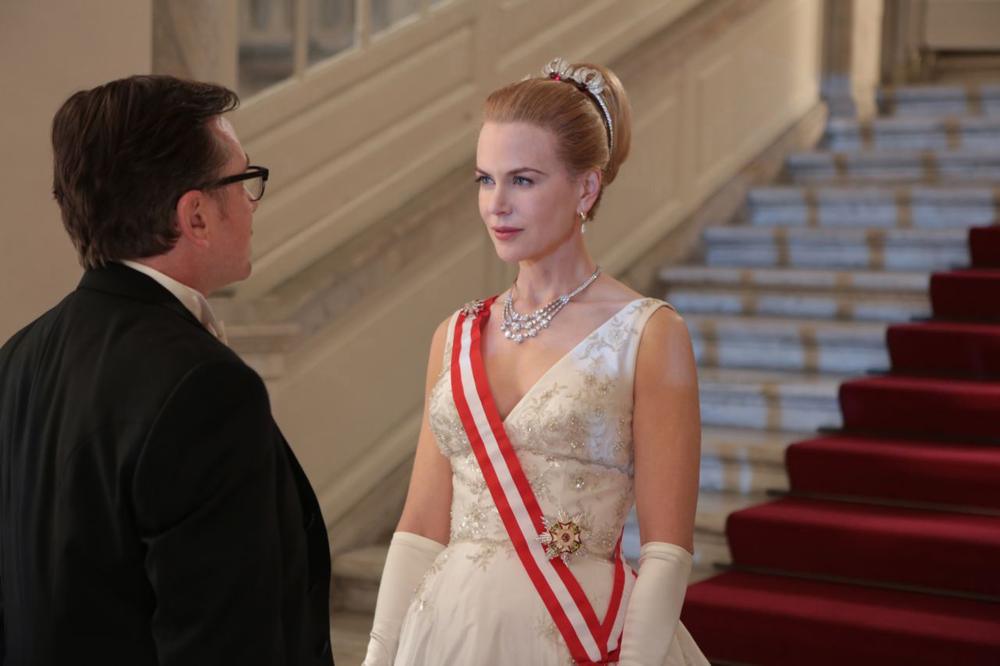
MCDGROF EC011Grace of Monaco was supposed to be a brilliant piece of Oscar bait for Nicole Kidman but ended up getting so screwed up along the way that it went to small screen rather than the big one. I watched it recently (it’s available on Netflix) and I didn’t think it was awful, at least not god-awful, but it’s clear that something went wrong. That something seems to have been tension between director Olivier Dahan and distributor Harvey Weinstein. The film had two distinct cuts and the two men could never reconcile them. The screenwriter, caught in the middle, refused to attend the opening at Cannes because of the controversy. This isn’t the first time Weinstein has tried to intervene between a movie and its director; he tried to kill Snowpiercer and luckily didn’t succeed.

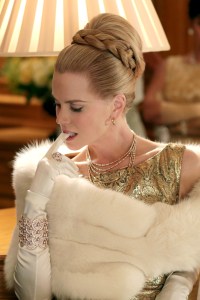
Both the script and the direction feel wooden. There’s no blood running through the grace-of-monaco-vogue-3-13may14-pr_bveins of this movie. Physically, Kidman embodies the role of Grace Kelly, especially as a newish princess still trying to make the transition between royalty and Hollywood. The actual royal family, children of Grace Kelly and Prince Rainier, have gone on record that this is a patently inaccurate recounting, fictionalized, fabricated, pointed not a biopic. Either way, Nicole doesn’t do Grace justice. She seems blank a lot of the time, and the performance is uneven. Tim Roth as Rainier isn’t any more inspiring.

So this movie went from getting booed at Cannes to being released on Lifetime, and then straight to video on demand where presumably it can hang out with other ill-conceived disappointments like the Jennifer Lawrence-Bradley Cooper piece of crap everyone wants to forget about, Serena.

Meanwhile, Lifetime is ramping up its cred by making fun of its own reputation. At least, I tumblr_nq7rlkyifi1tb8iyko2_500thought the Lifetime movie A Deadly Adoption was supposed to be a parody. I mean, you cast Kristen Wiig and Will Ferrell and I just assumed. The movie, though, doesn’t really feel that way until the last 15 minutes or so. Up until then, Wiig and Ferrell are a little too earnest, their parts and the story a little too straight. It’s actually pretty straight up Lifetime sexual thriller, with requisite DAUGHTER WITH A DISEASE!, REVENGE PLOT WITH A TWIST!, and my favourite, SLOW MOTION FOR MAXIMUM DRAMATIC IMPACT!

I actually felt pretty deflated about this movie. I was expecting something a little more…good? tumblr_nq7rmebtxx1tb8iyko2_500Entertaining? Funny? Worthwhile? Subversive? I don’t really get what was in it for Wiig and Ferrell. Is this a James Franco on that soap opera thing? Like, I’m so square I’m cool? I’m so big I can do anything? If so, it was largely lost on me. I’m voting missed opportunity.

Have you seen either of these? Or anything else on TV that rose above or crashed and burned?