
We meet scientist Augustine (George Clooney) on a very bad day for humanity. The inevitability that climate change has been predicting for years is finally here, and in the end, it goes so much more quickly than we ever imagined. Augustine works at an Arctic station that is being frantically evacuated on this particular day, people rushing home to be with loved ones as they wait to die, and in a matter of just days, they do. The toxic air will take a few days more to reach the Arctic, so Augustine stays behind, alone. At least he thinks he is until he discovers a little girl (Caoilinn Springall) who’s been left behind, but by the time she’s found, Augustine can no longer reach anyone else. These two may be the last humans alive on Earth.
BUT. There are 5 more humans still alive in space, astronauts that have been on a 2 year mission to assess a newly discovered planet for viability. And indeed it does appear to be the promised land, able to sustain human life. Except for everyone on Earth, it’s too late.

With his communications down, Augustine makes the difficult decision to try to reach another station. On foot. In the quickly melting, deteriorating Arctic landscape. Racing against toxic air. With a little girl in tow. Easy journey, you say? It is not. But Augustine’s got an urgent message for those aboard the starship: don’t come home. Turn back.
The five people aboard that starship are Sully (Felicity Jones), who is pregnant in space, her baby daddy and boss Adewole (David Oyelowo), plus Sanchez (Demián Bichir), Maya (Tiffany Boone), and Mitchell (Kyle Chandler), none of whom knew they were signing up to be the last earthlings/the ones who would need to repopulate humanity. What an awful burden to put on anyone, but it’s either that, or death. Which would you choose?
Sean didn’t love this movie because he found it cold, and I don’t think that’s just a temperature thing (although poor George had to limit takes to 1 minute, and use a hair dryer to thaw his eyelashes between takes). There’s no room in the movie for recriminations but thanks to a subtle and clever script by Mark L. Smith (based on Lily Brooks-Dalton’s book, Good Morning, Midnight), we know that Augustine is disgusted by humanity, by the fate we chose for ourselves. The movie very quickly divorces itself from Earth, which is over, and I can understand feeling untethered by that. I myself found it a fascinating corner of the human psyche to explore and discover.

Who are we at the end of the world? Augustine’s life’s work revolved around solving this problem, and now he’s watching it all come to naught. Were his sacrifices worth it? It is a powerful accounting of one’s life that takes place when it can be so starkly measured, and through flashbacks we sense that he’s feeling some regret. The astronauts too are facing a similar hardship. Imagine having come so close, having landed on a planet that could save humanity only to learn that they’re just a little too late. Oh, and that everything and everyone that they knew and loved are dead. And that they can never go home again, in every sense of the expression, that their fates now lie on a strange and unpopulated planet where, best case scenario, their kids will be committing incest for generations.
I love a movie like this that has me trying on so many different shoes to see how they feel. How it feels to fail on such a devastating scope. How it feels to actually face the extinction of the Earth, which seems like such a theoretical concept until the reality is burning in your lungs. And yet to also be in a place where guilt and regret no longer matter. Where not even grief and tears matter because we can only mourn what we have lost, or what we are leaving behind, and neither of those things apply when everything is blinking out at the same time. There are no legacies, no one to carry forward your story, everything will be forgotten, so none of it mattered.
Okay, I can sort of see why you might find this bleak. Yet I am choked with awe reconsidering it all again. George Clooney directs, and he correctly identifies that the end of the world will be markedly emotionless. We humans have no concept of an extinction level event. In 2049, when this movie takes place, we’ll have had – what, 70, 80 years? – of warning, and yet we still won’t see it coming, we still won’t be prepared, and we still won’t believe it until it’s too damn late. I can’t help but admire a movie that is willing to punch you in the gut like that.
The Midnight Sky streams on Netflix December 23rd.
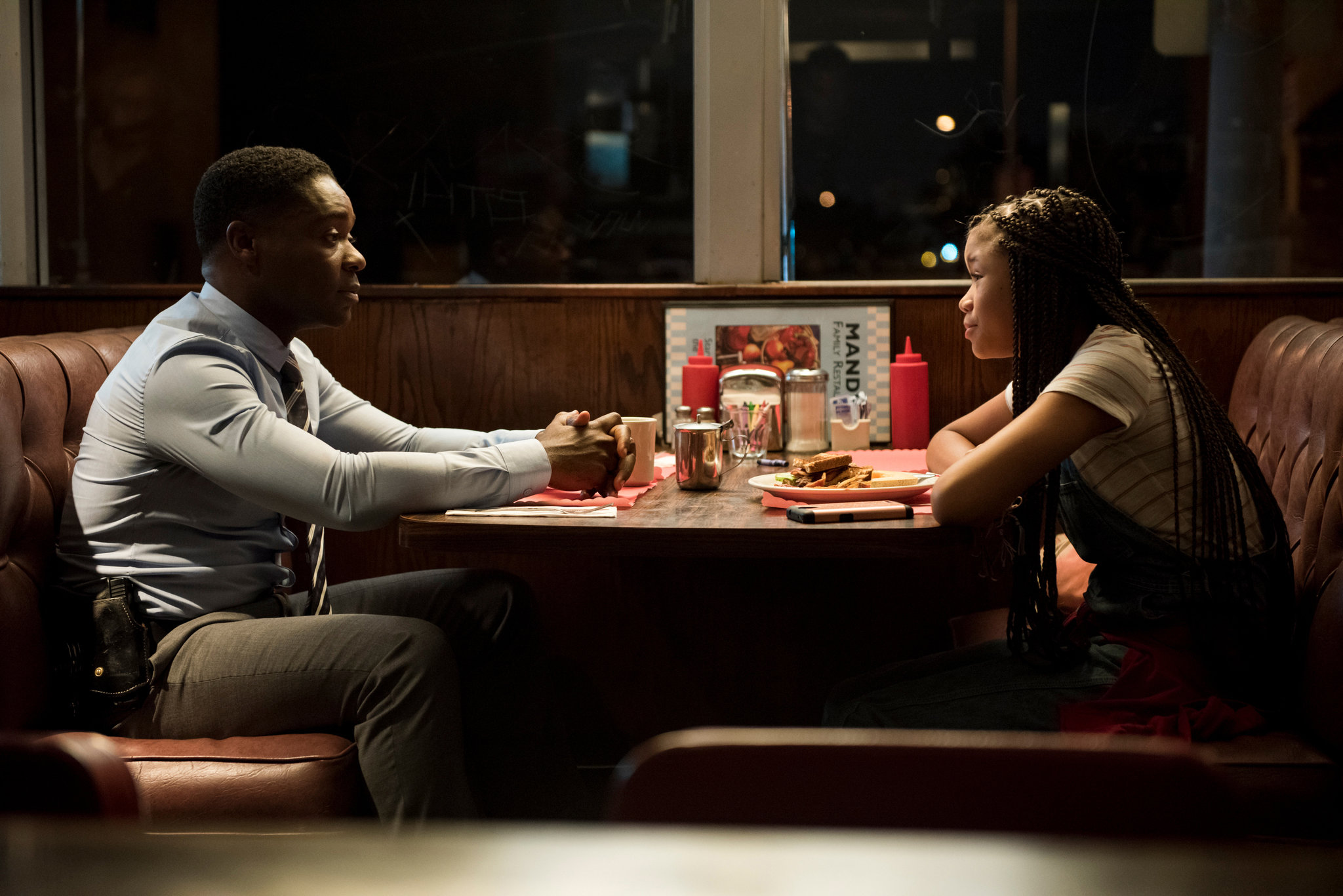
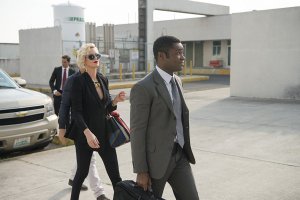 Uh oh. “Luckily” Richard (Joel Edgerton) “knows a guy”, so they’re not going to pay the kidnappers so much as send in an “extractor” named Mitch (Sharlto Copley) who claims he’s out of the business, straight as an arrow. Right. But while Harold (David Oyelowo) is awaiting ransom or extraction or escape in Mexico, he gets into even more trouble in the form of drug cartels (notice the plural).
 working on a theory about a tesseract, which would involve “wrinkling” time and space in order to travel through it. One dark and stormy night, a mysterious woman named Mrs. Whatsit appears to tell Meg, her friend Calvin, and Meg’s little brother Charles Wallace, the child genius, that she has heard her father calling out to them through the universe. Turns out, Mrs. Whatsit and her friends Mrs. Who and Mrs. Which are supernatural beings prepared to engage in a rescue mission.
 make the book wonderful, but it also paints a fantastic picture that I cannot stop myself from going back to in my mind. The visuals are exotic and beautiful and the world-building just divine. I can only guess at the kind of impression it makes on young imaginations.
 Sherwin (David Oyelowo) and Lucinda (Dianne Wiest) knock about in her rural home with only her nurse Ann (Rosie Perez) between them. Lucinda is sick and in a lot of physical pain but she’s not too sick to still be kind of a bitch. The last time she saw her daughter they fought, as usual, and parted badly, both assuming for the last time, and of course it was, only it was daughter who died, and not the ailing mother.
 Mary J Blige was originally cast but had to drop out. Nina herself had hoped that it would be Whoopi who’d portray her on screen. Instead director Cynthia Mort went with Zoe Saldana, and thus created a furor. With Dominican and Cuban ancestry, Saldana identifies as a black woman, but critics felt she was not black enough. Not black enough? The notion makes me queasy. But when Saldana said she was honoured to play Simone, the Nina Simone Foundation nastily replied “Dear Zoe, please keep Nina’s name out of your mouth for the rest of your life.”
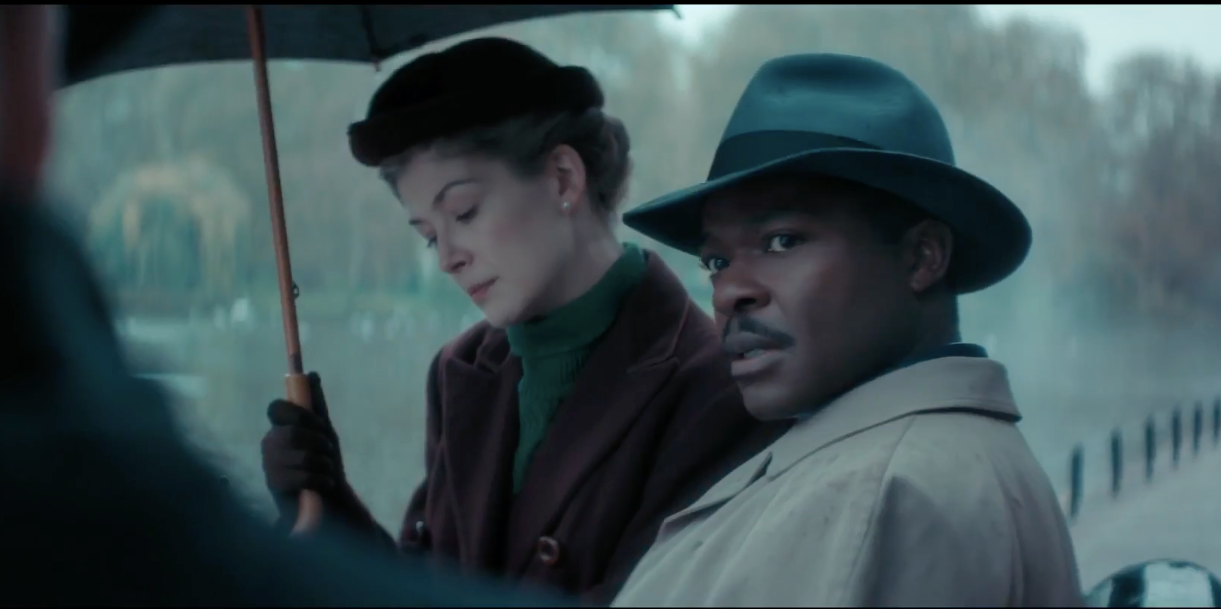 to say who their love most angers: her family, his constituents, or the status quo. Interracial marriage wasn’t exactly popular in 1940s England, and her whiteness isn’t even the whole problem: her social status is far beneath that of a prince. But they marry anyway, anticipating disapproval, unprepared for the reality of the diplomatic firestorm and political tumult their marriage would actually entail. His right to the throne is threatened, as is her life. He is threatened with exile, she with ostracism. Still, they persist in their love, not just of each other, but for the people of the new Republic of Botswana.
 David Oyelow and Rosamund Pike play the lead roles and you couldn’t ask for a better acted movie. Oyelow is dignified as this humble prince, Pike strong and heart-breaking. They help strike a balance between the passion of their love and the stark reality of apartheid. It would be easy for one of these plot lines to swallow the other, but Asante manages float above it, entangling both, as would have been the case in real life.
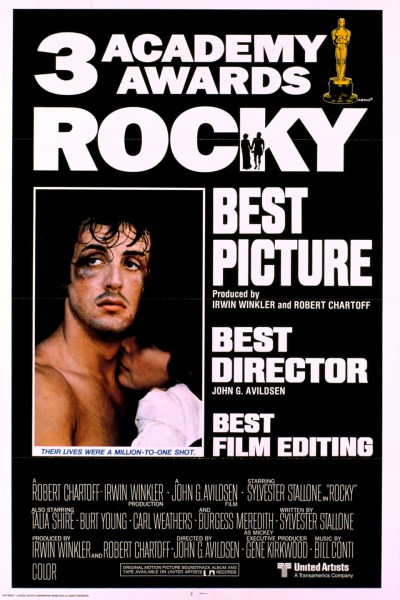 Network though that all but cleaned up in the acting categories – Peter Finch for best actor (he was the first actor to win posthumously); Faye Dunaway for best actress, and Beatrice Straight for best supporting actress. The fly in their soup was Jason Robards for All the President’s Men – poor Ned Beatty was shut out. In an upset, Barbra Streisand’s Evergreen (Love Theme from A Star Is Born) won best original song over Gonna Fly Now from the Rocky soundtrack but I don’t need to tell you which has had the more lasting impact culturally.
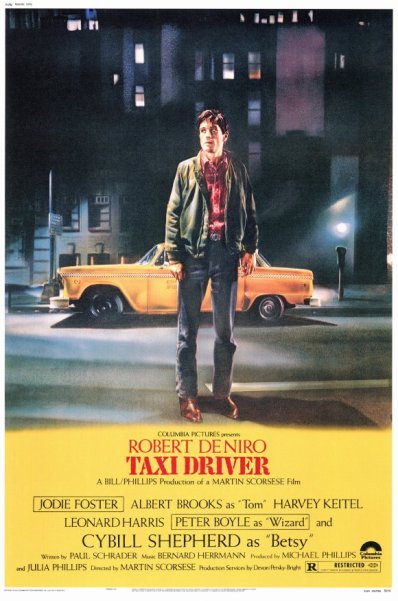 starring Bruce Dern. And Freaky Friday with Jodie Foster. And Scorsese’s Taxi Driver. And To Fly!, a documentary about the history of flight produced by the National Air and Space Museum that was the second-highest grossing film the of the year and was the highest grossing documentary of all time until Fahrenheit 9/11 in 2004.
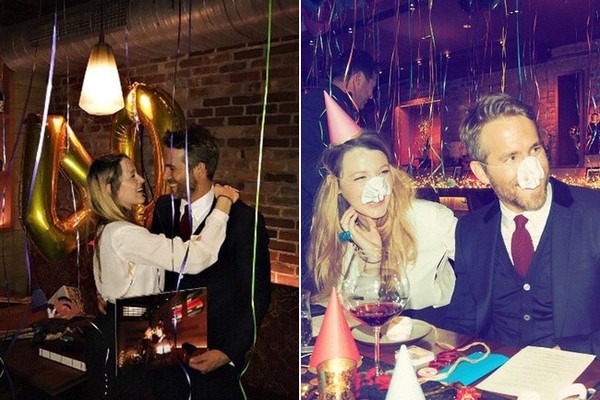 Murphy. Benedict Cumberbatch. Audrey Tautou. Colin Farrell. Happy 40th to all.
 born. Apple was founded by a couple of punks you might have heard of, Steve Jobs and Steve Wozniak. The Ramones released their first album and the Sex Pistols play their first shows, but it’s (Peter) Frampton Comes Alive! that tops the charts. The Boston Celtics defeated the Phoenix Suns in triple overtime in Game 5 of the NBA Finals – still considered the greatest game of the NBA’s first 50 years. The CN tower, then the world’s tallest free-standing structure on land, opened to the public. Jimmy Carter defeated Gerald Ford. Megamouth sharks are discovered off Oahu, Hawaii
 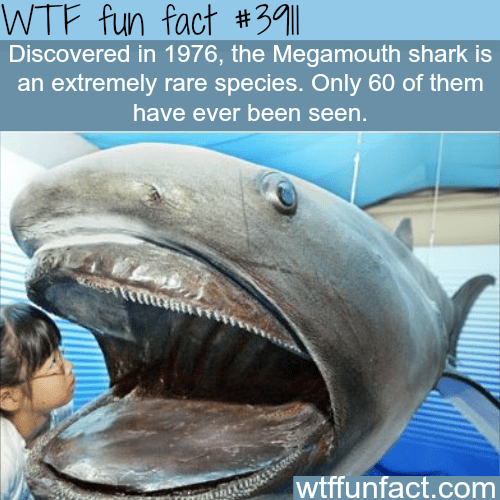 (nothing to be concerned about Sean, I’m sure it’s just coincidence you’re both turning 40 in the same place). Bob Marley survived an assassination attempt. California repealed their sodomy law. Peyton Manning was born. And Ronaldo. And Mark Duplass, just a day after Sean. And as much as I love me some Duplass, Sean is still my favourite thing from 1976, and I’m so glad I get to spend the day looking for megamouth sharks on a submarine ride on the ocean’s floor with him.
 Africa. The whole point of this film is rooted in poverty. A chess club is started in Katwe because of poverty – because mothers are too afraid of medical expenses should a child break a bone during soccer. So a board game is just more appealing. One of the big draws in getting the children to come in and learn the game is that the chess is served up with a free cup of porridge.
 enough to represent Uganda internationally. As she begins to win, and to travel, she glimpses the life that could be hers if her chess game complies. But now that she’s playing not just to win, but to change her life, and support her family, it’s a lot of extra pressure any little girl’s shoulders.
 ASSHOLES WATCHING MOVIES