
In the near, dystopian future, a war has waged across North America, leaving destruction in its wake. A military occupation controls the land now, and its citizens. They’re forcibly removing children from their families – it’s literally illegal to have a minor at home – and putting them into State Academies where their education is strictly controlled and could easily be confused for brainwashing and propaganda.
Eleven year old Waseese (Brooklyn Letexier-Hart) has survived out in the bush with her mother, a subsistance, off-grid lifestyle in order to avoid the facial-recognition drones that are always hunting children. Her mother Niska (Elle-Máijá Tailfeathers) is a Cree woman who intuitively understands how important it is to keep her daughter hidden, but an accident forces them to breach the city limits for the first time in years, and eventually to separate, with Waseese falling into the hands of the Academy. Emboldened to fight back, Niska joins a group of Cree vigilantes to get her daughter back.
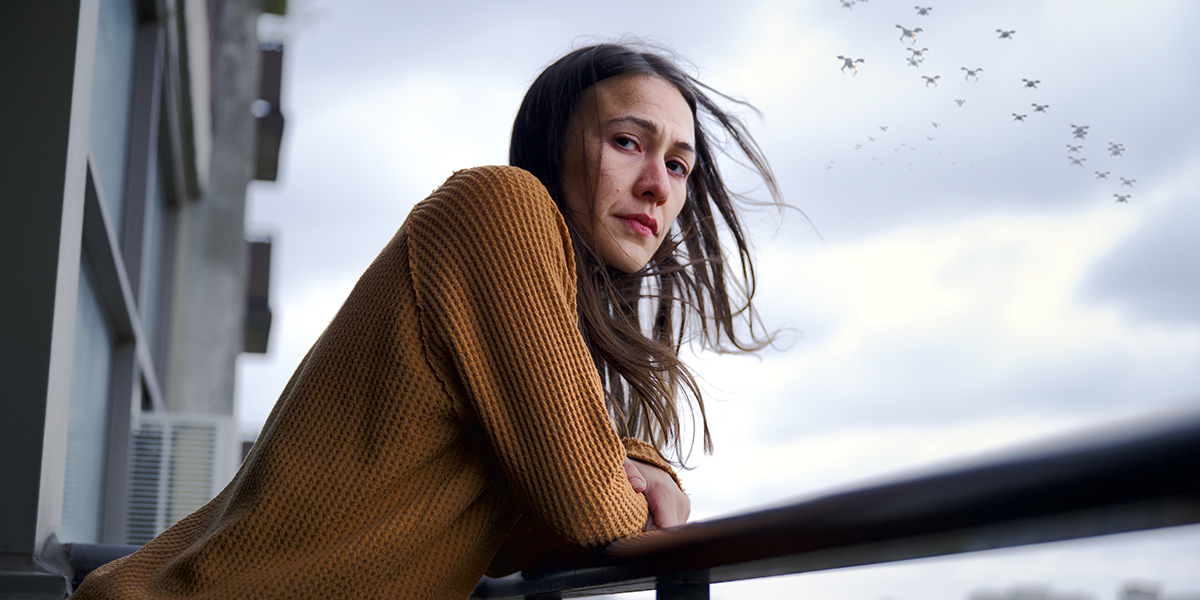
If you’re Canadian (or American or Australian), you might recognize the roots of this story. They are part of our shameful colonizers’ history. After stealing the land from underneath the First Nations people here, we did then snatch their kids, threatening parents with prison or worse for failure to comply, and pack them into residential schools where actual education was besides the point. Mostly the schools wanted to assimilate the kids, to stamp the ‘Indian’ right out of them, outlawing their languages and denying their cultures. Away from their parents and their communities, the children were taught to internalize racist stereotypes under the guise of ‘christian’ values. Many children were abused. Many children never returned home. Many survivors still suffer the consequences today, as do several generations of their families.
Director Danis Goulet, who is Cree-Métis herself, uses this atrocity to build a world that reflect this ugly reality. While immersed in a violent future, we are reminded of the past, Goulet finding a unique way to make the two blend seamlessly. Night Raiders is a new chapter in Canadian story-telling, one that can help inform and inspire new ways of addressing and remembering painful subjects that apply in so many of the world’s countries, founded in colonialism.
Night Raiders is an official selection of TIFF 2021.
This film contains scenes that may distress some viewers, especially those who have experienced harm, abuse, violence, and/or intergenerational trauma due to colonial practices.
Support is available 24 hours a day for anyone affected by their experience at residential schools and for those who may be triggered by content dealing with residential schools, child abuse, emotional trauma, and racism. The national Indian Residential Schools Crisis Line is available at 1-866-925-4419.
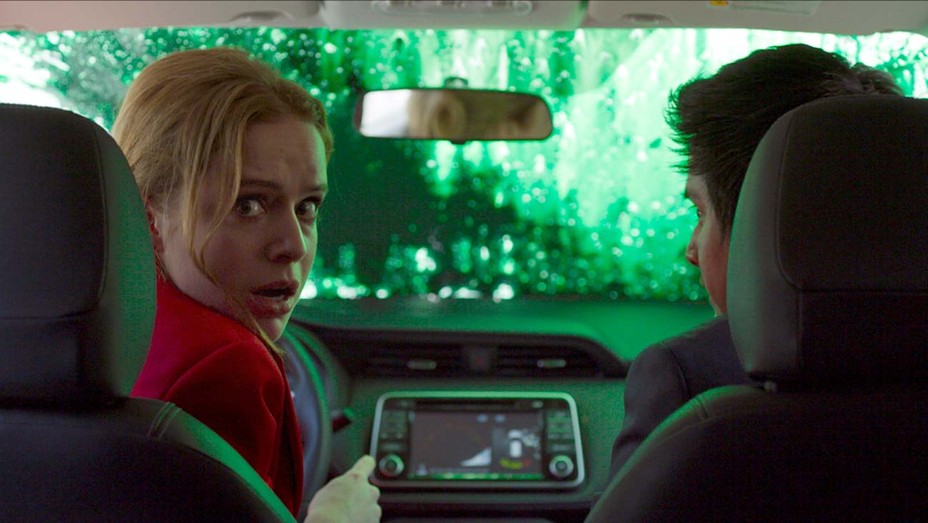


 Malorie is living with a small group of people, strangers, really, who don’t always agree on the best way to exist together, or how to stay alive. Malorie’s not even the only pregnant one – Olympia (Danielle Macdonald) is expecting too, right around the same time. The house’s other inhabitants (Trevante Rhodes, John Malkovich, Jacki Weaver among them) will have to make all kinds of hard choices to ensure the group’s survival. As you probably guessed, ultimately, Malorie will need to leave the relative safety of their shared home – and worse than that, she may have to sacrifice one child to save another. Doesn’t that sound like a fun little jam to be in?
 First, this doesn’t need to be said but I will say it anyway: fucking Alfonso Cuaron. What a brilliant director. This is just such an astonishing work in film. The sense of urgency is brilliantly sustained throughout. There are so many scenes in this one movie that are best of career, highlight reel stuff that you can never quite catch your breath. There’s a long scene, kind of a car chase in reverse, where the car in question is specially outfitted so that a custom-rigged camera can rotate not just inside the vehicle, but outside the windshield as well. It’s fantastic, heart in throat stuff.
 few faces – Dylan O’Brien (Teen Wolf,
 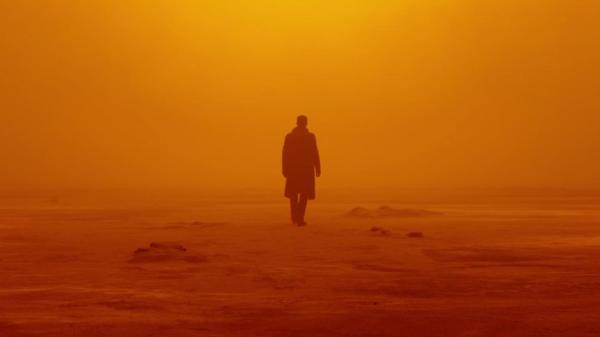 Has there ever been a more beautiful vision of a dystopian society than what Denis Villeneuve and Roger Deakins serve up in Blade Runner 2049? Even a photo of a dead tree will be captivating to those around you. Nuclear wastelands, city-sized garbage dumps, and coastal dams will all amaze. Visually, this is exactly the sequel that
  For a movie whose very title references souls and finding meaning within glossy shells, Ghost in the Shell is unbearably hollow. The packaging is nice but there is nothing underneath. At all. It will leave you with a number of questions but none of them will be existential.
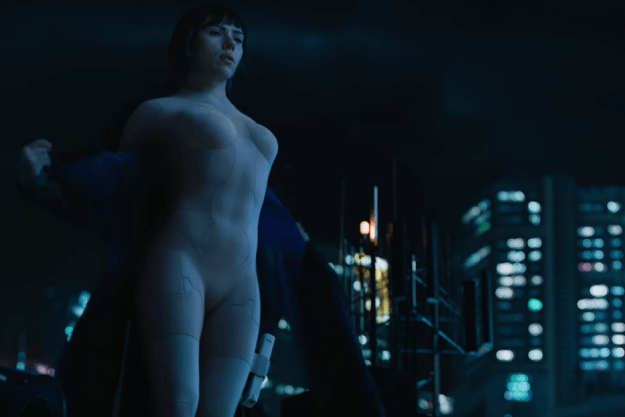 beautiful but emotionless robot? As always, the answer is DEFINITELY YES AS LONG AS SHE RSVPS from the Hollywood Foreign Press and PROBABLY SINCE WE NOMINATED ENOUGH BLACK PEOPLE LAST YEAR WE HAVE A 5TH SLOT FOR A WHITE IN 2018 from the Academy.
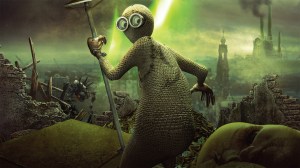 to war and likely both have lost. Only dust and destruction are left. And these dolls. They’re clearly sewed together with scraps of material and inexpert stitches, made from whatever parts are lying around but somehow injected with pieces of human souls; they’re all that’s left of humanity.
 just taught, but tested. Melanie (Sennia Nanua) is test subject #1. She’s a very sweet young girl until flesh is nearby, and then her jaws start chomping involuntarily.
 human. Newcomer Sennia Nanua is very compelling in her role; Melanie is a monster, but Nanua gives her a sense of humanity that transforms this horror film into something more urgent, more terrifyingly relatable.
 ASSHOLES WATCHING MOVIES