Sasha Tran is a famous chef opening a new restaurant in her hometown, San Francisco. Her fiance has just fled to India for 6 months, during which time they’re going to “see other people.” Those other people may or may not include Marcus, Sasha’s childhood best friend, with whom she lost touch after an ill-conceived grief-fuck in the backseat of his car. I mean definitely not. Their brief coupling was so awkward, and then she went off and did big things and he stayed behind to work in the family business after his mom died. It’ll never work. Never.
Sasha (Ali Wong) and Marcus (Randall Park) have a lot of love between them, but love is not enough. Their lives have diverged more than just geographically. Plus, it’s hard to take a dip in the hot springs of love when you’ve been lollygagging in the fallow fields of friendship all these years. Can they possibly overcome?
I mean, yes. Of course they can. This is a goddamned rom-com people. It’s not rocket science. There’s no will they or won’t they, there’s just how much longer until they do. And with this movie, you kinda hope it’ll be a while because you’re just enjoying the ride so much. Or at least I was, and improbably, I believe Sean was too. So that’s two people who hate romcoms (Sean because he literally has no emotions and myself because I’ve literally had eyeball surgery after bursting a network of vessels when I rolled them too much) who have made an exception for this one.
Always Be My Maybe is funny, and not just because the title is a pessimistic twist on a 1990s Mariah Carey song. Ali Wong is of course a comedy genius, and she plays very well against Randall Park, who I’ve always thought of as more of a dry comedian, but he’s got a bigger bag of tricks than I ever knew, including a musical side AND a violent side – and while I love them both, by god, I loved them even more when combined (stay through the credits).
This movie has absolutely nothing new to add in the romance department but you’ll be so busy being taken by surprise by random lines funny enough to stay with you for weeks you won’t even care. The cast is charmingly quirky and features a cameo (in fact, a meaty little part) that will pretty much make your year. Always Be My Maybe is streaming on Netflix right now, and it’s not a maybe, it’s a full-on yes.
It’s the last day of school, and best friends Molly (Beanie Feldstein) and Amy (Kaitlyn Dever) are ready to bid high school goodbye. They’ve been serious students, buttoned down and focused, and their hard work has paid off: they’re off to Yale and Columbia respectively. But their pride is tamped down a little when they learn that that many of their classmates are also headed for the Ivies – this despite the fact that they rarely seemed studious, and made lots of time for parties and fun. “I’m incredible at hand-jobs but I also got a 1560 on the SATs,” says one.
Molly is particularly devastated; sure she’s the valedictorian, but did she sacrifice fun for nothing? She doesn’t want to show up at college in the fall a party virgin. Her whole worldview is sliding down a crap chute, and her instinct is to dive in after it. Luckily, they have one last night before graduation, and Amy’s departure for a summer of volunteering in Botswana. One night to make up for 4 years of skipping parties and feeling left out of the in-crowd. They set their sights on Nick’s party – the most effortlessly popular kid in school (played by Mason Gooding, son of Cuba Gooding Jr).
The ladies do not get from point A to point B without boatloads (and sometimes they are literal boatloads) of shenanigans. This is Superbad, only because it’s girls, it’s much smarter. And it seems like this one night of trying to party teaches them more about themselves than the previous four years of high school. That sounds about right, doesn’t it?
The movie gets so much right even as we learn how much the girls have gotten wrong. Molly always assumed she was purposely excluded, but it turns out these kids are all too happy to greet her socially; her exile was self-imposed. How maddening, isn’t it, to discover that too late – and a good reminder for us all to check in with ourselves. How often do we impose our own limitations? Amy tackles her fears while Molly checks her ego, and her assumptions. The two women in the lead have amazing chemistry and it’s a lot of fun to witness the particular dynamic of their friendship. You and I know that college will test the bonds of their friendship, and inevitably change it if not crush it outright. They’re starting to have inklings that this might be so. So this last night out has some tangible pressure to it. Beanie Feldstein is a cinematic lantern, lighting up every screen she’s on, and lighting the way for others. Kaitlyn Dever is an excelling pairing for her, able to play off her energy in a more conservative and subdued way, while still holding her own.
Olivia Wilde tries out the director’s chair and seems to find it a pretty comfortable fit. She’s got an eye for letting actors do their thing; so much of the best bits feel spontaneous and are the best kind of weird. She’s also got an amazing feel for music – she introduces characters and themes with pop songs, and it really took me back. I bet most of us can come up with a soundtrack of our own high school experience. Music is such an important part of that time in our lives. I still surround myself by music constantly, but I will never again spend the day on my bedroom floor inhaling lyric booklets, or spend hours recording stuff off MTV like I did then. I know which songs I kissed to, slow-danced to, had sex to. Which ones we played on repeat as we drove recklessly and restlessly around parking lots doing donuts, which ones played at the diner as we split an order of fries, which ones we cried to when boys were mean to us, which ones accompanies us down the aisle at our own graduations and commencements. Wilde seems to have an intuitive sense of that, and I caught it.
There’s a theme in Booksmart that is hinted at but never spoken of: class. As in economic and social class. Molly points out the school’s 1% (Billie Lourd and Skyler Gisondo, whom Sean finds uproariously funny), but it’s clear that the Los Angeles high school as affluent as heck. Everyone, it seems, except for Molly. Not a single thing is ever said about it, but we see that she lives in an apartment building while everyone else has a McMansion, and her parents are absent from the film. So when Molly discovers that all her other classmates also got into good schools, she berates herself for having skipped the fun when she didn’t have to. But you and I know that she probably did: that kids like Molly have to earn their way in, but kids from rich families do not. They have legacy status, they know alumni who can pull strings. Their families donate money to schools. And, as we’ve seen in the news recently, they pay money to fake their way in on a little-used athletic scholarship or some other fraudulent means. College admissions are not the meritocracy we want to believe they are. There are very valid reasons why Molly worked so hard and others did not, even if the film never states them. So maybe Molly’s takeaway was to loosen up a bit, and experience life, which are not bad lessons. But for us, it’s a little bit more than that.
Even with these subtle layers, Booksmart never stops being fun. The cast is lively and diverse, the tropes are thankfully on the unexpected side, and the movie has a great pace. Plus it has an exception friendship at its centre. Just when you think we’ve said all there is to say about high school, Boomsmart is a charming, genuine and clever addition to the field.
Kate Bradley (Tiya Sircar) is a TV reporter who takes too many risks getting exclusive footage of fires and daring rescue attempts. Dedicated to the bummer beat, her boss can’t get her to stop, so he gives her a different kind of story, soft news that insults her, but the story turns out to be quite the gold nugget.
An anonymous donor has left a literal bag of cash on someone’s door step. She’s thrilled to have $100 000 but has no idea who could be so generous. That first recipient wants to call it a miracle, but Kate’s story doesn’t stop there. There are other door steps, other bags of money, and pretty soon the whole city’s abuzz with the good news.
Kate, who started off reluctant to report on something so negligible, now has quite a story on her hands. And it’s not just that it’s something positive making the news for once. It’s the mystery of the thing. Who is this guy, who becomes known in the media as Good Sam, short for good samaritan, and why is he changing lives without taking credit? Kate is obsessed with but skeptical of the notion that someone might be doing good without expecting anything in return – is this naiveté, or wishful thinking, or a new kind of philanthropy set to inspire a whole city?
Good Sam is a feel-good story, and perhaps a bit of a fantasy. In the day and age of Trump, it’s hard to imagine such a positive news cycle dominating the headlines. The plot’s a little flimsy and the characters aren’t shadowed by motivation or even much personality, but Tiya Sircar leads the cast with such good cheer, she’s hard to resist. Which is a good thing, because though Good Sam reaches for themes on the top shelf (journalism’s role in public perception, generosity without expectation), it all too often scrapes along the very bottom (mired in Kate’s relationship status). But with tempered expectations, Good Sam is not a bad way to spend time thinking about how ratings drive a news cycle, and heck, it’s easily accessible on Netflix right now.
Rose is a single mother who has a son who’s just a little weird. A complete genius according to grandpa Joe, but his school doesn’t want him back. So Rose (Amy Adams) needs to make some serious cash in a hurry, to pay tuition fees at a private school where weird kids can thrive, and cleaning houses just doesn’t cut it.
So she assembles a crack team consisting of herself and her flaky sister Norah (Emily Blunt) and together they start cleaning crime scenes. Blood and guts equal serious hazard pay. Of course, there are also serious hazards. And I’m not just talking decomposition smells and bodily fluid leaks and brains on the ceiling. I’m talking about emotional hazards, like bereft widows who don’t know how to deal with husbands of 50 years being reduced to a blood stain in the living room. Not to mention the fact that Rose and Norah’s mother committed suicide when they were young girls. So, you know, this is potentially triggering work, and Rose and Norah aren’t hardened enough yet to have strict professional boundaries.
As the title suggests, director Christine Jeffs puts a sunny spin on a macabre subject. Well, sunny-ish. Overcast anyway, which is pretty amazing considering the long shadows cast by tragedy. Sunshine Cleaning is a low-key movie. It’s intimate, with a light touch. Amy Adams is the sun at the centre of its universe. Everyone orbits around her, basking in her glow. Although I’m sure her character would not describe herself thusly, Rose is a fighter, a quiet fighter maybe, but she doesn’t give up. She persists. She’s seen hardship but you rarely see the cracks, which she deftly caulks with hard work and optimism. She’s the kind of character you root for even though she doesn’t ask for your sympathy – still, you feel she’s earned a break or two, and you hope to see her get them. Is that how life works? Not really. But it’s nice to dream.
In 2018, there was a big grassroots push to get some fresh blood into the U.S. Congress, where old, rich, white men have ruled things for far too long. That’s not a partisan problem, that’s across the board.
Knock Down The House is about the non-career-politicans who were brave enough to go up against the old guard – women, and people of colour. These are working class people, daughters of coal miners, waitresses, descendants of immigrants and slaves. True Americans who want to see true change. And perhaps most importantly, they are not taking money from lobby groups. They are ordinary people who want to represent ordinary people. But without funds, or name recognition, that’s not just an uphill battle, that’s practically an Everest-sized challenge.
What’s easy to admire about this documentary is that it challenges not a particular party, but the status quo. It confronts voter apathy and cynicism and is a literal breath of fresh air.
In the spotlight: Alexandria Ocasio-Cortez, Cori Bush, Paula Jean Swearengin, Amy Vilela. Not everyone can win, but the truth is, we all win just because they tried. Because hundreds will have to try for a couple to get through. Because even if it doesn’t topple over the kingpins, it makes them scared, and just a little more accountable.
Four very different sisters reunite in Madrid for the first time in years upon their mother’s death. A series of profusely weeping men make displays of themselves at her funeral. The next day, at the reading of the will, the four sisters learn that the man who raised them is not their biological father, and that their fathers may be four different men, any or none of the weeping funeral goers. In order to obtain their inheritance, they have to go on a wild goose chase to find their parentage.
The premise is wacky but they play is straight. Or, as straight as possible when the characters are all ridiculous caricatures. Well, the lucky ones anyway. Some of them don’t even get drawn with wild but general cliches. There’s the French artist, the blind priest, and perhaps worst of all, the man with dementia.
The sisters, meanwhile, get an even worse treatment. Claudia (Belen Cuesta) is uptight, and her marriage is failing. Sara (Blanca Suarez) is an important New York City businesswoman who left behind her true love, Sofia (Amaia Salamanca) is a lesbian with commitment issues, Lucia (Macarena García) is the baby.
So it’s like Mama Mia, except it’s a funeral, not a wedding, and there’s no singing or dancing or Meryl Streep or reasons to watch. Did I enjoy this movie? Evidently not. I veered from bored to skeptical to mildly offended. Plus there’s the issue of dubbing, which unfortunately is always an issue, one I should probably stop complaining about since it saves me reading subtitles. I don’t mind a subtitled movie at the theatre, in fact my ADD probably embraces it, but at home I’m never just watching a movie – I’m watching a movie and and and and. Which keeps my energy in check and my mind focused enough to absorb things and not get bored. Subtitles make it hard to multi-task. But dubbing makes it hard to take a movie seriously. The lips don’t match! They never match! Still, I can’t help but admire the people who work on these translations – you have not to just turn Spanish into English, but distill the essence of what’s being said into the same amount of syllables, which many languages would make very challenging. Of course it’s a bad sign for a movie when I’m mostly just thinking about how hard it would be to fit all those words and meanings into a set cadence. And from what I’ve seen, Netflix is springing for real professionals, not those TV movie of the week people who keep speaking long after lips stop moving. But back to the movie: should you watch it? No. There are roughly 5500 titles on Netflix – Canada’s Netflix catalogue is third largest in the world, behind Japan and America. So there’s really no excuse. You’re not that desperate.
Franny (Eve Hewson) and Dan (Avan Jogia) are young and broke but they’re terribly in love so they get married at city hall, keeping mum until after the fact.
The first year of marriage is supposed to be the easiest. You’re literally still in the honeymoon period. You’re still writing thank you cards for all the wonderful gifts you received at the wedding. You’re blind with bliss and you’re killing it so hard at this marriage thing that you practically think you invented it. But it’s also a time of transition and adjustment. Now that you’re officially bound to another human being, you have to make real compromise.
Franny and Dan are in for a bumpy ride. He, an out-of-work actor, takes a job house sitting/ dog walking while some other, luckier actor is out of town. She, a writer, finally lands a job writing for a terrible reality TV show. It’s not a glamourous job but she does respect her boss, head writer Noah (Hamish Linklater)….maybe a little too much? Because it certainly causes friction at home, her landing a dream-adjacent job, and him taking a job that forces him to admit that acting is not a thing he gets paid to do. Their paths diverging, they grow apart.
Paper is the traditional anniversary gift for a first anniversary. But I think in this case, it’s also referring to the fragility of that first year. Paper is so easily creased. So easily ripped, in fact. By the third year you’re into leather, which, whoa, is a lot more durable. Also durable: fifth year’s wood, 10th year’s aluminum, and motherfucking 60th anniversary’s diamond. Jeez Louise. Marriage, as an institution, makes less and less sense. And yet most of us are still making the attempt. Lots of us fail in that attempt. Some of us fail multiple times. I mean, can you even imagine being with someone for 60 years? When marriage was invented, it was a social bond, a partnership wherein financial stability and child rearing were emphasized. Today we expect everlasting romance. For 60 years? Yikes.
Franny and Dan are having a heck of a time just making it to year one. I remember my own year one: we bought a house, we got a third dog, and a new car. My nephew was born. My sister got married. Sean changed jobs. We traveled to New York City, and to Vegas where we renewed our vows for the first time. It was a good year. But Sean and I were not young newlyweds – Sean was an old maid in his 30s, in fact. We already had homes and careers and lives. We didn’t need to complete each other. Franny and Dan have a lot more working against them, and let’s be honest: they’re not half as charming as Sean and I. So while it’s understandable that you’d keep coming back here because we’re so damn irresistible, I’m not sure even 89 minutes is worth spending with Franny and Dan. Dan and Franny (do couples always agree on who’s name goes first?). Paper Year is an okay movie, strictly speaking, but it didn’t move me, it didn’t inform me, it didn’t delight me or captivate me. And those are all things I continue to get from my own marriage, on a surprisingly daily basis. And it’s just plain old Sean going about his ordinary life, being a (mostly) wonderful person and (largely) thoughtful husband.
Margot and Daniel meet over the whipping of an adulterer in old Montreal (one of this old-timey reenactment thingies). It’s brief, and it’s awkward, but they’re not exactly displeased to find each other sitting side by side on the plane ride home to Toronto. They’re pithy and flirty with each other, and it seems fairly cracking until the split cab ride home reveals two alarming truths: Daniel (Luke Kirby) is Margot’s neighbour, which prompts Margot (Michelle Williams to hurriedly confess that she is married. Happily. To Lou the cookbook writer (Seth Rogen).
Gem Sarah Polley writes and directs, and through her scenes of mundane domesticity, we see a content and comfortable marriage. The detail in their coupledom, the weird little quirks that pepper their relationship, these things are so specific they feel true. This couple feels solid. But while Margot knows inner contours of Lou’s every thought, Daniel is tantalizingly unknown. It’s hot: both the steaming Toronto summer and the relationship growing between neighbours. Maybe it’s even hotter because they’re trying to be good. Margot’s trying to be married to Lou, who gives her no reason to stray, and yet. And yet Daniel is mysterious and alluring. He’s new. Falling in love is not just about this other person, it’s about seeing your best self through their eyes. Of course Lou still thinks she’s beautiful, but beautiful in the way of a couple who’s been together a long time and hardly notices each other anymore. Beautiful even though he’s seen her bloated, he’s seen her blemished, he’s seen her hangry and petty and wearing sweat pants for 3 days straight. Beautiful in a way that when she’s naked in the shower, he’s more concerned about pranking her than ogling her body. Meanwhile, Daniel is deeply fetishizing her. She’s still a manic pixie girl to him, full of dark corners and intoxicating unavailability.
And here’s the true truth that Sarah Polley eventually gets around to: the grass isn’t greener. Or rather, the grass is greenest where you water it. Don’t take love for granted and don’t mistake novelty for connection. Take This Waltz is bittersweet and filled with melancholy despite having a saturated look about it, with reds that pop and yellows that burn like sunshine. It’s a great little movie that’s depressingly honest – a romance that defies its genre.
Jenny has just suffered a soul-crushing breakup with forever boyfriend, Nate. After 9 years together, things end right before she’s about to move cross-country for a new job. Thank goodness for best friends Erin and Blair who are prepared to drop everything to grieve with her while celebrating one last night together, out in NYC.
A series of glowy flash backs convince us that yes, Jenny (Gina Rodriguez) and Nate (Lakeith Stanfield) were indeed great but the truth is, in mourning a boyfriend, this movie really celebrates girlfriends. Jenny, Erin (DeWanda Wise) and Blair (Brittany Snow) have a bond that’s outlasted all the other relationships in their lives.
Rodriguez, Wise, and Snow have terrific chemistry. Writer/director Jennifer Kaytin Robinson keeps things loose; it feels like the women spent time getting to actually know and like each other, rather than rehearsing. It feels real. It feels familiar, like they’re tapping into the weird naturalness and closeness of our friendships from early adulthood. Things will change for them, I bet, and soon. I want to tell them to treasure the fuck out of these moments. In fact, these women are on the cusp. They’re nearing 30: careers are taking off, relationships are getting serious. Kids, suburbs, and neglecting our female friendships tend to come next. That sounds sadder than I mean it to because this movie is surprisingly upbeat and fun. So maybe time won’t get away on them, and maybe phone calls won’t go unreturned for months at a time, and maybe they won’t find themselves saying ‘We should get together soon’ and never quite making it happen. Maybe.
But that hasn’t happened to them yet! They’re still the most important people in each other’s lives, and on this night in particular, they are super duper there for each other and it’s marvelous.
Patient Zero: the man who brought AIDS to North America, sparking the gay plague epidemic, killing several hundred thousand gay men. His name was Gaetan Dugas – a French Canadian flight attendant for Air Canada. His name was published, his lifestyle vilified, his family shamed.
Except it turns out Patient Zero didn’t really exist, and even if he did, he wasn’t Gaetan Dugas.
When the CDC was frantically trying to crack this strange and terrifying disease, they interviewed a bright young flight attendant who was quite forthcoming. They greedily drank up every piece of information he offered. Ultimately, Gaetan’s extensive recollections helped them piece together a cluster chart that helped them identify the sexually transmitted nature of the disease. He was labelled patient O – O as in Out of California (which is where the first 56 men they interviewed had lived; Gaetan was the 57th, and he did not). But that O would later be mistaken for a 0 and that erroneous 0 would be interpreted as meaning the beginning, the originator, the first case of AIDS in North America. Obviously that was 100% factually incorrect, but a reporter who seethed at the government’s lack of response decided to galvanize the world with a book. In it, he constructed the Patient Zero narrative, which guaranteed that the book would be published, read, talked about, regardless of whether it was completely or even remotely true.
Killing Patient Zero is about correcting this notion and rescuing Gaetan’s name, a man who history has wrongfully accused. Director Laurie Lynd interviews many: friends and coworkers, leaders at the forefront of gay civil rights and AIDS advocacy, doctors and researchers and sociologists. Together they weave a portrait of a man joyfully enjoying his life. One man among many who are enjoying newfound freedoms, exploring possibilities, exploiting opportunities, embracing life. AIDS happened just as the world was opening up to gay men. Some called it the ultimate punishment for a sinful life. Gay men lived in terror, but terror of the unknown, because AIDS proved elusive, hard to define, impossible to treat, easy to contract, but by what means? No one could say.
Gaetan too would have lived with that fear. And when the telltale purple splotched appeared, he knew he would soon die. Still, he took the time to talk to the authorities and tell them what he knew. He did more than most.
Killing Patient Zero is as enlightening as it is profound. It’s an important historical record, one that honours not just Gaetan’s memory, but all of those who witnessed a vital community’s near-extinction and did something about it.


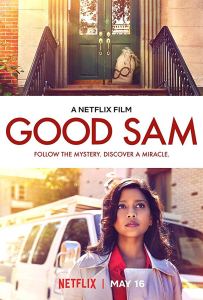 Kate, who started off reluctant to report on something so negligible, now has quite a story on her hands. And it’s not just that it’s something positive making the news for once. It’s the mystery of the thing. Who is this guy, who becomes known in the media as Good Sam, short for good samaritan, and why is he changing lives without taking credit? Kate is obsessed with but skeptical of the notion that someone might be doing good without expecting anything in return – is this naiveté, or wishful thinking, or a new kind of philanthropy set to inspire a whole city?
 husbands of 50 years being reduced to a blood stain in the living room. Not to mention the fact that Rose and Norah’s mother committed suicide when they were young girls. So, you know, this is potentially triggering work, and Rose and Norah aren’t hardened enough yet to have strict professional boundaries.
 up against the old guard – women, and people of colour. These are working class people, daughters of coal miners, waitresses, descendants of immigrants and slaves. True Americans who want to see true change. And perhaps most importantly, they are not taking money from lobby groups. They are ordinary people who want to represent ordinary people. But without funds, or name recognition, that’s not just an uphill battle, that’s practically an Everest-sized challenge.
 and her marriage is failing. Sara (Blanca Suarez) is an important New York City businesswoman who left behind her true love, Sofia (Amaia Salamanca) is a lesbian with commitment issues, Lucia (Macarena García) is the baby.
 coupledom, the weird little quirks that pepper their relationship, these things are so specific they feel true. This couple feels solid. But while Margot knows inner contours of Lou’s every thought, Daniel is tantalizingly unknown. It’s hot: both the steaming Toronto summer and the relationship growing between neighbours. Maybe it’s even hotter because they’re trying to be good. Margot’s trying to be married to Lou, who gives her no reason to stray, and yet. And yet Daniel is mysterious and alluring. He’s new. Falling in love is not just about this other person, it’s about seeing your best self through their eyes. Of course Lou still thinks she’s beautiful, but beautiful in the way of a couple who’s been together a long time and hardly notices each other anymore. Beautiful even though he’s seen her bloated, he’s seen her blemished, he’s seen her hangry and petty and wearing sweat pants for 3 days straight. Beautiful in a way that when she’s naked in the shower, he’s more concerned about pranking her than ogling her body. Meanwhile, Daniel is deeply fetishizing her. She’s still a manic pixie girl to him, full of dark corners and intoxicating unavailability.
 tapping into the weird naturalness and closeness of our friendships from early adulthood. Things will change for them, I bet, and soon. I want to tell them to treasure the fuck out of these moments. In fact, these women are on the cusp. They’re nearing 30: careers are taking off, relationships are getting serious. Kids, suburbs, and neglecting our female friendships tend to come next. That sounds sadder than I mean it to because this movie is surprisingly upbeat and fun. So maybe time won’t get away on them, and maybe phone calls won’t go unreturned for months at a time, and maybe they won’t find themselves saying ‘We should get together soon’ and never quite making it happen. Maybe.
 ASSHOLES WATCHING MOVIES