
The Runaways is a biopic-ish film about the rise and fame of all-girl rock group of the same name. The film’s script is based on Cherie Currie’s memoir, and is produced by Joan Jett. Unsurprisingly, the film mostly focuses on these two women, Currie on the mic and Jett on rhythm guitar. Lots of other ladies came and went – most wanted nothing to do with the movie, and their parts are fictionalized.
Curie (Dakota Fanning) and Jett (Kristen Stewart) were pioneers, 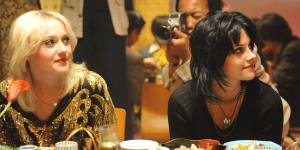 and came together under the influence of scuzzy manager Kim Fowley (Michael Shannon). Like any respectable rock band of the era, they eventually combusted, but not before releasing four albums in as many years. They never made it huge in North America but had some crazy success in Japan for a while, where their sound and aesthetic were appreciated.
The movie is just okay. The leads are phenomenal, stylish and electric performances from both Stewart and Fanning (and Michael Shannon is stellar, as always). But the “biopic” aspect is less bio,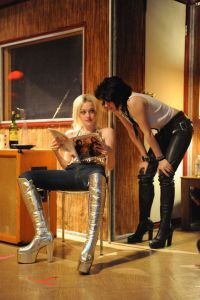 more pic. It barely scratches the surface. We don’t get to know anyone, and at any rate, Joan Jett’s post-Runaways life and music is where the real meat is. That said, it’s a clichéd ride about sex, drugs, and rock & roll, but it’s one worth watching to see Dakota Fanning get salty and Stewart own the role of rock’s first goddess. But it’s a condensed version featuring some character composites. The only member of the band besides the two front ladies that is touched upon is that of Sandy West, the drummer, but by the end they don’t give a shit about her, forgetting her in the title cards. She’d died before production began. Pesky cancer. The Runaways were revolutionary, a band about self-empowerment, but not all selves are created equally.
 . Really, really good.
 I struggle to communicate what it is that works so well about American Honey. My writer’s block was so bad that I went to see it a second time, quite a commitment with its 163-minute running time. All I’ve really learnt from two sittings is that writer-director Andre Arnold creates a believable world around these characters and makes it easy for the audience to feel like they’re a part of it. (Well, maybe I should just speak for myself. At my first screening, the film had lost over half its audience by the end).
 any number of traditions and rituals that are often somehow both unsettling and charming. Their favourite songs, games, and chants serve the film well in helping create a subculture that we can believe and relate to. Beautifully naturalistic performances from an exceptionally well-chosen cast, great choice of music, and some terrific (though sometimes elf-indulgent) cinematography help bring their world to life.
 Equity is a cold, unblinking look at Wall Street’s backrooms, through the eyes of a female dealmaker who’s trying to recover from a failed transaction. Her client’s shares traded too low during the initial public offering, and now she’s got a target on her back. Equity throws us into the immediate aftermath and we watch her as she tries to save her career by putting together a bigger, better deal.
 If you have at least a passing interest in finance, Equity’s story will draw you in and keep your attention until the end, avoiding most cliches throughout, at least when it comes to the main females. The male supportung characters fare less well, as they are all thinly sketched stereotypes (e.g., sexist boss, backstabbing boyfriend, and frat boy internet sensation). It is refreshing, though, for women to be the most compelling and realistic characters for a change.
 (John Ortiz), an ex lover, is married with a kid, though his relationship isn’t rock solid. He’s excited to have Anna around again, but you wonder if it’s real friendship he’s after, or the attention she can bring to his flagging career. A play wright, he’s got one ace in the whole: a new script he’s developed that revolves around a character that very closely (and unflatteringly) resembles Anna. Kate (Cara Seymour) is more reluctant to see her old friend. Is it because of the betrayal, or something else?
 girlfriend on Sons of Anarchy), which registers a double impact for every blow the film lands. Literally seen swimming amid a sea of scripts containing empty female parts, Siff is every female actress of a certain age searching for meaningful work. Anna’s opposite, Nadia (Dagmara Dominczyk), has given up her own work to be the rock of her family; her husband, Oscar, depends on her to be the stable one at home. But Nadia doesn’t want to be the rock anymore – “the rock is boring” she says, a line many of you will want to high-five because women are more than just someone else’s support (note to Jax!).

 Africa. The whole point of this film is rooted in poverty. A chess club is started in Katwe because of poverty – because mothers are too afraid of medical expenses should a child break a bone during soccer. So a board game is just more appealing. One of the big draws in getting the children to come in and learn the game is that the chess is served up with a free cup of porridge.
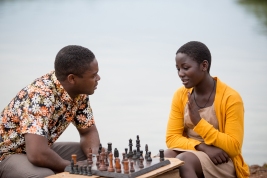 enough to represent Uganda internationally. As she begins to win, and to travel, she glimpses the life that could be hers if her chess game complies. But now that she’s playing not just to win, but to change her life, and support her family, it’s a lot of extra pressure any little girl’s shoulders.
 Catrin (Gemma Arterton) hired to write “slop” (ie, the female dialogue) appeases him by enlarging the role of the drunk uncle just for him. Convincing her boss Tom (Sam Claflin) to let her do this is as infuriating and degrading as you’d imagine – until he starts to fall in love with her, of course.
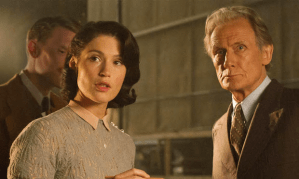 She mustn’t get too attached to feeling useful or creative. The war makes everything tenuous.
 Marnie has a little bit of money and an awful lot of time, so she packs up her New Jersey home and finds herself a condo in L.A. where her daughter Lori writes for television. Marnie’s California awakening is intoxicating. She loves all the things that most of us hate about L.A. But shopping at The Grove and volunteering only fill up so many hours. The rest are spent calling or visiting her daughter. Her daughter is not impressed.
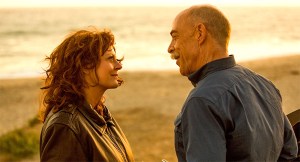 encouraged her to set boundaries with her mother, Marnie sees the therapist herself. And when that doesn’t go as expected, she finds other people to mother, like the ‘genius’ she overuses at the Apple store, and a friend of her daughter’s who’s more receptive to advice and well-intended intrusiveness.
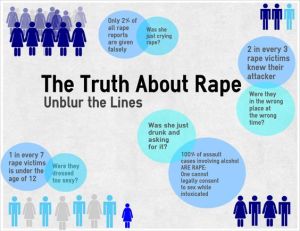 not only sexually assaulted by gangs of their peers, but that assault is being recorded. Welcome to the digital age. These photos and videos are widely and quickly disseminated and before the bell even rings on Monday morning, everyone knows. The public shame feels overwhelming, all-encompassing. It’s nearly impossible to convince such a young girl that in fact things won’t always be this way, won’t always feel this bad.
 failing our sons in some very basic way. Two of them, sentenced to testify on camera for this documentary, have learned nothing. No remorse, no responsibility. One young man volunteers that the only thing he’s taken away from this is that “girls gossip.” And these boys are free – to graduate, attend college, rape again, whatever. Free, and alive, unlike Audrie, unlike Rehtaeh, unlike so, so many.
 ASSHOLES WATCHING MOVIES