
If you’re looking for a spoiler-free review of the film, please see Matt’s excellent offering. I don’t want to ruin the movie for anyone, but if you’ve seen the film, then you understand the need to discuss it. It’s deeply affecting and disturbing and it’s one of the best things I’ve seen this year.
When Lee’s brother dies, the reclusive janitor reluctantly returns to his hometown to help out with the arrangements. He’s kept there longer than expected when he’s revealed to be his nephew’s new guardian.
Casey Affleck stars as Lee, a spook more than a man, a ghost still barely among the living, haunted by his past, carrying a huge burden of guilt, grief, and regret that we can almost physically see sitting atop his slumped shoulders. His performance is really restrained, as befits an emotionally blunted character. He manages to be subtle and to find lots of power in quiet moments. His performance will almost certainly be rewarded with an Oscar nomination, if not a win. What do you think his chances are? Did you see anyone out-act him this year? And what part do you think the allegations of sexual harassment against him will play in whether or not he wins?
Lee has a new life in a new town, though it’s pretty clearly only a half-life at best, given his physical and emotional isolation. During his questioning by the police, it’s clear that Lee feels he should be punished, and directly after he tries to take his own life. While clearly still trying to punish himself, do you think Lee is still suicidal? When he tells Patrick “I can’t beat this thing” – is he talking about depression, guilt, grief? His reputation? Or something else?
I thought the movie started off pretty slow, but looking back on it with context, I wonder if the lethargy was deliberately representative of Lee’s depression. The movie never says the D-word, but certainly exhibits all the Hallmarks: violent outbursts, hopelessness, emptiness, the inability to enjoy life or take pleasure from thinks you used to enjoy, pushing people away.
The idea for the story didn’t originate with writer-director Kenneth Lonergan: in fact, it was Matt Damon and John Krasinski who came to him with the idea and asked him to develop the script. Damon would star and direct. But conflicts with The Martian prohibited him from doing so, and they turned control of the movie over to Lonergan. Do you think Lonergan stands a chance for best screenplay, or for that matter, best director?
The script is often praised for its “masculinity” which rubs me the wrong way. I don’t think Lee’s refusal to deal with anything should be lauded in any way, and his continued self-torture isn’t exactly gender specific. But the story is told in a refreshingly sparse sort of way, where the lead character speaks only under duress, and as a little as possible. And so much is implied rather than spoken outright: the unspeakable things his ex wife said to him, the town’s rejection of him, his own struggle with addiction, his attachment to pain, his father’s death, the legal proceedings\media scrutiny that must have surrounded his case. Was there anything you felt the film missed? Any glaring holes you needed to see filled?
Some people felt the score was sufficiently bad to pull them out of some of the movie’s most impactful scenes (the house fire, in particular). Did you notice the score being good, bad, or ugly? Were there any stand-out supporting performances for you? Did you think the nephew, Patrick, was a realistic character? He really showcases the dark humour of the film, but sometimes I thought it odd how adult he seemed for a 15 year old.
We see Patrick trying to reconnect with his mother, who seems to have sobered up and carved out some sort of life with her new conservative Christian husband. But she’s not stable. She can’t handle things not going well. What purpose do you think this subplot served? Was it jarring or distracting for you to have Matthew Broderick in the role of her husband? Did you feel sympathy for the mother?
In the scene where Patrick’s girlfriend’s Mom comes out to Lee’s car to invite him for dinner and he says no, she responds that if he changes his mind in the next 10 minutes, “we’ll all be here”. The night of the fire, Lee remembered about the fireplace grate 10 minutes into his walk. He could have changed his mind, gone home, and his wife and kids would have all still been there. But he didn’t, and that scene is such a brutal reminder. What scene was the most emotionally engaging for you?
I think when Joe makes Lee the guardian, Joe is telling him: “You’re a good dad. I trust you with my kid. It’s not your fault.” And Lee can’t handle that. It’s too much like being absolved, and Lee cannot stand to be forgiven. In some ways, the guilt might be his only connection to his girls, and he’s unwilling to give it up. He doesn’t believe he deserves a second chance. Do you think there’s any hope for Lee?
Lee’s common refrain, uttered when things get too intense, is “Can we talk about this later?” only there is no later. We never see Lee deal openly with his emotions. He never lets us in. The audience is denied closure: how well has this film sat with you? Were you able to connect with a character who is so detached?
 I noticed that in flash back scenes with the 3 Chandler men aboard the boat, there was a big white pole stretched across the back of the craft, but in more recent scenes where just Lee and Patrick take to open waters, the pole is noticeably absent. Do you think this loss of a safety net is symbolic of anything else?
I felt like the film really addressed the ways in which we can judge parents. Clearly the town blames Lee for the accident that took the lives of his children. This is hammered home when he has a close call making dinner – he passes out and wakes up to an angry fire alarm. Some may see this as further evidence of his negligence, but who among us hasn’t made a similar mistake? Either way, it seems to be a catalyst for him giving up guardianship. Maybe it’s that his own self-doubt will never abate. One mistake proved fatal to his young family, and it’s clear that society has judged him harshly for it, perhaps because it makes us feel more insulated from our own mistakes. What really slapped me in the face though was when Lee is trying to make awkward conversation with Patrick’s girlfriend’s mother. I think she knows what is most likely going on in her daughter’s bedroom and she says something like “At least we know where they are.” Lee, however, knows damn well that kids are not necessarily safer in their own homes. No wonder he couldn’t get the conversation back on track. Even the most banal things paralyze him with fear. Remember how he overreacts when his nephew tries to exit the truck at the hospital when Lee thought he was meant to drive off? He admits that he just “gets scared” and his mind immediately goes to the worst possible scenario. In part, parenting often means confronting those fears. We try to keep our children safe but have to come to terms with the fact that we won’t always be there. Lee could have changed his mind just 10 minutes into his walk; 30 minutes later, his kids were dead. When he gets the phone call about his brother, he rushes to the hospital only to discover that Joe died an hour ago. He didn’t make it back on time. He wasn’t there. He couldn’t save him. There are so many near misses. But his reaction here is so real and raw. Do you think this sets the tone for the film? Does it foreshadow some of the later revelations?
One thing that I found very profound and very interesting is that the movie levels diseases. Three main characters suffer from disease: Kyle Chandler’s character from congenital heart disease, Casey Affleck’s from depression, and Gretchen Mol’s from addiction. None of them can “beat it.” But just as in real life, sympathy is usually only given to physical illness, whereas mental illness is stigmatized, and certainly here Joe is practically remembered as a saint whereas the other two are vilified.
We’re used to happy endings, or at least hopeful ones, but this one does little to console us. The ending is a bit abrupt, and just as bleak as the rest of the movie. Lee has sentenced himself to returning to the prison cell he’s built for himself. The only difference is that now he’s maybe possibly open to visitation. But could it have ended any other way?
In addition to discussing these points in the comments, feel free to ask your own questions, and to link to your own reviews.
 surviving only because of his wife’s coma. His 17 year old daughter Alex (Shailene Woodley) has been sent off to boarding school due to bad behavior but she returns as her mother is declared brain dead to reveal the nature of the fight she’d had with her mother. It’s all a lot more than Matt feels he can handle, especially now that he’s effectively a single parent.
 wrong. But you know what I mean: usually a pretty blonde will linger with some glamorous kind of cancer that makes you pale but otherwise untouched. Colon cancer is a mother fucker. I mean, you wouldn’t know it from the movie. She even keeps all her hair! But she does get to suffer the indignity of the old camera up the wazoo trick, and has to admit to cute guys that she’s bleeding in her poop. So that’s kind of wonderful. A laugh riot, if you will. At least that’s what they’re striving for. In reality, the movie’s quite tone deaf.
 dying wish. And of course her oncologist happens to be dreamy Gael Garcia Bernal. But there are even worse travesties than this afoot. First, as she lays dying, Marley talks to “God” (Whoopi Goldberg), who apparently is in the business of granting 3 wishes, like a genie. Even more egregious is Peter Dinklage, who pops up as a little person hooker whose nickname is – you guessed it – A Little Bit of Heaven. Because when the jokes about butt cancer dry up, why not make a joke out of someone’s sexuality? Ugh.
 man extraordinaire, Canadian superstar Gord Downie had recently announced that he had a brain tumour and was terminally ill. Since making music has always been his passion, he and the Hip went on a farewell tour and despite the ravages of cancer, he performed full-throttle at each and every show, somehow finding the energy and the courage to power through. Their final
  date was in their hometown of Kingston Ontario, just a little ways down the road from Ottawa. Our Prime Minister, Justin Trudeau, was in the front row, and spoke for all of Canada when he thanked Gord and the whole band for their decades of artistic serviced to the country. It was a stirring night. The end is coming for Gord and he knew it, you could see it in his eyes, feel it every time he was overcome by emotion, but instead of making it about him, he chose to use this spotlight (and believe me, about 32 out of our 33 million strong
  population were tuned in one way or another) to speak on behalf of Canada’s indigenous population.
 Prohibited from speaking their languages, practicing their spirituality, or honouring their cultures, teachers stripped them of their identity. Many children suffered terrible abuse, but all of these kids were deprived of their childhoods, and all of the families suffered terribly as I’m sure you would if your child was removed, perhaps never to be seen again, or if you were lucky enough to be reunited, we can only hope that you can find a common language in which to communicate. Communities were destroyed in what many Aboriginal people refer to as a genocide. It’s a dark part of Canadian history that wasn’t acknowledged until very recently. Today our First Nations peoples often live in poverty and other consequences of this intergenerational tragedy. Healing is not an Aboriginal problem, it’s something we need to address as an entire country. Gord Downie is doing his part.
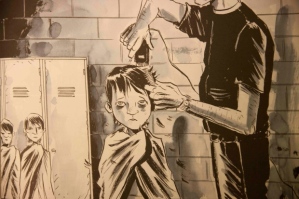 and hundreds and maybe even thousands of Chanies dotting our countryside. Lonely and miserable, many children made an escape an attempt only to lose digits or limbs to frostbite, arms and legs on traintracks, or lives to exposure, or to punishment when recaputured. How many tiny bodies are still unaccounted for? The fact that we don’t even know is proof of how little white Canada cared for Aboriginal people, and this is a guilty fact we struggle to reconcile even today.
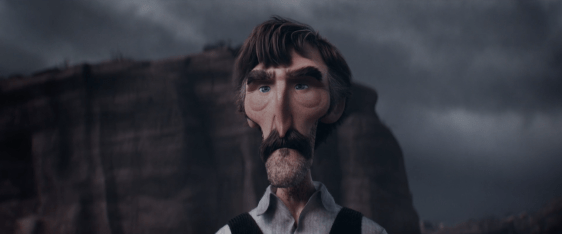 A tired old Sheriff is flooded with disturbing memories at the site of an old accident. Can he bear it? Can you?
 Marnie has a little bit of money and an awful lot of time, so she packs up her New Jersey home and finds herself a condo in L.A. where her daughter Lori writes for television. Marnie’s California awakening is intoxicating. She loves all the things that most of us hate about L.A. But shopping at The Grove and volunteering only fill up so many hours. The rest are spent calling or visiting her daughter. Her daughter is not impressed.
 encouraged her to set boundaries with her mother, Marnie sees the therapist herself. And when that doesn’t go as expected, she finds other people to mother, like the ‘genius’ she overuses at the Apple store, and a friend of her daughter’s who’s more receptive to advice and well-intended intrusiveness.
 ASSHOLES WATCHING MOVIES