
Dr. Miami (Michael Salzhauer) is a Miami-based plastic surgeon who specializes in Brazilian Butt Lifts, whose most valued employee is a social media consultant. He has assembled a multinational team of like-minded surgeons who are happy to pay to be part of his network. Salzhauer spends most of his time filming Game of Thrones spoofs and appearing in music videos, and may or may not have time left over to actually perform surgeries in his namesake clinic, within his namesake tower. Salzhauer is also an Orthodox Jew who seems fully aware of the fundamental conflict between his religion and his work, but believes it is necessary to sacrifice his beliefs to get what he wants. And also believes that everyone else is doing the same.
Dr. Miami should not be a doctor. He is focused on fame above all else, above family, work, and religion. Without even a cursory nod to professionalism, every aspect of his life is secondary to fame, and it’s not close. Dr. Miami is an irredeemable character who would, I think, be quite happy with how he is portrated in this documentary. So it is a credit to filmmaker Jean-Simon Chartier that a documentary about this unlikeable person manages to stay neutral and, more impressively, stay interesting, as we follow Dr. Miami’s relentless pursuit of more.
If you are anything like me you will be horrified by much of what you see in They Call Me Dr. Miami, and yet you will be unable to look away. This is an unflinching look at a person whom I cannot resist judging as a buffoon, yet I have to admit he is more introspective and self-aware that I would ever have guessed from his social media content. They Call Me Dr. Miami manages to humanize an individual even as he is trying so very hard to make a caricature of himself. That is no small feat, and it is all due to Chartier’s ability to remain objective, to which every true documentarian aspires but so few acccomplish.
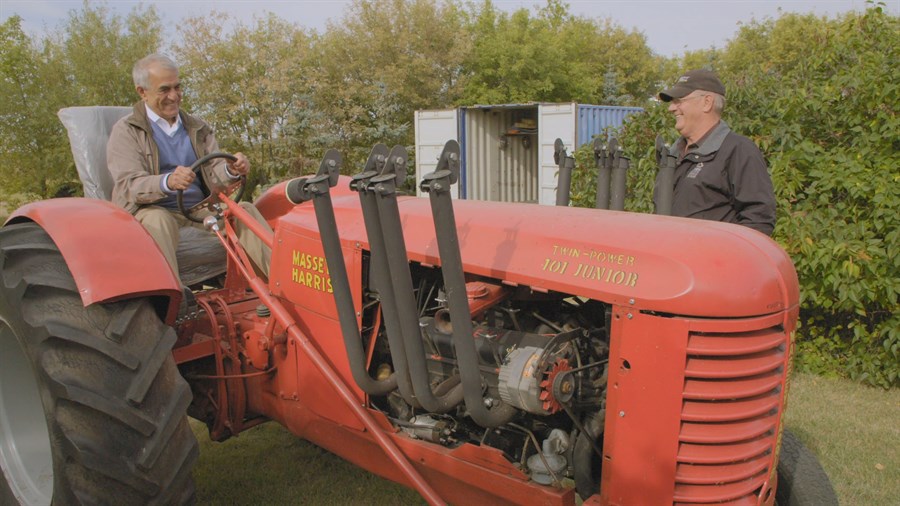 But a name is a powerful thing, and Kandahar, Saskatchewan (named in honour of the 1880 battle of Kandahar, Afghanistan) is about the only link to his home that Abdul Bari Jamal can find. Jamal came to Canada in 1991 with his wife and five children, refugees all, fleeing their conflicted homeland as the Taliban were taking control. On an impulse, and without telling any of his family, Jamal bought eight plots of land in Kandahar, Saskatchewan, for himself, his wife, and his kids. Ten years after that impulse purchase, Jamal takes his family on a trip to Canada’s Kandahar to let them in on the secret.
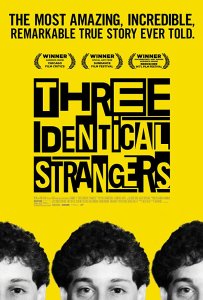 about it. It’s a documentary about two guys who discover, quite by accident, that they are twins, separated at birth. They were both adopted and had no idea they had a look-alike brother until mutual friends confused them when they both wound up at the same college, which is amazing enough. Their story goes national: it’s the feel-good story of the year, two 19 year old boys jubilantly reunited. And of the millions who catch sight of their front-page story is a third identical stranger. They are not twins, but triplets.
 even graduate. He sees a lot of himself in his students, and even though the staff and school board often feel at odds with his work, he perseveres and fights hard for them.
 “unfounded” which seems to be a fancy word for the police not believing her, which is hard not to take personally when ‘unfounded’ is used exponentially more often in sex assault cases than for any other crime. If you’re a woman of colour, disabled, or a sex worker, your word is all but meaningless. But if you’re one of the small sliver of people not dissuaded yet, you may find, as Gray did, that your body is now a crime scene. A rape kit is a must for conviction, yet there aren’t enough rape kit nurses to go around. You’ll have to offer yourself, body and soul, as evidence, because for some reason it’s your responsibility to help catch the rapist. But the fun doesn’t stop there: next you’ll be revictimized in court in a discouraging, dehumanizing procedure that never grants any real justice because it’s the victim who seems to be on trial.
 dust settles, 130 people are dead and 413 more are injured in a series of coordinated attacks at a number of locations throughout the city. The investigation quickly determines that the attackers are from Molenbeek, Brussels, the very neighbourhood where this barbershop is located. Of course, the attack becomes the main topic of conversation here, just like it was everywhere else.
 Cameron Yates focuses on the unusual relationship between mother and son. Meg McGarry allowed her son to drop out of school to focus on his passion. Now, nearing 16, he’s ready to move away to pursue his career. As a mother, we see helicoptering, permissiveness, indulgence, and an incredible amount of creative nurturing. But we also find a woman who has lost herself in her son’s shadow. Pursuant of her son’s great passions, she’s forgotten hers, and now that he’s ready to leave her behind, what will become of her?
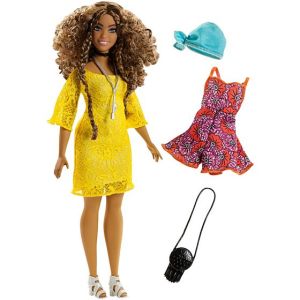 based on conspicuous consumption. She held jobs that real life women were still dreaming about. She wasn’t saddled with kids. She drove her own car and owned her own home, independently, without the help of Ken, who was little more than another accessory. But no matter how many astronaut Barbies existed, she was still tall, blonde, blue-eyed, thin, with impossible, top-heavy measurements. Sleepover Barbie came with a scale permanently stuck at 110lbs and a diet book that simply said “Don’t eat.” Needless to say, real-life feminists could never quite embrace her, even as their own daughters flocked to toy stores to buy her up.
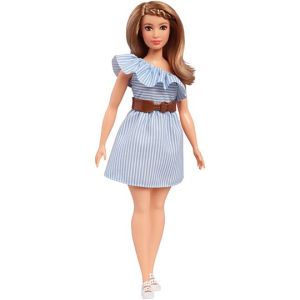 including tall, petite, and curvy. Curvy Barbie has a thicker waist and no thigh gap. It seems like a no-brainer now, but for the people working at Mattel, it was ulcer-inducing times. Would feminists finally be appeased? Would they be derided for waiting too long? Would children embrace a “fat” Barbie, one that didn’t fit into the outfits they might already own? They were anxious to steer the narrative but were wise enough to know that social media would own them – and that a Time cover story would largely dictate her early adoption or lack thereof.
 ASSHOLES WATCHING MOVIES