
Last year, the New Hampshire Film Festival was as swept up in the 2016 election drama as I was. They featured an impressive selection of politically themed documentaries and even hosted a standing-room only panel discussion on Politics in Film. I couldn’t get enough last year and took in as much of it as I could.
The documentary selection this year was noticeably less overtly political, presumably because the NHFF is as burnt out on American politics as I am at this point. Still, in keeping with tradition, the New Hampshire Film Festival remains the one time of year that I favour documentaries. The four docs I saw this year have very little in common in either subject or structure but are all challenging and depressing in their own way.

Sacred Cod: The Fight for a New England Tradition– Due to climate change and overfishing, the cod population in the Gulf of Maine has been dwindling like never before. As a result, fishing communities in New England that have thrived for generations are now struggling as many are forced to sell their boats.
Far from being just another climate change documentary, Sacred Cod focuses instead on the people who are affected by federal government restrictions that severely limit the number of cod that they can catch. To many of them, it feels like government over-regulation is costing them not just their livelihood but their way of life and proud community traditions. Some even doubt the science that the government is citing, given that you can still cherry pick areas that are still rich with cod.
Of the documentaries I saw at the festival, Sacred Cod is the most traditional in style but is exceptional in its compassion. The decreasing cod population and the necessity of government intervention is indisputable at this point and directors Steve Liss, Andy Laub, and David Abel know it but they show as much empathy to those affected by the quotas as they do commitment to the facts.
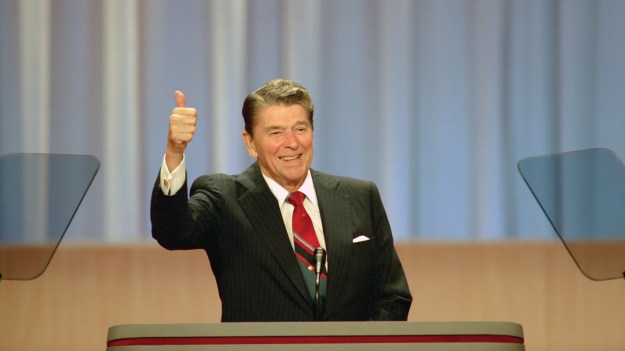
The Reagan Show– “So, what is a Canadian doing in New Hampshire watching a documentary about our greatest president?”. A young guy I met in line asked me this before The Reagan Show and I have no idea whether he was being sarcastic or not about that last part.
Nor can I tell you with any confidence what the filmmakers behind The Reagan Show thought of America’s 40th president. There are no narrators or even original interviews with which they can betray their political biases. They rely exclusively on footage from the White House archives and TV news segments to tell their story. Specifically, they’re focused on the story of how Reagan exceeded the expectations of most critics in his arms race negotiations with then Soviet Union President Mikhail Gorbachev.
If The Reagan Show has a point of view, it’s that Reagan was the first President to really understand television and how to play to the cameras in shaping the public’s perception of him. As far as politics goes, your own point of view will likely be challenged. I went in with an anti-Reagan bias and found that point of view challenged just as I’m sure the Reagan enthusiast I talked to earlier had his challenged too.
 label, Rodarte. They’re not the only designers to make the leap to film: Tom Ford made the jump rather successfully not to mention stylishly with A Single Man, and
  series of impressions – you get whiffs of what might be going on, and if you’re nose is good and you’re super motivated, you might even convince yourself the story has bones. But if you’re the kind of movie-goer who likes things like
  The film makes you think about memory, and what that means, and how it is shared, and if it is real. And it makes you think about humanity and what makes us truly ourselves, and if we can separate ourselves from memory, or if indeed that’s all we are is our memories. And it makes you think about love: can it be recreated, does it live on after death, does it exist independently outside a couple, is it found in the details or does it truly live in our hearts? So if you’re in the mood for a talky, thinky piece with very little action, Marjorie Prime may just be the film for you. Based on a play, most of the film takes place within just one room. But within that room, the acting is superb. Lois Smith is a phenom. Jon Hamm, Geena Davis, and Tim Robbins orbit around her, fueling her sun.
 choose between several old-guy movies (we ended up seeing
  es in this film, the latest from Ruben Ostlund, who previously directed
  options, so you can imagine some of the crazy things they do for money. It’s a destitute, desperate kind of life but you’d never know it to see Mooney adventuring around free-range with her comrades.
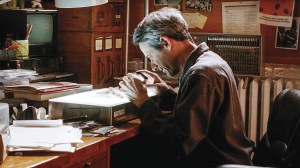 Nick’s marriage isn’t quite so solid. He and Alyssa (Chloe Sevigny) have been together a decade and there have been cracks before, so we learn from Alyssa’s sister Gwendolyn (Mary-Louise Parker). Plus, Nick’s life is so, so boring (SO boring he can’t help but repeatedly describe it as ‘thrilling’, without a trace of irony, and it never fails to break your heart).
 the 2016 American Election’s worst-case scenario. Misogyny and xenophobia seem to have its place in American political discourse after all- the Oval Office on weekdays and Trump Tower on the weekends. A lot of people have said a lot of things to try to make me feel better. “Geez, give him a chance. If he succeeds, we succeed,” they say. “He’s not going to do any of the things he said,” seems like a popular response, which even if true seems to miss the point. One person even made the bizarre claim “Don’t worry. Orange people never do anything”.
 “Sure, he’s unprepared and easily distracted but give him time,” would makes more sense if the world was a simple place where nothing all that important or complex were going on. Zero Days, the new documentary from Alex Gibney and the film I’m using as an excuse to talk about the feelings I can’t shake since the election, paints a scary picture of the complexity of the security threats that face the United States and the world. Specifically, Zero Days is focused on cyber security and the story of the Stuxnet virus.
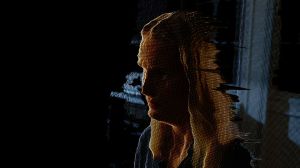 Gibney (Taxi to the Dark Side, The Armstrong Lie, Going Clear) takes his subject seriously, his documentary can’t help feeling like a Hollywood thriller and the twists can feel pretty exciting until you remember that this is real life. The director is wise to play up the suspense given that all this talk of worms and centrifuges can get a little technical and continually reminding us how high the stakes are is an excellent motivator to pay attention to all the tech talk. The interviews with the security company that discovered Stuxnet, the politicians who can neither confirm nor deny anything, and the NSA whistleblowers are all gripping.
 ASSHOLES WATCHING MOVIES