
It’s the last day of school, and best friends Molly (Beanie Feldstein) and Amy (Kaitlyn Dever) are ready to bid high school goodbye. They’ve been serious students, buttoned down and focused, and their hard work has paid off: they’re off to Yale and Columbia respectively. But their pride is tamped down a little when they learn that that many of their classmates are also headed for the Ivies – this despite the fact that they rarely seemed studious, and made lots of time for parties and fun. “I’m incredible at hand-jobs but I also got a 1560 on the SATs,” says one.
Molly is particularly devastated; sure she’s the valedictorian, but did she sacrifice fun for nothing? She doesn’t want to show up at college in the fall a party virgin. Her whole worldview is sliding down a crap chute, and her instinct is to dive in after it. Luckily, they have one last night before graduation, and Amy’s departure for a summer of volunteering in Botswana. One night to make up for 4 years of skipping parties and feeling left out of the in-crowd. They set their sights on Nick’s party – the most effortlessly popular kid in school (played by Mason Gooding, son of Cuba Gooding Jr).
The ladies do not get from point A to point B without boatloads (and sometimes they are literal boatloads) of shenanigans. This is Superbad, only because it’s girls, it’s much smarter. And it seems like this one night of trying to party teaches them more about themselves than the previous four years of high school. That sounds about right, doesn’t it?

The movie gets so much right even as we learn how much the girls have gotten wrong. Molly always assumed she was purposely excluded, but it turns out these kids are all too happy to greet her socially; her exile was self-imposed. How maddening, isn’t it, to discover that too late – and a good reminder for us all to check in with ourselves. How often do we impose our own limitations? Amy tackles her fears while Molly checks her ego, and her assumptions. The two women in the lead have amazing chemistry and it’s a lot of fun to witness the particular dynamic of their friendship. You and I know that college will test the bonds of their friendship, and inevitably change it if not crush it outright. They’re starting to have inklings that this might be so. So this last night out has some tangible pressure to it. Beanie Feldstein is a cinematic lantern, lighting up every screen she’s on, and lighting the way for others. Kaitlyn Dever is an excelling pairing for her, able to play off her energy in a more conservative and subdued way, while still holding her own.
Olivia Wilde tries out the director’s chair and seems to find it a pretty comfortable fit. She’s got an eye for letting actors do their thing; so much of the best bits feel spontaneous and are the best kind of weird. She’s also got an amazing feel for music – she introduces characters and themes with pop songs, and it really took me back. I bet most of us can come up with a soundtrack of our own high school experience. Music is such an important part of that time in our lives. I still surround myself by music constantly, but I will never again spend the day on my bedroom floor inhaling lyric booklets, or spend hours recording stuff off MTV like I did then. I know which songs I kissed to, slow-danced to, had sex to. Which ones we played on repeat as we drove recklessly and restlessly around parking lots doing donuts, which ones played at the diner as we split an order of fries, which ones we cried to when boys were mean to us, which ones accompanies us down the aisle at our own graduations and commencements. Wilde seems to have an intuitive sense of that, and I caught it.
There’s a theme in Booksmart that is hinted at but never spoken of: class. As in economic and social class. Molly points out the school’s 1% (Billie Lourd and Skyler Gisondo, whom Sean finds uproariously funny), but it’s clear that the Los Angeles high school as affluent as heck. Everyone, it seems, except for Molly. Not a single thing is ever said about it, but we see that she lives in an apartment building while everyone else has a McMansion, and her parents are absent from the film. So when Molly discovers that all her other classmates also got into good schools, she berates herself for having skipped the fun when she didn’t have to. But you and I know that she probably did: that kids like Molly have to earn their way in, but kids from rich families do not. They have legacy status, they know alumni who can pull strings. Their families donate money to schools. And, as we’ve seen in the news recently, they pay money to fake their way in on a little-used athletic scholarship or some other fraudulent means. College admissions are not the meritocracy we want to believe they are. There are very valid reasons why Molly worked so hard and others did not, even if the film never states them. So maybe Molly’s takeaway was to loosen up a bit, and experience life, which are not bad lessons. But for us, it’s a little bit more than that.
Even with these subtle layers, Booksmart never stops being fun. The cast is lively and diverse, the tropes are thankfully on the unexpected side, and the movie has a great pace. Plus it has an exception friendship at its centre. Just when you think we’ve said all there is to say about high school, Boomsmart is a charming, genuine and clever addition to the field.
 tapping into the weird naturalness and closeness of our friendships from early adulthood. Things will change for them, I bet, and soon. I want to tell them to treasure the fuck out of these moments. In fact, these women are on the cusp. They’re nearing 30: careers are taking off, relationships are getting serious. Kids, suburbs, and neglecting our female friendships tend to come next. That sounds sadder than I mean it to because this movie is surprisingly upbeat and fun. So maybe time won’t get away on them, and maybe phone calls won’t go unreturned for months at a time, and maybe they won’t find themselves saying ‘We should get together soon’ and never quite making it happen. Maybe.
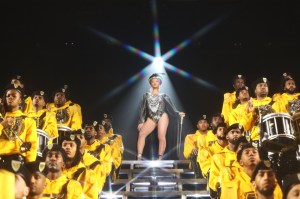 her style and her fame and her talent. She was a successful, powerful black woman, her success and power being so seemingly limitless that they transcended gender and race. And at the height of that power, Beyonce claimed both her blackness and her womanhood in a way that was political, artistic, and impossible to ignore. Now we need a word that is somehow more than Queen, and maybe the only name worthy is Beyonce itself.
 Elizabeth I (Margot Robbie) and Mary (Saoirse Ronan) are not that different. Elizabeth is said to have ruled by “good counsel,” relying on trusted advisors. History depicts her as moderate, cautious, and perhaps indecisive. Mary, on the other hand, was more forward, and clever, not that that stopped her own regents of plotting against her. She pushed Elizabeth to name her England’s heir presumptive. Elizabeth retaliated by proposing her trusted childhood friend as Mary’s next husband; Elizabeth felt she would be able to control him. Mary was too savvy to refuse outright but the relationship came to nothing.
 plot will ensure that they depend on each other for survival. Zoe’s led a pampered life and is in the habit of sleeping with her bodyguards, but this time Sam is determined to teach her to fight back. And there’s no better time: though freshly bereaved, Zoe’s own stepmother Rima (Indira Varma) is more concerned with appeasing the shareholders than any rescue efforts. Not only are Sam and Zoe on their own in the middle of Casablanca, Rima may prefer if Zoe never returns since she’s a little bitter that her dead husband left the mining company to his spoiled daughter rather than to her.
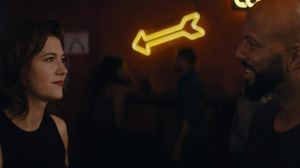 with her own life, and I’m not sure she believes she deserves that level of happiness anyway. In fact, the closer she gets to good things, the more she sabotages them. Ultimately she’ll have a bit of a meltdown on stage that results in a viral video of some powerful truth-telling that her audience may not be ready for. Just about the only thing that video doesn’t threaten is her strength.
 Gwen lives with her mother and younger sister. They have next to nothing – their makeup bags legit comprising of a pointy stick with which to prick their fingers and use the blood as blusher. Her father is absent, away at war. Her mother is mysteriously ill. Her neighbours are disappearing, one by one, a mining company encroaching on the land. But there’s also a darkness that comes knocking. Strange things are happening, inexplicable things.
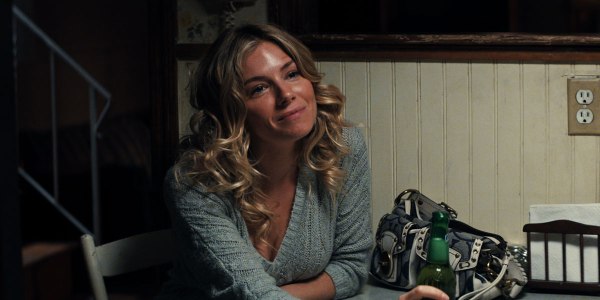 Because Deb is worth more than she even knows, which she stars to discover after her daughter fails to come home one night after a date with her basement-dwelling baby daddy. A loved one’s disappearance must be life-shattering. Miller lets us see the dissapearance’s drastic effects on Deb in such a restrained and measured way that Deb’s resulting character growth is organic, believable, and most impressively, almost invisible at first. Deb’s evolution is captivating, and the Deb we know by the end of the movie is at once the same core character and a woman whose outlook and attitude have evolved beyond anything I could have ever expected.
 ASSHOLES WATCHING MOVIES