Tag Archives: strong female leads

Queen of Katwe

I was leery of this movie – I was leery of a Disney version of Africa, which I didn’t have the heart to see. I was worried they would polish over the poverty and we’d get some “family friendly”, watered down version.

Luckily Mira Nair is sitting in the director’s seat, and I have great confidence in her ability to paint a portrait that is beautiful in its truth. And in fact, Queen of Katwe is beautiful, and it doesn’t shy away from the less desirable side of nullAfrica. The whole point of this film is rooted in poverty. A chess club is started in Katwe because of poverty – because mothers are too afraid of medical expenses should a child break a bone during soccer. So a board game is just more appealing. One of the big draws in getting the children to come in and learn the game is that the chess is served up with a free cup of porridge.
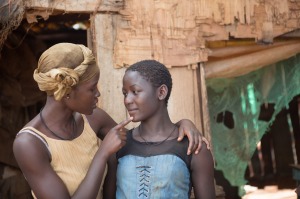
Phiona is poor even in comparison to these other Katwe kids in the chess club. She is being raised by a single mother (Lupita Nyong’o) and helps earn income by selling corn in the streets. But it turns out that Phiona might just be a prodigy – she’s certainly learning faster than anyone expected and quickly outpaces her other competitors, even her teacher. She lobbies for literacy just so she may read chess books in her spare time. Her mother sells possessions for a little extra lamp oil to burn at night so that Phiona may study.

The kids are enthusiastic about their first away tournament playing “city kids” until they get a look at them – poised, clean, well-dressed, book smart. The little Katwe kids are swiftly intimidated, many giving way to hives and hyperventilation. Their coach (David Oyelowo) knows how to steady them, and their superior chess skills carry the day. Phiona is particularly talented, good nullenough to represent Uganda internationally. As she begins to win, and to travel, she glimpses the life that could be hers if her chess game complies. But now that she’s playing not just to win, but to change her life, and support her family, it’s a lot of extra pressure any little girl’s shoulders.
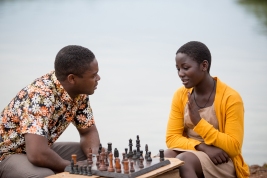
Mira Nair does a wonderful job bringing Katwe to life. Even the slums are vividly rendered with colour and energy. Yes the story hits familiar beats but Nair bolster’s the film’s predictability with strong performances anchored to weighty characters.

Oyelowo as Coach Katende is as good as he always is, radiating a warmth with maybe a touch of twinkle in his eye, but he knows his role is to prop up the strong women in the cast. Lupita Nyong’o gives a heart-breakingly restrained performance as a young widow who knows her kids are sometimes going to bed hungry. She so carefully balances the fear of the unknown and a mother’s strong will to keep her kids safe with this siren call of a better life that she herself can’t comprehend. She refers to herself as an “uneducated woman” but that only serves to reinforce how fiercely smart she is, whether or not she can read. The film doesn’t talk down to or look down on anyone. Nyong’o is so sensitive in her portrayal it really elevates the whole film. Madina Nalwanga, though, is the revelation. She’s the unknown cast by Nair to star as Phiona. Despite having never acted, she clearly has the grace and poise to make this her career, and it has to help that though Madina escaped the slums with dance rather than chess, her story is eerily similar to Phiona’s.

Queen of Katwe would feel a lot like any other underdog tale, except for its setting. Nair makes sure that Africa comes alive. A small girl reduces chess to this: “a small one can become a big one.” Chess is still fairly boring to watch, on film and in person I’m sure, but when you give it such a strong parallel to their lives – where the small can become big, where the Queen is most powerful, it starts to strike a chord. Is it unabashedly feel-good? Yes, it is. But isn’t it nice to have such a positive story out of Africa for once?

The Meddler

A widow moves across the country to be with her only daughter. It sounds trite and cliched and we’re only one sentence in. Hold up. Does it help if I tell you that Susan Sarandon and Rose Byrne play the mother and daughter? It should. Keep reading.

In fact, The Meddler may very well be tale as old as time. After her husband’s death, themeddler_trailer1Marnie has a little bit of money and an awful lot of time, so she packs up her New Jersey home and finds herself a condo in L.A. where her daughter Lori writes for television. Marnie’s California awakening is intoxicating. She loves all the things that most of us hate about L.A. But shopping at The Grove and volunteering only fill up so many hours. The rest are spent calling or visiting her daughter. Her daughter is not impressed.
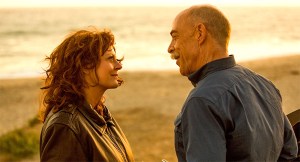
Marnie calls Lori when a new Beyonce song comes on the radio. She calls her when she hears about a serial killer roughly in the area. She calls her when Lori hasn’t called her back, and she calls her again when that one isn’t returned either. Then she texts. Then she knocks on the door with bagels. Or doesn’t knock but just comes in.

Small cracks in Marnie’s Positive Polly act surface: she’s grieving and trying hard not to show it. And she’s achingly lonely. So when Lori suggests that her therapist has meddler_xlargeencouraged her to set boundaries with her mother, Marnie sees the therapist herself. And when that doesn’t go as expected, she finds other people to mother, like the ‘genius’ she overuses at the Apple store, and a friend of her daughter’s who’s more receptive to advice and well-intended intrusiveness.

None of these really get to the heart of her pain though; her meddling is just a bandaid on her very wounded heart. She isn’t prepared to be alone so early in her golden years. She feels guilty about an inheritance that feels like blood money. And the only person who understands her grief is the daughter who’s pushing her away. Marnie wants to hold Lori close because her daughter is a piece of the husband she’s missing, but Lori needs distance from the mother who only reminds her of her father’s absence. The disparity is heart-breaking.

The Meddler is a very interesting meditation on grief and the various ways it’s expressed. The movie is marketed as far fluffier than it is, however with Susan Sarandon in the lead, there’s a lot of joy and laughter mixed in with everything else. She gracefully navigates between the bubbles of emotion as they rise to the surface. The writing is stronger as a drama than as a comedy but Sarandon is talented with any material, and lights the way with her stunning luminescence.

TIFF: Arrival

Arrival is exactly the kind of sci-fi film I’ve been waiting for all my life.

There are no guns, no star wars, no green men, no space cowboys, no mutually-assured destruction. The aliens touch down, and we’re not sure what their intentions are. Do we fire lasers at them? No. We study them. We gather together top academics, and we attempt to learn, peacefully (with the army on speed dial, just in case).

Amy Adams plays Dr. Louise Banks. Of all the people on Earth talking to arrival-movie-1-600x399aliens, she’s the one who listens well enough to actually crack the code. And it’s a hell of a code, unlike anything our puny human brains can really comprehend. This deep gulf of understanding makes plenty of people nervous – people with their fingers hovering over big red buttons. Annihilation-type buttons. Dr. Banks puts her own life at risk to keep things from escalating to an out-and-out global (universal? galaxal?) war.

Amy Adams is as good at playing Dr. Banks as Dr. Banks is at solving language problems. Both are beautiful to watch. Director Denis Villeneuve worked doggedly to make sure all the science is sound, but it’s also almost magical. It makes me want to call it the movie Interstellar aspired to be: rooted in science, hinging on human connection.

Arrival is the most intimate of sci-fi films, the aliens (if that’s what they are) almost incidental to humanity’s expanding comprehension of time and memory. It’s like poetry. And it doesn’t hurt one bit that visually, it’s slick as hell. Bradford Young’s cinematography is nearly stark, but it is absolutely arrival2arresting. It works in synchronicity with a hauntingly beautiful score by Jóhann Jóhannsson. Twinned together they remind you that though the plot feels startlingly realistic for a sci-fi film, there’s something otherworldly at play. Young’s work is atmospheric, Jóhannsson’s is pulsating.
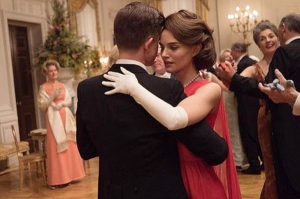
It’s refreshing to have an alien encounter that relies on communication rather than violence, and to have a woman stepping in as Hero(ine) feels only natural. In fact, the only part of the movie that didn’t gel for me is a 2-minute montage that serves to pilot the plot further ahead and is narrated by Ian (Jeremy Renner). The rest of the story is told completely through the eyes of Louise, so to have her voice suspended during these few scenes is jarring and emotionally blunting.

Adams, though, is faultless; she turns out a character that is mature and complex, and I won’t be one bit surprised to see her name alongside Natalie Portman’s, and likely Emma Stone’s, come Oscar time.

TIFF: Jackie

Jackie is a beautiful film by Pablo Larrain that focuses on Jacqueline Kennedy in the minutes and days following her husband’s assassination.

Larrain is a Chilean film maker, which makes him at outsider to American politics. He poured over documents and was fascinated to read about this day that every age-appropriate American remembers so vividly: when the car turned, the location of the grassy knoll, the flag-wavers lining the street, the bullet’s trajectory – and always sitting beside the president, his wife, Jackie. e02adc223bf38b822b3e250330bde15cLarrain thought to himself, what if it was the other way around. What if he was sitting beside her? And in that thought was born a beautifully conceived film that puts its female character front and centre.
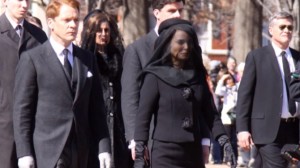
Larrain thought the script was good but sent it back with a note to cut every and any scene that she wasn’t in. The camera would be on Jackie the whole time. Obviously a film with such unerring focus would need an actress who could carry it, and Natalie Portman is that actress. This is her best role since Black Swan and honestly it may be her best role, full stop. She inhabits Jackie like a second skin. She doesn’t get caught up in the trappings of impersonation, she just embodies the grace, the thoughtfulness, and the mystery of one of America’s most beloved and glamourous first ladies.

Despite being a favourite in the press, Jacqueline Kennedy is perhaps unknowable. She was always careful about her public persona and was closely guarded when speaking on record. The film makes this abundantly clear through scenes with a journalist (Billy Crudup) about a week after tragedy has struck. She edits her remarks, strikes things from the record, and demands final approval before a single word is printed. Noah Oppenheim’s script is 14996precise and offers up tantalizing looks behind the closed doors of Camelot.

Peter Sarsgaard, as Bobby Kennedy, is a charming lurker. Greta Gerwig in her most un-Gerwig role to date is restrained and almost unrecognizable. I’d heard that Natalie Portman gave a stellar performance in Jackie but I was unprepared for how good the film would be as a whole. This isn’t just a candidate for Best Actress but I believe, for Best Picture. It’s so well-orchestrated, each piece comes together perfectly to make a very satisfying picture. JFK, one of the world’s most recognizable politicians, is a mere shadow in this film. Jackie gets her moment in the sun, which makes Natalie Portman the star at the centre of this movie’s universe.

She deserves all the acclaim she’ll receive. She’s brave and courageous here, mixing grief and poise in an intoxicating cocktail that you won’t be able to tear your eyes from. She’s magnetic. She shimmers with loss and outrage as she protects her husband (and more importantly: his legacy) from the vultures already climbing over his coffin. Jackie feels very much like an insider’s peek-a-boo on what has to be an iconic yet little-understood moment in history. Finally we experience JFK’s assassination as Jackie felt it – as the gruesome murder of her husband and the father of her two young kids. She sat beside him, scooping his brains back into his skull, calling to him even as she knew he was already dead. His blood is still fresh on her dress as LBJ is sworn in just 43 minutes later, Kennedy’s body resting just a few feet away. What to tell the children? What to tell the nation? It’s absolutely fascinating. Stephane Fontaine’s cinematography allows us to get very close to the grief, while also appreciating its context: Air Force One, the White House, the Lincoln convertible. Jackie manages to be both historic and quite personal, and Larrain ushers us ably into both worlds. Both Portman and Larrain resist the temptation to over-emote. Like the former first lady herself, restraint, control, and self-possession are at its heart.

TIFF: The Levelling

When her brother commits suicide, Clover does something she hasn’t done in ages: she goes home. ‘Home’ is a relative term – right now it’s the trailer beside a crumbling farmhouse damaged by floods where her surly father sleeps at night. Having just deeded the farm to his now-deceased son, her levelling_01father is working at keeping what’s left of the farm running. Clover, meanwhile, is trying to piece together what would make her young, whole-life-ahead-of-him, brother put a gun to his head. Neither is mourning in a conventional way, and they’re certainly not doing it together.
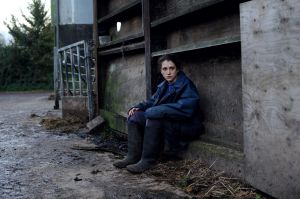
The Levelling is somehow beautiful without trying to be. So is its star, Ellie Kendrick. There is strength and vulnerability to both. Shot on location in  Somerset where floods actually did threaten farms, director Hope Dickson Leach was fascinated by the plight of farmers who invest so heavily in something so fickle as land. The Levelling, her first feature, is told from the stark perspective of people for whom life and death are matters of course. levelling_03When death is part of business, part of the lifestyle, part of every day, what toll does it take, and at what remove do they experience more personal brushes with mortality?
Blunt emotions roil beneath a landscape of precise, economical film making. Dickson Leach keeps a cool, steady tone. Her lead, Ellie Kendrick, is perfectly distilled in her restrained performance, never boiling over in a role that could easily have been histrionic in less capable hands.

The Levelling had its world premiere at the Toronto International Film Festival, in its discovery section. Dickson Leach is in fact a discovery, and having discovered her, it will be just as important to keep an eye on her for great things to come.

2016: Year of the Fabulous Ladies

Goodness me, this year is flying by, and looking back at some of my favourite films, I’m seeing a trend. A trend toward women of a certain age. Over 50, let’s say; the women who have often been ignored by Hollywood (more than half of all female characters are well under 40, which is not true of men). And yet here they are, fierce and fabulous. I’m resisting calling them “older women” (perhaps it’s time for a new word?) because they are so much more than merely older. These are terrific women giving voice to characters that are rarely seen, and heard even less (women are given less and less dialogue as they age whereas middle-aged men get more).

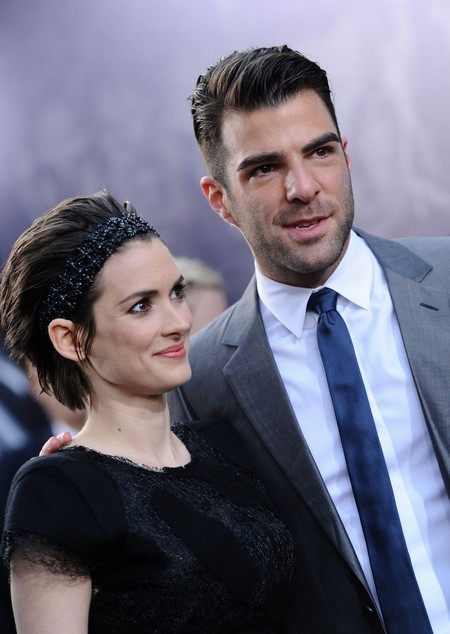
Aging is a sin in Hollywood. You go from playing the ingénue to someone’s mom, and then you drop off the face of the earth unless you’re Betty White. Which you’re not. Hollywood casts young women into older roles – Angelina Jolie once played Colin Farrell’s mother. She is one year older than he is. Amy Poehler played Rachel McAdams’ mother in Mean Girls despite only a 7 year age difference. Sally Field played Tom Hanks’ mother with just a decade between them – and having previously played his love interest! Toni Collette, aged 33, played Paul Dano’s mother when he was 22 (in Little Miss Sunshine). Laura Dern is just 9 years senior to her “daughter” Reese Witherspoon in Wild. Winona Ryder is just 5 years older than her Star Trek on-screen son, Zachary Quinto. That would be like Jonah Hill playing Miles Teller’s dad instead of his high school classmate. WTF?

All too many once-great actresses were abandoned by Hollywood when they hit 40. Where is Angela Bassett? Geena Davis? Joan Allen? Janet McTeer? We can’t save them all, but we vote with our dollars, by making sure that films like these find their audience:

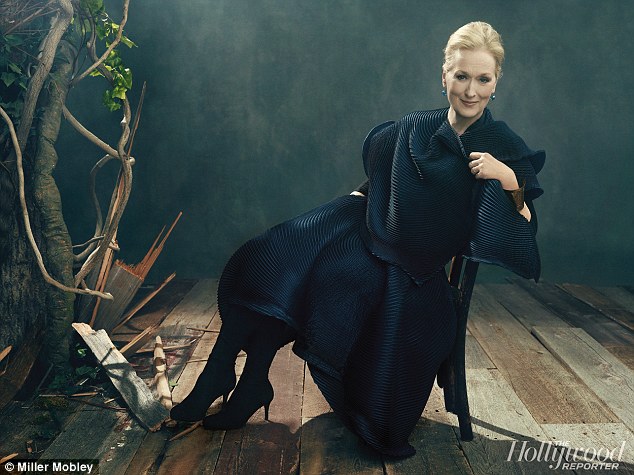
Florence Foster Jenkins – Meryl Streep turns in an endearingly cringe-worthy performance. When she turned 40, she was offered THREE witch parts in the same year. THREE! She turned them all down.  “I just had a political sort of reaction against the concept of old women being 23F3E33000000578-2869426-image-a-28_1418262921292demonized and age being this horrifying, scary thing. I just didn’t like that. I didn’t like it when I was a little girl, I don’t like it now.”

Grandma – Lily Tomlin proves Grandmas come in all sorts of salty sizes. She’s as edgy and witty as ever. “I’ve been offered lots of [roles as] people’s grandmothers that are just the butt of a joke. Doddering with a track suit on. The object of humor, just as women or gay people were the object of humor through ridicule in earlier movies. That was an accepted target, use of someone of that age or that lifestyle.”

Eye in the Sky – Helen Mirren shows nerves of steel as the powerful head of a military operation. Mirren has called Hollywood’s ageist double standard “fucking outrageous.” “Even Shakespeare did that to us. As you get older, even the Shakespeare roles become [less substantial for older women] — that’s why we have to start stealing the men’s roles — doing like I did in “The Tempest,” [by changing the role of Prospero to] Prospera. And it’s great that a lot of women are doing Hamlet, doing “Henry V,” and I’m sure there will be a female Othello soon. And I love that. I think it’s absolutely great because, you know, why not?”

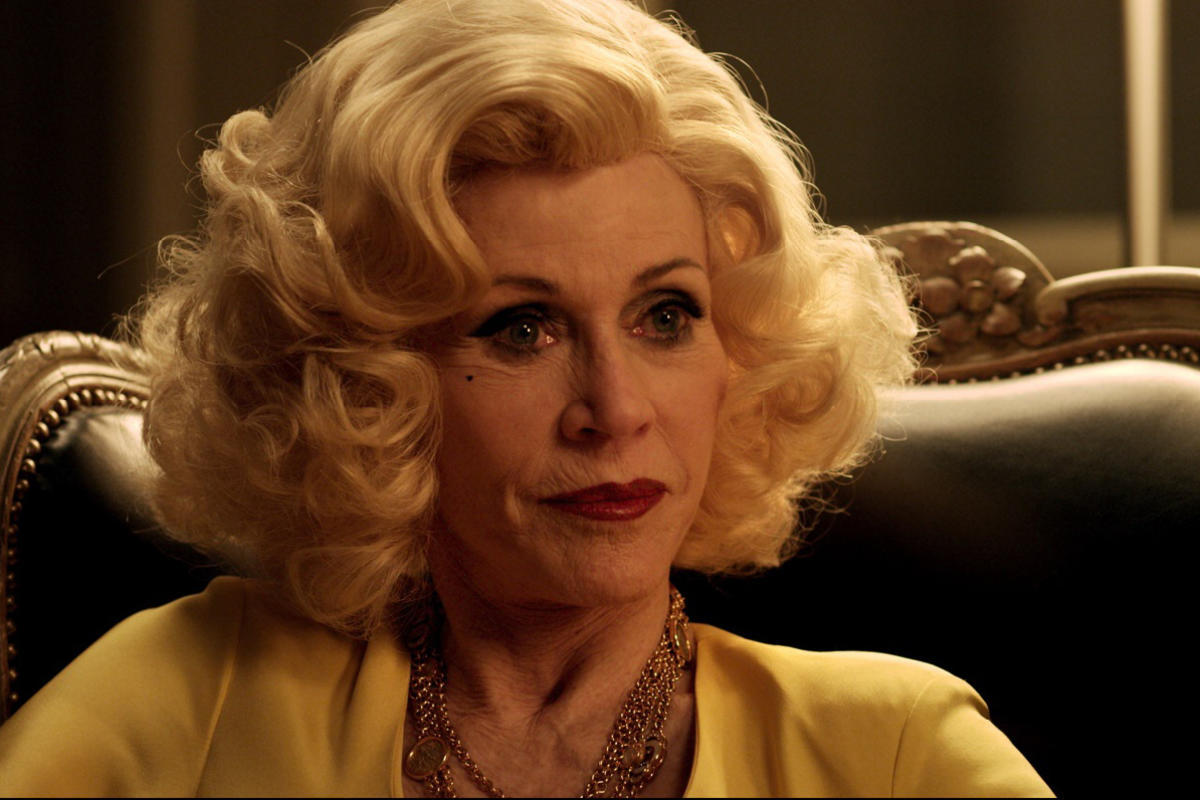
Youth – Jane Fonda has a small but scene-stealing role in this movie about finding meaning in your later years. “Ageism is alive and well. It is okay for men to get older, because men become more desirable by being powerful. With women, it’s all about how we look. Men are very visual, they want young women. So, for us, it’s all about trying to stay young. I need to work, so I had some plastic surgery. It’s not like it’s too much, it’s not like you can’t see my wrinkles, right? But I think it probably bought me a decade of work.”

Lady in the Van – Maggie Smith gives life and dignity to a mysterious woman living in her van. “I’m always older than God in these parts now.” She played Wendy’s 92 year old grandmother in Steven Spielberg’s Hook and “I’ve been that ever since. They don’t need to make me up any more, I’m afraid. I’ve caught up with myself.”

I’ll See You In My Dreams – Blythe Danner tackles widowhood, retirement, and loneliness. “I remember Leslie Caron years ago saying she left Hollywood when she was 30 or 35 because that’s when roles disappear. That’s not the case anymore, there are better, three-dimensional roles for women of all ages. I’m 71 and I’ve been working more now and getting better roles than I did when I was younger.”

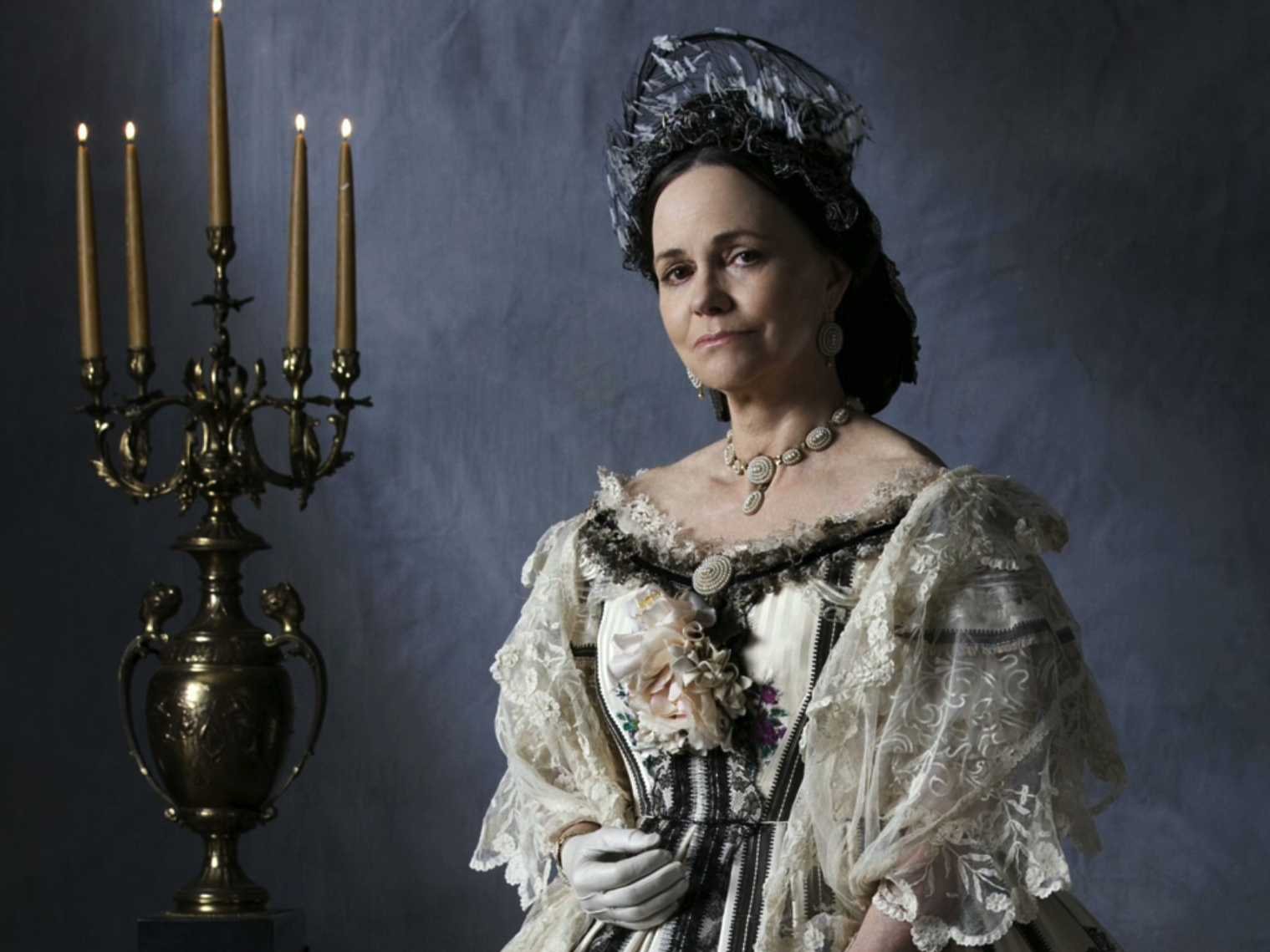
mary-todd-sally-field-lincolnHello My Name Is Doris – a riotous movie starring Sally Field, her first starring role in nearly 20 years. “They don’t write roles for women… and they certainly don’t write roles for women of age and women of color,” said Field. “Since the industry is run by men, men have a tendency to want to make stories about themselves and things they identify with. Then it becomes a self-fulfilling prophecy.”

Mothers and Daughters

Mothers and daughters: a relationship so often mined by Hollywood that maybe all the diamonds are gone and all that’s left are duds.

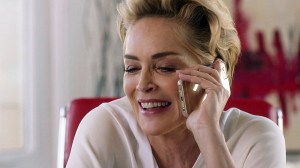
This movie is a dud, but not for lack of trying. Susan Sarandon, plus real-life daughter Eva Amurri Martino, and Sharon Stone, and Courteney Cox, and Selma Blair, and Christina Ricci, and probably more besides that I’m forgetting. That’s an awful lot of leading ladies covering pretty much every angle of motherhood that you can imagine. In fact, one of the maxresdefaultreasons this movie fails is that it tries too hard. The script is just so stupidly earnest. It makes wonderful actresses say such flighty, cliched things. And everyone cries all the time, at the drop of a hat. It made me really wonder why the script writer has so many fucking hats, and why she’s always dropping them. Secure your hat to your head, lady.
Mira Sorvino. That’s who I was forgetting.

Anyway, are your tear ducts all clogged up? Do you have some salt water that needs purging? Were you hoping to remove one tiny strip of makeup all the way down your face? Then have I got a movie for you! Mothers and Daughters doesn’t just ask you to cry, it begs. The director probably owns stock in Kleenex. But it’s the kind of shame-crying that only makes you mad at your stupid emotions and the things that make you feel them. I watched this on Netflix at 2am, when it is perfectly acceptable to cry watching a movie you loathe as long as you have Doritos to keep you company.

The writing is ambitious, but ambitious in the way that a 19 year old writes a memoir. People will be so impressed when I use all my big words! I have a thesaurus and Irs_1024x759-160502103124-1024-courteney-cox-mothers-daughters.ls.5216 want you to watch me abuse it! I’m going to write a trite little movie that wishes it was a pretentious little novel! Script writing 101 says I should put in a conflict here! [Insert conflict]. I wonder if Sharon Stone can do polysyllabics? Either way she’ll be impressed when I whip out this tired metaphor! And I’ll make it super relatable by including a variety of white women with down-to-earth jobs like bra designer, fashion icon, and celebrity photographer. And I wonder if I can work in cancer? Watch out, heart strings!

In conclusion, Mothers and Daughters is a movie I found randomly on Netflix, having never heard of it before despite starring at least 3 Oscar-nominated actresses. It will be palatable to neither mothers nor daughters but it’s definitely a movie that exists. The end.


Tallulah

The last time Ellen Page and Allison Janney shared the (figurative) stage, it was in Juno: Page was the pregnant teen and Janney the surprisingly supporting stepmom. Now they’re reteamed in similarly maternal roles. Page plays a young drifter who kidnaps a baby, and Janney is the duped divorcee who believes herself to be a Grandma.

This is not a perfect movie by any means and yet you’re going to spend the next 4 minutes reading about its virtues. Why? Because this movie was written and directed by a woman Tallulah_Unit_00820R-1000x562(Sian Heder) and features three of the most complexly-written and -rendered female characters you’re going to see on the big (well small – it’s on Netflix) screen this year.
Although the movie goes through the obligatory police-crime drama, its focus is really on these 3 women and their relationship to the world. Tallulah and Margo in particular yearn to feel connected, to feel necessary to someone, but are terrified of what that means. To love so enormously is also to risk loss. Wanting to be needed can lead to feeling disposable. Carolyn, on the other hand (Tammy Blanchard), is the dismayed if distracted mother now missing one baby. Although her young child needs her very much, she neglects her in order to get those same feelings from a man. She ends up utterly alone – blamed, shamed, and full of regret.

The movie shifts tone rather abruptly – one minute Page and Janney are trading stiletto-sharp barbs, the next they’re unloading some Louis Vuitton-worthy emotional baggage. Page is a petite powerhouse and Janney an exceptionally talented opponent and the film is never better than when the two are struggling to find a path between their fierce independence and the need to show someone else their pain. Theirs is about as fucked up as a mother-daughter dynamic can get, but they come from such a real and honest place6840c860-4efc-11e6-86d5-59965f7b75f9_20160721_Tallulah_Dead you can’t help but be drawn in. I am so proud to tell you about a movie in which women are taking care of themselves, and taking care of each other, and finding strength, not weakness, in accepting help from others. It’s heartening, just fucking inspiring, to see women taking this leap on behalf of all of us: reach out. Connect. It’s scary and risky and worth it.


Editor’s note: this post was not intended as an endorsement of kidnapping. Back away from the baby.

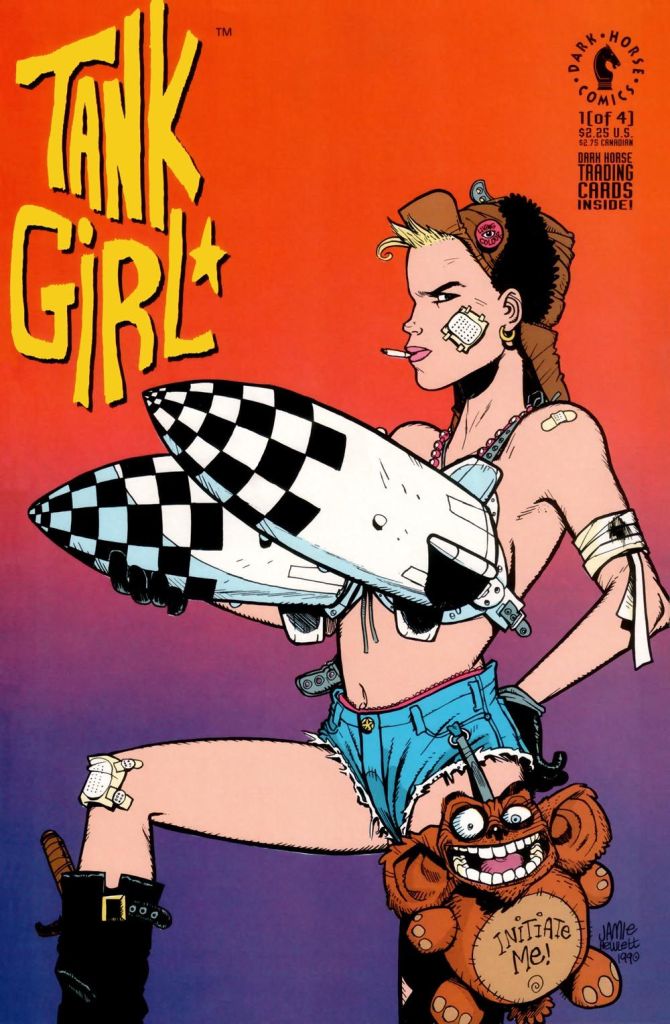
Tank Girl

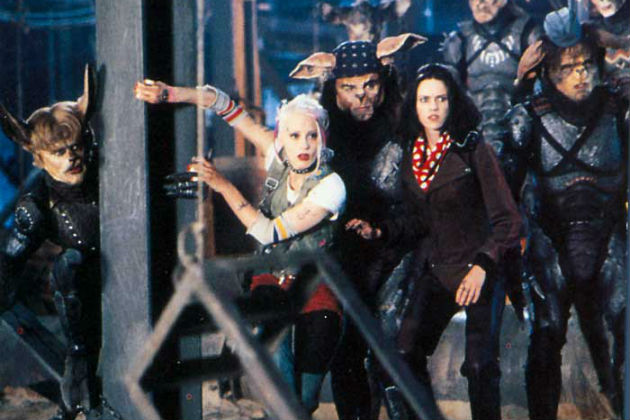
This movie speaks to the 90s kid in all of us and was MADE for cult status, which is to say, it isn’t very good. But it was quite quotable and a little risque, which is really all it took back in 1995. tank-girl-323And of course Lori Petty fulfilled all our alt-chick fantasies.

Tank Girl is based on a badass British comic strip but of course lost most of its uniquely British humour in the Hollywood rewrites. Studios, in fact, objected to a lot of the original material, such as showing Tank Girl in bed with her half-kangaroo boyfriend, this DESPITE the fact that it was a waste of a perfectly good $5000 10-inch prosthetic penis.

The year is 2033. We’re post apocalypse, naturally, and there’s been no rain for 11 straight years. Tank Girl and friends live in a wasteland fighting the oppression of “Water & Power’ led by Malcolm McDowell.

Audiences turned out to be mostly apathetic, and critics unkind, but it soon garnered an 4094473-2266063370-15327underground cult following who love the feminist, anti-heroine themes, and who can blame them? Flaws aside, Tank Girl IS a lot of fun to watch. She’s brash and bombastic and despite the fact that it’s the end of the world, she’s got an unending 90s-fabulous wardrobe. And as incredible as Petty is in the part, it’s also fun to occasionally see her animated counterpart leap into action.

I mean, in what other movie could you seek revenge for the prostitution of young kids to pedophiles by humiliating the pimp (or, well, madame) by making her sing Cole Porter at gunpoint? And in what other world would drought and murder combine to make the most fabulous weapon of recycling ever (because the human body is of course 60% water, and waste not, want not)?

Unlike most comic book movies where women are sexually objectified (or just plain absent), Tank Girl was herself sex-positive and comfortable in her dominance. She is competent, anti-establishment, strong, and fierce. Her sidekick, Jet Girl, is brilliant but less confident – and worth checking out because it’s probably the earliest we American audiences saw Naomi Watts, in a movie she now claims to be ashamed of.

Possibly the best thing about the movie is its obligatory 90s-alt soundtrack, assembled by Tank-GirlCourtney Love, and including tracks by Bjork, Bush, Portishead, Hole, Joan Jett, Veruca Salt, and of course Ice T (because he costars).

With a proud place on Luke Buckmaster’s list of 10 “weirdest superhero films”, it’s really something that has to be seen to be understood. Love it or hate it, it’s a film with longevity, and begs the question: is Tank Girl due for a remake?


Tank Girl can be seen on the big screen this Wednesday, July 13th in Toronto at The Carlton.

The Huntsman: Winter’s War

Ravenna (Charlize Theron) is the sister we know: kinda evil, not above killing kings in order to usurp their kingdoms. Ravenna is the one who the-huntsmantormented Snow White in the last movie, the wicked step mother, if you will. Her younger and less-known sister Freya (Emily Blunt) has powers that resemble Elsa’s, from Frozen, and they’re awakened when she undergoes a personal tragedy. She flees in grief, and tortured by sad and angry thoughts, she establishes her own land, her own army, all ruled with the vengeance in her heart. The best of her army turn out to be Eric (Chris Hemsworth) and Sara (Jessica Chastain) and they attract Freya’s unwelcome attention. They also attract each other and there’s a little bow-chicka-bow-wow. But Freya, scorned by love, can’t bear to seem them together, and slays Sara.

Meanwhile, back at home with Ravenna are the events of the previous movie. Ravenna recruits Eric, aka, The Hunstman, to capture Snow White after her escape, and promises to bring his wife back to life as a reward. a-sneak-peek-at-the-gorgeous-costumes-in-the-huntsman-winters-war-1740031-1461183847_640x0cHowever, he quickly switches allegiance and together they defeat and kill the Evil Queen, and Snow White is crowned in her place.

In this movie, an unseen Snow White (Kristen Stewart does not reprise her role) asks The Hunstman to do one final thing: to get rid of Ravenna’s magic mirror, still a source of evil.

You’ve probably already heard that this movie is not super good, and I’m not able to tell you any different. I’m also pretty grumbly about the fact that a movie with 3 strong female leads is still named after the man.

I’m going to focus on the thing that this movie does right, and that’s noticeably its costuming. It should be a surprise to none of you that Colleen Atwood is behind the genius designs.

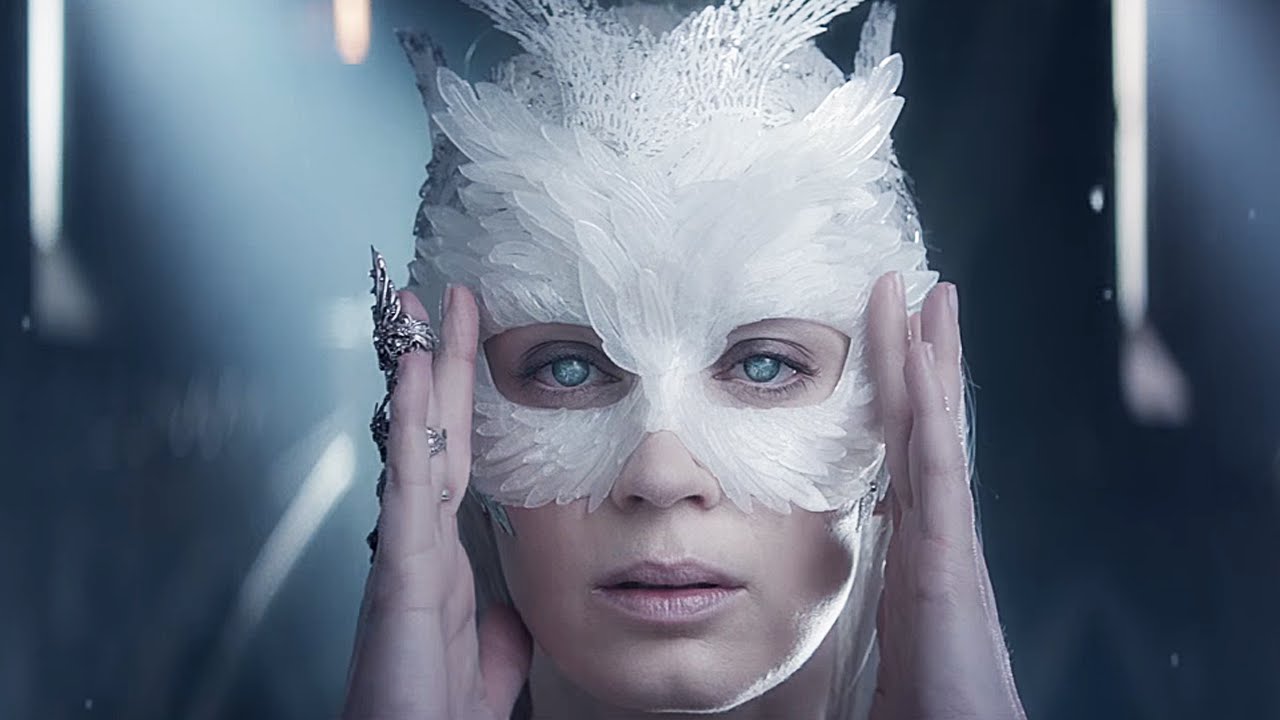
a-sneak-peek-at-the-gorgeous-costumes-in-the-huntsman-winters-war-1740028-1461183847_640x0cOn Freya’s costumes, Atwood says: I sourced a lot of fabric in Italy for the dresses that she wears. She has a lot of Italian velvets and silk in her dress and croquets from different vendors in Italy. Some of her fabric is vintage fabric I had in my stock. We wanted Freya to have something that wasn’t a crown. I have a 3-D printer in my crafts department, and this guy is a genius at operating it. I said, “Let’s do little tiny feathers and glue themmaxresdefault together.” So we grew that mask as separate elements in a 3-D printer and applied them to a facemask.

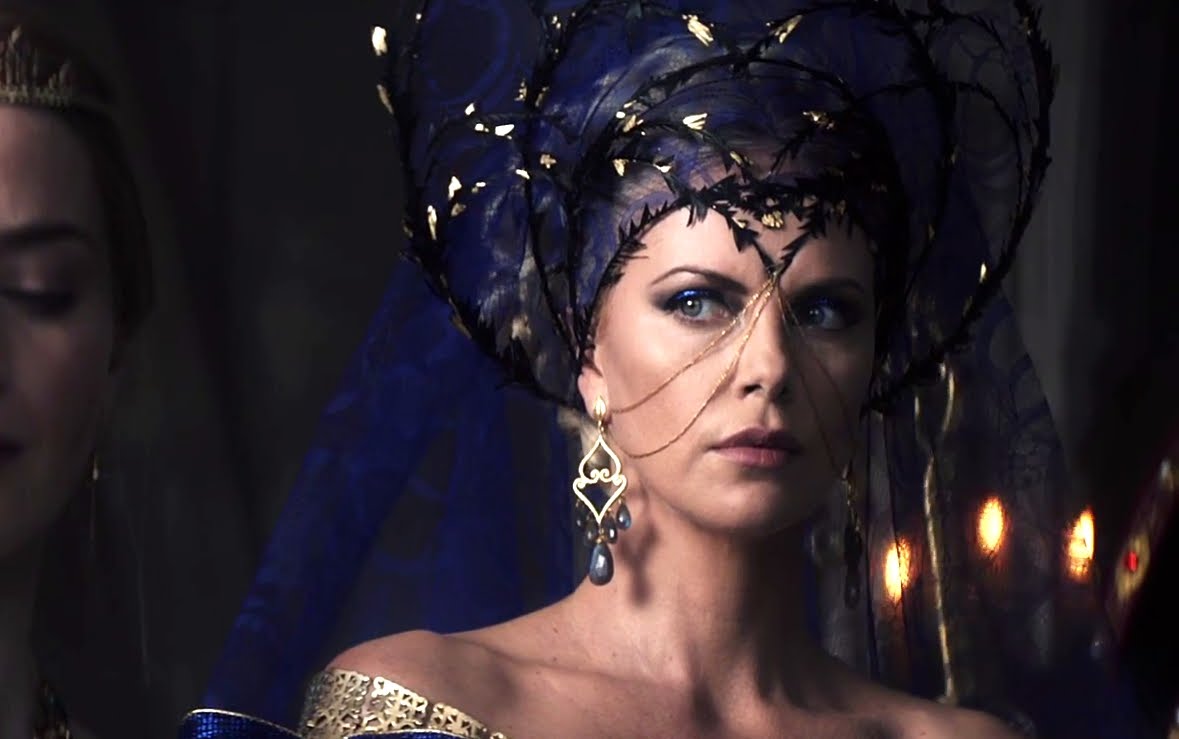
On Ravenna’s look: We built a different kind of cloak with feathers that I had all hand-foiled and made into the cape. It was quite an a-sneak-peek-at-the-gorgeous-costumes-in-the-huntsman-winters-war-1740032-1461183847_640x0cordeal for the people who had to feather it. I had a feather room, where it was just feathers stuck into Styrofoam. It was really beautiful, you walked in and there were all these shelves with gold feathers stuck in foam before we applied them to the cape.

On working in the fantasy\period genre: The big challenge is that you’re working with modern bodies, you’re working with people that are three times the size what people were in the actual periods. When you look at all the costumes from historical figures, you realize how small they were. You have to adapt that period or that fantasy silhouette to a modern body so that it doesn’t look charlizereally goofy. You back away from it to get the proportions right, so that you feel it’s historical, even though it’s on somebody eight inches taller than the average man was in that period, and it’s a woman.