So many movies are prefaced with those five sneaky little words: “based on a true story.” But what exactly do they mean? The answer is: nothing. Unless it’s a documentary, in which case you’re still not getting a complete truth, but at least you’re getting close. But in film we play pretty fast and loose with those words, and it’s up to the audience to decide how much weight we give them.
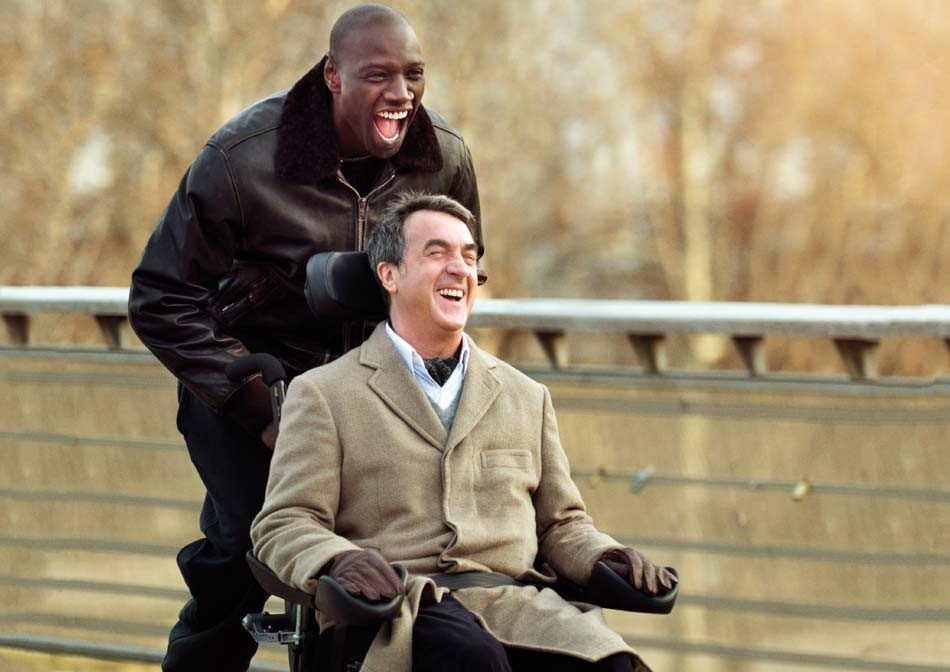
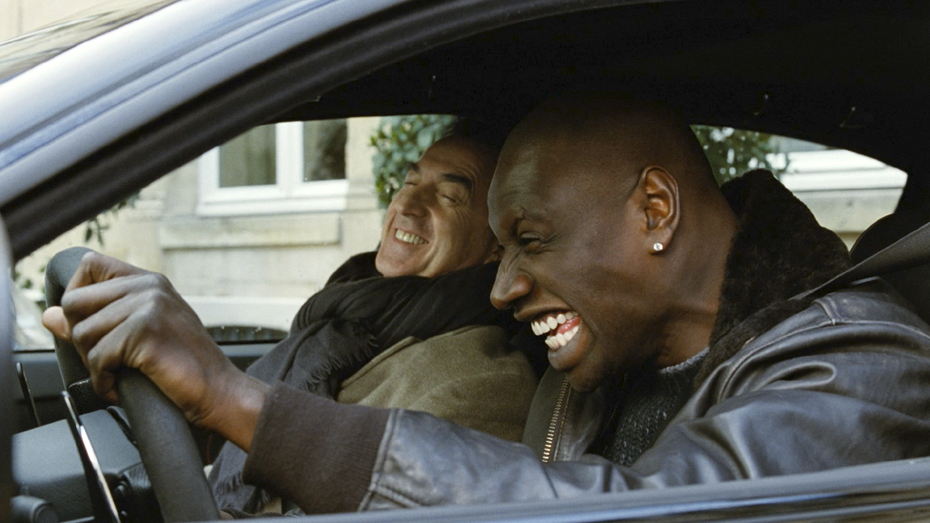
I got to thinking on the subject this week when I watched Intouchables, which is “based on a true story.” You may remember it’s about a tough young black guy who works for a paralyzed older rich one, as they touch and inspire each other’s lives for the better. In real life, the young 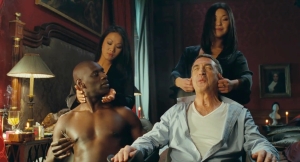 employee was actually an Algerian named Abdel. Does this change the heart of the story? Maybe not. But it does make me question the screen writer’s motives: did they just love this particular actor, who happened to be black, or did they feel it would resonnate better with us that he was African rather than Algerian, or did they think they’d get more mileage out of a bigger racial disparity? It doesn’t matter, I suppose, if you’re just there for a good story and some entertainment. But why then are directors still insisting those little words preface their fudged facts? We rarely have any of this information at our fingertips when we sit down with popcorn in our laps at the theatre. No one’s telling us what’s true and what’s just a cinematic embellishment.
Think back to that Will Smith vehicle The Pursuit of Happyness, based on the true story of Chris Gardner, who in the movie solves a rubik’s cube to get a shot at being a stock broker, and spends the trainer caring for his son in various subway bathrooms and homeless shelters so they can turn their lives around. In actuality, there was no rubik’s cube. Shocking, I know. Also, there was no kid. I mean, he had a kid, he conceived him while cheating on his first wife. But he dumped the kid with the mother and didn’t know where either of them were during his training. So, you know, not exactly the father of the year material that the movie pushes down your throat. Oh, and you know that big arrest (for unpaid parking tickets) that almost derailed his interview? Yeah, that was actually on a charge of domestic violence. That rosy little detail was left the fuck out.
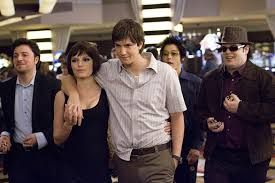 In the movie 21, a professor recruits star students, teaches them how to count cards, and takes them to Las Vegas to win lotsa money. Did this really happen? Apparently so. Only the MIT Blackjack team was almost entirely Asian. The movie? Completely whitewashed. Does Kevin Spacey look like a cross-dressing Asian to you? I mean, he’s phoning in his performance, but no, he doesn’t. There are a couple of throwaway Asians somewhere in the pack, but you’ll have to squint pretty hard past all the handsome white dudes to find them.
To make up for this sad racial bias, Hollywood presents to you: the “true” story of Rubin Hurrican Carter, an about-to-make-it-big boxer who is wrongly accused and convicted of a triple homicide thanks to an oppressive white system and spends 22 years in jail before some random Canadians turn up a piece of evidence that finally vindicates him. Great story, none of it true. First, the big match where Hurricane beats his (white) opponent soundly only the mean (white) judges give the win to the other guy? Yeah, didn’t happen. Well, I mean, it’s a historical fact: the fight did happen. But that other guy won fair and square – and by quite a long mile. A mile so long and so definitive that he sued the producers of the movie and won. Oh, and the part about him being wrongly convicted? Well, I hate to break it to you, but…I cannot attest to his guilt or innocence. All I can say is that he did have a colourful criminal past. Heavy on assault and battery. He was court-marshalled four times before being booted out of the army. He failed his lie detector test with flying colours and was convicted not once of these murders, but twice. The first verdict was overturned on a technicality. During his second trial a bunch of witnesses were now confessing that they’d lied for him about his alibi. He’s convicted again – but what about that vindicating piece of evidence? No such thing. Again, technicality. But it had been so long that no one was interested enough to put up a third trial, and so they all went home. But that doesn’t make for a rousing movie, now does it?
Fargo is one of my favourite movies, opens with a card that tells us that this too is based on a  true story. Exact words: The events depicted in this film took place in Minnesota in 1987. At the request of the survivors, the names have been changed. Out of respect for the dead, the rest has been told exactly as it occurred. But the true truth is that it’s a bunch of baloney. Yeah, there have been crimes in the world, sometimes even husbands killing wives. For money. But this story, friends, is a work of fiction. At the end of the Coen brothers’ screenplay, there is a note: “[the film] aims to be both homey and exotic, and pretends to be true.” The “true story” moniker has become a stylistic device.

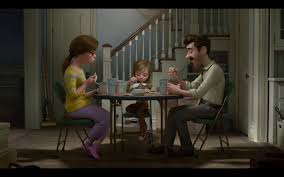 ng a young girl’s emotional life and decision-making from inside her head seemed just plain silly to me when the trailers for Inside Out were first released. What I couldn’t have possibly anticipated was how much insight we’ get through what seems to be such a simplistic concept into the way these five emotions interact as we grow up.
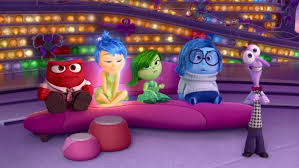 ance.
ance.

 h school teachers – she, art (being a talented artist herself, but recently plagued by arthritis) and he, English (being himself a writer, currently stifled by his alcoholism). They’re both a little isolated and angry at home, but shine in their respective classrooms and soon have their students engaged in a “war” – words vs pictures, or is a picture really worth a thousand words? It’s witty and interesting and while not their best work it was a surprising and gratifying Netflix find on a quiet night and I enjoyed it.
 hed, sure, but with a gorgeous pair of heels sticking out.







 irection of The Fault in Our Stars, which I despised for its manipulation. This one isn’t perfect either, but it allows its teenaged characters to be moody and awkward in sickness and in health.



 ASSHOLES WATCHING MOVIES