Monthly Archives: October 2015

Dan Aykroyd Brings the Blues to the St. Lawrence International Film Festival

The opening gala for the St. Lawrence International Film Festival kicked off Thursday night in Ottawa with none other than national treasure and hometown boy Dan freakin Aykroyd introducing the 35th anniversary screening of Blues Brothers.

IMG_3062The Blues Brothers were actually born in Toronto, which is where Aykroyd ran into John Belushi for the first time, at a bar on Queen Street where Downchild Blues Band was playing. Belushi was more into metal and punk but Aykroyd schooled him that night, and the music won him over, and musical director Howard Shore put a little bug in their ear, saying they should maybe start a band, and call it Blues Brothers.

The next time they met, Belushi had some 300 blues records and was already picking songs for a record for a band that didn’t exist blues-brothersyet. As you know, the two went on to be part of the original cast of Saturday Night Live, and they used this little band idea of theirs in a sketch. The rest is history: they recorded Briefcase Full of Blues, which topped the charts and sold 3.5 million albums, then they made seven more, plus the movie, and its sequel, and even a radio show. Belushi died in 1982, so now when the Blues Brothers play, his brother Jim joins Aykroyd on stage.
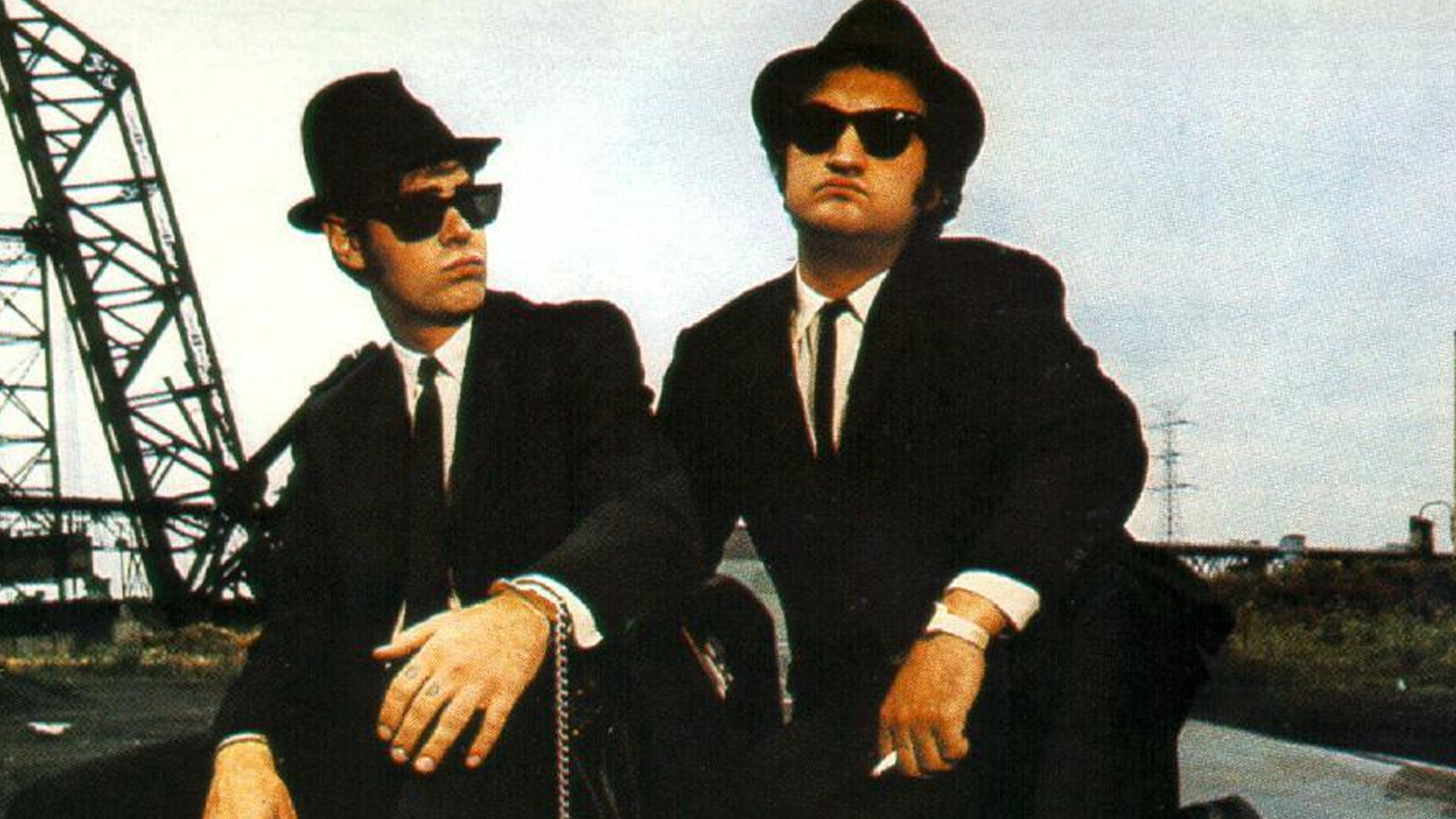
Aykroyd worked on the script for Blues Brothers while appearing on SNL. In it, Jake Blues (John), fresh out of prison, puts together his old bbrsband to save the Catholic home where he and brother Elwood (Dan) were raised. The film has a little bit of Ottawa influence in it: the ballroom of the Palace Hotel where the final performance takes place was patterned after Aylmer’s Chaudiere Club. And the air-raid siren atop the Bluesmobile was inspired by the one at Our Lady of Annunciation, where Aykroyd attended school in Hull – all in the Assholes’ backyard, as it were.
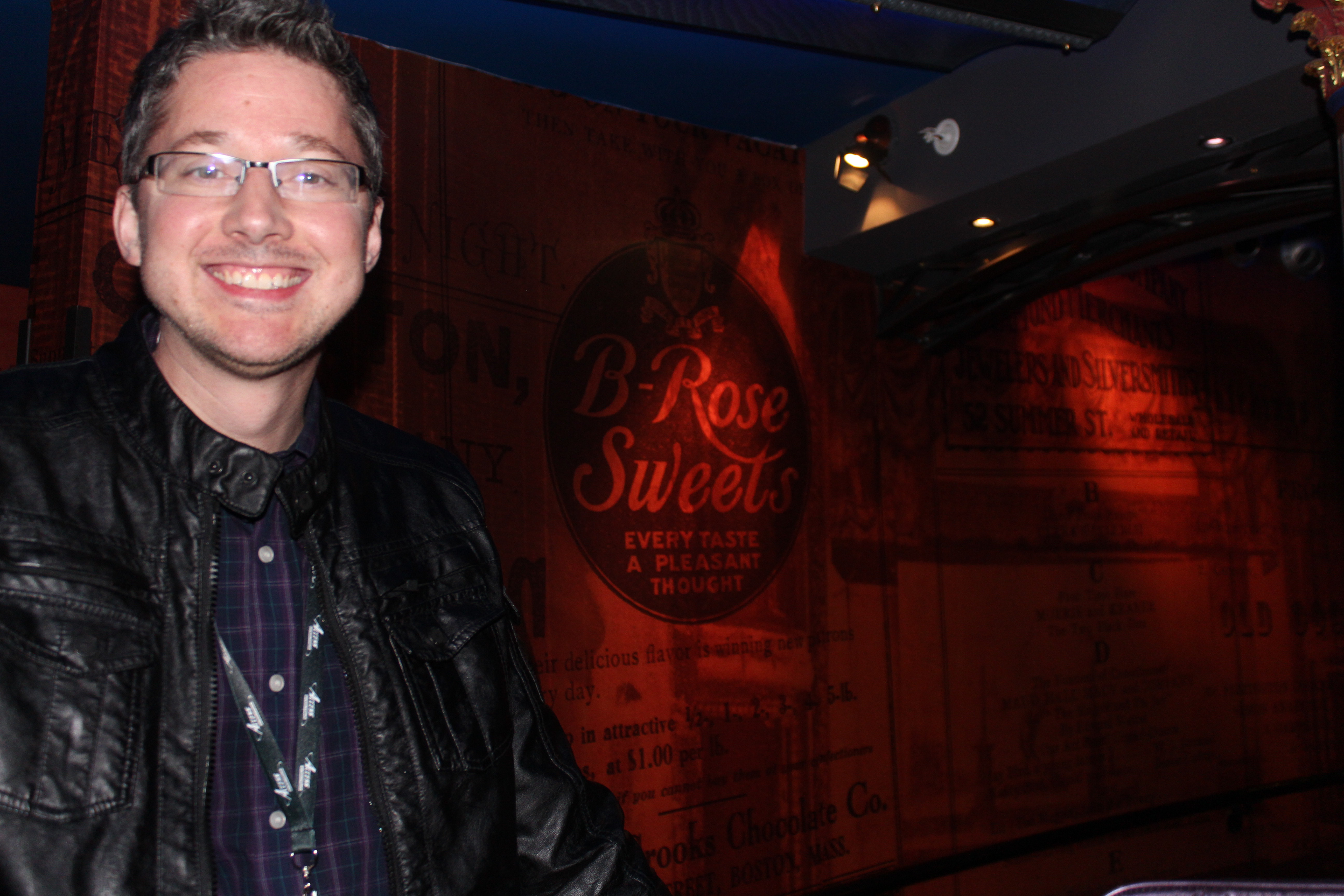
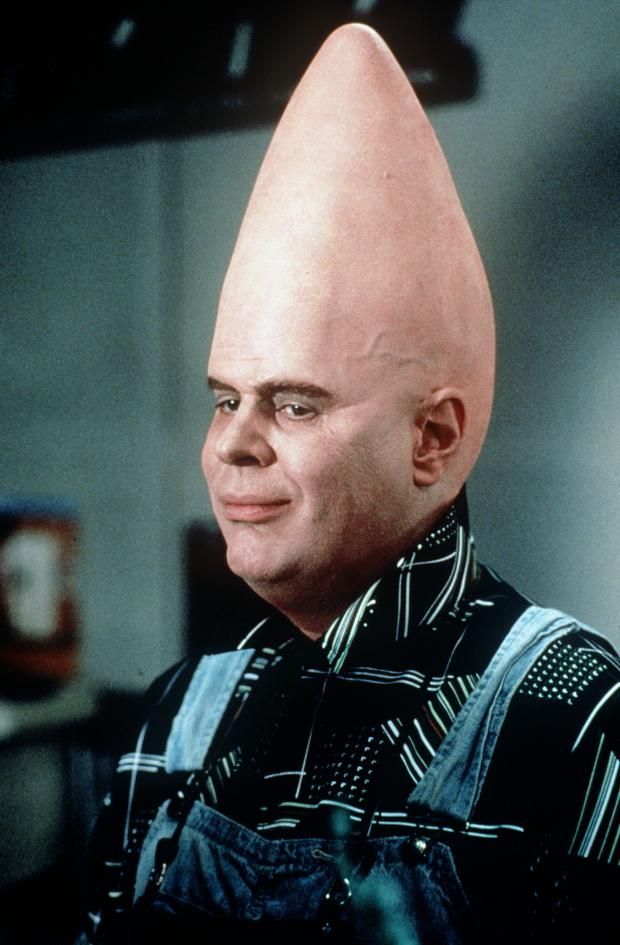
Aykroyd pulled up to the festival in a Bluesmobile of sorts, and walked the red carpet in his trademark shades. He sat down before the movie and told us that his favourite character to play was fe9d953c8dc8edccde5ad7dec9bdf039Beldar, the coneheaded alien, which he followed up with an immediate impression. I guess it’s not an impression if it’s YOUR character. “I talk at home like that,” said Aykroyd, and we believe him. His favourite movie, though, was Blues Brothers because “I had to use all the skills” – acting, writing, singing, dancing, playing the harmonica, stunt driving, not getting killed by Carrie Fisher. When someone asked about the pinnacle of his career, the question is quickly retracted, the asker not wishing to imply that the pinnacle isn’t perhaps still ahead. “May it please be behind me,” quips Aykroyd, and he’s quick to name the highlight: dancing on stage with James Brown.
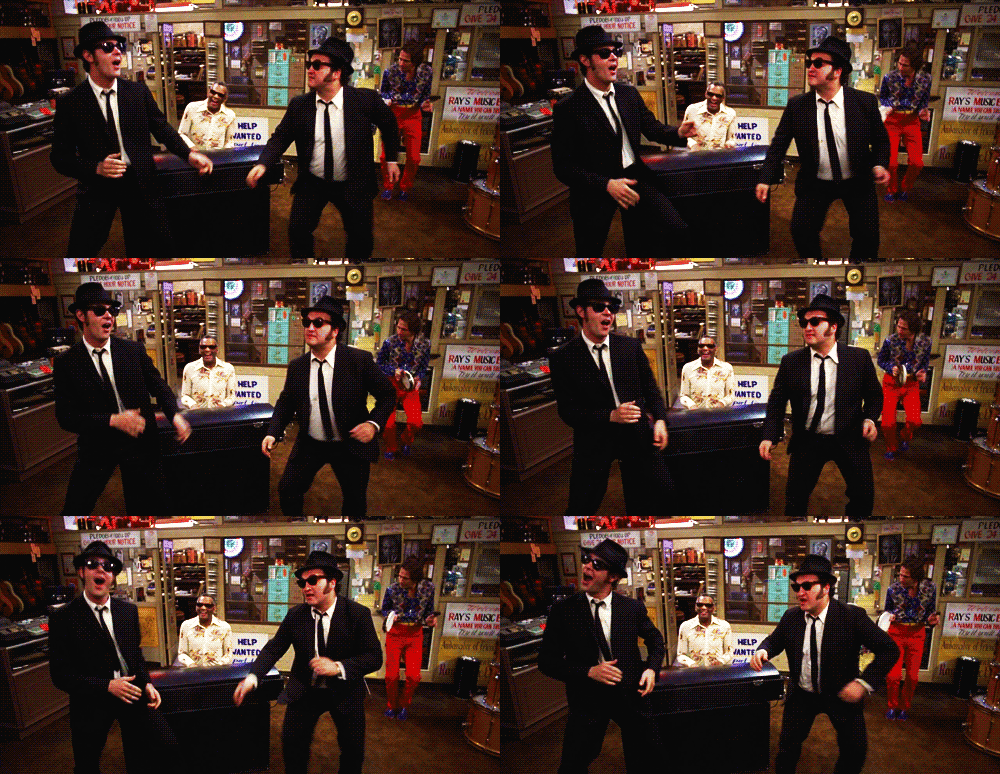
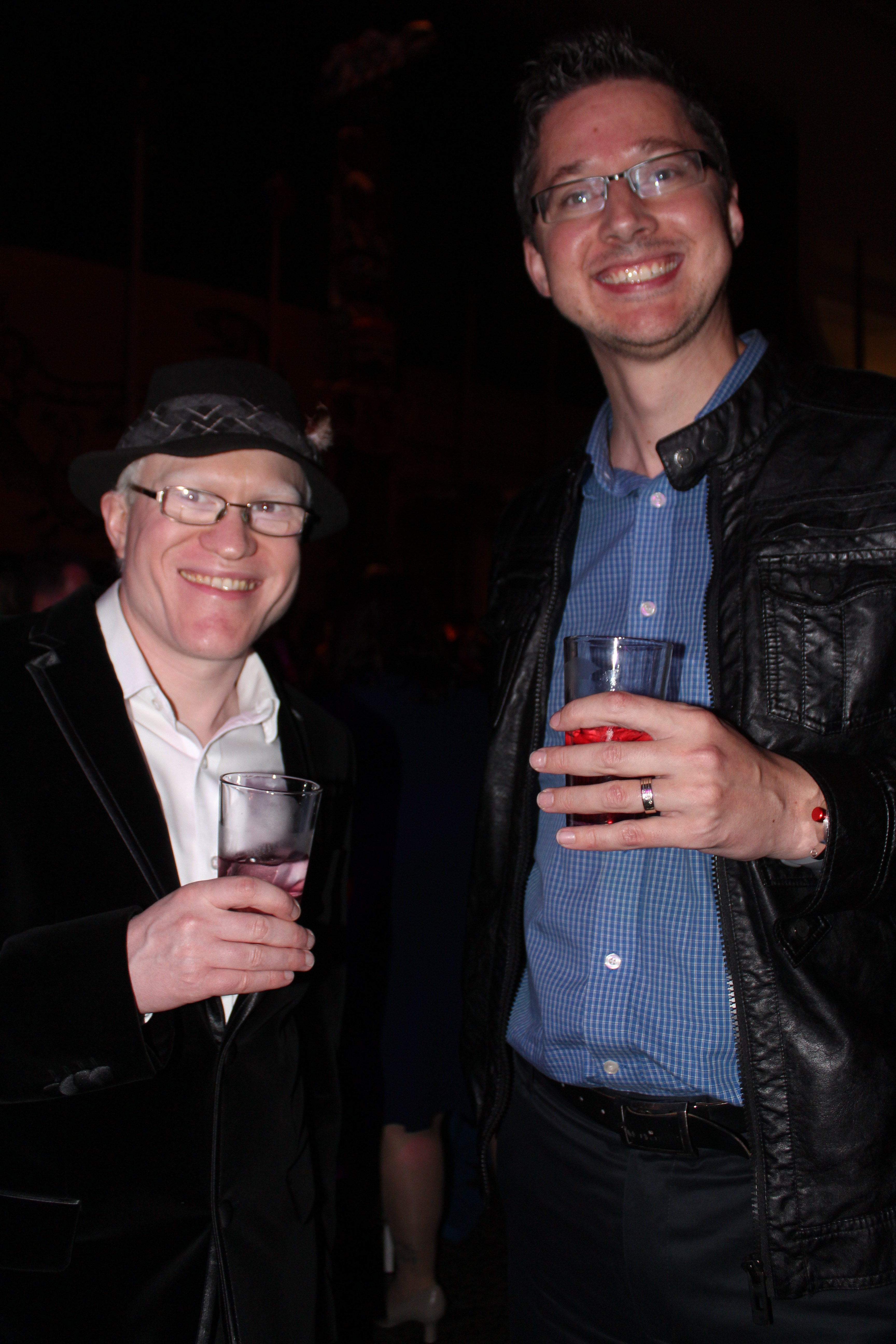
Without further ado, he introduces the movie, an extended cut with extra car chase, and assures us IMG_3081that he still has 80% of the moves. Watching him break out into a frenetic dance up on the big screen, you kind of want to call him on it. I’m struck by the tremendous sideburns worn by Aykroyd and Belushi, and by Elwood’s white socks. The movie is full of cameos you can hardly believe – Aretha Franklin is sassy in a stained apron, Ray Charles plays so fervently we can see the reflection of the piano’s keys in his glasses, James Brown preaches to the choir (including Chaka Khan), and John Lee Hooker gets everyone stomping.

Matt’s favourite part was hearing that Beldar bit, but mine is hearing Matt’s giggles throughout the IMG_3101movie (he’d never seen it, if you can believe that). The movie is being screened as a special 35th anniversary edition, and it’s nice to see it on the big screen rather than “in a motel room at 1am,” as Aykroyd puts it.
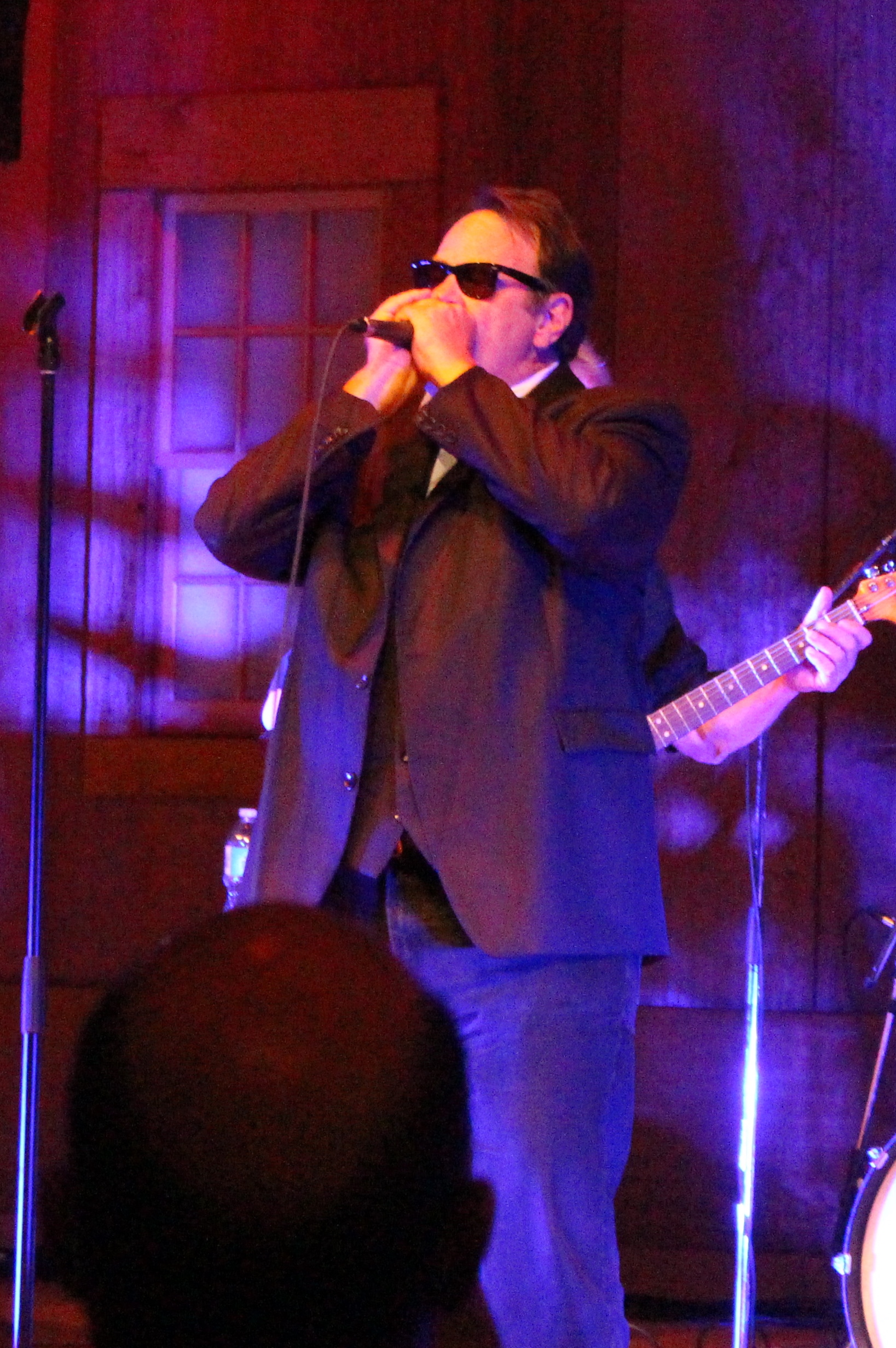
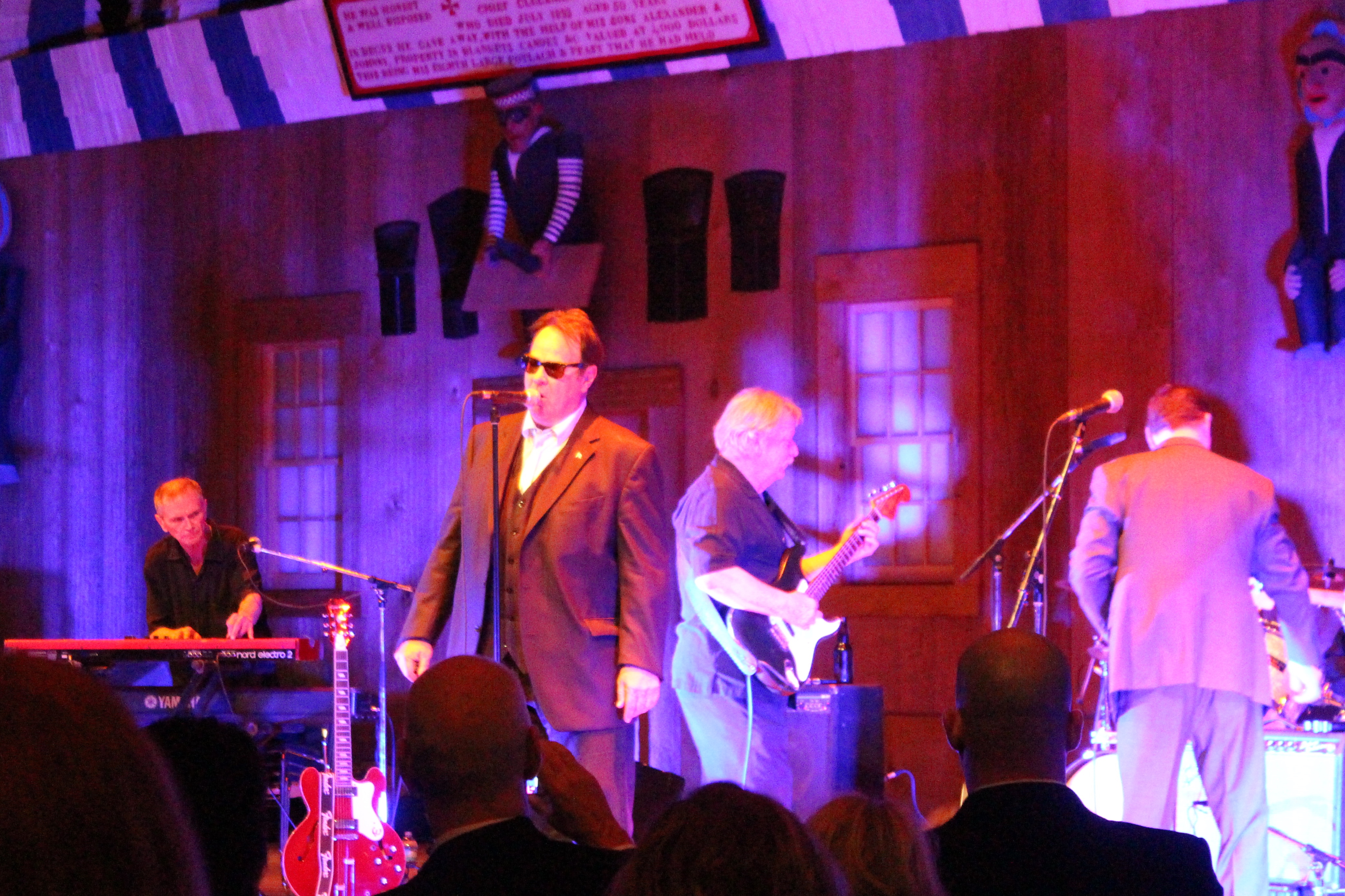
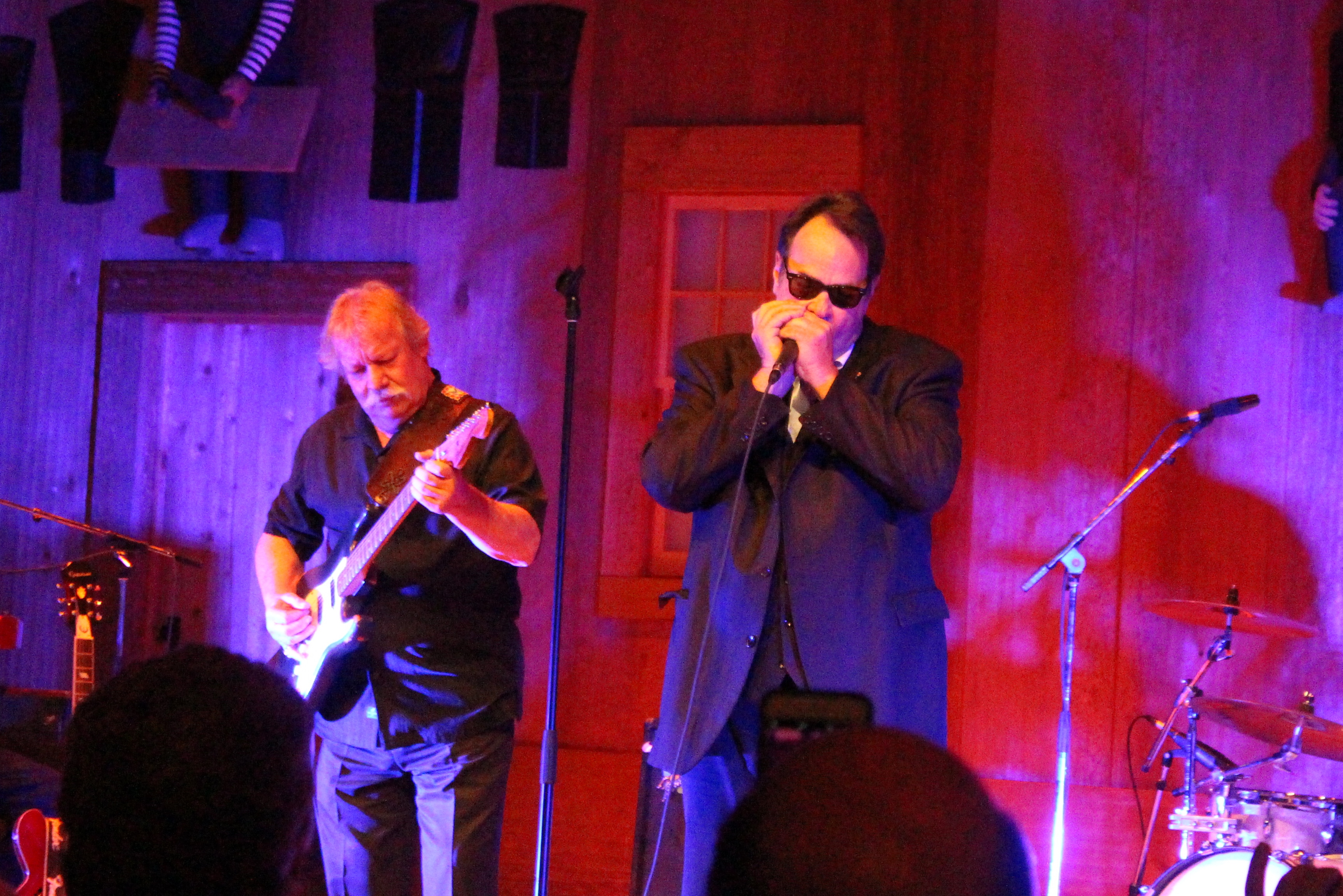
Afterward, there’s a gala reception where we are treated to a poutine bar (eminently Canadian) and drink Crystal Head vodka (Aykroyd’s own brand).  Downchild Blues Band is playing for the crowd, sounding just as good or better than they ever did. When Aykroyd joins them on stage, it’s electric, and pretty soon we’re dancing on and sharing the stage with a real live Blues brother.
IMG_3106

IMG_3130

IMG_3132

IMG_3102

Some Independent Titles to Look Out For, Courtesy of the NHFF

A Light Beneath Their Feet – Taryn Manning plays a bipolar mother who has worked hard to get her life back on track. After a severe episode left her hospitalized, she lost custody of her LightBeneathTheirFeet-W1-210x157daughter for several years and only with diligent, close work with a doctor did she earn back that custody and now has a very close relationship with her. The daughter (Madison Davenport), however, a high school student in her senior year, is feeling the pressure of that relationship. This is really the daughter’s story. She dreams of going away to college – to California, where the weather is “stable,” but knows that her mother remains medicated only for fear of losing her. If her daughter is gone, what’s the point? I liked this for the portrayal of bipolar disorder – not always done well or compassionately or truthfully or fairly in the movies. Yes, Hollywood likes to dramatize. But at this film’s poignant core is a loving mother who would do anything for her daughter. And she happens to have a disorder that’s really tough to manage – tough on her, and tough on her loved ones. And yet we’re able to talk about the daughter’s challenges without vilifying her mother. It’s an honest conversation that I wish we’d see more often.

Director Valerie Weiss is also the kind of film maker we need to see more often. With a dual passion for both art and science, she majored in Molecular Biology at Princeton while earning a Certificate in Theater and Dance.  “It was at Princeton that I transitioned from acting to directing plays and really felt that I’d found my niche.  Directing was so much more suited to my personality and my desire to think about the whole picture as well as the minutiae.  So, I decided to keep going with these dual interests and went to Harvard Medical School to do a Ph.D. in X-ray Crystallography (the 3-D photography of molecules) and founded a film program for graduate students so I could continue directing and learn to make movies.  I made my first film while I was writing my dissertation, and two weeks after we wrapped production, I had to defend my thesis.”

The Second Mother: I enjoyed this movie even more in the discussing than the watching. Brazil’s official submission to the 2016 Oscar race for best foreign language film, The Second Mother (actual title: Que Horas Ela Volta) tells the story of Val (Regina Case), a long-time a28cdd43-1308-4ed2-b04b-3d862cf7263a-1020x612housekeeper to an affluent family, who spent years caring for someone else’s child while her own daughter is raised “back home”, the recipient of Val’s hard-earned paycheques but not her physical presence. After a decade’s absence, her daughter moves into the employer’s home, and cracks open the class system, exposing hypocrisy. The film is quite subtle, and I struggled with the fact that I actually found the daughter to be quite abrasive, which made it hard for me to admit she was making some valid points. The film is character-driven, but I suspect that you’ll find afterward that it has provoked the heck out of your thoughts at the same time. What’s interesting is that eschewing the drama, this film is actually quite mild in tone, and often more than a little comic. It’s not lecturing you, but there’s a subversive undercurrent that builds. The writing is taut and the acting on-point; Regina Casé is so good that we inhabit her shabby shoes despite the fact that the action belongs to everyone else.

Director Anna Muylaert (that’s right, two female film makers in a row! – good job, New Hampshire!) co-wrote the piece with star Casé and held two special screenings in Brazil. The first was for housekeepers and nannies, including the woman who worked for her parents for 30 years. There were lots of tears at this screening. The second screening was attended by friends of family, many of whom felt uncomfortable watching the film, and recognized themselves in the mirror staring back. The country’s social dynamics are persistent, Casé remarks “If you cannot change the world, at least you can change the situation that is close to you.”

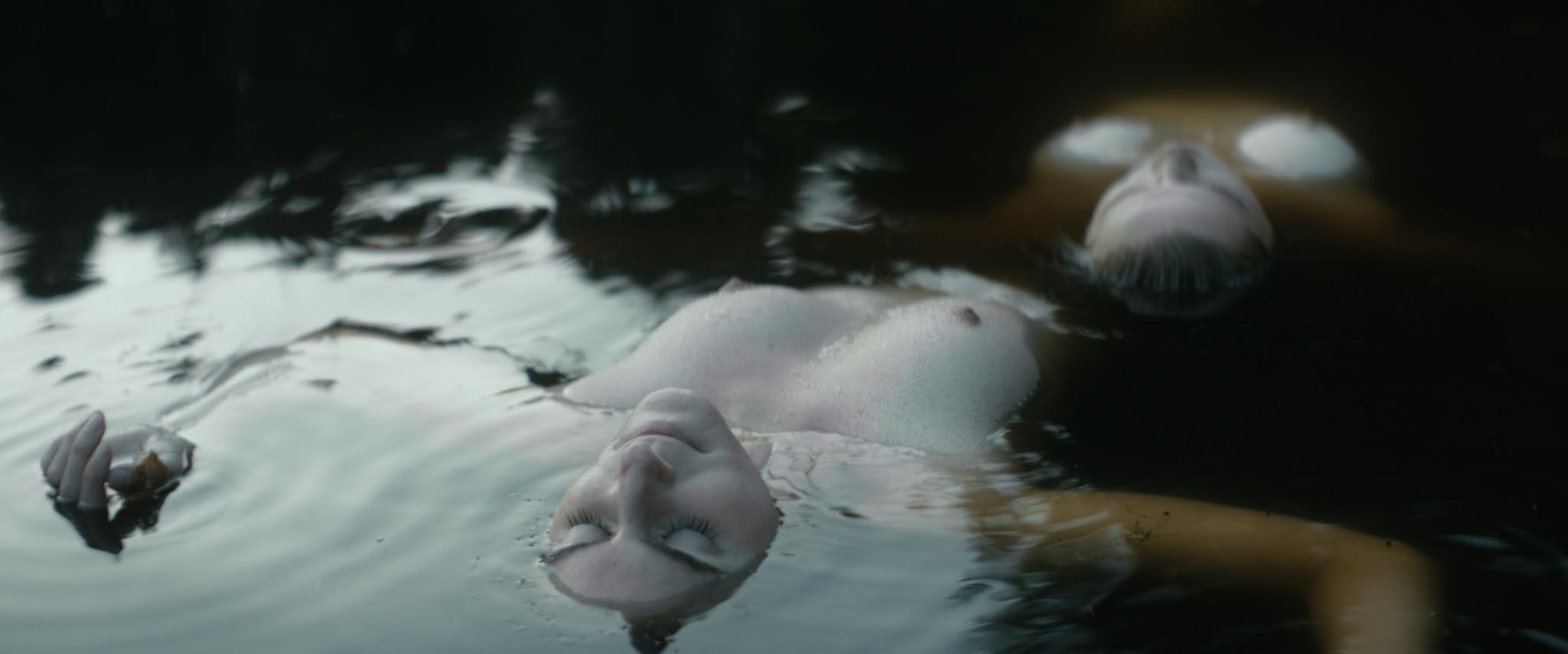
Bridgend: Sara and her dad move to a small village in the county of Bridgend (Wales) where the quiet teenaged girl starts to make friends with a group of kids her cop father doesn’t approve of, and not because of their clothes or manners or grades or attitude. It’s because this small town is having an epidemic of teenaged suicide, and now his daughter’s smack in the middle of Bridgend_PresseStill_0000346it. If that’s not unsettling enough, this film is actually based on real events – between 2007 and 2012, 79 suicides were reported in the tiny borough of less than 20 000. The movie never explains why these suicides are happening because the real world was never able to either. Cult mentality? Small town boredom? Irresponsible press? Teenaged rebellion? Bad parenting? It was disorienting and I felt helpless and scared – one by one these kids just disappear. There’s a communal depression that’s oppressive, and yet it’s pain-stakingly well-shot, at times visually beautiful, a jarring juxtaposition to what we’re experiencing emotionally. The memorial rituals and obsession with mortality deteriorate near the end into what I can only describe as a fever dream, because I honestly don’t know what to make of it. I’m desperate to know one single other person in the world who’s seen this movie and who can guess as to why I felt this movie was so…aggressive. Grounded sadly in reality, this film still has the shivery feel of a horror, and it’s been hard to shake.

Housebound/Creep

2 scary movies for the price of 1! (actually I bought Housebound from Amazon for $5 and watched Creep on Netflix, but anyway.)

Housebound: Kylie faces a fate worse than prison when she’s arrested for stealing to feed her houseboundaddiction: house arrest, with her mother. Sober, presumably. Exactly the reason she did crack to begin with. But we pretty soon see that it’s not just her Corrie-loving mother and silent-as-a-stump stepdad she’s avoiding – there’s a fourth presence in the house, and lately it’s making itself known. The visiting psychologist has a thing or two to say about this of course (it may land her in a psych ward if she’s not careful) but the dude who’s monitoring her ankle bracelet is more keen – turns out, Amos is a bit of a paranormal savant.

Housebound is given to us by way of New Zealand, which means it’s a horror-comedy hybrid, and it actually delivers on both fronts. Gerard Johnstone is a newbie director and he’s not too flash but he’s got all the creepiest angles down pat.

Creep: God-damned found footage. I wouldn’t even have attempted this one if it wasn’t for the charming Mark Duplass, who has cast his spell on me ever since I first came upon him on The creep-2014-movie-review-mark-duplass-josef-tubbie-time-bathtub-sceneLeague. There are two actors in this movie, but since one is behind the camera, this is really Duplass’s show, and it succeeds on his performance. Having placed a Craigslist ad for a cameraman’s services for the day in order to record some words of wisdom to his unborn son before cancer takes him away, the two men find the transaction not going quite as advertised.

Patrick Brice, the guy behind the camera, is in fact the director, and the two wrote (or improvised) the piece together. It’s truly minimal, low on blood but high on creep. I won’t say much more because it’s good to go in blind, but this is not exactly horror, so much as…unease? Anxiety? Terror? Something like that. Something interestingly outside the genre.

The Preppie Connection

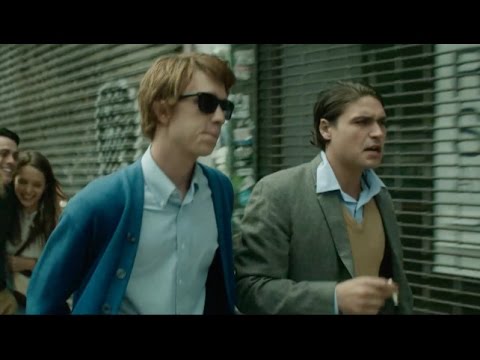
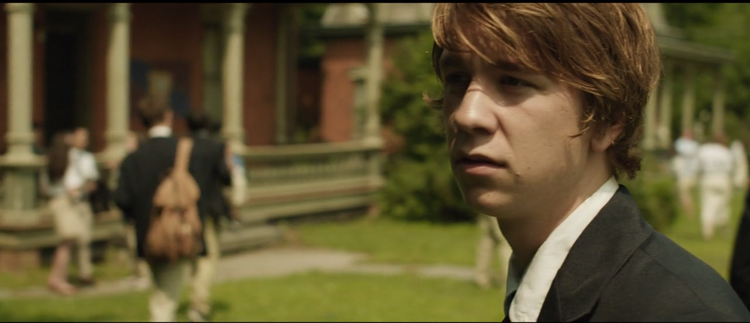
A gifted teenager from a working-class family gets accepted into a hqdefaultfancy prep school, with scholarship, without ever having applied. His mother has certain pretensions you see, and wants to see her family move up in the world. So she did the applying, and the accepting, for him (her depression and classic guilt trips assure compliance). But Tobey (Thomas Mann) knows he doesn’t belong there – “Before I even started Sage, I knew he was finished.”

A Columbian exchange student lets him know how to fit in (copious amounts of Lacoste go a long way – it’s 1984) and a pretty blonde girl, Alex, (Lucy Fry) gives him the motivatiimagesCAZ3G5GCon to stay. She’s in love with the preppiest, poppiest collar of them all though, so that spells trouble. How to get into the inner circle? Well, keeping in mind it’s 1984, Tobey figures it out pretty quickly: cocaine. Lots and lots of blow.

This movie is actually based on a true story of how a high school kid smuggled $300k of uncut cocaine into the US (remember that conveniently Columbian friend he made on the first day of school?).

You may have cut school once or twice in your day. What kind of shenanigans did you get up to? Pot? Sex? Soap operas? This kid flies to a foreign country and makes friends with a drug cartel. You can probably guess that things kind of get out of hand. The reason to watch this movie is to find out two things:

  1. Did he have fun while it lasted?
  2. Was it all worth it?

I really liked Thomas Mann in Me and Earl & The Dying Girl, and Screen+Shot+2014-10-27+at+8_44_22+PMagain in The Stanford Prison Experiment (he even popped up in Welcome to Me); this kid is someone to keep your eyes on. He’s excellent in this, effortless.

Director Joseph Castelo went to boarding school himself in the 80s, and remembers hearing about this story. Ultimately, it broke on 60 Minutes and then the whole country knew, and were aghast. Reflecting on his own experience, Castelo says “I was looking back on many of my own experiences and my own feelings of being an outsider in a boarding school. I wasn’t from a wealthy family and I was experiencing culture shock when I went to boarding school, just like Tobey experiences culture shock. You know you very much want to be a part of tThe+Preppie+Connection+Casthose circles, and it’s like any kid in high school, you need to figure out what’s the way in, how do I get into that inner circle, how do I become a part of this system that you have suddenly been thrust into and either you rebel against it or you work at being a part of it, and in a way, Tobey did both which is interesting. It made me think about my own impulses and my own thoughts and feelings when I was in boarding school. It really was cathartic. I really did feel like I worked through a lot of my own life.”

Sam Bisbee, the film’s music composer, adds his own personal touch, having worked and toured during the 80s. He says he “jumped at the chance” to work on the film because “the world and universe of the film is the same universe I grew up in, at almost the same time as the film’s setting. In the mid 1980’s I was a boarding school student at a New England prep school, and this was the time when I fell in love with music (I, also, clearly remember when the real life scandal happened at Choate).”

This film debuted just a few weeks ago at the Hamptons Film Festival, and was an excellent choice for the New Hampshire Film Festival as well. It’s not your average coming of age story, but it’s funny how even a rags to riches high school drug kingpin can still feel relatable and familiar. Maybe it has something to do with the intimacy of the film – it feels like we’re very close to Tobey. We know what he’s thinking before he says the words. We’re really inside his head, but there’s a cinematic wash, an 80s patina if you will, that still gives the movie an interesting sense of style.

I really enjoyed this one, and I’m pretty sure you will too. It’s playing at the St. Lawrence International Film Festival this weekend – Saturday October 24th in Potsdam, where it is receiving the inaugural Empire State Award, for excellence in filmmaking for either a New York Story or a New York Filmmaker. I’ll keep you posted on its wide release date – this is an independent movie that deserves to find its audience.

New Hampshire Has Reason to be Proud

Sean and I made the beautiful drive down to New England last Thursday for a long weekend of film festing in Portsmouth, New Hampshire.  We also made a frenetic drive back on Sunday in order to cover a local happening (The Monster Pool Horror Anthology – review coming soon) last night and because today is election day here in Canada, and there’s no way we were missing that.

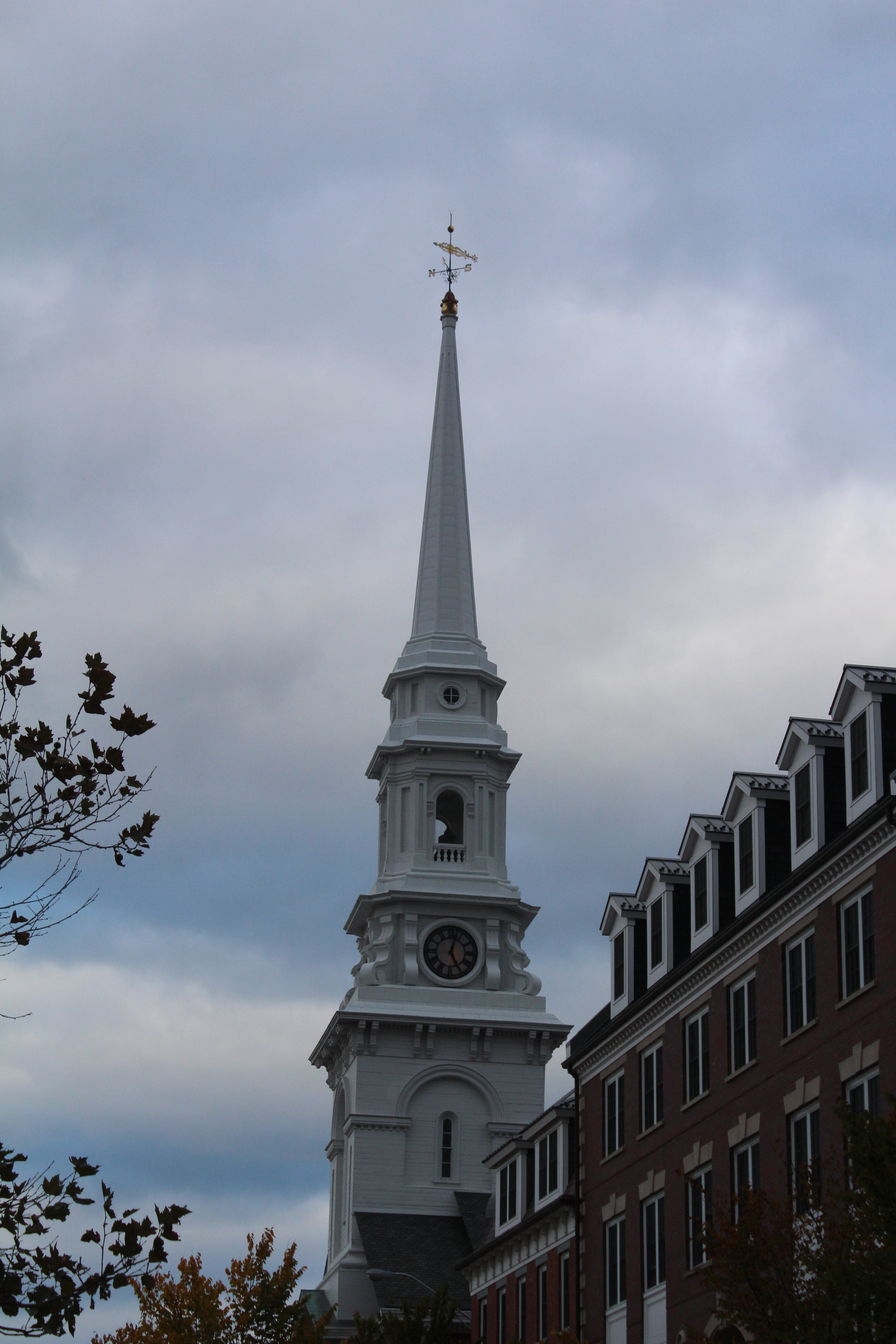
I’m finding that our coverage of the New Hampshire Film Festival is going to read a lot like a love letter to the city of Portsmouth. Home to about 21 000 residents, it’s bursting with IMG_2951historical charm and significance. And I mean it’s just sick with quaintness. The downtown is distinctive and beautiful and eminently walkable. It feels cared for. And I suppose this is what has distinguished the New Hampshire Film Festival for me: it has a real sense of community. Don’t get me wrong, it’s attracting plenty of outside and international interest as well, and I think that trend will only continue as this little festival is landing some pretty major films. But each screening was attended by many locals who clearly took pride in this festival. We were greeted warmly everywhere we went. The volunteers were friendly. And though we found this festival to be well-organized and well-run, there was this pervasive feel of the insouciant. This is the laid-back film festival, perhaps a tribute to the unflappable New Englanders who have done an impressive job of making this look easy – and I tell you now, it is not. But the wrinkles, if there were any, were invisible.

portsmouth nhffPortsmouth bustles with tourists in the summer, but I think she may look her best in the autumn. Its historic seaport still sparkles, but I loved seeing leaves on the grounds of architectural highlights, including Colonial, Georgian, and Federal style homes. The city is replete with fall colours and decorative touches – it starts to feel like the set of an idyllic small-town, except when you sit down to eat, at which point it tastes like the very best of big-city eating.

IMG_2950The seafood. We sampled local oysters from Franklin‘s, scallops from The District, and the best-ever clam chowder from Robert’s Maine Grill (Kittery, Maine being 2 minutes across the river). And don’t get me started on the lobster rolls. The movies at this point were incidental – this trip was already a culinary and sight-seeing success.

Okay, I’m lying. The movies are never unimportant. We’re Assholes: it’s what we do and why we came. We’ll get to those. First, though, the venues.

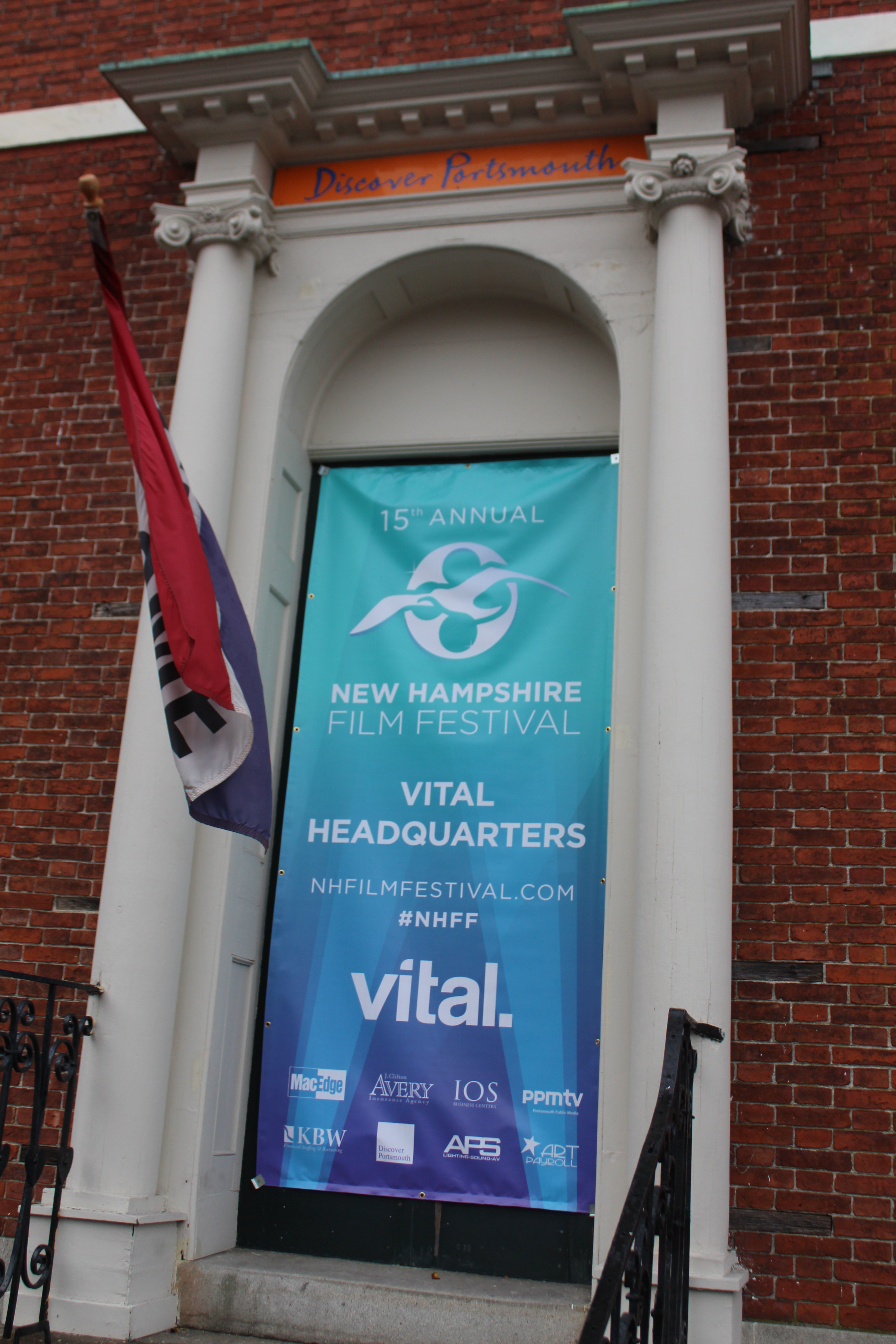
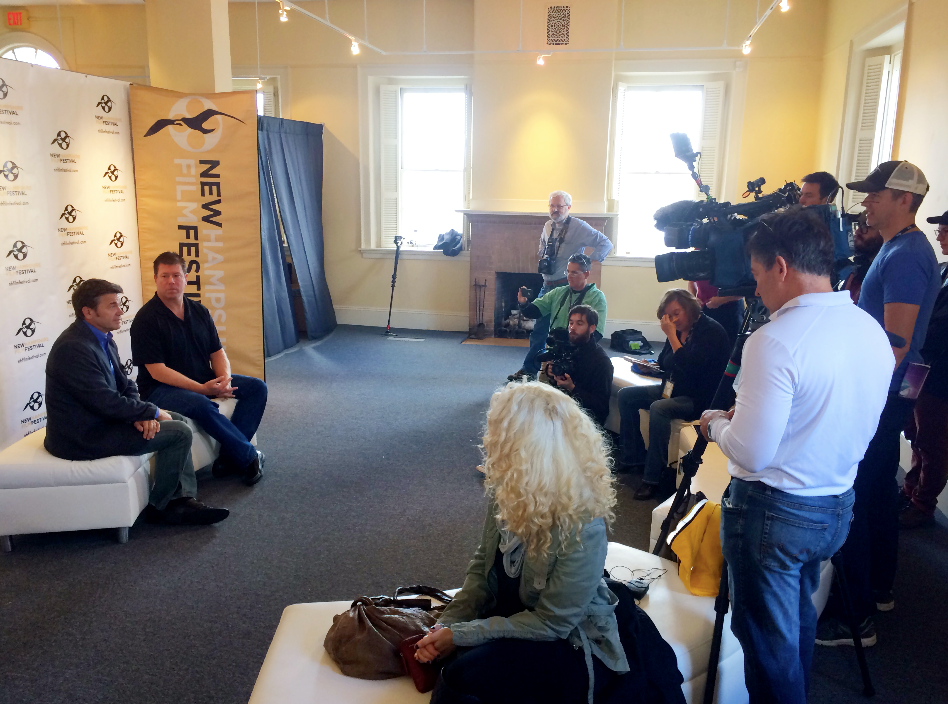
We rolled up to Discover Portsmouth Center first, a visitor center (this is me taking pains to spellIMG_2767 centre the American way) extraordinaire. It’s a gallery, a gift shop, a museum, a gateway to the Black Heritage Trail – really the cultural heart of the city (which seems to have attractions worthy of a city  many times its size), and also serves as the vital headquarters of the New Hampshire Film Festival, which is how it got to host a meet and greet with John Michael Higgins and Jimmy Dunn.

Both of these fellows are New Englanders; Jimmy Dunn you’ll know as a stand-up comedian who also appeared on the sitcom The McCarthys, as Joey McIntyre’s (fraternal) twin brother. John Michael Higgins, as we’ve already covered, is an absolute favourite of mine because of his fantastic charactermgs in many of Christopher Guest’s best (like Best In Show), but this guy gets hired for everything, from Pitch Perfect 2 to Broadway plays, to roughly half of all running sitcoms, including Arrested Development and Happily Divorced. More on them later (they were part of a lively and crazy-quotable comedy panel alongside Tom Bergeron and Juston McKinney).

On to our first film of the festival, Touched With Fire. This one screened at The Music Hall, which immediately requires me to derail this review in order to gush about the venue instead. It was recently declared an “American treasure” – and yes, it is. It’s a 900-seat theatre that you’ll immediately waTMS Music Halllk into and think: how dare you be so charming? It’ll make you think twice about ever setting foot into a dirty old Cineplex ever again, I’ll tell you that much. Built in 1878, it’s the oldest operating theater (American spelling!) in New Hampshire and the 14th oldest in the United States. It’s clearly been lovingly restored and it’s rocking character like a boss. It’s a venue-of-all-trades, home to intimate concerts (Suzanne Vega), readings (John Updike), and of course, independent cinema (we saw a poster for upcoming screenings of Grandma, a film which weIMG_2952 heartily approve). The lobby makes a strong statement, and the auditorium is lovely, but it might just be an area usually unsung that wins you over: after using the facilities, Sean declared the washrooms to be “the best ever” and insisted that I had to pee. I have never heard Sean remark upon washroom facilities in my life, and am usually skeptical about any men’s room, but when I visited the ladies’ quarters, I saw instantly what he was talking about, and they ARE magnificent. Obviously, we Assholes are in the business of reviewing movies, not restrooms, but just to prove to you we’re not nuts, appreciation for these washrooms is such that they’re actually nominated for Best Restroom literally in all the land, and I urge you bathroom-575x346to vote now (until October 31st) – even if you haven’t peed there yourself,  you can take my word for it, I promise. (I was too shy to snap a photo, but thanks to braver souls and the Internet, check em out!)

So, here we are: a thousand words about the New Hampshire Film Festival, and still not a single movie review. It’s your fault, Portsmouth, for being a unique place to discover and enjoy in your own right. You don’t need a film festival to earn tourists, but I’m sure as heck glad you have one, because not only were we impressed by your lineup this year, we can’t wait to come back and do it again in 2016.

NHFF screened something in the neighbourhood of 100 movies, and like any festival, you can’t see ’em all. We missed some with regret but regretted none we saw, and I guess that’s the greatest compliment you can pay a festival. Our selections:

Touched With Fire

The Preppie Connection

The Second Mother

Experimenter

A Light Beneath Their Feet

Bridgend

Chicken

Mississippi Grind

The Witch

Check back for more coverage of NHFF including the comedy panel and the red carpet, and for reviews for each of the films.

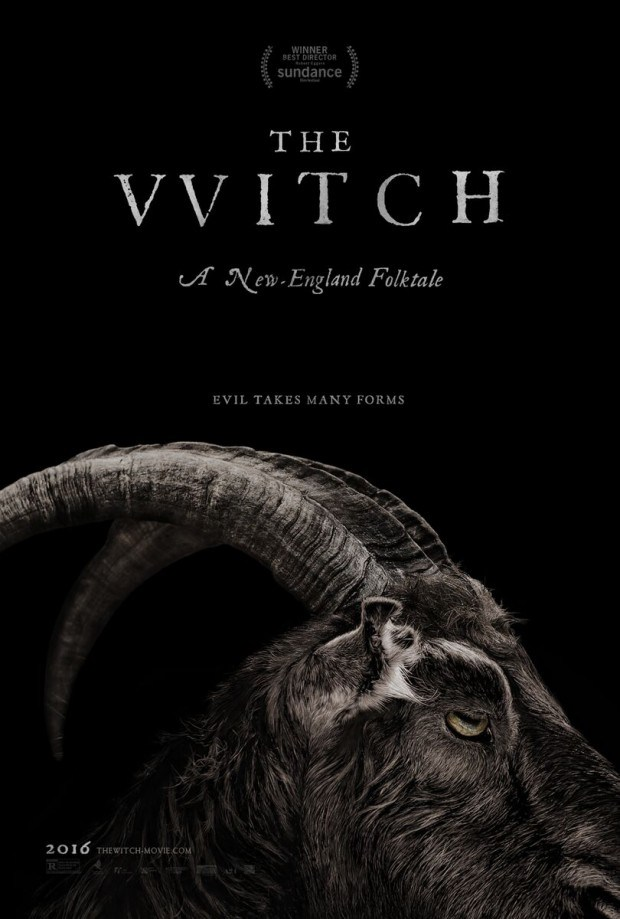
The Witch

Let’s get it out of the way right up front: The Witch will make your skin crawl. If you like horror movies then mark your calendars and track this down when it comes out next February!

We jumped at the chance to see the Witch at NHFF last weekend, where it won Best Feature (the festival’s top prize).  The Witch has also screened at Sundance and a few other festivals, but the NHFF screening was the last one prior to release, so if you haven’t been lucky enough to see it yet then you have to wait until February.  I got the sense this screening only happened because director Robert Eggers is a New Hampshirite, particularly because at the distributor’s request, the balcony of the Music Hall was blocked off in order to keep the screening as small as possible (only around 400 people ended up being let in).

The Witch has gathered significant acclaim everywhere it has screened, and all those accolades are well-deserved.  In addition to Best Feature at NHFF, Mr. Eggers has also been awarded the Directing Award (Dramatic) at Sundance and the Sutherland Award (for best first feature) at the London Film Festival.  I hope that acclaim helps secure a wide release for this movie.  It truly is worth watching even if horror movies are not your usual fare.  Because this is not your typical horror movie.  It is so much more.

What sets the Witch apart is the unique journey that we are taken on.  One of the most memorable aspects for me is how completely authentic the Witch feels in every aspect, from dialogue to sets to costumes to the woods themselves (even though, to Mr. Eggers’ stated regret, for financial reasons he had to film in Ontario rather than New Hampshire).  This level of authenticity and the care taken in crafting this movie clearly demonstrates Mr. Eggers’ deep love of New England’s lore, history and folk tales.  In applying that love to the horror genre, he has come up with something unique and captivating.  I was drawn in to this film’s world and that is an impressive feat when I am a polar opposite to the isolated 17th century pioneer family who are the Witch’s protagonists.  The loneliness and eeriness of the family farm and the surrounding woods are themes of the movie that we are made aware of instantly by Mr. Eggers, and in every shot the suspense and tension builds.  The music is particularly noteworthy, as again and again the score completes these scenes and tells us that worse things lie ahead (and oh my god, do they ever).

I don’t want to spoil anything about this movie so I’m not going to get into the plot at all.  It’s one of the creepiest movies I have ever seen, and I did not see the ending coming at all.   The climactic scenes in particular kept me on the edge of my seat and gave me even more of a payoff than I could have hoped for.  I hope all of you are able to see this because it’s a truly incredible movie.

The Witch gets a score of ten old-timey brooms out of ten.

Star Wars: The Force Awakens

I’m late to the party but the trailers for Star Wars: The Force Awakens have been so good. I cannot wait to see this movie but I will not be paying hundreds of dollars for an opening night ticket (at least, that is what I keep trying to convince myself).  Be strong, Sean!

Since watching the official full length trailers and then the slightly-different-but-really-almost-identical TV spots, I have seen a ton of speculation about who’s who and who’s related to who and I don’t know what else.  Thankfully these trailers have no answers.  I like that I have no real idea what is going on.  Too many trailers nowadays are just a shortened version of the movie, spoiling everything.  I’m glad that for The Force Awakens, Disney seems to have actively avoided spoilers to the point of everything being mysterious.  It’s good.  It’s also clearly driving fanboys insane, which only adds to my satisfaction – is that terrible of me?

I’m an original trilogy guy.  I hated the prequels.  Jay says that’s because I wasn’t six years old when they came out and she’s right.  Despite me being even farther from the age of six than I was in 1999, this trailer captures my imagination again and reminds me .  I really like the old school ships and the design of the robots (especially the little R2-D2-like orange ball).   I’m so relieved to see the blocky X-Wings and the busted-up Millennium
Falcon instead of the way-too-slick prequel ships.  I especially liked the speeder rolling by the crashed Star Destroyer.  What a great image.

And best of all, the trailer makes me want to watch the movie!  I need to find out what has happened.  I need to see why Han Solo has to explain that the old stories are all true when really, it hasn’t been THAT long, has it?  And why is Leia crying?  And who is that creepy Vader-like guy with the crazy lightsaber?  But I guess I’m old enough that I can manage to wait.  Especially with so many other movies to watch before then!

Touched With Fire

We saw four movies on Friday at the New Hampshire Film Festival, and this was Sean’s favourite of the bunch. Starring Katie Holmes and Luke Kirby as two bipolar poets who meet in group therapy while unhappily committed to a psychiatric ward, they feed each other’s mania and explore the possibility that maybe their illness is actually a gift.

imagesCAVJ8VDGThe movie derives its name from the book that examines the relationship between bipolar disorder and creativity, citing lots of artistic minds assessed as probably having suffered this or a similar disorder: Ernest Hemingway, Edvard Munch, Jackson Pollock, and Vincent van Gogh, to name a few.

Two things about bipolar disorder:

  1. It’s a serious disease. But it is a disease, and like many diseases, it can be managed with lifestyle choices and medication. It used to be called manic-depression but those two moods are misleading because not everyone experiences them like they’re often depicted in the movies. The mania is not always energized3d Bipolar disorder backgroundfun – some people get very irritable and paranoid during their manic phases. And other people will be angry and violent during the down phase, rather than depressed and sad. Medication and psychotherapy help a lot, but just like a diabetes, it’s a hard illness to manage. It’s a life-long commitment, and they’ve got the disease actively working against them at times – often just when they’re doing well, it starts whispering that they’re fine, they can get off the meds. That’s not really the case, but since the medication can make people feel sluggish or not quite like themselves, it’s really difficult to battle against those thoughts. And just like someone with heart disease who knows darn well they should cut down on red meat and stress, people who suffer with bipolar disorder can relapse, but for some reason we’re always harder on people with mental illness compared to other bodily illnesses. Bipolar disorder doesn’t get cured, but I have known people to live happy lives with it. I really salute them because it takes a lot of care and diligence and support.
  2. There does seem to be some kind of link between bipolar disorder and genius\creativity. I can’t tell you what that means because science has no fucking clue what it means. I can tell you that it doesn’t guarantee anything, and it isn’t true of everyone with bipolar disorder, or even most. But during the manic episodes, people have racing thoughts that can lead to all kinds of ideas and links and thinking outside the box. If you are a writer or musician who gets inspired and does your best work during this phase, think about what it means to have to give it up in order to “get well.”

touchedwithfireSo that’s what this movie explores: that fine line between wanting to get well, but also wanting to keep the aspects of the disorder that make you unique. Carla and Marco, in the movie, are both poets of a sort, and are transfixed by this sacrifice they’re being asked to make.

I am happy to report that this movie was not reckless. It did place value on medication, but it did it within a questioning context, which I think is important.

Let’s consider, for a moment, Vincent van Gogh. He’s one of the most acclaimed and famous artists ever. Was he bipolar? His “diagnosis” is only in retrospect since the disorder wasn’t even named or classified during his time. He certainly showed many of its dispositions. You know that during one of his “episodes” he mutilated his own ear, after which he checked himself into an asylum and spent there a fruitful year during which he painted many of his most prominent pieces, including the irises, his blue self1280px-Van_Gogh_-_Starry_Night_-_Google_Art_Project-portrait, and this one, A Starry Night, which was the view from his asylum room (minus the bars on the window, of course). This is what a night sky looks like to a “sick” brain. Isn’t it something? The world, our culture, places great value on this remarkable painting, and yet it would not exist had he been “well.” Doesn’t that make you think?

On the other hand, manic episodes are often accompanied with impulsivity, and poor judgement; sometimes even psychosis. About half will experience delusions or hallucinations, which can lead to violence. And the higher the high, the lower the low. The depressive state can include feelings of sadness, anxiety, anger, guilt, self-loathing, helplessness, and morbid thoughts of suicide. You wouldn’t wish this part on  your worst enemy, and it makes it tough to maintain the relationships and support network so crucial to health. Half of those suffering with bipolar disorder will attempt suicide or self-harm.

I valued this movie for asking the right questions, even if we don’t have all the answers. It felt like a pretty honest look at the disorder, the good and the bad, and the fallout that hits those that love them (Christine Lahti contributes a solid performance as a mother constantly on the brink), and I can see it being enlightening for audiences, and a good conversation starter for a disorder that’s often misunderstood.

MV5BODY2MjUzNzQ2NF5BMl5BanBnXkFtZTgwMjk0MDc4NDE@__V1_SX640_SY720_This film was written and directed by Paul Dalio, who was going to school in the Graduate filmmaking program at NYU, where he was discovered by his professor, who just happened to be Spike Lee (Lee believed in the work so much that he’s the executive producer on this film). Dalio made this film after overcoming his own struggles with the disorder as a way of reconciling the beauty and horror that comes from it, and dedicated it his fellow suffering artists.


Experimenter

As you may have noticed, we recently caught The Stanford Prison Experiment in a Bytowne double-bill.  As you also may have noticed, we are at the New Hampshire Film Festival this weekend taking in a ton of films and discovering we may not be festival-ed out yet!  It helps that the NHFF, in its 15 year, is a complete change of pace from the frenzied, big city, line-up centric, atmosphere of TIFF.  Here, you show up ten minutes before each movie and walk right in, and the program/map included with your pass (which I’ve looked at about a thousand times already) makes clear that at most it will be an eight minute walk between theatres, and so far we haven’t even had to go that far to catch four movies yesterday.

One of those four movies was Experimenter, which tells the story of Stanley Milgram, who will be familiar to anyone who has taken a post-secondary science course or two.  Dr. Milgram was the genius behind the obedience experiment.  To refresh your memory, or bring you up to speed, the experiment on its face purported to test the effect of negative reinforcement on learning.  Two subjects came in together, with one being randomly assigned the role of teacher and the other being the student.  Put in adjacent rooms, the teacher spoke through a one-way microphone and gave multiple choice questions to the student, who then got an electric shock for every wrong answer, with the strength of the shock increasing every time.  To give the teacher a taste of the effect, the lowest-level shock (of 45V) was given to the teacher before the test began.  Every teacher thought even that low-level shock was painful.  Throughout the test, the teachers could hear the student through the wall, howling in pain and begging to stop.  Though all teachers were visibly uncomfortable with the students’ anguish, 65% of them proceeded all the way through the test, with the last shock being administered to an unresponsive student (as a lack of response was considered a wrong response).  The teachers were never forced to administer a shock though they were told it was a necessary part of the experiment and asked to keep going.  And they did, even though the last shock was 450V!

Then the curtain was pulled back.  This was not a test of the student, it was a test of the teacher.  The student was always the same person, i.e., one of the experimenters.  He was not being shocked but instead had been recorded making anguished noises. The experiment was designed to examine why humans are so willing to give in to authority, as demonstrated particularly by the Holocaust.

It was a controversial study at the time and still remains so to this day.  For me, I think it’s fascinating and necessary.  The deception has to happen in order to get past the natural instinct that we all have, namely that if we were put in that scenario we would not shock the person.  But over and over this experiment and its successors have proven that more than half of us are lying to ourselves.

Experimenter is worth seeing for that experiment alone.  It’s a brilliant illustration of our latent defects and brings to light the evil even “good” (/normal) people are capable of, and what we need to fight against when we are subjected to authority, in order to keep our humanity.  That experiment is rightly where Experimenter puts its focus, but unlike The Stanford Prison Experiment, Experimenter looks at a lot of Dr. Milgram’s other work, which was equally brilliant (Six Degrees of Separation!).  That extra material was welcome to me but it’s just a taste of it, as there simply isn’t enough time to give the other experiments much attention.  Still, I think their inclusion was a good choice in order to show us Dr. Milgram was not a one hit wonder, and also give us a sense of the extent to which the obedience experiment monopolized Dr. Milgram’s professional and personal life despite his best efforts to move on.

I had some issues with the manner in which this story is delivered to us, though.  There are quite a few uneven parts of Experimenter, and some distracting choices made here in bringing the story to screen.  Two items stood out the most to me.

First, Dr. Milgrom speaks directly to us, which I think sped up the delivery of a lot of material to us but took me out of the cinematic experience and turned me into a student rather than a moviegoer.  Perhaps that was the intention but I think it detracted from the experience for me.

Second, there are several scenes with roughed-in backgrounds that clash directly with our foreground characters (e.g., a visit to a mentor’s house where our protagonists sit on furniture that has inexplicably been placed in front of a black and white 2D living room backdrop).  I could not figure out why this was happening during the movie and trying to figure out the reason distracted me throughout the movie (and that was not the only scene that had me thinking similar thoughts).  Afterward, Jay mentioned that maybe it was roughed in for the time being with the intention of being replaced, and I hope that is the case.

Despite those minor issues, this movie is so worthwhile.  I think you will find it fascinating and it does a great job of capturing the effect of the obedience experiment on everyone that it touched, whether directly or indirectly. and as a bonus gives us a bit of insight into a brilliant scientist who opened our eyes to a truth that is hard to for us accept, but an integral part of our nature that we need to know about in order to resist.

I give the Experimenter seven dangerous shocks out of ten.

Live from Beautiful Portsmouth – NHFF 2015

There’s actually a lot to see in Portsmouth besides all the stellar movies playing this weekend. It’s practically idyllic in its autumnal glory, just stupidly beautiful. One of the main venues is on Chestnut street, and I can’t believe that something so quaint actually exists outside of a TV set. How lucky are we? The Asshole in me is actually itching to find fault with this place!

Now for a few more of the New Hampshire Film Festival’s bountiful offerings:

A Light Beneath Their Feet: A high school senior must choose between enrolling at the college of her dreams (across the country, natch) and remaining at home to take care of hLightBeneathTheirFeet-W1-210x157er bipolar mother. This movie is proudly packed with strong women – the mother is played by Taryn Manning (Orange Is The New Black, Hustle & Flow); the fabulous SNL alum Nora Dunn appears as a good doctor; director Valerie Weiss started her film career while completing her PhD in Biophysics from Harvard Medical School, you know, in her spare time; and screenwriter Moira McMahon has shown herself a fan of working with strong females as production staff on Grey’s Anatomy, and as a writer and researcher on Private Practice. It’ll be nice to see these ladies hard at work, and kudos to NHFF for highlighting so many female directors this year!

The Witch: Robert Eggers, first time film writer and director brought home the prize for Best Director at Sundance this year, and this is why. The Witch is set in New England, circa 1630. William and Katherine lead a devout Christian life, isolated on the edge of an impassible wiluntitledderness, with five children. When their newborn son mysteriously vanishes and their crops fail, the family begins to turn on one another, unraveling within their own fears and anxieties, leaving them prey for an inescapable evil…or, you know, it’s just their overactive imaginations. You know the kind of shit that went down in New England back in the good old days (*cough*Salem*cough*). This one sounds super duper creepy!

Founded in 2001, NHFF began as a small, grassroots organization to support local, regional and student filmmakers. It now attracts over 10,000 festivalgoers to Portsmouth each year, and holds a place as a viable and recognized festival that showcases the brightest talent on the international film festival scene.