Drum roll please! This weekend’s prestigious Director’s Guild Awards, hosted by the effervescent Jane Lynch, made history when Alejandro G. Iñárritu took  home top prize for Outstanding Directorial Achievement in Feature Film for his brilliant work on The Revenant. This is the first time in the Guild’s history that a director is rewarded in back-to-back years (he won last year for Birdman or (The Unexpected Virtue of Ignorance)). The nice thing about these awards is that directors are the first to admit that they do not work alone. There are lots of people sharing in Iñárritu’s win. His directorial team includes:
Unit Production Managers: Drew Locke, James W. Skotchdopole, Doug Jones, Gabriela Vazquez
First Assistant Director: Scott Robertson, Adam Somner
Second Assistant Directors: Megan M. Shank, Matthew Haggerty, Jeremy Marks, Trevor R. Tavares, Jasmine Marie Alhambra
Second Second Assistant Directors: Brett Robinson, Kasia Trojak
Who are these people and what do they do? Excellent question! A unit production manager (UPM) is hired by the producer to do the fun admin-y stuff to manage a film’s budget. Based on the shooting script, the UPM will create a working budget related to the physical production. The producer stays on top of “above-the-line” expenses, ie, the creative stuff that gets the ball rolling pre-production: securing the script, writers, actors, directors,  producers, that kind of thing, fixed costs that no matter what scene is cut or special effect is scrimped on will still be paid the same. The UPM gets tasked with the less glamourous crew, the “below-the-line” costs, contracting with gaffers, makeup artists, sound engineers, all the “little people” who turn up and work hard to actually turn good ideas into reality. Plus he or she will be negotiating deals for location, equipment, etc.
An assistant director on a film has a full schedule: they track daily progress against the almighty production schedule, take care of logistics, prep the daily call sheets, check in with cast and crew, keep order on a busy set, and make  sure everyone’s safe. The first assistant director (1AD) is directly responsible to the director and runs the floor or set; they have to accurately estimate how long it will take to film a scene – whether several pages will be shot quickly, or one emotional paragraph may take all day. The 1AD is the communicator on set: all directions to the rest of the crew from the director will run through him or her. The second assistant director (2AD) creates the call sheets and then makes sure that all the cast is ready to follow through,
  putting them through make-up and wardrobe. The call sheet tells cast and crew what scenes and script pages are being shot today, and where. They will provide exact start times (which rarely turn out to be all that exact), and addresses of shoot locations, and transportation arrangements so everyone can actually get there and maybe even park legally. It should also have contact info for the important crew, safety notes, maybe weather reports, sunrise\sunset times, and where to find the nearest hardware store when you inevitably need another extension cord. The second
  second assistant director (22AD) (yes, that’s their real title) comes on board when the production is big and\or complicated. You can be sure the 2AD is checking on Brad Pitt’s mustache while the 22AD is making sure there’s a dozen ladies in hoop skirts behind him, or a thousand extras in zombie makeup, or that all the parking meters are fed. This really frees up Alejandro Iñárritu to laze about in his director’s chair fantasizing about Leo’s frosty breath, or Wes Anderson to deliberate between Egyptian blue and Ultramarine, or Steven Spielberg to play another practical joke on Tom Hanks.
 I’m also crazy excited to tell you that Alex Garland won for Outstanding Directorial Achievement of a First-Time Feature Film Director. Recognize his name? He’s the man behind 2015’s break-out indie success and seriously one of my favourite films of the year, Ex Machina. Remember the name, he’s only getting started. His directorial team includes:
Unit Production Manager: Sara Desmond
First Assistant Director: Nick Heckstall-Smith
Second Assistant Director: Ray Kenny
Also noteworthy: recipient of Outstanding Directorial Achievement in
Documentary, Matthew Heineman for Cartel Land.
These three directors may be men, but you’ll have noticed there are lots of females sprinkled in amongst their support teams, which I can only hope means the ladies are movin on up. Here’s a lovely lady worth highlighting – Mary Rae Thewlis was the recipient of the Frank Capra Achievement Award, given to an assistant director or unit production manager in recognition of career  achievement. Thewlis worked under Martin Scorsese on The Age of Innocence as a DGA trainee. She worked on the Tupac Shakur movie Above the Rim as the key second assistant director and under director Jon Avnet as second second assistant director on Up Close & Personal and then spent a lot of years at Law & Order originally as Second Assistant Director and eventually First Assistant Director. Kudos to her, and may she be an inspiration and example of hard work to aspiring young film makers everywhere.
A director is only as good as his or her team, so pick wisely, folks. It’s not just true of the movies. Find talent and nurture it.

 And boy do I visit. I hit that city like a hurricane of cash and I only leave when I’ve spent myself out. It sparkled in every nearly scene of this movie, which is more than I can say about the leads – Alison Brie, a total snore; Dakota Johnson, devoid of personality; Rebel Wilson against whom I am loathe to say a bad word except she’s working a shtick that’s tired and offensive (dear Hollywood producers, including Drew Barrymore, the name behind this particular mess: I have it on very good authority that it IS possible for a female to be fat and NOT obnoxious. I promise you it’s true!). I didn’t have a problem with Leslie Mann, resident old lady (seriously, it’s great that she’s game to play the crone opposite young actresses all the time, but let’s not put her in a box!), so of course she’s the
  least used of the four.
 remember wincing in several spots – like when it quietly referenced a better movie about female empowerment. If this was an attempt to be ‘different’ it was a very, very conservative effort while still relying on heaps of familiar tropes and situations (ie, how did all the guys I’m sleeping with end up at the same party???).
 dom tasted sweet and the possibilities felt truly exhilarating. I was tingly feeling genuinely awake and I embraced being happy on my own. And I was. Very. And then I met Sean and became very happy with him. In fact, he made me unsingle five years ago this Saturday and I am plump with satisfaction. It is extremely gratifying to go through life with someone who gets you and wants the best for you. But I was happy being on my own, truly happy, and I wasn’t missing anything. And I certainly wasn’t missing this movie in my life, and neither are you. Not even a little.
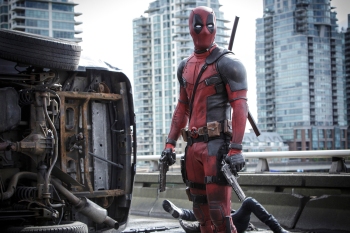 Deadpool delivers, plan and simple. It is big, loud and stupid, just like it should be. After all, the main character(a) is insane; (b) is immortal; and (c) knows he is a comic book character. There’s really not any need for pretense – we came to see craziness and that’s what Deadpool gives us, from start to finish.
 without another superhero origin story. It’s not necessary, it’s lazy, AND I’m pretty sure they already did Deadpool’s origin in Wolverine: Origins (though I’m also pretty sure they screwed it up). So Deadpool makes a misstep there but it’s forgivable since it keeps us laughing while it spins its wheels. And really, the comedy is the whole point anyway so it’s not a major complaint, it’s just my critical two cents.
 Ehrenreich) much to the consternation of finicky director Laurence Laurentz (Ralph Fiennes); and the fourth, a comedy starring sprightly song and dance man Burt Gurney (Channing Tatum). Poor Eddie has a lot to contend with – fixing stars up on dates, rescuing starlets from French postcard situations, making good on his promise to his wife to quit smoking, and fending off twin sisters and rival gossip columnists, both played by Tilda Swinton – and that’s before he realizes that his biggest star, Baird Whitlock, has been kidnapped!
 laundry list of Hollywood A-listers who beg to be in their films. George Clooney, for example, has worked with them three times before – Brother, Where Art Thou, Intolerable Cruelty, and Burn After Reading – all movies that I like, though I confess a particular burning love for Intolerable Cruelty especially. The Coens have great faith in Clooney’s comedic timing and treat us to a whole reel of his best reaction shots. It’s down right gluttonous – almost as sinful as that Roman costume they’ve got him strutting around in, showing off leg like you’ve never seen from him before. And my they’re nice legs. In fact, is there a human being on this planet who’s not a little in love with George Clooney?
 Blue Jasmin) but this is the first that I’ve noticed him – and he almost stole the show! Tilda Swinton, who is great in everything, is great again here, only doubly so since she’s handling twin duties and it’s uproarious. Heather Goldenhersh, as Mannix’s hard-working secretary, is pivotal and delightful, and I must say, this woman deserves to be fucking famous already. But even small roles are peppered with famous faces – the study group alone, from Fisher Stevens to my beloved David Krumholtz, is worthy of its own spin-off. And no Coen Brothers movie would be complete without at least a brief appearance by my spirit animal, the fabulous Frances McDormand. The reigning Coen Queen, this is her 8th film of theirs, although it’s not exactly a fair fight as she’s married to Joel (not that her oodles of talent require any nepotism). Her role is brief but watch for it, it’s a scene stealer.
 opposed to his preferred medium, digital) was exactly the right thing for this ode to old Hollywood. Even though your eyes see Channing Tatum in a sailor suit, your mind is steeped in 1950s glamour (which is actually much grimier than the usual coating of nostalgic veneer would have us remember). As usual with the Coens, what you see is only half of what you get. There’s a lot of layers to this seemingly lighter fare, from God and Commies, to pop culture and hydrogen bombs. I was charmed and tickled from start to finish and I’m going to find it awfully hard to buy tickets to Deadpool when what I’d really like to do is see this one again. And again. And probably again.




 ASSHOLES WATCHING MOVIES