Steve Gleason was an unlikely football star: too small to do what he did, he did it anyway, for the New Orleans Saints. It was the NFL that brought him to New Orleans but it was falling in love with a free-spirited local girl named Michel that kept him there beyond his retirement in 2008. They soon found themselves expecting a baby, which would be a happy occasion except that about 6 weeks prior Steve was diagnosed with ALS.
ALS, or amyotrophic lateral sclerosis, is a neurodegenerative disease where the nerve cells that control your muscles die. The brain can’t talk to muscles, leading to a loss of mobility, loss of speech and eventually the ability  to breathe. Everything is still right in your head though, so you’re still smart and alert and you see everything happening to you, helpless to do anything about it. There is no cure. It is fatal, and will likely be so within 2-5 years of diagnosis.
Within months, Steve is walking and talking with noticeable problems. As Michel’s belly grows with their baby inside, he starts keeping a video diary so that one day his unborn child may know him.
The documentary is bittersweet; the Gleason family experiences highs and lows, and no matter what we hear the clock ticking. As hard as it is for us to watch him deteriorate so quickly on film, to see that hardship mirrored on his wife, Michel’s, face, is just agony. Steve seems determined to share his struggle honestly, even when that means admitting that he’s trying to live up to this banner of ‘inspiration’ and ‘hero’ that the media has ascribed to him and not always knowing that means.
He does, however, establish the Gleason Foundation, which focuses on service and equipment. He felt that much of what ALS takes away, like speech and mobility, technology can give back. And while that’s true to an extent, it can’t quite account for everything: not time, not life. But the foundation gives him purpose, and he’s certainly in the position to bring awareness and to raise money for this disease.
It’s sucky to watch this movie. It’s hard. But as Steve himself says, it’s sad but it’s not all sad. And maybe it’s those moments of not-sad that we need to attend to: the hope, the faith, the optimism, the acceptance, and certainly the closeness and love of this family. And as difficult as it is, it’s also an amazing piece of film. It’s raw and emotional and real. As a famous athlete and the face on a poster on many bedroom walls, many would have called him a hero. But giving a voice to those who have lost them? That’s heroic. His wife’s caregiving? That’s heroic. This film has the power to provoke the hero in all of us. I can’t recommend it enough.

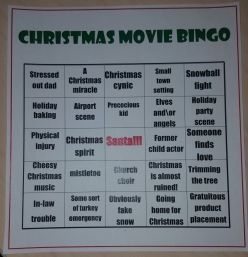 scenarios that used to make me want to ream someone with an unripe banana. Now when a workaholic refuses to acknowledge the meaning of Christmas, I rejoice: it’s by B12, or my I23. Hallmark movies are particularly fruitful for the purposes of Christmas movie bingo, although Matt achieved his high score by watching only Love Actually, and It’s A Wonderful Life.
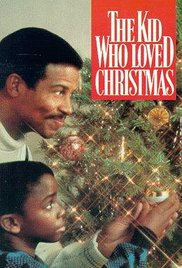 feels like her death is just an excuse to have Della Reese belt out Amazing Grace in a church, but have a little faith, folks: Eddie Murphy wouldn’t have produced just any Christmas TV movie. Her death is also an excuse for evil family services to swoop in and revoke the adoption (a single father is unstable!), which in turn allows us to see a little boy penning this heartfelt letter to Santa:
 the reason the movie REALLY stands out is that it will be streamed live into theatres as he shoots it.
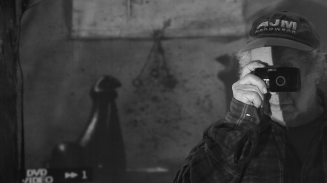 Frank in Don’t Blink, and he’s not entirely comfortable with it. “I don’t want to be pinned by the camera – I do that to people, I don’t want it done to me.” Sure he’s a man of contradictions, but that’s how Israel knows she’s got her camera pointed in the right direction. Not just an artist, Frank sees himself as a hunter, always searching for his perfect photo prey, and all Israel has to do is casually capture his encounters.
 Richards) at a distance. A weird teddy bear mysteriously shows up on his doorstep and is activated during a fight with this son. Before you can change the channel, the bear Freaky-Fridays them. Just a few short days before Christmas, “dad” has to go to school and confront the bullies and his nerves about starring in the big pageant and “son” has to take a witness’s deposition, throw the office Christmas party, and get tongued by more than one woman.
 the last time I visited it was for
  ASSHOLES WATCHING MOVIES