I lagged way behind and only saw the first John Wick a few weeks ago when it popped up on Netflix. If you haven’t seen it, and like action movies, it’s a good one (definitely good enough to warrant a sequel). And that sequel is now upon us.
John Wick: Chapter 2 is faithful to the first chapter’s formula, almost to a fault. That fault is repetitiveness, in a somewhat strange way. You see, one of the things I liked about John Wick (both the first movie and the character) is that he bleeds. He makes mistakes and the bad guys capitalize. He wins in the end through sheer force of will.
The same basic formula plays out in John Wick: Chapter 2 but since it’s a sequel, everything has to be tougher for our protagonist Jonathan (note to Ian McShane: emphasizing that this hit man’s full name is “Jonathan” is weird; please stop). The problem is the way the difficulty is ratched up. Wick is not given tougher bad guys to face. He’s just given more of them, which makes the extended fight scenes a tedious series of guys running at Wick and Wick then shooting them twice in the body and one in the head.
Or, if two guys (or more) run at him at once (a SERIOUS violation of movie bad guy etiquette) he puts one in an MMA- style hold, shoots the other(s) in the body then head, then gives a head shot to the guy he wrestled down and has probably been using as a human shield while dealing with the other(s). Keanu Reeves obviously practiced this move particularly hard and good on him for still being credible as an action hero, but a little variety would have been nice in order to continue the first movie’s realistic feel.
(Don’t even get me started on the part where Wick is specifically given a gun with limited ammo and then immediately gets a magic movie gun from the first bad guy he kills that shoots about 30 times before he has to cock it again. Or the fact that in this film every second person in Central Park is an assassin.)
There’s more good and bad, and more good than bad in John Wick: Chapter 2. But when this movie’s ending set us up for the third instalment, I immediately thought of Jason Bourne, which I seriously considered turning off on a plane. That is a bad road for John Wick to be headed down.
John Wick: Chapter 2 gets a score of six smashed-up classic Mustangs out of ten. Essentially, the opening car-smashing sequence was a metaphor, in which Wick was this movie and my goodwill toward the first movie was the car. That it was such a nice car to begin with is the most disappointing part.
By poet he means greeting card writer. And by greeting card writer, I mean ex greeting card writer. He’s just been fired, a dinosaur in a dying industry. Once the “Bill Shakespeare” of greeting cards, he lost his mojo when his wife left him. It’s kind of too bad because the mayor has just proposed a new holiday that could revitalize the greeting card industry and and get ole Bob the redemption he’s after.
It’s not going to be easy though. Competition’s going to be tough: there’s a lot of old hacks who’d like another shot at glory. And the greeting card industry’s about to get surprisingly bloody.
This is light fare, but fun. An oddball cast including Amber Tamblyn, Stacy Keach, Alex Karpovsky, Andy Richter, and Natasha Lyonne casts a quirky golden hue over the whole thing, which stitches together the nonsensical in the simplest way. This is by no means a workout for your cerebellum. Odenkirk is the man when it comes to laughs, and there are plenty here. Not a whole lot more, but late at night, surfing Netflix, sometimes that’s enough.
The Academy Award for Best Film Editing is very closely correlated to Best Picture. For 33 years, 1981-2013, every Best Picture Winner was nominated for Film Editing. Two thirds of Best Picture winners also win for Editing.
Editing is the invisible art that even editors struggle to describe.
Nebraska editor Kevin Tent: It’s hard to articulate what editors do, but when it’s bad, you’ll know it. When it’s good, you’ll never know.
Gravity co-editor Mark Sanger: The editor needs to provide a canvas that complements all of the other aspects to tie them together. If an audience has engaged deeply enough with a story to nominate it for best picture, then they understand the pages were bound together in the editing.
Any clearer? Basically, what Oscar voters are thinking is: Are there special challenges that go into it? Multiple story lines? Non-linear? Does it flow well, is the story clear? Is the film visually exceptional? Is the movie long but doesn’t feel it? Directing a movie is telling (showing) a story; editing a movie is how well you can tell it. Sometimes good editing means you don’t notice it at all, it seamless pulls together all the elements of the movie. Other times, it might purposely draw attention to itself: Wolf of Wall Street’s editor, Thelma Schoonmaker says “In ‘Wolf,’ we’re doing shocking cutting deliberately, because their world is out of control, and wild.”
Only the principal editor is named on the award. He or she may sit down and do the first edit of a movie by themselves, but the director is almost always sitting beside them for the polish of the film, and their work becomes blurred with judgments about pacing, film language, and more. Lots of directors have a go-to editor as this person will be their right-hand in making the film complete. They get to know each other very well, and must share a vision for the film, while pushing each other to make the best film possible. Michael Kahn, the most nominated editor is Oscars history, and tied for most wins (3), is a frequent collaborator of Steven Spielberg – they’ve worked together for nearly 40 years. Schoonmaker and Scorsese are also collaborators over several decades. Some of these editor-director ‘marriages’ last longer than the real ones do in Hollywood.
You probably can’t truly judge an editor unless you’ve seen the raw material they had to work with, but there are some things to look out for: is it focused? graceful? do they keep you on the edge of your seat when there’s action? are you riveted during a great performance? does it keep your interest throughout? are you ever confused, or left wondering what’s happening in a scene? do they stay on a particularly good moment for as long as it holds emotionally, or cut away too soon? What’s left out is just as important as what’s kept. And sometimes staying, rather than cutting, is even more powerful. Yup, it’s a lot to think about and certainly would require more than one viewing to really judge. There are only about 220 members of the Editing branch of the Academy, and they’re the ones who pick the nominees. Then everyone gets to vote for who wins.
This year’s nominees:
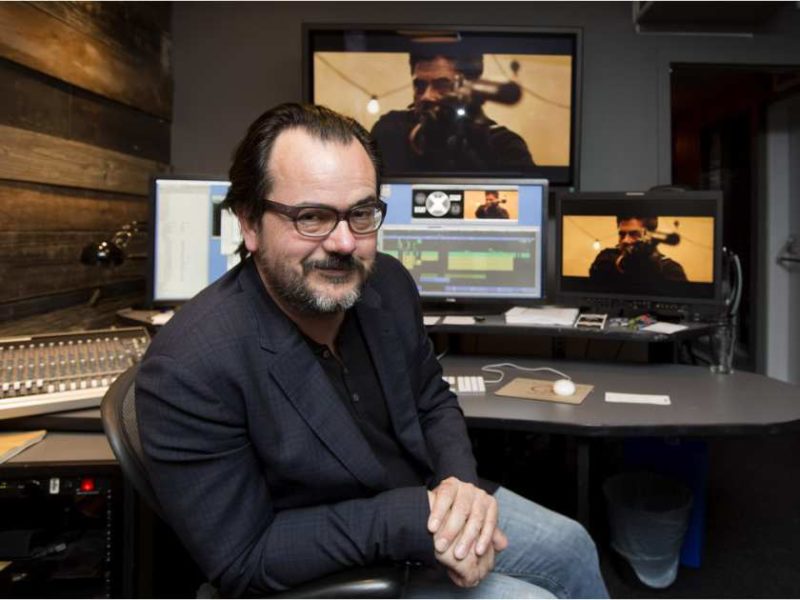
John Gilbert, for Hacksaw Ridge: Gilbert was previously nominated for his work on The Lord of the Rings: The Fellowship of the Ring, but the Academy likes war movies in terms of editing. The battle scenes have lots of intense editing, and Gilbert agrees that these are what the Academy is responding to: “They’re made up of fragments of images, a lot of it is very short shots and high intensity. The idea was to put the audience in amongst it and people really feel it in the battle scenes, a lot of people sort of cover their eyes, there’s a lot of bloodshed and mayhem, and it’s quite sustained.” While the initial work of stringing the film together can be done quickly, perhaps in a week, the real meat comes afterword, when director and editor sit down together to make all the difficult choices. “I worked with Mel Gibson for about 10 weeks on it. I originally thought that 10 weeks was not going to be enough. About half the movie is battle scenes, with a lot of quick-cut action, and a lot of choices due to the amount of footage I had. Mel had been in during the shoot and we went over some sequences in great detail, looking at re-speeding shots, and trimming frames, taking quite a bit of time. There are always key scenes where small changes in performance and timing can be critical and we worked hard on them.” Gilbert is quick to point out that editing is a collaborative process: “The assistants break it down into scenes for me, and I skip through the circled takes to start with, just to have a look at what sort of coverage I’ve got. I like to get an idea in my mind about the shape of the scene, where I’m going to use the wide shots, where I’m going to use the close-ups, and how to best use the coverage I have. I like to find what I think are they key moments in the scene and make a note of any magic I find in the performances. I make a ‘selects’ sequence as I go, which I make in story order, and that becomes the basis for my first edit. It is also useful if the script supervisor has a good relationship with the director and is able to give me insight into what they were thinking, and any moments they loved when shooting.”
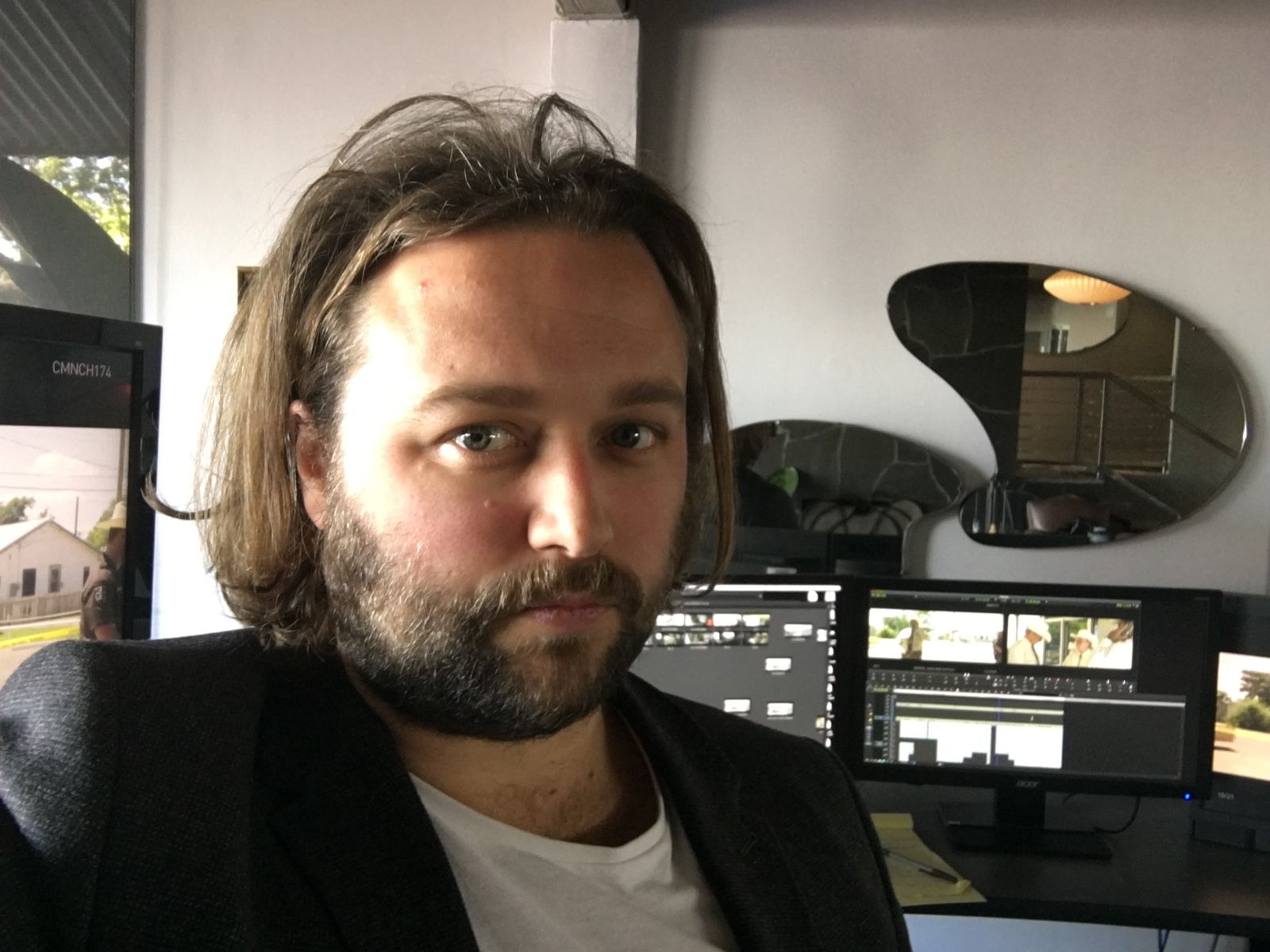
Joe Walker, for Arrival: Walker worked with Denis Villeneuve last year on Sicario and again this year on Blade Runner 2049, so they’re forming quite a successful partnership. He was previously nominated for his work on 12 Years A Slave. As Villeneuve and Walker wrapped up Sicario, Villeneuve passed him the script for Arrival, and he was immediately drawn to it for its “strong female lead. It was educated and it was grown-up, and I was fascinated by the application of my craft to it, in so far as it’s right in the middle of what I think is our super power as editors, which is the manipulation of time.” Arrival is told with little glimpses of memory, other times, other places. How do you sew that all together? “Many things were just grabbed moments that were sort of very emotive and beautiful, a hand touching a baby’s hand in a cart, or an out-of-focus shot of a horse in a stable. They could have gone anywhere. Trying to build that into the narrative and marble this narrative through with these little glimpses of a memory, if you like.” Arrival doesn’t have a strictly linear approach, nor is it classically circular or backward or necessarily out of chronological order. It simply does not exist within our perception of time and order. It’s interwoven, with all moments touching each other, if you can think of time reaching around on itself. “To really be moved by the ending, we felt we had to adjust that. We had to make sure that the wall that we built at the beginning wasn’t so solid that we couldn’t kick it down, but also we had to choose a real moment where people will definitely get it. That’s right at the heart of editing and narrative storytelling, working out when you’re just ahead of the audience, or in parallel with the audience, and never behind. We always wanted to compliment the audience’s intelligence so that they could figure it out themselves.”
Jake Roberts, for Hell or High Water: Jake “NOT the Snake” Roberts has worked on some pretty great films, including Starred Up, Brooklyn, and Trespass Against Us, but this is his first Academy Award nomination. He was a film buff grown up and expected to be a “film maker” but fell into editing rather accidentally, and fell in love with it quite whole heartedly. “The alchemy that occurred when you juxtaposed certain images or performances and added music or sound effects was ‘filmmaking’ to me in the most literal sense. I’ve been editing ever since.” On the particular challenges of making a neo-Western like Hell or High Water: “The challenges were mostly about tone and pace. It’s a serious film but has plenty of laughs in it so we had to be careful not to let it get too heavy or too silly and walk a line between it’s extremes. Likewise we wanted the film to be languid in places and for the audience to be able to hear the space and the silences but equally for it to play plausibly as a mainstream thriller.” How does he evaluate editing? “Never stop asking questions of the material. What do I (as the audience) want to see next? What information, be it visual or expositional, do I need to follow the story? What don’t I need? What is repetitive? Why don’t I like that character as much as I should? Why does it feel slow here?”
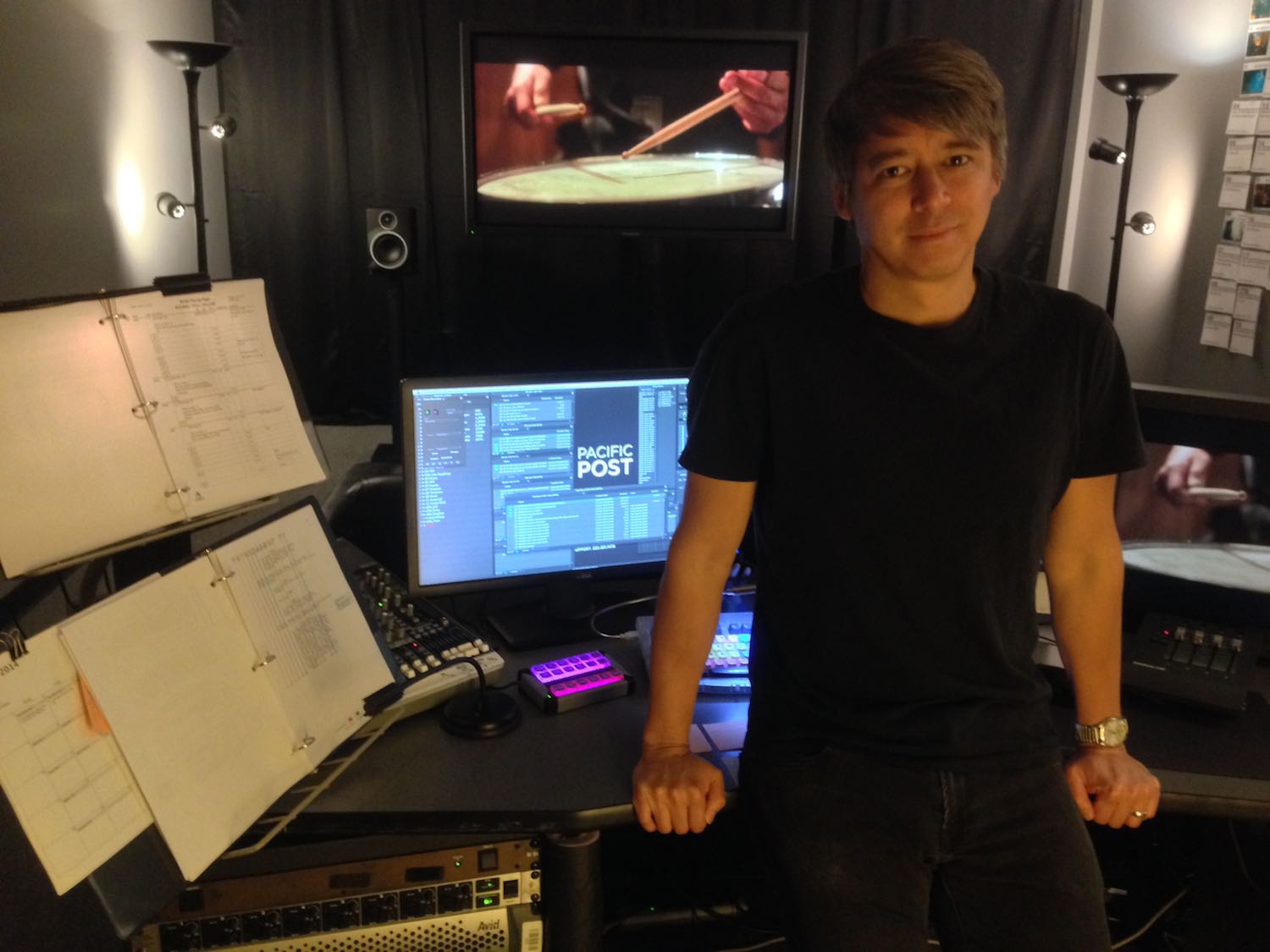
Tom Cross, for La La Land: He’s only been the lead editor on films since 2010 but he’s already got one Academy Award under his belt, for – you guessed it – Whiplash. How does Cross describe his collaborator, director Damien Chazelle? “Very, very prepared. In that way, it really helps me as an editor to put the movie into the first cut. The other thing that is so great about Damien, as a director, is that he is a true believer in what film editing can do. He gets very excited about solving problems, whether they be story problems or a character problems. I shouldn’t really say “problems,” but issues. He gets very excited about solving certain issues through editing. To his credit, he’s a brilliant writer and a visionary director, but he also is not afraid to change something in his script, whether it be dialogue or action, in order to fit what the film has to be.” How does Whiplash compare to La La Land? “In the case of Whiplash, the directive was to tell a story at a break neck pace, and with a certain amount of precision. As if the character of Fletcher was editing the movie itself. In the case of La La Land, Damien had similar directives for the editing. He had different styles that he wanted to do scenes. He used certain romantic scenes that would play out at a slower pace, and maybe less cuts. He knew that in order for that to really work and have the right emotional impact, he would have to offset that in other scenes. Other scenes have quick cutting, or fast cutting, or are told with dissolve, or other optical techniques. I think that something that excites me about Damien’s work is that he really looks at how editing can help tell the story. He’s a real believer in varying the pace and varying the speed of the cuts in order to accentuate moments when he wants to have something play slower and more romantically.” Lots of the movie relies on old Hollywood techniques to help make the film feel more dream-like, sweeping camera movements and dissolving scenes. In that way, the editing too is a throw-back. Some scenes that are meant to be more ‘modern’ (like the concert footage with John Legend) feature a lot of cutting, but others, such as when Mia and Seb dance in the observatory, are a single, brave take. And for all La La Land’s big, showy, numbers, there are also quiet scenes that convey a lot of emotion. “There were items where the editing would have to take a back seat and be very invisible. That could be seen in the dinner scene where they break up. It was directed to me as an editor to use these four shot units—we had a medium shot of Sebastian, a medium of Mia, a close of Mia, and a close of Sebastian. That’s all you have.”
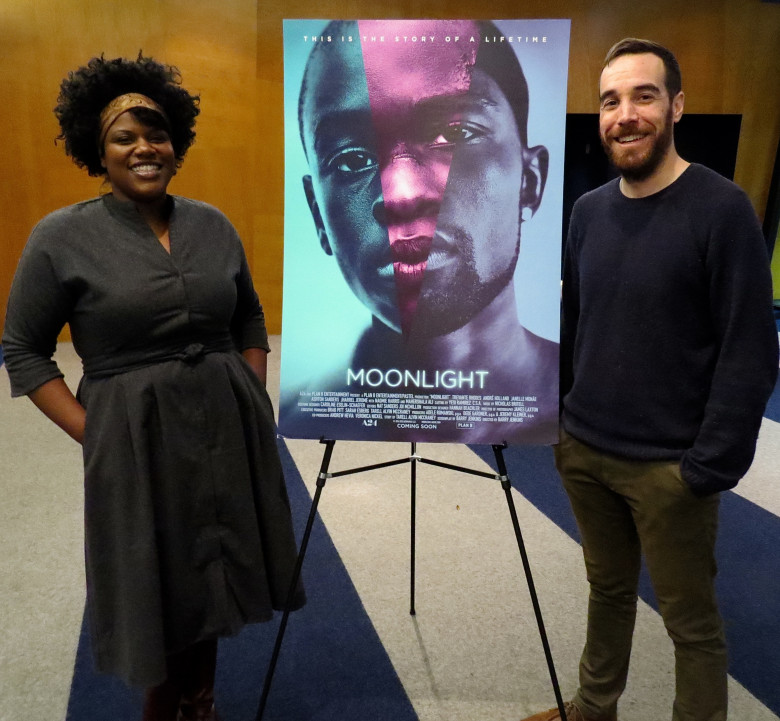
Nat Sanders and Joi McMillon for Moonlight: If Sanders and McMillon win, they’ll make history. Actually, they already have; McMillon is the first African American woman to be nominated as an editor. She’d obviously also be the first to win! Sanders and McMillon divided the job between the two of them, with Sanders primarily focused on the first two segments and McMillon working on the third. The third, of course, was the toughie, and McMillon had to convince writer-director Barry Jenkins to move substantial pieces around in order to maximize and earn emotional involvement. Once he was on board “we found a place for everything, it became organic.” “Barry’s really focused on what life feels like,” Sanders said, specifying cutaways of a hand sifting through sand, or Naomie Harris moving in slow motion through the yard. Sanders and McMillon tinkered with sound design, and chose abrupt cuts to black, but kept a respect for the elegant camera work. “When you get such beautiful footage, you have to treat it like another performance,” Sanders said. He also explains the particular challenge of working for college pal Jenkins: “maintaining Barry’s filmmaking voice, which was observational and ponderous, and always wanting to preserve that, but still needing to keep things moving.”
So does that make things clearer, or muddy the waters? And who’s your pick for Oscar?
The first mistake Fist Fight makes, and it makes it before it even starts, is assuming everyone in the audience is high. Not just assuming, but requiring. Requiring it, necessitating it with its very premise, yet rudely NOT passing out joints before the opening credits roll. There is nothing about this movie that will make sense unless you are largely mentally incapacitated. Let me be clear: there is no amount of marijuana that will help this movie to make any sense in the strictest definition of the word. There may, however, be a sweet spot where you just don’t care, and if you find it, let me know.
Charlie Day is a mild-mannered English teacher and Ice Cube is an intimidating history teacher at the same “rough” high school where it’s the last day of school, students are wild, and everyone’s job is on the chopping block. Before first period is even over, Ice Cube takes the chopping a little too literally, taking an actual fire ax to a student’s desk. Mean principal Tyler (Dean Norris) insists on firing one of them on the spot, and since Charlie Day’s got a baby due any minute (and is in fact NOT the one to threaten students with an ax), he lets Tyler know that Ice Cube is perhaps the obvious choice. This enrages Ice Cube, and instead of taking his anger out on the student who pissed him off, or the principal who just fired him, or the superintendent who made him interview for his own job, he for no apparent reason zeroes in on the innocent and oblivious Charlie Day, who we’ve already established as a “coward” for no particular reason, but he’s wearing khakis and a nubby sports coat, so let’s go with it.
Charlie Day spends the rest of his day in a total panic, trying to avoid this #teacherfight. Will he stoop to black mailing students? Planting drugs on fellow teachers? Lying to his pregnant wife and disappointing his young daughter? Of course he will. And most egregiously, he will go to Tracy Morgan for advice. I mean, I can suspend my disbelief enough to allow for a horse amped up on homemade meth. Sure. But someone seeking out Tracy Morgan for advice? Come on.
I have an enormous crush on Ice Cube, and he’s very Ice Cube-y in this. And Charlie Day is quite Charlie Day. It’s too bad nobody wrote for them. Or really wrote at all, period. The run up to the #teacherfight is so standard you’ll wonder where you’ve seen it before and realize the answer is: everywhere. This movie borrows heavily from all kinds of mediocre movies and doesn’t even bother to steal the best stuff. It’s lazy. And absurd. And when the fight occurs, it’ll require exceptions to the rules of time and space that your brain won’t even be able to handle, nor will it want to because this movie just doesn’t deserve that kind of effort.
Fist Fight has all the makings of a mid-February comedy. It’s like it didn’t even try to be anything more.
This movie is a surprise. Daniel Blake is an older gentleman who cared for his sick wife until her death, who has now fallen on hard times himself after a heart attack leaves him unable to work. Well, unable to work according to his doctor and his surgeon and his physio team. Totally fit to work according to the government who would otherwise owe him some sort of compensation.
Blake (Dave Johns) was receiving benefits for disability until a “health professional” (read: NOT a doctor, NOT a nurse) deems him fit and yanks his benefits. He must now apply for unemployment benefits, while combing the streets for a job, which actual doctors have cautioned him not to take, on account of his bum heart and it possibly killing him. The bureaucracy gives him the runaround, of course, as he must learn to navigate computers and the internet and smart phones and this whole world of job searching that he’s never had use for in his entire life. The whole experience is degrading, dehumanizing. And yet the film never feels that way. The movie is filled with humanity – not just compassion but admiration. Dignity, even. It’s a much more heartening experience than you might deduce.
Of course Daniel isn’t alone in his plight. At one office or another he meets a single mother (Hayley Squires), struggling to support her two kids. With them we see Daniel’s tender side, his need to give what little he has to others. It’s enough to make you cry (which means it made me cry, good honest tears that the film earned without manipulation).
The characters are quite strongly drawn. Their ordeal feels all too real. It’s sad though. So sad. It’s just further reminder that the system is letting down too many people who truly need it. Though this film is British, it feels universal. The righteous anger is restrained just enough not to be alienating, but to bring everyone into the fold, to make us all feel the iniquity and yearn for justice. A must-see.
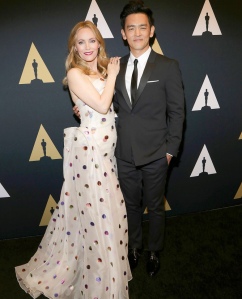
On Saturday, Leslie Mann & John Cho hosted the awards we don’t see (their 3 hour ceremony will be distilled into about 1 minutes of broadcast during the Oscars) – the Academy’s Scientific and Technical Awards. There are no nominees at these awards, just winners, people the Academy have chosen to honour for their contributions to film making (the Academy’s Board of Governors does the voting). These are often inventions and discoveries that make cameras better, or CGI more realistic.
“Simply put, the movies we love would not exist if not for your talent, your knowledge and your creativity,” academy President Cheryl Boone Isaacs said in her opening remarks. “There’s a reason it’s called the Academy of Arts and Sciences.”
Okay, I’ll bite: animatronic horse puppet, you say?
Mark Rappaport is credited with the concept, design and development. He runs a company called Creature Effects, Inc, that specializes in creating hyper-realistic make-up effects and animatronic animals for use in movies. Most movies will still use primarily real animals, but for certain scenes, animatronic replacements is just plain safer for both actor and animal. The trick is to make the “puppets” look real and move realistically.
Scott Oshita is credited for the motion analysis and CAD design; Jeff Cruts with the development of faux-hair finish techniques; and Todd Minobe for the puppet’s articulation and drive-train mechanisms.
The production crew of The Last Samurai needed an animatronic horse able to perform stunt sequences that would put a real horse and rider in danger, and goodness knows we can’t risk Tom Cruise’s pretty face.. Rappaport was commissioned to build a horse that could seamlessly replace Tom Cruise’s real horse for those scenes. Rappaport said “It’s probably the most sophisticated horse or animatronic creature ever made for film. It cost $1.5 million to make. It gallops in place. It reared up. It fell over. And it looks completely real.”
Those horses came in handy again for the 300 movie, and Rappaport was given a new challenge: a wolf to attack young Leonidas. This wolf was able to blink, movie its head, its neck, its brow, its jaw, and its tongue, it could even salivate and had glowing eyes!
Their animatronic horse has also been used in The Lone Ranger and The Revenant.
Apparently (Lego) Batman has a special fondness for cheesy romantic comedies. Sure the Dark Knight tends to enjoy a rather solitary existence, but he unwinds at the end of a long day by watching kiss-a-thons. For every baddie that he puts away, he likes to watch a good smooch. Nothing wrong with that. In his new movie, currently out in theatres, several of his favourite love movies are highlighted, so here they are, to the best of my memory:
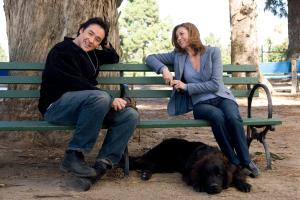
Must Love Dogs: Poor Diane Lane is so love-starved that her family takes her new singlehood into their hands, fixing her up with an internet dating profile she doesn’t want, or necessarily know exists, but which insists that all suitors ‘must love dogs.’ This is a pretty good gambit because along comes John Cusack, with a borrowed dog and good intentions. And that’s okay since her dog – a Newfie named Mother Theresa – is also not technically hers. Thus a relationship is born from the ashes of lies and non-shared non-interests. Condom hi-jinks and some VERY suspicious coincidences: classic.
Serendipity: Two people, attached to others, nevertheless share dessert when they try to buy the same pair of cashmere gloves for Christmas. They part – reluctantly – but both return for missing items and spend more time together. It’s magical (ahem). But her phone number gets blown away in the wind, a bad sign, obviously, so he puts his info on a $5 bill, hers in a used book, and if the universe thinks they’re meant to be, they’ll find the info and live happily ever after. Did I mention it’s John Cusack again? Batman must have a thing for Johnny.
Marley & Me: Jennifer Aniston and Owen Wilson are newlyweds who work at competing Florida newspapers – she successfully, he decidedly not. When they think about starting a family, they adopt a dog instead, to test the waters. The puppy is incorrigible but provides fodder for a column and suddenly he has a career too. The babies come, eventually, and changes in home, work, and friends. Marley’s there through it all – but well all know dogs don’t live forever. I’m sure this one hits Batman right in the feels. Dogs are the one thing he likes more than John Cusack.
Jerry Maguire: A sports agent eventually falls in love with the single mother who absconds the firm with him. She supports him, he fails to appreciate her. She has the kind of life that previously horrified him. They separate. It’s quite pathetic until he realizes that she’s had a profound impact on his life and that he wants to be with her no matter what, at which time it becomes even more pathetic. You had me at hello, 10lb head, show me the money, etc: you betcha Batman quotes along with this one.
So, do you have much in common with Batman? Which one of these would pair well with a cuddle?
If you’re going to cast Matthew McConaughey and pay his hefty salary, why then take away everything about Matthew McConaughey that is good and right in the world?
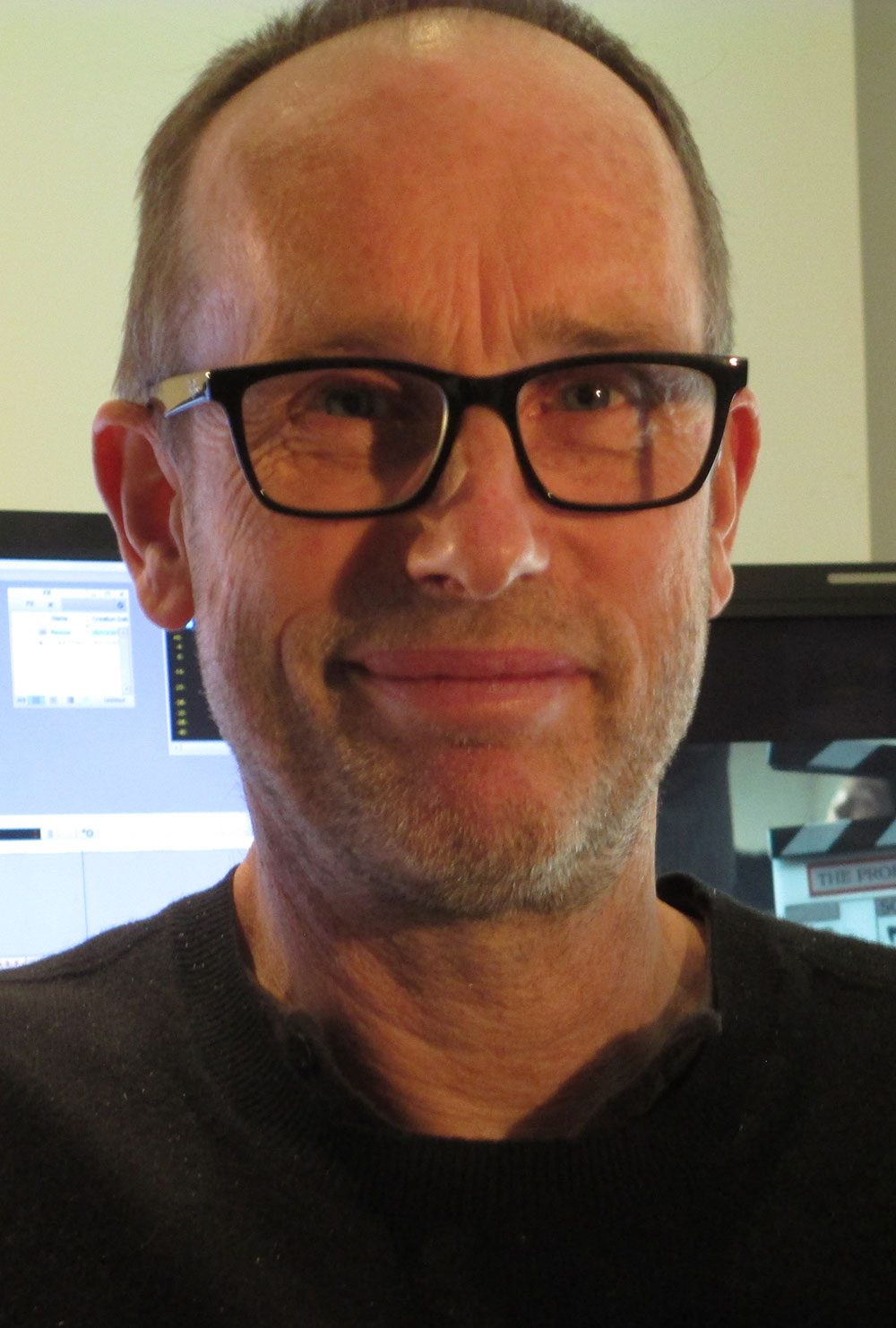
In Gold, McConaughey plays Kenny Wells, a prospector who is pot-bellied, bald, and has a giant snaggle tooth that I CONSTANTLY mistook for a wayward piece of chewing gum for the entire length of the movie. He has a gray pallor, he sweats, he is often scene in soggy, saggy tightie whities: it’s unforgivable. There’s no reason that a prospector named Kenny Wells couldn’t have been played by the handsome version of McConaughey, and it might have half-explained why a beauty like Bryce Dallas Howard would go out with such a loser, which is otherwise downright mind-boggling. Gold is very, very loosely based on things that might have sort of happened, but Kenny Wells was never a real person. McConaughey’s weight gain, however, is all too real: a testament to cheeseburgers and milk shakes, apparently. He also legitimately shaved his head. But if director Stephen Gaghan really REALLY needed a bloated, past-his-prime dude for the lead role, I’m confident that he could have got one much cheaper, and at less cost to McConaughey’s health. In fact, I propose this guy.
Superficial complaints aside, the movie just plain sucked. Feel free to stop reading now. The rest will just be me riffing on this theme. McConaughey gives a pretty committed performance, whistling around that big ugly tooth, but he should have known better. I can only assume that Matty’s got some weird fixation with gold; this is, in fact, his third movie about the pursuit of gold, after Sahara and Fool’s Gold (and to be fair, with a Rotten Tomatoes score of 42%, Gold is his best one yet – but please god, stop trying!).
My main complaint, and maybe the only one that really matters, is that this movie is plain old boring. Billed as a “crime adventure,” the real crime is not stolen gold but stolen time and money from the audience, and possibly also the extra plaque in McConaughey’s arteries.
Peak 1990s Michael Bolton was a cheesy, long haired dude who belonged in my mother’s cheesy CD collection, not mine. He was “adult contemporary” in the worst way imaginable. But then he cut off his mane and hooked up with Lonely Planet. The result?
Wait a minute: Michael Bolton has a sense of humour about himself? Indeed he does. And if you thought the above three minutes were worth a hoot, then you should definitely check out his Valentine’s special on Netflix because it’s a whole hour worth of laughs. If you’re anything like me and can’t handle sappy movies without copious eye rolls and squirms, and you think the softcore porn of Fifty Shades of Whatever is just plain undignified, finally we’ve got something you and your hunny can curl up to. Laughter makes couples stronger – trust me, it’s science.
But you certainly don’t need to be a couple to enjoy this as its basic function is to poke fun at the whole romantic notion anyway. The premise, which is a generous way to describe it, is this: Santa needs an extra 75k babies to deliver presents to by next Christmas, so Michael Bolton agrees to host a sexy telethon to inspire love\baby making. Answering the phones of this telethon include seldom-thought of celebrities such as Brooke Shields, Sinbad, and Janeane Garofalo. But that’s hardly the limit as far as celebrity cameos go. Bolton is helped by the likes of Michael Sheen, Maya Rudolph, and very briefly, his best friend Adam Scott. Plus about 2 dozen more.
Bottom line, it’s stupid. It’s quite stupid. It was the kind of stupid I enjoyed because it’s skeweringly silly, raunchy, sparkling with tongue-in-cheek homages. It’s quite reminiscent of the Bill Murray Christmas special, A Very Murray Christmas. And the truth is, Michael Bolton still sounds good. So on the rare occasion when he actually does sing, it’s perfectly pleasing. But it’s never, ever with a straight face. And that’s what makes it stupidly glorious.
[It also begs the question: what’s next? Murray got Christmas, Bolton got Valentine’s…who would you like to see tackle a holiday?]
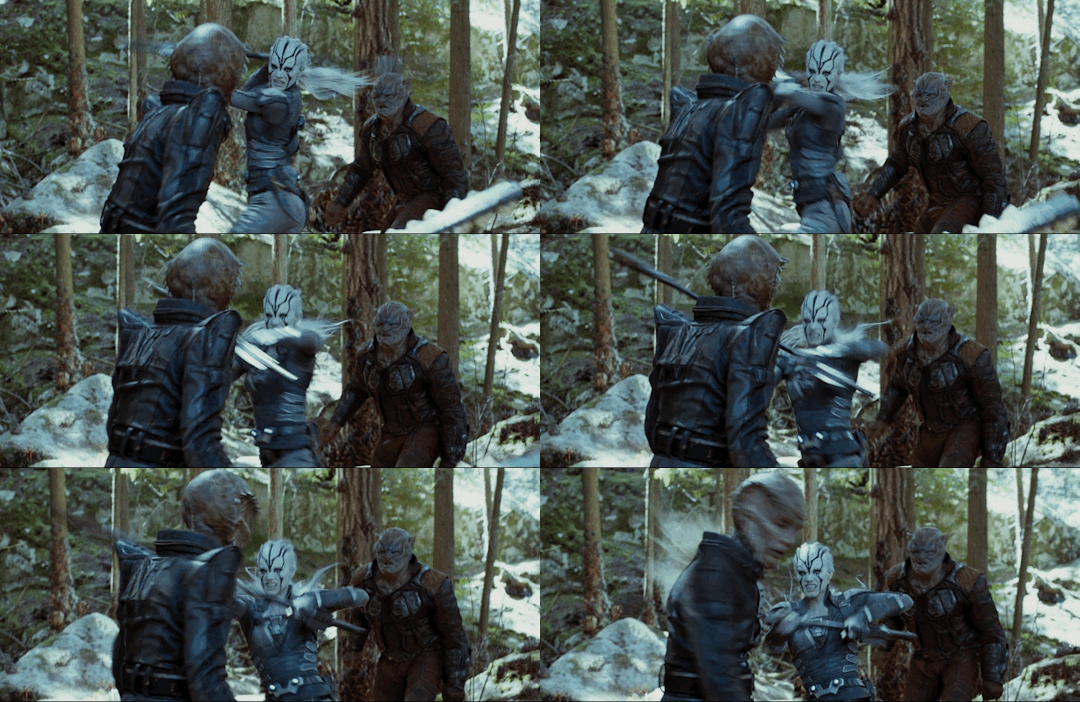
Fans of Community might have been delighted to see Danny Pudi in Star Trek Beyond; they may also be forgiven if they missed him. Pudi was playing an alien and was unrecognizable. The role was the fulfillment of a childhood dream, and just 3-4 hours in a makeup chair transformed him into a creature only a mother could love.
He learned fight choreography and studied the alien language alongside Kim Kold and Sofia Boutella. Despite the fact that sweat pooled under his prosthetics and his character gets beaten by Boutella, Pudi sounds ecstatic.
There are lots of famous Trekkies: Mila Kunis, Daniel Craig, Angelina Jolie and Ben Stiller are all confessed die- hards. Whoopi Goldberg of course. Tom Hanks was such a fan that he went snooping on the Paramount lot where he was shooting Bosom Buddies at the time – it just so happened that The Wrath of Khan was shot there also, and he seized the opportunity to board the Starship Enterprise. He sadly turned down a role in First Contact due to his first directing job, That Thing You Do! Eddie Murphy nearly snagged a role in The Voyage Home and is probably a little heartbroken that it was re-written. I totally avoided the show growing up, relegating The Next Generation to ‘Boring Dad Stuff’ and not giving it a second thought until JJ Abrams decided to make my life a little more complicated by rebooting the franchise and obligating all the men in my life to insist that I watch. I have. I’ve even had my own Star Trek transformation. But only recently did I experience a Star Trek fan film – a story that exists within the Star Trek framework\universe, lovingly created by talented film making fans.
Paul Laight, a gentleman kind enough to have been visiting us here for some time, just so happens to be a writer and producer on the film, and he and director Gary O’ Brien generously granted us answers to some of our most burning questions. But first, please watch the film, Chance Encounter.
This is a bit rude, but I was frankly surprised by how good it is. We are sent all kinds of movies to review, and lots of them are amateur jobs that make us cringe with their bad writing or terrible acting. This little piece, however, is well polished. It isn’t just made with good intentions, but with talent and professionalism. Thematically it’s an excellent fit for the Star Trek family, but the story could and would hold up without it.
Without further ado, an interview with the filmmakers.
ASSHOLES: What came first, did you decide to make a Star Trek movie, or did the story just seem like a natural fit in the ST universe?
PAUL: The latter. Myself and Gary have made some very dramatic war and horror short films, plus comedies, in the past as Fix Films so when he came to me with the idea of something more gentle and romantic I thought that would make a great change of pace and genre. Gary suggested a short involving an older man and a younger woman. Now, usually this idea can lend itself to something more sleazy but we did not want that. We wanted something emotional which would resonate rather than titillate. So, I had a think about it and eventually came up with the idea you kind of see in Chance Encounter. Originally it was set on a rooftop and it was just two people meeting and having an impact on each other’s lives despite only meeting briefly. Then Gary suggested we could make it as a Star Trek fan film and I agreed it would a fascinating project to attempt.
GARY: Yes exactly, once Paul introduced a Sci-fi element to one of his story outlines it suddenly opened up a new area to us that I could see was very much Star Trek shaped!
ASSHOLES: What level of fandom do you have to achieve before attempting fan fiction? Do you worry about upsetting other fans?
PAUL: I guess Gary may be able to answer this question better than me as he is a proper Star Trek fan. My feeling was that as a writer I wanted to do my utmost to tell a compelling story with intriguing characters which connects with everyone. I wrote the screenplay not just for Star Trek fans but for those who enjoy good stories. I was very confident no one would be upset by the story as the characters are intrinsically positive and at no time are we parodying Star Trek or the franchise in general. What was always great about Star Trek is that the characters and concepts were always compelling, so while open to satire, I was not interested in that. If someone is upset at Chance Encounter then they probably have anger issues.
GARY: I think you have to just tell your story first and then fit the expected “fan” elements in around it, which is how the staff writers across all the series approached things too I suspect. “Star Trek” evokes certain things that one might assume you have to include – aliens, transporters, warp drive, photon torpedoes, etc, all of which are absent from our film, and so maybe if there is a level of fandom you need to reach before writing fan fiction, it’s knowing the franchise well enough to strip out all the surface elements like those and yet still feel true to the source material.
ASSHOLES: What was it like making a film with so many visual effects on a limited budget?
PAUL: Gary is the tech genius and it is a testament to his years of training that he was able to produce such great results on a limited budget. Kudos to him.
GARY: Thanks mate! I think on such a low budget, part of getting the visual effects “right” is knowing when not to do them. It’s tempting to think that once you’ve got the computer and the software the sky’s the limit and so why not go crazy. But that’s not how the shows were made. Why green-screen and motion track stars outside the spaceship windows when we can do it just as effectively in-camera with a black fabric and bits of tin foil? Less is more was our philosophy!
ASSHOLES: What was the casting process like? Had you worked with any of the actors before?
PAUL: Having made over ten short films and various promos over the years our casting process is very organised now. We use online casting websites such as Shooting People and Casting Call Pro and have also built up an ensemble of actors we have used in the past. There are SO many talented people out there and when we post on the sites you will get a hell of a lot of responses. We then sieved the actors down to a shortlist and then we either meet in person (where the leads are concerned most definitely) or Skype first contact before meeting them. We had only worked with Phil Delancy before (Captain Janssen) so this was a whole new cast generally on this one.
GARY: Yes the casting went pretty smoothly and we feel blessed that we found such good people for all the roles. Everyone was very professional and did a great job – a pleasure to work with them all.
ASSHOLES: What are the challenges of making a short film rather than feature length?
PAUL: Well, I haven’t made a feature film but I have worked on them as crew and obviously everything is bigger on a feature; even a low budget one. Personally, though I think the amount of hard work you need to put in is commensurate for both. Most importantly in any production is you must have a good story and screenplay as your basis, then you can get talented people to commit to the project. Of course, a short film for me is a microcosmic feature but the biggest challenge is me and Gary pretty much did EVERYTHING from start to finish. I guess it would be difficult to do that on a feature, but maybe not impossible – as Robert Rodriguez has demonstrated.
GARY: My only experiences on features were as a tiny cog in a very large machine, but as director on numerous shorts you have to do everything. I guess film-making always boils down to being incredibly hard work though, just different kinds of work.
ASSHOLES:How do you run a successful crowdfunding campaign?
PAUL: Gary was the brains behind our campaign and I chipped in with a little clip. I think the most important thing is not ask for too much money! Be realistic and HAVE A GOOD STORY or IDEA you feel passionate about. We believed in our story and the angle of making a Star Trek fan film really helped us too. I mean, if you’re asking for $1,000,000 to make a film about paint drying you could struggle!
GARY: Exactly – we didn’t want to ask for any more money than we thought was needed. Also, it’s our first, and so far only campaign so I don’t know if our success was a fluke or not! We were just open, honest and did what we said we’d do – the rest is just left to fate I guess.
ASSHOLES: What feedback have you received from your backers?
PAUL: Amazing! One guy has even done a fan review on YouTube. All the feedback so far for Chance Encounter has been SO positive. People love the story and characters and effects, so nothing but good stuff so far. No nasty Star-Trek-Klingon-Trolling on YouTube comments either. Well, not YET!
GARY: Yes at this point people have been overwhelmingly positive about the film. With so much content out there we’re really flattered that people have even taken the time to watch it – that they like it too is just wonderful. Also, many of the comments say how true to Star Trek it felt, so that is a huge compliment in itself of course.
ASSHOLES: You’ve (Paul) described various roles as “caterer, florist, dead body” – what has surprised you most as a producer on a low budget indie?
PAUL: Oh yes, that was an attempt at humour on my part on my blog article. Basically, with Fix Films me and Gary have taken on various duties in the filmmaking process over the years and we love that aspect of it. But the most surprising thing is that film is ultimately a collaborative process and the amount of assistance and support we have had with our projects has been amazing. I’ve had friends and family and people I’ve never met before helping us on productions; and Chance Encounter is a case in point. Being a bit of a cynic I kind of thought that raising even £2000 for a Star Trek fan film would be tough but people came through for us and helped us make a wonderful story. I thank you all.
GARY: Yes, both the effort and money from so many people that made Chance Encounter happen was a thing to behold – we’re incredibly grateful.
ASSHOLES: Any plans to revisit these characters?
PAUL: I wouldn’t rule it out at all. It depends on writing a script that would work and of course getting finance on another production. But we spent a lot of time working on the characters, creating their back stories and biographies, so there is a great foundation with which to work from.
GARY: Well these characters were created for this specific story, so as Paul says – if they do return would depend on if they fit into a future story or not. I suspect that there is another Star Trek film lurking somewhere within us, with or without these characters – but at the end of the day it would have to depend on whether future fund raising efforts were successful or not. Watch this space!

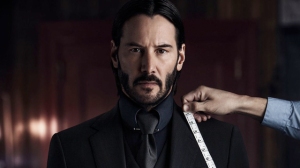 I lagged way behind and only saw the first John Wick a few weeks ago when it popped up on Netflix. If you haven’t seen it, and like action movies, it’s a good one (definitely good enough to warrant a sequel). And that sequel is now upon us.
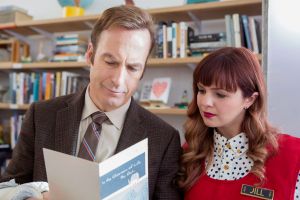 Shakespeare” of greeting cards, he lost his mojo when his wife left him. It’s kind of too bad because the mayor has just proposed a new holiday that could revitalize the greeting card industry and and get ole Bob the redemption he’s after.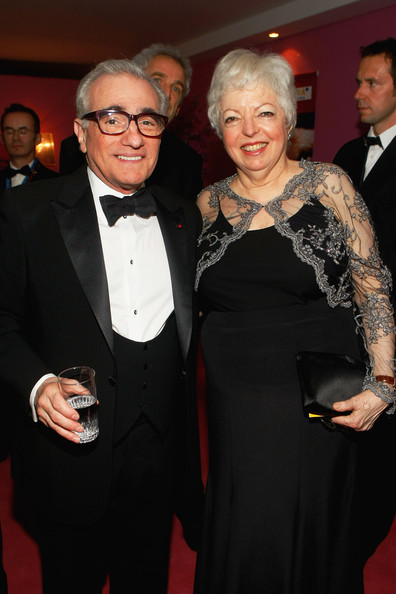
 wild, and everyone’s job is on the chopping block. Before first period is even over, Ice Cube takes the chopping a little too literally, taking an actual fire ax to a student’s desk. Mean principal Tyler (Dean Norris) insists on firing one of them on the spot, and since Charlie Day’s got a baby due any minute (and is in fact NOT the one to threaten students with an ax), he lets Tyler know that Ice Cube is perhaps the obvious choice. This enrages Ice Cube, and instead of taking his anger out on the student who pissed him off, or the principal who just fired him, or the superintendent who made him interview for his own job, he for no apparent reason zeroes in on the innocent and oblivious Charlie Day, who we’ve already established as a “coward” for no particular reason, but he’s wearing khakis and a nubby sports coat, so let’s go with it.
 quite Charlie Day. It’s too bad nobody wrote for them. Or really wrote at all, period. The run up to the #teacherfight is so standard you’ll wonder where you’ve seen it before and realize the answer is: everywhere. This movie borrows heavily from all kinds of mediocre movies and doesn’t even bother to steal the best stuff. It’s lazy. And absurd. And when the fight occurs, it’ll require exceptions to the rules of time and space that your brain won’t even be able to handle, nor will it want to because this movie just doesn’t deserve that kind of effort.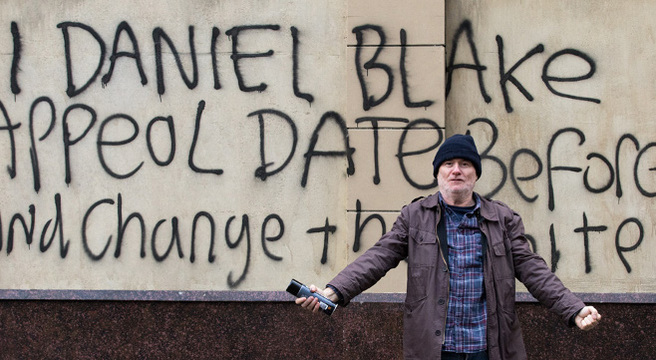
 On Saturday, Leslie Mann & John Cho hosted the awards we don’t see (their 3 hour ceremony will be distilled into about 1 minutes of broadcast during the Oscars) – the Academy’s Scientific and Technical Awards. There are no nominees at these awards, just winners, people the Academy have chosen to honour for their contributions to film making (the Academy’s Board of Governors does the voting). These are often inventions and discoveries that make cameras better, or CGI more realistic.
 Must Love Dogs: Poor Diane Lane is so love-starved that her family takes her new singlehood into their hands, fixing her up with an internet dating profile she doesn’t want, or necessarily know exists, but which insists that all suitors ‘must love dogs.’ This is a pretty good gambit because along comes John Cusack, with a borrowed dog and good intentions. And that’s okay since her dog – a Newfie named Mother Theresa – is also not technically hers. Thus a relationship is born from the ashes of lies and non-shared non-interests. Condom hi-jinks and some VERY suspicious coincidences: classic.
 Florida newspapers – she successfully, he decidedly not. When they think about starting a family, they adopt a dog instead, to test the waters. The puppy is incorrigible but provides fodder for a column and suddenly he has a career too. The babies come, eventually, and changes in home, work, and friends. Marley’s there through it all – but well all know dogs don’t live forever. I’m sure this one hits Batman right in the feels. Dogs are the one thing he likes more than John Cusack.
 at the whole romantic notion anyway. The premise, which is a generous way to describe it, is this: Santa needs an extra 75k babies to deliver presents to by next Christmas, so Michael Bolton agrees to host a sexy telethon to inspire love\baby making. Answering the phones of this telethon include seldom-thought of celebrities such as Brooke Shields, Sinbad, and Janeane Garofalo. But that’s hardly the limit as far as celebrity cameos go. Bolton is helped by the likes of Michael Sheen, Maya Rudolph, and very briefly, his best friend Adam Scott. Plus about 2 dozen more.
 ASSHOLES WATCHING MOVIES