
When Matt and I were perusing the TIFF titles this year and came across Colette, we thought it must be this year’s Big Eyes (in which a husband, Christoph Waltz, takes credit for his brilliant wife’s, Amy Adams, paintings). We weren’t wrong, but we were giving Colette insufficient credit.
Colette (Keira Knightley) is a young country bumpkin who didn’t even know how to operate a snow-globe when she met her husband Willy (Dominic West), who dazzled her. He was a writer, worldly, enamoured with his own success and reputation. But the well is dry and they’re broke. To keep her husband happy and their household afloat, Colette sits down and writes a book about her own school girl experiences. Although Willy 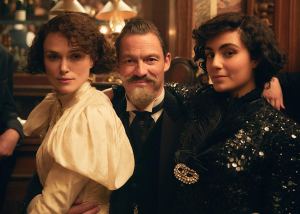 criticizes it for being too feminine and “full of adjectives” he signs his name to it and sends it off to be published. Of course it gets gobbled right up. Does Willy eat crow? He does not. He celebrates “his” success without a trace of irony and then gets mad at his wife for “implying” that she wrote it. Which, again, she did. This book does worlds better than any of his ever did so he’s eager to keep the gravy train going (imagine an actual gravy train! what a weird expression, especially since the carafe gravy is traditionally served in is called a boat). Anyway. He can’t help but lock her in a room until she produces another best-seller. It’s only logical! And she does. And when, oodles of success later, it begins to chafe and she suggests getting at least partial credit, her name alongside his, he bucks. Preposterous! Women writers don’t sell, he reminds her.
Living under those circumstances, it is perhaps not surprising that she explores her options, by which I mean, sleeps with women. She is emboldened, solely by the women in her life, to assert herself. And though the laws and the norms of the day prevent her from claiming all that she may, they also inspire her to finally break free from the leash that kept her bound to a husband who viewed her as a meal ticket, their marriage as a business transaction. Even a long leash chafes.
Keira Knightley has earned herself the crown for period films long hence, but finally she has found one that is worthy of her – or, better stated, a film that can maximize her limited gifts has found her. She sparkles here, breaking outside her box to march up a hill of empowerment. Colette is familiar but not generic. It relishes the vibrancy of the period, but it also embraces its grittiness. The messaging here is anything but subtle but it doesn’t take a gentle hand to sit back and hear her roar.
 about it. It’s a documentary about two guys who discover, quite by accident, that they are twins, separated at birth. They were both adopted and had no idea they had a look-alike brother until mutual friends confused them when they both wound up at the same college, which is amazing enough. Their story goes national: it’s the feel-good story of the year, two 19 year old boys jubilantly reunited. And of the millions who catch sight of their front-page story is a third identical stranger. They are not twins, but triplets.
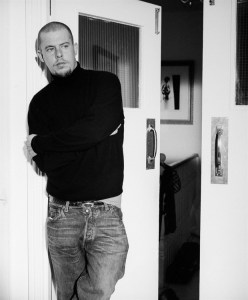 Lee’s flair for the dramatic meant he put on a damn good fashion show. Between his theatrical catwalks and his astonishing creations, he made a name for himself very quickly, very young. London loved to call him their own fashion bad boy, but he was nearly rejected by couture’s real epicentre, Paris, for being of the wrong cut. He was crass, he was lower class. He didn’t look the part or dress the part. Luckily fashion icon Isabella Blow discovered him, and through her, so did the world.
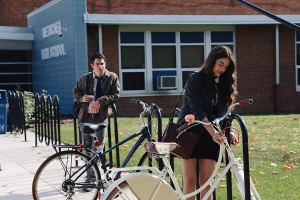 with the ostracizing and vilification of Abigail. Mr. Woods sees a lot of quiet talent in Abigail, and his singling her out for praise and attention only drives Melissa to more cruelty. But it’s ice to see Abigail being appreciated by someone, even if it’s her teacher. Until it’s her teacher’s, um, lips doing the appreciating, and that becomes problematic. Mostly for Melissa, oddly, who is insane with jealousy. To be clear, Melissa has every guy in school running after her, and she doesn’t want Mr. Woods. She just doesn’t want Abigail to have anything except Melissa-inflicted misery. And maybe she can’t stand to have anyone choose someone besides her. You’d have to invent a word above self-involved for the likes of Melissa.
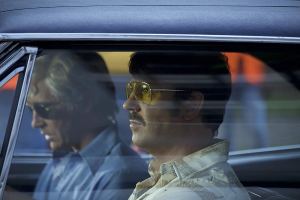 gravitates to him as he steals every scene. DeLorean could turn it on when he needed to, and that charisma bleeds through Lee’s performance – it’s only thanks to Sudeikis’ presence that I remember this isn’t a documentary.
 is so much texture here, you’ll want to pet the screen.
 enjoys a solitary go at the fuck room, riding a contraption reminiscent of Burn After Reading’s dildo chair. She enjoys a little solo S&M, her white skin framed by the black walls, the room feeling as dark and blank as the space outside, though rarely glimpsed, must also be.
 anywhere else. It’s unforgiving. It’s unknowable. It’s remote. There are only 5 hours of daylight at midday. It’s a blank canvas, a blanket of white, relentless and renewing, where even your own footprints are quickly snowed in and covered over; one wrong step can mean the difference between life or death. It’s no place for a novice like Core, but he’s got some demons of his own that keep him from making better judgments.
 You’ll never guess what’s coming. Okay, I bet you already have, more or less. Grace. Grace (Elle Fanning) is coming. She careens into his town one night and refuses to leave. That he wants her to is interesting, isn’t it? They make a grudging peace, but his solitariness is destroyed, and Grace, of course, is a big ole blob of chaos herself. But she challenges him in unexpected ways. He’s been able to manage this post-apocalyptic world because he didn’t lose much. Grace has lost everything – family, friends, lovers. She thinks Del is cold.
 Ten years later, a grown-up Rupert (Ben Schnetzer) is releasing a collection of their correspondence as a book, and a skeptical reporter (Thandie Newton) is interviewing him. The truth of their friendship is revealed through flashbacks, as is Donovan’s life, which of course was not all rainbows and lollipops.
 ASSHOLES WATCHING MOVIES