
We encountered all kinds of interesting documentaries at the Planet in Focus film festival, but I’m admitting a soft spot for 24 Snow.
I have a passion for documentaries anyway. A camera can actually be a transportation device, carrying us away to a world that looks and feels entirely different from our own. Sometimes the lens looks upon a piece of fiction that’s been created to jar your senses (like Blade Runner 2049), other times it encourages you to take a second look at something that’s quite familiar (like The Florida Project), but documentaries can do both while actually reflecting real life back at you.
24 Snow isn’t fiction but it definitely felt foreign to me, and its foreignness informed me on a world I knew little about. With this documentary, we travel to the Siberian Russian territory of Yakutia. I didn’t know there were Russian Inuits, yet there they 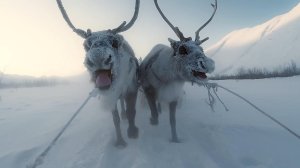 were, surviving in that beautiful but frigid (-70C) land. We are introduced to one main in particular: Sergei is a horse breeder, and even his horses will look strange to you. The Yakutian horse has of course evolved to weather the icy temperatures. They are small but sturdy animals, with shaggy coats that hopefully keep them warm. Their thick hair and manes are not unlike those of Shetland ponies but when you see one completely coated in ice, you know you’re in unfamiliar territory. The breeders de-ice the horses the way I de-ice my windshield. It’s a way of life I can’t really comprehend: solitary, isolated. No telephone, no electricity. No cash. No cars (none that can run you through ice and snow anyway – sleds get the job done).
These harsh conditions are a real test of one’s limits and it’s interesting to get to know the kind of person this job attracts. I live in Canada and am not unfamiliar with snowy, even permafrosted terrain, but the Yakutia is something else entirely. It’s stunning if you can separate it from its harshness, and the lush cinematography here certainly helps. The people and beasts of 24 Snow completely captivated me; it’s a fascinating documentary by Mikhail Barynin that’s as informative as it is beautiful.

 from all walks of life willing to put in work (2h45m monthly) in order to keep labour costs down for the greater good of this beloved co-op. And it clearly is very much loved. It offers locally sourced, often organic products for 40% cheaper than you’d find in luxury grocery stores, and the food on offer here is much, much better.
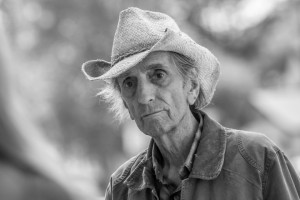 choose between several old-guy movies (we ended up seeing
  attracted the ire of a neighbour who reported him. A cease and desist letter from the city made him think twice – not about the rightness of gardening his own land, but about the rightness of this world. Never before motivated to activism, Finley took up the cause, providing free soil so that others could plant too. Now you’ll find the neighbourhoods dotted with planters, and if you think that’s interesting, just wait until you meet the people who are cultivating them.
 This documentary is not particularly imaginative when it comes to film making; it is straight forward, with few tricks up its sleeves. But Mankiller is a compelling subject, and a documentary shedding light on her story is important when it is omitted from so many history books. When Mankiller was first elected chief in 1985, it was to a male-dominant political structure that she broke into with patience and tact. She persevered, secure in the knowledge that the traditional Cherokee way was a more gender-balanced approach. She overcame a lot of obstacles in order to improve the lives of her people, and many believed her work with the federal government might have led to a national political career had her own health not stood in the way.
 inserts herself into cramped dynamics like she’s determined to put the Wicked back into Step Mother. Both throw out the red carpet when favoured son Matthew (Ben Stiller) makes a reluctant appearance. Harold has fostered a competitive streak between his children by different mothers but they otherwise aren’t close. So when their father’s life and career necessitate them pulling together, it’s a little awkward. Actually, it’s extremely awkward and kind of heart breaking. Because they aren’t bad people, they’ve just been starved of their father’s love and have no idea how to act like a family now that there’s no real chance that things will ever be different.
 options, so you can imagine some of the crazy things they do for money. It’s a destitute, desperate kind of life but you’d never know it to see Mooney adventuring around free-range with her comrades.
