Paul Newman was a Hollywood legend who, let’s face it, deserved a whole post to himself.
Born in 1925 in Shaker Heights, Ohio, second son to Arthur and Theresa who ran a sporting goods store. His first role was at the age of 7; he played a court jester in a school production of Robin Hood. By 10 he was performing at the Cleveland Play 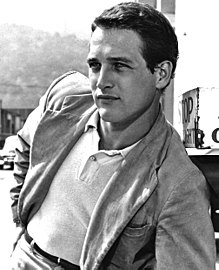 House and was part of the Curtain Pullers children’s theatre program. He was briefly at Ohio University but war intervened (well, war, and the fact that he dented the president’s car with a beer keg). He enrolled at the Navy pilot training program at Yale but was kicked out when his colourblindness was discovered. He went on to serve in the Navy as a radioman and rear gunner. He likely would have died in the war but for the fact that on the day his unit was attacked and killed by a kamikaze pilot, his own pilot was grounded due to an ear infection. Back home, he completed his degree in drama and economics. He toured with summer stock theatre programs before putting in a year at the Yale School of Drama, which he ultimately left to go to NYC to study acting under Lee Strasberg at the famous Actors Studio.
He moved to Staten Island in 1951 with his first wife, Jackie Witte. He made his Broadway debut by 1953 in Picnic. His first credited role had come a year earlier, for a 1952 television episode of Tales of Tomorrow entitled “Ice From Space” which 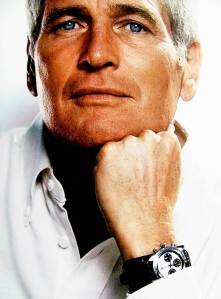 obviously sounds like something I need to see. In 1954 he appeared in a screen test with James Dean for East of Eden, testing for the part of Aron Trask, the fraternal twin of Dean’s character, Cal. Dean won his part but Newman lost out to Richard Davalos. Even though it wasn’t successful, it would be fateful. That same year, Newman co-starred with Eva Marie Saint and Frank Sinatra in a live (and in colour!) television broadcast of Our Town – Newman was a last-minute replacement for none other than James Dean. Newman’s name would often come up for Dean’s roles. The roles of Billy the Kid in The Left Handed Gun and Rocky in Somebody Up There Likes Me were both ear-marked for Dean but went to Newman after James Dean died in a car crash. Although Newman’s first film for Hollywood was in 1954 for The Silver Chalice, it was a flop and he often talked about his dislike for it (he took out a full-page ad in a trade paper apologizing for it to anyone who might have seen it!). But just two years later Somebody Up There Likes Me was earning him acclaim and in 1958 he earned his first Oscar nomination, for Cat on a Hot Tin Roof. Also that year he starred in The Long, Hot Summer with Joanne Woodward for which he won Best Actor at Cannes but perhaps more importantly, he won the heart of the woman he would love for the rest of his life.
Of course, Newman was still married at the time. He and Jackie had by this time had 3 kids: Scott, Stephanie, and Susan. Scott appeared in a few movies, including The Towering Inferno, but died in 1978 of a drug overdose. Newman started the Scott Newman Center for drug abuse prevention in his memory. Susan also stayed in the family business; she’s a documentary filmmaker with Broadway and movie credits – she had a starring role in the Beatles movie I Wanna Hold Your Hand, and had a small role oppose her dad in Slap Shot. But back to Woodward: they’d first met in 1953 but reconnected in ’57 on the set of The Long, Hot Summer. He divorced Jackie and married Joanne immediately. As glamourous as they were, they were among the first big Hollywood couples to move away from L.A.; they made their home in Westport, Connecticut. They stayed married for 50 years, until his death in 2008, and three daughters together, Elinor, Melissa, and Claire. Newman was of course famous for his devotion to his family, and you are undoubtedly familiar with his quip about his own fidelity: “Why go out for a hamburger when you have steak at home?”
In 1982, he and writer A. E. Hotchner founded Newman’s Own. It started with the salad dressing of course but the grand expanded to include pasta sauce, lemonade, wine, and more. But the most remarkable thing about the highly successful company is that Newman committed that all proceeds, after taxes, would be donated to charity. To date, the company has donated $500 million. Among the recipients of his philanthropy: protection for the first amendment; land conservation; religious 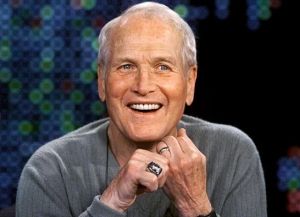 organizations; scholarships; theatre endeavors; a residential camp which he co-founded called Hole in the Wall Gang Camp, named for the gang in Butch Cassidy and the Sundance Kid naturally where 13 000 kids are served free of charge every year; and another of his bright ideas, the Committee Encouraging Corporate Philanthropy, which encourages CEOs of big companies to commit to charities – now responsible for $10 billion in corporate giving annually. Jeezum. So it’s not exactly surprising that Givingback.org would name him the Most Generous Celebrity of 2008; even since his death his foundations continue to generate good around the world.
Paul Newman was also a bit of a political activist. His support for Eugene McCarthy and his opposition to the Vietnam war meant he was #19 on Richard Nixon’s enemies list, which Newman often listed as his greatest accomplishment. Paul Newman supported gay rights, and gun control, and here’s a little factoid for you: he was at the very first Earth Day event, back in 1970.
Tireless, apparently, you may also remember that Paul Newman was a race car driver. He got into while training at the Watkins Glen Racing School for the film Winning, which came out in 1969. His first professional race was in 1972 at the Thompson International Speedway, where he entered as P.L. Newman, hoping not to attract Hollywood’s attention. He won four national championships at the Sports Car Club of America and came in 2nd at the 1979 24 Hours of Le Man, driving a Porsche 935. At the age of 70, he became the oldest driver to be part of a winning team in a major sanctioned race when he won at the 1995 24 Hours of Daytona; he would race in that again at the age of 80. The last work he ever did in Hollywood was to voice a race car named Doc in Pixar’s Cars; in fact, he’s received a credit for this year’s sequel, Cars 3, as well.
Paul Newman is one of only four actors ( with Laurence Olivier, Michael Caine, and Jack Nicholson) to have been nominated for an Academy Award in five different decades.
1958: nominated for Best Actor for Cat On A Hot Tin Roof; lost to David Niven for Separate Tables
1961: nominated for Best Actor for The Hustler; lost to Maximilian Schell for Judgment at Nuremberg
1963: nominated for Best Actor for Hud; lost to Sidney Poitier for Lilies of the Field
1967: nominated for Best Actor for Cool Hand Luke; lost to Rod Steiger for In the Heat of the Night
1968: nominated for Best Picture for Rachel, Rachel, his directorial debut, which starred Joanne; he lost to John Woolf for Oliver!
1981: nominated for Best Actor for Absence of Malice; lost to Henry Fonda for On Golden Pond
1982: nominated for Best Actor for The Verdict; lost to Ben Kingsley for Gandhi
1986: WON Best Actor for The Color of Money
1994: nominated for Best Actor for Nobody’s Fool; lost to Tom Hanks for Forrest Gump
2002: nominated for Best Supporting Actor for Road to Perdition; lost to Chris Cooper for Adaptation
[Note: received an Honorary Award in 1986 for his “many and memorable and compelling screen performances” and the Jean Hersholt Humanitarian Award for his charity work in 1994.]
Paul Newman was known for his piercing blue eyes and his sense of humour. His likeness was the inspiration for the 1959 illustration of the Green Lantern. Early in his career he was often mistaken for Marlon Brando, and he obligingly signed autographs as him whenever asked. He was Jake Gyllenhaal’s godfather. When he lost $50 to Jackie Gleason in a pool game, he paid him in pennies. Turned down the lead role in Ben-Hur because he “didn’t have the legs to wear a tunic.” Turned down Dirty Harry for being “too right-wing.” Was in an epic, years-long prank war with Robert Redford. He could play blues and jazz piano. He’s been on a US postage stamp. Although Paul Newman was the actor other actors looked up to, he was also a man of many diverse interests.
Paul Newman died of lung cancer in September 2008, with family by his side.

 Beyonce fills out a bodysuit. She’s just spectacular in this: spectacular, spectacular. You can’t make a movie like this without the perfect lead, and Danielle Macdonald is this movie’s soul mate, its one and only. But the rest of the cast falls into place perfectly too. Siddharth Dhananjay as Jheri is Patti’s perfect partner; perhaps an unlikely duo, but if the rap game is going to turn a cold shoulder on a white girl from Jersey, so too will it be tough for a brown boy pharmacist. But disenfranchised is disenfranchised and director Geremy Jasper paints an unflinching portrait. Meanwhile, Mamoudou Athie had already won my heart in Unicorn Store, so seeing him again here as Basterd solidifies his probable and swift rise to fame. Bridget Everett, Amy Schumer’s right hand man of comedy, rounds out the cast of Patti’s desperate mother, and strikes the right, harsh notes.
 Also uncomfortable: a singing telegram lady in a bonnet shows up daily to her door, singing the appropriate verse of The 12 Days of Christmas, and leaving behind the corresponding gift: two turtle doves, a partridge, a pear tree, etc etc. The problem is, the gifts are anonymous. It’s a mystery. A Christery, if you will. A Christmas mystery. And some pretty lame gifts that come with unwanted responsibilities. But Cynthia thinks it’s romantic, because she’s an idiot in a holiday movie and I guess she has to go along with it. I mean, do you realize how bird-heavy that song is? I did the math: it’s 22 birds by the end of the 12 days. That’s a lot of bird poop, and up to a 20 year commitment! Hope she likes omelettes, because birds are truly a gift that keeps on giving.
 plays the principal and he’s pretty darn at that too. But Matt Letscher plays the titular “Teacher of the Year” and though his character has the bonafide ribbon, you kind of have to take their word for it that he’s good at his job. Although we see quite a lot of him in the classroom, he rarely seems to be more than competent, and sometimes quite a bit less. Even so, this Teacher of the Year is being lured out of teacher. And if this is the best they have, they cannot afford to lose him. The rest of the school seems to be populated by teachers who are either oblivious or crazy with jealousy. It’s a sad state of affairs.
 about how good it is to be unemployed underwater? He literally calls the land lubbers slaves. But excuse me, there is one other black character, a “black fish” who sings. She is literally panned to for less than a second – blink and you’ll miss her.
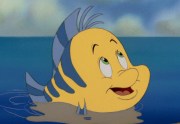 either but I find this way more misleading in a children’s movie [possibly my name is also confusing to children: my adorable and super-smart niece Ella, a year and a half old, is
 still refusing to say my one-syllable name and says instead “I no can do that” just to prove that she’s perfectly capable of complex sentences and is just happiest when she’s spiting me].
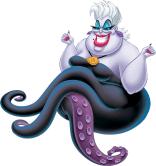 She technically only has 6 tentacles (it was cheaper than animating 8) but since she has 2 arms, I guess we’ll call it a draw. Octopus tentacles are distributed as 6 arms and 2 legs, but whatever. The team at Disney created Ursula with a drag queen named Divine in mind; unfortunately,
  Divine died before voice recording. I kind of love Ursula though. I love that she flaunts her curves and is always wearing a perfectly made up face. She’s got a soft spot for her pets (or sidekicks? henchmen?) Flotsam and Jetsam and a penchant for musical numbers and dramatics. My god, is Ursula ME? I do look hot in purple.
 label, Rodarte. They’re not the only designers to make the leap to film: Tom Ford made the jump rather successfully not to mention stylishly with A Single Man, and
  series of impressions – you get whiffs of what might be going on, and if you’re nose is good and you’re super motivated, you might even convince yourself the story has bones. But if you’re the kind of movie-goer who likes things like
  The film makes you think about memory, and what that means, and how it is shared, and if it is real. And it makes you think about humanity and what makes us truly ourselves, and if we can separate ourselves from memory, or if indeed that’s all we are is our memories. And it makes you think about love: can it be recreated, does it live on after death, does it exist independently outside a couple, is it found in the details or does it truly live in our hearts? So if you’re in the mood for a talky, thinky piece with very little action, Marjorie Prime may just be the film for you. Based on a play, most of the film takes place within just one room. But within that room, the acting is superb. Lois Smith is a phenom. Jon Hamm, Geena Davis, and Tim Robbins orbit around her, fueling her sun.
 and Ben haven’t seen each other since their unconsummated wedding night. But just as she’s agreeing to marry Joe in one month’s time, she gets big city divorce papers. Wahhh? Oh that’s right, there was a clerical error and it turn out she and Ben are still technically married. So she lies to her fiance, or, lies more to him, and flies to NYC where she gets into various big city hi-jinks such as: elevators! bumping into people! the lack of roosters!
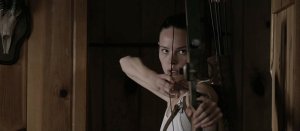 and sexual perversion isn’t just for kicks, it’s also serving a purpose. Because every time a girl fights back, her sentence is extended. And that’s very good news when you’re running a corrupt, for-profit scheme.
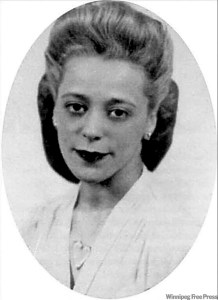 options for women of colour and decided she would be the woman to correct this. But her skin colour prevented her from beautician training at home, so she went off to Montreal and then to New York to complete her education. Returning to Halifax, she opened her own hair salon, where she would tend to a young Gwen Jenkins, later to be the first black nurse in Nova Scotia. And she didn’t stop there. She went on to found The Desmond School of Beauty Culture so black women could train closer to home. Students were taught how to open their own businesses, providing jobs for other black women in their communities. Then she started her own line of beauty products, Vi’s Beauty Products, which she sold herself.
