Over the weekend we took in True Story – the Jonah Hill\James Franco movie about a man who killed his wife and kids, fled to Mexico, and assumed the identity of a disgraced NYTimes journalist. Learning this, the journalist meets the guy in prison and writes the story of how he’s actually innocent. It got me thinking about cinema’s strange fascination with real-life criminals, and whether the Hollywood glamorization machine contributes to delinquency.
Personally, I have guilt. I immediately think of The Wolf of Wall Street – I love me some Marty Scorsese, but I had serious reservations about helping to line the pockets of someone who so callously victimized others. Leonardo DiCaprio plays Jordan Belfort, a young man who became addicted to the high life as a stock broker, and realized he could make even more money by scamming and defrauding countless trusting people.
Jordan Belfort was convicted of his crimes but spent less than 2 years in jail because he cooperated with the FBI. I used to believe in a line from True Story – that a criminal cannot profit from his crimes. Turns out, this is not quite true. Most states have “Son of Sam” laws (so named because people were understandably outraged when it seemed David Berkowitz stood  to get paid for his story) but these laws tend to be found unconstitutional because of free speech and discrimination based on subject matter. If a case like this is challenged, the criminal tends to win, so mostly nobody bothers to enforce it. So Jordan Belfort wrote a book, and got paid for it. And then Leo bid over a million dollars for the rights (and just for comparison’s sake, Jonah Hill made $60 000 for his work). And then Marty paid him another quarter million to ‘consult’ – he stood around on set, instructing Leo how to act all fucked up on Quaaludes and shit. And then he actually appeared in the end of the movie! So he made $1.2M and even though he’s supposed to be paying his victims back, only $21 000 ever went toward his restitution obligations.
Christina McDowell, daughter of Tom Prousalis, who worked closely with the real-life Belfort at Stratton Oakmont, wrote an open letter addressing Scorsese, DiCaprio, and Belfort himself, criticizing the film for giving insufficient attention to the victims of the financial crimes created by Stratton Oakmont, for disregarding the damage that was done to her family as a result, and for giving celebrity to persons (Belfort and his partners, including her father) who do not deserve it. Hard to argue with that.
It’s this last part that’s getting to me. To what extent are we, the audience, culpable? Are we condoning crimes? Rewarding them? Encouraging them? Jordan Belfort likened himself to Gordon Gekko of Wall Street (the movie) – he was inspired by the character’s unscrupulousness. 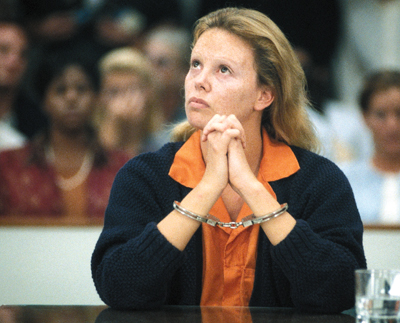 We can’t help how someone lacking a moral centre will interpret a movie (or a book, or a song, or a video game) – but we can and probably should stop giving these people a platform, or Hollywood’s version, a whole pedestal. Frank Abagnale Jr. was paid to work as a consultant on Steven Spielberg’s Catch Me If You Can. Aileen Wuornos became a recognizable name when Charlize Theron won the Oscar for portraying her in Monster – but can you name a single one of her victims? Those bratty, fame-obsessed kids who stole from Paris Hilton and her ilk were rewarded with reality TV shows and free trips to luxury rehab in lieu of prison sentences. When Sofia Coppola filmed her movie The Bling Ring based on their misdeeds, she renamed the characters so they didn’t get more famous – but she also paid $100 000 for the rights, which means they did get more rich. Piper Kerman went to prison on felony charges for laundering drug money and was rewarded heavily for it when Netflix decided to make a series out of her memoir Orange is the New Black – they paid her (and continue to), but paid for the “life rights” of several others as well. Nice work if you can get it. Philip Morris was a paid advisor on the film I Love You Philip Morris, in which a con man (Philip’s ex-lover) steps up his game to impress a fellow prisoner, including orchestrating elaborate prison escapes. Henry Hill capitalized on his gangster career with a line of spaghetti sauces, frequent interviews with Howard Stern, and a restaurant called Wiseguys, though Scorsese ultimately went with Goodfellas when it came time to release the movie. It may be the best mob movie ever made, but it glamorized the lifestyle and allowed Hill to thoughtlessly respond “I don’t give a heck what those people think; I’m doing the right thing now” when asked what his victims might think of the commercialization of his story through self-written books and advising on the movie.
Does this sit right with you?





 Susan Sarandon plays their matriarch, ‘Marmee’ – a big name for giving her so very little to do. But this is not a story about mothers, it’s a story about sisters, and no story about sisters can be told without boys, which is why floppy-haired Christian Bale is installed next door, and he’s making some interesting acting choices. He seems to have decided to go with “effeminate Keanu Reeves” for his portrayal of Laurie.