Author Archives: Matt

Carrie (2013)

While researching this week’s Wandering Through the Shelves Mother-Dauighter Movie challenge,I unintentionally stumbled onto yet another example of one of Jay’s least favourite subgenres: Beautiful Women Condescendingly Playing Ugly Ducklings.

The plain high school girl here is of course played by Chloe Grace Moretz, who has grown into quite a beautiful woman and is thus not at all how I pictured Carrie when reading Stephen King’scarrie 1976 novel. I always found King to be a fantastic and often insightful writer and this moving and- best of all- to the point (he has a tendency to ramble sometimes) story was my favourite book in high school.

Most classics don’t need a remake but- I’ll be honest- Carrie needed an update. At the risk of alienating Brian De Palma’s many fans, his 1976 Oscar-nominated adaptation hasn’t aged well. The dated music and hokey dialogue distract from King’s powerful story when viewed today. (Trust me, I just did). What holds up, of course, are Sissy Spacek and Piper Laurie who play the lonely daughter and controlling mother.

Kimberly Peirce seems up to the challenge of providing a fresh take on this story. In Boys Don’t Cry, she told a story of an outsider that was both beautiful in it’s depiction of human connection as well as horrifying in it’s display of our capacity for cruelty. Perfect for Carrie. Besides, five of the six most important characters are women so a woman’s voice seems welcome.

carrie remake

Unfortunately, Peirce follows De Palma’s template religiously, even recyclying the 1976 film’s dialogue whenever possible. To be fair, she does an impressive job incorporating modern carrie 2013concepts like cyberbullying into the story. She softens up the mom a little, played much more subtley by Julianne Moore than Laurie’s larger than life performance. That Margaret White is convinced that she’s acting out of love for her daughter is made much more clear in Peirce’s version. Still not enough to feel like a fresh take on the story though.

The biggest problem might be Moretz though. While Spacek appropriately never seemed comfortable in her own skin, Moretz seems much more comfortable kicking ass in Kick Ass than she does as an outcast. Apparently drawing from her own experience with being bullied, she does the best she can playing against type but it’s never a great fit for the character until prom night where Carrie finally starts taking her revenge.

I still say De Palma’s version is showing it’s age and needed a fresh coat of paint but I’ll take his dated but imaginative interpretation over this lazy remake any day.

Mother-Daughter Movies

TMPIt’s time for Thursday movie picks! This week we’re covering movies featuring mother-daughter relationships, which means I for one have been through about 6 boxes of tissues while deciding which are my absolute favourites. Thanks once again to spectacular blogger Wandering Through the Shelves for hosting this weekly meeting of the minds.

Matt

While I’m relieved not to be watching live-action fairy tales or YA movies anymore, this was harder than I thought. About a month ago, I had no trouble making a list of classic father-son dynamics but to mother-daughter relationships- that call for not one but two great roles for women- are a little harder to find in Hollywood.

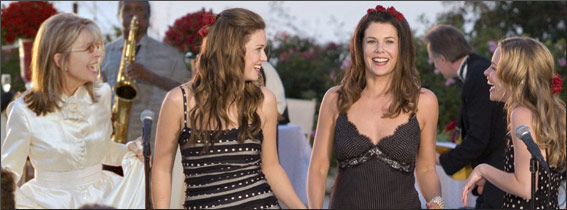
Mamma Mia! At first, my strategy was to name as many Meryl Streep and Diane Keaton moviesmm7_L as I could. This only got me a third of the way there when I remembered Mamma Mia!, the only American movie on my list. Judge me all you want but I love this musical. Yes, the cast was clearly chosen for their comic timing and definitely not their singing voices but their energy with the help of lots of Abba music make this a party I wish I was at. When searching for the father she never knew, a 20 year-old soon-to-be bride comes to realize how little she appreciated the mother who brought her up all by herself.

Jay: Consider yourself judged, Matt.

The Piano Teacher The dynamic between mother and daughter can be as messed up as any piano-teacherand who better to explore just how bad it can get than Austrian director Michel Hanake. Never afraid to make his audience squirm, Hanake (Funny Games) cast Annie Giradot as a mom that makes Carrie’s look permissive. Isabelle Huppert plays a forty-something pianist who shares not only an apartment but a bed with her controlling, perfectionist, and manipulative mother. All this withholding and repression leads to some pretty bizarre behaviour when the daughter meets a young man that she can’t help but be attracted to. Watching it can be an uncomfortable experience but it’s never dull and is sure to inspire lively discussions- even debates.

Volver Penelope Cruz got her first Oscar nomination for Pedro Almodovar’s 2006 Spanish volver-cruz-cobocomedy-drama. Carmen Maura plays mother to both Cruz and Lola Duenas, seemingly back from the dead to seek the forgiveness of her estranged daughter. There’s some serious stuff here but Volver is also surprisingly funny. It’s a hard film to categorize but an easy one to love.


Sean

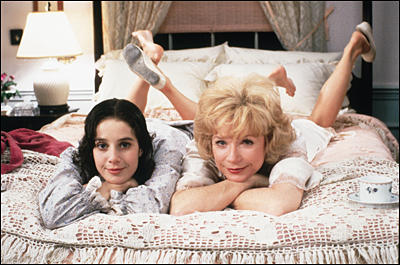
terms_of_endearment_3_maclaine_wingerTerms of Endearment – I saw this movie for the first time yesterday and right away I wondered how I had not seen it before. The opening credits contain so many recognizable names and everyone lives up to expectations. It is not an easy movie to watch because it seems so real. It’s not often a happy movie but it’s so genuine and for that reason above all else I think it will stick with me for a while. I highly recommend it to anyone else who hasn’t seen it.

Spanglish I didn’t even realize until now that this was also written and directed by James L. Brooks (just like Terms of Endearment). Score two for him because this movie is also fantastic. Like Terms of Endearment, it is also not very happy but comparing these movies is a disservice to both. Spanglish stands on its own as a story of true love and sacrifice. Just don’t watch these two movies back to back as you may never recover from all the heartbreak.1112065277

Jay: I can’t believe I let you do this one! I love Spanglish because their cultural isolation really pits the two of them against the world. Even when they occasionally hate each other, they’re still each other’s entire universe, and when other options start to present themselves, this mother is prepared to make the hard choices. You know this movie gets me every time, to see how close the mother gets to love and fulfillment but turns her back on it because she knows it’s best for her daughter.

Freaky Friday (1976) The third slot was a tough one because while I watched several other Freaky-Friday-classic-disney-18104673-900-506mother-daughter movies this week, I felt the other tearjerkers didn’t hit the mark. I went another way. I have to make 100% clear that this is the original Freaky Friday, not the remake. I did not see this movie as a kid, mainly because I confused it with the Friday the 13th series and horror movies terrified me. It’s very dated but it’s fun to see a young Jodie Foster try to act like a regular kid and then do a very accurate impression of herself as adult who happens to be pretending to be a regular kid.

Jay

I’m having a tough time paring down this list. I watched Autumn Sonata (Ingrid fucking Bergman!) which succeeds in being uncomfortable and intense despite subtitles. And I watched Imitation of Life, which pitted parenting styles against each other with equally depressing results. And I watched Because I Said So because frankly, how could I not? As Matt pointed out,acc3e0404646c57502b480dc052c4fe1 Diane Keaton is just screaming to be on this list, and this film with 3 sisters and a meddling mother is a comforting exercise in voyeurism. And Pixar’s Brave – I love the circularity in that relationship, the growth experienced by both women and the understanding that comes with it. And The Kids Are All Right – there’s so much here in terms of a family coming to terms with shifting roles, and it’s striking how much the two mothers complement each other. And Sherrybaby. And Easy A (love Patricia Clarkson in that!). And Anywhere But Here. And Mother and Child. Nothing like a major health crisis to flush out your Netflix queue!

But fuck it. Steel Magnolias, baby. There, I said it. It’s goopy and sentimental but you know 5a64037be0d86f25_steel_jpeg_previewwhat? The relationship at its core, Sally Field and Julia Roberts, feels absolutely genuine. Julia Roberts plays a young woman with diabetes, and Sally Field the constantly-worried mother. Both are headstrong but you can tell that Mom is secretly proud that her daughter is determined not to let her illness stop her from living on her own terms. Sally Field will give anything, including body parts, to keep her daughter going, but when the worst happens, the grief and anger are palpable and real.  For my money, Sally Field talking to her comatose daughter is just about the most heart-wrenching tribute to motherhood you’re apt to find.

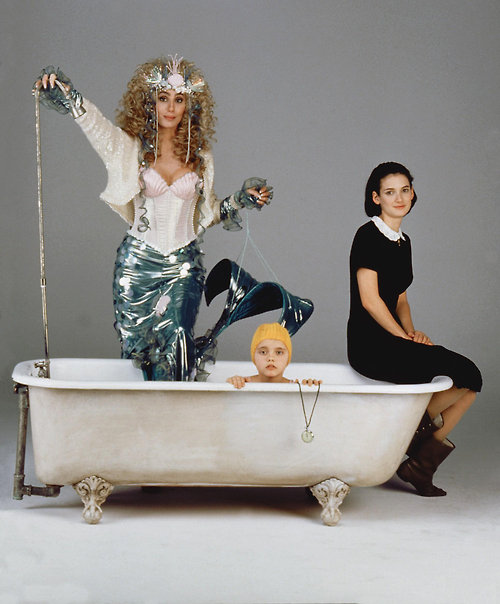
And Mermaids. I can’t help it. The family situation reminds me so much of my own – just a mom mermaidsposterand her girls on their own in the world. It’s not always easy, or friendly. When you fight you fight big, but you love big too. And the dancing in the kitchen: yes! I love Cher’s awkward stabs at motherhood – the funny little food and the ill-timed advice – and Christina Ricci’s weird little pumpkin-headed wiggles.


Now Voyager is the ultimate in family dysfunction. A hateful and over-bearing mother stifles her daughter NowVoyager-Still6(played by the inesteemable Bette Davis) into a nervous breakdown that turns out to be her weird salvation. Of course, upon return, the now glammed up and self-assured daughter is again reduced to a puddle in the face of her unfeeling mother.

Home

There’s nothing a Boov admires more than a wuss and fleeing in terror at the right moment can be all one needs to earn enough respect to become captain of the ship. Having pissed off the wrong alien race, they flee to Earth and are blissfully ignorant to the fact that the humans- forcibly relocated to cramped ghettos- don’t regard them as the “liberators” that they claim to Home 1be. After having accidentally sent out a house party evite to the very aliens that made them flee to Earth in the first place, the already unpopular Boov Oh turns fugitive and hits the road with a young human who wants to find her mom.

The pre-screening of Home at Silvercity last night got a lot of laughs and your kids will probably love it. I was turned off at first by pretty unimaginative animation and a slow start that took way too long setting up its concept. I was eventually won over though and surprised about half way through to discover how much fun I was having watching it. Voiced by Rhianna and Jennifer Lopez, I never really connected with the human characters but grew to love the Boov. Jim Parsons, famous for playing a physicist Home 2ignorant of Earth’s customs, is right at home voicing an alien with the same problem. He gets almost every real laugh in the movie and I plan on using “What is the purpose of your face?” as often as I can for awhile.

Neither the story or the visuals in Home will appeal to adults the way Big Hero 6, Lego Movie, or even How to Train Your Dragon 2 did. It has enough touching moments and big enough laughs though to make up for the many points where it starts to drag.

Wristcutters: A Love Story

Don’t worry, it’s not as depressing as it sounds.

This is what I was promised when a copy of Wristcutters was eagerly thrust into my hand at my local video store. I cautiously took her at her word but I was worried. Of all the possible ways for someone to “off themself”, wristcutting is my least favourite- probably because of my squeamishness about blood. So, if this is not only going to be a movie about someone cutting themselves but SEVERAL people cutting themselves (as the title seems to promise), then we’re going to have a problem.

It turns out that all the bleeding happens during the opening credits. Depressed and heartbroken after a break-up, Zia (Patrick Fugit) takes his own life but not before throughly wristcutterscleaning his apartment. To his dismay, the last thing he sees is one lone dust bunny in the corner of his bathroom. It’s a powerful scene in what I interpreted as the last seconds of panic once it’s too late to go back.

The rest of the film takes place in a strange corner of the afterlife set aside specifically for those who offed themselves (the movie’s words, not mine). It’s not quite Hell. As Zia explains, everything is just the same as before, just a little bit worse. They still have to work, pump gas, clean the apartment etc. Everything looks the same, just a little grayer. And no one can smile anymore.

I was not misled. Wristcutters is not as depressing as it sounds. Wristcutting- and suicide in general- are mostly incidental to the story and the discussion of the topic is limited to a game a love storythat people play in this world where people try and guess how someone did it (usually accompanied by a darkly comic flashback). Even this device is quickly abandoned when Zia hits the road with a hitchiker looking to appeal her case and be sent back to the land of the lving (Shannyn Sossamon) and a failed Russian musician with nothing better to do (a very funny Shea Whigham).

Wristcutters is often funny and gets a lot of mileage out of the chemistry between Fugit and Whigham but Wristcutters felt like a missed opportunity. So many of us are touched by suicide and yet most people aren’t comfortable really talking about it. What better way to talk about it than in a comedy with a setting where everyone has this one thing in common. I found myself ironically wishing that it was more depressing or at least more sick, more daring in what it was willing to address directly, and more creative. Apart from the tone, which is more self-consciously quirky than actually unique, we get a surprisingly generic road movie and love story with the tragedy of teen suicide merely providing the context andn eye-catching title.

Draft Day

The girl behind the counter shrugged when I asked her if Draft Day was any good and told me that she didn’t know much about football. I can relate. Jay and Sean had to explain pretty much every play to me when we went to see the Ottawa Redblacks play last year. In fact, the joke I made at the video store was “The only thing I hate more than sports is sports in movies”. To which she replied incredulously “Then what are you renting this for?”.

I didn’t know what to tell her and still wouldn’t. I guess my thinking was that having this site is going to sometimes involve taking the time to check out movies that I would normally have Draft Daygiven a pass.

Set almost entirely in the hours leading up to the impending NFL draft, Draft Day- as I was relieved to discover- barely has any football in it and assumes pretty much zero knowledge of the game or the NFL. Seattle is even introduced as “Home of the Seahawks”. Instead, the action takes places off the field as we get a behind the scenes look at the trades, negotiations, and strategizing as unpopular Cleveland Browns GM Sonny Weaver (Kevin Costner) tries to make a big enough splash to save his job.

Draft Day is a strange movie and I’m not sure who director Ivan Reitman (who I’m pleasantly surprised to see is still working) was hoping would embrace it. Instead of inspiring locker room Draft Day 2speeches and risky plays we get contract negotiations and conference calls. Costner throwing a laptop across the room in frustration is really the most action we can hope for here. So there’s  more Moneyball than Remember the Titans but even Moneyball found the time to show us some baseball.

Sadly, Aaron Sorkin, who co-wrote Moneyball, was not available to write Draft Day and, while the former was witty and suspenseful the latter is exposition-heavy and surprisingly predictable. So who is the target audience for a sports film that is too blandly written for film fans and too talky for sports fans? I’m starting to think it was written for me. The diligence it takes in explaining to the audience what just happened, while probably insultingly patron to most, provided me with the only real pleasure I got from the experience as I continually found myself patting myself on the back for keeping up with it.

Black and white films since 1970

TMPTime for more Thursday Movie Picks! All the Assholes have assembled Avengers-style to talk about their favourite black and white films made post-1970

Luc

Full disclosure. I hate black and white movies, especially if they were shot past 1917 when Technicolor was invented. Why would anyone want to even go that route? I find it distracting and somewhat pretentious (The Artist comes to mind), I recognize that this is my own personal bias and you may completely disagree with me. That’s fine. That being said, if I was forced to pick some of my favorites, I would have to start with Kevin Smith’s Clerks.

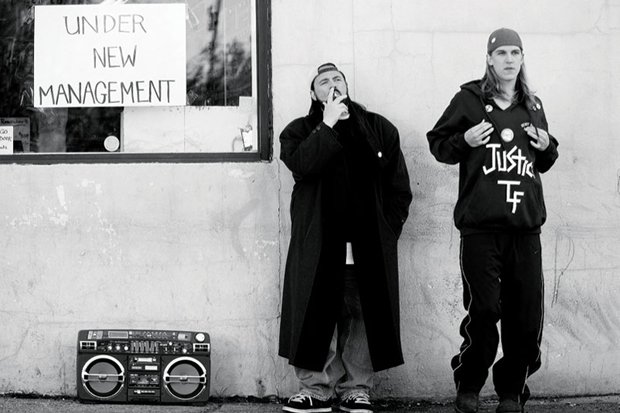
A true cult classic that any obsessive movie goer has surely seen more than once. There’s so clerks1many things to like about this movie! It was shot in black in white in order to save money. This might be the only acceptable reason to shoot in black & white. It’s much cheaper to make a movie this way since lighting issues are non-existent. Post production colour temperature problems? None. Lighting problems? Nope. There’s many advantages to shooting in black & white, but aesthetics is not one of them, in my opinion.

I also admire Kevin Smith’s ambition as a filmmaker. The story goes like this, Kevin smith, who wanted nothing more than to shoot his first feature length, decided to max out his 30,000$ credit card and gave himself 21 days to accomplish this incredibly inspiring goal. How can you not support and admire this feat?

In regards to the movie itself, I find the writing absolutely brilliant, not much actually happens throughout the 122 minutes of conversations about movies, hockey, women, and blowjobs. Now that I think about it, it’s quite amazing that with a cast of friends and family members (hired to save money), this movie did so well.. It grossed over 3 million dollars, was critically acclaimed and really launched Jay & Silent Bob’s career.

This film is about the mundane, daily struggles of an apathetic convenience store clerk (Dante), who seems to have no real direction in life, and his best friend, Randal, a video store clerk, who’s in a similar predicament. Did I mention that Dante and Randall love hockey? Well, they love it so much that their sole purpose throughout the movie is to figure out how they can ditch work in order to play a quick game of pick up hockey on the rooftop of the convenience store and yes, I am talking about two grown men. We also get to meet two great characters, Jay and Silent Bob. Two pot smoking friends who sell marijuana, shoplift and give golden advice on women and relationships.

If you haven’t seen this movie yet, you might want to get out from under your rock and get on it! Seriously. Sean seconds this nomination and adds that it’s a movie he could really relate to at the age of 18 (and maybe still). “I remember always having similar conversations with my friends to those in the movie, just ridiculous things we threw at each other that led to hours of stupid discussions.”

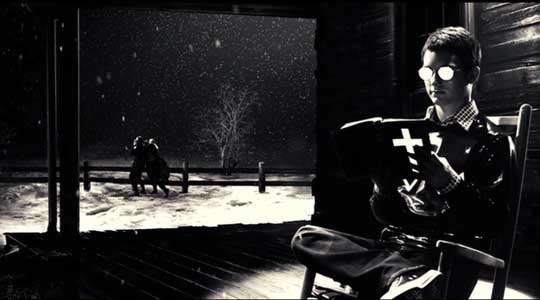
Back to Luc. My second pick is no other than Abbott and Costello Meet Frankenstein (might sincity03actually be my #1) but the movie was shot in 1948 and all the assholes agreed to choose movies post 1970, I’ll have to go with Frank Miller’s Sin City. I’m not sure this counts as a typical black and white film, considering that some scenes have bright red, yellow and green, but as I said before, I find it somewhat difficult to choose my “favorite” black and white movie since I generally don’t appreciate them. I love the themes that are explored in this movie: crime, corruption, loyalty. The graphics are also pretty stellar. I’ve never actually seen anything quite like it and if you’re familiar with Frank Miller’s graphic novels, you will surely recognize the artistry from beginning to end.

My third favourite black & white movie would have to be Good Night, and Good Luck, directed by no other than George Clooney. Frankly, I can’t remember all that much about the movie other than it being politically driven. You might say “dude, you write for a movie review site, can’t you at least take a couple of hours to watch the damn movie?” And the simplest answer is no. No, I can’t, it’s in black and white.

Matt

The pickings of great black and white movies aren’t as slim as Luc would have you believe. I don’t love black and white movies, I just don’t give a shit. If the filmmakers are telling a good story in an interesting way, I don’t care if it’s in black or white.

In fact, there’s lots of good reasons besides saving money to shoot in black and white. Actually, I would be tempted to argue that saving money is the worst reason. The Artist was a silent film about silent films so Michel Hazanavicius shot in the style of the classics he loved. Martin Scorsese wanted to avoid making a gratuitously bloody boxing movie so he shot Raging Bull in black and white to soften the blow.

Black and white films can feel timeless. Last year’s Ida didn’t feel like a new movie to me. It felt like a classic that had been around for years that I am only now just getting to see. Conversely, Schindler’s List doesn’t look nearly as dated as other films released in 1993.

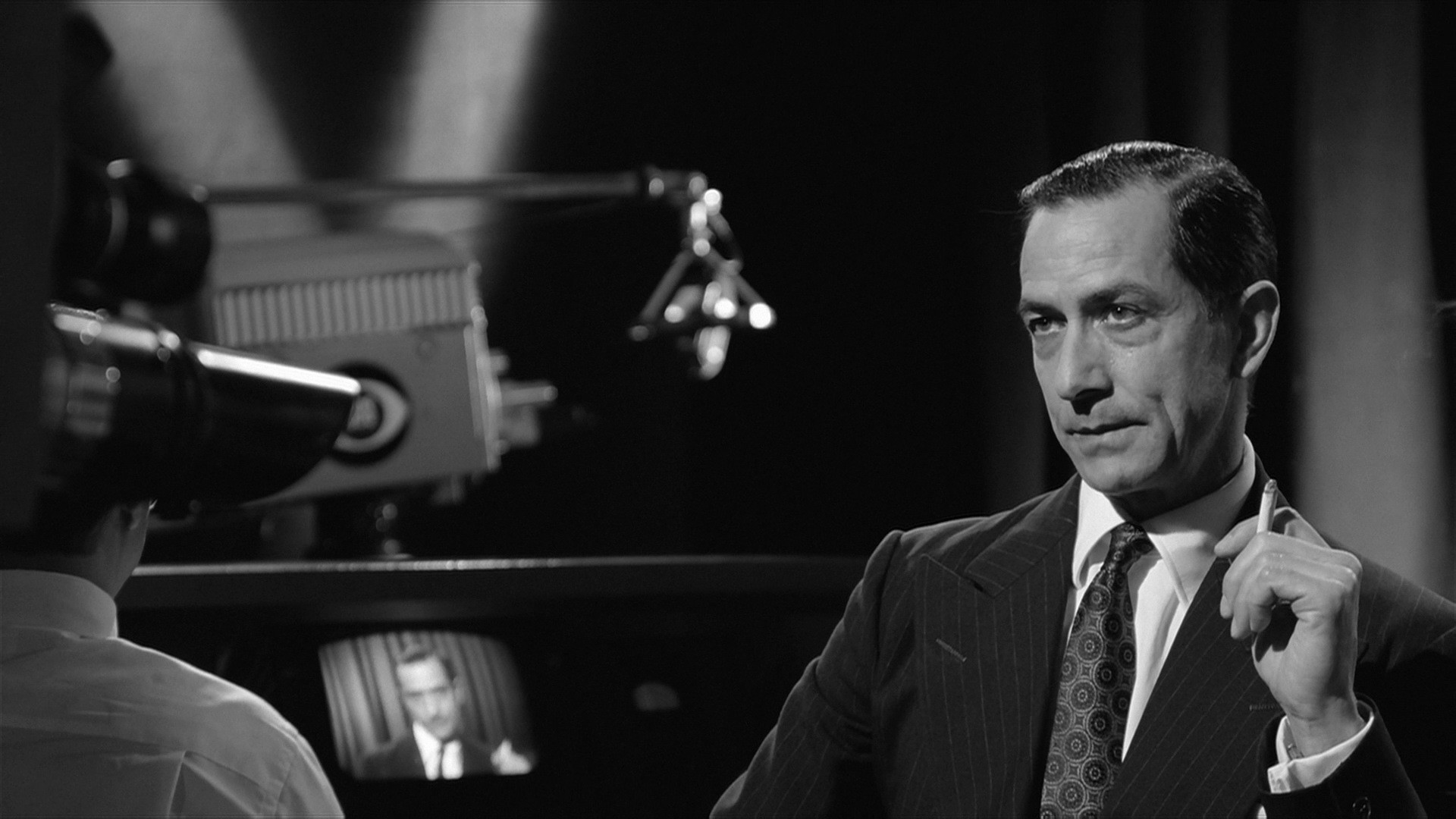
Good Night, and Good Luck- I hate to say anything against George Clooney but, as a director, good-night-and-good-luck-original1he’s never really come close to living up to the promise he showed in one of the best movies of 2005. To refresh Luc’s memory, it tells the story of news anchor Edward R. Morrow and his fearless coverage of Sen. Joseph McCarthy’s anti-Communist witch-hunt. I don’t know if it needed to be in black and white but, because it recreates live television featuring real footage of McCarthy that would have originally been presented that way, it seems appropriate. It takes a smarter and less dramatic approach than most films that are based on real events and definitely a must-see.

schindlerslistSchindler’s List- Steven Spielberg’s 1993 passion project hasn’t seemed to age a day. I rewatched it for the fifth or sixth time yesterday and couldn’t help feeling that everyone involved from cast to crew to extras shared his passion. It’s a beautiful film from start to finish, with even the controversially sentimentality working for me. I feel a heart-wrenching sadness every time I watch it unlike anything else I’ve experienced at the movies and, when it’s over, I feel almost cleaned out.

Sin City- Robert Rodriguez’s 2005 film is almost a panel-for-panel adaptation of Frank Miller’s graphic novels. The comics were black and white (mostly) so the film had to be too. It works mostly thanks to Miller, whose writing ranges from as pulpy as it gets to almost poetic. “When it comes to reassuring a traumatized 19 year-old, I’m about as expert as a palsy victim doing brain surgery with a pipe wrench” is my personal favourite. Moments like that are almost enough to make me forgive last year’s disappointing sequel.

Jay

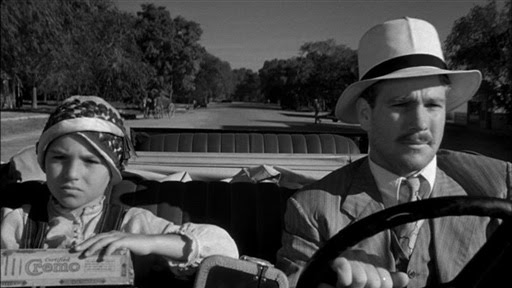
I like wondering  why directors choose to shoot in black or white – what are they trying to tell me paper_moonby presenting their movie in this way? One of Sean’s picks, Paper Moon (Sean says: it’s fun to see Tatum O’Neal as a little grifter, with her real life father helping out while thinking he’s in charge) is a great example of a careful choice. Set in the depression era, the black and white adds an evocative nostalgia factor. As Matt might point out, it’s a movie that refuses to age because it was purposely dated when released. It means to take you back to a “simpler” time, and then make you question what exactly was so simple about people trying so hard not to starve. Cinematographer Lazlo Kovacs uses black and white to great advantage, with a deep focus that keeps everything razor-sharp.

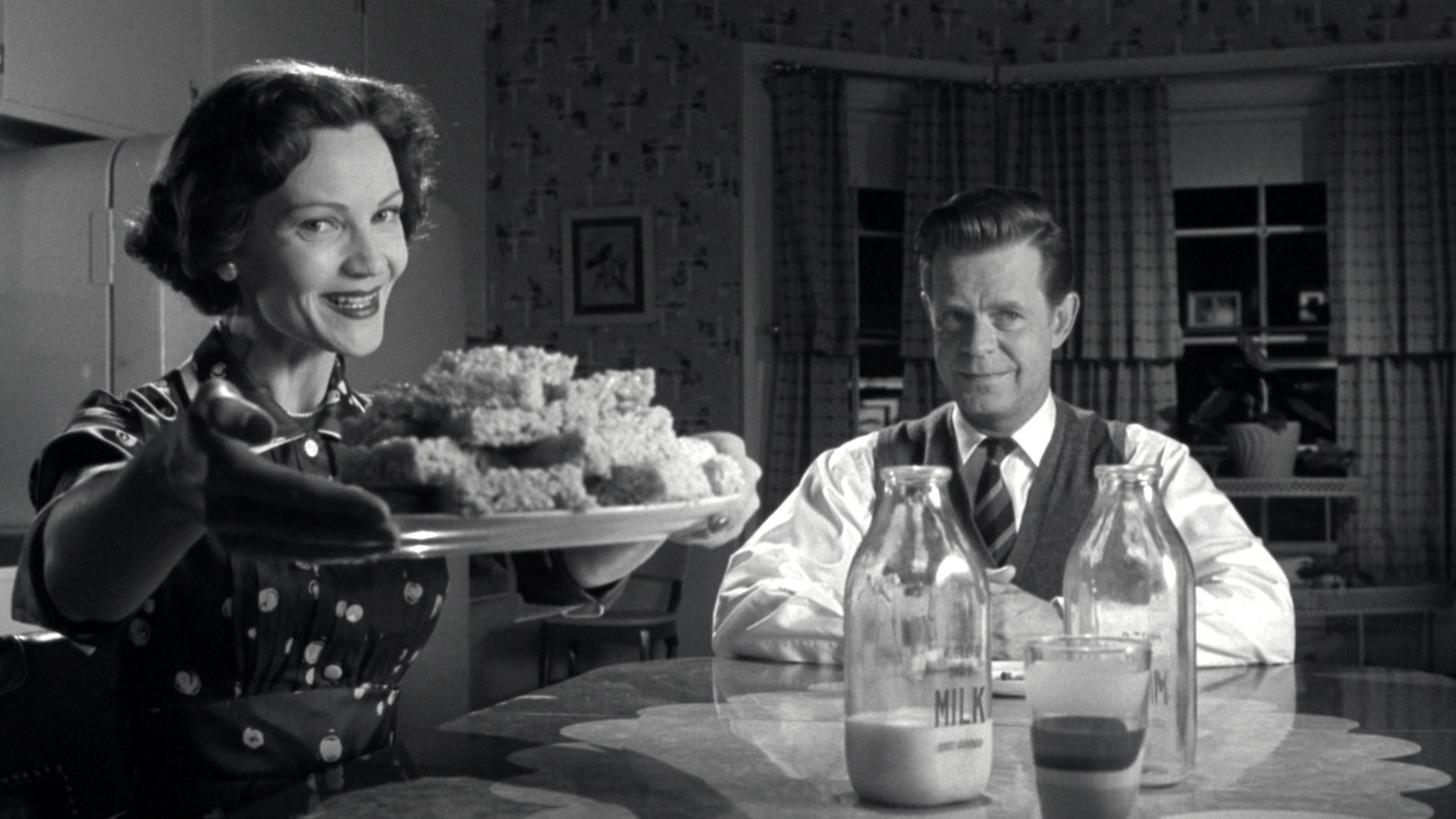
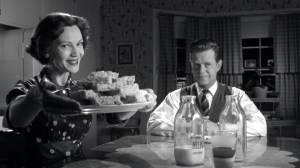
Pleasantville, in my opinion, uses black and white very wisely. It doesn’t just demarcate “old” pleasantville3422and “new” but comes to symbolize enlightenment. Tobey Maguire and Reese Witherspoon play teenaged siblings who get thrown into a 1950s sitcom, again, the “simpler” times that turn out to be not-so-simple. Although everything is superficially pleasant in grayscale, the two rapidly come to miss the highs and lows of life back home. As they influence the sitcom’s residents to challenge their notions and beliefs, the characters are engulfed in colour. They are set ablaze with their newfound edification but some are ashamed of their obvious (colourful) sophistication and seek to cover it up. Now the black and white is a symbol of repression and shame.
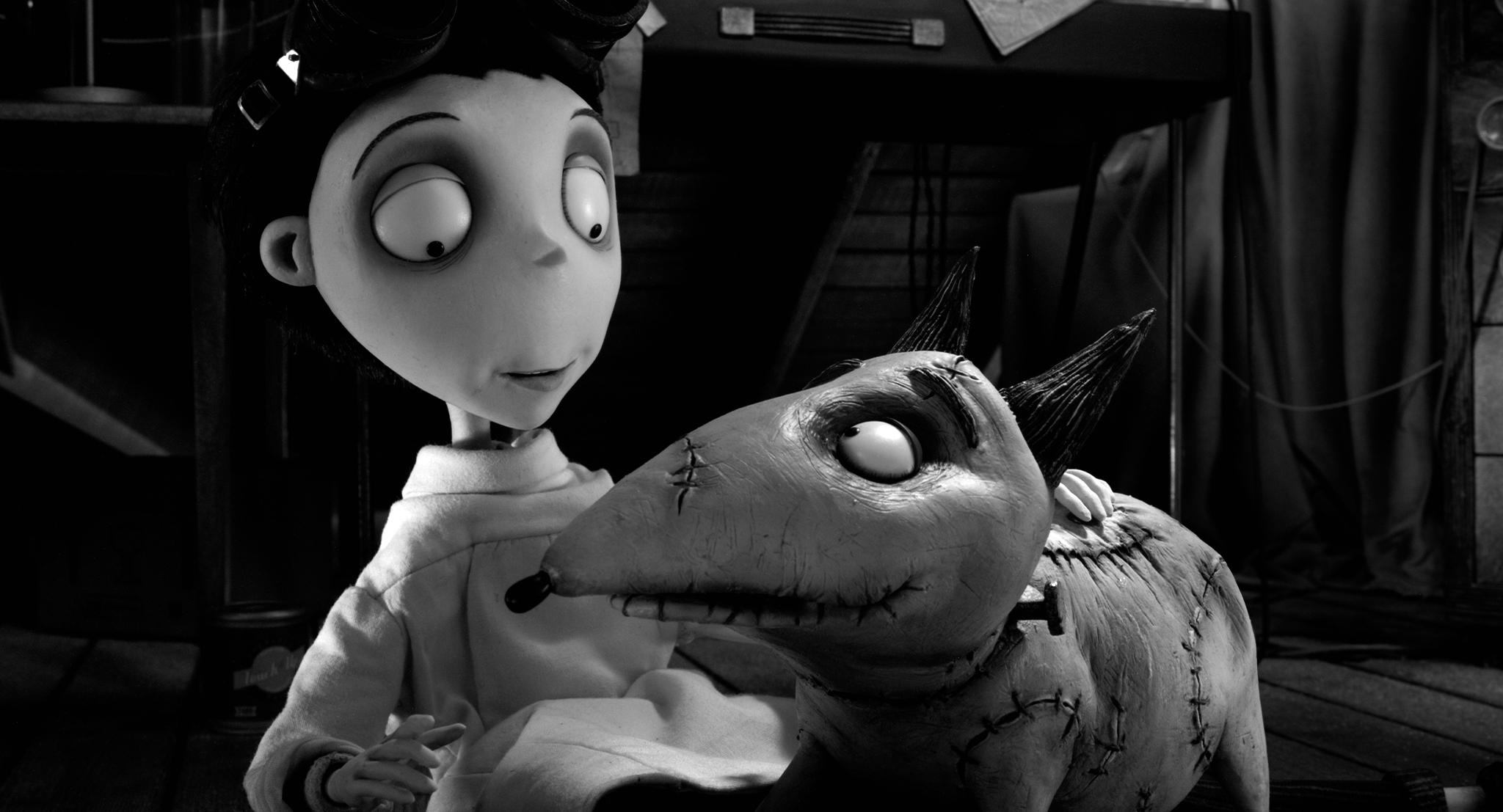
Sean chose Frankenweenie as his third and final film. It’s an animated and touching story of a boy scientist and his resurrected dog that’s sweeter than it has any right to be. Director Tim Burton has said “I find black and white very beautiful. It gives a real sense of emotion. I was FRANKENWEENIEreally excited about seeing this in black and white because there’s a depth to it that I love. It’s not right for every project but when you take the colour out of something, sometimes you start looking at other things, such as textures and characters. I was very happy that the studio [Disney] went along with the idea. If they’d wanted it in colour, I wouldn’t have done it.”

I’m happy to report that this week’s theme made me seek out movies I hadn’t seen before. I following_stills_04watched Chris Nolan’s first feature-length film, Following, and enjoyed trying to pick out early hints of his trademarks. Why did he shoot in black and white? Perhaps to enhance the stylistic look of a film noir, but also, I suspect, like Kevin Smith, because he was shooting on a tight budget. Clerks was big-budget compared to Nolan’s six grand and he made the choice to get the biggest bang for his buck.

Denis Villeneuve, on the other hand, seemed to be more in camp Scorsese. He directed a Canadian film called Polytechnique that’s about the Montreal Massacre – the day a gunman polytechniquedecided to target women and killed 14 of them while they were in school, dismissing their male classmates while voicing his hatred of feminism. It’s a bloody day in Canadian history but Villeneuve seemed to want to minimize the impact of the blood, allowing the audience to think about the killing spree in perhaps a slightly more abstract way. The film rises above the tragedy and is quite cool in its presentation, some might even call it dispassionate.

Joss Whedon made a Shakespeare adaptation of Much Ado About Nothing shot in black and white – maybe to highlight the sexiness that’s supposed to be in the movie, or to make the comedy’s dark side come alive, maybe to help mask and mistake California for Italy, and maybe it’s because it’s as far as he could possibly get from his simultaneous project, The Avengers.

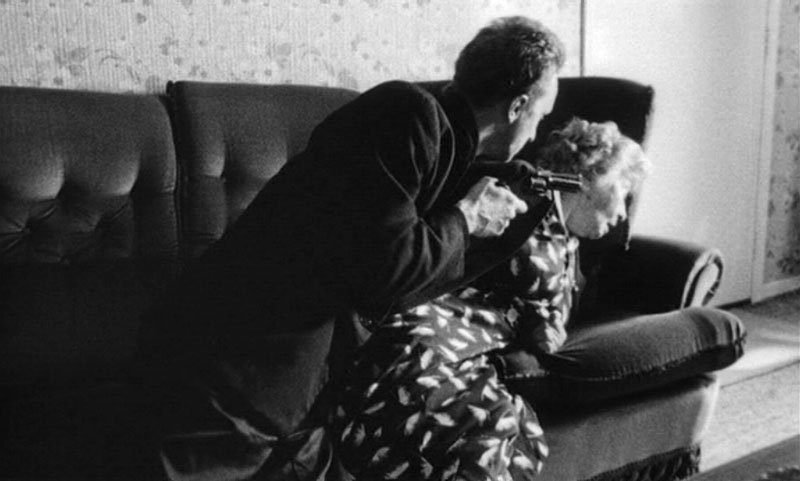
The hardest movie you’ll ever watch is almost certainly Man Bites Dog. A mockumentary that man_bites_dog6shadows a serial killer who engages in increasingly graphic crime, you can’t look away but you’ll want to. It’s hard to swallow but carries an important message. It was shot in gritty black and white, a tip of the hat to cinema verite style, which is falsely considered more objective. In this case, the medium is just as stark as the message.


We look forward to hearing all of your picks – be sure to let us know your favourite black and white in the comments!

p.s. You might want to check out last week’s theme, father-son movies.


Focus

As much as I always enjoy the chance to see a SilverCity pre-screening, it’s hard for me to get enthusiastic about a movie about a couple of grifters. Especially the master and apprentice kind, where a seemingly hopeless but but enthusiastic novice tells a seasoned veteran “Show me how to do what you do”. I couldn’t help entering the theater thinking that I had already seen every possible twist, every possible combination of who’s playing who and who’s been in on it the focus 1whole time. Having been tricked before, I vowed to go in with my eyes open.

Focus didn’t throw anything at us that I haven’t already seen. I can’t say I was able to predict every single twist. I couldn’t possibly. The movie shifted gears so many times that I couldn’t always tell which trick was coming next but, once it came, it was usually familiar.

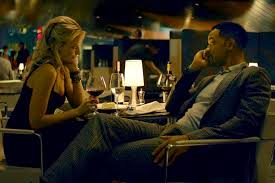
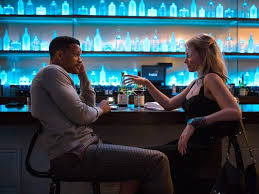
Which isn’t to say that there’s nothing to like. Focus is more than a heist film, it’s a comeback film for Will Smith after a nearly two-year absence after 2013’s unsuccessful After Earth. His career has had more surprises and twists than Focus does and I’ve enjoyed watching him continue to improve as an actor ever since his sitcom days. Now well into his forties, he plays Nicky as confident instead of coky, with none of that goofy hamminess he brought to most of focus 2his earlier movies. His banter with up and coming co-star Margot Robbie is much more fun to watch than the execution of the scams are, which are rarely clever and often just plain sillly.

Smith and Robbie look great and so does the movie. Directors Glenn Ficcara and John Requa find the coolest bars and know how to shoot them and, just like in their last movie Crazy Stupid Love, the bar seduction scenes are the best in the movie. The clothes, the lighting, the slick editing, and confidence of the two leads can make the dialogue sound smarter than it really is.

Oscar aftermath and Requiem for a Dream

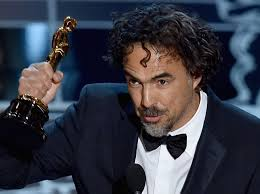
Twenty years ago, having not met any of the other Assholes yet, my Oscar parties were just my younger brother and I in front of a TV. I was 13 years old and hadn’t seen most of the nominated films but I still felt like my opinions on every category needed to be heard. Not having a blog yet, my 11 year-old brother birdman oscarbecame the first victim of my Oscar rants. Not that he minded. Although less invested in the awards themselves than I was, I think he joined me each year for the fun of watching me guess wrong over and over again. “You’re really bad at this,” he used to say.

Twenty years later, I’m still really bad at this. I watch as many nominated films as I can now but only managed to call 12 of the 24 awards on Sunday. That’s 1 in 2 which I remember was pretty much exactly what I scored back in the early days. So all that preparation, sitting through Hnpharry Potter and Transformers movies just to have an opinion on visual effects, for nothing.

Not that I didn’t enjoy losing. Despite Neil Patrick Harris’ awkward hosting (“We’ll be right back with Oscars for Best Live Action Short, Animated Shorts, and Bermuda Shorts” being the low point), it was a great night full of red wine and spicy mustard that Jay brought back from Paris. There were pleasant surprises too. I don’t mind losing when losing means Big Hero 6 gets to take home an Oscar or when the excellent Whiplash takes home more than anyone but Sean expected.

Now that awards season is officially over, I’m a little burnt out. It happens every year.Starting on nomination day, I hit the ground running seeing so many movies that by the end the thought of sitting through another movie makes me exhausted and the smell of popcorn makes me nauseous.

Because we have this site now, taking my usual post-Oscar break isn’t an option so I went out and rented Requiem for a Dream, one of Luc’s favourite movies that I have been putting off seeing for fifteen years. I didn’t know much going in but I knew enough to think it would be unpleasant and 2000’s nightmarish cult classic did not let me down. Despite some scenes of hope and beauty early on, it started out sad and only got more punishing as it went on. Director Darren Aronofsky’s unusual filmmaking lets us experience the pain and anguish from the point of view of the characters. His style separates Requiem for a Dream from more conventional films about addictions. requiem for a dream

Requiem for a Dream mostly stands out because of Ellen Burstyn who, at the age of 68, was a good enough sport to walk around with 10 and 20 lb fat suits and sat wit5h the makeup department for hours putting on uncomfortable prosthetics. She gives a performance that’s so heartbreaking that the cinematographer reportedly sobbed through her big scene. She won an Oscar for this, right?

Nope. Just checked. She lost to Julia Roberts for Erin Brockovich. Come on, guys. No wonder I can never predict your choices.

Oscars 2015: Best Director and Best Picture

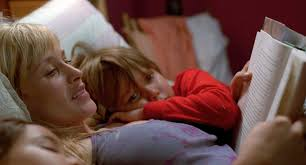
Birdman cinematographyBest Directoruntitled

Richard Linklater- Boyhood

Alejandro González Iñárritu- Birdman

Bennett Miller- Foxcatcher

Wes Anderson- The Grand Budapest Hotel

Morten Tyldum- The Imitation Game

One of the more controversial categories this year, the Best Director race is traditionally one of the more reliable predictors of the Best Picture Oscar. The Academy’s snub of Ava DuVemay for Selma has put a bit of a damper on things but Linklater and Iñárritu’s inclusion still make for an nteresting race.

Miller and Tyldum are strange nominations. Not only did I find Selma a much better movie than The Imitation Game, it was much more of a director’s showcase. And Miller won’t win. Since I started watching 20 years ago, no director has won for a film that didn’t even earn a Best Picture nomination. As good a job as he did with Foxcatcher, it really is bizarre that the Academy passed over four Best Picture nominees in favour of Milller.

Now for Wes Anderson. I am running out of things to say about him, having praised The Grand Budapest Hotel several times over the last couple of weeks. We love him here at Assholes Watching Movies and are thrilled that the Academy finally got around to giving him his first Best Director nomination.

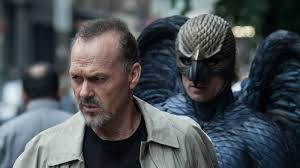
That leaves Linklater and Iñárritu who have made two of this year’s best movies. How do you compare the ambition of these two projects. Birdman’s self-aware screenplay and dizzying cinematography vs Boyhood’s 12 year commitment. I wouldn’t be disappointed either way but I’m voting Linklater. He made a great film, not just an ambitious one that was filled with beautiful moments filled with truth.

Best PictureBirdman script

American Sniper

Birdman

Boyhood

The Grand Budapest Hotel

The Imitation GamePatricia Arquette

Selma

The Theory of Everything

Whiplash

I’ve commented on all eight of these films at length andhave made no secret of my love for boyhood. Experts have declared Boyhood and Birdman as the two frontrunners, leaving me with no idea what is going to happen. Both movies are great so I won’t mind either way. As long as American Sniper doesn’t win as my colleague just predicted.


Gideon’s Army

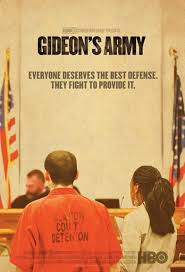
I set out to review Gideon’s Army last night with a quick comment on the best documentary Oscar race. My quick comment became a long comment as I got a little carried away thinking about what makes a documentary great. Should we hold theGideon's Army 1m to the same standards as we would fiction in terms of style or is it enough to just tell the truth about an important subject?

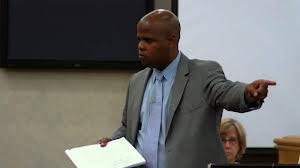
Gideon’s Army is a fantastic documentary no matter how you look at it. Screened mostly at film festivals in 2013 but now available on Netflix, it follows three young and hopelessly overextended public defenders working in poor areas in the southern US. Anyone who’s ever watched Law & Order knows the Miranda rights, probably by heart. “You have the right to an attorney. If you cannot afford an attorney, one will be appointed.” Everyone has a right to legal representation, even if your lawyer is taking on up to 180 clients at a time as Brandy Alexander (not even thirty years old yet) has to. A statistic at the beginning of the film states that there are 15, 000 public defenders working in the US right now and together they represent millions of defendants each year.

Gideon's army 2

Gideon’s Army gets the statistics out of the way quick and then puts all its focus on people. The three lawyers that we get to know in the film have to defend both people that they firmly believe to be innocent and people that they know to be guilty and proud to be guilty of unspeakable crimes. They lose sleep over the cases that they are terrified to lose and the lives they are afraid of ruining. In Brandy’s case, she had to represent at least on person who threatened to kill her. The work is so stressful that they have a support group.

One lawyer described being regularly asked “How can you defend those people?”. This is not a popular subject for a doc. Lawyers don’t get much sympathy, especially criminal lawyers, and Gideon's army 3neither do defendants. The film makes a strong case that the system that claims “Innocent until proven guilty” is really stacked heavily against the accused, especially if the they don’t have money. The system puts tremendous pressure to take a plea bargain, not being able to afford to stay in prison while their house and job slip away as they await trial.

Gideon’s Army potrays those that do their best to keep burnout and pennilessness at bay to defend those that can’t afford to pay them as heroes. Director Dawn Porter’s admiration is understandable. As a social worker, I can cheer for anyone who will take the time to listen to and stand up for those that the rest of the world has seemed to have given up on. I highly recommend you check out this movie.