

When director Nina Paley’s father was on his deathbed, she and he had conversation about Passover that turned into a discussion about her long-ago decision to drop out of college to pursue her art, and how he wished she would have found a way to increase her savings. It strikes me as a typical conversation between a father and daughter, particularly a Jewish father and daughter. But it becomes much less typical when animated into a conversation between  a bearded dollar bill and a goat. Those pieces form the heart of Seder-Masochism, a unique look at the story of Exodus from the perspective of a couple lapsed Jews.
In between, the story of Moses is told as a musical, with the Jews dancing their way through oppression in Egypt and then chaos in the desert to a collection of toe-tapping classics, one of which, naturally, is “Go Down Moses”. Underlying the whole thing is the reality that in escaping from under the Pharaoh’s thumb, the Jewish patriarchy remained a source of oppression for women. Paley admits that she had no idea how to  resolve the conflict between the Jewish God and the goddesses, but she does an excellent job of highlighting that conflict in the sunniest way possible.
The animation, all done by Paley, is unbelievably cheerful and bright, contrasting in every way with the subject matter. That cheery art style, combined with the upbeat soundtrack, ends up making the film feel even darker as we see these awful events depicted as if in a Saturday morning cartoon, enhanced with the largely upbeat (and unlicensed) music. Paley was up front about not having paid for the music in order to keep costs down while using the songs that best fit her vision. The strongest scenes from the film, though, are those featuring the conversation between Paley and her father, as they are funny and starkly honest at the same time.
Whether or not you know anything about Judaism or Exodus, Seder Masochism is a well-made, charming, and surprisingly personal film. And once Paley has completed the festival circuit this fall, she plans on making this movie available for free, so you’ll soon be able to see Seder Masochism yourself even if you aren’t able to catch it on the festival circuit.

 omic book roots of the character as a human and alien united by their hate of Spidey.
 is so much texture here, you’ll want to pet the screen.
 Because Deb is worth more than she even knows, which she stars to discover after her daughter fails to come home one night after a date with her basement-dwelling baby daddy. A loved one’s disappearance must be life-shattering. Miller lets us see the dissapearance’s drastic effects on Deb in such a restrained and measured way that Deb’s resulting character growth is organic, believable, and most impressively, almost invisible at first. Deb’s evolution is captivating, and the Deb we know by the end of the movie is at once the same core character and a woman whose outlook and attitude have evolved beyond anything I could have ever expected.
 Monsters and Men is that conversation piece. Moreover, it is one of the finest cinematic conversation pieces I have ever seen. What makes it stand out from the rest is that it tries so very hard to stay impartial (and succeeds), to the point that a black cop at a dinner party (
 The ever-evolving Predator crash lands on earth and interrupts a U.S. sniper’s top secret Mexican mission. After ejecting from its ship, the Predator kills the sniper’s support team but the sniper (Boyd Holbrook) manages to escape, mailing a few pieces of the Predator’s gear home as evidence of the encounter. The gear finds its way to the sniper’s son (
 Of course, ridiculousness is a Black staple and while Predator does not quite measure up to Black’s best (namely, the amazing Lethal Weapon), it is a wonderfully entertaining film thanks to Black and the extremely solid cast. The standouts of the teriffic ensemble are Tremblay as the protagonist’s code-cracking son and This Is Us’s Sterling K. Brown as a scenery-devouring special agent whose motives are never clear but always nefarious. The Predator keeps up a steady stream of action and laughs from start to finish, and as a result, I’m now waiting eagerly for the even-more-ridiculous sequel that the Predator blatantly and shamelessly promises.
 Even if you haven’t seen King Kong or its many remakes (like me, until yesterday), you probably know the story. A struggling filmmaker (Jack Black) leads a rag tag crew on a voyage to a forgotten island where he’s going to complete his movie against the studio’s wishes. While there, the filmmaker and his cast encounter a mess of overgrown B-movie creatures including dinosaurs, bugs, lizards, bats, and of course, the giant gorilla who rules them all.
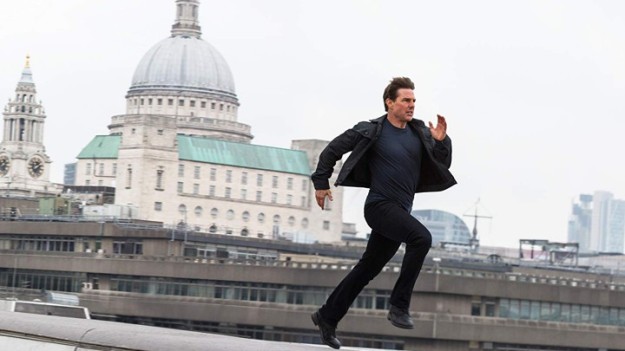 Aside from the awkward colon in the title, the most annoying thing about the Mission: Impossible series has always been Tom Cruise’s massive over-reliance on rubber masks (yes, even moreso than his ridiculous excessive arm-pumping while running). While Mission: Impossible – Fallout doesn’t totally avoid the rubber mask cliché, it tweaks it enough to feel fresh. And every once in a while, despite how familiar the M:I formula has become after six attempts, the movie will sneak one by you, winking as it does.
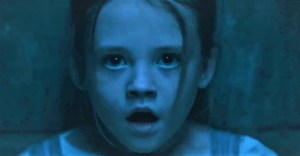 Our House is a retelling of the age-old cautionary tale about the dangers of science. As we all know, science experiments’ most common outcomes are monsters, ghosts, and superviruses, with temporal paradoxes or dimensional portals being all-too-common as well.
 Full disclosure: I was fortunate to watch this film with a ferocious guard dog on my lap, so I knew I could handle whatever scares were thrown my way. You likely will not have that same advantage, at least while Our House is in theatres. But even without the dog, the first hour of this movie will be bearable for everyone, including scaredy-cats like Jay. There’s not any significant tension in this film until the final third of the movie, but that last third contains a very suspenseful sequence that made me wish the intensity had been raised sooner, to allow for a longer showdown with the ghosts.
 ASSHOLES WATCHING MOVIES