After suffering the tragic loss of her parents and sister, Dani (Florence Pugh) decides to tag along on a trip to Sweden planned by her boyfriend (Jack Reynor) and his roommates. They are attending the Midsommar festival in a tiny northern town, a nine day celebration involving white robes and dance circles. On the surface, the festival appears to be harmless hippie nature worship but even from the start there are signs that something dark lurks just underneath. Then, one by one, the visitors start going missing.
When Jay is not feeling well, I have this awful habit of subjecting her to movies she would not watch in her own. Star Wars and Indiana Jones come to mind as films I have foisted on her. Today I decided to add Midsommar to the list, and it actually went pretty well!
Midsommar is deliberately slow paced, and quite beautiful to watch as it unfolds and devolves into a creepy mess. There is a simple lesson here: when invited to a cult meeting, do not drink the Kool-Aid. And if your friends start disappearing, don’t just brush it off, get the hell out of there. Because if you don’t, odds are you’re going to be an unwilling part of the ceremony.
Midsommar is an unsettling movie and most definitely a horror film, but it’s not reliant on jump scares at all, so Jay isn’t even that mad at me for making her watch it. Rather than relying on cheap tricks, Midsommar aims to disturb, to creep you out, and to teach you to never, ever visit Sweden. Ever. It succeeds on all counts.
In a suburb of Dakar, workers on a construction site go without pay for months. They decide to leave the country by boat for a better future in Spain. Among them is Souleiman (Ibrahima Traoré), Ada’s lover. But the men never reach Spain. They are presumed dead, lost at sea. Poor Ada (Mama Sane) cannot afford to spend time pining or mourning for her lost love because she’s betrothed, by arranged marriage, to someone else. Omar is wealthy and handsome. The only problem is that Ada’s still thinking of, and worried about, someone else. Oh her wedding day, Ada is withdrawn, depressed, but her friend Fanta (Amina Kane) is seduced by Omar’s beautiful home and its furnishings – particularly what is to the marital bedroom, outfitted in new, luxurious furniture. The wedding is interrupted by a fire, thought to be an act of arson: Omar’s beautiful bed burns.
The next day Issa (Amadou Mbow), a young detective, arrives to investigate. Ada soon finds herself under suspicion, subject to invasive interrogations and even a virginity test. But as Fanta, Issa, and others fall sick, certain people wonder whether this mysterious illness is actually the spirits of the lost men possessing their bodies to exact revenge.
Mati Diop’s film addresses economic disparity and gender inequality but first and foremost it remains a love story, beautiful and ethereal. Claire Mathon’s cinematography gives the film a distinctive feel. Mixing social commentary with the supernatural, Diop may be Senegal’s Jordan Peele, crafting a film that is unexpected and unpredictable, like nothing you’ve seen before.
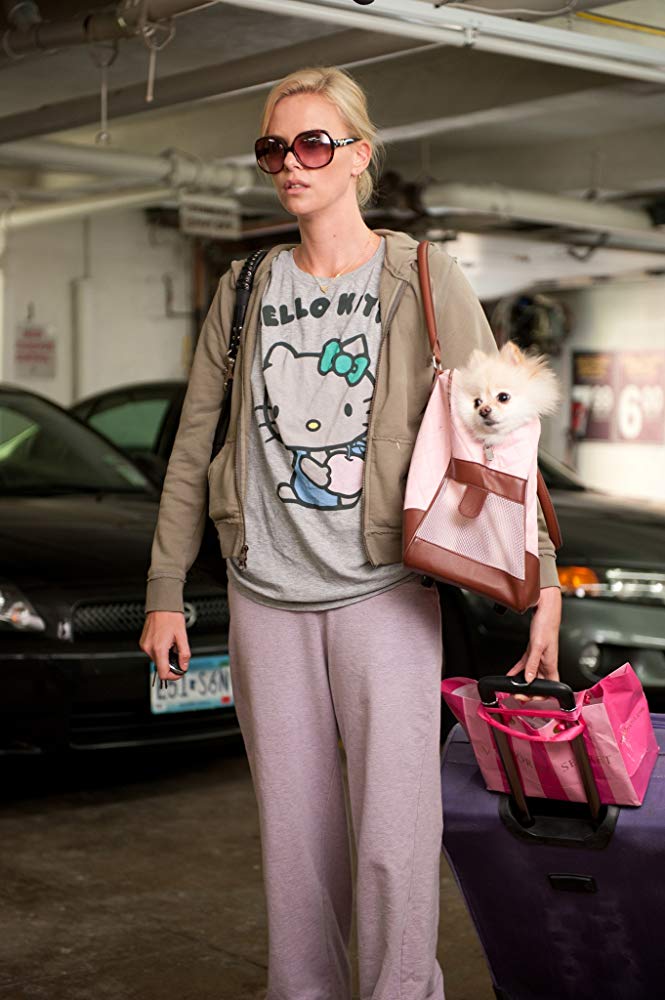
Mavis is immediately identifiable as a character who’s a little stuck. She wakes up in her Hello Kitty tshirt, drinks a Diet Coke breakfast, watches a lot of bad reality TV when she should be working. Maybe her stunted growth is what makes her so successful; Mavis writes a young adult series and maybe she’s a little TOO good at putting herself into that head space.
Anyway, Mavis (Charlize Theron) has a tight deadline, so she does the rational thing and focuses all of her energy on obsessing over an email sent from the current wife of her ex-boyfriend, Buddy. It’s a baby announcement. They’ve just had a baby. Mavis assumes that Buddy’s miserable, trapped in their scuzzy hometown by a wife and now a kid. So she drives to said hometown to test her theory.
Mavis is kind of pathetic and kind of unlikable, and yet we’ve all been her, at least a little. She’s 37 but hasn’t let go of her past – perhaps the last time she felt like a whole, complete person. She peaked in high school: ugh. Gross. But the good news is, when she arrives in crap hometown, she hits a wall named Matt (Patton Oswalt). She doesn’t remember him from high school – she wouldn’t, she was popular, they didn’t exactly run in the same crowds – but he provides the little voice of reason that she clearly lacks. Not that she’s going to let a little thing like reason dissuade her; she reaches out to Buddy (Patrick Wilson) and to our communal chagrin but not surprise, he responds. To his ex girlfriend. Who I’m pretty sure he knows is trouble. While he’s dealing with his wife’s breast milk.
Anyway, Charlize Theron is disturbingly good in this. Disturbingly. Even when Mavis is being so hateful we can hardly keep looking at the screen, Theron manages the all-important drop of humanity that keeps us from throwing in the towel. She finds and celebrates Mavis’ flaws. Without her, this movie could have come off as seriously bitter. Young Adult is dark and dour, but director Jason Reitman plays to Theron’s strengths and pulls off a serious mood.
We meet Rose-Lynn (Jessie Buckley) the day she’s released from prison and she doesn’t exactly strike us as the picture of reformation. She’s greedy, selfish, a bad mother, a bad daughter, a terrible employee, and doesn’t have an ounce, not one ounce of contrition or personal responsibility for the crime she was put away for. Rose-Lynn cares for only one thing: an escape to Nashville, where she’ll be able to pursue her dream of country singing. But Rose-Lynn lives in Scotland, born in the wrong corner of the world, she thinks. Who ever heard of a country singer from Glasgow?
Rose-Lynn is an anti-hero of sorts, hard to like, harder to root for. But you cannot deny her talent. Not even you don’t like country music – stripped down, “three chords and the truth,” raw and unfiltered, Rose-Lynn is a Voice and Jessie Buckley a real revelation.
Julie Walters really props her up as a long-suffering mother and grandmother tired and weary of her daughter’s constant excuses. Sophie Okonedo is luminous as a supportive employer turned friend and booster, playing 50 and looking not a day over 28. Even the kid actors manage not to fuck up the good vibes going on in the film. But the truth is, this is very much Buckley’s movie to make or break, and she proves that she isn’t just a great singer but a talented actress. Her expressions are as good as entire country songs written onto them, just unguarded heartbreak.
The script is very good, taking a circuitous route to where it’s going but enjoying the journey there, and making sure we do as well. The structure is as admirable as almost anything else, everything falling into place as if this was the only way it ever could. A bit of genius, really, in a movie that already contained genius of another sort.
I wasn’t always sure I was going to like this movie, and then I fell violently in love with it.
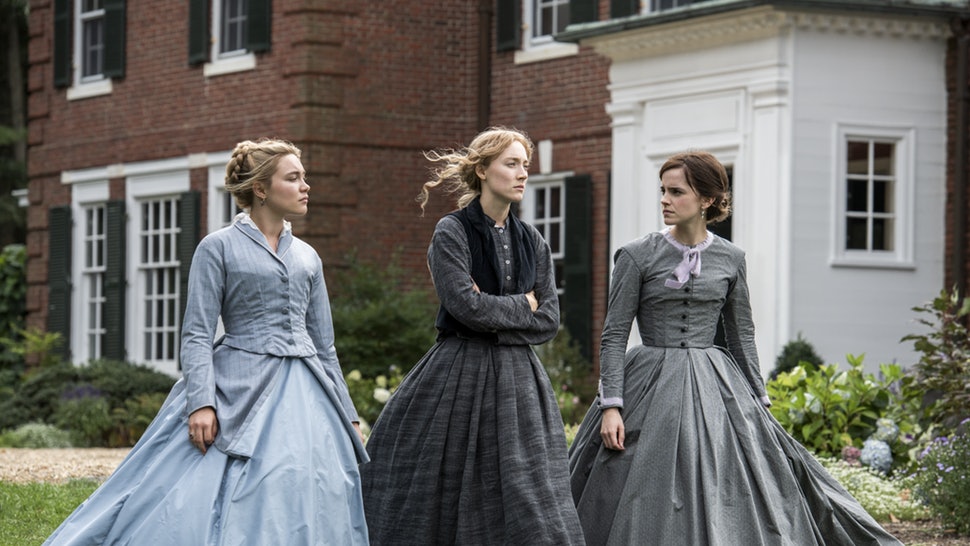
Writer-director Greta Gerwig has a clear feminist point of view when retelling the classic tale Little Women. She doesn’t deviate much from the novel penned by Louisa May Alcott (two novels in fact – more on that later) and doesn’t need to. Alcott was surprisingly modern unconventional for her time (1832-1888), writing about domesticity and women’s work but making it clear that they all had minds and passions and ambitions of their own, even if society was set up to constrain their use.
The novels are largely classified as autobiographical or semi-autobiographical fiction, with Jo March standing in for Alcott herself as she pulls stories from her own life to illustrate herself and her sisters transitioning from childhood to womanhood. The first novel was such a success that Alcott quickly wrote a follow up which she titled Good Wives, telling more about her characters are their lives as grown women. An avalanche of fan mail had poured in, much of it demanding a happy ending for Jo, happy meaning married of course, so Alcott wove that into her own story, but bucked against the traditional and created a second option for Jo, one she hoped would appease readers (she was, after all, needing to support her family on the earnings from her work) but would still honour the true spirit of the character she and so many others had come to love. But 150 years later, Gerwig restores Alcott’s true intentions, bending the ending just a bit, leaving it not a little ambiguous so that we may choose which of the paths was truly more important to Jo.
As a writer with 3 sisters myself, who often put on plays together in the basement (we had no attic) of our home, you can probably guess why I loved this novel from a young age. It wasn’t its radical (for the time) point of view, it was the wonderful bond of sisterhood so deeply felt within its pages. Even as the sisters fight (sometimes physically, as illustrated in the film), their attachments are secure, their love never wavering. Modern sisterhood is often portrayed as catty and competitive but we too were a home of Little Women with big personalities and are close to this day, as our Snapchat can attest.
Jo (Saoirse Ronan) is the writer, not just of their childhood productions but also evidently of this retelling. Big sister Meg (Emma Watson) is the actress, Amy (Florence Pugh) the dreamer and youngest Beth (Eliza Scanlen) the sweet, shy musician. Marmee (Laura Dern) presides over her family with unending patience and affection even as she spreads the family’s resources thin taking care of others in the community. The next door neighbours are almost as rich as they are irresistible; Mr. Laurence (Chris Cooper) cuts a sad figure from the window of his large but empty house, and young Laurie (Timothee Chalamet) clearly feels stifled as its only other occupant. Both men will get folded into the March family home in their own ways. Mr. Laurence is fond of young Beth, who reminds him of his own departed daughter, while Laurie and Jo get on like a house on fire, often to the exclusion of Amy who feels on so spurned.
The brilliance of Alcott is that even as some of these sisters settled into marriage and domesticity, the work never seems to judge them. Their paths are held in equal esteem to that of Jo’s. Alcott, who remained unmarried herself, was revolutionary in her thinking, in painting love and career in equal measure and equal worth. 151 years later, we still haven’t truly caught up, still trying to balance those wants and needs in a way that feels satisfying and right. Although I loved the spirit of this adaptation, I suppose I thought Gerwig might have a little more to say on the matter. I imagined that she might have stamped just a bit more of herself into the proceedings.
Saoirse Ronan and Florence Pugh are the stand-outs among the cast; as this is the seventh movie adaptation I suppose by now we know these are the plum roles (Jo having been played by the likes of Katharine Hepburn and Winona Ryder, and Amy by Elizabeth Taylor and Kirsten Dunst). All great directors have their muses and it seems Ronan may be that for Gerwig, playing her leading lady twice now, and likely to secure an Oscar nomination. Pugh has already had a dizzyingly successful 2019, and she certainly makes the most of her scenes in this. As Gerwig must, she trims many of the novel’s excesses, choosing scenes for plot and character development and losing many of the fun and funny anecdotal ones that make the novel feel so lively and warm. But Gerwig’s adaptation is both faithful and wise. It’s only that I admire her unique voice so much that I wish she had respected her source material a little less and allowed her own perspective to shine through a little more. If it is possible to love something while being just the tiniest bit disappointed, then that’s my verdict. Gerwig gives Little Women 100% but I unfairly hoped for 110%. Still, it’s a pleasure to see a female story be so lovingly preserved through the years, in timeless and timely ways.
I was literally up to my elbows in cookie dough, had been for at least 6 hours, and we’d already listened to all my Christmas records. I was craving something funny, but more importantly, something easy to watch – something that wouldn’t suffer from my inattention or oven checks or frosting mishaps. Solution: 2010’s Dinner for Schmucks, a movie I’d seen and enjoyed when first released but not since.
And honestly: why the heck not? It’s actually FUNNY. I mean funny. But also wacky, an offbeat kind of film where Paul Rudd plays chronic good guy Tim who’s up for a big promotion at work but will lose it unless he plays along with a weird office tradition wherein the high ups try to impress their boss by bringing the biggest idiot the can find to a dinner party where the idiots will be secretly judged and one of them awarded the top prize (which, if you’ve been paying attention, is not compliment).
Tim is not normally the kind of guy to condone such disrespectful shit but he’s real desperate for the promotion. And the universe basically drops an idiot right into his lap. Barry (Steve Carell) is a weirdo who misinterprets almost all that life has to offer and he spends all of his free time searching for dead mice to taxidermy and pose in intricate dioramas inspired by his fantasy life. It would be hard to out-schmuck this guy. Tim’s got it in the bag.
His girlfriend, meanwhile, is losing all respect for him. But while his relationship circles the toilet, we the audience are beyond entertained by their antics – heightened by memorable turns from Zach Galifianakis and Jemaine Clement. There’s layers of insanity in every single corner of this movie, and that’s before we even get to the dinner, which is peopled by extravagantly bizarre characters by the likes of Chris O’Dowd and Oscar winner Octavia Spencer.
This was a delight to revisit. A sheer, full-figured delight.
Honestly, I never thought this day would come. In 1983 there were rumours in the playground that George Lucas had nine chapters of Star Wars planned, but it seemed made up. None of us would have have predicted that a fourth Star Wars film would be released 16 years later, and none of us could possibly have foreseen that another 12 years after the disappointing prequels wrapped up, the third trilogy would kick off. It’s been more than 42 years in the making, which is essentially my whole life, but at long last Star Wars’ ninth chapter has finally arrived.
Picking up more or less where The Last Jedi left off, Rise of Skywalker immediately confirms that Emperor Palpatine (Ian McDiarmid) is back and hasn’t lost one bit of his galaxy-dominating ambition. With a whole fleet of Star Destroyers at his command and Kylo Ren (Adam Driver) at his side, the Emperor’s goal is to destroy the Resistance’s rebels once and for all. It’s up to Rey (Daisy Ridley), Poe Dameron (Oscar Isaac), and Finn (John Boyega) to lead the Resistance into battle against the Emperor and finally foil his dark plans, with the help of many old friends along the way.
By any objective measure, Rise of Skywalker is probably the weakest film of the final trilogy. Clearly spawned from a checklist of items that needed to be addressed, Rise of Skywalker is exactly the sum of its parts. Fortunately, its parts are very well-crafted and they fit together to close out the Star Wars ennealogy as well as this fanboy could have hoped. Some of J.J. Abrams’ choices are not entirely satisfying on their own, but combined, they provide some closure, some redemption, and a whole lot of Return of the Jedi flavour. The choice to borrow so liberally from RotJ, in particular, grants a satisfying symmetry to the whole affair.
An argument can be (and has been) made that Rise of Skywalker plays it too safe. No doubt that is a conscious choice by Abrams and an understandable reaction to the (unfair) hate The Last Jedi received for trying to take these films to new places. The choice to emulate the final (and weakest) movie of the original trilogy is one such safe choice, and overall, I agree that Rise of Skywalker plays it safe at every turn. But isn’t that beside the point?
Rise of Skywalker takes us to where we’ve been and in revisiting these familiar places gives us a final showdown between good and evil where the fate of the galaxy is at stake, where lightsabers and force lightning flash while a small rebel fleet takes on impossible odds, where working together for the right cause offsets a shortage in numbers, and where good always finds a way to win. That is the only way the Star Wars saga could have ended, and that’s exactly what Rise of Skywalker delivers.
When Aditi (Priyanka Chopra) and Niren (Farhan Akhtar) Chaudhary find themselves pregnant for the third time, it’s not exactly a happy occasion for everyone. They have a son, Ishaan, but lost a daughter and are afraid of it happening again. Niren doesn’t want to risk it but Aditi, once a Muslim now a Christian, won’t abort. But Aditi and Niren both carry a tricky gene that runs a 25% chance of passing SCID (Severe Combined Immunodeficiency) on to their child, which means the baby would have such a compromised immune system that he or she would be prone to severe infections with no ability to fight them off. Such babies rarely live to see their first birthday. Their baby, a daughter, is born, and they name her Aisha, which means life. But a trip to London confirms that Aisha does in fact have SCID and without very expensive bone marrow and stem cell transplants, she will die.
Despite all this drama, Aisha (Zaira Wasim, who is narrating this from some point in the future) insists this is a romantic film, about her parents. Married 8 years at this point, they are suddenly in a long distance relationship, with Aditi in London with Aisha, and Niren back home in India with Ishaan. They had married out of caste, a true love marriage. But having a sick kid and being away from everyone you love is a real test on any relationship. But a worse test is coming: Aisha the narrator has already told us she is dead. What will losing a(nother) child do to Aditi and Niren?
Priyanka Chopra is stunning, even in late 90s mom jeans. More than that, she’s really good in this, even as she shifts between mother caring for her daughter’s health to caring more for her happiness. And as one half of a complicated couple, She’s got great chemistry with Akhtar, who brings his best to the film as well. This film is based on a true story, and it feels very much like the actors respect their real-life counterparts while also making the characters very much their own.
At the end of Aisha’s life, Aditi and Niren are faced with impossible choices and they don’t agree. The strain is of course further complicated by the loss of their first baby, who Niren has tried to forget. The death of a child is…unfathomable. Many couples separate in their grief. What will become of Aisha’s mom and dad, who never stop being exactly that? Writer-director Shonali Bose makes great use of flash backs and flash forwards to lighten the mood or break up the bleakness. The movie is overlong but keep going, it’s worth it. It’s emotional and trying but ultimately rewarding.
Eight minutes in and this movie’s already breaking my heart. Nicole and Charlie have just spent 8 minutes sharing the things they love most about each other, and their lists are touchingly precise. But it turns out they’re in mediation, and the exercise is meant to kick off their divorce proceedings. Nicole welches – she doesn’t want to read hers, and I sort of can’t blame her. It’s so vulnerable to admit that you once loved the person you no longer love. Fuck.
Nicole (Scarlett Johansson) is a talented actor and the star of a play directed by Charlie (Adam Driver). They share a son, Henry, and a New York City apartment but now that they’ve split, Nicole plans to return to L.A. to work in television. Charlie intends and expects to stay in New York. Though they originally swore off lawyers, agreeing to do things “amicably,” they have one asset that’s precious to them both: Henry. Fighting for custody and for coasts is important to both, so they lawyer up and get down to fighting dirty.
Interviewing lawyers, one dirtbag (Ray Liotta) asks Charlie “Does your wife do drugs or anything? Coke?” he asks, hopefully. Fuck. It’s gross. It’s gross that two people who loved each other and each care deeply for their young son can’t be civil. Civil? They are so hopelessly and desperately past civil that the word looks meaningless here on the page. And the lawyers? They’re fucking hyenas looking to devour their prey.
A Marriage Story is actually a Divorce Story. As both a child of divorce and a divorcee myself, I feel both sides of this thing so acutely that I feel as though I’ve been impaled by my own hopes and dreams. My parents’ divorce was the best thing that ever happened to us; we hated my awful father as a unit and breathed a sigh of relief when he finally left our house for the last time. My mother raised four daughters by herself. Money was tight but there was never any doubt that we were better off without him. But is there a small part of me that wondered why he never fought for custody – never even asked for visitation? A small(ish) part of me that will always wonder if there’s something fundamentally unlovable about me? Leavable about me? My first marriage ended badly, traumatically, like a death. As they do sometimes. We had no child to fight over so one day I just never saw him again and now I have no idea whether the man I once promised to love and cherish forever is dead or alive. And now I’m married to Sean and it’s wonderful and stable and safe and sexy and I hardly ever stay awake all night wondering why it’s so easy to stop loving me and if it could happen again.
Sean saw this one at TIFF (without me – I was off reviewing Jojo or Joker or somesuch) and told you he liked it nearly 3 months ago, but to me he said: it will make you cry. And of course he was right. Written and directed by Noah Baumbach, you don’t really stand a chance of remaining unmoved. Marriage Story is an insightful and well-aimed gut punch. It hit me right in the feels. But even Sean, who comes from a cozy nuclear family and is married to the most amazing woman on earth, even Sean was stirred up. Love is easy. Marriage is hard. Divorce is a goddamned hole in the heart.
I forget sometimes that I speak French. Well, maybe not forget so much as don’t think about it. Much like I don’t specifically think about speaking English. I just do. If I hear or see French, my brain understands without me having to engage anything in particular. It’s just effortless. Growing up we spoke both at home, both at the same time, every sentence seasoned with both languages, choosing whichever words or expressions suited us most. So when I started watching this French film on Netflix, I listened without thinking, and since I was also doing work on my laptop, I didn’t even realize there were subtitles, and may not have consciously realized it was French until I glanced up and my brain shuddered: the subtitle had a mother calling her son “sweet pea” when in fact what she called him was a “soft caramel.” Soft caramel isn’t really a thing in English. I mean, it’s a thing you can eat, but it’s not a term of endearment. So the subtitles substituted for something that made more sense but wasn’t a direct translation. This happens all the time of course, sometimes with hilarious results, but when you’re understanding both at the same time, it can be a little jarring. I’m positive Netflix must have an option for turning off the captions but I’m also positive that about 4 minutes of bumbling through buttons netted no results.
So here I am, watching an animated movie with two tracks, basically: spoken French and written English, and the two are in basic agreement. It’s about a little boy named Naoufel who dreams of becoming a concert pianist and an astronaut. And about the same young man, grown up, who is a pizza delivery guy. Which I feel is supposed to be some sort of humbling come down, but what has an astronaut ever done for me? And yet the pizza guy routine brings joy, hot and cheesy, to my front door. My life would be worse without him. Anyway, Naoufel isn’t exactly the most exemplary of deliverymen, and one night when he’s struggling even more than usual, he just gives up, gives in, sits down in an apartment lobby talking to a woman on the intercom while he eats her undeliverable pizza. He falls in love and devises an elaborate scheme for stalking/wooing her.
Meanwhile, across town, a disembodied hand escapes from a laboratory fridge. The hand goes on an epic Parisian journey through the city’s gutters, fending off pigeons and rats. The hand is sad, I think.
Yeah, it’s weird. That might be the weirdest sentence I’ve ever written here. It’s damn weird to have a stalker love story be intercut by a dirty roaming hand. And all the dirty, greedy flies who follow it. And yet it is strangely beautiful, poetic, almost hypnotizing. The animation is soft, subtle. The story is intimate and sad, truly something unique and unforgettable.

 When Jay is not feeling well, I have this awful habit of subjecting her to movies she would not watch in her own. Star Wars and Indiana Jones come to mind as films I have foisted on her. Today I decided to add Midsommar to the list, and it actually went pretty well!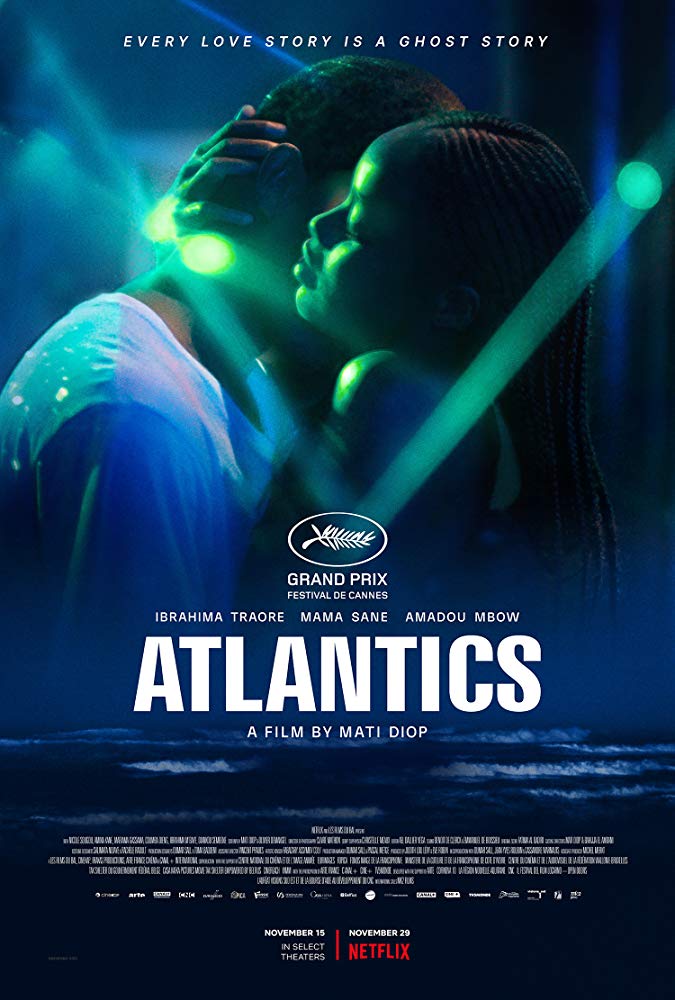


 Picking up more or less where The Last Jedi left off, Rise of Skywalker immediately confirms that Emperor Palpatine (Ian McDiarmid) is back and hasn’t lost one bit of his galaxy-dominating ambition. With a whole fleet of Star Destroyers at his command and Kylo Ren (Adam Driver) at his side, the Emperor’s goal is to destroy the Resistance’s rebels once and for all. It’s up to Rey (Daisy Ridley), Poe Dameron (Oscar Isaac), and Finn (John Boyega) to lead the Resistance into battle against the Emperor and finally foil his dark plans, with the help of many old friends along the way.


 ASSHOLES WATCHING MOVIES