Category Archives: Kick-ass!

The Royal Tenenbaums

Before I say anything else, understand that my mind is busily chewing over a fact that makes me very uncomfortable, namely, the near-uniform whiteness of Wes Anderson’s movies. I love Wes Anderson. I love his movies. But I do not love monochromatic casting. But in thinking on this quite a bit in the past few months, I’ve come to realize that it’s not that he doesn’t hire people of colour, it’s that he doesn’t hire African Americans, rather specifically. In fact, The Royal Tenenbaums may be the only time he’s every hired a black actor for a role of substance (Courtney B. Vance got to narrate Isle of Dogs), and it’s really only to service a racist character, ie, Danny Glover’s only there so that Gene Hackman can call him a long list of slurs. And though Wes Anderson’s worlds are so often populated by the same faces, Glover’s has never reappeared. Hiring someone just to be a target seems particularly cruel. However, Kumar Pallana, an Indian actor, had appeared in 4 of Anderson’s films (he died in 2013 – and was originally a barista in Anderson’s favourite Dallas coffee shop). Waris Ahluwalia, an Indian-born, American Sikh, has been in three. Tony Revolori, the terrific breakout bellboy from The Grand Budapest Hotel, is of Guatemalan descent, though so far he’s appeared in more Spider-man movies than he has in the Wes Anderson universe. There was a smattering of Japanese voice actors in Isle of Dogs, though surprisingly and relatively few considering the whole film takes place in Japan. This isn’t exactly an exhaustive list, but it’s as close as it is short, and between you and I, the minute you start putting together a list of non-white actors, you’ve already lost. That’s 9 terrific, talky, thinky, inventive pieces of cinema with incredible ensemble casts and insane attention to detail and just 1 solitary black man, necessary to the script to be the recipient of a grumpy old man’s careless racist remarks. It’s a terrible tally.

And it’s too bad that Anderson’s movies have this problem because otherwise they’d be 100% my jam.

The Tenenbaums are a fascinatingly dysfuntional family. Matriarch Etheline (Anjelica Huston) raised her 3 children to be exceptional after her lousy husband Royal (Gene Hackman) left. Chas Tenenbaum was a prodigy investor, successfully running businesses out of his childhood bedroom. Now he’s a recent widower and fresh trauma has him raising his own sons in a constant state of terror. Margot Tenenbaum was a prodigy playwright, earning prizes and praise as a child for her mature writing. Today she’s literally soaking in depression as her husband Raleigh (Bill Murray) knocks helplessly on the bathroom door. Richie Tenenbaum (Luke Wilson) was a tennis prodigy hopelessly in love with his sister, Margot. He had a career-ending meltdown when Margot married Raleigh, and he’s spent the time since sailing the world, keeping oceans between himself and his family. Eli (Owen Wilson) is the boy next door who grew up gazing upon the relative privilege of the Tenenbaum family, wishing to belong to them. And of course Henry Sherman (Glover) is Etheline’s new suitor and the family’s disruptor.

Broke, homeless, with hackles raised about the new man prowling about, Royal Tenenbaum decides to home after decades away. They won’t have him of course. He spent years disappointing his family before being completely estranged from them. So his only move is to fake cancer as a ploy to gain sympathy – and even that’s a tough sell. But it gets him back in the family home, and one by one the grown children all return to orbit around him. They’re all fucked up in their own ways, but they’ve also got an extremely fucked up dynamic together. They’re a bunch of fire starters just waiting for a match, and Royal is a goddamned flame thrower. Whoosh.

It’s a movie full of quirks that still manages to be cohesive and sell a cogent story about a family full of tragedies. Betrayal lurks in every closet, disaster through every doorway. And even though it contains perhaps Anderson’s bleakest scene ever (set to Elliott Smith’s Needle in the Hay), it’s not all doom and gloom. There are plenty of laughs, but also some actual heartfelt moments. The movie is an act of forgiveness, a representation of forgiveness being a gift you give yourself, to set yourself free from the past and the pain it causes you. Royal may be irredeemable but his family is not. They’re deeply flawed and chronically eccentric, but the script searches authenticity and finds it in abundance.

Fun Facts:

Though the role of Royal was written with Hackman in mind, it was offered to Gene Wilder, who turned it down.

Danny Glover’s look in the film was modeled after U.N. Secretary General Kofi Annan, which is possibly my favourite sentence in the world.

There is no such thing as Dalmatian mice; the spots were drawn on with Sharpies.

Anjelica Huston wears Wes Anderson’s mother’s glasses in the film.

The hand that is seen with the BB lodged between its knuckles is not Ben Stiller’s, it’s Andrew Wilson’s (yes, brother to Luke and Owen). It’s no trick, he really has a BB stuck in there and has since childhood. Can you guess which one of his brothers shot him?

I turned to Sean at one point to say that there were a lot of Beatles songs in the film. In fact, Ruby Tuesday was playing at the moment, which is by the Stones, as I’m sure you’re aware, and as I myself am normally aware, though my brain was clearly existing in some alternate reality at the time. There is a Beatles song, and a John Lennon one, and four from the Stones. Brain fart.
Good Boys

Eleven is such a precious age. You’re straddling the cusp of childhood and adolescence. You’re feeling big in your britches but the world’s still treating you like you’re a little kid.

I remember going to Denny’s once, and the waitress brought me one of those paper kid’s menu-placemat hybrids with 3 crayons so I could choose between the grilled cheese or the chicken nuggets. I was insulted. Beyond insulted. The kid’s menu was for 12 and under and I was 9. Nine! Practically a grown-ass woman, I thought. How dare she. I have never been back to a Denny’s. That’s a true story. I hold a grudge. The point being, those tween years are tough. They didn’t even call us tweens back when I was a tween. In fact, my little sister gave me a homemade card calling me a “teeny bopper” which makes it sound like I grew up in the 1950s – actually, that’s just a word she got from my grandfather, but it stuck. I didn’t care much for that either, but surprisingly, I still speak to both my sister and my grandfather, though I do sometimes still harbour dark doubts that they deserve it.

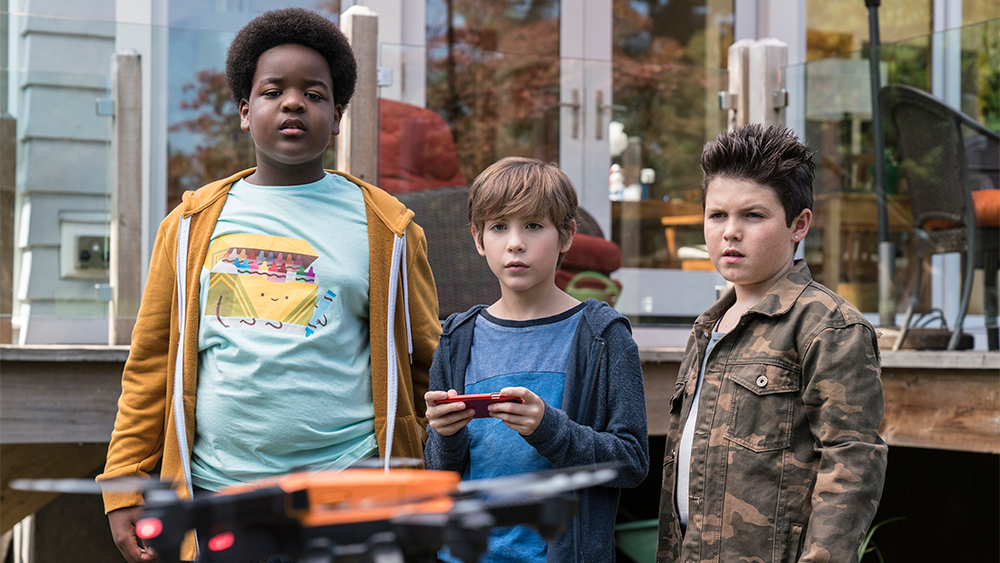
Max (Jacob Tremblay) is the undisputed leader of the bean bag boys, a trio including golden-voiced Thor (Brady Noon) and nervous nelly Lucas (Keith L. Williams). They have just unlocked the most coveted of achievements: they’ve secured an invitation to cool kid Soren’s (Izaac Wang) party, a kissing party with girls and everything. None of them know how to kiss, which is a problem, but not insurmountable. Between the 3 of them, they come up with quite a plan for learning how, but their brilliant plan falls apart when they lose Max’s dad’s work drone to a couple of teenage girls, then steal their drugs in retaliation, then spend the rest of the movie in an epic quest to make things right.

I loved the characters from the start. The script really captures the line they’re straddling between youth and adulthood. The kids are just beginning to think about sex but haven’t got a clue. They talk big and swear hard, but their innocence is always quite apparent. As a grown-up, you just want to clasp your hands to your heart and declare them precious, but doing so would probably have them die of embarrassment. Oh lord it’s hard to be eleven.

All 3 kids are well-cast and have a great rapport. You believe them as a unit, even as they’re starting to realize that they may not be destined to be best friends forever as previously believed. The script is a magnet for vulgarity, and perhaps embraces it a little too heartily, but for all its gross-out humour, it has a lot of heart. I especially love how much the kids have internalized the concept of consent. It gives me hope. Good Boys reminded me of my own awkward transitional years, but mostly it made me think of my oldest nephew, who will turn 8 in a couple of weeks. I cradled him in my arms the day he was born, he peed on me while I gave him a bath, he’s clung to my neck when he had a booboo. But every day he’s getting bigger, and thinking more for himself, and growing apart from the very adults that he used to want nothing more than to play with on the living room floor. It’s nearly impossible for me to stop seeing him as a little guy, but since I’ve known him, all he wants to do is grow. I remember when his biggest goal in life was to weigh 40 lbs so he could go from car seat to booster seat. And then he wanted to be just tall enough to ride the Vortex water slide at the Great Wolf Lodge. Now he wants to be old enough to watch End Game. Meanwhile, who among us doesn’t occasionally wish we could hit pause? Have him stay cute and cuddly forever, sweet smelling and polite?

Good Boys made me laugh, but more than that, it made me smile.

Coraline

It’s actually nearly impossible for me to believe I haven’t reviewed this one here yet because it’s such a treasure, one that continues to impress me in new ways every time I watch it. Coraline is 10 years old now and it’s safe to say the world of animation has changed in its wake. With Coraline, Laika showed that animated films could be more than just cartoons for kids. With gorgeous, artful sets, thoughtful stories, and dark themes, Laika has distinguished itself as a cut above, and Coraline has set the bar for so much that has come since. They weren’t the first to do this, of course, but they’ve certainly made the biggest impression on American box offices.

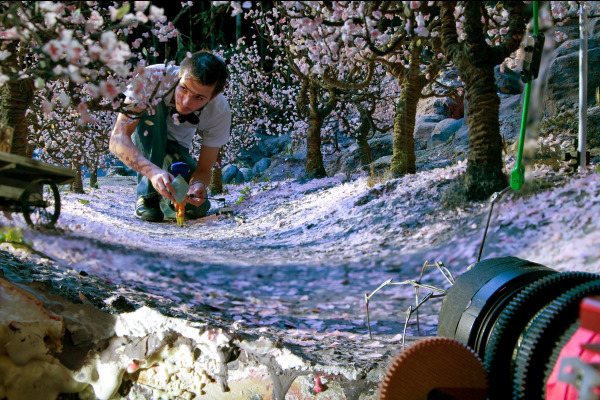
I happen to love stop-motion films because it feels like we’re so much closer to the artwork. 24 character puppets were constructed for Coraline, which kept 10 artists busy for four months. The Coraline puppet at one point shows 16 different expressions in a span of 35 seconds. When you stop to think about what that series actually means, the careful minutiae, the attention to detail, the willingness to expend so much work for a few seconds of film, you start to really appreciate the possibilities of stop-motion. Of course, there was no single Coraline puppet, there were 28 made of her alone, in different sizes for different situations. Her face could be detached and replaced as needed. The prototype would be molded by a computer, and then hand-painted by the modeling department. Each jaw replacement was clipped between Coraline’s eyes, resulting in a visible line later digitally removed. There were exactly 207,336 possible face combinations for her character. Just her character! Over 130 sets were built across 52 different stages spanning 183,000 square feet – the largest set ever dedicated to this kind of film.

I like to think about the different people on the set of a movie like this. One person was in charge of making the snow (the recipe calls for both superglue and baking soda, if you’re interested; leaves are made by spraying popcorn pink and cutting it up into little pieces). Someone laid 1,300 square feet of fake fur as a stand-in for grass. Another was hired just to sit and knit the tiny sweaters worn by puppets, using knitting needles as thin as human hair. You have to really LOVE doing this to dedicate your life to knitting in miniature. Students from The Art Institute of Portland had the opportunity to help out – what an amazing induction to a burgeoning industry.

Coraline is an 11 year old girl, recently moved to a new home, and her parents have little time for her. So perhaps she can’t entirely be faulted for falling for a grass-is-greener situation when she finds a secret passageway in the new house and follows it to an alternate universe where her Other Mother is attentive and loving. Of course, all is not as it seems – the Other Mother is trying to keep her there, permanently. It’s dark, but also magical, spell-binding. It absorbs you into this world, which remains in a state of disorienting metamorphosis. The Other World seems inviting at first – utopian, even, to a young girl. But as it unravels, the world looks and feels increasingly hostile; Other Mother herself begins to wear clothing and hairstyles more forbidding and harsh. It reveals itself in a dizzying, undeniable way, the best use of the medium, an unforgettable piece of film.

The Farewell

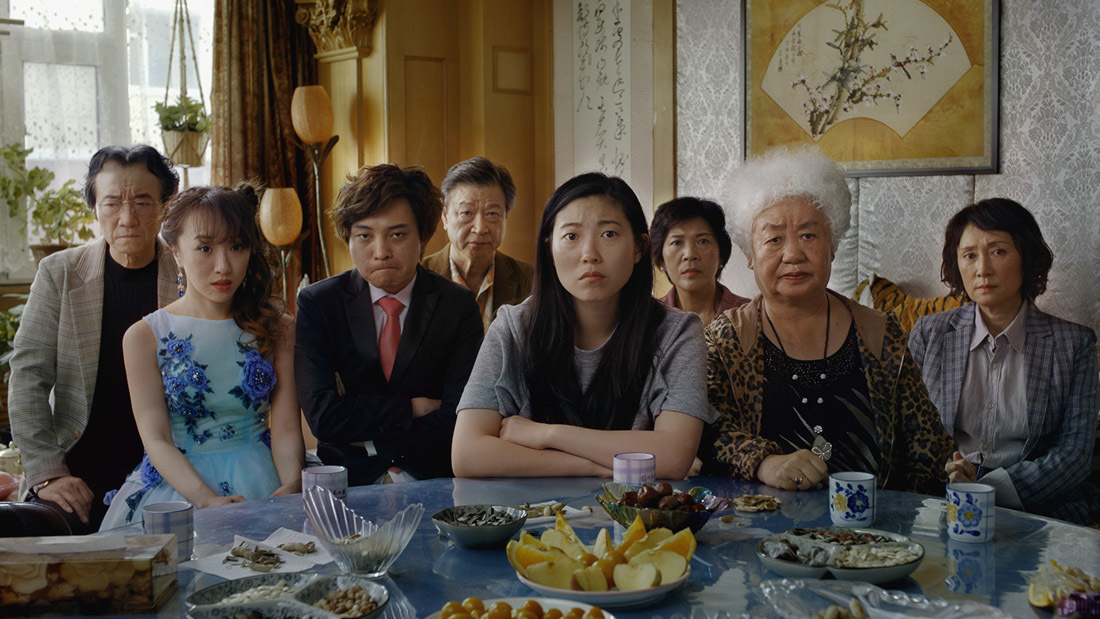
Billi (Awkwafina) is barely scraping by, trapped somewhere between her parents’ disapproval and her need for their continued financial support when she’s blindsided by the news of her grandmother’s cancer diagnosis. Grandma, aka Nai Nai ( Shuzhen Zhao), is in China, and totally oblivious to her health status. Billi’s parents, Jian (Diana Lin) and Haiyan (Tzi Ma) moved to America when Billi was 6, but she’s always managed to stay close to her grandmother. She’s disturbed when she finds out her parents are willing to keep the secret from Nai Nai, and even more dismayed when she learns they, and the rest of the family, will be travelling to China to say goodbye under the guise of a wedding. But Billi, known for being awfully emotional, is not invited. One look at her teary eyes would tip off Nai Nai for sure.

She goes anyway.

What follows is lyrical, moving and a thoughtful tribute to family, and the nature of goodbye. But it’s also a meditation on some of the differences between East and West. In China, it’s common practice to hide this type of diagnosis from a loved one. Billi feels conflicted about this choice, and reminds people that in America, it would be flat-out illegal for medical professionals to hide someone’s medical status from them. But Billi’s uncle insists that in Asia, family trumps everything, and it is their job to bear this emotional burden for her, so that Nai Nai’s last months or weeks or days are not wasted on sadness and regret.

And certainly, the film is not wasted on sadness or regret. The family throws a wedding so that all Nai Nai’s friends and relatives can gather round her one last time without arousing her suspicious. A very obliging girlfriend of just 3 months goes along with it and wins good sport of the year for the next dozen years. So now the onus is on Billi to say goodbye in a non-obvious way.. And it turns out she’s not just saying goodbye to Nai Nai, but to her last real link to China.

The ensemble cast is uniformly terrific. They really create a dynamic that is utterly believable as a family, and that’s why the movie works so well. It could easily melt toward the sentimental but manages to stay firmly away from the overwrought. That said, the writing is good. Very good. it rings true and feels relatable. Awkwafina is of course the light and joy of the film, but don’t expect her usual goofball act. The Farewell is not a comedy. It is subdued, and tragic. But Lulu Wang’s writing and direction keep it authentic and filled with compassion, the kind of film that unites us in our humanity.

The Art of Self-Defense

Casey (Jesse Eisenberg) is a meek man. He gets bullied at work by the very clique he wishes most to belong to. He photocopies their favourite tittie magazine in black and white xerox to study it, and by doing so, completely misses the point.

One night, coming home with dog food, he is attacked by a motorcycle gang and beaten within an inch of his life. He survives and decides to make some changes. He signs up for karate lessons at a dojo where we encounter toxic masculinity at its most pungent. He learns punches and kicks, but more importantly, how to be a MAN, a manly MAN: to listen to metal, to learn German rather than French, to replace his beloved wiener dog with a more aggressive variety. He’s also encouraged to beat people as severely as he was beaten. These changes do in fact make him more confident. And also a dick.

Nothing in this film is played for laughs. In fact, it’s delivered largely in deadpan monotone, a stylistic choice applied fairly evenly throughout the cast. It takes a minute to get used to this, or get over it maybe, but it’s also an important clue that we’re investing in satire and critique, and if the film seems a little outrageous, a little over the top, well, that’s the point.

Casey is quickly swept up by the dojo’s charismatic instructor, Sensei (Alessandro Nivola), and hardcore brown belt but second class citizen Anna (Imogen Poots). If it sounds like a cult, good. It is not not a cult. But it’s also kind of karate, a homoerotic, needlessly violent, testament to testosterone. But when Casey gets promoted to Sensei’s mysterious night classes, it’s a whole new world of brotherhood, brutality and a special brand of hyper-masculinity that requires constant proving.

The humour is dry and dark as hell; in this script, a well-chosen word can wound as much as hand or foot. Or gun, though guns are for the weak. Eisenberg is well-suited for the role; he channels nascent neuroses as well as the yearning to be more. Writer-director Riley Stearns is perhaps a little inconsistent, but is brave in his stinging skewering of American masculinity, economic with words but generous with derision. It’s a little hard to take at times, but patience will be rewarded.

Astronaut

Becoming an astronaut was always a dream of mine.  As early as I can remember, I was fascinated by the idea that there were other planets and stars surrounding us, and the idea that I could float around in outer space and jump so much higher and further on the moon than on Earth.  At the time I lived in Kentucky and learned at school that I could write to NASA and they would send back random photos of space shuttles, planets, satellites, and so much more.  So write I did.  I wrote almost as many letters then as Jay does now (she is singlehandedly keeping Canada Post’s lettercarriers employed), and ended up with stacks of photos that I treasured throughout my childhood.

AstronautObviously, I am not the only one who dreamed of becoming an astronaut.  Space travel is clearly on a lot of people’s bucket lists, as shown by the proposed reality show cataloguing a one-way mission to Mars (which went belly-up earlier this year), the numerous space flights available for purchase (Virgin Galactic has collected $80 million in deposits for 90 minute voyages costing $250,000 each), and NSYNC’s Lance Bass attempting to buy his way onto a Russian rocket (he couldn’t afford it after Justin Timberlake left the band), among other examples.
In Astronaut, Angus (Richard Dreyfuss) definitely has space travel on his bucket list.  He’s always looking to the stars and, as a retired civil engineer, possesses the type of scientific knowledge that might grant a seat on a NASA mission.  Unfortunately, he never secured a NASA spot during his career and his dreams of space travel seem more and more distant as his health begins to fail.   But the stars align when a billionaire (Colm Feore) announces a contest that will give the winner a seat on the first commercial flight to space, which otherwise would be too expensive for Angus (and the rest of the 99%) to afford.  You can probably guess who becomes one of the twelve finalists in that lottery, but even with that stroke of luck things don’t come easy to Angus, not only because of the health issues I mentioned, but also because he’s trying to settle his wife’s estate and he’s struggling with an impending move to a retirement home.

Astronaut asks us to suspend our disbelief on more than one occasion, and in exchange rewards us with a sweet and engaging fairy tale.  The pieces fit together so neatly and conveniently that there is never any real tension or possibility of failure, but the movie works even with relatively low stakes because of Dreyfuss’ stellar performance.  Angus is a great combination of gruff and personable, and Astronaut is elevated by Dreyfuss’ wonderful chemistry with Angus’ family and friends, particularly his daughter (Krista Bridges), his son-in-law (Lyriq Bent), and his grandson (Richie Lawrence).

Writer-director Shelagh McLeod wisely focuses on Angus’ personal relationships rather than the space flight itself and Astronaut is better for it, because the fantastical (and potentially unbelievable) elements of the film are just minor details.  What matters is watching Angus reach for the stars, and I happily cheered him on from start to finish.

The Muppet Movie (2011)

This weekend, I was babysitting my two adored and adorable little nephews, Brady, who is 7, and Jack, who is 5. We went to the trampoline park and the toy store, and then we came home to bake a cake for their dad, who was celebrating a birthday. We mixed and measured and layered on nearly 5 pounds of candy, which they insisted their dad would love, including banana cannons and a candy fence we dubbed the fortress of bananatude (I know, this cake sounds banana heavy).

Anyway, the kids were discussing The Muppet Babies for some reason, which Jack pronounces ‘Muffin Babies’ and is pretty sure he’s saying the same thing we are. I’m thinking about Jack a lot today because he’s being brave and having a little surgery. Mostly I’m thinking about my sister, Jack’s mom – the surgery will likely be harder on her than on him. But anyway. After we discussed which muppets were our favourites (Kermit for Jack, Fozzy for Brady, who does work in an errant “wocka wocka” into random conversations), and how we’d recently seen them at Disney World, we decided that our pre-bedtime movie would be Lego Batman. Haha, just kidding, they watched that in the car (imagine as a kid having a movie screen in your car!) – we watched The Muppet Movie!!

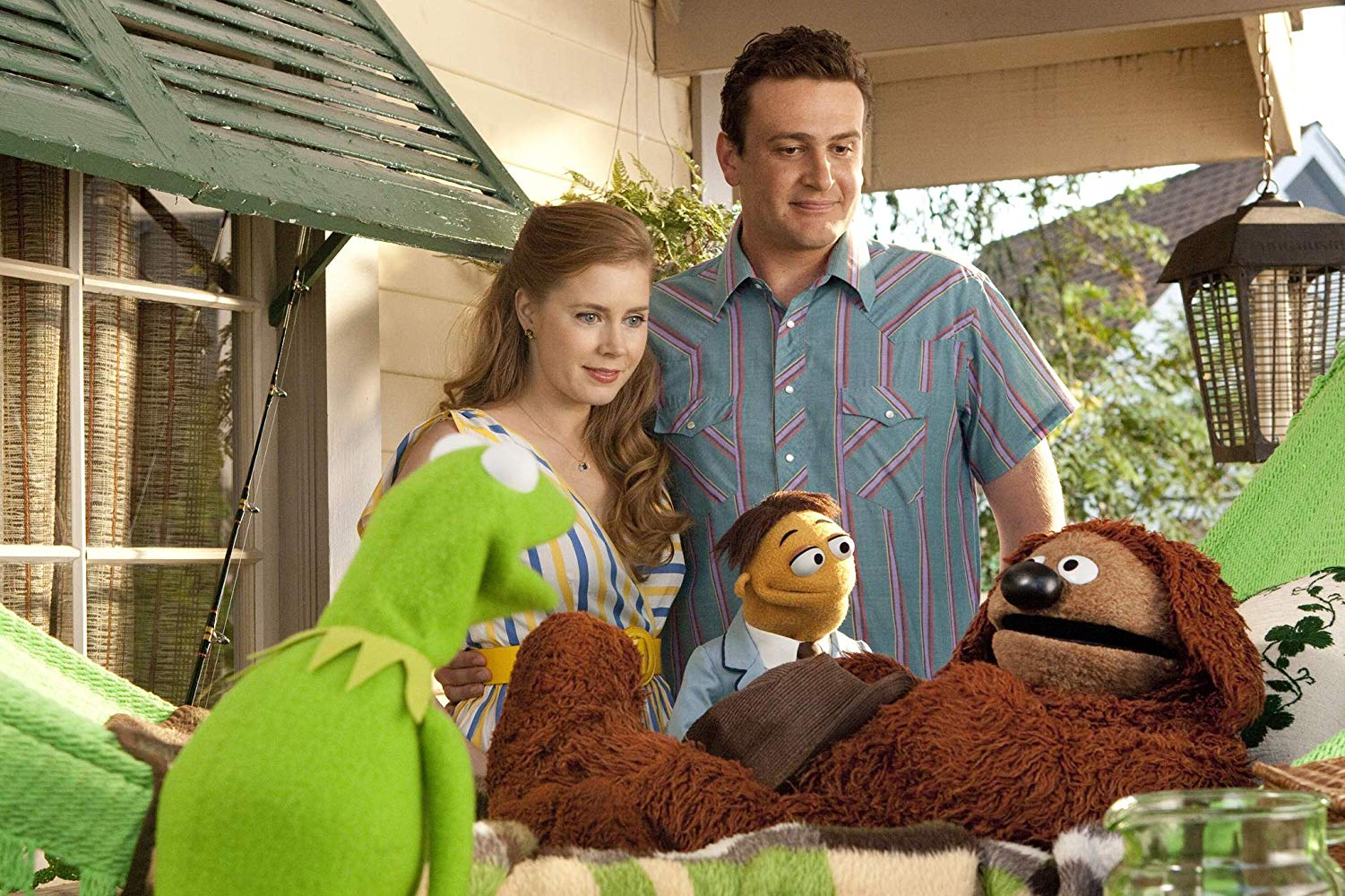
It’s about two brothers, the human Gary (Jason Segel) and the muppet Walter, who is obsessed with THE Muppets, who they’ve compulsively watched on television since they were kids, but who have sadly been absent from show business in recent years. Gary and his human girlfriend Mary (Amy Adams) are celebrating their tenth anniversary and plan to visit L.A. to celebrate, and Walter is thrilled to be invited along with them (by Gary, and a much more reluctant Mary) as it is the home of the Muppet studios. But once there, he discovers that an evil businessman Tex Richman (Chris Cooper) is about to buy both the studio and the Muppet name right from underneath them. So he enlists Kermit to go on a roadtrip to assemble the old gang in an effort to raise the money to save the day.

Jason Segel showed his puppet fetish in Forgetting Sarah Marshall and went full kink with this script, clearly a loving tribute to a beloved franchise. There’s joy being spewed all over the screen in this film, the movie is dripping with it, and it’s fun just to sit back and get soaked in nostalgia. The script introduces a new character, Walter, with whom we re-experience the magic of the Muppets, and it’s great to see them back in action, recreating a lot of acts that we remember so fondly, in a format that we know and love. They work in plenty of celebrity cameos, both human and Muppet, and the whole thing feels like a love letter – not just to the Muppets, but to a new generation of kids just discovering them, two of whom were cuddled next to me in my bed.

At the end of the movie, when asked how they liked it, Jack exclaimed “I didn’t know Kermit had a car!” Because when you’re 5, even the most mundane things can seem momentous. The Muppets are that elusive thing that can bring out the kid in all of us.

Spider-Man: Far From Home

Things have really changed for Peter Parker, our friendly neighbourhood Spider-Man (Tom Holland). He went to space, fought Thanos, vanished for five years, returned from the dead, fought Thanos again, and lost his mentor. But now, after all that, he’s back in high school, and he’s headed to Europe with his best friend Ned (Jacob Batalon), his crush MJ (Zendaya), his rival Flash (Tony Revolori) and the rest of the science club. All that’s on his to-do list is to tell MJ how he feels about her. Unfortunately, as always happens to Peter, Spidey-stuff keeps getting in the way of his best-laid plans.

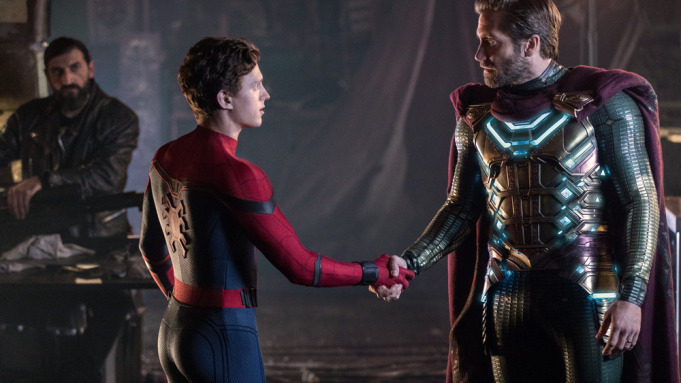
Just like Homecoming, Far From Home gets Spider-Man right. He’s best as a high schooler, trying to balance his hero responsibilities with his studies and social life. He’s also best as a small-scale hero who’s thrown into Avengers-sized problems. Far From Home gives us lots of both, as Peter’s trip happens to coincide with a major attack on Venice by a water elemental. Naturally, Peter dives into the city defence with gusto and in doing so teams up with a fishbowl-wearing hero named Mysterio (Jake Gyllenhaal) and an eyepatch-wearing ray of sunshine named Nick Fury (Samuel L. Jackson). Both need Spidey’s help to save the world.

Things are not as simple as they seem, of course, and even a casual Spider-Man fan will know basically where things are headed from the trailers alone. But in getting to the climax, the movie has almost too many twists and turns, because at times the script struggles to make sense of the on-screen events (and the post-credits “solution” seems like a cop-out even as it raises some interesting questions).

As a fanboy, I have no problem at all overlooking those minor flaws. Far From Home is just so damn entertaining and Tom Holland is a fantastic Spider-Man and a better Peter Parker. Still, as a critic, I hope the next live-action Spider-Man movie takes a few more cues from Spider-Man: Into the Spider-Verse, which stands as the best Spider-Man movie ever because the action never stops AND the script never stops making sense. Despite being chock-full of Spidey goodness, Far From Home doesn’t bring everything together into a cohesive whole like Spider-Verse did, but Far From Home’s can-do attitude and wacky humour still make for a really fun movie that Spidey’s fans are going to love.

The Guilty

How many times in your life have you called 911? I hope the answer is none, but for some of you it will be higher than that, and chances are, it wasn’t exactly a happy occasion. Even if you’re calling on behalf of a stranger, you must believe that it’s an emergency situation, and those tend to be adrenaline-filled and on the harrowing side. I call 911 on a very regular basis, and I’m always grateful for the patient expediency of the person on the other end. Mining someone’s abject panic for important, potentially life-saving information, is not an easy thing to do. Distilling that information into its most salient components while managing someone’s fear and distress takes precision and control. Dispatchers will sound cool and confident on the phone, but that doesn’t mean their job isn’t getting to them. They assist people through the darkest of circumstances. They experience vicarious trauma. The Guilty is one of their stories.

Asger Holm (Jakob Cedergren) is working what seems like a normal shift when he gets a call from what seems like a wrong number. A woman named Iben (Jessica Dinnage) is calling, pretending to be on with her young daughter. Because of his training, Asger manages to ask the right questions in the right way. Iben is making this phone call in front of her abductor, and trying to do it stealthily.

Asger gets more and more attached to the case as he speaks to Iben, to her abductor, to her daughter Mathilde who is not even 7 but home alone covered in someone else’s blood after having seen her mother be dragged violently away. He goes beyond the bounds of his position in order to fulfill a promise to Mathilde to get her mother home safely.

How do you think you’d stack up as a 911 dispatcher? They test for inductive (using specific observations to make broader generalizations) and deductive (using the info you’ve collected to come to a logical conclusion) reasoning, plus memory recall and the ability to read maps and a good old fashioned psych evaluation. And then there’s just necessarily personality quirks like the ability to be still in the face of chaos.

Asger is a flawed hero and not necessarily the best at his job. But he cares about this woman. Tonight, his job goes from hard to nearly impossible. It’s disturbing. The movie will break your heart in a million ways. But if you think it’s hard to watch, imagine how hard it is to live, to take these calls for 12 hours or even 24 hours at a time, day after day, weekends and holidays. It’s a lot to ask of anyone, and Asger is pure proof of the toll this job can take.

Jakob Cedergren is excellent, as he must be, acting almost exclusively against voices over the phone. Through the arc of one telephone call, he experiences a major shift, and almost every high and low on the human spectrum. Director Gustav Moller keeps things very simple and straight-forward, allowing the story’s natural tension to take centre stage.

Toy Story 4

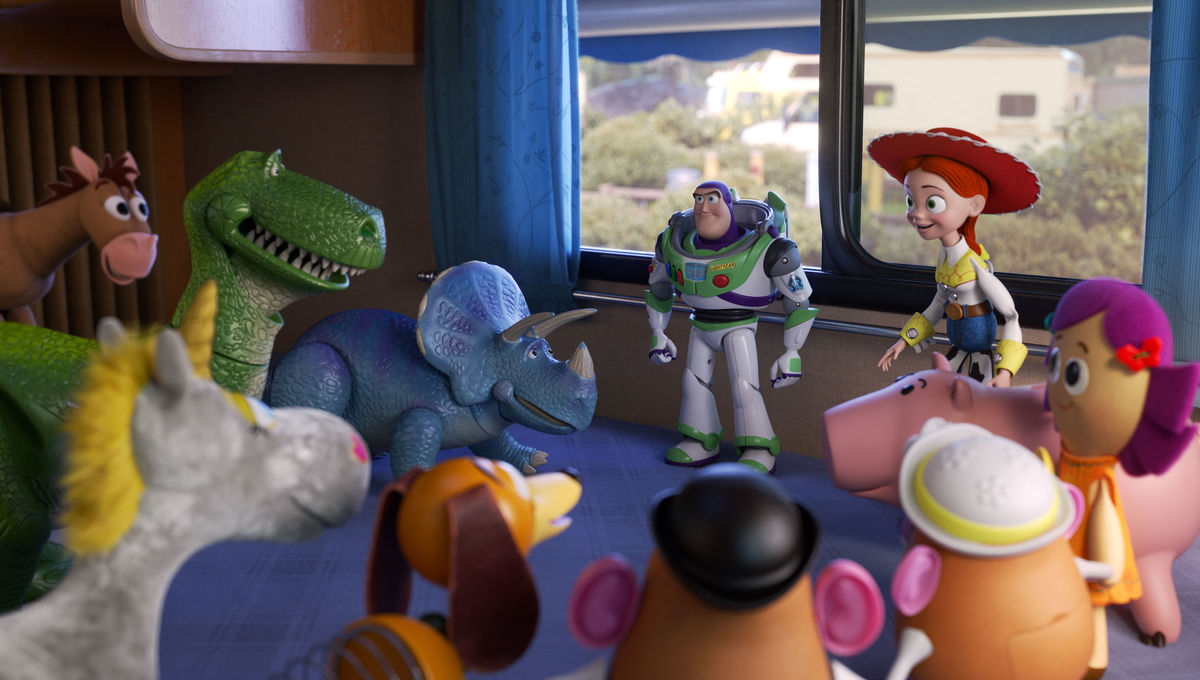
Toy Story movies have always been darker than people give them credit for. In the first film, Buzz believes himself to be a hero stranded in a hostile environment. Turns out, he’s just a toy – everything he thought was real is a lie. He exists to be someone’s plaything, and Woody and the gang convince him that there’s dignity and even nobility in this fate, even if it strikes you and I as a kind of slavery, to exist merely at someone else’s whim, until you’re all used up, and then you’re disposed of. What a dizzying and disorienting concept; it’s no wonder Buzz literally gets depressed when he learns his true nature. In the second film, Woody literally contemplates his own mortality. His benevolent master Andy will one day tire of him, and worthless, he’ll be discarded. His friend Jessie really hammers this home with a heart-wrenching flashback of being abandoned at the side of a road by someone who once claimed to love her. Ultimately, Woody chooses to live as a toy rather than achieving a sort of immortality as a collector’s item; he’ll have a short but meaningful life rather than a long but insignificant one. What a choice. In the third film, Woody and the gang face the consequence of this choice: Andy goes off to college, and eventual abandonment becomes actual abandonment. Not only that, but the best friends are being separated, with Woody being doomed to spend his twilight years alone on Andy’s shelf, no longer a useful, loved plaything, but a mere relic of his past. Meanwhile, his friends are going to molder up in the dark oblivion of an attic. What cold comfort. Luckily, the toys are instead given to a little girl named Bonnie to live out a happy afterlife. Cue the fourth film.

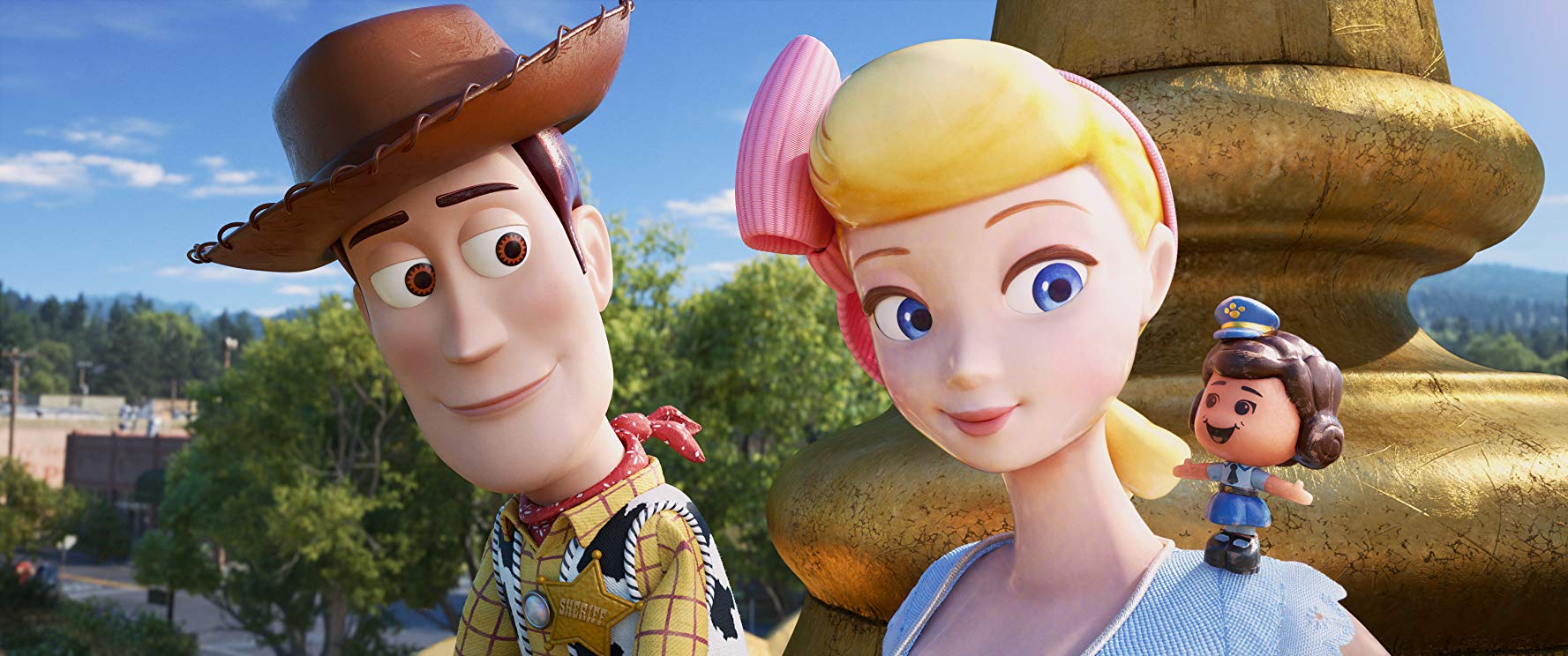
Woody (Tom Hanks) and pals are having a grand old time being played with by Bonnie. Sure, the little girl prefers cowgirl Jessie (Joan Cusack) over cowboy Woody just a tad, but still, it’s a good life, no complaints. Bonnie is starting kindergarten soon, and at an orientation session, she shows some initiative (fancy term for not following instructions) and makes herself a toy out of trash rather than a pencil cup out of art supplies. She brings her cherished new friend home and gives him a place of honour among toys. “Forky” is no more than a spork, some googly eyes, a pipe cleaner, and a broken popsicle stick, but he’s Bonnie’s new best friend, so Woody vows to keep them together at all costs. That’s going to be a problematic promise because a) Bonnie’s family is embarking on an RV roadtrip and b) Forky has some suicidal tendencies. Forky was never supposed to be a toy, you see. He’s trash. He knows he’s trash. Rather simple-minded and fairly spooked, all he wants more than anything in the world is to be trash once again, which is where he keeps launching himself. Woody keeps dutifully fishing him out, but one of these times he’s bound to get thrown out for good. It’s on one such rescue mission that Woody encounters an antique store where he thinks he may find an old friend/lost toy/love interest, Bo Peep (Annie Potts). We haven’t seen Bo Peep since the second movie, which was 20 years ago. Where has she been this whole time?

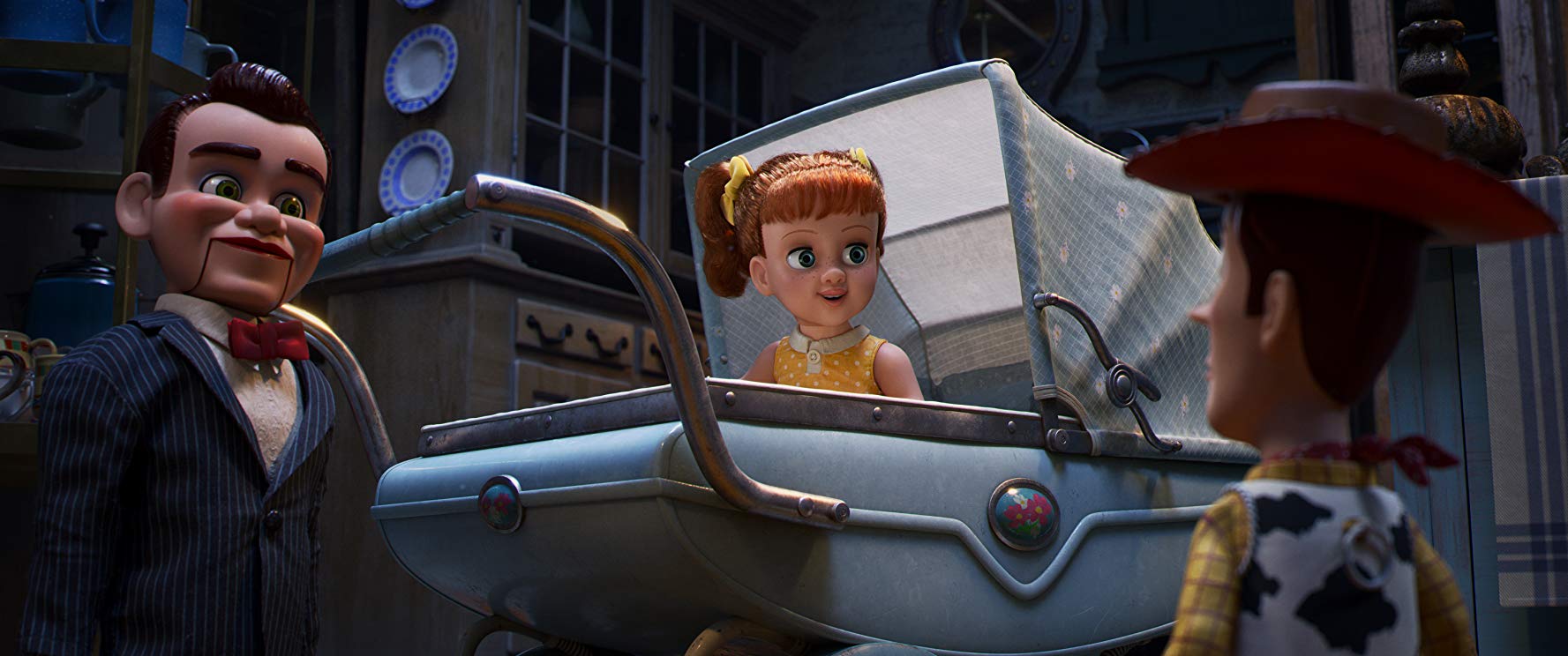
Bo’s been living free and wild as a toy with no owner. That’s essentially Woody’s worst nightmare but she makes it sound rather grand. Besides, Woody has a new worst nightmare: another antique store occupant, vintage doll Gabby Gabby wants his voicebox and she’s prepared to rip the stuffing out of his chest to get it. Yikes!

Structurallly, this fourth installment plays out a lot like those that came before it. There’s always some kind of separation, and then some kind of secondary rescue mission when the first one fails. These toys sure do get themselves into some high-stakes situations on an alarming basis!

It’s wonderful to see the cast of old friends: Bo looks shinier than ever, and Jessie’s hair has never looked yarnier. The animation on these films started out innovative and has only improved. And new friends are a hoot and a half: Forky (Tony Hale) is a walking, talking existential crisis, but the rendering of his pipe cleaner is photo realistic. Gabby Gabby (Christina Hendricks) was a dollie defective right out of the box, and her resulting failure to bond has really warped her. Duke Caboom (Keanu Reeves) is a Canadian daredevil who never lived up to his promise; he is haunted by his past, and by the kid who resoundingly rejected him. Ducky (Keegan-Michael Key) and Bunny (Jordan Peele) are two brightly-coloured stuffed animals attached at the hands. They’ve been unredeemed carnival prizes for far too long, and are a little unhinged. Officer Giggle McDimples, Giggs for short (Ally Maki), may look precious and pocket-sized, but she’s a force to be reckoned with, and fiercely protective of her road warrior partner, Bo Peep. All these new toys will come together in surprising ways to give our pal Woody one last big adventure.

Coming full circle with the original film in the franchise which was released 24 years ago, Toy Story 4 has Woody once again paired with a toy who does not believe himself to be a toy. Woody’s experiences with Andy, and now with Bonnie, position him to a real advocate for finding and fulfilling one’s purpose and embracing one’s destiny. Heartwarming and heartbreaking in almost equal measure (I cried twice before the opening credits were over, and then alllllll the way home), Toy Story 4 more than justifies its existence. But after the perfect send-off in #3, is #4 a necessary or worthy addition? As much as I looked forward to connecting with these characters again, I surprise myself by saying no. Toy Story 4 is a good movie, an entertaining one, a very sweet one, but I can’t help but wish they’d left it at a trilogy so that we could have one perfect, shiny thing in our lives.