
I am not a Star Wars fan. I knew about it peripherally – its symbiotic relationship with pop culture is hard to miss – but I’d never seen the movies and never cared to. But Sean has always carried a special spot in his heart for Star Wars, or for the original trilogy anyway. He was just born when the first one came out but as a little boy he was enamoured with the series, with the very concept of space cowboys, and swords made out of laser beams, and cool flying cars. And while I think he respected my stance on keeping Star Wars out of my life for the most part, he kinda sorta took advantage of me when I had massive back surgery two years ago. While I was high on pain pills, he screened all 6 movies for me, and I was ambivalent at best. I’m totally okay with these movies existing in the world and I’m happy for anyone who takes joy from them, but they aren’t for me and never will be. But I still experienced vicarious excitement for Sean when The Force Awakens was announced. It felt like we waited forever to get our hands on that one, and it felt a little out of this world to sit in a theatre and watch that famous crawl go up the screen. Ultimately, though, Sean was disappointed by TFA. He felt it was a little too similar to a previous Star Wars film ands couldn’t quite work up the same enthusiasm for this retread. But that didn’t let us off the hook for the opening night of Rogue One. Nor for The Last Jedi, of course, and this time, Sean was a little more enthusiastic.
Warning: spoilers ahead. If you haven’t seen the movie yet, steer away. Maybe check out Sean’s spoiler-free review instead, or my own of the original trilogy.
I was not. Enthusiastic, I mean. I don’t mean to be a wet blanket on his boyhood nostalgia, and it wasn’t as if the film was without merit. I didn’t think it was bad, I just didn’t care all that much. And at two and a half hours, it was long and felt it, and I couldn’t help but sneer at the scenes that I thought of as bloated – that extended Finn/Rose casino adventure that never went anywhere in particular.
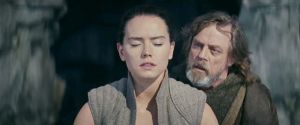
But later, thinking about this one scene between Luke and Rey, I reconsidered. “I failed him” he says of his nephew Kylo Ren’s defection to the Dark Side. No, she says, “He failed you.” And that’s when the movie really opened up to me and I started thinking of the film in terms of theme – that theme being failure. Triumphs are easy. Heroes are only truly tested when things don’t go their way. Rose and Finn are not going to accomplish their mission but they never stop trying, they never stop believing, and that doggedness inspires hope in others. That mission was never as crucial as they believed. Vice Admiral Holdo had another plan in mind the whole time, and she orders the evacuation of her ship. But this plan fails too. The escape pods are picked off one by one and Holdo ends up sacrificing herself to save them. When she reveals to Leia that she’ll stay behind in what will amount to a suicide mission, Leia says “I can’t take any more loss” to which Holdo responds “Yes you can.” Never mind that it feels like Laura Dern is speaking for us, the audience, who have so recently lost Carrie Fisher. It’s also a tiny admission by a formidable General that her job is hard, and weighing on her heavily.
“Yes you can.” Three devastating little words that permeate even the vacuum of space. Loss doesn’t ask for permission. It must be endured. Even when you think you can’t possibly take anymore, the universe laughs, and serves you a double helping. But broken hearts still beat. Loss and life are inseparable, two sides of the same death star.
Leia looks weary in this movie. The toll of each loss is written in the slope of her 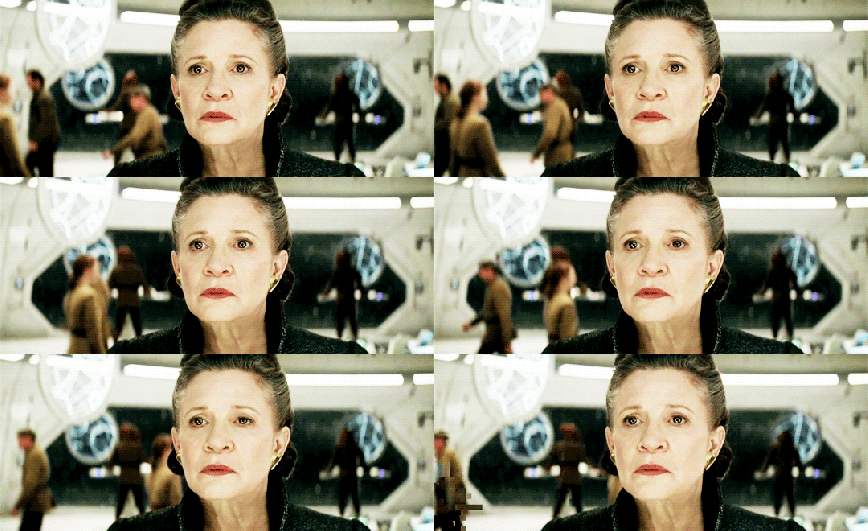 shoulders. But her unwavering belief in the cause fuels her persistence, as a Rebel and as a Leader , a figurehead who inspires others but also a teacher who is grooming the next generation. Poe seems to be a favourite of hers, though all agree he’s a bit of a hot head who prefers the shoot-em-up approach. Poe’s whole raison d’etre this film is to learn some hard lessons. He too must fail, and learn to put the Light first and foremost, ahead of even his own ego.
And perhaps it is Luke himself who most needs to learn how to continue on in the face of failure. Having failed his nephew Ben, who then serves under Snoke as the formidable Kylo Ren, Luke is so devastated and full of self-doubt that he retreats. Not just physically, though he does completely disappear at a time when, arguably, the Rebellion needs him most. But he also retreats from the Force. He cuts himself off completely. And maybe it’s his fear that he’ll fail again that prevents him from giving Rey the help she needs. It’s certainly a side of him we hadn’t anticipated. The Hero always steps up. How is Star Wars of all things, of all franchises, suddenly subverting the very archetypes it helped define?
In the film’s last epic battle, Luke is literally fighting his own failure. Kylo Ren is the kid he couldn’t save. Despite three movies’ worth of heroics, it’s this one failure that defines him now, that shapes his legacy as man and Jedi. But more than Kylo Ren, he’s also fighting his own apathy, his own instinct to hide. Anyone can be brave when things are easy. But Luke has had to reach down to previously unplumbed depths in order to find the will to continue on. There is no light saber in the galaxy half as powerful as the sheer will it takes just to show up, to stand in the face of failure even when you fully expect to find failure again. There is power in resilience. There is strength is perseverance. Anyone can wear the hero’s mantle, but to show up cloaked in failure, ready to face the impossible, expecting to lose but willing to do it anyway? This is what we come to the movies to see and to feel. Fuck heroes. Flying is easy. Shooting (first) is easy. But showing up for people even when your own self-worth has been shattered? That’s fucking something. Writer-director Rian Johnson has single-handedly redefined everything we thought we knew, and has done it smack in the middle of a trilogy. Ballsy.
Though The Last Jedi is a direct continuation from where we left off in The Force Awakens, Kylo Ren seems to have grown up quite a bit. He’s more self-assured and he’s more powerful. But he’s still prey to his own temper, which betrays him. He should have been able to pick up on Luke’s misdirection if he hadn’t been letting his rage dictate their interaction. The truth is, temperamental as he may be, Kylo Ren is a contender now. We’ve been underestimating him, and we’re not the only ones. But does he have a fatal flaw? Certainly, Kylo Ren has failed the Light. He’s failed his parents, and his heritage. But is he also failing himself? And if the answer is yes – does he have the means to soldier on?
Now we wait for Episode IX.
 It is a good thing that Disney did not try to stick a Frozen short in front of Episode XIII, which weighs in at a hefty 2 hour and 33 minutes not including ads and previews. It doesn’t help that much of that time is spent watching Poe Dameron try really, really hard to learn a fairly simple lesson. Poe got it on what by my count was the fourth try, during a battle that took me by surprise because I expected the movie to have ended before that fight even started!
 She’d been a school teacher back home but moves to New Orleans to move in with her sister Stella and brother-in-law Stanley when creditors take over the family home. She’s horrified to find them living in a grungy little apartment, and even more horrified to find that Stanley is no gentleman. They butt heads right away, and not only is their relationship antagonistic, but she destabilizes an already volatile situation between husband and wife.
 Orleans in the picture, but it does have a ground-breaking jazz sound track that gives us the city’s flavour and soul. Streetcar has become an important moment in American cinema, with great performances from iconic stars, and it’s given us more than one enduring catchphrase, although its most famous, simply “Stelllllla!” meets the bare minimum for a catchphrase – it’s really more about how Brando said it. Could say anything, really, and we’d pay attention.
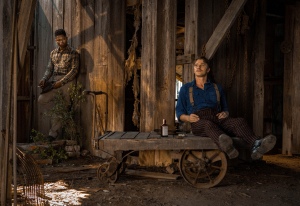 distinguish between different levels of abject poverty, but there’s no question that the white McAllan family will always be in a better position than the black Jacksons (yeah, I feel weird writing that, so go ahead and feel weird reading it). Ronsel is having trouble adjusting to this country that demands that he risk his life defending it but then will spit in his eye the moment he’s back on American soil. Tough blow.
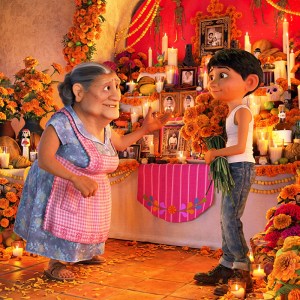 Of course, this being a movie and all, things do not go smoothly. Miguel’s pursuit of his passion means he accidentally crosses into the land of the dead himself, and he needs the help of his dead ancestors (possibly including that cur, his great, great-grandfather) in order to return home.
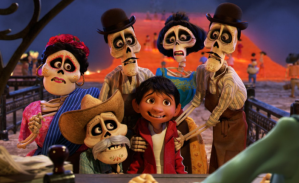 fine line between paying tribute to another culture, and appropriating it. Coco was originally set to be titled Dia de los Muertos, and of course Disney tried to copyright that name. You can imagine the uproar this caused – so much so that Pixar belatedly brought some Mexican ‘consultants’ on board just to make sure they didn’t step in any more shit, and as you can tell, they quickly made a name change. At any rate, the movie felt quite respectful to me, but I’m not really the one who gets final say on that. I will say that it feels like a nice offering by an American studio in the age of Donald Trump and his egregious wall.
 henceforth like a gentleman, but his next three attempts were flops – poorly reviewed, scarcely read. He was really under the gun to write his next best-seller and you know what pressure does to a writer: it blocks him. He pitched a vague idea for a Christmas ghost story to publisher and was laughed right out of the office, Christmas being a “minor” holiday and all. He determined to self-publish and gave himself the daunting deadline of just 6 weeks hence – a release just barely in time for Christmas. The only problem aside from funding was that not a word had been written.
 the book justice. And even happilier, the movie doesn’t suck, period, which was a major concern of mine. It seemed far too easy to just let it coast on its sentimentality. But while director Stephen Chbosky doesn’t have a lengthy track record to ease my worrisome nature, he does have one credit under his belt that’s all I really needed to hear: he adapted and directed
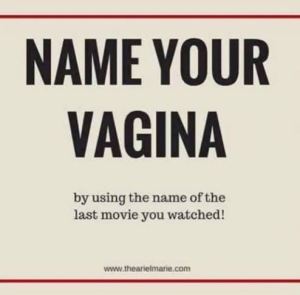 room because she wanted to share something for “just the ladies.” Turns out, it was a GIF she’d seen on Facebook: Name your vagina by using the last movie you watched. Of course, instead of being boring and truthful (and smart and scrolling by without comment), women (and men) are falling over themselves to come up with the best titles they haven’t recently, or ever, seen: No Country For Old Men, Lethal Weapon, Sausage Party. Feel free to take you best shot in the comments section. As for me, well, I couldn’t quite remember the name of the last movie I’d seen – only that it was a documentary on Netflix about Hasidic Jews. I was a little worried.
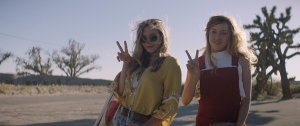 herself. But the truth is, her mother has recently died and she really doesn’t have anyone else in her life. So there’s maybe a little sympathy there, or there should be. But it also means that her $60K inheritance will fund a trip to L.A. where her latest obsession lives. Taylor (Elizabeth Olsen) is an “Instagram star.” She lives and makes her living online, creating picture-perfect moments for her followers to drool over while being sponsored by trendy businesses to do so. So she’s kind of the perfect match for Ingrid. They both eat this shit up. It’s just that a) Taylor doesn’t know they didn’t simply “bump into each other” and b) Ingrid’s a little unhinged and every damn thing is about to unravel.
 every book attributed to her name, I wasn’t sure that there would be much left for me to discover. But when Dunne asks her what it was like, in the 1960s, to have seen that 5 year old girl she once wrote about, the one tripping on the LSD her mother had given her. There’s a pause, and we mentally fill in the appropriately horrified responses, but instead she quietly says “Let me tell you, it was gold.” And that’s what made her work so riveting, her voice to incisive. She was a serious, ballsy reporter, and in a time when female reporters were rare and journalists of her ilk were unheard of.
 ASSHOLES WATCHING MOVIES