Category Archives: Jay

Where’d You Go, Bernadette

Richard Linklater managed to get his hands on best-selling source material (the book, by Maria Semple, spent a year on the New York Times bestseller list) and systematically removed everything that was good and charming and unique about the novel to produce a bland and facile piece of film.

In the book, Bernadette is a reclusive but loving mother who suddenly disappears. Her husband and daughter believe her to be dead. Her teenage daughter Bee more or less narrates the story, mostly told through uncovered documents of her mother’s, piecing together her mother’s life, and discovering hidden depths and wells of sorrow. In the film, Bernadette’s whereabouts are never in question – we witness her escape and follow her on her adventure and see things through her eyes. You can hardly blame Linklater for this transition; with Cate Blanchett in the role, it would feel almost sacrilegious not to. But it does change the nature and structure of the story significantly, not to mention negates the mystery completely.

But that’s hardly the film’s only problem. I mean, the characters are just not likable. Bernadette, of course, is not meant to be likable – she has retreated from society, she burned out on humanity and doesn’t suffer fools, or many non-fools either. But her husband (Billy Crudup) is a workaholic, disloyal asshole. Her neighbour (Kristen Wiig) is an entitled twat. Her assistant is a scam artist. His assistant is a homewrecker and a gossip. Their therapist (Judy Greer) is an unprofessional over-stepper. It’s an unrelenting parade of unappealing characters, the only bright spot daughter Bee (Emma Nelson) and we’ve already discussed how Linklater chose to shine the spotlight elsewhere. Oof. But only a few of these characters are without sympathy. Mostly the problem is that Linklater never takes a stance. His indecision is stamped all over this movie. He clearly wasn’t up to making the book spark on screen so he neutered it, shot it very conventionally, and then acted surprised when no one was overly impressed by his mess.

Where’d You Go, Bernadette is actually about what happens to a creative genius when she stops creating. That’s the core theme in the book: Bernadette lost her creative outlet and just started wilting. But in the movie, she just comes off as a crazy lady who has a mental breakdown and then flees to Antarctica on some hair-brained mission. And her husband makes so many poor decisions you just wish someone would throw him overboard and give the narwhals a hearty lunch.

The only thing that remotely saves the movie is Cate Blanchett, who is luminous and quirky and vibrant, doing much of the heavy lifting that realistically, both Linklater and a solid script should have done for her (and frankly, for us). She is a delight to watch but you never shake the feeling that this film should be so much more than it is – and that’s true even if you haven’t read the book and you aren’t watching it next to me, a person who is loudly bemoaning the very substandard adaptation. Where’d You Go, Bernadette is sadly lost in translation.

Light Of My Life

A man known only to us as Dad (Casey Affleck) is camping deep in the forest with his young daughter, Rag (Anna Pniowsky). Only it turns out they’re not so much “camping” as “hiding” and “surviving.” They’ve been doing it for so long that Rag, who’s about 10, has never really known other people. Their lives depend on escape plans and emergency contingencies; their home consists of whatever of their campsite they were able to shove into a sack before fleeing. Dad is paranoid about everyone. They take no chances.

Is this another Leave No Trace? Sort of. But with a bit of Bird Box mixed in. A “female plague” has decimated the female population, leaving the country in ruins. Rag is one of only few girls left, and her father is desperate to keep the secret. I could easily imagine the intense pressure of safe-guarding what is most precious to him. We are never without a sense of dread. It’s actually a bit difficult to watch because the tension is enormous – we are always anticipating the next threat around the corner, even when their lives are quite peaceable.

Written and directed by Affleck, he’s awfully fond of really long scenes in which he tells rambling, long-winded stories. Sean had more patience for this than I did. I preferred exploring the unique bond that crops up between father and daughter when they have no one else in the whole world, and what it does to a kid to grow up with such vague but serious threats: everyone is the enemy, even if she’s not yet old enough to understand what these “bad men” want with her. Her innocence rubs up against our own understanding of the hostility toward her. It’s an agonizing watch, really, brutal and brilliant, a dismaying test of ethics.

Skywalker’s Sacrifice

Over the weekend, Sean and I did a 24 hour Star Wars movie marathon. That’s all 10 movies: Episodes I, II, III, Solo: A Star Wars Story, Rogue One, Episodes IV-VIII, quite a recap going into Episode IX next week, a nice refresher. I’d only kinda seen Episodes I-VI before this – Sean made me watch them once, but I was pretty high on pain pills after a back surgery and clearly didn’t remember much. All I knew is that I really didn’t connect with them as much as people who’d grown up with them did.

Having now rewatched them properly, I think I know why I don’t love the original trilogy: it’s made for kids. So if you were a kid when you first saw it, you probably feel all warm and fuzzy toward it. But if, like me, you were a grown up, well, it’s harder to excuse a lot of its flaws. I was routinely unsettled by the characters’ coldness – every time there was a big battle, they’d immediately celebrate their victory with high fives and hugs all around, no word of sorrow for literally hundreds or thousands or a whole planetful of their friends who were just slaughtered. And the so-called romance is completely passionless. You’re telling me Han Solo is a cold fish? Really? I’m pretty sure a scoundrel like him would be making use of all the supply closets and cargo holds in the Millennium Falcon. I’d bet there’d be boxes of condoms falling out of every console on that ship. But what really gets me is the overly simplified concepts of Light and Dark. There’s good guys and bad guys and nothing in between. I thought Luke Skywalker was a bit of a wiener in Episode IV, but Mark Hamill grows him into a hero over the whole of the trilogy and I suppose George Lucas wanted to tell his fellow nerds: look, we can be heroes too. Darth Vader, meanwhile, is pretty much the epitome of villainry – the way he looks, talks, breaths, walks, it’s all so imposing and threatening. I love him as a bad guy and have a hard time getting over that he wasn’t the bad guy boss, and an even harder time understanding how quickly he was ‘turned’ by Luke in the end. I know that as a 6 year old, little Sean was relieved that Luke’s dad was now ‘good’ but big Jay (god I hope that doesn’t stick) feels quite conflicted about it. It’s just a little too easy, and unearned. Plus, the dude has slaughtered millions at this point. Sparing one hardly seems like adequate contrition.

Anyway, all that to say it’s a total relief when we finally get to the newer movies, The Force Awakens and The Last Jedi. They are so much more emotionally and thematically complex that I respond to them on a whole different level. They’ve made me cry, while the previous ones didn’t even make me feel. The Last Jedi in particular feels like a real triumph in cinema – after I saw it in theatres, it grew on me the more I thought about it, the more I traced the themes of failure and perseverance and hope and redemption. But it’s only now, having watched all of the films in quite succession, that I can truly appreciate all that this film accomplished. The Last Jedi is more or less Luke’s film. He’s been in exile but Rey tracks him down, determined to gain his help for the Resistance. But Luke denies her. He is a beaten up old man who just wants to be left in peace. He doesn’t want to fight anymore. The fight has gone out of him. He suffered a major setback in training his nephew, Ben. He couldn’t keep Ben from turning to the Dark side. It even brought out some Dark in Luke as he contemplated ending Ben before he could turn into Kylo Ren. Ever afraid of the Dark, Luke runs away in shame and sadness, to a quiet life of contemplation. He turns himself off from the Force. And he’s not the only one who is suffering. His sister Leia may still be fighting, but it’s taken a toll on her. Now she knows that even victories come with a cost. She is emotionally exhausted, and burdened. And that’s to say nothing of her son, whom she has lost. It was shocking in The Force Awakens to learn that Han and Leia shared a son, but losing him tore them apart, as grief does to so many parents in mourning. We see how much life has changed Han – still a plucky, trouble-making smuggler, but also a grieving father keening for even a glimpse of his fallen son. Luke too is changed – no longer the young boy filled with optimism and confidence. He has seen too much, suffered too much. His wisdom has made him weary. It’s hard to see Luke without hope, but it reminds us of his master Yoda – he too had exiled himself in the face of failure. In fact, he only broke his exile to train Luke. And now here we are, some 40 years later, with a new young Jedi and Luke is the teacher. A reluctant teacher, of course, because Luke has been so disillusioned he’s lost his faith, yet he can’t help but step up in exactly the way that his teacher did before him, even giving his life for Rey in the same way that Obi-wan did for him. When Luke’s cloak flutters empty to the ground it’s a direct call-back to Obi-wan’s own demise, and a brilliant cinematic moment.

I liked The Last Jedi for having the courage to show us failure. Every other movie (and by no means do I just mean Star Wars) shows us heroes facing down impossible odds and overcoming them. This is a new kind of test: how to get knocked down and get back up again. How to keep going in the face of failure. How to let go of the past. And these films mean that last bit in more ways than one, literally passing the torch between the older generation and the new, but teaching both that only by letting go can we truly move forward.

Video evidence of our movie marathon:

Hot Air

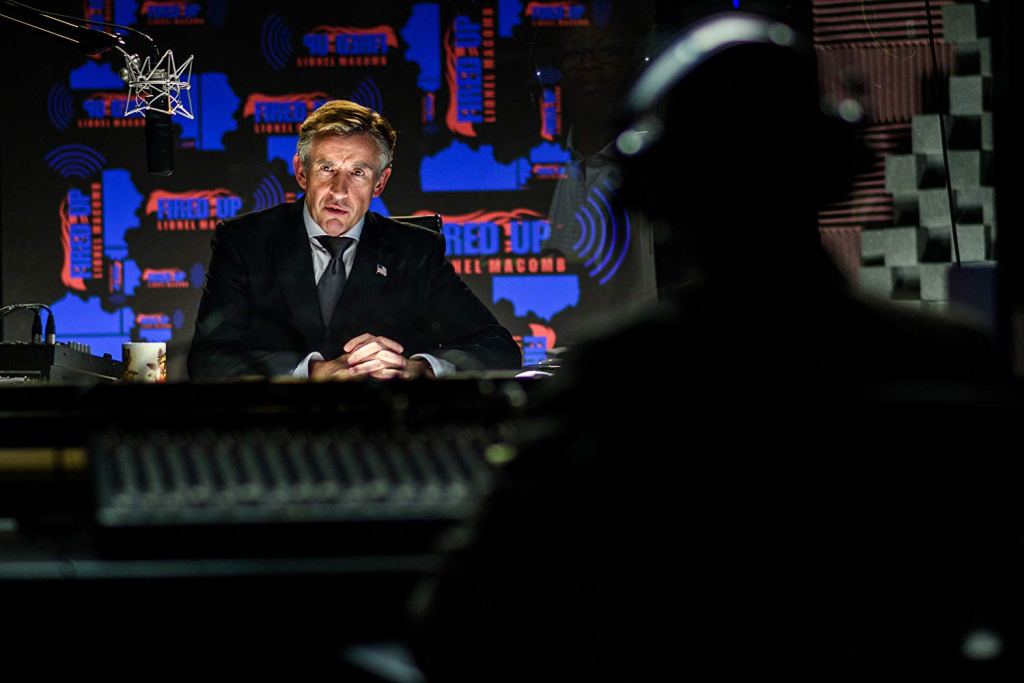
Lionel Macomb is the king of conservative talk radio. By shouting outlandish opinions and wildly distorting facts on hot button, right-wing issues, Lionel has made himself an empire. For 20 years he has slept on a mattress stuffed with cash but now a former protege, Whitley, is threatening his domain by presenting himself as a kinder, gentler (read: religious) right-wing alternative.

Lionel (Steve Coogan) isn’t exactly going to just let Whitley (Skylar Astin) walk away with a piece of the pie, but he’s been losing ground steadily and suddenly even his long-standing feud a Senator he dismissively refers to as “The Hyphen” (Judith Light) isn’t as fun anymore. It’s a terrible time for his life to be disrupted but it wouldn’t be much of a movie if it wasn’t. In waltzes a long-lost relation he never knew he had, 16 year old Tess (Taylor Russell). Tess challenges him and pushes his buttons, which doesn’t exactly ingratiate her to him. In fact, the only reason she’s allowed to stick around at all is an intervention by girlfriend Val (inexplicably, Neve Campbell), who is notably not as asshole but bewilderingly in love with one.

I love Steve Coogan and would happily watch him in anything. This role is great for him, caustic, wordy, with a ranty-ragey charisma. But then the script fails him. Tess arrives on the scene to humanize him, and while she does provide context, there’s not a lot of growth. It’s like writer Will Reichel forgot why movies exist. Maybe (and I’m being generous here) the point is that conservative “personalities” lack the basic human ability to change. Certainly a lack of soul is an asset to a career in punditry. But then why introduce Tess at all if he’s going to refuse to learn from her? It makes for a frustrating end because there’s no real redemption, and you get there only to realize that there’s also been very little on the journey there. Lionel Macomb is a talking head, a very good one thanks to Coogan, but a whole bunch of people spent a whole a bunch of money on this movie and nobody thought to ask: is there a point to this? Shouldn’t there be?

How The Grinch Stole Christmas (2000)

I feel like a bad Canadian for even thinking this, but the truth is, I don’t like Jim Carrey. Well, to be fair I’ve never met the man; what I mean is, I don’t like his schtick. I don’t like his over-the-top, cartoony performances. And since he’s playing an actual cartoon character in this, How The Grinch Stole Christmas never really had a fair chance with me, never mind the fact that it skewers a venerated classic film that I grew up idolizing.

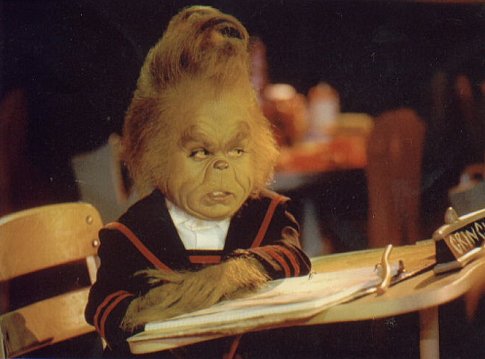
Jim Carrey plays The Grinch. He’s green, he’s hairy, and he’s very very mean. Except a little Whovillian named Cindy Lou (Taylor Momsen) sees the good in him – wants to see the good in everyone – and nominates him to be Christmas cheer captain. He is coaxed down the mountain to accept his prize and things actually go fairly well – he gamely stuffs his face as Fudge Judge, wins a potato sack race, and is submitted to carol after carol after carol. But there’s at least one Whovillian who can’t quite accept his presence: Grinch’s childhood bully and current mayor of Whoville, Augustus Maywho. Maywho gives him a gift meant to humiliate and remind The Grinch of what caused him to flee up the mountain in the first place. With plenty of Whovillians joining in the laughter, The Grinch is once again flooded with shame, and this time he vows revenge. Just one catch: little Cindy Lou isn’t quite ready to give up on him.

Tim Burton was attached to direct this for a long time but eventually the studio settled on Ron Howard, who does his best to deliver something Burton-esque. It’s not nearly as dark as Burton would have gone (in fact they got out of their way to establish The Grinch as a sympathetic character) but Howard steps out of his comfort zone in terms of visual style. Whoville becomes a smorgasbord of Christmas cheer; there’s eve a machine gun that helps Christmas be vomited all over town. It’s an abundance that’s hard to ignore: production counts over 8000 ornaments, exactly 1938 candy canes, 152 000 pounds of fake snow, and 6 miles of styrofoam used to create sets. Sean and I actually saw some of these sets on the Universal backlot tour, just behind the Bates Motel from Psycho. During production, Jim Carrey put on a dress and grabbed a knife and ran screaming from the house, scaring the pants off a bunch of tourists who failed to recognize him at the time. Otherwise his days were pretty miserable, spending 2 hours to get into costume, and another hour just to get out. The latex suit was covered in yak hair dyed green. But when you watch the movie, you’ll appreciate just how many other character underwent extensive hair and makeup routines. This movie actually has the most extensively make-upped and costumed cast since The Wizard of Oz – 443 costumes were created by wardrobe, and on busy days, 45 make-up artists were working at once. So if I’m not exactly giving Jim Carrey credit for a job well done, I do think production design (art director Michael Corenblith and set decorator Merideth Boswell) deserve some accolades, along with costume designer Rita Ryack, plus hair stylist Gail Ryan and make-up artist Rick Baker who received his 6th of 7 Oscars for this film

Eddie Murphy, Tom Hanks, Jack Nicholson and Tim Curry were considered to play The Grinch, and I think we should all spend at least 10 minutes today thinking about what those movies would have looked like. The truth is, Jim Carrey is probably a good choice for the role. Who else could pull off a costume that essentially has The Grinch running around “naked” a lot of the time, his private area conveniently covered by a suspiciously large tuft of hair. Jim Carrey and Ron Howard both wanted to make a very kid-friendly movie but thanks to studio interference, there’s a bit of raunchiness in the film that may surprise you. The love interest between The Grinch and Martha May (Christine Baranski) is surprisingly sexual. In fact, it’s safe to say that those Whos are pretty pervy, generally speaking. But there’s lots of base humour and visual gags to get you through, and very small children probably won’t pick up on lots of the adult-oriented stuff. Still, it may be hard for those of us familiar with the original made-for-TV movie to really embrace this one. How The Grinch Stole Christmas is probably best left to the kids.


Top 10 Star Wars Capes

Edna Mode is a fashion designer to the stars, and by stars I mean super heroes. She is the bespeckled wonder responsible for suiting up The Incredibles and she has one golden rule: no capes. Clearly no one in a certain galaxy far, far away cares to follow this little nugget of common sense. There are capes nearly everywhere you look. Every dramatic exit is done with the flourish of a cape. So even though we can all agree they’re a stupid sartorial choice, let’s indulge ourselves with an ode to Star Wars’s sweeping capes and the people who wear them.

[By the way: did you know Sean and are watching 24 hours of Star Wars movies? What else could inspire such a post?]

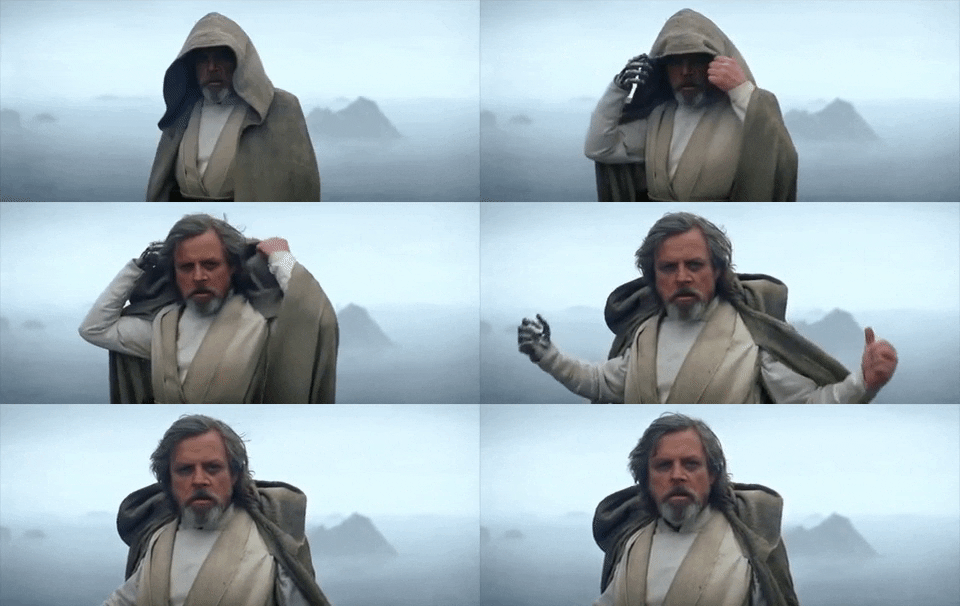
10. Luke Skywalker (Mark Hamill): Luke is not normally prone to capes and yet this teeny tiny glimpse of one could just as easily held the #1 spot as #10. It’s part of his big reveal and proves a flair for the dramatic runs in the family.

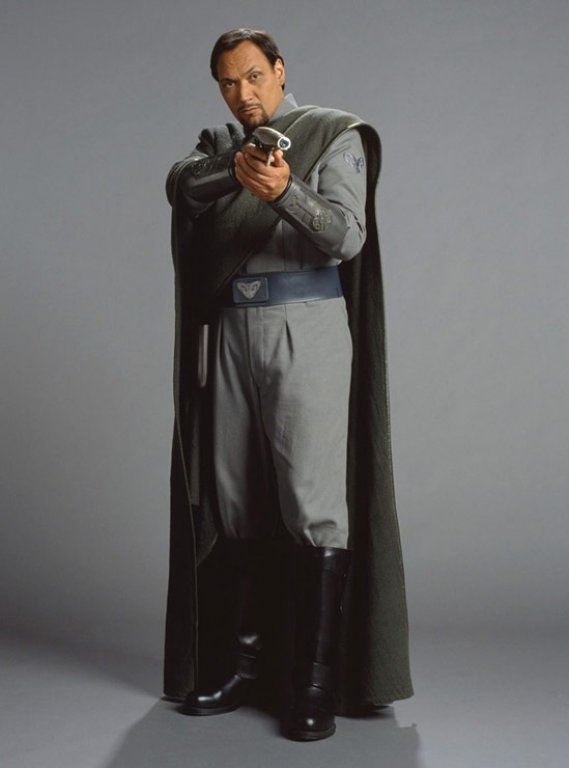
9. Bail Organa (Jimmy Smits, Episodes I-III): as a Senator, Bail Organa indulges a certain stateliness. This guy’s got more than one cape in his closet and he doesn’t care who knows. You might start to think that the Rebel Alliance might have been more successful had they only cut all the capes – I bet you could build a death star or two for the price of their dry cleaning bill.

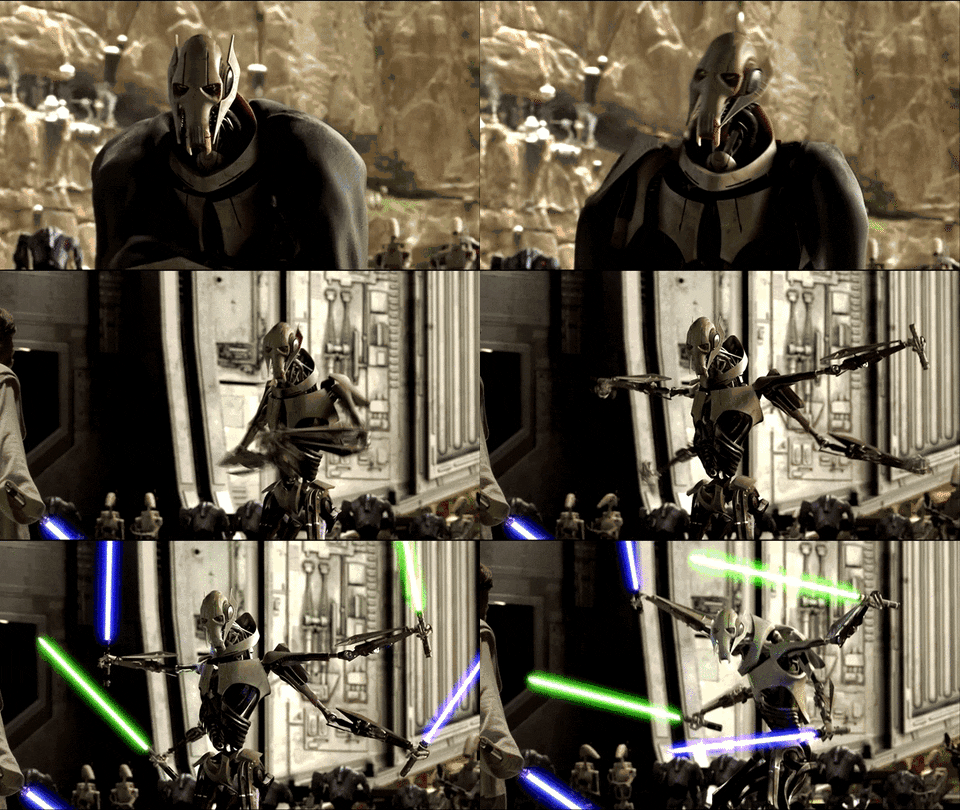
8. General Grievous (Episode III): I can’t help but feel that this dude wears such a suspiciously huge cape that someone should have guessed that he was hiding something underneath. In fact, I am routinely surprised and disappointed by what the so-called Force fails to pick up. Some pretty big stuff, to be honest, that even your average intuition could have detected. It doesn’t take a jedi knight to figure out that big cape = big trouble.

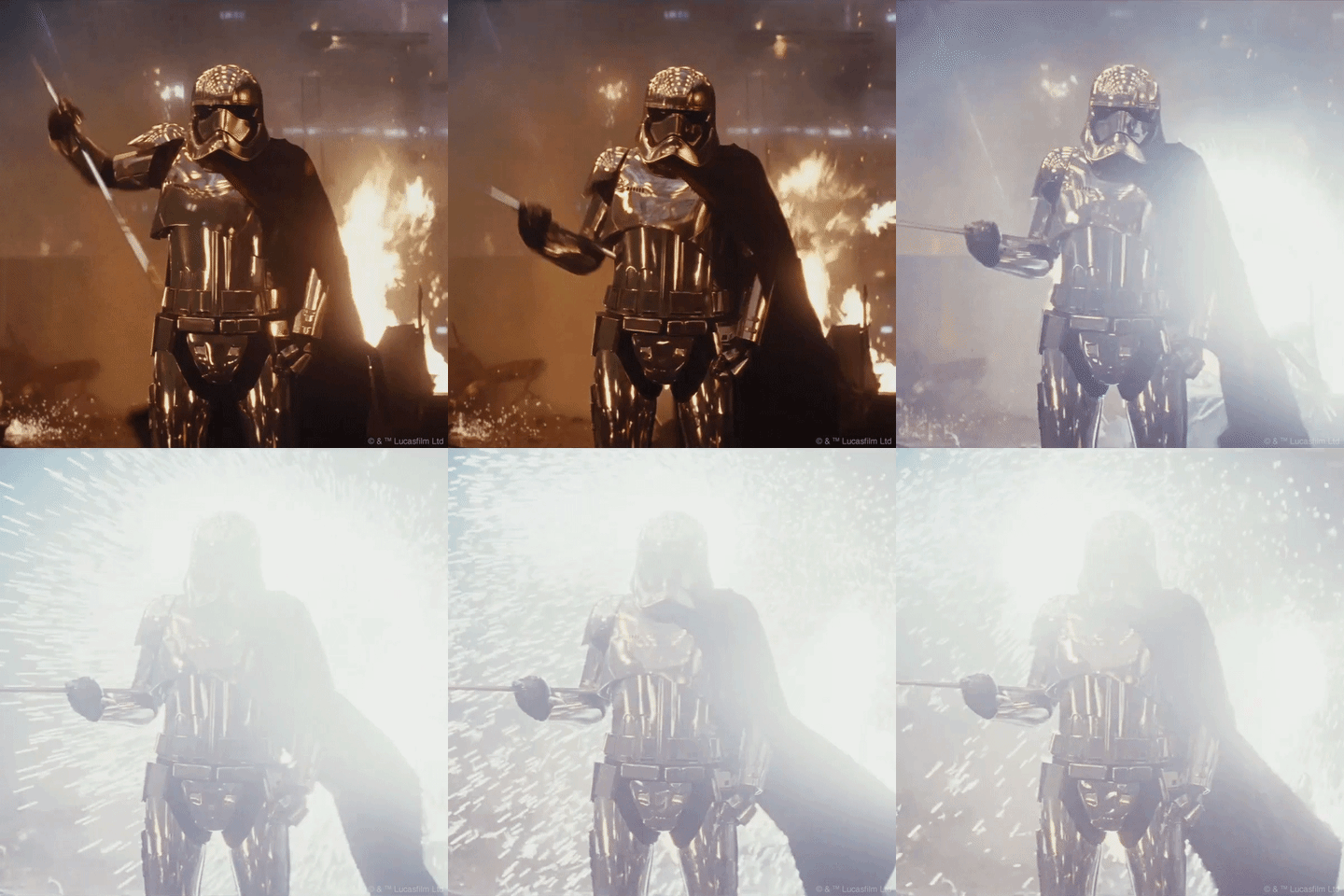
7. Captain Phasma (Gwendoline Christie, Episodes VII-VIII): I never watched any Star Wars growing up but even I couldn’t fail to pick on some of the iconic images so persistent in popular culture. I recognized storm troopers as the bad guys of Star Wars long before anyone told me they were but to be honest, as a kid I always imagined that they were robots. I wasn’t cured of this delusion until The Force Awakens, when I learned there were humans inside that molded plastic. The uniformity of their uniforms (if you’ll forgive my redundancy) spelled machine to me – perhaps being a woman I just have an innate fear of wearing the same thing as someone else (who wore it best?) and Captain Phasma feels me. It’s hard to really distinguish yourself in a suit of armour but she accessories with this somber one-shouldered garment.

6. Padme (Natalie Portman, Episodes I-III): Padme also has an awful lot of capes, even when you sort them from the similar appeal of the long jacket, the cloak, the robe, and the poncho. No matter how you slice it these folks sure like to have a piece of cloth flowing behind them, announcing arrivals and departures. Is it dangerous around all these ship engines? Definitely. Awkward in battle? Absolutely. And yet: total capetown.

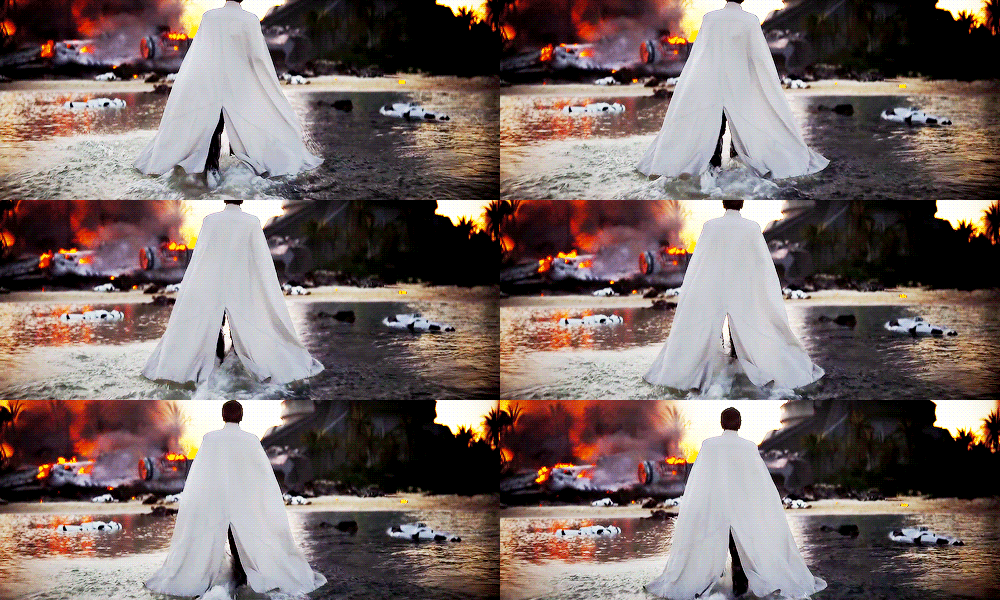
5. Orson Krennic (Ben Mendelsohn, Rogue One): I think Krennic’s capes are a direct reflection of his lack of confidence. He’s insecure, so he tries to impress people with his vestments. He certainly looks important but capes don’t make you competent.

4. Kylo Ren (Adam Driver, Episodes VI-IX): Kylo Ren is a lot like his father – petulant and temperamental with a well-developed emo side. It’s no surprise that the cape appeals to him as well. It helps a young guy who perhaps isn’t fully respected yet cut an imposing figure.

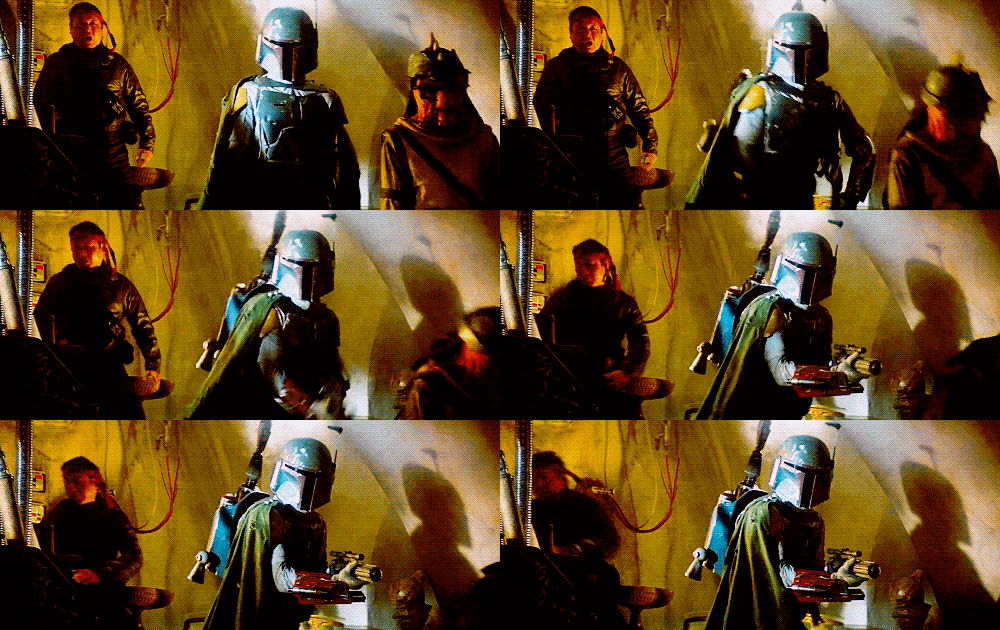
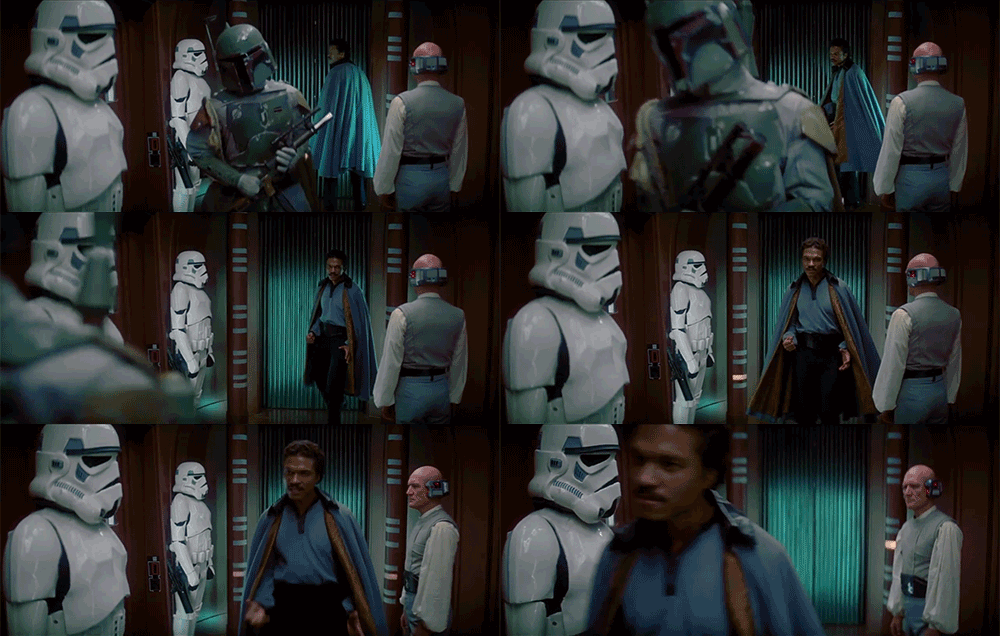
3. Boba Fett (Jeremy Bulloch, Episodes V-VI): for some reason, lots of little boys were absolutely taken with Boba Fett because of his ‘cool armour’ which is baffling to me. Boba Fett is a boring, unnoteworthy character as far as I’m concerned. But he’s got this little torn piece of canvas dangling from his shoulder, so he’s not without vanity. He may never show his face, but he wants you to know he’s an individual.

2. Lando Calrissian (Billy Dee Williams, Episodes V-VI): this dude may be a scoundrel and a cheat but he’s charming and well-dressed and let’s face it, a bit of a scene-stealer. We learn in Solo: A Star Wars Story that the Millennium Falcon has a cape room in it, that’s how much Lando loves his capes, so it’s hard to pick just one. Plus, Williams has a knack for using them in a commanding but flashy way. He wears the cape, the cape doesn’t wear him.

  1. Darth Vader: production designer John Barry and costume designer John Mollo have my utmost admiration for having come up with perhaps THE most iconic look of the 20th, and maybe even 21st, century. Darth Vader is immediately intimidating, the cape makes him broader, more imposing, and it follows the same lines of his helmet. Darth Vader is scary as heck and in a series of films full of costumes the likes of which we’ve never seen before, his is the most memorable.

Marriage Story

Eight minutes in and this movie’s already breaking my heart. Nicole and Charlie have just spent 8 minutes sharing the things they love most about each other, and their lists are touchingly precise. But it turns out they’re in mediation, and the exercise is meant to kick off their divorce proceedings. Nicole welches – she doesn’t want to read hers, and I sort of can’t blame her. It’s so vulnerable to admit that you once loved the person you no longer love. Fuck.

Nicole (Scarlett Johansson) is a talented actor and the star of a play directed by Charlie (Adam Driver). They share a son, Henry, and a New York City apartment but now that they’ve split, Nicole plans to return to L.A. to work in television. Charlie intends and expects to stay in New York. Though they originally swore off lawyers, agreeing to do things “amicably,” they have one asset that’s precious to them both: Henry. Fighting for custody and for coasts is important to both, so they lawyer up and get down to fighting dirty.

Interviewing lawyers, one dirtbag (Ray Liotta) asks Charlie “Does your wife do drugs or anything? Coke?” he asks, hopefully. Fuck. It’s gross. It’s gross that two people who loved each other and each care deeply for their young son can’t be civil. Civil? They are so hopelessly and desperately past civil that the word looks meaningless here on the page. And the lawyers? They’re fucking hyenas looking to devour their prey.

A Marriage Story is actually a Divorce Story. As both a child of divorce and a divorcee myself, I feel both sides of this thing so acutely that I feel as though I’ve been impaled by my own hopes and dreams. My parents’ divorce was the best thing that ever happened to us; we hated my awful father as a unit and breathed a sigh of relief when he finally left our house for the last time. My mother raised four daughters by herself. Money was tight but there was never any doubt that we were better off without him. But is there a small part of me that wondered why he never fought for custody – never even asked for visitation? A small(ish) part of me that will always wonder if there’s something fundamentally unlovable about me? Leavable about me? My first marriage ended badly, traumatically, like a death. As they do sometimes. We had no child to fight over so one day I just never saw him again and now I have no idea whether the man I once promised to love and cherish forever is dead or alive. And now I’m married to Sean and it’s wonderful and stable and safe and sexy and I hardly ever stay awake all night wondering why it’s so easy to stop loving me and if it could happen again.

Sean saw this one at TIFF (without me – I was off reviewing Jojo or Joker or somesuch) and told you he liked it nearly 3 months ago, but to me he said: it will make you cry. And of course he was right. Written and directed by Noah Baumbach, you don’t really stand a chance of remaining unmoved. Marriage Story is an insightful and well-aimed gut punch. It hit me right in the feels. But even Sean, who comes from a cozy nuclear family and is married to the most amazing woman on earth, even Sean was stirred up. Love is easy. Marriage is hard. Divorce is a goddamned hole in the heart.

Friday Fuckfest: Salma Hayek Edition

It’s Sean’s birthday so he got to pick today. Sean and I don’t normally have the same taste in women, but Salma Hayek is a rare but definitive exception. I mean, she’s Salma-Smokin-Hot-Hayek, she transcends type.

She’s an Oscar-nominated actress, a very successful producer, and a passionate humanitarian, but today we solute her for being an exceptionally beautiful woman.

The Duchess

While the children are outside playing, Georgiana (Keira Knightley) and Charles (Dominic Cooper) among them, Georgiana’s mother is inside, brokering her daughter’s marriage to a man she’s met but twice. She’s not 18 yet but the match will make her a duchess, and by her mother’s standards, that’s more than enough.

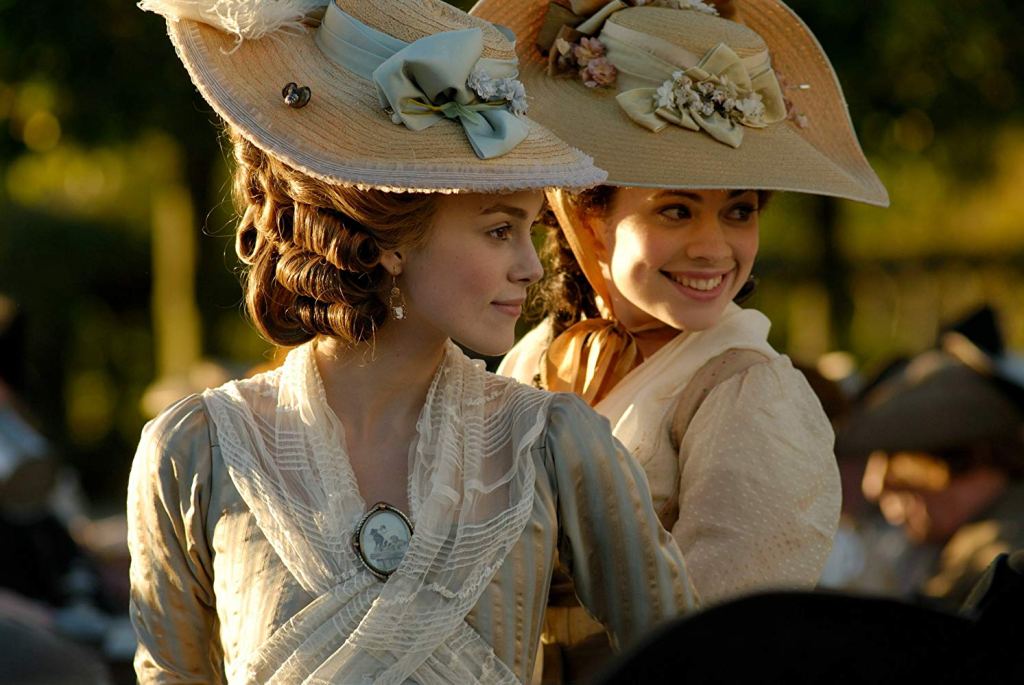
Georgiana is so young that she’s actually surprised when the marriage to the much older Duke (Ralph Fiennes) turns out not to be filled with warmth and happiness. He only cares that she produces a male child, and her failure to do so is an embarrassment. Meanwhile, he saddles her with children he’s conceived elsewhere, the least well-kept secret in all of England. And though she’s turned a blind eye to every indiscretion, when he beds her only friend and moves her into their home, it all gets to be a bit too much. With no other option, Georgiana must tolerate it, as she tolerates all else. None of her hats and dresses can make her happy so she does the only thing she can: she takes a lover. Remember childhood friend Charles? Georgiana certainly does.

I saw this streaming on Netflix and was surprised I hadn’t seen it. Now that I have, I’m less surprised. I didn’t need this in my life. It’s not bad, it’s just very generic. It feels like a movie I’ve seen before and it even, in some ways, reminded me of another Keira Knightley film, Colette. It’s a period drama with a very slight feminist bent. She discovers sex! Turns out, it’s not all about your husband raping you until pregnant. Sometimes it even feels good. There. I spoiled it for you. Sorry/not sorry. It’s a literal bodice ripper (and such a shame, the hair and costumes are the only real thing this movie has going for it) – if it was a book it would be a Harlequin, with Fabio on the cover, and I’d feel much more embarrassed about having read it. Instead I’m mostly just mildly annoyed. Georgiana is apparently a distant relative of Princess Diana so the film was marketed using the Diana angle as heavily as it could (“There were three people in her marriage”) for a movie that has absolutely nothing to do with her. Shameless, of course, but when your film’s this bland, what else can you do? Ralph Fiennes’ stockings aren’t exactly selling tickets.


The Fanatic

This is the kind of movie I wish didn’t even exist because what if you accidentally watch it? You’re a nice person. You don’t deserve that. Promise me right now that you’ll never watch this movie. Promise! It’s because I care.

Moose (John Travolta) is a rabid fan. He’s on the spectrum and not exactly sensitively portrayed; Travolta goes all in, with every tic he can fathom and a bad haircut to boot (in fact, a wig). But it’s about to get a whole lot worse.

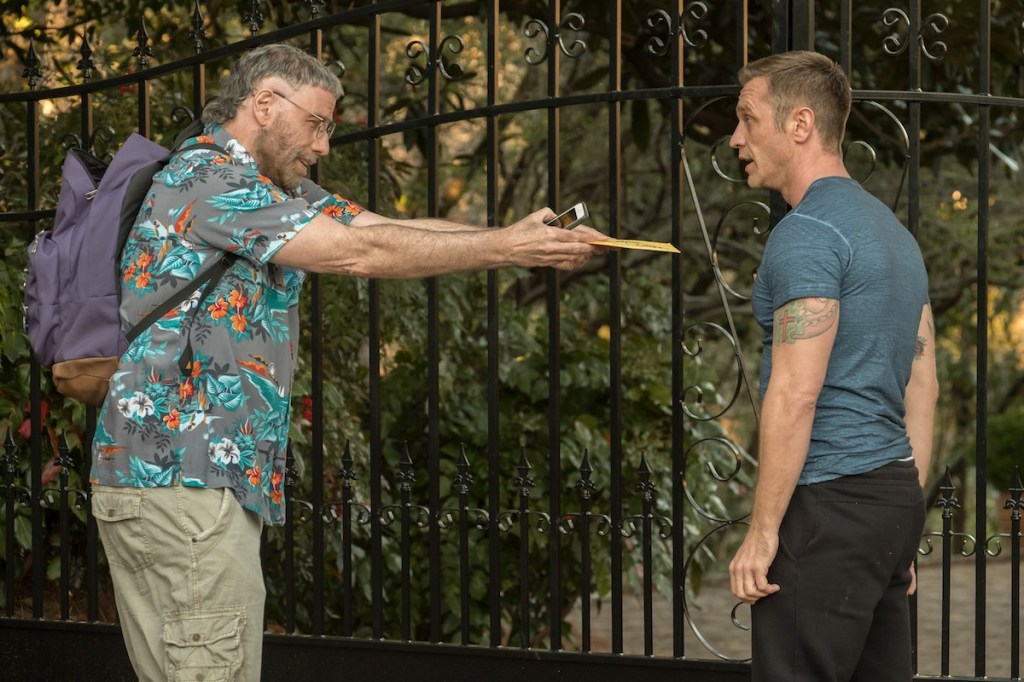
One of his absolute favourites is horror star Hunter Dunbar (Devon Sawa). He spends money he doesn’t have on movie memorabilia and waits in line to have it signed. But when Dunbar cuts the autograph session short, Moose just about loses it. He feels there are certain entitlements between a star and his fan and when Dunbar isn’t exactly gracious about it, Moose spirals. I mean, you know you’re in a bad space when a paparazzo calls you a stalker. Or you should. But Moose just keeps escalating things, showing up at Dunbar’s house, scaling the fence onto his property even, and he doesn’t take it well when Dunbar is increasingly hostile (he’s got a young son at home). Of course, Dunbar just thinks Moose is another crazed fan. He doesn’t understand how much danger he’s in. And maybe neither does Moose.

Directed by Fred Durst (yeah, I know), the movie starts mediocre and only declines. There are a number of poor directing decisions, my least favourite probably the fantasy scenes in which Moose imagine the roles reversed, himself a generous and magnanimous movie star.

No, I’m lying. It does get worse than that. I withheld some stuff to avoid spoilers, but you’re not going to watch this thing anyway, right? You promised. Not even out of morbid curiosity should you watch. I mean, it’s not even laughably bad, or watchably bad. But I suspect the movie (or, its director) thinks it’s clever, which is intolerable and awkward and just makes the whole thing feel so much worse. We always knew, intellectually, that something had to be the worst thing on Netflix, but never before has the answer been so obvious, or definitive.