Our reviews and thoughts on the latest releases, classics, and nostalgic favourites. Things we loved, things we hated, and worst of all, things we were ambivalent about.
Odd is his actual name, and according to townspeople, he lives up to it each and every day. If they knew he had powers that justified what they called him, they’d REALLY be upset. Odd (Anton Yelchin) is a short-order cook who can see the dead. They can’t speak but they are often frantic to impart a last message, sometimes about how they died, and who might be responsible. Thank goodness for Chief Porter (Willem Dafoe), who pursues Odd’s leads and doesn’t ask too many questions that can’t be comfortably answered.
“Wheel of Misfortune”
But there’s something more sinister than usual hanging around this California desert town. Dark and threatening forces (seen only by Odd of course) are clustering around a mysterious man, and Odd has a very bad feeling that something very serious and very deadly is about to go down.
The movie is pretty wobbly as far as tone goes: romance, tragedy, comedy, supernatural thriller. It’s scary, witty, goofy, silly, and yes – odd. And while some may find it tough to breach the ever-changing landscape, Anton Yelchin is just the man to incorporate all of these facets into something that makes sense. While Yelchin’s loss is still keenly felt, it’s a little more palpable when he’s addressing a child’s ghost and offering condolences for a life cut short.
Odd Thomas is a quirky comedy-horror if ever there was one, but I couldn’t help but like it. It is oddly entertaining; Odd has the makings of a paranormal investigator that I could watch again and again – I kind of wish it was a series and not a film so that I could. Writer-director Stephen Sommers adapts from a Dean Koontz novel which I have not read but imagine the film manages to capture a good bit of the source material’s spirit. It’s an engaging deviance from the usual approach, a more whimsical, almost quaint approach to horror, quite a feat for something involving satanic cults and mass murder.
You remember Danny Torrence, right? Loved to ride his Big Wheel down quiet, carpeted hallways. Called his index finger Tony and spoke for him in a creepy voice? Avoided being chopped up into tiny pieces by his father by outsmarting him in a hedge maze?
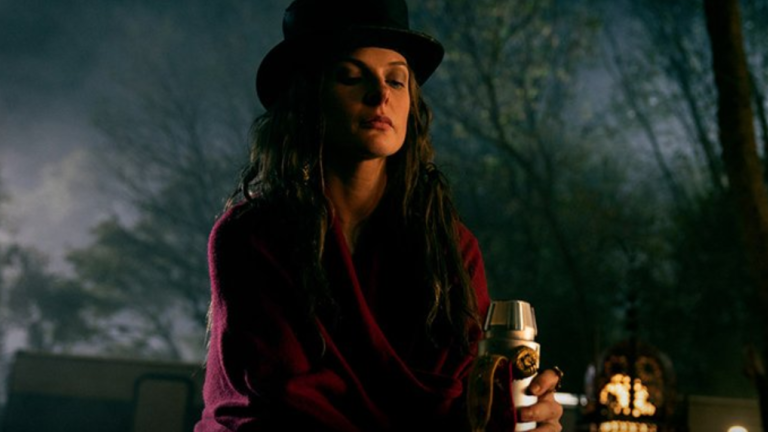
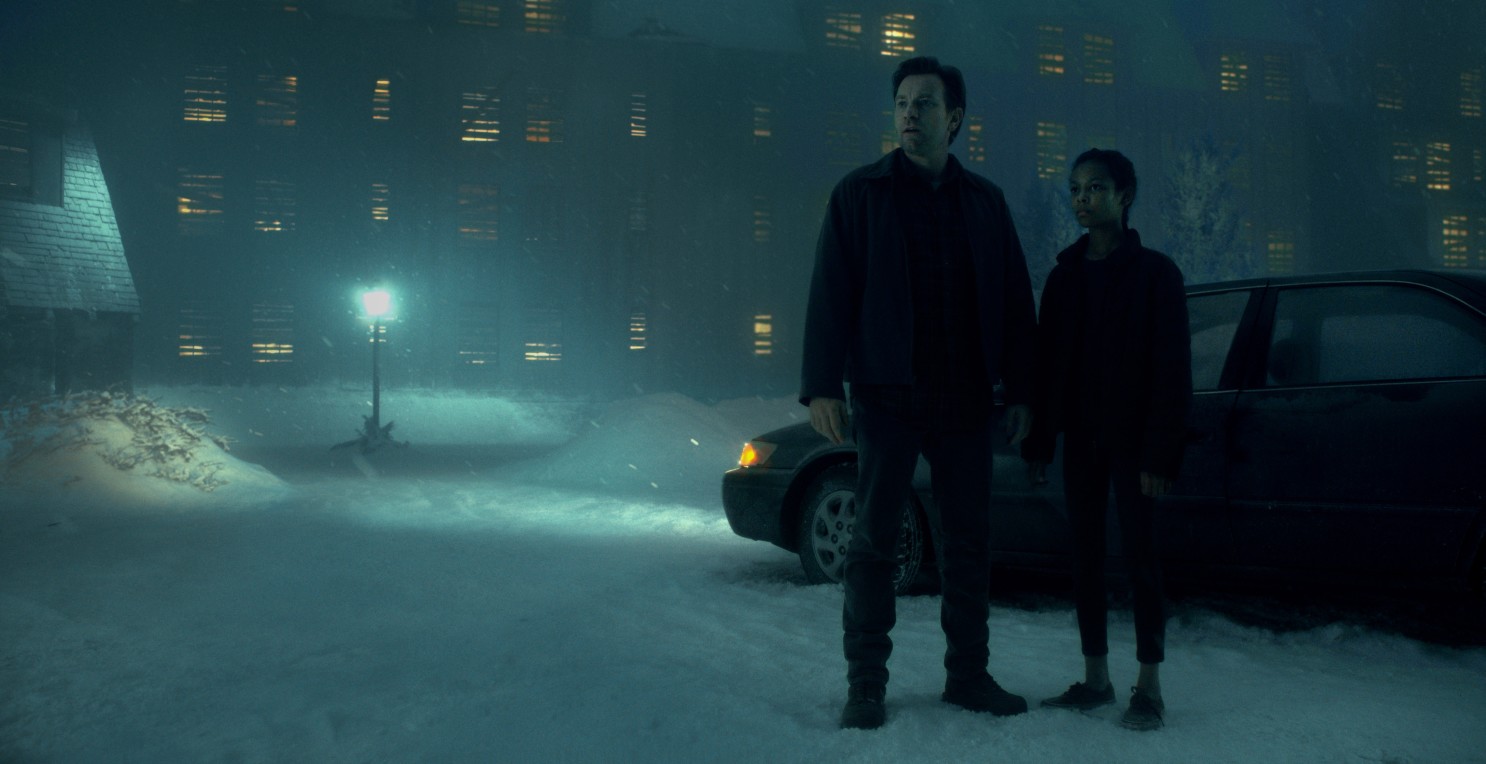
Doctor Sleep is the sequel to The Shining you didn’t know you’d been waiting 40 years to see, starring survivor Danny Torrence, now all grown up and going by Dan (Ewan McGregor). Dan is an alcoholic, struggling to beat the disease that claimed his father. He’s alone in the world, nothing but a string of bad decisions behind him, not to mention some haunting memories which he tries to repress. He’s trying for a peaceful life these days but when teenager Abra (Kyliegh Curran) reaches out to him via their mutual power (we’re still calling it the shining), he can hardly ignore her, especially because she’s in danger. Her powers are pretty significant and she can feel other kids like her getting brutally murdered. A mysterious cult known as The True Knot, led by Rose The Hat (Rebecca Ferguson), preys on children with powers, drinking their pain and eating their fear to remain immortal.
Of course this struggle will ultimately end up at the Overlook Hotel, where the final showdown takes place. It’s been abandoned literally since the last time Danny was there, and it’s got plenty of trauma triggers just waiting to trip him up. The hotel itself is not unlike the True Knot, sucking at whatever shining powers it can get, and Dan’s presence certainly revives this.
The film has a great supporting cast including Emily Alyn Lind, Zackary Momoh, Alex Essoe, Henry Thomas, and especially Carl Lumbly, Jacob Tremblay, and Cliff Curtis. Director Mike Flanagan knows how powerful it is to situate us back into the setting of one of the most famous and successful modern horror movies ever, but he wisely uses it sparingly, creating his own almost separate story that merely feels adjacent to the great Stanley Kubrick oeuvre. Likewise, he doesn’t seek to recreate Kubrick’s style, though the temptation must be great. Doctor Sleep takes a more brooding, almost meditative approach, which might be a nice way of saying slow. It is a bit slow because we take the time to get reacquainted with Dan Torrence and incorporating his infamous past with what we know of him today, because those events have certainly shaped him. There has always been a reason to revisit The Shining; in the first film, Danny’s special powers are relegated to subplot and never get fully addressed. The Shining seems like it’s named after Danny but it’s his father’s story; Jack’s writer’s block and cabin fever and alcoholism and isolation culminate in a rather explosive way. The fact that his son is ‘weird’ is a relatively minor factor in his downward spiral. Finally with Doctor Sleep we get some answers – what is it more than why is it, but it’s still satisfying to tie up some long-nagging loose ends. Of course, it also opens up its own universe of terror and intrigue.
Mike Flanagan’s film hits different notes than Kubrick’s did, though, apart from the synth ones in the score that inspire instant dread. It’s respectful of Kubrick’s masterpiece, but draws a lot on the book by Stephen King, and winds up forging its own identity. To be honest, I was surprised by how much I liked this movie. Flanagan is smart to build his sequel on familiar bones but not to make the film in Kubrick’s image. It helps that they’re very different stories about very different family members. Rebecca Ferguson is a lot of fun as Rose The Hat, and Kyliegh Curran is clearly going to be a huge star. It takes a while to get them together but not only is it worth the wait, it doesn’t feel like a wait, it’s a genuine pleasure to have this creep up on you on all sides until you’re surrounded and the only thing to do is to surrender.
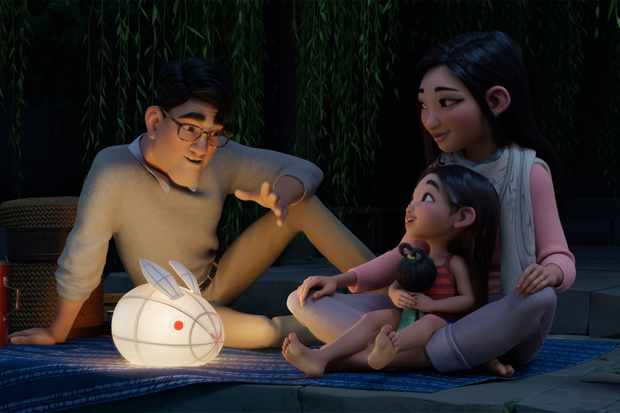
When Fei Fei is a little girl, her mother (Ruthie Ann Miles) tells her about the moon goddess Chang’e. The popular myth says that many, many years ago, ten suns rose in the sky together, scorching the Earth. The archer Houyi shot down nine of them, and was rewarded an elixir for immortality. He did not take it as he did not wish to become immortal without his beloved wife Chang’e. But one day his apprentice broke into his house to steal it, and to prevent him gaining it, Chang’e drank it herself. She ascended to the heavens, choosing the moon as her residence, where she mourns her husband to this day, because true love lasts forever.
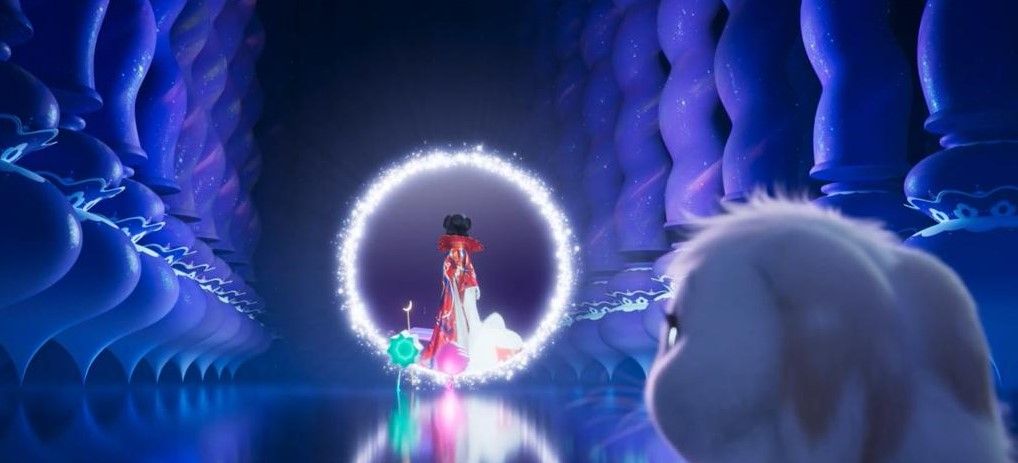
Fei Fei’s mother passed away, and every year when her family gathers for the Mid-Autumn Moon Festival, there’s an extra reason to remember her mother. But this year she is surprised to learn that her father (John Cho) has invited an unexpected guest: his new girlfriend, Mrs. Zhong (Sandra Oh) and her son, Chin. Upset by this sudden turn of events, Fei Fei (Cathy Ang) decides to build a rocket ship to the moon so she can enlist Chang’e’s help to remind her father that true love (ie, his first love, ie, Fei Fei’s mother) is forever. She and bunny Bungee (plus stowaway Chin) are surprisingly successful, but the moon isn’t exactly what she’d anticipated. Her first friend is Gobi (Ken Jeong), a pangolin former royal advisor who was exiled 1000 years ago; he has some important wisdom to impart about loneliness, if only Fei Fei would listen. But she’s still determined to enlist Chang’e (Phillipa Soo), a goddess in the form of a rock star, and every bit as demanding and self-interested as one.
Over The Moon is a new offering from Netflix, an animated musical film appropriate for the whole family. It’s more in the style of Laika films than Disney or Pixar, but unfortunately doesn’t reach the heights of any of these. Although it does use one of Disney’s favourite tropes, the dead mom, it teaches a lesson about a different kind of grief. The visuals are stunning and the moon adventure is sure to please any young child, with rap-battle ping pong games and softly glowing creatures, it’s hard to deny. But the moon adventure is book-ended with family scenes reminiscent of Lulu Wang’s The Farewell, another movie that used food as an excuse to gather and grieve. These scenes are tinged with loss but also hint that life can move on. It is heartfelt but not emotionally manipulative. Some of the feelings are nuanced enough that they may be complicated for very young audience members to understand, but anyone who has loved and lost will feel something familiar here, and that’s a pretty good reason to watch.
Leonora’s family is starving. In the wake of a nuclear event, everyone is starving. Leonora (Gitte Witt) and husband Jacob (Thomas Gullestad) are doing their best to keep their young daughter Alice (Tuva Olivia Remman) safe in an increasingly violent and unsettled world, but they cannot put enough food in her belly. Leonora was an actress in the time before the apocalypse so she may not have needed much convincing to take in the new play being mounted in an abandoned hotel, but considering the pay-what-you-can tickets include dinner, it’s a done deal.
The dinner is real enough, but the play turns out to be more like interactive theatre, which is enough to spoil even a starved belly’s appetite. Mathias’ (Thorbjørn Harr) particular brand of dinner theatre requires patrons to wear masks as they discover the actors in different scenarios, macabre or shocking or enticing. But the show blurs the line between performance and reality; the masked guests grow increasingly weary as they pass from one dreadful scene to another. But when Alice goes missing, Leonora’s frantic search turns up some uncomfortable truths and the guests, transforming from spectators to spectacle, must confront the true cost of an evening’s entertainment.
Cadaver has an interesting premise and a disappointing follow-through. It cultivates an atmosphere of dread and tension capably but resolves them predictably. Writer-director Jarand Herdal sets his horror in a world I’d like to know more about but then all but shuts it out, locking down his subjects in an old hotel, the likes of which we’ve seen before, and seen better.
The guests’ desperation and Mathias’ instinct for survival are the most banal and expected conditions in this post-apocalyptic world. I suspect the more interesting stories were taking place out in the streets, just beyond the hotel’s doors.
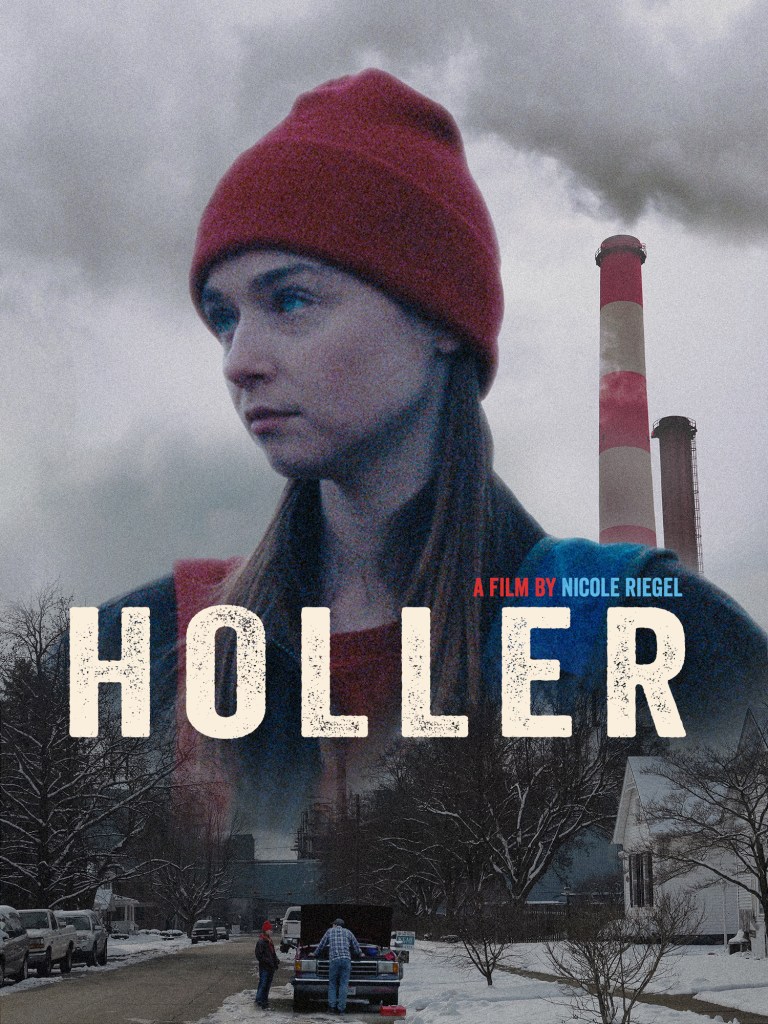
Ruth (Jessica Barden) is a smart young woman who, in different circumstances, might have had a bright future ahead of her. As it stands, the future is besides the point because the present is already so tenuous. She’s barely attending her last year of high school because she and older brother Blaze (Gus Halper) are working at a frozen food plant trying to keep their family home from sliding back into the hands of the bank while their junkie mother (a very unglam Pamela Adlon) gets sober in jail. The siblings strip scrap metal for spare change but when Ruth’s acceptance to college could mean real change for her, the pair get serious about making money and agree to a dangerous (not to mention illegal) scheme with shady dealer Hark (Austin Amelio).
It’s easy to mistake Ruth for a woman twice her age; she’s certainly got enough burdens to add some real curvature to the spine. She’s a minor but talks as though she’s already seen it all, and with only the vague sense of a surrogate mother in boss/neighbour Linda (Becky Ann Baker), who can only turn so many blind eyes, she doesn’t exactly have a lot of positive influences or role models in her life. She’s smart but not optimistic enough to be ambitious. Her small, forgotten town in southern Ohio has no opportunity yet acts as a vacuum to the people born there. This is no place for the young, but it’s hard going on impossible to leave. Meanwhile, everyone’s TV or radio has Trump making empty promises about the return of the manufacturing economy, which everyone but him seems to know is already dead.
Writer-director Nicole Riegel, a former U.S. Army soldier, expands her 2016 short of the same name, reflecting on the people and places she grew up with, returning to her own struggling Ohio hometown and shooting on gritty 16mm film to give the film an authentic feel. In fact, she casts non-professional actors in supporting roles to lend a blue collar credibility to the film, but the entire cast comports itself very well, and there isn’t a complain to be made about the acting.
The story, perhaps, is a little worn. There are decades worth of blue collar movies about working class struggles. There is little dignity in the tough choices to be made – there are no working class heroes here, only people who are tired, poor, and desperate. It’s a bleak outlook for a young woman, one that Barden wears well, and the movie reflects her competence, its strongest moments are in her hands. Though it may be a little well-tread, it is a strong first feature for Riegel, who surely has more stories to tell.
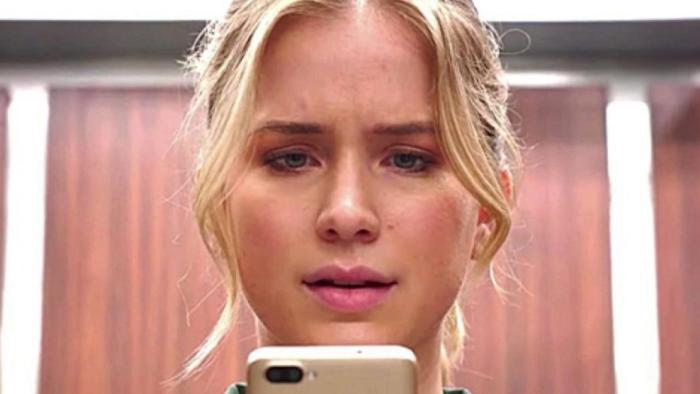
Quinn (Elizabeth Lail) is a young nurse working in a hospital. She befriends a teenage patient who was injured in a car accident and awaiting surgery. Evan (Dillon Lane) is very nervous about the surgery, and Quinn’s reassurance doesn’t help – he has an app on his phone that predicts the exact moment of his death, and guess when his time’s up? That’s right, the very next day, scheduled mid-surgery. Quinn is dismissive on the app but Evan explains his certainty; at a recent party, his girlfriend and a bunch of friends had used the app as a drinking game. Everyone had downloaded it, and the person nearest to his or her death had to take a shot. Evan’s girlfriend drank the shot – her countdown to death was just 3 hours away. She wisely turned down a ride from drunken Evan but wound up dead anyway, and Evan crashed his car, a tree limb stabbing through the passenger seat where his girlfriend would have been sitting. At shift exchange, Quinn relays this conversation with her peers, and all are excited to download it themselves. Most have countdowns decades away, meaning long lives ahead, but Quinn’s clock is counting down from just 3 days from now.
Quinn’s little sister Jordan (Talitha Bateman) is scheduled to die right around the same time, so they team up with fellow near-deather Matt (Jordan Calloway) to seek out any possibility of extending their lives, including the help of a priest and some salt. The thing about death, though, is that it comes for everyone.
This movie isn’t exactly going to uplift the genre or defy expectations or win awards, but for what it is, it’s pretty decent. The countdown clock is an effective if often-used tool. Elizabeth Lail isn’t exactly given first-rate material to work with, but she’s a good actor and the character’s not a ditz, and those things alone put Countdown in the top half of all horror movies. The story’s generic and predictable but the jump scares still work enough to get your heart pumping, and that’s always worth something in the horror genre. If you’re up for a little fate-dodging, and are prepared to meet Death himself, choose Countdown, but leave your phone in another room.
Devour! is our bucket list film festival. When we cover a big film festival like TIFF, we often go hungry, meals replaced by the crumbly remains of a granola bar fishes out of the bottom of my tote. So imagine our delight when we heard about Devour!, a festival that pairs food and film. As lovers of both, we have resolved to one day travel to beautiful Wolfville, Nova Scotia to partake in what I’m sure can’t help but be a joyous event. However, since that wasn’t in the cards this year, the lovely people of the Devour! film festival have provided us with a virtual hybrid, so that for the first time ever, those of us even outside of Nova Scotia can indulge in a unique festival with strong programming.
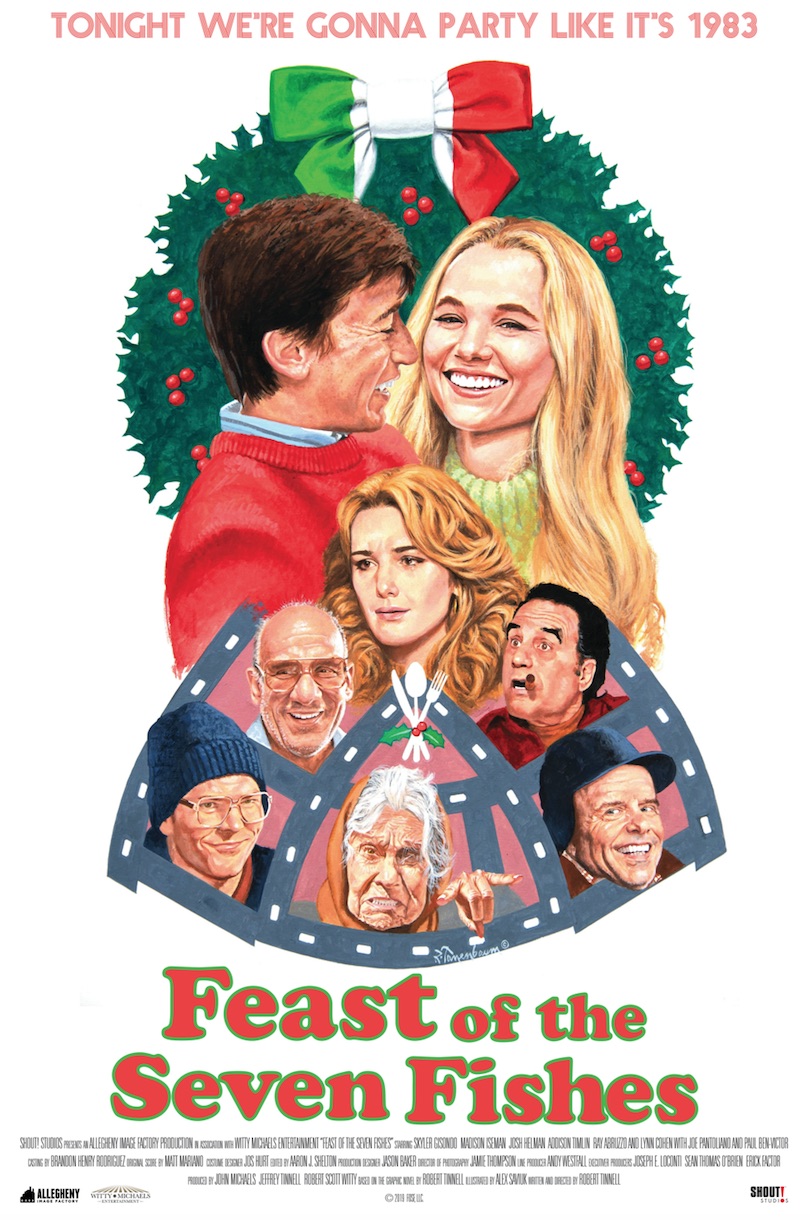
Feast of the Seven Fishes is about a big Italian family preparing – guess what – a traditional Feast of Seven Fishes. It’s Christmas Eve and the whole family gathers to participate and partake. This year’s a little special because young Tony (Skyler Gisondo) is bringing a date – a non-Italian date.
Almost every culture celebrates holidays with food and feasts (or, conversely, with a lack of them). Family recipes are passed down from generation to generation to preserve culture and tradition. I remember being in my grandmother’s kitchen, learning how to make her perfect, flaky pie crust, used for any number of recipes including French-Canadian recipes for tourtière and straight-up sugar pie (incidentally, my grandmother also gave out sucre à la Crème for Halloween, a maple-flavoured, crumbly fudge). At Christmas a Bûche de Noël would always be the centrepiece of our table, even if everyone preferred my grandmother’s flawless apple pie for dessert. And even my mother, an avowed non-baker, would whip up gateau chomeur, a humble dessert, once in a while, and for dinner, a pâté chinois that still haunts me.
Food is an opportunity to gather. In Tony’s family, it is largely the men who prepare fish on Christmas Eve. They start days in advance, soaking and resoaking the fish though inevitably someone will always complain that it wasn’t soaked enough. Food is an excuse to reminisce. Mom usually made it best, and her way is still the only way. Food is a tool for teaching each other about what we value and what we believe. Some observe special diets, or stay away from meat on Fridays. Some people eat ham on Christmas instead of turkey, others roast suckling pig or goose. And food says something about us, about our family. On the holidays, I usually bring dessert, because I like to make things as pretty as they are delicious. One of my sisters brings an appetizer, because we like to snack. And another brings the cheese plate, because she can’t cook and we all know it.
Tony’s dad is busy working in the butcher shop, but his uncle Carmine (Ray Abruzzo) and uncle Frankie (Joe Pantoliano) introduce the new non-Italian girlfriend Beth (Madison Iseman) to their culture and their family by telling her all the stories of past Christmas Eves. No family member is spared embarrassment when the uncles are drinking and reminiscing. When finally it’s time to eat, the whole family gathers around a table groaning with food and stretched to its limit and possibly even extended with other tables and mismatched chairs to accommodate one and all. There is not a grandmother on earth who’s most fervent wish isn’t to have her whole family gathered around a single table. Food is passed, wine is shared, conversation shouted across the table. Perhaps a toast is made, an absent loved one remembered, a prayer given, or a moment of gratitude observed. Several generations of family members young and old sit elbow to elbow, the lefties always throwing a wrench into things.
Tony’s family has specific customs and unique recipes, but changes are you’ll find something to relate to in a film like this, a film about family and holidays and time spent together. Writer-director Robert Tinnell shares a piece of himself with this film, but he also uses food as a universal symbol for how and why and when we gather. Tinnel draws uniformly wonderful performances out of a stacked cast including Paul Ben-Victor and Lynn Cohen. The film does indeed feel like a boisterous family gathering, and we feel welcome at their table. There’s an air of bonhomie and contagious conviviality. But what makes it special is that it captures the spirit in such a real and recognizable way. They aren’t your family, but they could be.
Check out the Devour! website to learn how to watch this and other movies, including that documentary everyone’s talking about, My Octopus Teacher.
Lily James plays a lady’s companion, a woman paid to accompany her mistress as she travels about Europe, but when Mrs. Van Hopper (Ann Dowd) gets sick, her companion, used to attending to her mistress’s every need, suddenly has a lot of time on her hands but few options to fill it. As paid staff, Lily James’ character isn’t allowed to use the hotel’s amenities intended for guests. Luckily, the handsome if brooding Maximus de Winter (Armie Hammer) comes to her aid. A mysterious young widower, Max and his beautiful estate Manderley are often gossiped about, and it is whispered he has been terrorized by grief since his wife’s sudden passing a year ago. But on outings with the lady’s companion, he’s a perfect gentleman and charming company. Sadly, Mrs. Van Hopper eventually recovers only to catch wind of her companion’s secret rendez-vous, and she immediately books them passage back to New York. Facing a sudden goodbye, Max de Winter proposes to the young, naïve girl of lowly station, and they share a passionate honeymoon before he brings her home to Manderley.
Rebecca is a ghost story, written by Daphne du Maurier and newly adapted for Netflix by Ben Wheatley. The new Mrs. de Winter is haunted by two malevolent forces. First, the house itself, which is demanding in its size and responsibilities, and isolating too. Manderley is spooky because it is simply too large for just two people. It never feels like it belongs to her, in part because it’s been passed down for generations by the de Winter family, and partly because Rebecca, the dearly departed former Mrs. de Winter, had so confidently left her mark. Manderley is also a symbol of a growing class divide. It reminds us that not long ago, our young protagonist was staff herself, but even as a lady’s maid she’d never worked in or even seen such a massive estate. As its current mistress, she is uncomfortable in the position and feels out of place among Max’s friends and family. And then there is the spectre of Rebecca herself. The new bride experiences two very different encounters when it comes to Rebecca. Mrs. Danvers (Kristin Scott Thomas), the housekeeper, seems nearly obsessed with her, and speaks reverentially of Rebecca. Rebecca’s routines and methods and preferences are considered by Mrs. Danvers to be the ‘right’ ones, and the new Mrs. de Winter can never quite measure up to a ghost. Max, on the other hand, will never speak of her, and loses his temper when the subject is broached. His new wife is cowed by how much he must still love Rebecca to be so sensitive, and realizes that there are perhaps 3 people to this marriage.
It’s a brilliant gothic exercise in gas-lighting and gender roles, and Ben Wheatley’s added some drop dead visuals to the mix, taking full advantage of every second they’re not in that house. It kind of feels that Ben Wheatley, known for his twisted, psychological horror films, went in the opposite direction, flexing new muscles with a talkier script and dazzling production values. However, because it was Ben Wheatley attached to direct, I imagined dizzying psychological warfare, and on that he under-delivered. Directing for a broader Netflix audience for the first time, he’s erred in favour of conservative and pretty. But Du Maurier’s source material is actually a good match for Wheatley’s usual directing style. I would have loved to see him seize on the madness, make Manderley as sinister and foreboding as High-Rise. Manderley is haunted, if not by Rebecca’s ghost, by secrets and resentments and insecurity. The house feels like a prison, and gender norms are the new bride’s shackles. Between her husband and the housekeeper, she is made to feel crazy. There is so much potential for psychological horror that went wasted.
Ben Wheatley, you are a talented man with a unique directorial voice. The world is improved by your personal brand of weird, and I wish that Netflix money hadn’t robbed you of the courage to just be you.
Furniture salesman Don Champagne (Patrick Wilson) has a picture-perfect life – a beautiful wife, high-achieving children, a lovely home…and yet all is not as it seems. His business isn’t thriving, his home was purchased with help from the in-laws, his son isn’t quite as successful as his daughter, and all of those things are carefully monitored and measured by wife Mona (Katherine Heigl), who carries a goal tracker around and expects everyone to conform to its (her) high standards.
I was really not feeling this movie when I first turned it on. The cold, bitchy wife trope is overdone and offensive. She’s controlling. She’s exacting. She schedules everything obsessively and won’t do anything that wasn’t pre-planned. Kill me now. Her poor, welcome mat of a husband Don is practically a saint for putting up with her. When he starts up an affair at work, we’re very understanding. His wife is practically frigid, their sexual activity under-scheduled. He’s not a bad guy. He’s earned this affair, and the new salesgirl Dusty (Jordana Brewster) seems like the perfect opportunity. In fact, he is the target, and their affair a convenient excuse for blackmail. Shit. Since Mona controls the purse strings along with everything else, Don has no choice to come clean. And that’s when things get spicy.
It’s just enough to make me wonder if there’s mayyyyyybe something here. Is it satire? Black comedy? I’m going to be generous and say yes: that was probably the attempt. But something gets sorely lost in translation and what we end up with is something that looks and feels a lot more like misogyny. The men in this film are no great shakes but the women are relentlessly vile and the 3 men who wrote this shit are probably moderating incel chatrooms right now. It’s not a good look for anyone, not even my precious Patrick Wilson. His perfect, angelic smile has been tarnished by this film.
Home Sweet Hell is probably meant to skewer suburban conformity through Mona’s obsessive need to preserve the perfection she meticulously portrays. What it actually does is send out some serious toxic masculinity vibes and I should have listened to my first instinct that said: no.
What would TIFF be without a documentary from Werner Herzog (and in this case, Clive Oppenheimer)? Luckily, the man’s output is such that I may never have to know.
Part of why his documentaries are so compelling is that he seems genuinely passionate and fascinated by his subjects. His films are an indulgence of his curiosities, he’s scratching his own itch, but he generous to take us along with him, unearthing the coolest little-known facts and seeking out experts buried deeply in their fields, often at the ends of the earth. In Fireball: Visitors From Darker Places, Herzog has become obsessed with meteors and comets. Indeed, for as long as humans have been alive, we have observed these wonders and searched for their meaning. They have influenced ancient religions and global landscapes, cultures and philosophies, even the life and death of dominant species.
Comets and meteors are natural beauties, the origin of dreams, and a mostly unseen threat that stalks our skies and could easily wipe us out, defenseless as we are.
Who but Herzog could so poetically refer to dust as the “currency of the cosmos.” If nothing else, his enthusiasm sparks our own imaginations, and space of course is a near infinite supply of awe and mystery and possibility.
While Herzog and Oppenheimer mine plenty of zest in this most recent documentary (their third collaboration, after Into the Inferno and Encounters at the End of the World), they lack in structure and narrative. Their approach is more pinball, racing from one area of interest to another, seemingly as it occurs to them, assembled rather loosely. If you’re looking for a more academic approach perhaps this is not for you, but it will slake your inquisitiveness, arm you with some impressive conversation starters, and be the flint to your fascination.







 ASSHOLES WATCHING MOVIES