TIFF: Denial

denial_04Movies based on true stories were a recurring theme for us at TIFF 2016. Our festival experience included five B.O.A.T.S. in a row. My favourite of those was Denial. As a lawyer, I may be slightly biased toward legal dramas, but if you have even a passing interest in law and order (or Law & Order) then you’ll enjoy Denial.

Denial tells the tale of a defamation lawsuit brought by David Irving, British holocaust denier, against Deborah Lipstadt, American university professor. The claim is brought in England, and as a result in order to defend herself, Lipstadt is faced with proving that Irving is a liar.denial

Director Mick Jackson attended our screening and participated in a Q&A session afterward. Jackson confirmed that the courtroom scenes were word-for-word reenactments of the trial transcripts.  That was a great choice by the writers as it makes the scenes feel authentic in pace, tone and style. It was refreshing to me that the real-life scenes were allowed to stand by themselves.

Don’t get me wrong, I enjoy the over-the-top moments a la Col. Jessep’s crossexamination in A Few Good Men, but those don’t actually ever happen in real life. Real life is much more subtle.  Denial embraces that subtlety wholeheartedly and in doing so sets itself apart from your typical lawyer movie.denial-timothy-spall

Rachel Weisz puts on her best American accent and convincingly plays targeted Professor Lipstadt as a driven, determined and difficult-to-deal-with client, and Timothy Spall is wonderfully despicable as Holocaust-denier Irving. But my favourite performance by far was Tom Wilkinson as Lipstadt’s barrister, Richard Rampton, Q.C. Wilkinson is just so fun to watch in the courtroom scenes and in the strategy sessions with Weiss and the rest of team Lipstadt, led by Andrew Scott (who, thanks to his role in Sherlock, I was sure would turn out to be the evil mastermind pulling Irving’s strings). He conveys confidence while at the same time hinting at underlying conflict. I can only hope my British accent develops to the point where one day I sound as lawyerly as Wilkinson.

While I practice my accent, you should definitely watch Denial. I give it a score of eight unhandleable truths out of ten.


TIFF: Mascots

Christopher Guest has long since held an esteemed spot in my heart and my DVD shelf for his improv-heavy mockumentaries. He wrote and starred in the grandfather of them all, Spinal Tap, but came on as director as well for his classics Waiting For Guffman, Best In Show, and A Mighty Wind. He’s poked fun at small town theatre, dog shows, and folk music, and after an agonizing decade-long hiatus, he’s back with Mascots.

As you  might guess, Mascots does indeed take on the little-explored world of mascotery: you know, the guys at football games dressed up in the big fuzzy suits, trying to get the spectators to cheer and do the wave. The fun is more images.jpgsincere than scathing, but no less amusing for its kindness. Christopher Guest’s body of work is so aligned with what I find funny that Mascots was my number 1 pick for TIFF, ahead of La La Land or Nocturnal Animals or Loving. I was delighted to be able to attend the world premiere, but somewhere in a secret place down near my toes I was worried that perhaps his latest just wouldn’t measure up. With a ten year break, would the chemistry still be there?

I needn’t have worried. Biiiiiiiig sigh of relief. It’s funny! So funny I’m in immediate need of a re-watch. The laughs from one joke often drowned out the next – and what a pleasant problem to have! Mascots is vintage Guest, and he’s got a lot of the old troupe assembled for more.

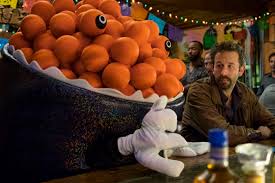
Jane Lynch, Ed Begley Jr, and Don Lake play judges at this year’s Golden Fluffy awards. They’re former mascots themselves and are pleased to judge this year’s finalists in a cut-throat competition. Chris O’Dowd is “The Fist,” hockey’s bad-boy mascot. Parker Posey is a dancing armadillo. Tom Bennett is a football club badger. Christopher Moynihan is a plush Plumber. It sounds absurd and it absolutely is, but that’s what has always worked so well in Guest’s movies: he takes a hobby that exists on the fringes and is practiced mascotswith total obsessiveness, and he shows us the incredible underbelly. It’s fascinating. Like a car wreck or a wonky boob job, you can’t help but stare.

In the case of Mascots, Guest seems to take a particular interest in the proceedings, giving ample screen time to the “performances.” This is way more earnest than we’re used to seeing from him, but it works, largely because the actors commit with such deadpan abandon. It takes a lot of guts to make a movie the way Guest does – he doesn’t know what he’ll end up with until the camera stops rolling and he starts cutting in the editing room. He relies on a deep pool of talent – too deep, as most only get to shine for a line or two. I want more Balaban, more Willard. And definitely more Corky St. Clair, a role Guest reprises from Waiting for Guffman. If we can’t have it all, though, Guest and company still give us a pretty fair shake. I left the theatre with rosy cheeks and a bounce in my bottom.

The good news is that just two films into my Toronto International Film Festival experience, I’d already found a film to love. The even better news: you’ll love it too, and soon – it’ll be out on Netflix October 13th.

TIFF: Birth of a Nation

It is sometimes difficult to separate the message from the movie. I’ve already braved backlash by confessing that I didn’t care for 12 Years a Slave. This is not the same as saying I love slavery or I hate black people, but some people will choose to hear it that way. I can see with my own eyes that 12 Years A Slave does have artistic merit. Steve McQueen has a stylistic sensibility I can’t ignore, and Chiwetel Ejiofor gave a riveting performance amongst a strong cast. But the movie felt derivative to me. In a crowd of slavery movies, this one didn’t have a distinctive voice and I was bored. How does Birth of a Nation compare?

Well, it’s both better and worse. The first two-third to three-quarters of Nate Parker’s movie is a lot of the same old. We get it: slavery is bad. I actually don’t require 90 minutes of convincing on that subject. But the last chapter of the story is when it finally comes alive: the slaves rise up. birth-of-a-nation-nate-parkerNat Turner, a docile preacher, reaches his breaking point and leads a rebellion. A bloody rebellion. White slave owners will be slain in their beds. These scenes are so jarring that I can understand why one might think that 90 minutes worth of context are important. Those minutes establish that yes, slavery is bad. There were indeed lots of vicious slave owners who were just despicable human beings. But slavery movies often have a benevolent slave owner as well, one who is “not so bad,” I suppose so that white people don’t shout “They’re not all like that!”

As Samuel, Armie Hammer is this year’s Benedict Cumberbatch. He’s not too terrible. But his character’s arc is perhaps the most compelling of the film. As children, he and Nat are playmates. They aren’t equals, but maybe they’re friends. It is only as Samuel inherits the plantation and all of its chattel – which of course includes the human beings who work the land – that this relationship transforms. It is clear that Nat is not just his employee – there is a subservience to their interactions that is immediately repulsive. Times are tough in the south. Plantation owners are under a lot of pressure, and the slaves are of course the first ones to suffer, to work longer hours with less food. Samuel, being “one of the good ones” begins to drink, ostensibly to deal with the increasingly degrading things he must demand of his slaves. He slides from benevolent to aggressive, and it’s a great performance from the man you’re probably not watching as closely as you should. But that’s the problem with owning slaves. Once you accept that owning another human being is okay, of course it’s a slippery slope that leads directly to the rapes and whippings and deprivations we’re so used to seeing. There is no good way to own a slave.

As Samuel slides further down into the muck, Nat is rising from it, with increasingly radical ideas about his oppressors. So Nat Turner rises up. Samuel Turner gets cut down. Are we prepared toenter_slavery_2_la see this? Prepared to watch people be chopped up as they sleep in their homes? It’s brutal and shocking. And justified: the film has made sure of that. Of course this is a true story so you know there is no happy ending here. Nat Turner’s is a necessary voice in the story of slavery, and Nate Parker’s choice to make religion both a weapon, and salvation, are a fresh take on a crowded genre.

Nate Parker co-wrote and directed himself in The Birth of a Nation, and his passion is evident. I only wish he trusted his audience more. In the hands of a more competent director, we might have a Best Picture contender here, but instead he allows his slow build to be overplayed, turning his third act into a bit of a cocky circus act. It’s uneven. It neglects secondary characters – and with Aja Naomi King so damned good, it seems a crime not to give her more screen time.

Speaking of which. I would feel irresponsible if I didn’t bring up the skeletons in Nate Parker’s closet. The Birth of a Nation was a Big Deal at Sundance. Fox Searchlight eagerly bought it up and set an October release date, certain it would be on the path toward Oscar. But rape allegations in Parker’s past resurfaced. When he was a student at Penn State, he was accused and charged with sexually assaulting a woman along with his roommate and The Birth of a Nation co-writer, Jean Celestin. They stood trial; Parker was eventually acquitted but Celestin was found guilty before having the verdict overturned on appeal. The story gained traction when it was reported that the victim had committed suicide. Even with an acquittal to his name, an a newfound belief in god, Parker’s mea culpa press tour has been lacking. His remorse has been sparse. Gabrielle Union, the actress who plays a rape victim in The Birth of a Nation, herself a real-life survivor of sexual assault, has struggled to reconcile his past and her part in his present. Can we and should we separate the art from the artist? What kind of shadow does this cast over his film? As Union puts it, “As important and ground-breaking as this film is, I cannot take these allegations lightly.”

The Birth of A Nation is an important story and deserves to be seen and heard. I said before that I thought it was both a better and a worse film than 12 Years A Slave. What I meant was: it’s not as good a movie. It’s more formulaic, more conventional, less sophisticated, a little too obvious. But as a piece of art, it inspires conversation and controversy. I can’t discount it.


TIFF: The Rest

carrie-pilby

Carrie Pilby

Awkward, isolated and disapproving of most of the people around her, a precocious 19 year-old genius is challenged to put her convictions to the test by venturing out on to the NYC dating scene, in this adaptation of Caren Lissner’s best-selling 2003  novel.

-tiff.net

I was especially excited about the world premiere of director Susan Johnson’s debut feature because I knew I would get to share the experience with my parents. I also liked the sound of Carrie as described by the TIFF website. I’ve always enjoyed unlikeable characters who become easier to empathize with once we get to know them.

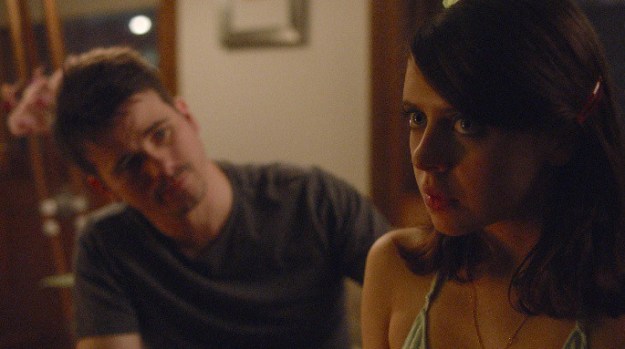
As it turns out, Carrie Pilby isn’t nearly as misanthropic or as unsympathetic as the website would have you believe. In fact, when played by Diary of a Teenage Girl’s Bel Powley, she’s actually quite charming. She may be a little too sarcastic for her own good but she’s never mean and her posture suggests such obvious vulnerability that you may just want to give her a hug.

You may find Carrie’s exasperation with those around her easy to relate to considering the unforgivably forgettable supporting cast. Nathan Lane and Gabriel Byrne phone in their performances as her therapist and father and potential love interest Jason Ritter finds a way to make sleazy seem boring. Only Saturday Night Live’s Vanessa Bayer, who I was pleasantly surprised to see at the premiere, holds her own against Powley as Carrie’s co-worker and new friend.

In the end, the script is nowhere near as smart as Carrie is. Though it offers a number of big laughs and some seriously sweet moments, the dialogue is way too obvious most of the time. I found I was able to anticipate line after line almost as if I was dreaming the film into existence myself.
 

headshot

Headshot

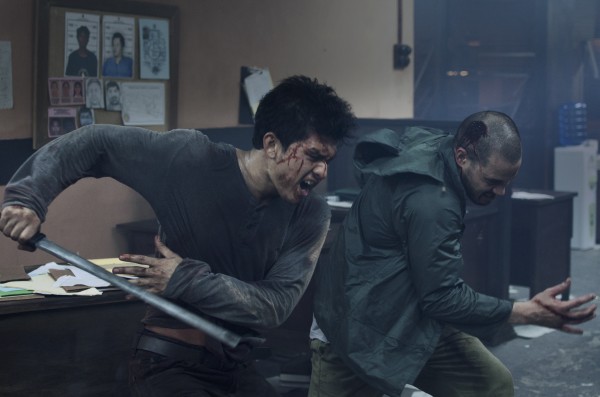
The indomitable Iko Uwais (The Raid) stars in this fast and furious actioner as an amnesiac whose mysterious past as a killing machine comes to the fore when he takes on the henchmen of a vengeful drug lord.

-tiff.net

I ended my first night at TIFF 2016 the best way I know how- with my annual Midnight Madness screening. You never know what you’re in for with the Midnight Madness program but this year I felt like I was in good hands. Back in 2011, I caught a midnight screening of The Raid at the festival and I was so exhilarated by the experienced that I’ve made sure to catch at least one midnight film each year. No matter how many bad movies I have to sit through.

The Raid isn’t just a bloody good time. It’s actually an impressive film. There isn’t a wasted moment in the whole movie and every shot serves to build suspense. This combined with outstanding fight choreography and a less-is-more approach to dialogue make The Raid one of the best action films so far this century.

The Raid works in large part because of director Gareth Evans who I really wish was directing Headshot. The latest vehicle for Indonesian martial arts superstar Iko Uwais is nowhere near as tense or as tightly edited. Not that directors Kimo Stamboel and Timo Tjahjanto do badly. They do an admirable job of capturing every chase and fight so that we always know who’s kicking who. But there’s something missing. Maybe it’s that The Raid managed to avoid the kind of silliness that Headshot has so much of (amnesia, for example, not to mention a sometimes corny love story).

That being said, Uwais’ hands, feet, elbows, and whatever else he can find always connect like they’re supposed to and Headshot manages to outgore The Raid. Friday’s Midnight Madness crowd seemed to have a good time and if you don’t mind a few heads being split open I’m sure you will too.

 

a-monster-calls

A Monster Calls

Liam Neeson, Sigourney Weaver and Felicity Jones star in this adaptation of the award-winning children’s book by Patrick Ness, about a lonely young boy struggling with the imminent death of his terminally ill mother who is befriended by a friendly, shambling monster that arrives in his room nightly to tell him stories.

-tiff.net

I read on Wikipedia that Toronto’s Roy Thomson Hall holds over 2,300 people. I am quite sure that on Saturday afternoon I heard 2,000 cry. I could hardly stop myself from crying through the final moments of the latest film from director J. A. Bayona (The Impossible) and didn’t do much better through the closing credits or walking down King Street after.

I was surprised by my emotional reaction given that I was finding most of the film disappointingly uninspired. As much as I loved the design of the monster and the outstanding voice work of the great Liam Neeson, I expected more wisdom from his stories (which are brought to life in lovely animation).

Only in the end do the monster’s lessons really become clear. As frustrated as the young boy is by the seemingly pointless stories at first, it becomes clear that he is being taught lessons unusually mature for a children’s story. I can think of several family films where a child has to learn to cope with the loss of a parent but I can hardly think of any that are less condescending and more painfully honest.


hello-destroyer

Hello Destroyer

Jared Abrahamson (Fear the Walking Dead) plays a painfully shy but ruggedly capable enforcer on a minor-league hockey team who discovers the cutthroat nature of his locker-room “family” in the forceful first feature from Canadian director Kevan Funk.

-tiff.net

Tyson Burr (Abrahamson) may not be the star player of the Prince George Warriors but he’s an enforcer – the guy you can count on when the game gets rough. In one particularly rough game, Tyson puts someone in the hospital and soon sees how quickly his team, his coach, and the community at large can distance themselves in hopes of avoiding responsibility for the culture of violence that they helped to create.

When introducing the film on Saturday, Funk was quick to insist that Hello Destroyer is not intended as a commentary on Canada’s infamously violent national sport. He’s more concerned with violence in general and the social context around aggressive behavior. There’s very little hockey played onscreen and some fans of the sport may be disappointed by the slow pace of the film. I’ll admit to being frustrated as it slows down even more in the second half. (It was my third film of the day and I was starving). It’s only after the fantastic Q and A with Funk and the cast that I let it all sink in.

This is one tragic, hard-hitting, and beautifully acted film. It’s the kind of movie that gets better and better the more you think about it.


TIFF: Barry

It’s 1981 and Barry is just starting his junior year at Columbia University in New York. His estranged father is Kenyan and his mother is a white American. Some of his friends insist that he is fortunate to be mixed race because he should be able to fit in everywhere but for Barry it feels like he can’t fit in anywhere. Barry is the story of a young man finding his identity and searching for self-acceptance.

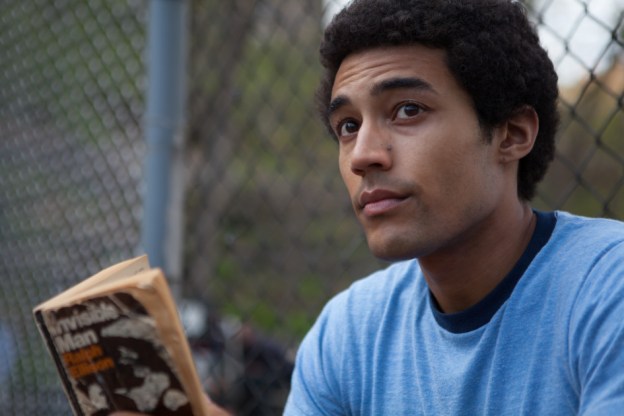
By the way, “Barry” is short for Barack. Yes, that one. Starring in his first feature film, Australian actor Devon Terrell is brave enough to portray the 44th President of the United States while the real one is still in office. It’s an impressive performance. Yes, he looks and sounds like him (though Avi Nash as Barry’s friend Saleem does an even better impression in two of the film’s funnier scenes). The real trick though is making the emotions seem believable while mimicking the future president’s signature speaking style without looking like he’s auditioning for Saturday Night Live. Terrell succeeds at convincingly playing a 20 year-old college student who swears, gets drunk, and gets punched in the face for chatting up another guy’s girl while never letting you forget that he is in fact playing the Barack that we know.

Director Vikram Gandhi and writer Adam Mansbach are less concerned with reminding you that young Barry will one day become the first black President. They are mostly concerned with the internal struggle of young men of mixed race in the US and use the details of the real Barack Obama’s life mostly to provide interesting context. I’ll admit that the context worked for me. I would have surely found this movie less gripping without knowing that this same young man’s historic inauguration will one day inspire hope for a brighter future for millions of Americans. (Not to mention around the world).

If you can believe Oliver Stone’s Snowden, which I saw at the festival the day before, Edward Snowden watched President Obama’s inauguration with a renewed faith in government. As he told filmmaker Laura Poitras, he really allowed himself to think that this is a leader who could bring some real change. As it turned out, when it came to illegal surveillance of law-abiding citizens, Snowden watched things go from bad to worse under Obama’s watch.

It can be hard to reconcile the idealistic young man of Barry with the president that we see in archival footage in Snowden. How do you claim a passion for social justice while sanctioning (or, at the very least, defending) illegally spying on your own citizens? Don’t get me wrong. I still love him and will miss him no matter who wins in November. But he is the President of the United States and every president has a certain amount of blood on their hands.

I understand that you don’t get to occupy the highest office in the land without getting your hands dirty. I’m just saying that there’s a story there, between the events of Barry and the events of Snowden. Barry, deliberately paced and completely unpretentious, has a story worth telling as does Snowden, which was self-important but undeniably gripping. But somewhere out there there’s got to be a movie that tells the story of the journey from hero of a nice little indie to the villain of an Oliver Stone movie. That’s the movie I’d really want to see.

TIFF: In The Blood

Rasmus Heisterberg is perhaps most well known to date for having written the screenplay for The Girl With The Dragon Tattoo but this Dane’s putting himself on the map as a writer-director with In The Blood (I Blodet).

In The Blood is about a defining time in a young man’s life. It’s summer in Copenhagen and Simon’s enjoying the bright nights as always – drinking and partying and waking up in a stranger’s bed, late and hung-over for class where intheblood_01he’s a successful medical student. He’s content to have this repeat on an infinite loop, but the friends he shares an apartment with are not. They’re ready to sell up and move on – to girlfriends, babies, and different cities. Simon’s hitting the brakes hard but his friends’ growing-up momentum may just pull him over the cusp into adulthood, like it or not.
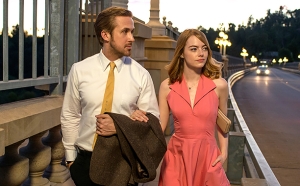
Kristoffer Bech, usually performing with his band Shiny Darkly, is well-cast in his first role. As Simon we see both his playful spirit and also a creeping melancholia as impending adulthood and responsibility cast their shadow over carefree youthful days.

In The Blood carefully studies the tipping point in an identity-seeking year of one’s 20s. There’s joy and freedom, reflected in the saturated cinematography by Niels Thastum. Copenhagen looks lush and full of life. But there’s also confusion and uncertainty in this self-seeking, and unfortunately, that’s reflected in the film making too, in overlong scenes that don’t accomplish much, and a run time that feels bloated.

This movie has a personal edge to it that veers into self-indulgence at times. Simon isn’t a very likeable character and it’s hard to hang in there as he flails about between one bad decision and another. As much as it may seem all-engrossing to the person going through it, this kind of personal growth is a little boring to watch.

Film festivals are curated by the best in the business. That said, when you’re seeing a couple of dozen films back to back to back, usually knowing very little about them, it’s inevitable that you’ll rub up against some you don’t like. I didn’t connect with this one. At all. I found it insufferable. But I still want to stand up and applaud this first-time director for getting his baby over an ocean to a world-respected film festival. That’s an accomplishment. And if this is the worst thing I see at TIFF this year, that’ll be an accomplishment too.


This review first appeared on Cinema Axis.

TIFF: La La Land

Damien Chazelle has bested himself, and everyone else. With just 3 feature films to his name, he has established himself as a visionary, an innovator, a pusher of boundaries, a seeker of beauty.

Sean was immediately aflame with praise. He wasn’t just finding a spot in his top ten of the year for it, but dusting off old standbys in his all-time list to make room.  And let me remind you that this is a musical. Not normally Sean’s cup of tea. Sean needs one of three La La Land (2016) Sebastian (Ryan Gosling) and Mia (Emma Stone)things to love a movie: sports, explosions, boobs. La La Land has none of those. It has singing and dancing and old-fashioned romance. Yet Chazelle has breathed new life into the genre, with riots of primary colour, energy so vivid you can taste it, and music that evokes deep troughs of emotion. And by ‘breathed new life’ I mean that he’s actually found a way to bring great musicals from cinema’s past into modern times. Forget made-for-Broadway musicals like Chicago or Into The Woods, their theatre sets turned into movie sets – it’s more reminiscent of Singin In The Rain. La La Land takes place in the streets of Los Angeles and Chazelle takes advantage of its sprawling landscape, and its glittering skyline.

Emma Stone and Ryan Gosling, in the two lead roles, don’t just burst randomly into song. You very quickly get to sense that they sing when ordinary words just won’t do. They play Seb, a jazz pianist, and Mia, an aspiring actress, both a little down on their luck when the meet. The song and dance make up their courtship. The pair do not meet-cute; they meet-ugly several times until it takes: toes tap, together. New love is exhilarating. You feel as though you could sing your lover’s name from the rooftop, as if you could dance on air. It just so happens that in La La Land, they do these things literally. And it’s glorious. The fluid, ethereal dance steps will remind you of Fred and Ginger. Chazelle weaves magic, and a touch of fantasy, into their story, and even though you may never have waltzed among rs-248320-emma-stone-ryan-goseling-la-la-land-sing-dance-trailerthe stars in your sweetheart’s arms, you sort of know how it feels. But this great passion never lasts. It tapers off. Songs repeat. Sean felt himself longing for the exuberance of the beginning of the movie, and realized that was the point. Seb and Mia were missing it too.
If you’ve watched the gorgeous trailer, you’ll recognize the song that Ryan Gosling sings. The lyrics go: “City of stars, are you shining just for me?” But the movie reminds you that L.A. isn’t just a city of stars, it’s a city of dreams, and Seb and Mia are there to chase theirs. They haven’t come to Los Angeles to find love, but to find meaningful work. To become famous and\or successful. La La Land is about following your dreams, and it’s about the cost of following those dreams.

So Sean, whose movie reviews often consist of just three words (“It was good”) can’t shut up about this film. He’s fumbling to find the right words, but he knows he hasn’t just seen a good film, but experienced something unforgettable. I, on the other hand, have been oddly silent in the 24 hours since we saw it. Not for lack of trying, it’s  just that every time I open my face to speak, more tears fall out of it. And lest you start to worry that this is some tragedy wherein Ryan Gosling ends up shot, it’s not. These aren’t just tears of sorrow, but of joy and of wonder. This movie has made me feel. It has made me feel all the feels. I can’t even make it through this review with any dignity. La La Land is why I go to the movies. It’s unselfconscious and unabashed, a cake among pies, and as soon as I’ve finished weeping, I want another slice.


If you’re as desperate as I am to keep reading (and talking! and weeping!) about this wonderful movie, please visit our discussion section – SPOILERS – be warned.


TIFF: American Pastoral

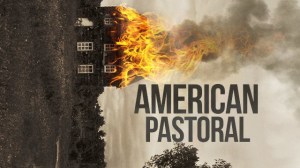
pastoralbar640Ewan McGregor makes his directorial debut with American Pastoral, an adaption of Philip Roth’s novel. As always, I haven’t read the book and Jay has. She reports the movie to be quite faithful to the book, even pared down to have a two hour run-time.

I feel like the book must have a black cover, because American Pastoral is dark from start to finish. It is methodical in chronicling a family’s unravelling and is as far from idyllic as you can get.

With its dialogue-heavy scenes divided by contextual stock footage clips, American Pastoral felt more like a play than 21st century cinema. It is richly shot but largely static. The style mostly fit but at times the transitions were jarring. When they worked the transitions felt like covers of Life magazine, reenacted. Except as far as I know, Life magazine never featured a pipe bomb explosion at a small-town post office. Perhaps my dad’s magazine collection is incomplete.

In the Q&A session following the screening, McGregor described his approach to directing as an attempt to give life to the movie he saw in his head when he read the script. He imagined some nice shots and paid the price to get them (literally in the case of some costly train platform scenes). His foray into directing is a workmanlike effort but not a distinguishing one.

As an exploration of the destructive power of children, American Pastoral succeeds. As entertainment? Not so much, not for me.

By the closing credits I felt sad and drained, which I have no doubt is exactly how McGregor and Roth would have wanted me to leave the theatre. But because nothing stuck with me other than that empty feeling, American Pastoral is not a movie I can recommend.  If you enjoyed the book it’s likely worth a shot though, and in that case I hope you can connect with it in all the ways that I didn’t.


TIFF: Voyage of Time

Voyage of Time: The IMAX Experience is the 45 minute version of Voyage of Time: Life’s Journey, written and directed by Terrence Fucking Malick; a 30 year labour of love.

We watched the shorter version in the IMAX theatre where Sean watched Spider-Man 2 with a girl named Tall, Stupid Rebecca. Did you guys know Sean dated other women before me? How rude. But he did, apparently, when he used to live in the fine city of Toronto (and voyage-of-time-copertinaby the way, I also lived here at the time, and yet: Rebecca BitchFace. I’m sure she’s a lovely girl.) Where was  I? Oh yes.

It takes a special brand of masochism to attempt a Terrence Malick flick as your fourth film of the day, and yet there we were, sitting in the same seats where Sean once fumbled an “accidental” boob graze of another woman’s tit. I KNOW YOUR MOVES, SEAN. Ahem. I digress.

Voyage of Time is billed as an examination of “the origins of the universe, the birth of stars and galaxies, the beginning of life on Earth and the evolution of diverse species” but that’s COMPLETE HORSESHIT. Calling it a documentary at all feels like a stretch. Or, you know, a flat out lie. But it is the movie Terrence Malick was born to make. His feature films tend to be languorous, dreamy imagery interspersed with the vaguest tendrils of plot. Voyage of Time is all the imagery and none of the plot. It’s loaded up with his signature “sun flares through a leafy tree” but these alternate between CGI renderings of what Terrence Malick thinks the beginnings of life might have looked like. Terrence Malick is many things, but: astrophysicist? Nope. He’s definitely got some scientific advisers on tumblr_o9l8rnmwj61r5ixiao2_540board but the result isn’t science at all. It’s conceptual; more contemplative than comprehensive. No science teacher will ever show this in class – but a yoga teacher might. Getting the gist? It’s a thing of beauty, often thoughtful, but far from educational.
Brad Pitt narrates, often in such a way that you can hear the italics in his voice. It’s like he’s reciting poetry with his eyes closed (Cate Blanchett narrates the longer version, for some reason). I tried very hard not to snort because the director of photography was sitting directly behind me, and that’s a lot of pressure. I felt sometimes that I should sigh appreciatively just so that he didn’t get a complex. Or lean back for a high five every time there was a sun-dappled field or rays of sunshine peaking from between limbs of a majestic tree.

It’s obvious even from Malick’s narrative films that he has a thing for nature and philosophy and theology, for lack of a better word. The pace of the movie is soulful, at the rate of about 1 fact per 1-2 minutes of silent reflection.

Did I enjoy it? Well, fuck. It is an experience. Plus, making it to the end of any Malick movie is an accomplishment, almost equal with having climbed Everest. It’s definitely CV-able. And he did raise a question I’ll be chewing over for days to come. Most documentaries in the vicinity address life – what, where, when, why. But Terrence asked about death – when did death first appear? And you know what? Not only do I not know the answer, I didn’t even know to ask the question. We think of life and death as inseparable, but who’s to say?  Life’s first ambition is to go on living, and maybe that’s exactly what it did. Until. Until what? I don’t know. Neither does Malick, but at least he’s asking, and you know he’s asking in the most magical way he knows.


TIFF: Snowden

I feel much better now. If you read my Amanda Knox review, you may remember that I was close to TIFF burnout last night. Well,  I did what I hate doing: I made the tough choice of skipping my Midnight Madness movie last night and finally got some good sleep. Nothing like watching four more movies to make an unsettling documentary but a distant memory. I’m excited about TIFF again.

Seeing Oliver Stone take the stage to introduce Snowden (which I’ve been dying to see) didn’t hurt. Stone hasn’t made a particularly good movie in awhile and, come to think of it, has never really made a film that I love, but seeing him at TIFF still feels like a big deal. And, thankfully, my concerns about whether or not he could handle this tricky material were unnecessary.

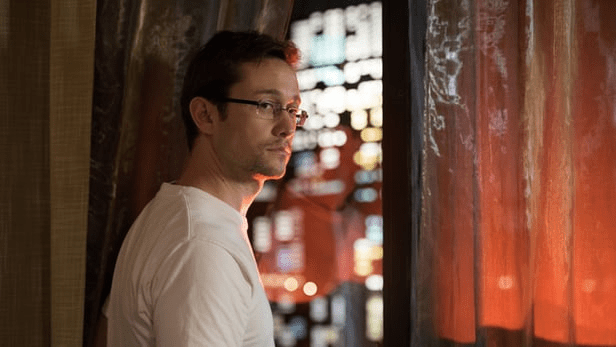
I mean, it’s not perfect. It tries to do way too much and is about 20 minutes longer than it really should be. But it tells and/or speculates about the story that I felt 2014’s Oscar-winning documentary Citizenfour missed out on. It tells us about Snowden the man. Wonderfully played by Joseph Gordon-Levitt, Snowden is easy to root for and easy to relate to. I’d even argue that Stone’s film does a better job of  making the case that all of us should care about illegal NSA surveillance. Even if we feel we have nothing to hide.

Of course, this isn’t a documentary and it’s easier to inspire outrage in a dramatization of events. Snowden isn’t a substitution for Citizenfour, which is an important documentary that everyone should see. It is, however, an interesting and worthy companion piece that will likely make you appreciate Snowden’s sacrifice even more and think twice about getting changed in front of your laptop.