Citizenfour – Discussion

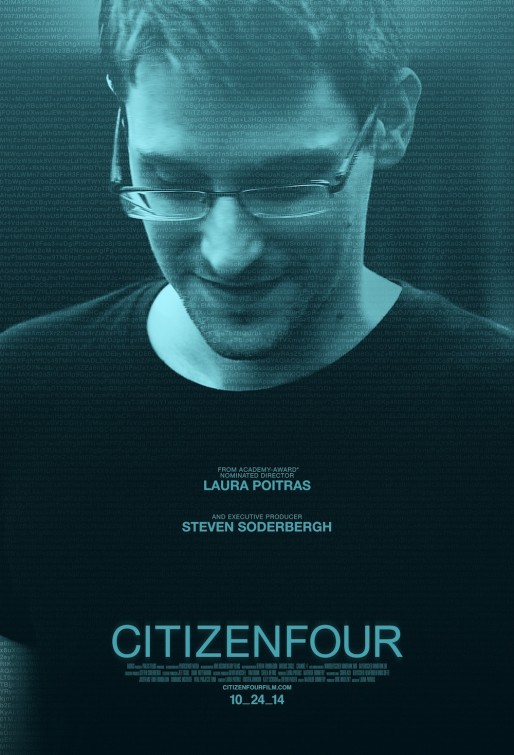
Citizenfour is a great documentary, maybe not in terms of movie making, but certainly in terms of the discussion it generates. If you’ve followed the case, then you’ve learned nothing new: Edward Snowden surreptitiously contacts Laura Poitras, the film’s director, and asks to meet. She flies to Hong Kong and films him over the course of 8 days, as Glenn Greenwald of The Guardian interviews him and breaks the story on the extent of NSA’s pervasive spying on its own citizens. If you’d like to learn more about this movie, please see fellow Asshole Matt’s review of the film. If you’ve seen it and would like more in-depth discussion, then keep reading.

Why you should care: One thing this movie does well is that it makes the case for why should citizenfourwe all care. It’s easy enough to brush it aside, thinking that since we having nothing to hide, nothing nefarious in our texts or emails, then we’re “safe”, no one will be kicking in our doors. And that’s true. But it’s also true that every single day, these people are infringing upon your rights. They are looking over your shoulder at things we used to consider “private” – phone calls to our friends, emails to our mothers, messages from our doctors, banking we did online, books we’ve borrowed, movies we rented, things we bought, passwords we mistakenly believe are ‘secret’, every single thing we’ve ever searched for on Google. Think about that for a second. Our histories, our personal blueprints, are available for analysis. If this was a dystopian sci-fi flick, we’d be creeped out and outraged on behalf of the protagonist. But those scenarios are already happening. It’s already here. But since it’s illegal and since people might just be mad about it, the government does it in secret – and outright lies about it when called out. It uses all the technology developed for flushing out terrorists and uses it against YOU. It has turned spy against its own citizens, every last law-abiding one of them. You don’t need to be suspicious. You don’t need to have a record. You don’t need to have motive, or to associate with known criminals, or use words like “bomb” or “jihad” or “Ebola”.
What does privacy mean to you? Make no mistake, this data collection is a weapon and one that will be used to oppress you. Citizenfour and Glenn Greenwald in particular seek to impress us with this fact: PRIVACY IS FREEDOM. I think it’s important to think of it in terms of control: your own control over your privacy, and others’ ability to control you using obtained private information. There is no freedom without privacy. That’s why we vote by secret ballot. Privacy allows freedom of conscience and diversity of thought. Sure, the government has seriously abused this data yet, that we know of. But why should we be content to wait until that happens – and it will happen – it is being collected in order to be used, not for you, but against you.

Is Edward Snowden a hero or a traitor? Poitras doesn’t really touch on this, unfortunately. Her film is more a portrait of a man, but whether you call that man a whistleblower or a traitor tells a lot about you and about the world you think you live in. The truth is, he is responsible for one of, if not the, largest security breaches of American state secrecy. Why did he do it? The film paints him (and he paints himself) as self-sacrificing, conscience-directed, a do-gooder of the greater-good. He assured us he expected and was willing to be punished for his actions, but won’t return to US soil to stand trial. And for all his protestations, I felt he did court attention. He didn’t reveal the secrets himself, he sought out famous film and print journalists to bring “his” story to light. But he was an established (if closeted) libertarian for pretty much his whole life, believing that the government should defend its citizens, not encroach upon their rights. Few news stories, this documentary included, have been able to separate Edward Snowden, the personality, with the information he uncovered, and even though Poitras claims she was working on this film before Snowden contacted her, we see little evidence of this in its finished product. Those eight days in Hong Kong are the meat of the movie, but I was surprised that she merely recorded it passively rather than asking any questions. I was left wondering – is Snowden operating purely from an ethic of responsibility, or does he have other motives at play? And does it even matter, since the information is all true? Can you be held above the law if the information you leaked shows the corruption of the lawmakers themselves?

Has Citizenfour succeeded? Snowden tells us that what we can do at home to protect our privacy is to encrypt, to block our ISPs, to use personal clouds, to leave no trace. I’m not sure this is practical for every user of the web, and is it even enough? Citizenfour excelled at showing us just how seriously they took they spying. There’s an escalating sense of paranoia – from Snowden’s use of physical barriers to Greenwald’s reluctance to speak out loud – the camera focuses on his feverishly scrawled notes, methodically shredded. They take no chances but I do wonder – has the average viewer of the movie seen this as a call to arms? Have you changed the way you use the internet or cell phone?

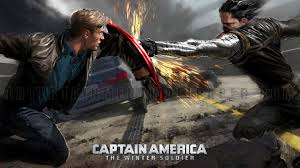
Captain America: The Winter Soldier

I liked but didn’t love Guardians of the Galaxy. Having complained in the review that I posted yesterday that I found it sometimes hard to follow, I starteed to worry that I was becoming a bit of a wet blanket. In hopes of repairing my image of being no fun at all, I am prepared to go all in in my support of Captain America: The Winter Soldier.

Captain America

I didn’t even like the first Captain American all that much. In fairness, I suspect I might have nodded off at one point. As far as I can remember, a scrawny Chris Evans gets an injection of something to become supersoldier Chris Evans so he can go overseas and fight with the Allies in World War II. In the sequel, Captain America isn’t just super strong but has been cryogenically frozen so he can fight for SHIELD in Marvel’s version of the present.

It’s this fish out of water story that makes Winter Soldier such an improvement. And it’s not just played for laughs. Sure, there’s the usual confusion over the internet and modern music. But what does the iconic war hero Captain America think of how America fights its wars now? I won’t go so far as to call Winter Soldier The Thinking Man’s Superhero Movie or anything like that but like, Iron Man, it takes just enough from real life to make the world that Cap is trying to save more relatable than usual. In fact, this is probably the best Iron Manless Avengers movie so far.

The first half or so of The Winter Soldier almost feels like a thriller, with the action getting bigger and bigger until it becomes unmistakably Marvel. The action scenes are a step above most of the other movies in the Avengers series, although I did wish that the directors wouldn’t cut away so fast sometimes so we could see what’s going on. Chris Evans, who I thought was so boring in both the first Captain America and in The Avengers, has a lot more to work with this timepulls it Winter Soldieroff. Or maybe I have just started thinking of Evans differently after having seen and loved last year’s Snowpiercer. Anthony Mackie is a great addition as somebody named Falcon. And Samuel L. Jackson, in his sixth appearance as Nick Fury, finally has something to do. Early scenes where he clashes with Captain America over modern warfare are a big part of what makes it feel like something important is happening and it was refreshing to finally start to get an idea of who Fury is.

If you don’t think you’ll like Captain America: The Winter Soldier, I didn’t think I would either. Check it out. You might be pleasantly surprised.

Guardians of the Galaxy

Nominated for Visual Effects and Makeup and Hairstyling Oscars, Guardians of the Galaxy was the third highest grossing movie of 2014. So, when I talk about GOTG, I’m going to assume you know what movie I’m talking about and won’t waste any of your time describing the plot. Which is just fine with me because I’m not sure I followed it all.

I don’t watch these kinds of movies all that often- ones where I am introduced to multiple alien Guardians makeupraces so I’m not used to having to keep track of sci-fi mythologies. This one felt particularly complicated to me and I found it especially hard to keep Thanos and Ronan straight. By the end, I was surprised by how little that wound up mattering. I got it without really getting it.

The five Guardians of the Galaxy are easy enough to tell apart: Christ Pratt, a green woman, a grey guy, a raccoon, and a tree. These five were a blast to watch especially when they were all Guardians visual effectstogether. They were different enough from each other- in looks, in personality, in worldview, in fighting styles- that their unlikely alliance was almost always funny to watch. Their banter helped give me engaged through chase scenes that I found otherwise hard to follow and made me forget problems- mainly that I wasn’t always clear what was at stake here- that would have been unforgivable had the movie insisted on being taken more seriously.

The fact that director James Gunn was having so much fun with these characters helped make the necessary plot-advancing scenes so much less dull than, say, The Avengers. In fact, give me these characters over The Avengers any day. This whole project had so much more life and creativity than 2012’s Avengers film and I am as excited for a GOTG sequel as I am indifferent to this summer’s Avengers: Age of Ultron.

On a final note, I’ve rooted for Chris Pratt ever since I started watching Parks and Recreation and I thought his charm in this was a big part of what made this film work. But is it just me or does Star-Lord (well, his mom really) have terrible taste in music?

For another asshole’s opinion, read Sean’s review here.

Citizenfour

Filmmaker Laura Poitras’ documentary on the scope of NSA wiretapping and surveillance worldwide is the first of the Oscar-nominated documentaries that I’ve had the chance to see. (Thanks Bytowne for making it available). Poitras was already working on the film when she lucked out and got an encrypted e-mail from the mysterious Citizen Four, who we all know by his real name Edward Snowden. Snowden met with Poitras and journalists Glenn Greenwald citizenfourand Ewen MacAskill secretly in a hotel room in Hong Kong where he provided them with proof of the extent to which the NSA had been spying on its own citizens. Poitras’ footage of thiese meetings take up a large part of the film’s running time.

If you’re unfamiliar with Snowden or his revelations, this is definately a movie worth seeing. And if you have taken the time to follow this story as it happened, you probably care enough to wan to see this movie given that it gives you the rare opportunity to watch history as it happens. So, in short, it’s a movie I’d recommend for anyone.

“I’m not the story!” Snowden repeatedly insists. It’s hard to tell if Snowden’s desire to focus on the message instead of the messenger is admirable or self-serving (I’m leaning towards admirable). Either way, Poitras often ignores this and wisely puts the focus on Snowden and the parts where she does are the best parts of Citizenfour. These scenes offer a rare chance to get to see a little bit of who he is. We’re with him when he gets e-mails from his girlfriend about agents showing up at her door. We’re even with him as he prepares to come forward, watching him as he fixes his hair and kills time in his hotel room. He keeps saying that he’ knows and accepts that there will be consequences but his body language can’t lie. We can see that he’s scared.

Being at the right place at the right time is a big part of what makes a documentary and, by that standard, Citizenfour is a great documentary. Poitras was fortunate enough to have Snowden citizenfourcome to her and let her film him as he broke one of the biggest and most important news stories of 2013. It’s worth mentioning also that she was taking on some level of risk herself just by being involved.

I’m not so sure that Citizenfour is a great movie though. There’s not enough footage of Snowden to fill a full-length documentary and Poitras spends a lot of time scrambling to fill the rest. There are a lot of establishing shots, lots of text on the screen, and a few too many shots of Snowden sitting in his room watching tv. It feels like a missed opportunity, especially given that Americans are divided on whether Edward Snowden is a hero or a traitor. Poitras is leaning towards hero, maybe a little too heavily. She’s not wrong and documentaries certainly aren’t obligated to tell every side of the story. All I’m saying is, since Poitras had so much time to fill, maybe she could have filled some of it by asking him some questions.

For more on Citizenfour, read Jay’s discussion here.

Last Love

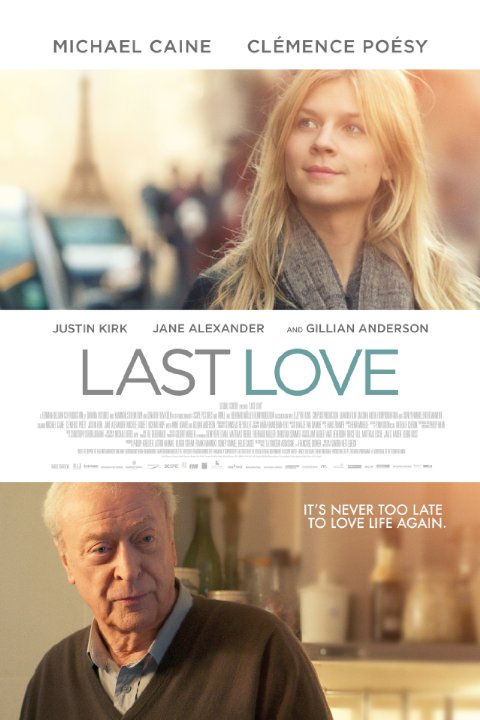
This movie is kind of a chore. Supposedly it’s about going on with life after the death of a loved one, but 3 years after Matthew Morgan (Michael Caine) loses his wife, he’s still puttering around Paris like a lost puppy dog and it’s uncomfortable to watch and also kinda boring.lastlove

“There’s a crack in everything, that’s how the light gets in” – and just like that, a young lady appears in the picture, the lovely Clémence Poésy as Pauline, and is either the crack or the light. Repeat a vaunted Leonard Cohen lyric enough and I’ll almost start to believe this movie doesn’t suck. Almost.

Michael Caine just can’t keep his shit together. His American accent is a joke. He’s a dick who keeps correcting the french when they make attempts to communicate with him, yet hasn’t bothered, in all his time in Paris, to even learn basic vocabulary in their language.  In the middle of mopey, maudlin crap you cringe and laugh at his unintentionally funny stumbles through languages, both pigeon french and his supposedly-native English. And since he can’t really commit to his lines, there’s just no point here. His kids sweep in, Gillian Anderson and Justin Kirk, and do absolutely nothing to revive the film. Nothing can save it. It’s painful.

Gone Girl

Gone Girl is director David Fincher’s most successful film to date and most people are familiar with it and, if you’re not, the less you know the better so I will skip the usual plot summary.

Despite Golden Globe nominations for best actress, screenplay, director, and original score, only actress Rosamund Pike walked away with a shot at an Oscar. Her best actress nomination makes sense, especially this year where the pool of strong female lead performances seems more shallow than it was over the last few years. We get to know Amazing Amy mostly through flashbacks and Pike’s eyes and haunting narration suggest she’s got secrets and we really want to find out what happened to her.

gone girl review

The fact that Gone Girl works so well though has a lot to do with Ben Affleck, who plays Amy’s husband. The press has picked on Ben almost as much as they did his Gone Girl character. It’s probably partly because he’s made more than his share of shitty movies. He also has this way about him though. He’s a charming enough guy but often can’t seem to help seeming insincere. Maybe it’s his, as Amy puts it, “villainous chin”. Or maybe it’s just hard to seem sincere under a media microscope, where your every gesture is examined for signs of insincerity. Either way, he knows what it’s like to be bullied by the press and he seems to draw on that experience to deliver probably his best performance so far. Ben’s public life serves Gone Girl just as well as Michael Keaton’s did Birdman. Even that famous smugness of his works. His character’s a nice guy but we’re not always sure we believe him, as much as we’d like to. The way Affleck and Pike play it, we’re never quite sure what the truth is.

For another asshole’s point of view, click here.

22 Jump Street

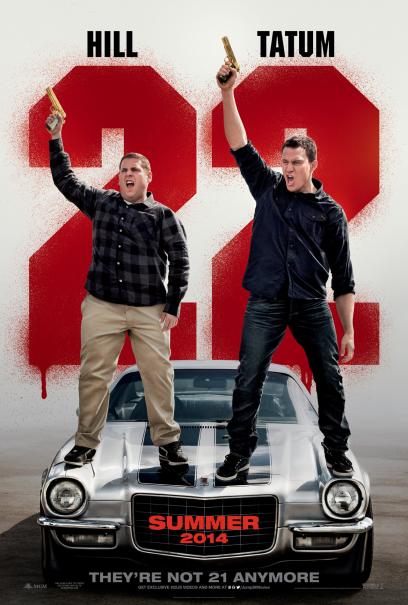
Jonah Hill and Channing Tatum are just so fun together.22_Jump_Street_3

There’s nothing ground-breaking going on here but the good news is, here’s a sequel that won’t make you hate the original. It brings back almost exactly what you loved about the first movie, capitalizing on the bromantic chemistry between the two leads, and not confusing the audience with fresh writing, original scenarios, or new jokes.

Tatum has a big, innocent smile that make stupid look good. Hill milks the socially awkward thing for all it’s worth, usually taking it a step beyond what most people would find reasonable or comfortable and pulling it off because no one flounders quite as endearingly as he does. These two are making interesting career choices but they know what’s bankable and this franchise certainly is.

Just as self-referential as the first was (the directors risk nothing, replicate everything), you still can’t help but fall for it all, needless as it may be. It’s zany and implausible but if you’re not laughing, something’s wrong with you.

Teenage Mutant Ninja Turtles (1990)

TMNT 2014 is an awful movie that also happens to be the most-watched movie by families at home right now. We sat through it out of morbid curiosity and wished we hadn’t, but a certain nostalgia was at play for Sean, who loved the original as a kid.tmnt

We found the original Turtles on Netflix last night and again, a whim was indulged. I’m not going to review this for you, because it’s a movie where grown men play teenaged turtles. In costumes. That talk with New York accents but say California surfer dude things. Oh, and they’re ninjas, trained by a huge rat named Splinter that took 3 puppeteers to control and who looks a little like my Yorkie, Fudgie.

It’s not great, but Sean had very fond memories of it that were sullied by this re-watching. I recently wrote about my own experience watching Annie for the first time in at least two decades, and how it didn’t measure up to my memory either. So instead of reviewing the movie, I’m asking you about your own experience – have you ever had a childhood memory tarnished? Ever loved a movie as a kid and then hated it as an adult? Not all movies age well, and not all people do either! I suppose it’s inevitable that some movies will lose their magic, and I suppose it’s just as possible that some movies never had it, they just had little fans with rosier eyeglasses.

Annie (1982)

Because an Annie reboot is in theatres right now, I thought an Annie refresher was in order – and was shocked to learn that neither Sean nor Matt had ever seen it in the first place. I assured them it was a classic that may have eluded them in their childhoods but needed to be seen tout Annie-filmde suite.

So I’m going to write it now, in bold: I was wrong. This is not a good movie. I don’t know how or why I had such warm fuzzy feelings about it. Sure the little red curls are cute (a wig!) and I’m sure I fell for the scruffy dog named after my mother, but only a song and a half are decently hummable, and Carol Burnett’s Miss Hannigan feels wildly inappropriate. Not to mention the weirdly racist Punjab character, who wears a turban and can move things with his mind.

Jack Nicholson was originally cast as Daddy Warbucks, and Drew Barrymore auditioned to be Annie. Would that have made any difference? Because my biggest complaint with this movie is th at it’s just not that charming. I was rather bored by it. I can’t imagine what about this movie inspired someone to want to make another, but I admit I’m at least curious to find out how much has changed. Surely Cameron Diaz as Miss Hannigan must be a nicer, soberer creature, less prone to child exploitation and flimsy underclothes? And I’m praying that no one ever has to refer to Jamie Fox as “Daddy.”

Critics don’t seem to have liked this new one (or the old one, for that matter), but the box office tells another story. The first Annie also did pretty well in theatres, was the tenth-highest grossing film of 1982, which still wasn’t enough to make a profit considering its bloated budget. I haven’t been bored enough to get to the 2014 version yet but when I do, you’ll be the first to hear.

Inherent Vice is finally playing in Ottawa!

I couldn’t wait to see this. I thoroughly enjoyed Thomas Pynchon’s beautifully written but always entertaining novel and couldn’t wait to see what the always unpredictable writer-director Paul Thomas Anderson was going to do with it. PTA hasn’t been very accessible lately with almost painfully slow and light on dialogue movies like There Will Be Blood and The Master. I have watched and rewatched those movies and think they’re great but will still always prefer his more exciting earlier work (Boogie Nights, Magnolia). Inherent Vice, about an almost constantly stoned hippie private eye working a hopelessly confusing case, seemed like it might be a bit of a return to form.inherent vice 2

Although probably much more engaging to mainstream audiences, Inherent Vice still has more in common with The Master than it does, say, Boogie Nights. It gets our attention immediately with missing ex-girlfriends, frameups, murders, and an ominous message Beware the Golden Fang! It gets more and more demanding as it goes on however, as Doc gets more and more information through a fog of marijuana smoke and it becomes tougher and tougher to tell the reality from the hallucinations.

The mystery held my attention even as I started to lose my way. The cast of interested parties and suspects started to become unmanageable for me and, although all the bizarre supporting characters are well-cast and usually compelling, I lost track of them all at a certain point and even now couldn’t tell you how they all fit in. In fact, I am pretty sure it doesn’t all fit together.

What’s most impressive about Inherent Vice is that I barely noticed how lost I was while I was watching it and it was only when jay asked me afterwards “So, what did happen to Mickey inherent viceWolfmann?” that I realized that I didn’t really know. I just enjoyed watching Doc (Joaquin Phoenix) trying to keep it all straight. The story is really about Doc, a hippie in 1970 when hippies were a dying breed. Its a great character for Joaquin, who plays him as niave in an increasingly cynical world and as surprisingly sharp sometimes, despite being bumbling and as lost as we are most of the time. The situations he finds himself get increasingly absurd and hysterical but there’s always a dark and foreboding tone- sometimes in the background, sometimes front and center- that is made even trippier when seen through Doc’s stoned confusion.

As a whodunnit, Inherent Vice doesn’t make a lot of sense and doesn’t answer the question it raises clearly enough for most people’s taste. For fans of Paul Thomas Anderson, though, it moves his career in a new and interesting direction and I can’t wait to see how he’s going to try to follow this.