Bikram: Yogi, Guru, Predator

I don’t mind stretches and poses but I’ve never bought into yoga culture. I don’t like the body shaming or the forced spirituality or the merchandising juggernaut it has become. Some yogic schools of thought actually believe that yoga should be a gift to the people; teaching yoga is a seva, a blessed service, so teachers shouldn’t charge. And yet yoga studios pop up in every gentrified corner of the world ready to take hundreds of dollars from their affluent customers, with a LuluLemon around the corner ready to charge exorbitant rates for a see-through pair of pants.

Bikram Choudhury arrived in Beverly Hills (where else?) and immediately set the yoga world on fire – and some would say, created the yoga world, at least in America. He claims clients in Elvis, Nixon, Frank Sinatra, Barbra Streisand and more. He built an empire, franchising some 600 studios and embracing the nickname McYoga as some kind of distinction of honour.

Bikram was a celebrity and loved his Hollywood lifestyle. Sure his acolytes saw “red flags” and signs of “megalomania” and acknowledge that humiliation was part of the training. People were fat-shamed routinely. “The best food is no food” was a popular mantra. All part of the fun. Yoga was a cult and his followers were clearly brain-washed – some of them still today, scrambling over all kinds of logical fallacies to excuse away his transgressions, one lady basically saying they won’t say anything negative about him because thanks to him, her back bends were deeper. The man referred to himself as a blood sucker and literally told women “put a cork in your pussy, you’re not allowed to pee” and still people cover for him, “he has his own truth.” Yes, he certainly does.

This documentary covers all manner of sin in the Bikram Yoga Studio. “Separate the man from the teacher,” they said, but you’ll notice nobody says “separate Jim Jones from Peoples Temples”; I’m pretty sure we’ve agreed that everything that comes from an evil cult leader is also evil.

Were you surprised to learn that Bikram Choudhury is a sexual predator? That his yoga studios were basically an excuse to have a constant rotation of sweaty women in bikinis parade their flexibility in front of him so he could pick who to rape next. Bikram yoga was a conveyor belt feeding a hungry rapist.

And let e tell you: if anyone refers to themselves as your family who is not actually your family? Run. RUN. Normally this happens at work, and it’s almost always done to cover up some kind of abuse. They’re about to make you work weekends. Or not pay you for overtime. Do it because “we’re family” though it never EVER works both ways.

And another little hint from your friendly neighbourhood Jay: a man who shows up dressed only in a Speedo and a Rolex? Not a good guy.

It breaks my heart to see so many of his followers turn a blind eye to some really awful stuff. Bikram the man is a monster, but how many of his followers are complicit? Hundreds. Thousands. More? He has fled the country but he’s still doing teacher training and studios are still sending girls to him in Spain and Mexico. Shame on them. The only effective inoculation is information, and this documentary is a powerful dose.
The Irishman

Martin Scorsese has finally married the two sides of his personality: the one who delights in showing us the excess of sin (think: Wolf of Wall Street) and the one who is concerned about the state of our souls (think: Silence). It has taken him some 25 films and 77 years to get here, which is possibly why this film lacks the verve of his other gangster movies. The Irishman is mournful – perhaps even an elegy.

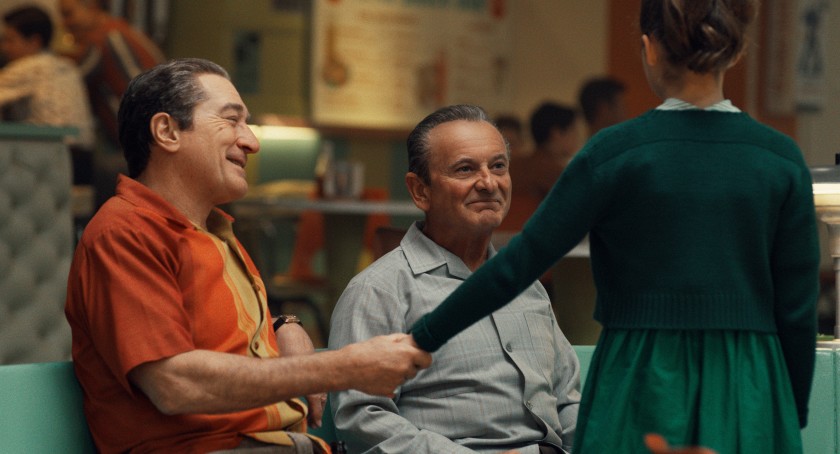
The films revolves around Frank Sheeran (Robert De Niro) in his position as hitman for the Bufalino crime family. There are three distinct timelines in the film: 1. old man Sheeran recounting his crimes at the end of his life; 2. middle aged Sheeran on a road trip with mob boss Russell Bufalino (Joe Pesci) and their wives; 3. “young”ish Sheeran as he meets Russell, befriends Jimmy Hoffa (Al Pacino), starts a family and makes a living putting bullets through people’s heads. Scorsese navigates between these timelines with relative ease (shout-out to editor extraordinaire Thelma Schoonmaker!), though it does take some time and attention to get used to. He keeps the camerawork clean and businesslike, almost as if the camera were just a fly on the wall, observing unobtrusively.

De Niro et al are given the “de-aging” CGI treatment so they can play the parts in all 3 timelines, which is not my preference. I’ve seen de-aging used well (meaning sparingly, like Carrie Fisher in Star Wars) but De Niro always looks a little off, and the trouble doubles when he’s got his shirt off. Plus it’s startling when De Niro is meant to be doing something more physical. When Frank is meant to be stomping on someone lying in the street, De Niro may have a young face but his kicks are that of an old man (the actor is 76). But his performance is quite good, and complex, and possibly the least showy of his career. Which is polar opposite to what Al Pacino does in the film, and I’m still not certain what to think of that. On the one hand, I do believe Hoffa was a bit of a ham himself. On the other hand, Pacino’s acting seems to have devolved into an over-the-top impression of himself. I’m not even sure it’s conscious. I’m not even sure he could stop. Although I confess I could watch him scrape the bottom of an ice cream sundae while screaming “cocksucker!” all day long, and at 3.5 hours, I pretty much feel like I did. His volume’s turned up to 11, and when it crashes into De Niro’s coiled repression, gosh, what a sight. What a symphony.

Scorsese seasons the story with all kinds of various wiseguys and goombas (Bobby Cannavale, Jesse Plemmons, Stephen Graham, Ray Romano, and not least of all, Harvey Keitel) and it makes a fair point about how Frank views the world: there are friends, and there are acquaintances. He can make peace with having to whack a mere acquaintance. But tighter ties would be a problem. He keeps people at a distance, or at least that’s the justification. The truth is, Frank is a sociopath and throughout the film we watched as his humanity is leeched from him. The money might be good, folks, but the job does take its toll. But Sheeran is such a stoic, melt into the background guy that we never see it. He is scary because we don’t ever know what makes him tick, what motivates him. If he has any inner life at all, we can only guess.

Meanwhile, mortality emerges as Scorsese’s other major theme, and it’s one we imagine hits quite close to home for him. Frank is looking back on his life, confessing his sins – but does he feel remorse? Can he feel anything at all? Frank has four daughters but at the end of his life, he’s fixated on Peggy (Anna Paquin), the one who won’t speak to him. Peggy is one of the few female characters in the film (sure there are “wives” but they’re about as important and present as background actors) and she says almost nothing. Her silence is judgment, revulsion. She has seen her father for who he is and she wants nothing to do with him. Even as a small child she has always felt the same about Russell Bufalino no matter how hard he bribe her with gifts; Peggy is in many ways the moral centre of the film, alarming since she’s on screen for about a total of 4 minutes out of the film’s 209. Speaking of Bufalino, Pesci does a startlingly good job of portraying a man who has completely blurred the boundaries between work and evil that he is absolutely, coldly, rotten to the core and doesn’t even seem to know it. This may be the stand-out performance of the film for me.

This all sounds like some pretty epic, pretty heavy stuff, and it is, but at times it’s also funny, surprisingly so. Most of the characters are introduced to us with one important statistic: the date and manner of their death. On their own it’s often quite comedic, but time after time, bullet after bullet, death clearly stalks them all. And when the bullets run out, time starts cutting them down, and old age is often more brutal than violence. It’s slower, and crueler. In the end it’s coming for Frank too, and he’s left to face it alone, everyone else either dead or just done with him. Does he regret his choices? Does he even believe they were choices? The story is based on a memoir that’s fairly contested in terms of facts, but Scorsese isn’t interested in the history, he’s interested in the allegory, and, at this stage of his career it must be said, the legacy. Whereas his earlier gangster movies left a more glamourous impression, The Irishman leaves no room for doubt: mob life is no life at all.

Holiday Rush

The day after Thanksgiving, Rush Williams (Romany Malco) is up early like always to host his popular morning NYC radio show. At 5am he’s already fielding texts from his daughters for their Christmas lists which looks like “pony!” and “Prada bag!”. Are his kids spoiled? Well, they actually seem pretty sweet, but the four of them are used to a certain lifestyle and their expectations correspond to it. Plus, son Jamal just got into Harvard.

So it’s a really, really bad time for Rush to have lost his job, but that’s exactly what happens. Bad news waits for no one. And those kids are NOT pleased about their come down in life. As they move out of their lavish home and into the small house they grew up in, now occupied by Aunt Jo (Darlene Love), and plan for a scaled-down Christmas, dad Rush hears a lot of grumblings.

Meanwhile, Rush and his producer Roxy with the cool hair (Sonequa Martin-Green) scrape together just enough money to buy their old radio station, the one where they got their start. It’s small, but it’s theirs, an opportunity to build the show and the station they’ve always wanted. But the new owners at the old station aren’t making it easy, threatening the advertisers, hoping to turn off their lights before they play a single song.

At the risk of losing all credibility, the truth is I believe this Netflix holiday movie is a cut above. The script is almost always my biggest side of beef with these things but in the case of Holiday Rush, it’s no beef, it’s beef wellington, it’s roast beef, it’s prime rib. Settle down, Jay. Prime rib may be reaching. But it IS charming and smart, despite being written by two white dudes. And the acting is uniformly good, an impressive ensemble propped up by excellent, never obnoxious kid actors, convincing chemistry between Malco and Martin-Green, and Darlene Love is the icing on this gingerbread house, a real treat that we all deserve.

Meanwhile, Holiday Rush earns a little bit of extra integrity by addressing grief over the holidays, something so many of us deal with but often try to suppress. There’s a lot of pressure to be jolly over the holidays, but it’s a time of family, friends, and traditions which often make loved ones’ absences be felt more keenly. The truth is, grief can and must exist alongside joy. You can miss someone even as you welcome in someone new. Living, and enjoying life, is no disrespect to someone’s memory. The movie’s acknowledgement that grief can be part of a holiday normalizes it for us, gives us permission to feel two things at once and not beat ourselves up about it.

And of course there’s some heart-warming bullshit about making Christmas less consumer-y. How many Christmas movies will it take to convince us? “It’s not what you have, it’s what you have around you.” Absolutely true. But I’d also take the pony.


Last Christmas

Emma Thompson writes a holiday rom-com inspired by the music of George Michael? Can. Not. Compute.

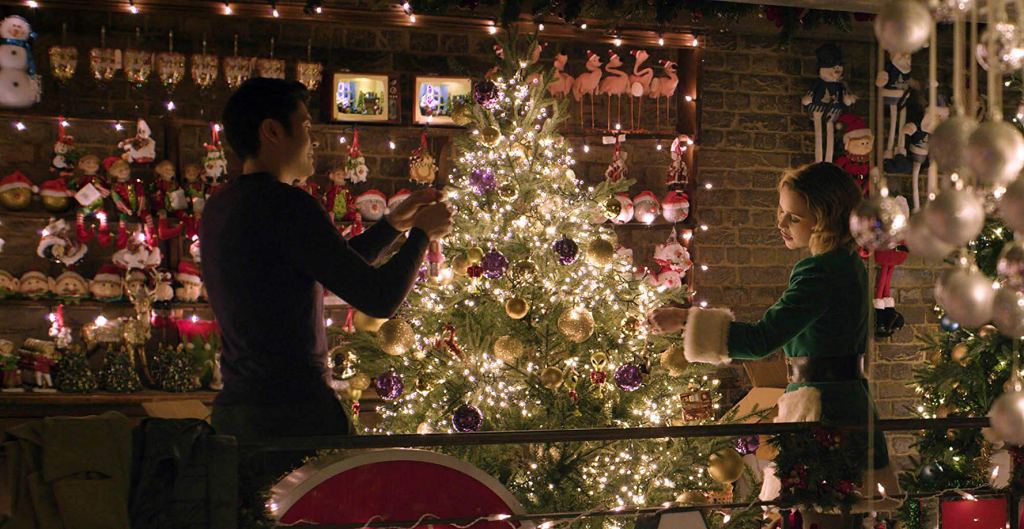
Kate (Emilia Clarke), having recently recovered from a major illness, is sort of spinning her wheels in life. A weekend job she took in a year-round Christmas store has turned into a permanent position. Singing at auditions isn’t bringing her joy. She avoids going home because her overbearing mother Petra (Emma Thompson) is a piece of work and maybe wishes Kate was still sick. She’s just going through the motions, sowing some oats, not being a very good friend or daughter or sister or employee. Not being very good to herself. Still, she’s a little embarrassed that her negligence resulted into a break-in at the store. Her boss, Santa (Michelle Yeoh), has a brusque exterior but is decent and kind at heart. This is your wake up call, Kate, even if she doesn’t yet know how to answer it.

Around this time, two mysterious men show up in or around the store: one for Santa, and one for Kate. Kate is curious about Tom (Henry Golding) but not overly attracted to him. Still, they start spending a lot of time together, and he grows on her, not least of all because he’s someone she can confide in. He listens to her, wants the best for her, helps her restart her life. He’s the perfect guy, basically, with a whimsy to him and an irresistible smile.

You might say the trailers are a bit misleading but we should have known that Emma Thompson (who came up with the story along with husband Greg Wise and co-wrote the script with Bryony Kimmings) wouldn’t be responsible for a run-of-the-mill rom-com. If you divorce yourself from the concept, I think you’ll find the film is actually pretty worthwhile. And can we just have a moment of appreciation for cinematographer John Schwartzman who seems to have lit a movie entirely with Christmas lights? Magnifique!

I straddled a line with this movie – I hate to do Christmassy things too early in the ‘season’ – for me, Christmas doesn’t really start until December 7th, and I don’t like to do anything much before December 1st. Of course, having this site forces me to watch holiday movies far in advance of that, so I’ve only just seen Last Christmas despite its November 8th release (of course, wait too long and it may no longer be in theatres). It didn’t fill me with the Christmas spirit, though that’s not offered as a criticism – it did satisfy me as a movie-goer. Talented actors play flawed characters who don’t normally populate romantic films, yet they still deserve their happy endings. Small bits of politics are kneaded artfully into the dough. But even if the batter tastes familiar, this ain’t no cookie-cutter Christmas movie.

The Star

In nearly every church staging of the nativity story, some beatific, well-behaved little girl is cast as Mary, some lucky boy as her Joseph, and then about 30 of their friends as various sheep and camels and goats and whatnot (in Love Actually, Emma Thompson is surprised to learn there was not just one lobster but several, plus an octopus and a Spider-Man) – the point is, there are lots of kids and very few roles, so they’ve always been padded out with the animal brethren likely to be hanging around a manger.

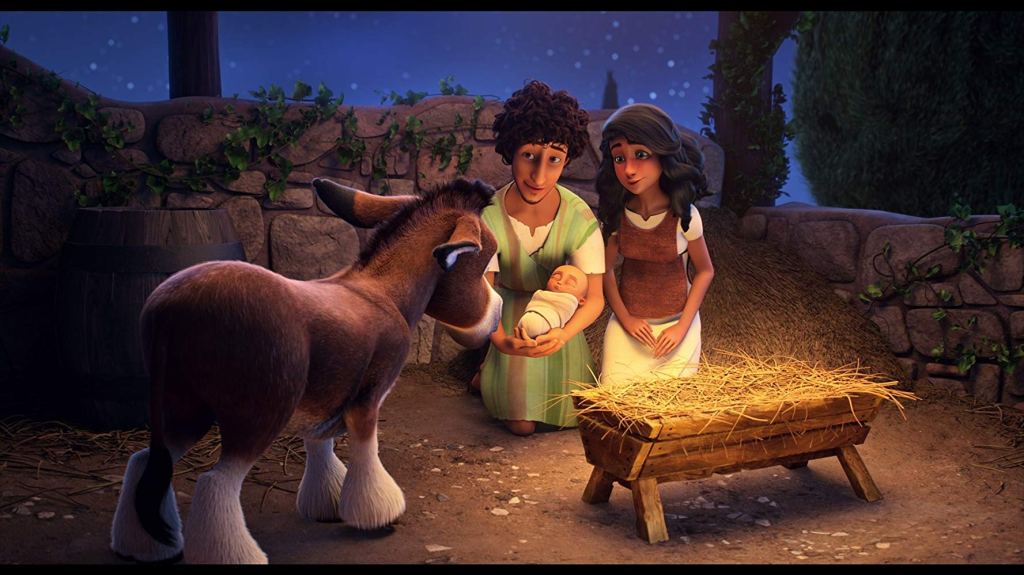
In this particular retelling of the nativity story, the humans take a back seat to the animals; for once, they’re the stars, especially a brave young miniature donkey named Bo (Steven Yeun). Bo dreams about being in the royal caravan but in fact is locked up in a mill grinding grain all day. His buddy Dave, a dove (Keegan-Michael Key), eggs him on.

Meanwhile, Mary (Gina Rodriguez) and Joseph (Zachary Levi) are celebrating their wedding feast and about to have a VERY awkward conversation. Boy is she relieved when a wayward runaway donkey crashes the party and gives her a few minutes’ reprieve. Anyway, eventually she and Joseph start their trek to Bethlehem and Bo and Dave find a helpful sheep named Ruth (Aidy Bryant) to lead the way and help Bo with a Lassie moment.

Meanwhile, a trio camels (Tyler Perry, Oprah, Tracy Morgan) belonging to the three wisemen are also having a moment trying to get their human cargo to a baby foretold by the stars.

Every nativity scene you’ve ever seen has a donkey. Now you’ll actually appreciate him.

The Star is actually a charming little movie full of big voice talent and quirky little moments to make your season bright.

Galaxy’s Edge

We recently visited Disney World’s newly opened Star Wars land, Galaxy’s Edge in Hollywood Studios, where imagineers have ingeniously used 14 acres to create the village of Black Spire Outpost, on the wild frontier planet of Batuu. Batuu was mentioned in the novel Star Wars: Thrawn: Alliances and Black Spire Outpost was very briefly referred to in Solo: A Star Wars Story, so while this planet on the “Outer Rim of the Unknown Regions” has technically always existed in the canon, it wasn’t already familiar to fans, allowing for a whole new Star Wars experience.

We spent several days exploring Galaxy’s Edge and we happened to come home on the very day that Disney was unveiling its new streaming service, Disney+, which means we immediately watched The Mandalorian and it was like we hadn’t left at all. Its sets made me realize just how much attention to detail is present on Batuu, in Galaxy’s Edge. Imagineers worked closely with LucasFilm and it honestly feels so immersive and convincing it’s like stepping into a movie, or indeed this new show. The team cited Ralph McQuarrie’s concept art for the original Star Wars trilogy as a basis for the architecture and aesthetic look of the land, which does indeed feature 41m (135 foot) tall spires standing amongst the rockwork that are intended to be the petrified remains of massive trees in an ancient forest. Black Spire Outpost was once a thriving trading outpost which has more recently faded in importance, so it’s now the perfect kind of place for people to hide out, which means it’s crawling with smugglers, bounty hunters, and rogue adventurers  – hang around long enough and I’m sure you’ll witness an arrest. The town is run by the First Order of course, with a heavy storm-trooper presence, but there are knots of Resistance as well, so think twice about who you talk to. The park is signed primarily in Batuu’s fictional Aurebesh language and it stays true even when it comes to merchandising in Black Spire’s many shops and markets, which means you won’t find anything that’s branded Star Wars because the movie ‘Star Wars’ doesn’t exist for them. But you will find a wooden storm trooper doll, or a card game native to the planet; a toy stall is run by an actual Toydarian. Even their Coke bottles don’t look the same.

The stuff going on in Black Spire Outpost while you’re there is said to be set between the most recent film, Episode VIII – The Last Jedi and the upcoming film and last in this trilogy, Episode IX – The Rise of Skywalker. You’ll find lots of familiar and impressive stuff – a TIE Echelon and THE Millennium Falcon chief among them. Using the Disney Play app on your phone, your ‘data pad’ remembers all of your Black Spire achievements and failures. If you do a less than stellar job on Smuggler’s Run (in which you fly the Millennium Falcon), it may cause problems for you when you visit the Cantina. Walking around the park will even sound like Star Wars thanks to John Williams’ score.

I can tell you all about it but really it needs to be seen, and to that end may I present Jay, Matt and Sean visit Galaxy’s Edge, frequent the Milk Stand for green and blue milk, find the Droid Depot to build a new R2 friend, ride Smuggler’s Run with increasing competence, hear the musical stylings of DJ 3-RX in Oga’s Cantina, and find out what a Ronto is. Plus Sean builds a custom light saber in Savi’s Workshop and is visited by Master Yoda himself.

Please like and subscribe while you’re there – it helps us enormously!

Beauty and The Beast: The Enchanted Christmas

As it happens, the morning after I happened to meet ‘Enchanted Christmas’ Belle at Mickey’s Very Merry Christmas Party, my 3 year old niece was watching the movie at home. I’d never seen it myself, somewhat miraculously because my sisters seemed to watch it religiously when we were small. It’s nice to see that they’re indoctrinating their offspring on straight-to-video sequels so young.

My other sister’s kids were not so well versed on Beauty and the Beast lore, perhaps because they are boys. When we were at Disney with them back in February, we had a dinner reservation at the very hard-to-get Be Our Guest restaurant inside the Beast’s castle. The boys were nonplussed until Hollywood Studios generously put on their Beauty and the Beast musical and sped them up on the essentials – though I do stress essentials. It’s a lovely little stage show but it’s quite stripped down. Belle’s father Maurice is completely written out, and the Beast’s transition is so hasty that it seemed to go unnoticed by our two boys. Little Jack, who was teetering between 4 and 5 years old at the time, worried about our upcoming dinner with the Beast. “Does he know we’re coming?” he asked, worriedly. “Will he be mad?” “No, no,” I assured him, “now that he’s married he’s very domesticated, very calm and inviting, just like your dad when he makes spaghetti.” Once there, the Beast is in fact very much the gentleman, and the kids realized there was nothing to fear.

Meeting Enchanted Belle helped me to complete my Belle trilogy – blue dress, yellow dress, holiday dress. If you want to shower me with special prizes, go ahead. I’ve also met the Beast of course, and Gaston, who made me feel very much an old lady by being a young lad himself. In my mind, Gaston has always been, well, a man. But standing beside him made me think that perhaps I’m now…in my Maurice years? Dear god.

[Why does Gaston look like he’s trying to punch me in the tit?]

[When Matt told Gaston it was nice to meet him, Gaston, true to nature, replied “I know.”]

Anyway, shall we talk about the movie, perhaps?

At the end of Beauty & The Beast, the Beast has turned back into Prince Adam and the teapot and candlestick and so forth have all taken human form once again as well. However, to re-live the glory days (according to Disney’s pocketbooks – likely the servants who spent years as household objects would say otherwise), this movie flashes back to the Christmas they all spent together still under the spell. So Belle was still technically a prisoner with an on-again, off-again case of Stockholm Syndrome, and the furniture/servants hadn’t celebrated the holidays in years because the Beast had “forbidden” it.

Sadly Gaston does not appear as the antagonist; the part of “villain” is played by – and this is going to be as hard to hear as it is for me to write – an organ. An organ who takes credit for writing ‘Deck the Halls.’

So…not quite as beloved as the first, shall we say? That seems diplomatic. And perhaps so terrible an understatement as to be blatantly unfactual. Factually speaking. But, um, it was an honour to meet her in person!

Frozen II

Reviews for Frozen 2 were a bit mixed and I confess I didn’t exactly love the first one (was I the only one on the entire planet not to?). I didn’t hate it, but it was just okay for me. I didn’t even love the song. On our recent trip to Disney World, we met pretty much the whole Frozen crew but needed to attend a sing-along (where people definitely, enthusiastically sang along) to even remember some pretty big plot points from the movie, which came out in 2013 (for example, not one of us remembered trolls). Still, we dutifully brought back an Elsa dress for our 3 year old niece, who has caught Elsa fever (not the kind that produces snow boogies) like pretty much every little girl under 10 has at one time or another.

So of course we went to the see the film. The trailers looked…well, astonishing, frankly, real marvels of computer animation, if a little light on story. We tempered our expectations and emptied our bladders (it’s not really that long, just long for kids – nearly 2 hours with previews) and took our seats in a theatre packed with kids.

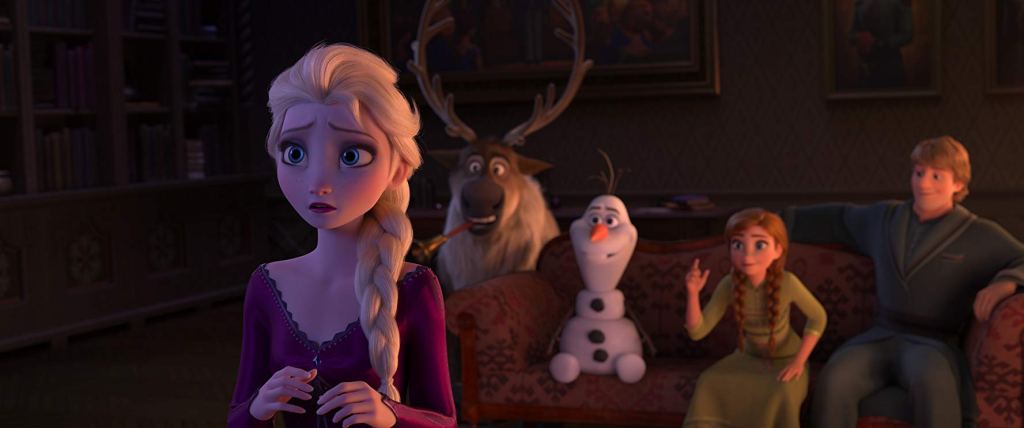
And you know what? I can’t speak for the kids, but I freaking loved it. Yes, the animation is, well, staggering. There was more than one moment when I had to convince my eyes that they were looking at cartoons, not real life. The cinematography is top-tier; the light design is dazzling. But, okay, throw all that aside: what about the story? You may have heard that it doesn’t reach the heights of its predecessor, that it lacks drama because it doesn’t have a distinct villain. That the songs are a bit on the forgettable side. I think that’s all a bunch of hogwash.

Frozen II is more interesting, more complex, and more satisfying than the first one, perhaps because its themes are more mature, perhaps because instead of battling a bad guy, it turns inward, introspective. An enchanted forest is calling to Elsa, and though everyone fears what will happen if she opens Pandora’s box, she opens it anyway, exuberantly, after obsessing over it. Though she and Anna vow to go forth together, as a team, they inevitably part ways and both will be tested.

I laughed. I cried. I was surprised on several occasions by its bold and curious choices. There’s a musical number performed by Kristoff (Jonathan Groff) that inserts what I can only describe as a 1980s-style power ballad into the proceedings for no apparent reason. The number is done as if it’s an early MTV music video, all hokey and cheesy and wonderful because of it – clearly not aimed at children who will never know that the M in MTV once stood for music.

I felt that the first film espoused a fake kind of feminism – people applauded it while apparently failing to note that lots of male characters were still propping up the sisters. But in this film they simply do, and they do well, all by themselves, without anyone needing to point it out. You can tell the ladies are genuinely getting down to business because Elsa’s beautiful dress, already being marketed to little girls in stores, comes with slacks, making it easier for her to kick butt. Elsa seemed moody and bratty in the first, but here she’s a woman full of confidence, full of competence. And Anna knows her worth, magical powers or no.

Do any of the songs rival the powerhouse Let It Go? from the first film? How could they, really? Let It Go was an anomaly, one in a million. And then horribly overplayed and quite tedious. Still, several of the songs were quite good, if not quite as memorable, and performed by Broadway’s best, well, it’s nothing to sneeze at.

I don’t know what kids think of it (yet – my 5 year old nephew and 3 year old niece will see it tomorrow – and in 2 weeks, when that 3 year old niece turns 4, her aunt Jay will bring an Elsa cake to her birthday party) but I do know that I was impressed by it, entertained by it, moved by it. I said previously that the first Frozen felt more like a merchandising tool than a movie, destined to spawn straight-to-video sequels, so this is a rare occasion when I admit my mistake, and am humbled by it. Just a bit. 😉

This is my nephew Jack, who’s providing the kid perspective.

And my other nephew Ben.

It’s okay. You can tell me their reviews are better than mine. I know it. And I’m the proudest aunt.

Ben also has something to add to my Detective Pikachu review.

Friday Fuckfest: Helen Mirren Edition

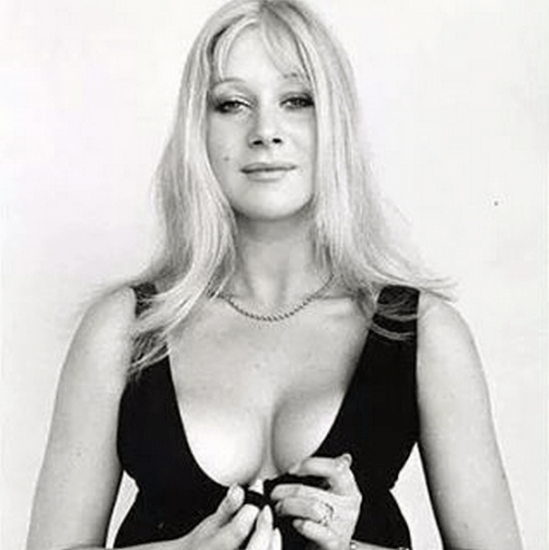
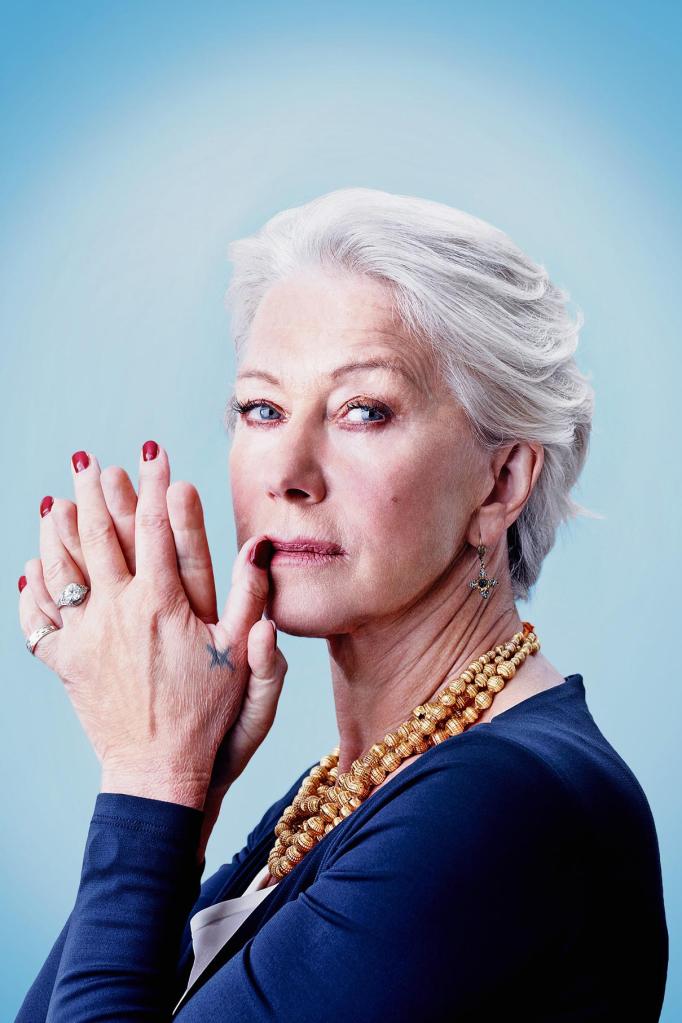
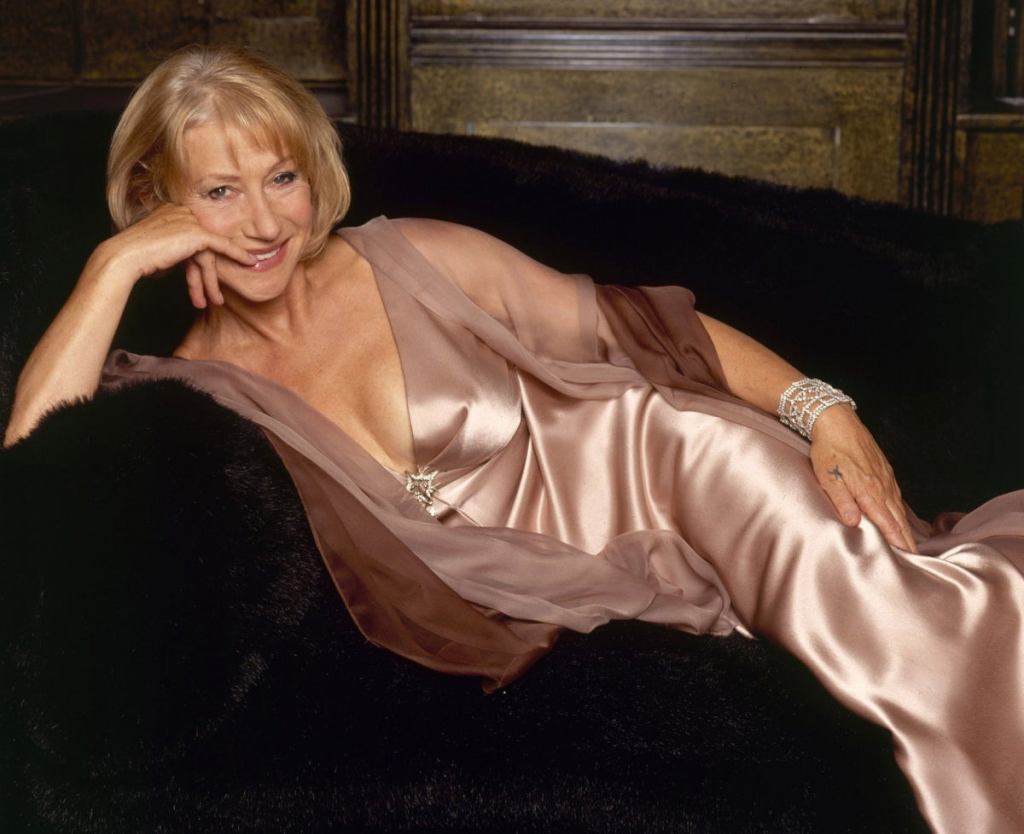
There is no denying that Helen Mirren was a very beautiful young woman.

But it is this Helen Mirren, 74 year old Helen Mirren, who inspires the lust that fuels my fantasies:

I will not say anything so foolish as ‘she looks good for her age.’ She looks good, full stop.

Damn good. Know why? Because she owns it. There’s no pretending with Helen Mirren. She owns her age AND her sexiness.


She doesn’t wonder: do I still have it? Can I? Should I? She just seems relaxed in her skin, and confident. Damn it’s sexy.

The Knight Before Christmas

We know Brooke (Vanessa Hudgens) doesn’t believe in fairy-tales because that’s what she flat-out tells a student at the very top of the movie. Making such bold and inflammatory statements practically invites the supernatural, so when a knight from 700 years ago suddenly turns up in her life, it’s pretty much her own fault.

Sir Cole (Josh Whitehouse), the transplanted knight, was just going about his 1300s life when he meets an “old crone” (not my words, believe me, and not exactly an accurate description either, even, I suspect, by 1300s relativity) in the forest who gives him a quest to be completed before midnight on Christmas Eve. Next thing he knows he’s in Ohio. In the winter. He pops up in the middle of a Christmas village where his armour seems like it might just be another merry costume, and the fair Brooke doesn’t think much of her run in with him….until she later hits him with her metal steed car and has to take him to a hospital, where his ye olde claims of identity are mistaken for head trauma.

Brooke does what any intelligent young woman would do when she meets a crazy homeless person: she invites him into her home, to stay. You have to be quite a handsome crazy homeless person to merit such an invitation, I’d imagine, armour or no armour. Only her trusty best friend (and possibly her sister?) Madison (Emmanuelle Chriqui) is the voice of reason here, but she is too easily hung up upon, if you ask me.

Meanwhile, Sir Cole (as he insists on being called) gets his 21st century lesson from – where else? – the magic picture box, ie, Netflix itself, which continues to astound me with its ability to be, um, self-referential (by my count he watches Holiday In The Wild and The Holiday Calendar…had he kept scrolling he might have run into last year’s Vanessa Hudgens holiday offering, The Princess Switch; watch for its sequel, The Princess Switch: Switched again, a real honest to goodness thing, I kid you not, in 2020).

What will happen, then, when they inevitably fall in love? I mean, these two are kneading bread together in a way that makes me blush. Guys, I must be slipping. It is WAY too early in the Christmas season (in fact, I’d argue that it isn’t even the Christmas season yet) for me to feel this benevolent toward a holiday romance. Have I gone soft as the marshmallows in my hot chocolate?

The answer may be yes: I am an ooey-gooey puddle of movie-watching goodwill and kindness. I may have lost some self-respect, I may have lost your faith, I may have to change the title of this site, but the truth of the matter is: I didn’t fully hate this movie.