Tag Archives: based on a true story

TIFF: Amanda Knox

It’s so great to be back at the Toronto International Film Festival! I felt nostalgic the moment I stepped off the train. The rushed breakfasts, the possibility of a close encounter with your favourite celebrity, the feeling that I’m finally starting to know my way around this once intimidating city, and the hope of catching one of the year’s best films keep me coming back every year. And, for the first time, I get to share the experience with my parents. So why am I tempted to just skip my next movie and go to bed early?

Partly, it’s because I woke up at 4 a.m. yesterday to catch my train and got back to my hotel at 2:30 a.m. this morning after a Midnight Madness screening. Partly, it’s because I’ve been catching four screenings a day since I got here. Both good reasons I think for me to be getting close to early TIFF fatigue but Amanda Knox, which just had its world premiere at the Festival, is another big reason why I couldn’t sleep last night.

Though it was apparently international news back in 2007, I really don’t remember Knox’s story. Amanda Knox was in her early twenties when she was arrested and convicted of murdering her roommate while vacationing in Italy. This wonderful documentary follows her road to exoneration over a period of several years.

What’s unsettling about this film is what apparently captivated the media nearly a decade ago. It’s Amanda. Young, pretty, charismatic, and full of life, she doesn’t look or sound like she’d be capable of such a heinous crime. So when she looks directly into the camera and calmly says, “Either I’m a psychopath in sheep’s clothing, or I’m you,” I get the shivers.

As a true crime documentary, Amanda Knox is every bit as gripping as Netflix’s Making a Murderer. But, despite having only a fraction of the running time with which to do it, it manages to give a more balanced look at the case than the controversially one-sided Netflix phenomenon.  Knox and her Italian now ex-boyfriend and co-defendent are interviewed extensively, as is the Italian homicide detective that maintains their guilt to this day. You’re bound to like and trust some of the interviewees more than others but, according to the filmmakers, each of them have seen the film and every one of them feels that they have been represented fairly.

I still don’t know what happened that night nine years ago. Maybe that’s why the police, media, and public turned on Amanda so quickly. Not knowing is scary. It keeps us up at night (or, in my case, last night). The good news is that, even if you couldn’t make it to Toronto this year, you’ll get a chance to decide for yourself. Amanda Knox will be on Netflix later this month.


Looking for more on Netflix? Try

Audrie & Daisy

Where To Invade Next

Free State of Jones

Newton Knight (Matthew McConaughey) is a poor man fighting a rich man’s war, and he knows it. The rich men have cleverly saved themselves from war by enacting the 20 Negro Law, which exempts any man who owns 20 slaves. Nice loophole. Knight is less than pleased. When a very young recruit is gunned down beside him, he straps the body to a horse and sets off to return the boy to his mother for burial. The only problem is, this act stinks of desertion to everyone that matters.

Not content with hiding out, Knight (a real historical figure) instead founds free-state-of-jonesthe “free state of Jones”, made up of deserters, runaway slaves, and women, and they start their own mini rebellion against the corrupt Confederates in charge. The soldiers have been raiding local homes, taking their “10%” (more like 90), but leaving large plantations untouched. These people aren’t exactly hard to convince which side will benefit them most.
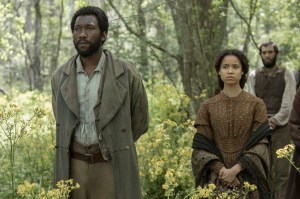
Free State of Jones is graphic from the get-go, but if you can survive the first two or three minutes, the worst of the gore is over. It helps to establish how bloody and senseless this war is (the civil war, if that’s not clear): no matter how perfectly rhythmic the marching, it doesn’t stop you from getting mowed down. Director Gary Ross also tries to give the film some context by intercutting the main story with courtroom snippets of a case against a man 1\8th negro, a coloured person in the eyes of the law, who thus is not allowed to be married to his white wife. I didn’t care for the splicing but came to appreciate it by the end.

This is absolutely a brilliant and worthy piece of history but it’s not quite done right by Free State of Jones. The movie’s well over 2 hours but feels as though FREE STATE OF JONESit lollygags from scene to scene, dwelling in weird places, then rushing through others. Perhaps Ross has simply bitten off more than he can chew, but you can see his good intentions shine through. What we need, though, is passion. It’s sadly lacking here. Even McConaughey’s strong performance is muddied by the white saviour characterization: Knight was a much more divisive figure.

I enjoyed this movie but was frustrated by its limitations. I would have liked to have seen more of Rachel, played by Gugu Mbatha-Raw, who I think is spectacular but criminally underused in this film. I wouldn’t stop anyone from watching Free State of Jones, but I am endeavouring to temper your expectations. The civil war has many stories to tell, but they aren’t just historical ones. There are a lot of modern consequences, enough to give you shivers.

Kidnap Capital

Phoenix, Arizona is the kidnap capital of the world; as many as 1000 drop houses in the city are hiding kidnapped illegal immigrants from Central America. This movie is the story of one such house.

A dirty, dark room houses a bunch of underwear-clad men. Some have been there a long time, some are new. All are grimy, desperate, and scared. All are being held for $2800 ransom, which none have. Most have already spent their life savings to get this far – to America, land of the free. Land of kidnappers preying on the vulnerable. Land of guns, (KIDNAP CAPITAL) - Publicity still 4.jpgterror, and violence. Although they’ve dreamt their whole lives of a better life in America, most just want to go home. A few have nothing to go back to. Manolo, newly arrived, is mostly concerned for his wife.

The women have been contained elsewhere, maybe not being held for money, but held for other reasons – the kind of reasons that give husbands nightmares. So if money isn’t going to solve their problems (and they don’t have any anyway), looks like the only way to survive is by fighting, easier said than done when the captors are armed and motivated gangsters.

Writer-director Felipe Rodriguez gives us suspense and agony in Kidnap Capital. It’s gripping and heartbreaking and takes place almost entirely in one suburban home. I would have liked to have seen more of the outside world, not because the interior isn’t enough (I actually think the sense of claustrophobia is brilliant), but because this whole thing is KidnapCapital_FeatImage@2x.pnggoing down in a nice, friendly neighbourhood just like yours. Like mine. And it takes an awful lot of looking the other way by an awful lot of neighbours, cops, friends and family, for a kidnap ring like this to work. And this is going on TIMES A THOUSAND in Phoenix. So that’s a lot of selective blindness by a lot of “good people.” And that made me so sad.
Immigration isn’t an easy issue, but I have tonnes of sympathy for people whose lives are so wretched that they sacrifice and risk everything for the chance at a better life. I don’t know what the answer is, but I know they don’t deserve this. And this is real. It could be happening in your neighbour’s basement right now. With Sicario and Desierto and now this, movies are giving voice to a forgotten, helpless people. Human trafficking isn’t just a movie plot, which is why this one’s going to stick with me for a good long time.

War Dogs

I like to picture Jared Leto and Jonah Hill sitting in a dark hookah bar, one-upping each other with weird, deranged laughs. Jared Leto was playing the Joker but even so, I think Jonah Hill won.

In War Dogs, Jonah Hill plays Efraim, a young 20-something high school drop out who casually becomes a multi-million-dollar arms dealer. No big deal. He brings grateful high maxresdefaultschool bud David in on the deal and soon the two of them are rolling around naked on crisp 100 dollar bills (I assume: this wasn’t in the movie, it just seems intuitive).
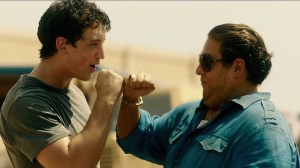
Do they get in over their heads? You betcha. As soon as they meet Shady Henry (They don’t call him that to his face. Or call him that ever, come to think of it) (You can tell Bradley Cooper’s shady because of the beard. And the shades) it all goes to pot. But they’re such knuckleheads they actually pound fists over surviving The Triangle Of Death just by blind luck.

Todd Phillips, director of The Hangover trilogy, is driving the bus. The first thing you’ll notice is that this movie isn’t nearly as funny as you’d expect from him. And it’s not even trying to be. Sure there are laughs (Matt felt that lots were misplaced) but it’s a pretty muddy, ethically gray situation and pretty soon we’re sweating at least half as much as Hill (he sweats A LOT).  But you have to hand it to the sly dog – that Jonah Hill is getting mighty good at creating characters we love to hate. He’s a Scarface-quoting, two-faced, super-slick (nearly as slick as his hair) dude who isn’t willing to sell his soul for money because that’s a deal done long ago – he is, however, willing to sell yours. Willing to sell his “best friend’s”. Pretty crafty. Miles Teller as David is marginally more likeable but goddammit neither of them are displaying one iota of charisma (Matt described Bradley Cooper as “wooden” so I guess that’s three of a kind).

Phillips divides the work, based on a true story, by the way – did I forget to mention that? True story all the way. Worrying. Very worryingly. God bless Dick Cheney’s America as Efraim might say. These two chuckleheads were actually granted an American military contract worth tens of millions of dollars. Your actual tax dollars lined their greasy war-dogs-3pockets. But as I was saying, Phillips divides the film into chapters, which is kind of a neat trick, except he forgets to have a point of view. So this movie, which should have a lot to say, actually says nothing. Take a fucking stance! Two uneducated, inexperienced kids, got their grubby hands on a) crazy amounts of money and b) crazy amounts of weapons and the United States government didn’t just let it happen, it made it happen. War is about money. We all know this, rationally, no matter George W.’s stated reason. It’s about economy. But it’s still painful that there’s no context. There are no good guys, no bad guys, no victims, no soldiers, no dead or dying or shot or bleeding. There’s just greedy little fucks making bank.
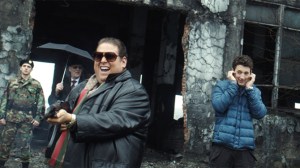
And here’s the other problem: with Efraim being a soulless sociopath and David being hapless and bland, you don’t really care about either of them. Even David’s narration starts to sound a little impatient. It’s cynical as fuck but it’s also just kind of dead. And maybe that’s why even the comedy falls flat: this movie doesn’t feel like a living thing. There’s no bite, no moral compass. It’s entertaining and occasionally offers up some galling guffaws. Just don’t expect it to own its own horribleness.  War Dogs is just as careless as its characters.

Anthropoid

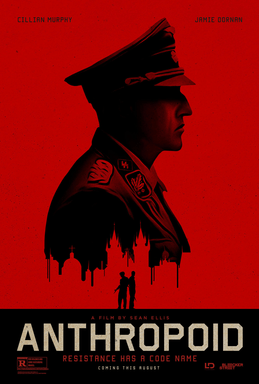
It is all too easy to ignore atrocities that are occurring in other parts of the world.   Awful things are happening right now, in Turkey and Syria and Lebanon and dozens of other countries.  We rarely hear about them in our media and at least for me, it is all too easy to brush off the few stories that I do see as being just another bad thing that happened in an unstable part of the world, and then go on with my day.Anthropoid_(film)

Anthropoid is a story of one of those bad things in an unstable part of the world, and seeing the events on screen made me feel horribly insensitive about brushing anything off just because it happened somewhere else.  Set in Czechoslovakia, the movie opens just after Great Britain, France and Italy stood by and watched Hitler’s Germany assimilate the Czechs, the Slovaks, and everyone else who had the misfortune of living next to those German assholes.   Of course, once they took control, Hitler and crew then started rounding up and murdering people by the thousands. Overseeing the operation was Hitler’s third in command, Reinhard Heydrich. Operation Anthropoid was the displaced Czechoslovakian government’s response to the occupation: an assassination attempt on Heydrich.

Anthropoid methodically takes us through the operation from incursion to aftermath. None of it is enjoyable in the least. That is not in any way a criticism of the movie. This is a tale told well and told with respect. It is a tense affair from beginning to end, and we become sufficiently familiar with the resistance group to feel the loss every time one of them is taken down by the Nazis. There are a lot of losses in Anthropoid and taken together they are overwhelming.

thumbnail_24585There are few illusions to be found among the resistance about walking away after the mission is over.  That may be the most disheartening part of the whole affair. Everyone involved knows that assassinating Heydrich will not win the war; rather, it is a kick to the hornet’s nest that will likely escalate Germany’s killing spree.  But it is all they can do and so they proceed.  The resistance members’ bravery in the face of there being no winning outcome is well-portrayed.  There are several memorable moments along those lines, including a nicely-played theme as one of our heroes learns to cope with the terror that all soldiers must experience.

Do not go into Anthropoid expecting to be entertained, as you will not be. And that’s okay.  As a movie, Anthropoid is solid but not spectacular, but as a lesson in humility and awareness, Anthropoid is important and deserves to be watched.  I am glad I saw it.


Florence Foster Jenkins

Florence Foster Jenkins was a real woman, a patroness of the arts who supported almost all of New York’s musical endeavours and dedicated her life to her passion, singing. She was instructed by leading maestros and had orchestras and composers at her beck and call – her generous donations made sure of that.

Just one tiny hiccup: she couldn’t sing to save her life. Her singing was not unlike a dying florence-foster-jenkins-2016-meryl-streep.pngsquirrel’s trying to evacuate a burning building. Horrendous. But she had no flipping idea. Meryl Streep plays Florence with gusto. We all know Meryl can sing: she’s been in Mama Mia and Into The Woods. She’s got pipes. But in this movie she manages to unabashedly sound like someone took a hacksaw to those pipes and stuffed them full of gasoline-soaked rags. It’s stupendous. Her caterwauling never fails to get a laugh and it was amazing to me how long she could sustain that, how funny she could make the same joke, in slightly different, gutsy ways.
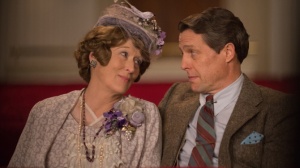
Hugh Grant plays Florence’s husband, St Clair, the man behind the “talent” who applauds her every croak and covers up the critics. Their love is tender but their relationship unique. It’s unusual to see a marriage so complex and interesting portrayed without judgement. Simon Helberg plays Mr. McMoon, the man engaged to be her accompanist. An able pianist, he struggles to attach his rising star to her pitiful performances, but it’s amazing how far money and connections will get you. Helberg, nearly unknown to me, creates a florence-foster-jenkins1memorable character of his own in the shadow of two much bigger leads, but he manages to earn his own laughs and distinguish himself.
Meryl Streep is an absolute star and she’ll be a big part of why you love this movie. She finds nuance in her tuneless moaning and clinches the laugh time and time again. I couldn’t help it, not that I must wanted to. And Hugh Grant is charming as ever, and dare I say, reaching beyond his usual repertoire to be worthy of The Streep. It works. They have a distinct, affectionate chemistry that you want to be a part of. Director Stephen Frears knows how to tell a sympathetic story without disempowering anyone.

I thought a lot about the American Idol contestants purposely selected for their awfulness so that we may bond in our mockery of them. Florence Foster Jenkins was a 1940s era William Hung. No one has ever had the courage or the temerity to tell her she’s bad, and so she persists, believing that she’s good. Maybe even great. But Streep pulls it off infectiously, plays delusional faith in herself with sweetness and not inconsiderable vulnerability.  And yet we anticipate her humiliation. Will she ever find out the truth? And who among us will be most devastated?

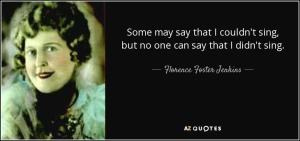
quote-some-may-say-that-i-couldn-t-sing-but-no-one-can-say-that-i-didn-t-sing-florence-foster-jenkins-78-98-56In truth, this film may not have a lot of staying power, unlike the lady herself who is remembered these 75 years later. She lived authentically, and those who loved her told the Good Lie. I was touched. Frears is careful to avoid cruelty, pushing the bounds of mockery and sincerity without ever overstepping, and so wins our respect. And frankly, so does Florence.
The Vegas Chronicles: Casino

The Assholes are in sunny Las Vegas this week, probably bleeding money across several casino floors right this very moment, unless you’re reading in the dead of night, in which case we’re slapping strippers’ asses. We’re also taking the opportunity to talk about some of our favourite movies set in Las Vegas, so of course we’d end up talking about Casino.

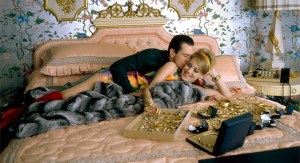
The Bellagio welcomed the cast and crew of Ocean’s 11 with open arms. Caesars Palace was just as accommodating with The Hangover. The Riviera, however, gave no such love to casino1Marty Scorsese. Those ungrateful buggers forced the crew to film only between the witching hours of 1 and 4 am, so as not to disturb the gamblers. They allowed not disruption to the business side of things but weren’t self-conscious about advertising with a large banner declaring “Robert DeNiro, Sharon Stone & Joe Pesci Filming the New Movie ‘Casino’ Inside!” I would call it shameless, except this is Vegas we’re talking about. I’m pretty sure you leave your shame at home.
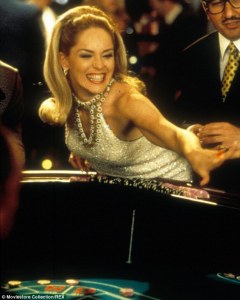
The movie is said to be based on a true story, but it’s set inside a fictional casino called Tangiers. The nut’s not hard to crack, though. This is the history of the Stardust casino. It’s a story fairly well-documented, but Scorsese also drops some hints in the soundtrack. The exterior of the casino was filmed in front of the Landmark hotel, which was scheduled for implosion shortly thereafter, which further added to the mystique. Scorsese went out of his way to film exclusively in the Las Vegas valley, and even managed to shoot driving down historic Freemont Street, which is no longer open to automobile traffic.

The film was informed by tonnes of insiders, but also featured real Vegas characters in the cast. Vegas comedian Don Rickles played the Tangiers casino manager in a largely non-comedic role. The guy who played a jewelry store owner who just got robbed is a real Vegas jeweler. Oscar Goodman, the attorney, is a real-life lawyer who defended many Vegas mobsters. Goodman of course went on to be elected mayor of Las Vegas in 1999. And careful viewers will note that the blackjack dealer is the very same blackjack dealer from article-2611806-1D4E026400000578-395_634x794Rain Man, and can also be seen dealing cards to Chevy Chase in Vegas Vacation.

Matt’s a decent blackjack player, and Sean’s pretty good at keeping Matt’s head out of a vise, but when I’ve got money to blow, I’m not at a craps table, I’m at Hermes. Check in with us on Twitter (@assholemovies) so you can see what we’re up to, and if I’ve yet to find a 45-pound gold and white beaded gown a la Sharon Stone.

And that’s that.


Mike and Dave Need Wedding Dates

Mike and Dave are real-life brothers who trolled for wedding dates on Craigslist. Spoiler alert: the ad did not net them true love, but it did earn them fame and fortune, so I guess there’s a happy ending in there somewhere.

Now Hollywood’s got hold of this “true story” and they’ve raunched it up to 11. It’s rated R and believe me, that’s a hard R. There were some crude laughs, some I don’t even want to admit to, but there were dozens of scenes that went on for much too long. It’s a thin story mike-and-dave-need-wedding-dateswith paper cut-out dolls instead of characters, both of which provide the sparest of backdrops for a series of lewd sketches that aren’t so much plot-driven as rude one-upmanship.

The movie is determined to check all the boxes: swearing, sex, nudity, drugs. It uses prop genitalia, merkins (a pubic toupee), and cock socks (otherwise known as “modesty pouches”). And it also features the liberal use of butt doubles. Butt doubles for everyone! (well okay, not for Zac Efron, who has yet to see one that’s better than his own). How does one go about hiring said butt double? An agency will send over a big catalogue of butts for Anna Kendrick to look through and she might select several to peruse in person before selecting her butt’s representative. I assume the temptation to upgrade one’s assets would be enormous.

A body double working under Screen Actors Guild guidelines will be paid $795 for a full 8-hour shift, while part-specific models typically get a rate of $445.30. Of course, naked cheeks net double pay, and an “elite butt double” (whatever thKHekcf3at means) can command a much higher figure. And I’m sure Anna Kendrick springs for the premium butt. Wouldn’t you?

In case it’s not obvious, I found researching body double pay rates much more interesting
than Mike and Dave’s antics. And actually, they’re quite upstaged in the movie by their dates. Anna Kendrick and Aubrey Plaza out-bro the bros. That’s not an endorsement, mind you, just a statement of fact: in a competition of who’s downest and dirtiest, the ladies take the crown. They’re like the love children of Amy Schumer and Danny McBride. So, um, score 1 for feminism (she says as she thrusts out her tits) but score 0 for the movie going public.

Whiskey Tango Foxtrot

Based on a memoir, Whiskey Tango Foxtrot is the “true story” of Kim Baker, an American journalist sent to Afghanistan to be a war reporter despite having absolutely no experience (being unmarried and childless was short straw enough). In Afghanistan she is immediately confronted with the concept ftf-11806r_2_wide-54dfd259b4cfc0e148859666f964e90321c3fd1b-s900-c85of “Kabul cute” – women who were a 4 back home in New York are suddenly 10s. Tina Fey plays the 4. Margot Robbie plays a 15.

Afghanistan is windy and gritty, basically a forgotten war now that Iraq is a better news story, but the more she sticks with it, the more Kim elicits candid remarks from her subjects. Billy Bob Thornton plays the guy who finds her nothing but a nuisance, admonishing her not to sleep with his marines.

It’s actually not a bad movie, considering it bombed at the box office. What went wrong? Possibly people didn’t like to see one of their favourite comediennes amid such a serious backdrop – it’s hard to laugh at limbs being blown off. And the very same war fatigue mentioned in the movie may contribute not wanting to hear about it in theatres, either. Bill Murray’s Rock the Kasbah suffered the same fate. And maybe Tina Fey’s just not ready to cross over genres, or to headline her own movie alone. Martin Freeman was great support in the movie but didn’t get any screen time in the trailers. And Whiskey_Tango_Foxtrot_reviewthe trailer, for that matter, played up the movie’s comic aspect even though the movie’s a dramedy at best, lobbing one-liners like hand grenades into a pretty grim war zone.
But Fey actually does well, if you give her the chance. I thought she and Freeman were great together. The movie just doesn’t have a lot to say. It’s not a commentary on the war so much as one woman’s less glamorous version of Eat, Pray, Love. The real Kim Barker never broke any major news stories so there’s not a lot of insight and not much authenticity. I think the script had some great pieces but suffered from abrupt lurches in tone. Overall though, I’m glad I gave it my time, even if I didn’t Lima Mike Foxtrot Alpha Oscar.


The Witness

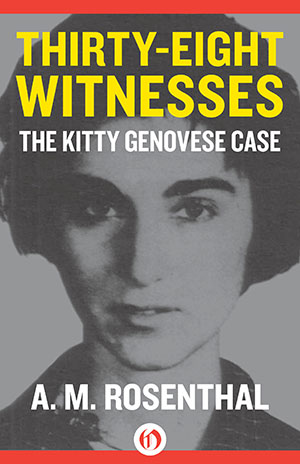
Bill Genovese was 16 years old when his big sister Kitty was stabbed to death in Queens, New York. Her 1964 murder shocked and scared the nation as news got out that 38 of Kitty’s neighbors watched and did nothing to intervene as the 28 year-old screamed for help and fought for her life.

It’s actually a horrifying image that has always stuck with me ever since I first read about it in Social Psych. How could 38 people watch from their apartment windows as their neighbor was in such immediate danger? This question inspired a new subfield of social psych research and was one of the main reasons why I continued to study (and pursue a career in) psychology. It inspired Bill Genovese to enlist in the Marines when the Vietnam War began because he vowed to never be the guy standing by and doing nothing. And I just found out that it’s a fucking lie.

Obviously and tragically, some of what I learned about Kitty Genovese in college was true. Yes, she was brutally murdered by a stranger outside her building as she screamed for help. Yes, police later interviewed 38 witnesses to the attack. But the claims that 38 people knew what was going on and (shockingly) even that no one tried to help her are erroneous products of some sensationalist and irresponsible journalism published in the New York Times.

The Witness follows Bill Genovese over a ten-year period as he attempts to separate fact from urban myth in the death of his sister. For forty years, the Genovese family believed the same fiction that I did. What that must have been like, to not only lose a daughter and sister to such a brutal attack but to believe that her own neighbors stood by and did nothing, I can only imagine. For a long time, the subject of Kitty’s death (even her life) was too painful for them to even talk about. Until one day Bill can’t take the silence anymore and starts looking for answers.

Sure, the Genovese case received national attention which may have brought about some real positive changes. And, no, that may not have happened had the story been reported as it actually happened. But The Witness makes a fairly strong case that the truth- in journalism as well as in healing from personal trauma- is always important. At some point while watching this documentary, you’ll probably start to wonder if Bill’s obsession with finding the truth is getting a little unhealthy. But by digging deeper into the details of his sister’s life and death, he’ll come to feel closer to her than ever and he honours her memory by reminding all who see it that Kitty was so much more than the last 30 minutes of her life.


.