
I have good news. Big news. Blockers comes out April 6 and it’s actually a super funny comedy. I don’t think I’ve laughed this hard since Bridesmaids.
It’s about 3 young women at the end of their high school career. Graduation and college await them, but for now: prom. And more importantly, prom sex.
This movie marches right past social expectation and allows three smart, strong girls to  assert themselves sexually. All the usual bullshit about female virginity is thrown into the gutter with other outdated notions like the earth is flat, and bloodletting as a cure-all. These ladies are real, raw, and raunchy when it comes to sex, which, sure, is refreshing, and that’s nice and all, but the truth is we wouldn’t give a damn about myth-busting if it wasn’t entertaining, and this movie captures that elusive comedy magic and makes its audience howl with laughter.
Now, the girls may be ready to shed their prom dresses and their hymens, but their parents are not quite as happy with this little sex pact. Leslie Mann, John Cena, and Ike Barinholtz play the parents on a mission to stop the sex from happening. On prom night they’re hoping to be cock blockers, and they’ll go to stunning and humiliating lengths to block those cocks, but maybe in their heart of hearts, it’s the growing up and saying goodbye they’re trying to block as well.
Of course the movie inevitably tackles our dear old friend the double standard, and actively wonders how we can ever hope to achieve equality for women when even their own parents don’t treat them that way. But this is no issues movie, it’s a goddamn comedy, and rated R, a strong R, because it’s rude, crude, and full of franks and beans.
Female sexuality, especially that of a teenage girl, is rarely if ever treated this way and it’ll make you stand up and cheer for how empowering it feels to watch this. Is this the female American Pie? Fuck no. It’s funnier and smarter and 1000% less juvenile. But this movie isn’t just about fierce females, it’s also about their feminist boyfriends/boy friends. Boys who are in to consent, who stop when asked, who take cues from their partners and respect them. And it manages to do this casually, no big deal, like this is just how it is BECAUSE IT’S DAMN WELL HOW IT SHOULD BE. And it never stops being funny. Disguised by vulgarity, this movie is actually showing us how to behave. Except for the butt-chugging. I’m pretty sure we should stay the hell away from that.
 she wants to know that he’ll be okay. But it’s creepy and invasive and neither Sam nor his prospective dates are super into this idea. Even Abbie’s support group is pretty skeptical. They’re also a pretty good source of humour in a movie that may have been overwhelmed by its maudlin theme. Thankfully the likes of Steve Coogan, Kate McKinnon, and Christopher Walken, all favourites of mine that I never dreamed would somehow end up sitting in the same little circle in the same film, go a long way to providing some comic relief.
 Poor Janet. She’s just achieved a major career coup and every single guest at her party will make a thunder-stealing announcement. It’s really not her night. It’s REALLY not her night.
 competing against bands that play instruments. How dare they! I thought college was supposed to prepare you for the real world but these ladies are literally not even prepared for guitars. Yeesh. (Not to give too much credit to the new “bands”, including Evermoist, led by Ruby Rose, because after seriously mocking the Bellas for being a “cover band”, it turns out they all do covers too! A Cranberries tribute is particularly poignant with the recent death of Dolores O’Riordan.)
 Turturro) may be stepping out on their mom, but he’s also the geeky guy who still takes them to Benihana for special occasions even though they’re far too old. Their mother (Edie Falco) has never struck them as a sexual being before, but it turns out that she too has wants and needs, and that maybe not all her tears and concerns are for them. This is a really great script that unfolds over just a couple of days, but pivotal days that will completely reconstruct the family.
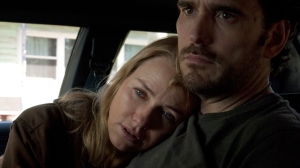 when Melissa loses her job and she and Richie get evicted from their home, the good days are clearly behind them. The cycle of poverty’s got a pretty nasty pull on them, and in many ways this feels like a companion piece to The Florida Project, though this one’s already five years old.
 relationship, taboo and reviled in the 1930s and 40s, was that it inspired the creation of the Wonder Woman comic. Marston’s original stories (written under a pseudonym) incorporated the feminist ideals embodied by his wives. Wonder Woman was a strong woman who needed no man. His early comics also involved a fair amount of bondage and submission, which he pursued in his own bedroom and thought more young men should be turned onto. You can imagine the sort of censorship and uproar he faced.
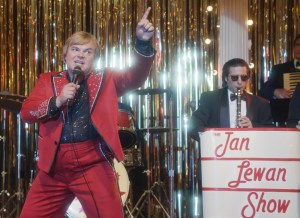 The FBI gets one whiff of this and feel it must be some sort of Ponzi scheme. They shut Jan down, but since he promises it was an honest mistake, and to pay back his investors, problem solved. Except, in order to pay back his investors, he ends up creating a second, bigger scheme.
 In fact, music alone is not enough to save them. Turns out they’ve suffered a tragedy that neither has fully grieved, and singing about it is going to be very difficult since talking about it has been impossible for years. They’re still a broken couple, now they’re just putting all their dirty laundry on the stage for the consumption of others. A particularly ambitious dream of them getting a record deal never seems all that impossible because actually, their music is good, and fun (so long as you are currently in a good space with your loved one). Sean and I found ourselves communicating in that subtle hand squeezy way that some couples have when they are relating a little too well to the awkwardness on screen.
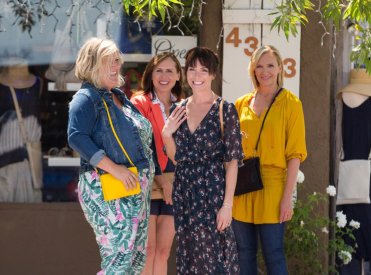 When Sean reluctantly fingered this title on Netflix, we did the math: I love Toni Colette + I like Katie Aselton + I hate Bridget Everett + I really hate Molly Shannon = an uncomfortable tipping toward the negative side. Not a great start. But the movie’s not a total write-off.
 ASSHOLES WATCHING MOVIES