Tag Archives: female directors

What Happened, Miss Simone?

There is a patina of sorrow over this documentary that I was aware of from the very first scene.

Nina Simone, one of the greatest jazz singers, entertainers, and concert pianists ever, felt isolated by and from both the black and the white community though she was admired and originalidolized by both. And how could they (we)  not?  She truly was a grand dame of jazz, with a depth and darkness to her voice that touched all who listened. The film is not short of people willing to praise her talents, but we get a true sense of her personality when she is profuse in her own praise of other artists as well. Ever humble, she is generous to other musicians and quiet about her own accomplishments though thankful to those who helped her along the way.

The greatest treat in this documentary is undoubtedly the vintage footage of Miss Simone performing. It gives you a real sense of how timeless her sound was, how her incredibly rich voice can still reach across the years and fill your heart like velvet. Oh man.

Simone was also a “patron saint of the rebellion”- a woman who reflected the times she lived in, proudly. She was tired of the establishment in more way than one and did her part to expose its hypocrisies, even if it was at the expense of her white audience. She wasn’t afraid to align herself with militants and defined herself as “not nonviolent” even though MLK was a friend of hers; thankfully she had music at her disposal and not guns. When she started playing exclusively political songs, it affected her career. But she believed it was part of the artist’s role to preach what they believed, to have their art contain a message, and hers certainly did, notably with Mississippi Goddamn, a song written in response to and expressing sorrow and anger over the murder of Medgar Evers in Mississippi and the Baptist church bombing in Birmingham that killed four little girls.

Simone lived in an era where society didn’t appreciate a woman’s genius, let alone a black woman’s. What did it do to her? She struggled with depression and appeared to already be in a downward spiral when Dr. King was assassinated. But when a battle with bipolar threatens – will she be willing to take medication that could rob her of her music?

Simone has been dead for a decade but never ever forgotten. This documentary helps to shed some light on a strong, interesting, multi-faceted woman. It’s nominated for an Oscar this year in a category that feels fairly locked up by Amy, an inferior offering. But the good news is, you can see them both on Netflix right now, and decide for yourself.

Director’s Guild Awards

Drum roll please! This weekend’s prestigious Director’s Guild Awards, hosted by the effervescent Jane Lynch, made history when Alejandro G. Iñárritu took 2016dgaw001home top prize for Outstanding Directorial Achievement in Feature Film for his brilliant work on The Revenant. This is the first time in the Guild’s history that a director is rewarded in back-to-back years (he won last year for Birdman or (The Unexpected Virtue of Ignorance)). The nice thing about these awards is that directors are the first to admit that they do not work alone. There are lots of people sharing in Iñárritu’s win. His directorial team includes:

Unit Production Managers: Drew Locke, James W. Skotchdopole, Doug Jones, Gabriela Vazquez

First Assistant Director: Scott Robertson, Adam Somner

Second Assistant Directors: Megan M. Shank, Matthew Haggerty, Jeremy Marks, Trevor R. Tavares, Jasmine Marie Alhambra

Second Second Assistant Directors: Brett Robinson, Kasia Trojak

Who are these people and what do they do? Excellent question! A unit production manager (UPM) is hired by the producer to do the fun admin-y stuff to manage a film’s budget. Based on the shooting script, the UPM will create a working budget related to the physical production. The producer stays on top of “above-the-line” expenses, ie, the creative stuff that gets the ball rolling pre-production: securing the script, writers, actors, directors, budgetproducers, that kind of thing, fixed costs that no matter what scene is cut or special effect is scrimped on will still be paid the same. The UPM gets tasked with the less glamourous crew, the “below-the-line” costs, contracting with gaffers, makeup artists, sound engineers, all the “little people” who turn up and work hard to actually turn good ideas into reality. Plus he or she will be negotiating deals for location, equipment, etc.

An assistant director on a film has a full schedule: they track daily progress against the almighty production schedule, take care of logistics, prep the daily call sheets, check in with cast and crew, keep order on a busy set, and make makeupsure everyone’s safe. The first assistant director (1AD) is directly responsible to the director and runs the floor or set; they have to accurately estimate how long it will take to film a scene – whether several pages will be shot quickly, or one emotional paragraph may take all day. The 1AD is the communicator on set: all directions to the rest of the crew from the director will run through him or her. The second assistant director (2AD) creates the call sheets and then makes sure that all the cast is ready to follow through, revenantputting them through make-up and wardrobe. The call sheet tells cast and crew what scenes and script pages are being shot today, and where. They will provide exact start times (which rarely turn out to be all that exact), and addresses of shoot locations, and transportation arrangements so everyone can actually get there and maybe even park legally. It should also have contact info for the important crew, safety notes, maybe weather reports, sunrise\sunset times, and where to find the nearest hardware store when you inevitably need another extension cord. The second callsheetsecond assistant director (22AD) (yes, that’s their real title) comes on board when the production is big and\or complicated.  You can be sure the 2AD is checking on Brad Pitt’s mustache while the 22AD is making sure there’s a dozen ladies in hoop skirts behind him, or a thousand extras in zombie makeup, or that all the parking meters are fed. This really frees up Alejandro Iñárritu to laze about in his director’s chair fantasizing about Leo’s frosty breath, or Wes Anderson to deliberate between Egyptian blue and Ultramarine, or Steven Spielberg to play another practical joke on Tom Hanks.

2016dgaw002I’m also crazy excited to tell you that Alex Garland won for Outstanding Directorial Achievement of a First-Time Feature Film Director. Recognize his name? He’s the man behind 2015’s break-out indie success and seriously one of my favourite films of the year, Ex Machina. Remember the name, he’s only getting started. His directorial team includes:

Unit Production Manager: Sara Desmond

First Assistant Director: Nick Heckstall-Smith

Second Assistant Director: Ray Kenny

Also noteworthy: recipient of Outstanding Directorial Achievement in2016dgaw011
Documentary, Matthew Heineman for Cartel Land.

These three directors may be men, but you’ll have noticed there are lots of females sprinkled in amongst their support teams, which I can only hope means the ladies are movin on up. Here’s a lovely lady worth highlighting – Mary Rae Thewlis was the recipient of the Frank Capra Achievement Award, given to an assistant director or unit production manager in recognition of career 2016dgaw013achievement. Thewlis worked under Martin Scorsese on The Age of Innocence as a DGA trainee. She worked on the Tupac Shakur movie Above the Rim as the key second assistant director and under director Jon Avnet as second second assistant director on Up Close & Personal and then spent a lot of years at Law & Order originally as Second Assistant Director and eventually First Assistant Director. Kudos to her, and may she be an inspiration and example of hard work to aspiring young film makers everywhere.

A director is only as good as his or her team, so pick wisely, folks. It’s not just true of the movies. Find talent and nurture it.

Mustang

I saw Mustang, as I see most foreign language films, surrounded by baby boomers. In Ottawa, the Bytowne is really the only place to go for foreign, documentary, and most independent films. The other thing about the Bytowne: Old people love it, partly because it’s reasonably priced but also because they can ask each other “Who’s she again?” without fear of getting shushed because their neighbours were most likely wondering the same thing. So I wondered at some points whether the hearty laughter coming from the audience during this tale of female oppression was the reaction that the director was hoping for.

To be fair, I’m not at all confident that I know exactly what reaction Deniz Gamze Ergüven was going for with her debut feature. Mustang can shift tones pretty quickly and, for once, I don’t mean that as a criticism. We first meet Lale (Güneş Şensoy, who’s just wonderful) and her four sisters on their way home on the last day of school in their small Turkish village. When they run into a group of boys, it’s off to the beach to sit on their shoulders and splash each other. In a Hollywood movie, this would just be a throw-away scene for a Best Summer Ever montage but, in this time and place, it’s enough to set in motion a chain of events that are just plain infuriating. Word spreads fast about the sisters’ scandalous behavior and their livid uncle immediately pulls them out of school and keeps them home to learn to cook, clean, and be good future wives. Worried that their reputation as corrupted girls would get worse, he rushes to marry them off as soon as possible.

They’re just good kids who like to have good silly fun. To see them oppressed in the name of sexist religious fundamentalism is an outrage. Ergüven’s trick is that she has made a film that effectively captures the cruelty of the situation but is always watchable -sometimes even entertaining- and almost never unpleasant. She is as committed to portraying the girls’ resilience in the face of oppression as to the oppression itself.

There are occasional scenes of very broad comedy in which I’m sure the Bytowne crowd’s laughter was exactly what Ergüven was hoping for. In the ever-escalating battle of wits between Lale and her mean uncle, I can’t be sure. I couldn’t laugh at Lale’s increasingly clever plots to sneak out of the house. The cost to her freedom and, eventually, her safety once she’s inevitably caught made me way too nervous.

It’s a credit to Ergüven that she’s made a film that could affect audience members so differently. Mustang calls attention to gender inequality and injustice that is as hopeful as it is frustrating. Through her faith in one young girl’s fighting spirit. her feature debut is a worthy nominee for the Best Foreign Language Film Oscar.


The Diary of a Teenage Girl

The eponymous teenage girl (Bel Powley), aka Minnie, loses her virginity to diary-of-a-teenage-girlher mother’s boyfriend, Monroe (Kristen Wiig/Alexander Skarsgard) – don’t worry, they “aren’t possessive.” Obviously that should not have been the only obstacle, and she knows this isn’t ideal, but in her words, she’s ugly, and who knows how many offers will come her way.

So this isn’t one of those easily watchable movies, it’s not “enjoyable” or “comfortable.” It’s awkward in the ‘He only sleeps with my Mom or she’d suspect something’ kind of way that rings true for those of us who put up with our mother’s creepy boyfriends in our own childhoods, but true in diary-of-teenage-girlthe way that we’ve buried way down deep and aren’t anxious to revisit.

Don’t worry, the awkwardness doesn’t end there – anyone for random cartoon penises? Our heroine isn’t exactly likeable – relatable, maybe, but self-involved like any teenager, won’t stop talking about herself, only we don’t have the luxury of sending her to her room. And in a movie about a young girl being bedded by her mother’s boyfriend, she shouldn’t be the villain. And, okay, she’s not: Skarsgard’s 1970s mustache is, but my sympathy for her ran short.

file_608469_diary-of-a-teenage-girlDon’t get me wrong – on the whole, I’m still liking this film. It’s bold and unconventional, frank and non-judgemental, which, given the topic, is refreshing. Bel Powley is self-possessed, mixing sexual, spiritual and artistic awakening confidently. Kristen Wiig shows a lot of restraint in her role from the back seat. And writer\director Marielle Heller bravely bears witness without passing judgment – but it’ll make you squirm.

That’s the point, I guess. The diary of any teenage girl would make you squirm. I kept a diary myself – luckily not as a teenager (that was my poetry writing period, which, believe me, is worse) but as a little girl. It’s MN_poster_PRINT_Final_lowsilver and has a unicorn on the front and stickers of Joey McIntyre from The New Kids on the Block, aka, my former future husband, littering the inside covers. The sickly-sweet pink pages feature lots of my extra-large loopy handwriting talking about boys, recess, how wonderful I was, and what a rotten cook my mother was, and would always be. Cringe-worthy stuff. Reminds me of a documentary I watched a while back called Mortified Nation – a series of events across North America where people stand at a microphone and read embarrassing excerpts from childhood diaries. Audiences laugh warmly along with the reader, who through some form of catharsis realizes that whatever mortifying inner thoughts we had as a tortured teenager, most were pretty commonly shared. And in a way it’s nice to look back on a time when we were young and innocent and everything was fresh and exciting, and we were self-absorbed enough to wallow in it, and to write it down for posterity, as if anyone would care.

Did you keep a diary in your youth? Is it filled with sexual transgressions? Does it tell of a wild and misspent youth? Are you embarrassed? Would you stand up and read it aloud to a room full of strangers?


Would you print an excerpt from it in the comments?


Sleeping With Other People

In one of the opening scenes, Jason Sudeikis is standing in the middle of a New York City street getting yelled at by whichever woman he bedded the night before. Lots of confused tourist are driving by. I know they must be confused tourists because the same blue Beetle convertible drives by no less than 5 times during this short scene, and must literally be pulling constant U-turns to do so. Other cars make appearances even more often – a gray SUV can’t stop driving by them, and I counted a half dozen drive-bys before I gave up.

So that’s my review of the movie. It’s so generic that I literally counted cars.

sleeping-with-other-peopleJason Sudeikis is likeable; Alison Brie is bland and has the charisma of a houseplant. These two late-bloomers lose their virginity to each other in college and then spend years whoring it up until their paths re-cross. The story never gets remotely close to anything original and is often trying to be funny, I believe, but falling short. Way short.


A Very Murray Christmas

AVeryMurrayChristmas_posterLet’s get one thing straight: this isn’t Scrooged, the redux. It’s a plotless variety show without a lot of variety, but it’s got Bill Goddamned Fucking Murray, so what else do you want?

It’s Christmas Eve and Murray is contractually obligated to put on a Christmas special live from the Carlyle Hotel in Manhattan. He’s in no position to be doing such a thing and the show is doomed to hell, but so what? His piano accompanist is Paul Shaffer, for crying out loud. How bad could it be?

Well, as Amy Poehler and Julie White come bustling into his room to assuage his pre-show jitters\brow-beat him into meeting his obligations, it would seem that they are worried too. There’s a blizzard blanketing NYC, and none of the celebrity guests have shown up. No guests at all, actually, except for Michael Cera, playing a slimy talent agent desperate to sign Murray (who is famous in real life from being unrepresented).

Murray starts off singing dejectedly but can’t even finish his first song. NEN1NCNECeZIRU_1_bThe special’s a disaster! But wait! Who’s that sight for sore eyes revolving through the door? Why it’s none other than Chris Rock, here mistakenly, but here nonetheless, and despite his vehement refusals, he gets emotionally manipulating into joining the live broadcast. Singing ‘Do You Hear What I Hear?’ as a duet, Murray and Rock are one of the highlights of the show. In a special that’s not even an hour long, Chris Rock proves he may not be a singer but he is indeed an actor; the reluctance to join in spackled across his slowly turns into Christmas cheer as the joy of the song spreads to his heart…until the power goes out, and he takes the opportunity to make his escape.

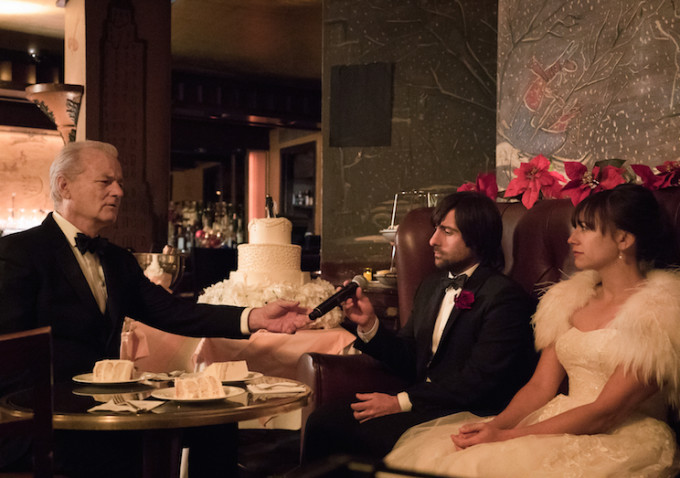
“Force Majeure!” cry his cheeky producers. The contract taken care of by an act of god, White and Poehler hoof it out of there too, leaving Murray to mope around a nearly-deserted hotel where he comes across a sobbing bride (Rashida Jones) and her wobbly wedding cake. Dream wedding ruined, no guests in sight, no preacher to marry them, and a 90bunch of lobsters going bad, she and her groom (Jason Schwartzman) have fought.

Never fear: when not hosting Christmas specials, Bill Murray also proffers marital counselling, and so in he goes to save the day, and spark up some more “impromptu” holiday tunes. Jenny Lewis playing a waitress is on hand to do the lady part of ‘Baby It’s Cold Outside’, everyone’s favourite date-rape carol, and the band Phoenix is conveniently on hand pretending to be kitchen staff to back up several more ditties, so that Jason Schwartzman can prove there is a worse singer in this thing than Chris Rock.

And then Maya Rudolph shows up playing a washed up lounge singer, and holy hell, she just puts them all to shame. She belts out a ‘Christmas (Baby Please Come Home)’ so good that even Darlene Love would approve (she sang that song on Letterman every Christmas since 1986 except for the writer’s strike in 2007 – this will be her first year without, since Dave is retired). It’s not surprising that Rudolph is amazing: she is, after all, daughter to soul singer Minnie Riperton and composer-songwriter Richard Rudolph. Oh, and granddaughter of Teena Marie. She’s got chops, plus extra credentials for often impersonating Beyonce on SNL, and for playing in a Prince cover band called Princess. And I’ve got a huge crush on her.

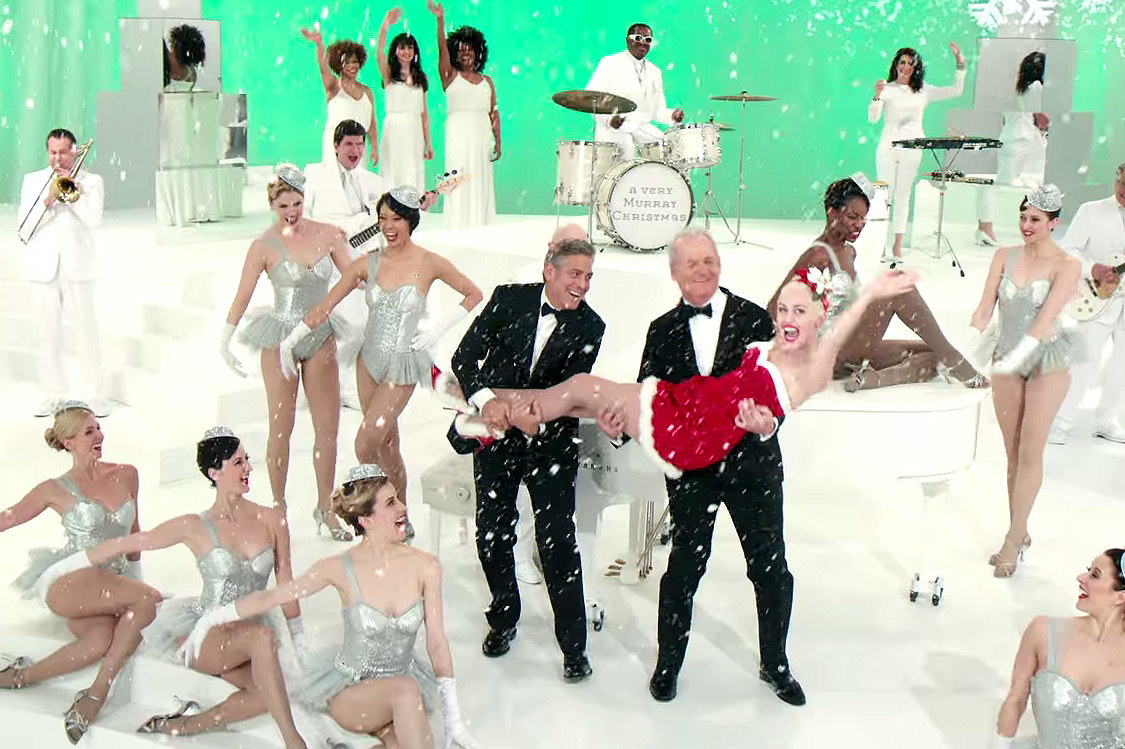
Then the action mysteriously leaves the Carlyle Hotel for a decked-out maxresdefaultsoundstage in New Jersey, where two new guest stars join the festivities: Miley Cyrus, cheating on her own cameo in The Night Before, and George Clooney to mix the martinis. An unlikely pair? If you say so!

I wish I could find something to be grumpy about with Miley’s performance, but the truth is, she sounds good. Perched atop Shaffer’s bill-murray-miley-cyrus-george-clooney-netflix-christmas-specialpiano, Silent Night is rendered faithfully, although there’s probably a little too much leg for the holy parts. The real surprise, and delight, is when Clooney pipes up during ‘Santa Claus Wants Some Lovin.’ Is the world ready for this side of George Clooney? Unfortunately he flashes a lot less leg, but he does look awfully dapper in his suit.

Anyway, director Sofia Coppola did quite a job of rounding up a slew of stars and dipping them in Christmas coating. You can play a real game of celebrity bingo, as you’ll see in the comments. There’s no plot, no story, no moral: just a lot of the ever-charming Bill Murray. It’s available on Netflix and it’s the kind of thing you can easily just put on in the background while you do some holiday baking or cleaning or wrapping, or better yet – some imbibing.

Cheers.


Suffragette

Just a few weeks ago, Canadians voted for “change” and for “sunny ways.” We elected a young Prime Minister with a famous last name and idealism still twinkling in his eyes. He was sworn in last week and presented us a cabinet that among other things, had gender parrity.

jt

That’s right. Half men, half women. So of course the very first question journalists needed answered about this tall list of accomplished people was why “he went with gender equality” in his cabinet. Why? Why did he “go” with “gender equality.” Is that really a question you can still ask this day in age? Okay, you know what – it is. Because sadly, this is the first cabinet to achieve this status. But Trudeau seemed to agree in spirit, answering simply “Because it’s 2015” – a mic-drop response that was heard around the world.

But the fact remains that if a Prime Minister chooses a cabinet that has a representative amount of women in it, he’ll have to answer as to why.

Isn’t that incredible? And incredibly sad?

As you know, the boys were dragging me off to see Spectre this weekend, and James Bond is probably the human embodiment of the antithesis of gender equality. To correct the imbalance, Sean agreed to hit up Suffragette with me first, because he’s a 2015 kind of gentleman, even if his movie idols aren’t.

Suffragette focuses on some of the lesser known but pivotal “foot soldiers” of the early feminist movement in Britain. After 50 years of peaceful protest, the women have amped up their right-to-vote rhetoric and are ready to engage in civil disobedience for the cause.

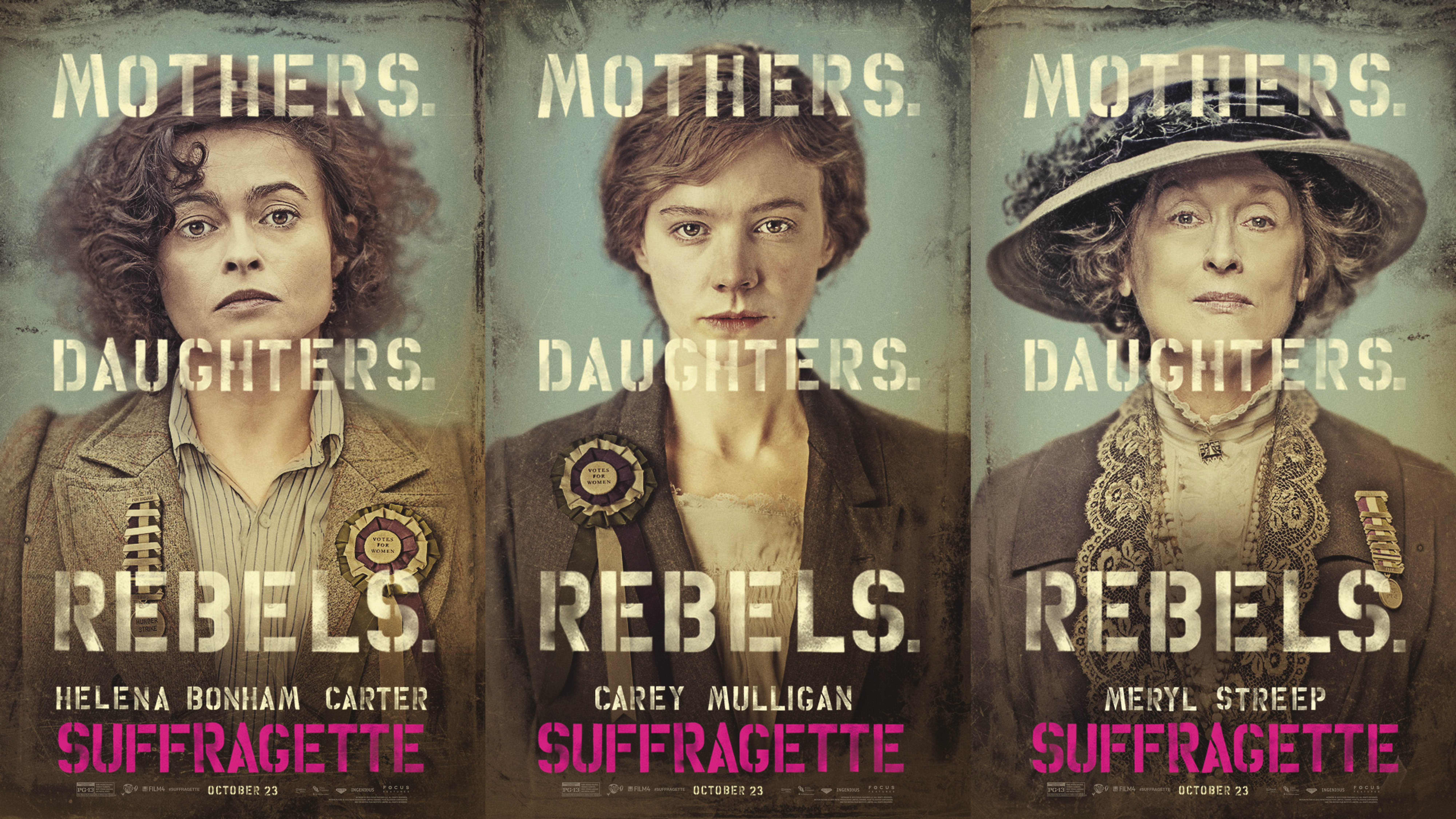
suffCarey Mulligan plays a young woman who was born in a laundry facility and has worked there all her life, working herself raw and having her boss force himself on her just to earn a third what the men take home. And then it goes directly into the pocket of her husband to do with as he sees fit. Not a naturally political woman, she gets dragged into the movement almost unwillingly but once she’s there, you can bet that neither her boss nor her husband are pleased. But it’s the vitriol from her fellow women that’s most upsetting. She doesn’t know her place, and this upsets everyone.

And it’s also enough to have her freedom taken away, and her child too if she’s not careful, so AAantithese are pretty high stakes. The laws are against her – but that’s the point. She is subject to laws she’s not allowed to influence let alone make. Women were property or commodities and laws existed to keep them that way.

Helena Bonham Carter plays a semi-educated pharmacist who is not only a pillar of her community, but an agitator and grass-roots activist. She’s recruiting and planning things when it’s time to start smashing windows and bombing letter boxes. HBC played her part well, suffragetteinjecting a little back bone into the character while still ultimately being subject to her husband’s whims. Helena Bonham Carter is the real-life great-granddaughter of H.H. Asquith, who served as the Prime Minister of the United Kingdom from 1908 to 1916, during the height of the suffrage movement. He was of course a staunch opponent of votes for women.

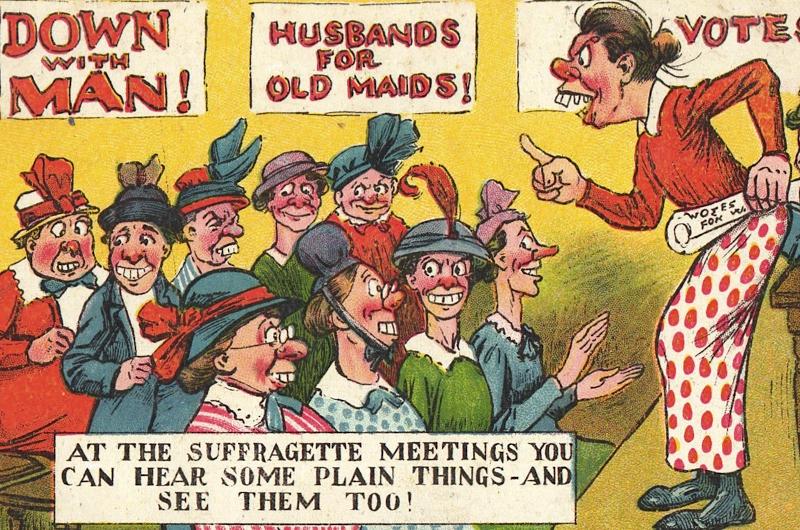
Mulligan is the perfect choice for a young mother who goes through quite the character arc, from wife and labourer to militant feminist – of course, you might find that the first two under such terrible conditions would inspire desperate reactions from anyone. Brendan Gleeson and Meryl Streep also having juicy roles, though Streep’s there in little more than a cameo, she’s nevertheless the perfect choice for theimg095 down with man movement’s heroine, Mrs. Pankhurst (this is the little detail that got to me – that all of these brave, notable women were known only by their husband’s names, ie, Mrs. Pankhurst. It killed me). Streep is strong and steady as ever. All of this capable acting smooths over some of the flaws in film making. It’s not a perfect piece of art, but it is an important one, and it’s hard not to be stirred by it.

Women in Canada got the vote in 1916, for the most part. It was not granted in the province I layout.inddlive in until 1940. American women got the vote in 1920. Some women in the UK were granted the vote by 1918 but it wasn’t unconditionally granted until 1928. That’s less than 100 years ago: way too close for comfort. Is there a woman alive today who hasn’t wondered what it would have been like to live through that? To still be all that we are and yet to be so diminished in the eyes of the law – and society? It’s boggling. And yet, in 2015, when a Prime Minister hires women to work in his government at an equal rate that he hires men, he is still asked why.


Inside Out Film Festival

hr_1986_IO_2015OttawaFestival_websitebannerNot to be confused with the latest Pixar offering, Inside Out is a not-for-profit film festival that runs in both Toronto and Ottawa and showcases movies from around the world that are made by or about the LGBT community. Access to queer cinema is a big draw in the community, as evidenced by a packed house at the Bytowne and the enthusiastic applause that ended the night. Inside Out screened The Girl King earlier this week, which you may know we took in a few days ago at another film festival. That’s right. We hit up two film festivals this weekend alone.

We did catch a screening of Fourth Man Out, about a small-town car mechanic who comes out to his best friends on his 24th birthday. They promise him that their relationship won’t change…famous last words. Because things fucking change. Of course they do. The quartet of young actors are greatfourth-man-out together, but I’m not going to call this a bromance because I think that word cheapens and mocks friendship between men. They are good friends, and Adam’s coming out does mark a big transition for the group – although it’s someone on the outside who has to remind them that this is not really about how hard it is for them. The movie is legitimately funny and accessible, but as Matt pointed out, feels a bit dated. “It’s okay that our friend is gay” feels like something that should have been made 15 years ago, and if it’s taken this long for a movie like this to get made, that’s a sad commentary indeed and even more justification for festivals like this to exist.

Another movie that we haven’t begun to talk about yet is Mississippi Grind, which Sean and I saw at the New Hampshire Film Festival (a third festival, but that was last week, keep up!). Mississippi Grind is about a chronic gambler (Ben Mendelsohn) who meets a human good luck charm, or so he MSGbelieves (Ryan Reynolds), who bankrolls his new loser buddy on a redemptive road trip. They scheme to travel the country together raking in the big bucks, but let’s remember that gambling is a serious addiction, and these people never know when to quit, and, voila: you know this isn’t going to get a happy ending. Ben Mendelsohn is great, and as much as I loved him in Animal Kingdom, it’s nice to see him in such a nuanced role; he seems quite comfortable straddling the line between pathetic and hopeful. Ryan Reynolds is at his best, which is nowhere near what Mendelsohn is doing, but he’s in his comfort zone so this odd pairing works on a strictly chemistry level. The script is loose and leisurely, maybe too leisurely for its genre, but I enjoyed its unpredictability and defiance of the expected arc.

Live from Beautiful Portsmouth – NHFF 2015

There’s actually a lot to see in Portsmouth besides all the stellar movies playing this weekend. It’s practically idyllic in its autumnal glory, just stupidly beautiful. One of the main venues is on Chestnut street, and I can’t believe that something so quaint actually exists outside of a TV set. How lucky are we? The Asshole in me is actually itching to find fault with this place!

Now for a few more of the New Hampshire Film Festival’s bountiful offerings:

A Light Beneath Their Feet: A high school senior must choose between enrolling at the college of her dreams (across the country, natch) and remaining at home to take care of hLightBeneathTheirFeet-W1-210x157er bipolar mother. This movie is proudly packed with strong women – the mother is played by Taryn Manning (Orange Is The New Black, Hustle & Flow); the fabulous SNL alum Nora Dunn appears as a good doctor; director Valerie Weiss started her film career while completing her PhD in Biophysics from Harvard Medical School, you know, in her spare time; and screenwriter Moira McMahon has shown herself a fan of working with strong females as production staff on Grey’s Anatomy, and as a writer and researcher on Private Practice. It’ll be nice to see these ladies hard at work, and kudos to NHFF for highlighting so many female directors this year!

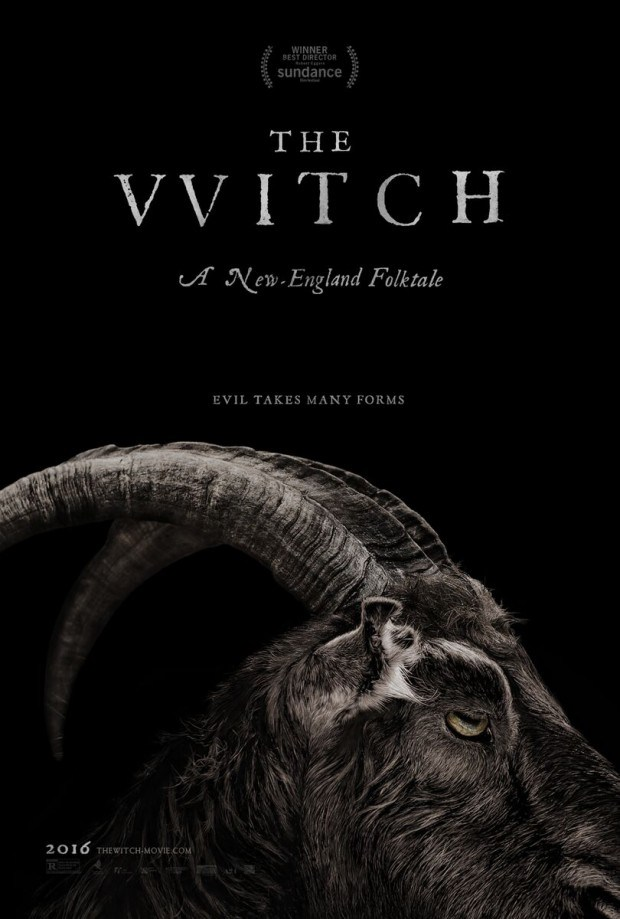
The Witch: Robert Eggers, first time film writer and director brought home the prize for Best Director at Sundance this year, and this is why. The Witch is set in New England, circa 1630. William and Katherine lead a devout Christian life, isolated on the edge of an impassible wiluntitledderness, with five children. When their newborn son mysteriously vanishes and their crops fail, the family begins to turn on one another, unraveling within their own fears and anxieties, leaving them prey for an inescapable evil…or, you know, it’s just their overactive imaginations. You know the kind of shit that went down in New England back in the good old days (*cough*Salem*cough*). This one sounds super duper creepy!

Founded in 2001, NHFF began as a small, grassroots organization to support local, regional and student filmmakers. It now attracts over 10,000 festivalgoers to Portsmouth each year, and holds a place as a viable and recognized festival that showcases the brightest talent on the international film festival scene.


TIFF 2015: One Last Push

The last weekend of TIFF held a lot of first-rate movies for us.

kateThe Dressmaker: Kate Winslet is ravishing and saucy is this film about a little girl who’s sent away from small-town Australia when she kills another child, and returns years later a sophisticated, fashionable woman able to transform the townspeople with her Singer and some satin, but not erase their memories. Her past is a shadow never escaped. It reminded me in some ways of Hot Fuzz – the facade of a close-knit town spoiled by the spectre of evil. The title may sound prim and proper, but the movie’s just a little bit naughtier, and helluva lot quirkier. Even Sean enjoyed it liammore than he thought he would; the movie’s sheer audacity earning quite a few laughs. It’s dark, and with theme shifts from elder care to bedding a younger lover, this movie doesn’t quite know what it wants to be. Not that that stopped me from thoroughly enjoying it. Winslet and Judy Davis as her demented mother give really strong, badass performances.


The Danish Girl: Both timely and timeless, this one’s a stunner in many ways. Eddie Redmayne’s performance is a show-stopper. Alicia Vikander proves she’s not just a flash in the pan. And my god it’s gorgeous to watch. So lush. A real artist’s palette. As you know, this movie is about one of world’s first sexual reassignment surgeries; painter Einar Wegener always knew he was different, but when he dons panty hose to sit 40th Toronto International Film Festivaland pose for his wife (also a painter), Miss Lili Elbe emerges and can’t be denied. This movie is restrained and delicate – and maybe a little too tepid, considering its thematic content. But it definitely worked for me on a more personal level. What is it like when the man you love tells you he’s really a woman? And what happens when you still love this woman, but she wants to leave her past behind? It’s anguishing watching them try to redefine their lives, and their selves. Redmayne will of course get another Best Actor nod (but will he win and join Spencer Tracy and Tom Hanks in back-to-back Oscars?) but I won’t be surprised if Vikander is recognized too. The Danish Girl ends up being as much her story as Lili’s. It’s not bold, it’s not daring, and it’s not a masterpiece. But it is a triumph.


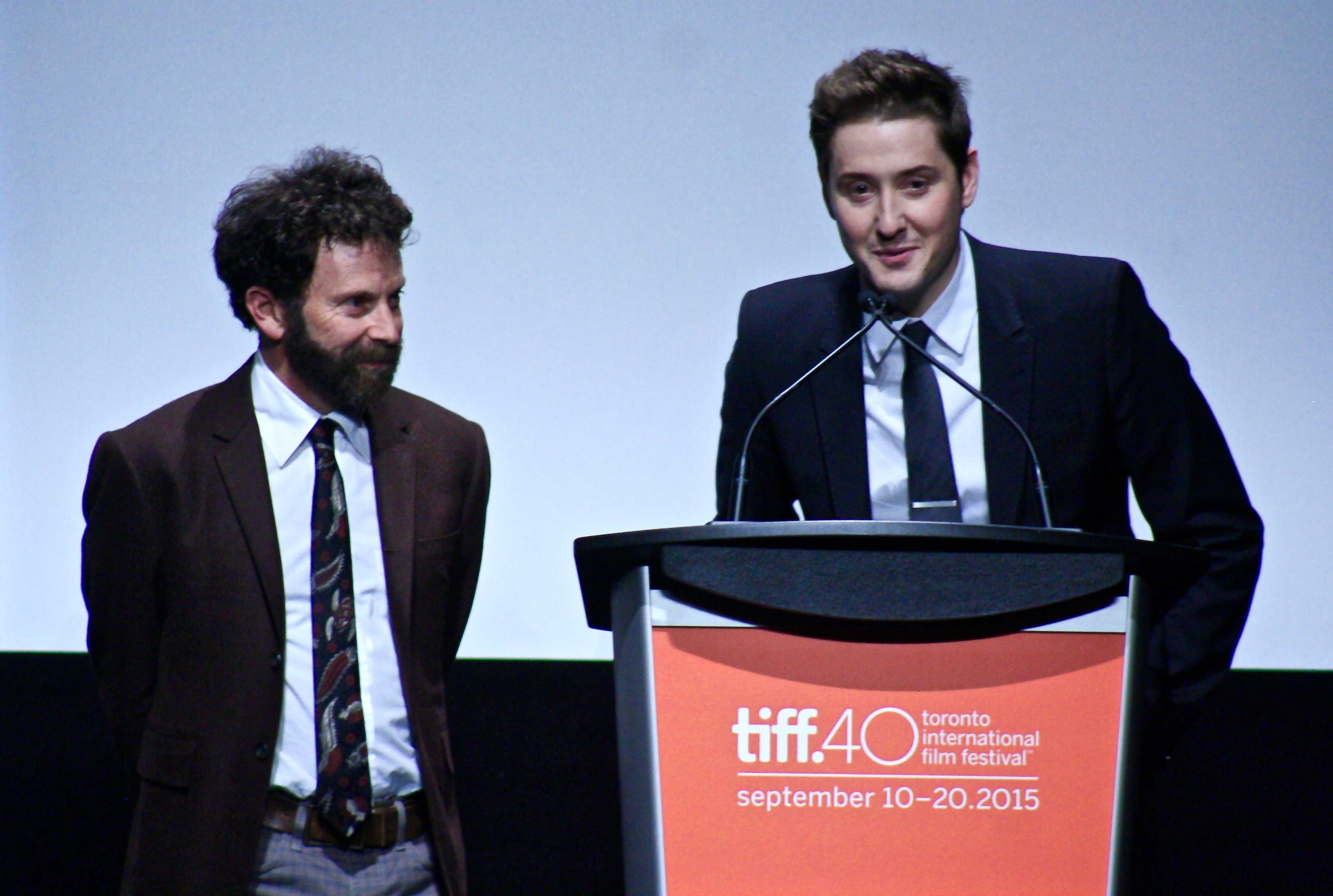
Anomalisa: Charlie Kaufman and Duke Johnson make a surprisingly exceptional pairing. Together they direct tjjlhe most invigorating piece of film I’ve seen in a long time. The script is amazing. It’s funny and smart from start to finish. The stop-motion animation is also first-rate and very distinguished. There’s nothing like it out there. How can something so banal be so funny? It’s the perfect examination of human connection, and this will stand up there with Kaufman’s best. Weird? Of course it’s weird, that best kind of brain-tickling, truthful weird. But the genius is in the pairing – for every nuance offered by Kaufman, Johnson answers with a brilliant piece of animation: the earbuds, the car air fresheCharlie-Kaufman-anomlisaner, the lobby flower arrangement, the miniature hotel room hair dryer. I always adore stop-motion animation because this physical recreation of an entire world always seems to show so much care and precision from the animators. Anomalisa is a marvel to look at and think over, and if you love Eternal Sunshine of the Spotless Mind and Being John Malkovich, then this one’s unmissable.


Legend: The legend worth noting here is Tom Hardy himself – twice. He plays real-life gangster twins, Reggie and Ronnie Kray. And he manages to make these men who look so much alike feel like complete individuals. And the camera tricks that make Tom Hardy able to punch himself in the face are super cool. YTom Hardyou can’t take your eyes off him, no matter who he’s playing. The movie, though, wasn’t my favourite. It’s exceedingly gory and gleefully bloodthirsty in some parts, and then suddenly you’ve got supercheesy 1960s pop Going To the Chapel blaring like this is some throwback romcom. There’s an annoying narration, I think to cover up some of the holes in the story, but at any rate, it doesn’t work. This movie feels as schizophrenic as poor Ronnie is claimed to be, and while it’s still worth checking out for Hardy alone, it’s best to lower your expectations a bit.


Lolo: I love Julie Delpy. I love how she writes such witty, talky women. It’s like hanging out with your girlfriends: snappy, snarky, sharp. This movie is about a 45 year old Parisienne, Violette (Delpy) and how she falls in love with “country bumpkin” (Dany Boon). This might have been a smart and sexy meloloditation on middle-aged coupledom but instead it falls apart when Violette’s millennial son Lolo is introduced. You’ll want to punch this kid in the face, especially as he lounges around in his hipster underpants one too many times. He’s jealous of mommy’s new lover, and resorts to all kinds of low-brow, stale antics to drive them apart. Delpy is better than this. If she had made a movie with just the new lover and her best friend, my god, that would have been a power house. She didn’t need this juvenile intervention, and it’s not her strength as a writer nor as a director. I still enjoyed her bawdy sense of humour and breezy manner, but it wasn’t quite the film I’d hoped it would be.