Tag Archives: female directors

TIFF by the numbers

1: serving of vegetables eaten by Assholes during TIFF (and it was a McFudge salad at McDonald’s – desperate times, people!)

2: number of meals skipped from being too tired

3: number of meals skipped from being too busy

5: number of times Jay and Sean got swag and Matt did not

7: out of eleven days of TIFF attended

9: movies that made Jay cry (longest run: 3 in a row – rough day)

12: number of times we saw something directed by a woman!

15: actual, alarming amount of burgers consumed by Assholes during TIFF

15.5: kilometers covered on foot, just walking back and forth between theatres

16¼ : approximate hours spent by Sean, waiting in line

17: actual number of blisters incurred by Jay

24: times in 7 days I saw that stupid L’Oreal commercial

34: total number of films seen by one Asshole or another (movies with happy endings: 2?)

34: also the  number of times Jay agonized about whether to pee before or after the movie (accidents: 0 – happily reported)

35: hours Jay spent watching movies

39: number of pages of notes taken by Jay (legible ones: maybe half, if I’m lucky; theatres be dark!)

40: years of TIFF

50: times we had our tickets torn

197: dollars spent on parking

346: days until we get to do it again

It was another rainy day at TIFF…

On the one hand, rain makes you feel a little less guilty about spending the last few days of summer sequestered in movie theatres. On the other hand, there’s the standing in long lineups outside the movie theatres getting icy cold rain down your back, and the dampness in your shirt never dries in the movie theatre air conditioning. So you spend the whole day with a case of the shivers. But you also get to meet really cool people – a gentleman outside the Scotiabank theatre who sheltered me with his umbrella (while occasionally sending a big dump of sub-zero rain down my cleavage, but the intentions were good), an older woman I dubbed the blue angel for her raincoat who insisted I take her umbrella while waiting outside Bloor Hot Docs in the very early morning.Toronto festival goers are nothing if not courteous.

Miss You Already: This was the earliest I’ve ever been up for a movie, so if it was anything less than I was hoping, I would have been pissed. And the thing is, my expectations were tempered. It was directed by Catherine Hardwicke, who did Thirteen, but also Twilight. It stars Drew Toni-Collette-Drew-Barrymore-Miss-You-Already-George-Pimentel-WireImage-for-TIFFBarrymore, one of my favourite celebrities, and Toni Collette, one of my favourite actresses. Note the difference. Drew Barrymore does best when just allowed to do her bubbly self, and in this case she’s well-cast and well-used. She and Collette play lifelong BFFs who have their friendship tested when Barrymore finally gets her innermost wishes granted with a long-awaited pregnancy and Collette has her innermost fears realized with a cancer diagnosis that means she is possibly dying, her children soon to be motherless. Collette is an amazing actor, capable of anything, and she handles this material with exactly the aplomb you’d expect. But this isn’t a movie likely to make the Oscar circuit. It’s meant to be crowd-pleasing, in a ten-pack of tissues sort of way. And it is. It’s a solid commentary on women and friendship, and what it means to be there for someone through thick and thin.

Maggie’s Plan: Greta Gerwig is the Diane Keaton of her generation. She’s kind of amazing in this neurotic, bohemian way. In this, she plays a young woman who is ready to have a baby, no matter what her best friend (and former lover) Bill Hader thinks. Of course, the minute she 2015 Toronto International Film Festival - "Maggie's Plan" Premieremakes her move, she meets a man and falls in love. He’s married? So what! You can’t let a stale marriage come between you and your true love – so the marriage between Ethan Hawke and Julianne Moore must crumble. Julianne Moore, by the way, is pretty much my favourite in everything lately. I will see her in two movies on this day at TIFF and can’t imagine two more different roles if I tried. Here she’s playing this European shrew with a wildly entertaining accent and immeasurable emotional peaks and valleys. I obviously hoped that this would be a good movie but was still pleased at how funny it was. And clever-funny too, which is always a relief. Kudos to another capable female director, Rebecca Miller. So thrilled to have seen so many talented women at this festival!

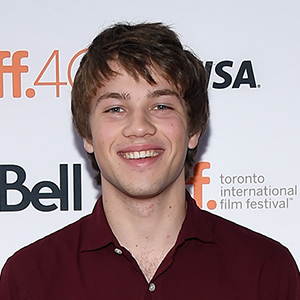
Closet Monster: Matt saw a talented young Canadian actor at TIFF several years ago in a movie called Blackbird. He knew that Connor Jessup was someone to watch out for, and he has. When 300_connor_jessup_gettyhe was announced to be starring in Stephen Dunn’s feature debut, Closet Monster, he was sold, and he sold us on it too. Thank you, Matt, for that. Stephen Dunn directs a highly personal film about a young man “coming of age” (good lord I hate that expression) in small and small-minded Maritime town. As a kid, Oscar witnesses a brutal hate crime that leads to internatlized homophobia. His teenaged coming out, and coming to terms, are therefore traumatic. Dunn creates a stylized world of escape for his protagonist, with just a hint of “magical surrealism” to help the bitter medicine go down. It’s a beautiful debut and we were all glad to have been part of it.

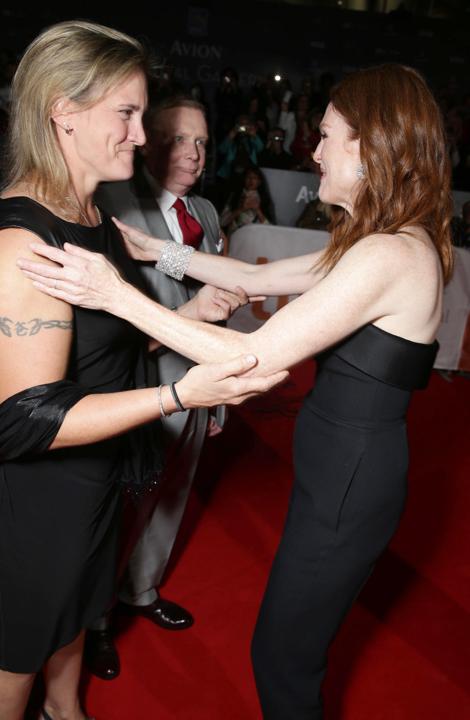
Freeheld: An embarrassingly short time ago, as in earlier this century, two women met and fell in love, and when one got sick, the other was going to be left holding an empty bag because domestic partnerships still weren’t really respected in their backwards-thinking country, and her partner’s benefits couldn’t legally be inherited by her. This true story, belonging to Laurel Hester freeheldand her widow Stacie Andree, is brought to the big screen with heaping sensitivity. You couldn’t ask for more from Julianne Moore or Ellen Page, who play the two lovers. Michael Shannon, as Hester’s partner, does a bang up job as the guy with a lot to learn. He’s a placeholder for the audience: we experience their story through his eyes. Sean and I saw Michael Shannon on Broadway a few years back (in an intense play along with Paul Rudd and Ed Asner, believe it or not) and we’ve watched him with grstacie2eater interest ever since. Steve Carrell pops up in the movie too – you may have noticed him in the trailers for this movie, as he’s the clown through which we achieve some catharsis. He plays a “big gay Jew” who basically manipulates a sick woman into stumping for his cause – gay marriage. And causes like that do need a face to make them real to people, but I couldn’t help but sympathize with Andree, who must have just wanted to spend that time with her dying spouse. It’s of course an emotional movie (Kleenex sponsored the premiere, and handed out tissues as we went in). It’s a good but not great movie – but it IS a great story, and I’m so glad it’s been respectfully told. And seeing it with real-life counterparts, including Stacie Andree herself in attendance was something that I will never forget.

Wow, Julianne Moore and cancer both featured heavily in this day’s viewings!

Finally, Matt took on Missing Girl, which you may be intrigued to know, or mystified to learn, that Matt describes as a “charming comedy about a missing persons case.” It’s not every day you hear that one.

Cheers from TIFF!

Check out our other coverage here, and here, and stay tuned on Twitter: @assholemovies

TIFF 2015: About Ray/3 Generations

about rayI was absolutely blown away by the trailer for Gaby Dellal’s new family drama about a teenager (Elle Fanning) who seeks signatures from both parents allowing her to begin the process of sex reassignment surgery. My only concern going in was how the currently trending topic of anything trans would be dealt with. Would it be sensationalized or exploitation? Would it struggle so hard to stay PC that it wouldn’t say anything at all? Would Dellal take advantage of all the press surrounding the subject matter to produce shameless and obvious Oscar bait?

All my fears were laid to rest almost immediately. Dellal introduced the film saying that About Ray was not a story about someone who was transgender. It’s a story about family. This turned out to be absolutely true. The three leads (including Naomi Watts and Susan Sarandon as Fanning’s mother and grandmother) don’t play one-dimensional symbols of courage. These characters- as well as their house-  look completely lived-in. Having to adjust to thinking of their (grand)daughter as a (grand)son is only a small part of the story of this family’s bond and conflicts. Fanning, Sarandon, and Watts are more than up for the challenge. They even look like a family.

About Ray is complex and always entertaining (eliciting laughs from Sunday morning’s audience in almost every scene) and never preachy. See it.


Note: when we saw this movie at TIFF, it was called About Ray. Now that it’s finally hitting theatres May 5, it has been renamed ‘Three Generations.’

TIFF 2015: Ninth Floor

ninth floorWhen I first started at Concordia University in Montreal, news magazine Macleans had ranked the school as an embarrassing 11 nation-wide. The only Macleans measure on which we could chant “We’re number 1! We’re number 1!” was student activism. (Im)famous at the time (I have no idea if this has held true 15 years later) for its student protests, the Concordia Student Union refused to keep quiet on issues of social justice. During my undergraduate orientation, some sneaky CSU reps took some of us aside and told us their side of their conflict with the university’s administration. They told us one story (which, as I recall, they neglected to mention happened 32 years prior) about blatant racism on the part of one professor and the administration in general and how several students held their ground and seized the Sir George Williams campus’ computer room for two weeks until their demands were met.

This incident that I now know happened in early 1969 is the subject of Ninth Floor, which premiered Saturday night as part of the TIFF Docs program. Director Mina Shun makes her documentary debut and at times fails to ask the questions I would have liked to hear the answer to. Even onstage she seemed to still be adjusting to her new title of documentarian- accidentally referring to her participants as “cast members” more than once and even referring to one partipant’s tearful interview as his “Oscar moment”. Overall though, this is a POWERFUL film about an important two weeks in Canadian history and gets bonus points for searching for the roots of racism instead of taking the easier road of labelling some as the Bad Guys. Even professor Perry Anderson- who was the subject of the students’ original complaint- is treated with some compassion. The screening concluded with four of the film’s “cast members” – three participants in the occupation (one of whom later went on to become Canada’s first black Senator) as well as Professor Anderson’s son- taking the stage to a standing ovation in one of the most moving of my TIFF moments.

Both onstage and onscreen, the interviewees often speak of their actions in 1969 as those of young naive kids. I never speak up during question periods but what I wanted to tell them- but didn’t dare- was the ongoing tradition on campus of retelling against injustice and the pride with which my generation- all these years later- speak of their actions.

Odds & Ends – Netflix Edition

longestweekThe Longest Week – Jason Bateman plays a dependently wealthy man-child chronically working on (or at least thinking about) the great American novel until one day his parents cut him off, he gets evicted, and he shows up on his best friend’s (Billy Crudup) doorstep, begging for a place to stay. And this might have gone well if he didn’t immediately start crushing on and sleeping with his best friend’s girl (Olivia Wilde). Likeable leads. Aiming for quirky but falls into been there, done that.

Touchy Feely – Rosemarie DeWitt plays a massage therapist suddenlyTouchy-Feely-Poster1 stricken with a complete aversion to touch. She can’t do her job anymore but that’s the least of it: all of her personal relationships start to suffer too. Luckily her brother the dentist starts to do really well healing his patients thanks to his daughter (Ellen Page) breeching protocol. The uptight family does some X and wander around and just like this movie, they never really go anywhere.

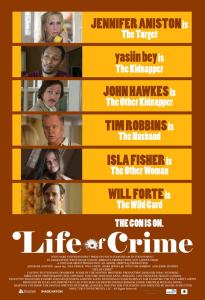
Life of Crime – Tim Robbins is a rich old white guy with a young, hot wife (Jennifer Aniston) but leaves his wife for a younger, hottlife-of-crimeer mistress (Isla Fisher). Too bad some dumb criminals pick this exact moment to kidnap the wife and demand a hefty ransom. Sure he has the money, but now that he thinks about, he wouldn’t mind if his wife just disappeared – in fact, it would save him on alimony. Not the best Elmore Leonard adaptation but solid, and sometimes charming.

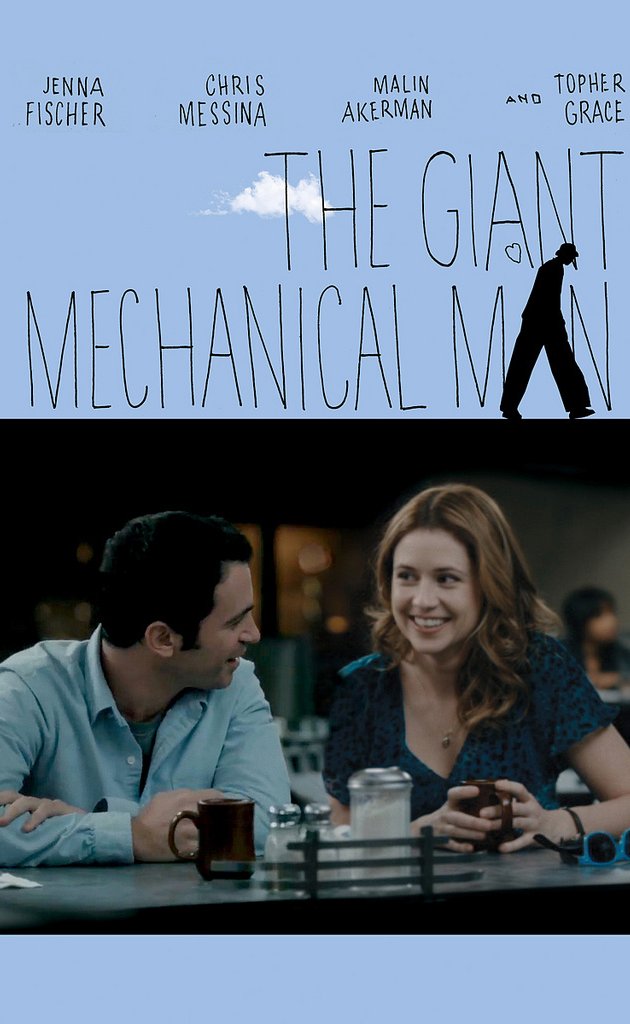
The Giant Mechanical Man – Jenna Fischer plays a woman who’s a little too old to still not know what she wants to be when she grows up. Temping isn’t paying what it used to andmechanicalman she has to move in with her uppity little sister. She feels comforted by the giant mechanical man (Chris Messina) when she spots him around the city – one of those street performers who dress up like a metal statue and never move. Turns out the mechanical man is going through a transition period himself. His girlfriend’s left him because he spends his day wearing silver paint rather than being gainfully employed. The two finally meet when they both take jobs far below their stations, and bond over their common loserdom. It’s quietly sweet, but it’s hard not to think that Pam belongs with Jim, and Danny with Mindy. Call me crazy.


McFarland

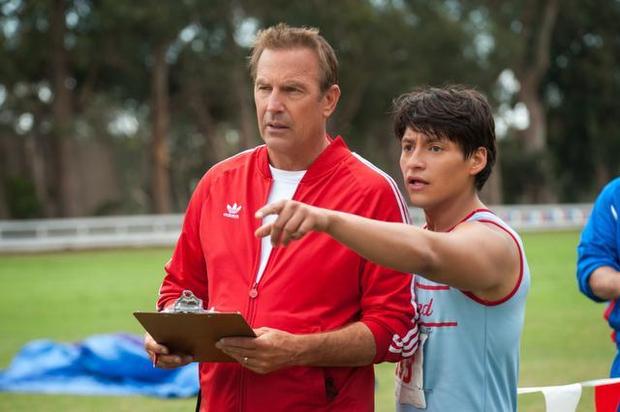
I pretty much thought we must be out of sports stories by now. How many teams can possibly start out dead-last but thanks to the inspiring speechifying of their devoted but grizzled coach, end up earning first? And of those teams, how many can overcome the prejudice of racism at the same time, convincing white folks who admire achievement that maybe these coloured folk aren’t so bad after all, because they sure are fast? And how many of these can possibly star Kevin Costner?mcfarland

If you answered TOO DAMN MANY, then you, sir, are correct!

This movie doesn’t really do anything wrong other than steal from every sports movie that’s come before it. If it was the first of its kind, you might even call it good, or inspiring. But I’m going to call it neither, because I do not live under a rock. I’ve seen it all before. I’m tired of this formula, which was pretty thin to begin with.

Silver Linings Playbook, or How I Learned to Stop Worrying and Hate the Movie that Everyone Else Loves

Some movies do it for you, and some movies don’t.

But for me, at least, there’s a certain amount of guilt when I don’t love a movie that I’m supposed to.  I’m really comfortable having never seen Star Wars, or Lord of the Rings. I feel really confident that, having booked a ticket in the nice theatre this Friday, and paying $22 to see Avengers: Age of Ultron in both 3D and VIP, I’m going to hate it. Just hate it. And that’s okay. What I don’t like is hating a ‘good’ movie. An Oscar-nominated movie. A critics’ darling. An intellectual two thumbs up. I feel so disappointed with myself if I just can’t muster the hurrah.

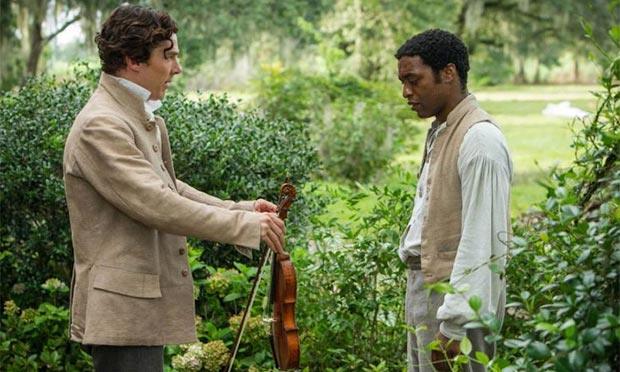
12 Years a Slave film stillI didn’t like 12 Years A Slave. There, I said it. I thought it was derivative. I felt I’d seen it before, and better. I didn’t like The Hurt Locker. It was forgettable, and Jeremy Renner was regrettable. I didn’t enjoy There Will Be Blood, and that one hurt, because I’d considered myself a big fan of Paul Thomas Anderson. There’s a good chance I didn’t fully follow it, or maybe I just need a second clear-headed chance (I needed that with Magnolia too) but it left such a bad taste in my mouth that so far I’ve been unable to even consider it. And, as you may have gleaned from the title, I did not like Silver Linings Playbook.

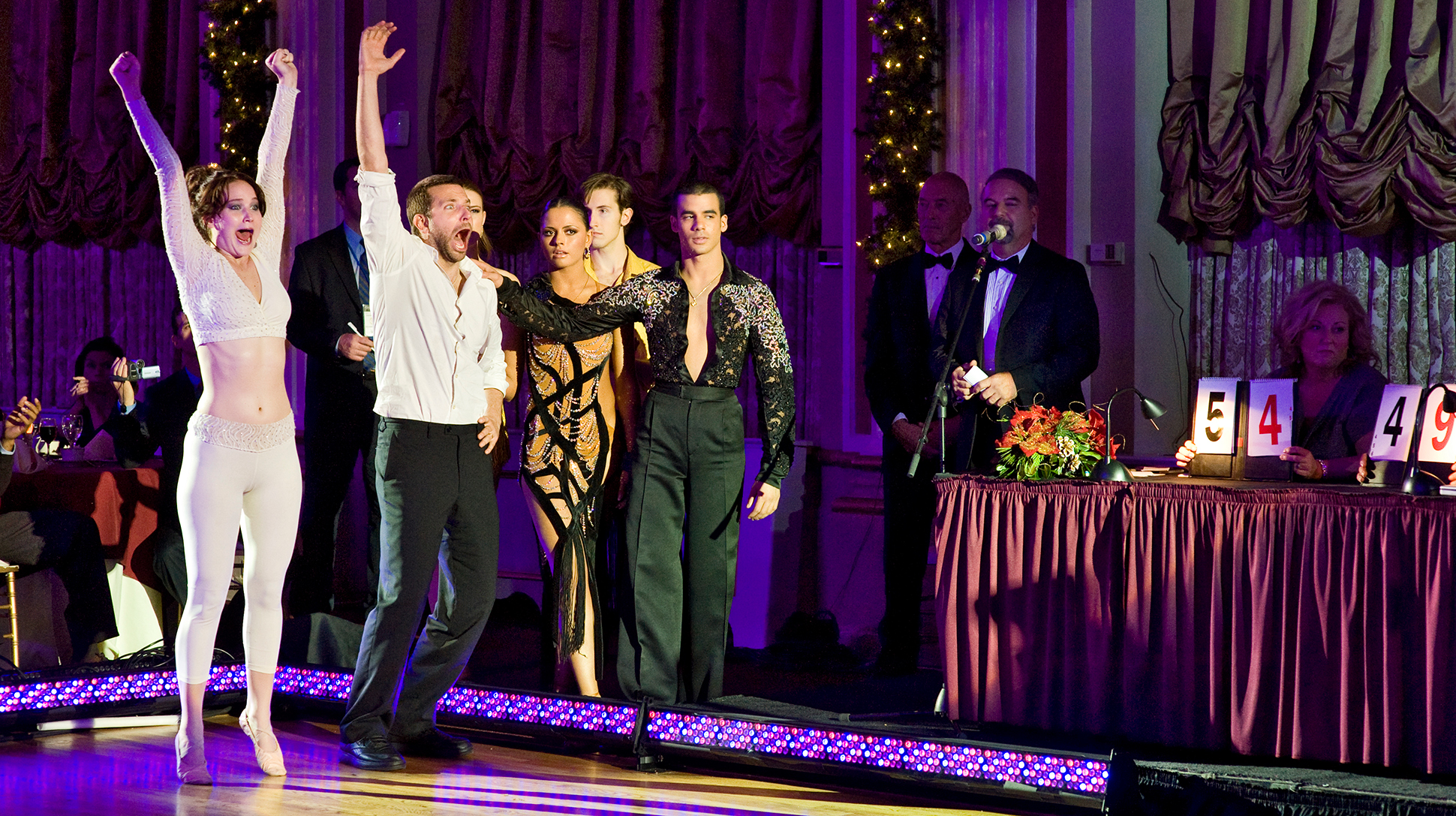
Well, maybe that’s a little blunt. I didn’t hate it. I didn’t hate any of those movies. I just fail to appreciate how so many can think so highly of them. Because they’re all in a little category I like to call “meh”. I would call Silver Linings an above-average romcom. It’s pretty conventional, sticks to the formula, with a parody of mental illness thrown in for kicks, but it feels exploitative at times, like they’re caricatures of ‘crazy’ rather than people who struggle with a disease. This movie is an ode to temporary solutions that at times seemed to embrace the formulaic approach and almost wink at the audience, and then settled in the end for just falling prey to it. silverliningsThe screwball vibe gets in the way of the love story, and you never get swept away by it. The family dysfunction was treated so casually that I never felt the movie took itself, or its subject matter, seriously.

I recently gave this movie a re-watch, because I was feeling generous, and because I (Heart) Huckabees is one of my favourites, but I didn’t connect with it any better the second time around. I might be induced to laugh along with, but not at, someone newly diagnosed, and just released from being institutionalized. I’ve been up close and personal with bipolar, and this just felt cartoonish to me. Plus, it feels irresponsible to suggest that bipolarism can be cured by falling in love, or that someone who is bipolar must end up with someone equally as ‘crazy.’

But anyway. This movie is old news. I don’t like it, and I don’t care who knows. I am a curmudgeon. I am an Asshole, dammit, and a curious one – do you have a movie that you hate but everyone else loves? Do you feel weird or guilty about disagreeing with critics? How often does The Academy get stuff wrong?

Little Women (1994)

The March sisters. Being 1 of 4 sisters myself, I suppose I should relate more to them, but I do not. I’ve never had a warm or fuzzy feeling for these women, and I do not foresee one suddenly coming on.

In 1994, director Gillian Armstrong decided to cast 3 famous little women, and 1 unknown. I wonder if she just ran out of budget. As Meg March, Trini Alvarado comes from left field and does little to distinguish herself. Pay her no mind. We all know that Meg is not that important. It’s next in line Jo (Winona Ryder) who has set herself up as the head of sisters and all things, the playwright and boss. Little Beth (Claire Danes) is the retiring, sweet one. And of course there’s Amy (Kirsten Dunst), the youngest and the sauciest, always finding trouble to get into, such as bringing limes to school, and falling through the ice.

Winona Ryder, Claire Danes, Kristen Dunst: can you get any more 90s than that lineup? MV5BNWRkOWVjZmMtMGEwOC00NDQzLWIwYWYtNDFkOGFiNTUyMWJjXkEyXkFqcGdeQXVyMjA5MTIzMjQ@._V1_SY1000_SX678_AL_Susan Sarandon plays their matriarch, ‘Marmee’ – a big name for giving her so very little to do. But this is not a story about mothers, it’s a story about sisters, and no story about sisters can be told without boys, which is why floppy-haired Christian Bale is installed next door, and he’s making some interesting acting choices. He seems to have decided to go with “effeminate Keanu Reeves” for his portrayal of Laurie.

This version is a perfectly acceptable adaptation of Louisa May Alcott’s beloved story. So my beef is not so much with the movie, and I dare not say it’s with the novel, but I don’t care much for the story, which feels too precious and sappy to me. Which is the only reason I’m not freaking out about Greta Gerwig and Saoirse Ronan reteaming. They’ve already been hard at work on Gerwig’s version of Little Women, with Ronan as Jo, of course. And Emma Watson and wholesome Meg and Eliza Scalen as boring Beth and Florence Pugh as a surprisingly elderly Amy. Oh, and Timothee Chalamet, of course, as Laurie. And Laura Dern as Marmee, and Meryl Streep as crazy ole Aunt March, so consider my heart irretrievably broken.

Gideon’s Army

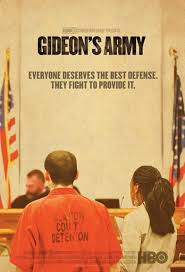
I set out to review Gideon’s Army last night with a quick comment on the best documentary Oscar race. My quick comment became a long comment as I got a little carried away thinking about what makes a documentary great. Should we hold theGideon's Army 1m to the same standards as we would fiction in terms of style or is it enough to just tell the truth about an important subject?

Gideon’s Army is a fantastic documentary no matter how you look at it. Screened mostly at film festivals in 2013 but now available on Netflix, it follows three young and hopelessly overextended public defenders working in poor areas in the southern US. Anyone who’s ever watched Law & Order knows the Miranda rights, probably by heart. “You have the right to an attorney. If you cannot afford an attorney, one will be appointed.” Everyone has a right to legal representation, even if your lawyer is taking on up to 180 clients at a time as Brandy Alexander (not even thirty years old yet) has to. A statistic at the beginning of the film states that there are 15, 000 public defenders working in the US right now and together they represent millions of defendants each year.

Gideon's army 2

Gideon’s Army gets the statistics out of the way quick and then puts all its focus on people. The three lawyers that we get to know in the film have to defend both people that they firmly believe to be innocent and people that they know to be guilty and proud to be guilty of unspeakable crimes. They lose sleep over the cases that they are terrified to lose and the lives they are afraid of ruining. In Brandy’s case, she had to represent at least on person who threatened to kill her. The work is so stressful that they have a support group.

One lawyer described being regularly asked “How can you defend those people?”. This is not a popular subject for a doc. Lawyers don’t get much sympathy, especially criminal lawyers, and Gideon's army 3neither do defendants. The film makes a strong case that the system that claims “Innocent until proven guilty” is really stacked heavily against the accused, especially if the they don’t have money. The system puts tremendous pressure to take a plea bargain, not being able to afford to stay in prison while their house and job slip away as they await trial.

Gideon’s Army potrays those that do their best to keep burnout and pennilessness at bay to defend those that can’t afford to pay them as heroes. Director Dawn Porter’s admiration is understandable. As a social worker, I can cheer for anyone who will take the time to listen to and stand up for those that the rest of the world has seemed to have given up on. I highly recommend you check out this movie.

Gender Inequality in Film

Yes, there are movies made with a female in the lead. But has Oscar ever heard of them?

This year’s Best Picture nominees are as follows: a story about a man who goes to war and loves it; a man on Broadway as actor\director\schizophrenic; a little boy growing up to be a man; a man running a crazy hotel; a brilliant gay man; a brilliant black man; a brilliant man with a degenerative disease; a devoted male student and his sadistic male teacher.

So, a big time sausage fest. These are the stories of men. Felicity Jones, Emma Stone, and Keira Knightly are all nominated for their roles as pretty accessories. None are real players in their films; they are passive actors in someone else’s story. Julianne Moore in Still Alice, Reese Witherspoon in Wild, and Marion Cotillard in Two Days, One Night are all the driving forces in movies told from their (female) points of view, and none of those movies earned best picture nods.

2014’s highest grossing movies include:

1. Transfomers: Age of Extinction

2. The Hobbit: The Battle of the Five ARmies

3. Guardians of the Galaxy

4. Maleficent

5. X-Men: Days of Future Past

6. The Hunger Games: Mockingjay, part 1

7. Captain America: The Winter Soldier

8. The Amazing Spider-Man 2

9. Dawn of the Planet of the Apes

10. Interstellar

Women fare a little better here – females take the lead in 2 of the 10, which, in case your math is  weak, is exactly 20% of the top-earners and 0% of the most lauded. And women, in case you haven’t looked around in a while, make up a good 50% of the population. Does that make any sense to you? Only 12% of protagonists were female in 2014 movies, which is down 3% from the previous year. THAT’S THE WRONG WAY, PEOPLE!

a0e86469192b5ac4b68c392aa7ee39b1Yes – you’re reading that right. Only 9% of directors are female. Only 4 women have ever been nominated as Best Director, and of them only Kathryn Bigelow has won (for The Hurt Locker – a movie with basically no women in it). It would seem that to be taken seriously, a woman has to direct a masculine film; Angelina Jolie made war movie Unbroken this year, and Ava DuVernay tackled the most iconic man in American history with Selma. Both were locked out of the Best Director category but Selma scored 2 men nominations for Best Song while Unbroken garnered 3 nominations spread among 5 men and 1 lone woman (Becky Sullivan, for sound editing – we salute you!).

In 73 years of Academy history, only 8 women have won best adapted screenplay, and only 8 have won best original screenplay. In 85 years, only 7 women have taken home Best Picture Oscars as producers, and all of them were co-producers with men.

77% of Academy voters are male. Another big surprise: the average winner in a female acting category is 36 years old compared to 44 for men.

The top 10 highest-paid actresses made $181 million in 2013 while the men made more than twice that – $465M!

The worst part is that the stats are worse when it comes to movies made for kids – in top-grossing G-rated family films, there is almost a 3:1 ratio of male characters to female characters. And how many of those are industrious go-getters? What are we telling our daughters, or for that matter, our sons? And what does it say about us as a society that animated female characters tend to show more skin than male ones – even the little girls – and are portrayed with tiny little waists and sexy features. Even the non-human females are sexualized in children’s cartoons!

In G-rated family films, speaking parts are 70% male. Characters with jobs are 80% male.

In 2012, Pixar released Brave, its first movie (out of 13) with a female protagonist. While Merida provides a positive female role model to its young audience, behind the scenes things were a little less progressive. Brenda Chapman, who spent 6 years working on the film, was stripped of her directorial duties and for the 13th time in a row, a Pixar movie was helmed by a man.

Check out the Geena Davis Institute on Gender in Media to find out more.