
History is written by the victors. Turkey has denied – or worse, refused to acknowledge at all – the Ottoman empire’s systematic extermination of 1.5 million Armenians. What better way to commemorate a genocide than with a bland and basic love triangle, amirite?
I don’t want to make light of this sad historical time, but I feel like that’s what this romantic epic does. Jeez Louise I feel dirty even writing that, and yet here we are.

It’s 1914. An Armenian druggist, Michael (Oscar Isaac), gets engaged to local girl Maral in order to afford medical school. Off he goes to Constantinople where a)he promptly falls in love with the beautiful Ana (Charlotte Le Bon) who’s of course already attached to a journalist, Chris (Christian Bale) and b)Turkey starts slaughtered Armenians, forcing both Ana and Michael to run for their lives.
This is the first big Hollywood film to be made about this atrocity, and it took years to get it made. It was financed by Kirk Kerkorian, whose family survived the genocide. To get The Promise just right, he brought in powerhouse writer, Robin Swicord (The Curious Case of Benjamin Button, Memoirs of a Geisha) and director Terry George (Reservation Road, Hotel Rwanda) and together they managed to water down a very powerful story in order to broaden its appeal. The genocide becomes the backdrop to a love story, and not a very compelling one. Even love takes a backseat when survival is at stake. Plus, it puts the  viewer in an awkward position: in order to root for our two heroes to get together, Chris and Maral, who’ve done nothing wrong, will have to die. That seems excessive, doesn’t it?
It’s beautifully, lavishly shot, easily appreciated since the violence is somehow de-emphasized. You can almost see the compromises they’ve made – by aiming for a lower rating, they’ve effectively neutered the film. The acting, however, is its saving grace. All three put in amazing performances. Oscar Isaac has been so consistent lately, and here he even nails the accent.
Yes, it’s melodramatic. The music alone will convince you of that. But it’s a tolerable watch, and, I’d argue, an important one. Since little is known about this ugly chapter in the 20th century, our attention is overdue.
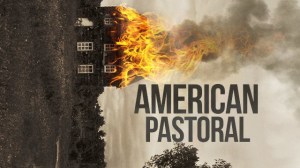 Ewan McGregor makes his directorial debut with American Pastoral, an adaption of Philip Roth’s novel. As always, I haven’t read the book and Jay has. She reports the movie to be quite faithful to the book, even pared down to have a two hour run-time.
 school bud David in on the deal and soon the two of them are rolling around naked on crisp 100 dollar bills (I assume: this wasn’t in the movie, it just seems intuitive).
 pockets. But as I was saying, Phillips divides the film into chapters, which is kind of a neat trick, except he forgets to have a point of view. So this movie, which should have a lot to say, actually says nothing. Take a fucking stance! Two uneducated, inexperienced kids, got their grubby hands on a) crazy amounts of money and b) crazy amounts of weapons and the United States government didn’t just let it happen, it made it happen. War is about money. We all know this, rationally, no matter George W.’s stated reason. It’s about economy. But it’s still painful that there’s no context. There are no good guys, no bad guys, no victims, no soldiers, no dead or dying or shot or bleeding. There’s just greedy little fucks making bank.
 The basic premise is: what if your food had feelings? Like, every night when the grocery store closes, the food comes alive in almost exactly the same way the toys do in Toy Story. But in Toy Story, the worst thing we do is neglect our old toys. Worst case play with them too roughly. But we flipping eat food! And before we eat it, we torture it: we cut it, mash it, boil it up, set it on fire. At first the food is blissfully unaware of its weird relationship with us, but when they eventually find out it’s supermarket anarchy.
 sausage fest. And of course I cracked a few laughs. I absolutely did. But mostly I didn’t enjoy myself much. I feel too guilty to laugh at something so obvious and offensive as a bottle of “fire water” with a Native American accent (provided by white guy Bill Hader). And while that might be the most culturally inappropriate, it’s not the hardest to watch. Not with a used condom sloppily lamenting its fate, or toilet paper experiencing PTSD.
 another. Like any first date, the movie doesn’t play all its cards right away. It flirts with us a bit, hinting at what’s still unsaid. The unfortunate thing is that this movie never puts out. It teases a lot of things that never actually develop. When our pants are down, nothing’s doing. This movie turns out to be a disappointing date: there’s no heat, no essential spark. It never delivers on its promise. And I was really frustrated with it dropping the ball so often. That’s just lazy.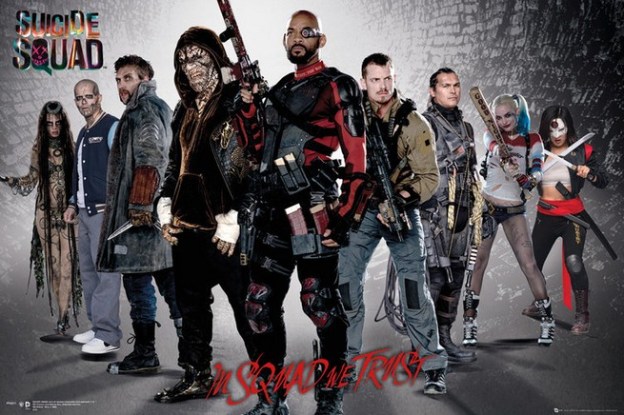
 fact that I liked
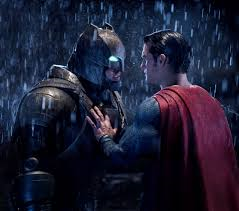
  By now you’ve probably read that a lot of people have felt let down by Suicide Squad. I was too. Its missteps aren’t as embarrassing as BvS’s were but its best moments weren’t as impressive either. Actually, while BvS ended with me feeling like I’d seen the biggest movie of the year, Suicide Squad ended with me wondering “Was that it?”.
 love, Quinn is the only character in the whole ensemble whose actions always make sense and Robbie is the only actor of the bunch who never makes a false move.
 Squad. Unfortunately, they don’t get nearly enough chance to just be themselves and play off one another. Like BvS, it’s far too interested in its needlessly complicated plot than it is in its characters.

 As you may remember, I had a great time last weekend watching a
  Which is not to say Assassination Classroom: Graduation is a bad movie. I mean, it’s not really a GOOD movie by any measure, but my post-screening research shows that it adheres quite closely to the source material (incidentally, this is a sequel to last year’s Assassination Classroom with each movie covering about half of the original manga’s story) and was a big box office hit in Japan. But this movie had no intention at any time of embracing the complete ridiculousness of its concept or the yellow squidlike teacher. Instead, Assassination Classroom: Graduation plays it almost completely straight, delivering life lesson after life lesson as the middle school class grows up and learns the ways of the assassin from a big yellow squid. How you can play that concept straight at all, I don’t even know.
 So back to those green tea Kit Kats. Apparently Kit Kats are a huge deal in Japan because the name sounds like “kitto katsu”, which means “you will surely win”. That nice sentiment has given rise to a whole host of ridiculous Kit Kat varieties being eaten up by the Japanese (and also at least two white Canadians), including Shinshu Apple, Edamame Soybean, Purple Sweet Potato, Hot Japanese Chili, and Wasabi, among others.
 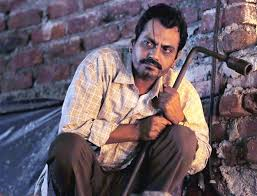 count on one finger the number of Indian films I’ve seen that were about serial killers. Which brings me to the appropriately titled Psycho Raman.
 The symbiotic relationship between cop and killer is nothing new and I feel like I’ve seen every version there is of the “You complete me” speech but Kastyap shows us enough memorable images and packs enough suspense into Psycho Raman’s best scenes that his film is well worth watching. Mumbai is a compelling setting for this familiar story and, as the Fantasia Film Festival website notes, shows a side of India that most of us aren’t used to seeing.
 important character of Raghavan, the cop with a dark side. The film is divided into ten chapters and way too many of them don’t feature Raghavan at all. Not that I’m complaining. Kaushal doesn’t bring anything new to the drug addict or the angry cop and his scenes are often tedious. Still, the battle over this man’s soul is the whole point and Kastyap needed to put in a little more time developing this character.
 ASSHOLES WATCHING MOVIES