Tag Archives: independent film

AUFDRUCK (LABEL)

LABEL

Last month, we got a Facebook message from a very brave filmmaker. Jaschar L Marktanner invited us to watch and review his short film, voluntarily facing the wrath of not one but three admitted Assholes. How fun it would be to pan AUFDRUCK (LABEL in English), from a writer-director so boldly putting themself in the hot seat.

Imagine my disappointment when I actually enjoyed it. LABEL is only four minutes long so a spoiler-free description is a unique challenge for me as a reviewer. I think (and hope) that Jaschar won’t mind me telling you that it’s shot in black and white, which is an excellent choice, partly because it adds to the French New Wave feel. In their first IMDB credits, Kira Mathis and Mary Krasnoperova play two women in a coffee shop describing a mutual acquaintance as a “son of a bitch”. Labelling and complaining with a friend over coffee may seem like a pretty universal experience but it soon becomes clear that these women use the label pretty liberally, as the conversation becomes more and more absurd.

LABEL is funny, gradually upping the ridiculousness as it follows the structure of a really good comedy sketch. Marktanner’s film has more to offer than just laughs though with what I read as an effective critique of modern fatalism. I am happy to report, however, that he has generously given this Asshole one thing to grumble about. Speaking no German, I was forced to watch LABEL with English subtitles which were colour-coded depending on who was speaking.  I found the dark red to be difficult to read against the black and white background. Once or twice, I had to pause it to avoid missing a single word. There, I said it.

Overall, LABEL is well worth your time and I am grateful to Jaschar for sharing it with us.

I Smile Back

I Smile Back is tough to watch from the start, and it only gets worse.  It tells the story of Laney (Sarah Silverman), a housewife struggling with “drugs and daddy issues”, whose primary question of her therapist is, “which do you want to talk about first?”  Laney is married with two young children, so her apparent drug and sex addictions are significant problems for a whole number of reasons.

I am by far the least qualified asshole to diagnose Laney, being the only one who’s not a mental health professional.  But since Jay’s in a pain and morphine-induced haze right now, and Matt hasn’t seen the movie, you get stuck with me as your tour guide!  So here we go.

First, the easy part.  Silverman is excellent in the lead role, and is well-deserving of the acclaim she has received so far (nominated for a SAG Award for Best Actress).  I found her very believable as a woman who loves her family and truly wants to be part of it despite struggling with all sorts of stuff.  That Silverman is so good makes the movie all that more difficult to watch.

Beyond that, it gets much tougher.  Because of how difficult the movie is to watch, looking at I Smile Back critically is very hard for me.  I did not like watching it but I know I was never supposed to.  Nothing that happens in Laney’s life gives us a lot of hope that things are going to get better, and the movie does not end on a happy note (in fact, at the end things are at their very bleakest).  Silverman has made us care about Laney by then.  I wanted Laney to get better and repair her relationship with her husband Bruce (Josh Charles), so I was hoping for a typical Hollywood ending.

Suffice to say, I did not get a happy ending, and after reflection I think that was the right decision by writers Paige Dylan and Amy Koppelman (the latter of whom wrote the book on which the movie is based).  But something still was missing, and after staring at this computer screen for a while, I think I have put my finger on it.  In a meta sense, the movie is worthwhile because it gives Silverman the chance to show a whole other dimension to her acting.  But within the movie itself, I Smile Back didn’t give me anything meaningful.

The only meaning I can find within the movie is that anyone may be struggling with mental health and it’s not easy to recover even if he or she really wants to.   And while that’s something I agree with, it’s something I already felt coming in and the story in I Smile Back really didn’t go beyond that basic notion.  Everything in the movie was consistent with that idea but it felt like we were on a fixed path because of it.  Looking back, almost all the characters we meet other than Laney are primarily plot devices to give Laney a chance to make another bad decision, and she rarely misses the opportunity.  The opportunity that feels missed is on the part of the writers, who rather than fleshing out characters or situations, just keep things moving by giving Laney more chances to do bad things.   Because of that, I never felt that seeing these awful things happen onscreen was worth the pain.  I never felt any payoff for my discomfort within the movie and I needed there to be something.

Overall, this movie was worth checking out for Silverman’s performance but it’s really not great otherwise.  I give it a score of six out of ten.

Her Composition

I’ve yet to comment on my Whistler experience because Jay has already written in detail about our first two days and was so spot on with her reviews of Carol, The Life and Death of an Unhappily Married Man, How to Plan an Orgy in a Small Town, and Love that I felt I had nothing to add. It was Friday (or, as I kept calling it, “Sunday”) that I dared to separate from the other Assholes and brave the Whistler Film Festival alone.

Whistler itself proved easy enough to navigate. I managed to explore almost the entire village on foot in about half an hour and is structured in such a way that even I would find it difficult (though not impossible) to get lost. Her Composition was a different story. After a chance encounter with director Stephan Littger earlier that day, I had the rare and awkward treat of sitting next to him at the Canadian premiere of his debut feature. Littger had already expressed some apprehension about the disappointing speakers at the Village 8 Theater and made a point of encouraging us all to move up to the front of the theater to get the full effect. Sitting so close to him made his anxiety contagious and we both shifted in our seats when the DVD began to skip only a minute into the screening. The problem soon corrected itself though and I was able to relax and enjoy this fascinating and challenging film.

Her Composition is, thankfully, not a comedy, sparing me the pressure of laughing on cue. Malorie (Joslyn Jensen), like Natalie Portman’s character in Black Swan, is an artist who wants to please her instructor so badly that she has trouble truly letting go. With her thesis composition due in a matter of weeks, she decides to start over. Finally getting out of her head, Malorie starts working as an escort and drawing inspiration from the sounds of the city and of her encounters with her clients. Her new unorthodox approach to songwriting feels empowering at first but the narrative begins to get darker and darker as her experiences as a sex worker get more and more dangerous and as her obsession with her masterpiece begins to border on madness.

Littger’s frustration with the house speakers is understandable. The sound mixing makes or breaks a film like this and Littger and his team have clearly put a lot of thought into how to communicate texture through sound. Malorie hears music in her head which, of course, is inspired by the sound and rhythm of the world around her. To communicate this to the audience- the relation between a man’s grunts during climax and the song in her head- is the hard part. It’s a work of exceptional editing and sound mixing.

Even if all the subtleties of the sound weren’t showcased as well as Littger would have liked, he’s still got Jensen- whose performance is nothing short of captivating. Her transition from teacher’s pet to tortured genius is believable every step of the way. I was disappointed that she was unable to attend the Canadian premiere last week because I would have been happy to meet her and congratulate her.

I hope a lot of people see this in theaters with speakers that would make Littger proud.

River

Of all the films we saw at the 2015 Whistler Film Festival, River was my favourite, and apparently, I’m not alone.   When the bulk of WFF’s awards were handed out yesterday, River won the Borsos Competion for Best Canadian Feature Film!

As well, writer/director Jamie M. Dagg was honoured twice in connection with River, for Best Director and Best Screenplay (naturally).  River’s lead, Rossif Sutherland (Donald’s son and Kiefer’s half-brother) also received an honourable mention in the Best Performance category.  And when the People’s Choice Award is announced tomorrow, I will be rooting for River to win that too, because it’s awesome.

What was it about this movie that grabbed me?  There’s so much there to love.  It’s a Canadian-Laos co-production, the first of its kind and the first western movie to be filmed in the southeast Asian country of Laos (if you’re rough on your geography, Laos is nestled between China, Vietnam, Cambodia,  Thailand and Myanmar).  It’s hard to call anything we see onscreen beautiful, exactly, but the surroundings almost become a character of their own.  The title, though generic, is fitting because the seemingly omnipresent water is an obstacle that our protagonist grapples with again and again.

The movie starts in a frenzied emergency room and the tension only builds from there.   Every sight and every sound tightened the knot in my stomach as I watched the action unfold from there.  The cinematography is fantastic, the editing is tight, the score is amazing, and Rossif Sutherland is a revelation as Dr. John Lake.  Dr. Lake is one of the doctors in that frenzied opening scene, and the outcome results in him being asked to take some time away.  After a night of drinking at a vacation spot in south Laos, Dr. Lake witnesses a sexual assault and from there everything goes to hell.

Rossif commands our attention right away.  He’s got more than a little Jack Bauer in him, frenetic, unstoppable, and big enough to have eaten Kiefer whole.  But Rossif is clearly set on making his own name rather than relying on his lineage, and in River he delivers a star-making performance.  From the start, Dr. Lake is not a super likable guy, but Rossif makes us root for him anyway. We’re with him all the way through his journey and Rossif owns every single frame.

At all times, Rossif is an overpowering presence in the best of ways, and it is clear that the foundation for his stellar performance is Jamie Dagg’s work behind-the-scenes.  It’s hard to believe this is a Canadian movie and even harder to believe this is Jamie’s first feature film.  The action scenes, and there are many, flow naturally, are perfectly staged and suck the viewer right in.  Despite the fact we know in our gut that this can’t end well, we follow Rossif eagerly, because he and River are so compelling.  And just when you think it can’t get any better/worse, Dagg’s script delivers a fantastic payoff that elevates Dr. Lake and this movie to a whole new level, which did not even seem possible because what came before was already so great.

During the Q&A, we were told that this movie is being given a wide release in the spring of 2016.  How wide seems yet to be determined, but this is a movie you need to track down and experience.  Because River will take you on a wild ride that you won’t soon forget.   Don’t miss it!

Whistler, Day 2

This day ended up being nothing like the one we had planned. It was supposed to have been crazy in a 4-movie kind of way, but as you’ll see it ended up being crazy in an unanticipated kind of way.
 12009642_729776313832592_461311092944717881_n
The Life and Death of an Unhappily Married Man: This ultra-indie (made for less than I have in my bank account on any given day), a dark comedy written and directed by Josh Hope, tells the tale of Riley (Tommy Beardmore), perpetually irritated by his wife and miserable at his job. The opening scenes of the movie don’t exactly make you sympathetic to his plight, however – could it be that Riley himself is the architect of all his pain? If every single facet of your life is going wrong, the only common denominator is you, Riley. It’s hard to watch a movie having no sympathy whatsoever for the main character; it’s even harder to do so when the man who wrote and directed the film, based on his own real-life experiences, is sitting next to you in the theatre. Matt and I agreed afterward that we couldn’t decide if it was bad writing or bad acting that made whole scenes fail. It felt like it was trying too hard to be a quirky movie while actually being ridiculously unimaginative. Sean had a slightly kinder outlook, but here’s what it boils down to: nobody died. And I think there has to be a rule that if you announce in the title there’s going to be a death, you bloody well better go through with it. And furthermore, if you’re going to create a character this irritating, then you’d better reward us with his destruction. Anyway, we’re very happy that the director got to exorcise some demons in the making of this film, while also convincing lots of young actresses to remove their tops (needlessly, sure, but there is no balm to the divorced man’s soul like young, nubile, goosepimply tits). Kudos to him.


How To Plan An Orgy in A Small Town: Like the previous one, thisMV5BMTUzMjU2NzA4Ml5BMl5BanBnXkFtZTgwNzM0MTg5NjE@__V1_SX214_AL_ independent film was crowd-funded, made on a teeny budget, and vied to be crowned ‘Most Awkward Title 2015’ . It’s about a “town slut” turned successful sex columnist who has to go back home for her mother’s funeral only to encounter the awful people who chased her away, who are now begging her to organize an orgy for them. This little Canadian gem is written and directed by Jeremy Lalonde and I’m happy to report that while there’s also heaps of nudity in this one, the whole thing was pulled off an awful lot better than the one we saw before it. It’s probably  not fair to compare them, but we’re at a festival, we’re watching movies back to back, and it can’t be helped. We rated this movie better on every score: the writing was better, the acting better, the score was better. The jokes landed. In fact, the jokes were funny to begin with, and then well-executed. The scenario was a bit of a stretch but it asked you to go along with it, wink wink, and so we did. Matt thought it was a little “low-brow”, which is frankly probably what won Sean over. It’s not arty. It’s not putting on airs. It really is the kind of weirdos you’d expect to show up to a small town orgy, and you kind of love it for that. If you’re familiar with small towns at all, you’ll find something to relate to in this movie. The lead actress, Jewel Staite, looked awfully familiar to all of us without any of us being able to say why. She must be one of those Canadian staples that just floats around in everything, but I can tell you this: we’ll be deliberately looking out for her from now on. I loved her sarcasm, her cynicism, her naiveté. This character is interesting, and she pulls her off with a wry, shy charm. The cast as an ensemble was actually very solid, and we had fun discussing our favourite characters over dinner – and nearly all of them were mentioned at one point or another. So this is how you assemble a successful indie film: you work and rework the script; you find great talent. And you don’t start filming until you have done both those things. And when it comes time to film the nude scenes, you film quickly, and without permits. Is it weird that the director of both these movies told about illegally filming public nudity? Should we be worried about our film selections? Nah. I think we’re cool.


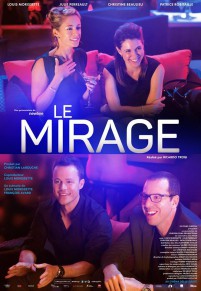
7d3340a1d2d14c92b1137e346b554afeLe Mirage: This one garnered some controversy when it was released in its home province of Quebec earlier this year. It’s about a 30-something man who seems to have it all – a successful business, a beautiful wife, an impressive home, great kids. But things aren’t as swell as they seem and instead of telling his wife about the trouble they’re in, he turns, instead, to her best friend, newly implanted with ginormous tits, the new object of his fantasies. It doesn’t sound all that out there, but there’s … an aggressive kiss. A kiss aggressive enough that some people were calling sexual assault. I’d like to give you my take on it, but the truth is, for first time in Asshole film festival history, we missed a screening. Entirely our own fault. Sean decided last-minute that in fact, he could not come all the way to Whistler and not ski the mountain. But he’d in no way prepared for this, so we scrambled around to rent all the necessaries, and that cut into our movie-going time. I’m sad to have missed it, but not sad that life got in the way. We love movies, but they’re only a portion of our happy lives, not the entirety.


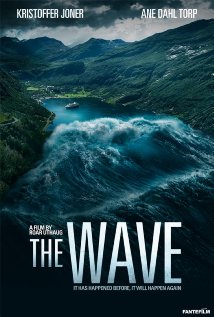
The Wave: This is Norway’s official entry for Oscar consideration inMV5BMjI2NDUyODgyMV5BMl5BanBnXkFtZTgwMTM5NDY1MzE@__V1_SX214_AL_ the foreign film category, and it’s Norway’s first disaster movie. The mountain pass of Åkneset is constantly moving and could fall out at any time. This movie imagines that it does, and creates a huge tsunami that’s going to threaten the lives of anyone who gets in its way. Sean and I were very excited to see this one but alas, we were told that there were “technical difficulties” and it would be delayed by at least 90 minutes. People dispersed to kill time alcholically (I’m assuming) but we stuck around long enough to hear that in fact it was cancelled altogether and so we parlayed our useless tickets into another screening.


Gaspar Noe’s Love: What better way to end the day than with NoeLovePoster-thumb-630xauto-51550graphic, unsimulated sex. That’s right: it’s not porn, it’s not acting, it’s just sex, up on the big screen (and possibly in 3D, if you’re lucky – just watch out for that money shot!). Murphy is an American studying film in Paris who hooks up with unstable,erotic Electra. Their sex life is turbo-charged, and then one day they get the very good idea to invite their pretty neighbour to join them, because why not? So yeah. If you thought our day was jam-packed with sex and nudity already, let me tell you, that was only a little light over the clothing petting compared to this. Two and a half hours of graphic, penetrating, relentless sex. You don’t even realize how unsexy sex is until there’s such an onslaught of it: every inch of Murphy’s constantly turgid penis, the sloppy wet noises of fervid humping, the moans of ecstacy, the sighs of agony (or were those just mine?), the slapping of balls, the scrunched up orgasmic faces, the curled toes, the semen. Oh, the semen. There is literally a cum shot that will make you flinch as it spurts toward your eye. No detail is spared when it comes to Murphy’s cock, but only dark, hairy triangles of mystery where the women are concerned – and why is that? You haven’t seen this much hair on a woman since 1974 so I can only assume its point was to obscure. And while we clearly see every last bit of Murphy’s erection as he plunges balls-deep into one woman or another, we never get a single glimpse of anything pink and glistening while he eats her out, or fucks her with his thumb. The vulva is a beautiful flower but apparently not worth showing. So I hated this movie for its singularly male experience, but since I hated this movie for many reasons besides, it seems unfair to dwell on this one thing. But since my laptop reminds me that it’s 4:06am back home, I might save those other reasons for another day. We have to attempt some sparse sex acts of our own now before dreaming in 3D.

99 Homes

99 Homes, the fifth film from Ramin Bahrani (Chop Shop, Goodbye Solo), made me feel something no movie ever has.  Movies have made me angry.  Movies have made me cry. I’ve walked out of theaters sometimes feeling inspired and other times defeated.  But until watching 99 Homes, no movie had ever made me feel heartbroken.

The old man got to me. In a movie about people losing their homes, it’s easy to grow as numb to the eviction scenes as the evictors do.  Most refuse to accept their situation, hurl threats, and yell “How can you sleep at night?!”  But not this old man.  He just doesn’t quite understand what’s going on and doesn’t put up a fight.  He seems to sense that something’s not quite right here but, confused by all the fancy talk and not wanting to cause any trouble, keeps his protests half-hearted as he is forced out of his home.

This poor old guy is one of many people we see forced out by real estate broker Dennis Nash (Andrew Garfield).  Nash wasn’t always this way.  When we first meet him, he is an out-of-work construction worker and single father who is behind on his house payments.  He soon endures the humiliation of being escorted out of his family home by two sheriff’s deputies and moving his family into a sketchy motel.  Needing money and having very few options, Nash goes to work for Rick Carver (Michael Shannon), the broker who profited in a big way both from Nash’s eviction as well as from the housing crisis in general.

We’ve all seen this story before.  Carver’s business practices are ruthless and unethical and, as a recent victim himself, Nash is at first revolted by him at first.  His questions about the legality and ethics of what their doing, though frequent at first, are quickly silenced when he starts to enjoy the steady cash flow.  It’s a familiar arc but the back drop of the housing crisis makes it more relatable.

Garfield takes some getting used to as Nash.  Best known for playing skinny nerds, his casting as a working man isn’t a perfect fit, even with the beard and tattoos.  As his performance matures along with the character, I found the actor’s baby face to be gradually less distracting.  The part of Carver, however, fits Shannon like a glove and he is always believable and never dull.  The most compelling thing about the Carver character, and Shannon’s performance, is that the script knows when to stop just short of making him a complete monster.  Carver does terrible things the way a real person does, not like a villain in a film.  In my heart, the “film villain” label is reserved for Nash after what he did to that poor old man…

Band of Robbers

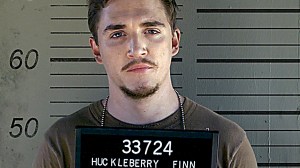
Some things never change? Huckleberry Finn and Tom Sawyer are childhood friends, scamps, hunting for buried treasure. They get into trouble. Huck gets caught, repeatedly, and winds up in prison. He doesn’t rat on his friend though, his partner in crime, so Tom keeps out and becomes a cop. Upon Huck’s release, Tom is only too happy to recruit him maxresdefaultinto his Band of Robbers, where they can make “bad guys pay” and get a heck of a pay day for themselves.
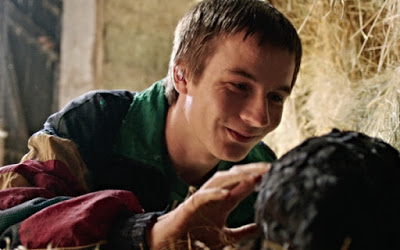
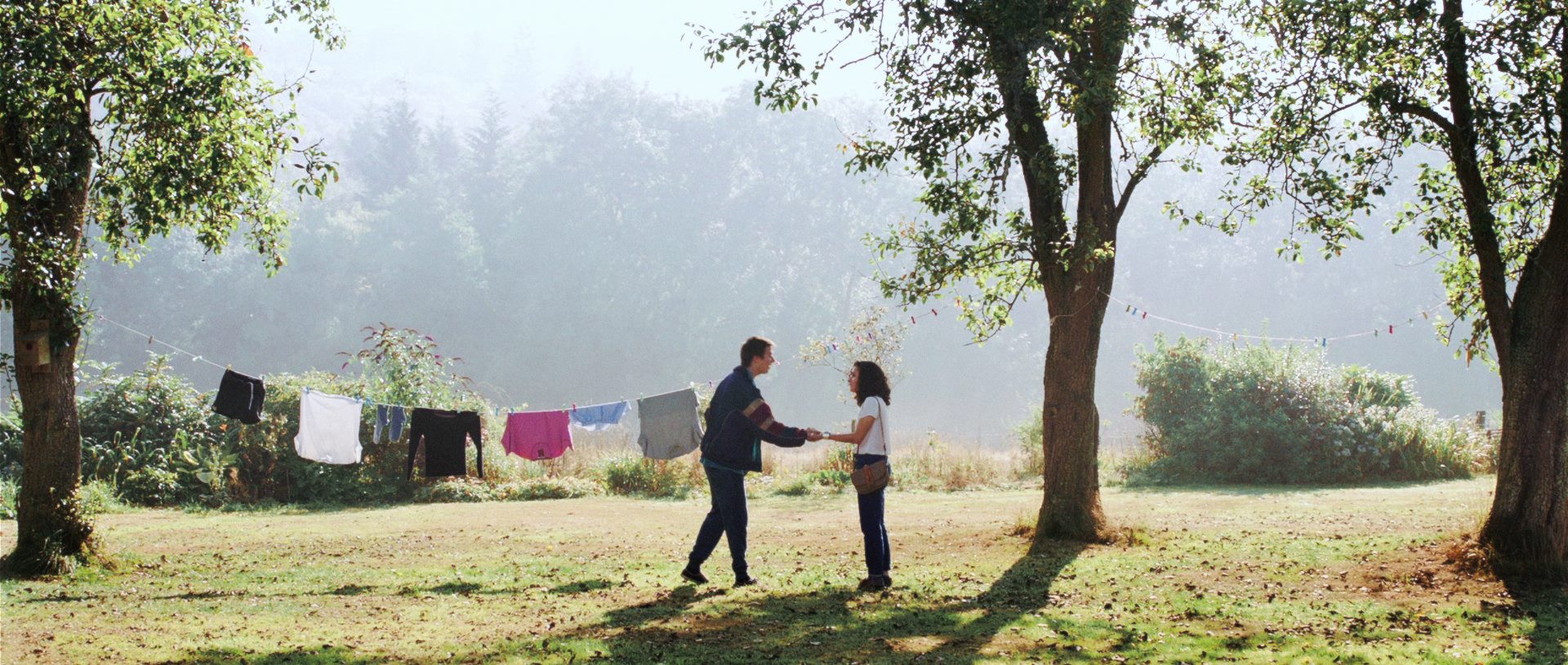
Not exactly the Twain you remember? The directors describe it more as “fan fiction” and no, it doesn’t quite hit the high mark they’ve aimed at, but there’s fun to be had in the trying. The script is uneven but there are enough little giggle-nuggets along the way to sustain you. The movie doesn’t quite keep to its original momentum, but I have to admit, I wanted to find out how it would play out.

Adam and Aaron Nee both wrote and directed this thing but only Adam stars – as Tom. The first half of the film is coated thickly in their love for the source material and fans of Mark Twain will be rewarded with winks and nods aplenty. But someone less familiar will still find plenty to enjoy in this little indie caper. The Nee brothers are sometimes lumped into the Mumblecore movement often attributed to that other famous pair of sibling filmmakers (The Duplass brothers), but some would argue the cinematography in their films alone elevate them beyond such distinction.

No matter how you slice it, it seems pretty clear that this is a talented duo on the rise. Discover them now.

NHFF: The Best For Last (Chicken)

The New Hampshire Film Festival was full of great movies – in retrospect, we didn’t see a single bad one, and that’s not supposed to be possible when you’re ingesting just as much film as possible in a single weekend. There has to be a dud in there somewhere – that’s science, isn’t it? Or mathematics? Law of averages? Just my luck? But no, not a bad one in the bunch. There were, however, some super duper standouts.

chickenYou’ve already heard Sean crow over his favourite, Robert Eggers’ The Witch, but you haven’t yet heard me swoon over Chicken, the absurdly titled (and I should know) movie that will break your damn heart. There is no way to summarize this movie and do it justice. It’s about a 15-year-old kid named Richard (Scott Chambers) who suffers from some unspecified developmental delay. He lives in a trailer with his brother Polly, who is neglectful at best and I’ll let you use your imagination for his worst. Richard’s only true friend is a chicken who gets included on his many adventures about the property he and his brother (Morgan Watkins, Kingsmen: The Secret Service) are illegally squatting upon. But then one day he meets the daughter of the new owners, Annabel (Yasmin Paige, Submarine), whose abrasive tongue might lose its barbs for such a gentle creature and his faithful chicken. Now take that inadequate synopsis and sprinkle it with magic.

Director Joe Stephenson absorbs us into Richard’s world immediately, and we can’t help but fall in love. There isn’t much plot wasted on this character-rich drama, but you’ll never be bored. Richard is MetSomeonenot quite like any character you’ve seen before, aptly and considerately brought to life by the excellent Scott Chambers who wisely chooses empathy over pity. Stephenson knows that Richard is the key to the audience’s heart, but he’s not after some melodramatic tear-jerker, he’s looking for honesty, and he finds it in unlikely places. You’ll be startled to find such compassion from such a young filmmaker but he’s brave enough to give his actors lots of room – literally and metaphorically. You’ll see this translate on the screen as he often takes full advantage of his scenic location rather than closing his characters into too-close shots. He injects a strong cinematic element into what was once a play and has room to spare. Though there’s some Chicken-1unevenness to the script, I easily forgave all not because I cared for Richard, which was easy enough to do, but because I came to care for the brute Polly. And once you have seen Polly in action you will appreciate the enormity of  Stephenson’s accomplishment of making you care about both brothers.

You don’t always feel it, but the movie is lathering up to something bigger than the sum of its parts, and once you get there, you won’t want to watch but nor will you be able to look away. At the climax, just as through the whole movie, the characters are complex, sympathetic, and real, and that’s what sets this movie apart and elevates it to a whole new level.  These wonderful characters make this movie one you have to watch and one that will stick with you long after you leave the theatre.

IMG_2851Both Chambers and Stephenson were in attendance for this, its North American premiere, and the audience was all too glad to be able to reward their effort with a heartfelt standing ovation. And yet, as I’ve found myself thinking back on this movie even as I’m attending other film festivals, and in fact have watched more than a dozen movies in the week since, I realize that it’s not enough. It’s not every day that a movie gets under my skin, and I’m probably more cynical than most.

This film took home the Narrative Grand Jury prize, and jury member John Michael Higgins Chicken-1-456x320presented the award to Stephenson noting “It was a very special experience for me to watch. This film had an incredibly delicate tone, sustained over each event, which is very hard to do.” I’m glad these guys have a trophy to lug home, because this movie’s not going to win an Oscar but it does deserve something that will sit on a mantle and proclaim: I made something moving, and people saw it, and they fucking loved it. Because all of us who were lucky enough to see this film loved it and I have no doubt that you will love it too.

TIFF 2015: The Missing Girl

missing girl 2Colin Geddes, director of both the Vanguard and Midnight Madness programs at the Toronto International Film Festival, introduced The Missing Girl as “probably the gentlest” of the films that he would be introducing to Festival audiences this month. Normally a fan of the sick and twisted, Geddes deserves a lot of credit for introducing us to this surprisingly charming comedy about a missing persons case.

Character actor Robert Longstreet plays Mort, a middle-aged comic book store owner who’s found himself in a bit of a rut after the death of his father, a well-respected detective with the local police. Painful memories of the disappearance and presumed murder of his high school crush still haunt him and come flooding back in a big way when his young and hot employee fails to show up to work one day. The longer her absence, the more extreme the measures he’s willing to take to find out what happened to her.

“Gentlest” or not, The Missing Girl did stress me out a little about having to walk back to my hotel alone after midnight in a strange city. Director A. D. Calvo takes our expectations of the genre as well as the film’s title and makes them work in his favor for awhile until he doesn’t need them anymore. While the mystery of whatever happened to the two missing girls will grab your attention, the character of Mort will hold it until the end. Longstreet is both believable and charismatic in a sad way, not an easy task given that you’re likely to find his behaviour increasingly bizarre. Less a story about a missing girl than a lost man, The Missing Girl examines the ways our growth can be stunted at any age and what it takes to come back to the land of the living.

Odds & Ends – Netflix Edition

longestweekThe Longest Week – Jason Bateman plays a dependently wealthy man-child chronically working on (or at least thinking about) the great American novel until one day his parents cut him off, he gets evicted, and he shows up on his best friend’s (Billy Crudup) doorstep, begging for a place to stay. And this might have gone well if he didn’t immediately start crushing on and sleeping with his best friend’s girl (Olivia Wilde). Likeable leads. Aiming for quirky but falls into been there, done that.

Touchy Feely – Rosemarie DeWitt plays a massage therapist suddenlyTouchy-Feely-Poster1 stricken with a complete aversion to touch. She can’t do her job anymore but that’s the least of it: all of her personal relationships start to suffer too. Luckily her brother the dentist starts to do really well healing his patients thanks to his daughter (Ellen Page) breeching protocol. The uptight family does some X and wander around and just like this movie, they never really go anywhere.

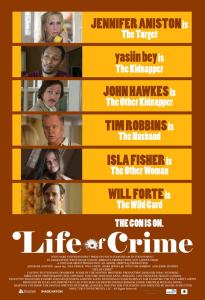
Life of Crime – Tim Robbins is a rich old white guy with a young, hot wife (Jennifer Aniston) but leaves his wife for a younger, hottlife-of-crimeer mistress (Isla Fisher). Too bad some dumb criminals pick this exact moment to kidnap the wife and demand a hefty ransom. Sure he has the money, but now that he thinks about, he wouldn’t mind if his wife just disappeared – in fact, it would save him on alimony. Not the best Elmore Leonard adaptation but solid, and sometimes charming.
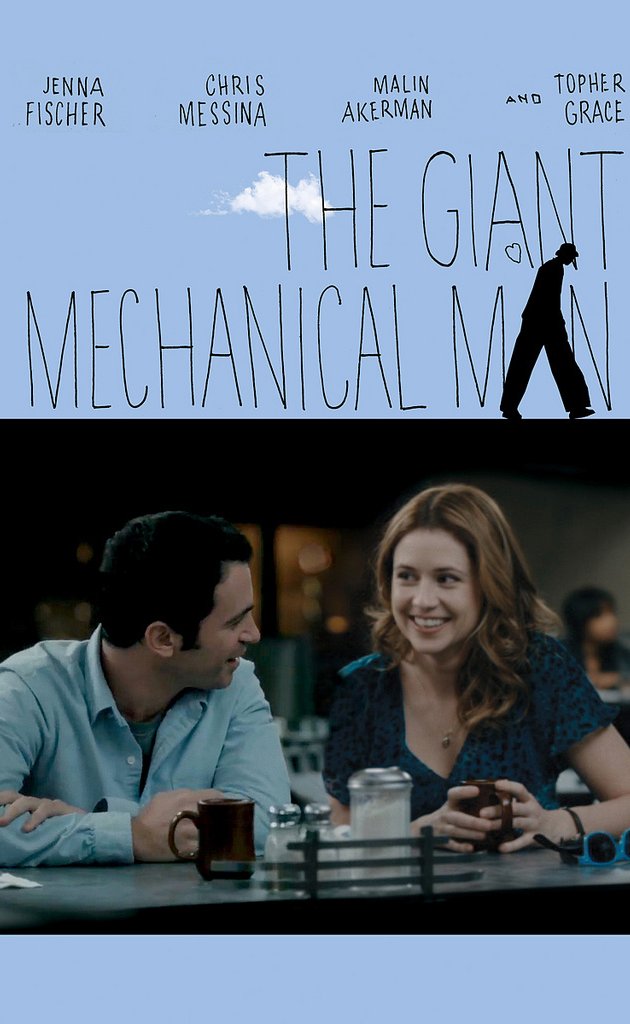
The Giant Mechanical Man – Jenna Fischer plays a woman who’s a little too old to still not know what she wants to be when she grows up. Temping isn’t paying what it used to andmechanicalman she has to move in with her uppity little sister. She feels comforted by the giant mechanical man (Chris Messina) when she spots him around the city – one of those street performers who dress up like a metal statue and never move. Turns out the mechanical man is going through a transition period himself. His girlfriend’s left him because he spends his day wearing silver paint rather than being gainfully employed. The two finally meet when they both take jobs far below their stations, and bond over their common loserdom. It’s quietly sweet, but it’s hard not to think that Pam belongs with Jim, and Danny with Mindy. Call me crazy.