The Reverend Ernst Toller is the minister at First Reformed church, a small congregation in upstate New York. Mary, a young woman in the community, asks him to counsel her husband, who is struggling with her pregnancy. Michael is an environmental activist who is gripped by despair and hopelessness – he cannot imagine bringing a child into this world. Ernst (Ethan Hawke) takes him on, but it’s a tough case, and he relates more to the wife (Amanda Seyfried) than to the husband, who seems unreachable.
But the truth is, the Reverend is in no condition to counsel anyone. He’s messed up. And Michael’s question “Can God forgive us for what we’ve done to this world?” messes him up even more. He defends god, but struggles privately. He takes up Michael’s obsession but continues to pollute his own body, as we watch his physical and mental health spiral downward.
The first half of the movie is a lot of Ernst feverishly and guiltily Googling, while also drinking himself to death. It’s is not overly compelling stuff. But it’s super jarring when there’s suddenly a scene that feels like a complete divergence from everything that came before it. It’s almost like director Paul Schrader is shaking things up to allow room for the spiritual. He reminds us that we’re not in charge. We may think we know what’s happening, but we don’t.
And that’s true. I was very caught off guard by the ending, and there’s not many stories in the world that I don’t see coming a mile away. I mean, we know this dude is having a breakdown in a major way. But things get extreme, and, um, open to interpretation? This movie is getting a lot of love from the critics, but it does boil down to: 90% boring, 2% omg wtf, and I guess 8% wrapping your head around Cedric the Entertainer’s casting. It’s one you’ll have to see for yourself.
Ethan Hawke is quite good, and he has to be because this character embodies so many conflicts – faith & science, love & fear, strength & despair, consecration & desecration. It’s hard to really put this one into words, which I think is kind of the point. Schrader tackles the inexpressible, he goes there, and treats spirituality with more seriousness than I’ve seen from a movie in a long, long time. It does not make for fun viewing. Can you hack that? Is that how you want to spend 108 minutes?
This is a special breed of movie. In a summer of blockbusters, this quiet movie is a stand-out, a necessary refuge from the storm of testosterone and TNT playing at the local cineplex.
It’s about an army vet, Will (Ben Foster) who has made a home for himself and 13 year old daughter Tom (Thomasin Harcourt McKenzie) in a national park, where they read books, grow and forage food, and live a peaceful, low-stress existence. Until, that is, a small mistake trips them up and they are apprehended by park rangers and social services. Though Tom is obviously well-cared for and has been educated beyond her grade level, she should be in school, and have a roof over her head. At least that’s what the social worker says. But once housed and employed, things get sticky. Tom is a curious and lively teenager, making friends and thriving in her new environment. Her dad struggles to assimilate, and he’s largely unable to cope.
Trust me, I know the description sounds ordinary, but the execution is flawless.
The casting is impeccable. Ben Foster isn’t a big, bankable name but he’s every casting director’s wet dream. He brings intensity and gravitas to every role he encounters, and the stoic approach he takes with Will is perfect, though few other actors would give themselves permission to try such subtlety. Opposite him, Thomasin McKenzie is fabulous. The movie is all about their dynamic and it only works if both halves of their little family unit is working in synchronicity. Tom is obviously bright but McKenzie gives her such a sense of vulnerability that we never lose sight of what’s at stake.
The script, by Debra Granik and Anne Rosellini, is such a luxury. They find so much value and beauty in simplicity that I’m astonished at how much I felt for what amounts to a fairly sparse script. The difference is, they’ve edited carefully, they’ve pared it down to the essentials, and tuned them ever so carefully. What’s left is a lot of room for the actors to be comfortable and take ownership. Room for the director to make her mark. It’s so smartly-written. It would be easy to find melodrama in these circumstances but instead Granik and Rosellini consistently find empathy and dignity and it makes weepy just to write about it.
The cinematography is astonishing. At times it looks like an expensive nature documentary – one that fits seamlessly into a feature film. Someone (Michael McDonough) took a lot of care with this. He films the park with such loving and patience we get the sense of how at home the characters are in this special place. By contrast, the city looks colder, less inviting.
Granik’s direction is flawless. As you may be surmising from everything written so far, there isn’t much in the movie, not even silences and blank spaces, that aren’t actively working for the plot or the characters. And by keeping things trim, it forces the audience to be active too. The keys are all there, and the deft direction encourages us to pick them up, sort them out. This movie respects its characters and its audience – objectively, the events and circumstances are tragic, but they’re communicated with such restraint. It’s easy to have sympathy when no one is asking for it. Will and Tom do not describe their situation as homelessness, and the movie lovingly backs them up in this.
This movie is so thoughtful and caring and it shows a different model for living and loving with no judgment. There’s no malice, no villains. Even the social services are shown to be well-intentioned. But Will and Tom are hardly the only outcasts, and Leave No Traces embraces them as well. It has room in its heart for everyone and even though there is much to be sad about, the film is so sweetly assembled that I left the theatre with a little pocket of hope in my heart. There are no easy answers, but Granik’s gaze is fair and honest and I’m just bowled over by every inch of this movie. It’s a rare and precious thing, and though it may be called Leave No Trace, it actually leaves quite a mark.
So here’s a movie for all you people who like to take some risks with your cartoon watching!
Torrey Pines is stop-motion animated, but there’s no clay in sight, it’s all paper cut outs, which I kind of loved. I mean, I’m a sucker for stop-motion any day of the week, but this one looks like something your or I could do, if only we had tonnes of time and talent and patience and a kick-ass story to tell. Clyde Petersen has all of those things, and this is (sort of) his story.
It’s about Clyde when Clyde was still a 12 year old girl dealing with gender identity and the struggle of finding his way. The film is filled with wild hallucinations and psychological projections, so even though the movie is without dialogue, we still feel what Clyde is feeling. When in the car with his mother, we don’t hear them argue, but when a speech bubble features a bear biting off the head of a rabbit, we get the gist. Clyde’s mother is schizophrenic, and what she sees as a fun-filled family road trip from San Diego up to New York, the rest of the world views more as kidnapping. It’s a trip that will change Clyde and his family forever.
My love for stop-motion exists because there’s just no better way to visually represent the love and attention that goes into making a film. Stop-motion will often show us how something works close up, and we see beauty in this new perspective. Torrey Pines doesn’t disappoint; I particularly loved seeing the jointed fingers at work. But it’s also not traditionally beautiful animation. It reminded me of being in high school – my friend Kelly one day said to me that my shoes were so ugly they were cool. Up until that exact moment I’d only seen the cool in them, and forever afterward couldn’t stop seeing the ugly (she was right). The look of Torrey Pines is also ugly-cool (although legitimately both), and perhaps there is no better aesthetic to explore a coming of age story in the 1990s.
I mentioned earlier that there’s no dialogue to this movie, and that definitely proved challenging for Sean. Maybe it’s not for everyone but I liked that this film was a rule-breaker. Music and score play a much larger role in the film because of the lack of speaking roles, and it really moves us along through the stages of the film. There’s a lot to see and think about in this movie, heavy stuff, but really relatable and authentic with a flavour all its own.
Chris Messina plays Kenny, the world’s saddest ice cream peddler. He mopes around Chicago in his stupid black bowtie, eventually ending up on a bridge that’s perfect for throwing oneself off of. EXCEPT the bridge is a little crowded: Lolita (Abigail Spencer) is also there, and she’s feeling kind of territorial about her favourite suicide spot. But before you know it, they’re bonding over their mutual depression and the crappy therapist they have in common. They don’t call their respective suicides off, but they do decide that no death is complete without one last road trip – and aren’t the bridges in San Francisco that much nicer for hosting one’s imminent death?
So off they drive in a stolen Mercedes. They have a cross-country adventure that only two people determined to die could possibly have: madcap, in a non-urgent way. The script doesn’t feel compelled to follow the usual formula for a road trip movie, so it’s sprinkled with surprising pit stops and hijinks. Kenny and Lolita have nothing to lose, so anything is possible.
I usually find Chris Messina quite charming, but he’s dialed way down in The Sweet Life, playing a man longing to die. It sounds quite grim but actually Messina and Spencer manage to keep things fairly light most of the time, though I’m not sure that’s a compliment. The actors are talented enough to try to convey more than the script itself allows, but the truth is, the movie treats mental illness pretty flippantly, as if suicidal ideation is just a means to a meet-cute. It also sort of implies that their mental health problems are directly attributable to one specific person, and confronting that one person should cure them for good — right?
If you aren’t too concerned about the movie’s messaging about mental health, it’s a quirky little indie dramedy that’s a great character exercise for two fearless actors. Their struggle to connect feels real, the emotional dissonance sometimes a challenge, but The Sweet Life is not as hopeless as it sounds.
Jeannette Walls lived a turbulent childhood: her parents bustled her and her 3 siblings from town to town, evading bill collectors, never quite having enough money for both food and her father’s insatiable thirst. Poverty and addictions pock her youth, but for all their struggles, her mother would never leave her father, and the kids soon realized they’d need to fend for themselves, each disappearing to the big city as soon as it was feasible (a real challenge when someone is constantly drinking up all the money).
Walls went on to write a memoir detailing the hardships she lived through, and that book became this movie, though something was lost getting from A to B. The book pulls no punches. Her parents are complex characters, and their children have conflicted feelings toward them. The movie’s a little more pat, the trajectory a little more Hollywood. Someone decided to apply some spit shine to this story, a story that’s naturally very dark and brooding now has themes of hope and redemption that maybe don’t belong.
I can’t say what exactly is wrong with the film except it’s just too easy. The grit is gone. Sure Jeannette’s father Rex is charming but he’s also kind of a monster. He’s a negligent parent who abuses his wife and kids and helps keep family molestation on the down low. And of course he wants deathbed forgiveness. Meanwhile his wife is a “free spirit” who chooses homelessness over independence from the man threatening her family’s well being. Neither parent is capable of putting their children’s needs first, or of meeting those needs even if they ever did. Which they don’t.
But The Glass Castle is worth a watch for the performances alone. As Jeannette, Brie Larson lives up to her previous Oscar win, but it’s Woody Harrelson as Rex who you’ll remember. He’s tortured and endearing and inspiring and hateful. Is this the film he’ll win his Oscar for? I wouldn’t be disappointed if he did. But shame on Hollywood for trying to put gloss and a positive spin on childhood poverty. These kids were failed not just by their parents but by the system. And now their brave story is being watered down to make it more palatable for film audiences. Shame.
The first image from the film is a trigger warning and believe me, take heed. To The Bone is a serious, unflinching look at eating disorders that will absolutely be upsetting to each and every one of us, but particularly to those suffering from or recovering from eating disorders themselves.
Lily Collins, herself a survivor of eating disorders, plays Ellen, a young woman still very much in the throes of anorexia. The film shows her getting treatment in a centre run by Keanu Reeves, which should tell you all you need to know about how inauthentically the healing is portrayed. In reality, treatment is heavily regimented, usually in a medical setting. Eating disorders are the most deadly of mental illnesses, no one’s going to let an emaciated Lily Collins push a fish stick around her plate for dinner. And they’re also very difficult to treat because unlike drinking, you can’t simply give up food. You have to learn to eat in moderation. Eating disorders are often (but not always) about control. Often there is some type of childhood abuse that accounts for someone wanting very much to exert control over their bodies now.
This both is and isn’t the case with To The Bone, but the family dynamics are a strong point of the film. Ellen’s family situation is sad and disjointed. Family therapy does not go well. Her father is absent, her mother can’t deal anymore, so support is provided by a step-mother who maybe doesn’t have the closest of relationships with her husband’s tiring and trying daughter. Some of you may find this movie enlightening. Certainly I believe that Ellen and her disorder have been portrayed empathetically. But it’s a tough watch that could definitely be a hardship for some, and may glamourize a terrible disease for others. This is a film to be watched only with care, and preferably in the company of others.
Based on writer-director Marti Noxon’s own experiences with anorexia as a teen, the film forced Collins, in recovery for eating disorders, to lose 20lbs. She did so with the “help” of a nutritionist, but there’s nothing healthy about a young woman already on the brink of being too thin being asked to lose up to a fifth of her body weight. I hate that movies do that and I can’t imagine that graphic shots of protruding bones and skeletal characters is putting anything but negativity into the world. And it doesn’t help that none of the other characters are put into any kind of context. They help show that eating disorders are not just the stuff or rich white girls, but by keeping those characters one-dimensional, we do them a disservice. The thing is, even with good intentions, sharing stuff like this can be dangerous. Details about how to purge or count calories can come across as tips; Collins’ skin-and-bones frame can be seen as aspirational. And I suppose this is where we ask ourselves: is this film doing more harm than good? What is responsible film making? Without knowing the answers, I do know that I am not comfortable recommending this film without some heavy caveats.
Sean and I watched Neal Brennan’s stand-up special 3 Mics on Netflix earlier this week. Neal Brennan was the co-creator and co-writer and co-everything else on Chappelle’s Show, which meant a whole lot of success all at once, and then even more abruptly, nothing at all. He has since reinvented himself as a stand-up comedian, but what you get from watching 3 Mics isn’t your typical routine. It’s got plenty of laughs, particularly from the “one-liners” mic, but he’s most riveting when he’s at another mic, a less funny mic, the one where he talks about “emotional stuff.”
He talks candidly about his depression, his childhood, his career, his father’s alcoholism and emotional abuse. He talks about the void where self esteem usually goes, and how he spent many years all too happy to hide behind his more gregarious partner, Dave Chappelle. Still fighting his demons, he is nonetheless up on the stage, and he’s getting very honest about how hard it is for him to be there, and why it’s so important that he stay.
Which set me to thinking a couple of days ago when I was at a USS concert. Ubiquitous Synergy Seeker is the best band you’ve never heard of, an electronic-based alt-rock duo (comprising a singer-guitar player named Ash and a hype man called Jason) who describe themselves as “camp fire after-party” and sound kind of like if kurt cobain and kanye had ever met and made an album – only not, it’s way more unique than that, and so, so listenable. Singable. Danceable. Turn-uppable. Bliss outable. And it just so happens that the singer-guitar player dude, Ashley Buchholtz is a notoriously shy “hyper-introvert” who’s battled his own demons, struggled with self worth, and even now, to a crowd of adoring fans, admits that singing the songs we paid to hear is hard for him – his greatest fear, actually.
So that made me think about how we view performers as people who are outgoing, and who seek the spotlight, even though that’s not always the case. And as I read up on actors I’d heard were particularly shy, I heard over and over that performing was a way to overcome shyness, but for a lot of people, it’s never completely overcome. Carol Burnett felt she could only perform “in character” and would clam up if she was just being herself. Barbara Streisand rarely performs live because even after decades of super-stardom, she’s still a pack of nerves before every show (so, reportedly, is Adele).
Adam Sandler is so shy he rarely does press and when he does, it’s almost always in character. You’ll notice that when he sings, it’s almost always in another voice; funny accents help him overcome his nervousness.
Kim Basinger struggles so much that when she won her Oscar in 1997 (best supporting actress – L.A. Confidential), she was hardly able to speak. She has agoraphobia, panic attacks, and social anxiety: some days, leaving the house is more than she can bear.
Kristen Stewart has a reputation for being cold and distant, but the true source of her reserve is crippling shyness. She worries so much about what others think of her, she can barely stand to talk about herself, and comes off guarded and sullen in interviews.
Nicole Kidman has overcome the stutter that made her so shy as a child, but even now there are days she can’t stand to walk into a restaurant or a party alone. Richard Gere was so shy as a child that his parents wondered if he could even speak. Evan Rachel Wood was too shy to even order a pizza.
Courtney Cox has said that her shyness has limited her career. Being too nervous to audition, to risk rejection, she hasn’t pursued a movie career like other Friends.
Mark Ruffalo describes himself as an introvert and a bit of a “depressed person” who negotiates happiness for himself on a day to day basis. Director Tom Ford thinks of himself as a loner, and “Very introverted. I’m very shy. I’m very emotional.”
Of her anxiety, Jennifer Lawrence says “I have a prescription.” She doesn’t think it’s likely to get any easier, either: “No, I’m always just very nervous. I never feel like, ‘I’ve got this.’ I’m always very nervous and aware of how quickly people can hate you and that scares me.”
Sarah Silverman adds “People use “panic attack” very casually out here in Los Angeles, but I don’t think most of them really know what it is. Every breath is labored. You are dying. You are going to die. It’s terrifying. And then when the attack is over, the depression is still there.”
Emma Stone’s panic attacks were so intense when she was little, it led to agoraphobia. She manages them better today, but that doesn’t mean she doesn’t get them, it just means she’s learned some ways to cope. The red carpet life must be extra-stressful for anyone who suffers with social anxiety. I think it’s really cool to pursue your passion even when it butts heads with your fears. I applaud anyone who has to work hard just be among people, and I’m even more impressed with those who find a voice with which to speak out, and to remind us that we’re never alone. Someone else is feeling it too.
Words of wisdom from USS: Chill out. Be easy on yourself.
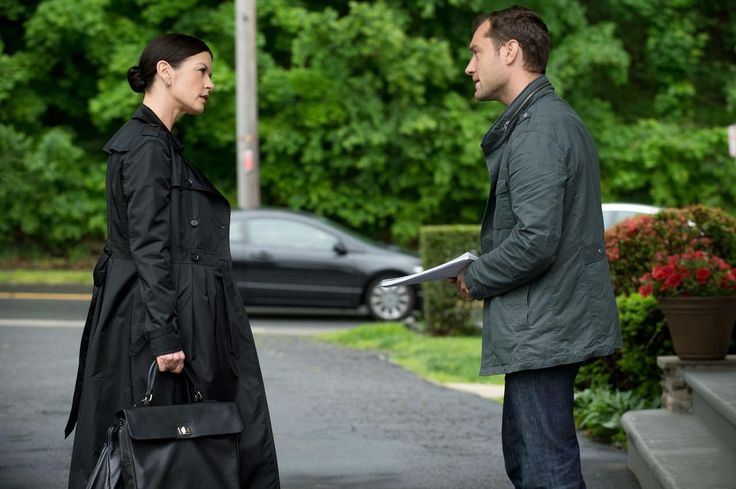
Emily Taylor (Rooney Mara) is trying very hard to be happy. Her husband (Channing Tatum) is newly released from prison and they can resume their lives together. But happiness isn’t coming easy: Emily is depressed, and suicidal. She begins seeing a new doctor (Jude Law) who prescribes an anti-depressant called Ablixa. Ablixa’s causing some strange side effects though. Worrisome side effects. Violent side effects.
Side Effects is a smart, well-crafted thriller by Steven Soderbergh. He’s heavily influenced by Adrian Lyne’s Fatal Attraction and hits all the right marks for a taut, twisty little thing. He’s not big on making a statement about pharmaceuticals or psychiatry or mental illness, any of which might have been appropriate.
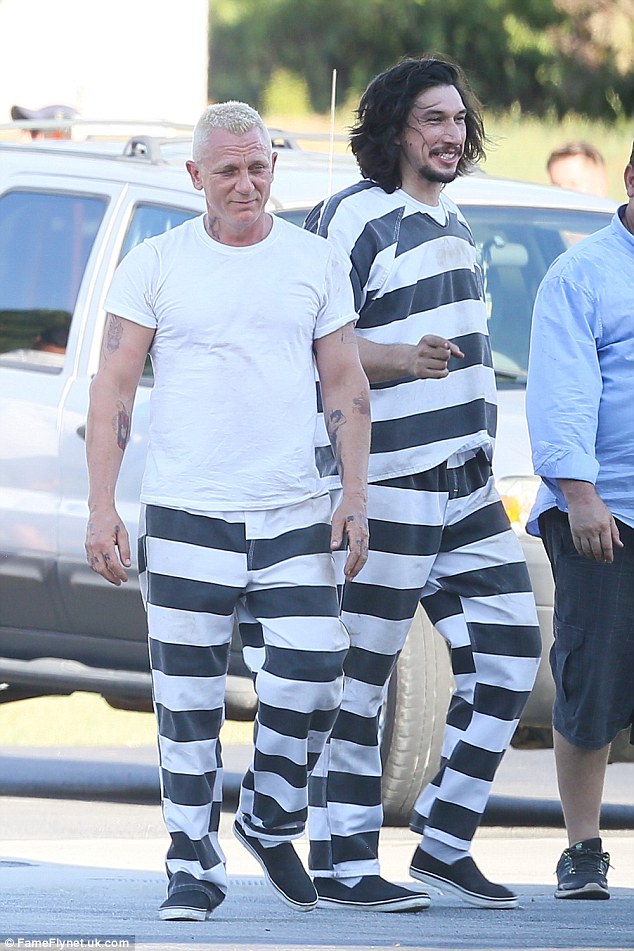
I forgot how much I liked this movie. It was supposedly Soderbergh’s last, and it seemed one he could be proud to go out on. TV stuff notwithstanding. But now, at the ripe old age of 53, he’s “come out of retirement” to do Logan Lucky, the new Daniel Craig\Sebastian Stan\Channing Tatum\Katherine Heigl\Adam Driver\Hilary Swank Nascar-heist movie.
But back to Side Effects. The first half is about guilt and mental health: how they interact in a doctor’s office, and in a court of law. The second half is a little more Alfred Hitchcock than Adrian Lyne. Things come unglued. The second half is less successful than the first but a fun, engrossing watch. The anxiety is ratcheted up expertly, with Soderbergh always in control. Rooney Mara is a terrific actress and she coasts ably over any rough terrain. Catherine Zeta-Jones and Jude Law keep up. Soderbergh stays at the top of his game as well – true, he circumnavigates truth and exploration in favour of entertainment, but it’s forgivable. It’s always forgivable when it’s this fun to watch.
Captain Fantastic, the movie and the man, asks big questions, gives brutal answers, and leaves you with deep thoughts for analysis.
Captain Fantastic, played with vigour by Viggo Mortensen, is a man raising 6 kids in the woods like a pack of wild coyotes. They’re off the grid. They hunt and grow food, read meaty novels by campfire light, and train their bodies strenuously, sometimes dangerously. Each kid has a unique, made-up name so they’ll be the “one and only” in the world. It sounds heavenly or lonely, depending on your perspective. Not all the kids are happy. Not all the parents are happy either, although so far I’ve only mentioned Captain Dad. Mom, as it turns out, is off in a mental health facility, and has been away from the family for several months before they learn she’s committed suicide.
Her death is the catalyst for the family returning to civilization to attend her funeral.
Viggo Mortensen is fantastic, although not always likeable. I’ve seen enough documentaries to know that raising a family off-grid, though idealistic, is not always so great for the kids. In Surf Wise, a doctor raises his kids on the beach, establishing a surf school. He turns out some great athletes, but the kids are otherwise totally unprepared for real life. Without education or even identification, it’s tough for them to rejoin the ‘real world.’ In The Wolfpack, a bunch of kids are kept pent up in a New York apartment. They develop rich inner lives and lots of art, but are totally unaware of what real life entails. In Captain Fantastic, the kids are book-smart but lacking in experience. They don’t know how to interact with the modern world, so unless all of them are prepared to continue subsistence living, and form an incestuous colony, it’s not really a sustainable lifestyle. And the kids are growing resentful.
Captain Fantastic raises a lot of interesting questions about parenting. Should a parent’s decisions always be respected? Are anti-capitalist, anti-establishment values best addressed by dropping out of society? How much freedom is too much freedom for children? And what kind of risk is acceptable? And do children need to sometimes be shielded from difficult or painful concepts, or is complete honesty always the best policy?
This film is quite funny in parts, and quite serious in others. And by serious I mean I cried a small ocean’s worth of salty tears. The kid actors are mercifully good, and Mortensen is generous with them in their shared scenes. Writer-director Matt Ross delivers some pretty satisfying emotional release, and a captivating twinning of joy and sorrow. Unfortunately the script dips a bit in its final acts, letting Captain Fantastic off a little easily, but it’s already a philosophical triumph by that point, a good movie that’s actually about something.
Did my grandfather write this script, by any chance? The puns scream yes. If someone pulls a Werther’s Original caramel candy out of their pocket, it’s official.
I can see glimmers of goodness in this beleaguered movie, believe it or not. Johnny Depp looks cool, even if he’s playing the same basic cartoon character he whips out for every movie he’s made this century. And the queens (Helena Bonham-Carter and Anne Hathaway) are resplendently rendered. Somebody spent a lot of money but didn’t care that the story was just too convoluted for its own good. What was this even about? It’s certainly not from any story book I remember. And if you a) hire Bort and b) put him in tights, I have to believe you never intended for me to take this seriously. Not for one minute.
I saw a play of the same name in Stratford (Ontario, known for its Shakespearean efforts but this one was “off-Shakespeare” if that makes sense) starring a young Sarah Polley. And maybe that’s part of my problem: Alice, to me, will always be a little girl. Mia Whatsername is a wonderful actress but not Alice.
I was wholly uninspired by the movie and to be honest, often confused. I did catch one interesting part, where Alice wakes up chained to a bed in an insane asylum. Now, to be sure, a grown woman claiming to know of an alternate universe behind a mirror where she talks to rabbits and time is enough to get her legitimately diagnosed. Her doctor, however, through out the popular female catch-all “hysteria” and it reminded me of a list I’d recently seen of actual reasons why women just like me and you were committed to asylums not so very long ago. Play along, will you, give yourself a point for every “offense” you’ve committed on this list, and leave your score in the comments (if you dare).
-business trouble
-kicked in the head by a horse
-ill treatment by husband
-imaginary “female trouble”
-immoral life
-jealousy & religion
-laziness
-marriage of son
-masturbation
-medicine to prevent conception
-mental excitement
-novel reading
-parents were cousins
-politics
-loss of lawsuit
-asthma
-bad company
-bad habits
-bad whiskey (!)
-egotism
-quackery
-fighting fire
-time of life
-venereal excesses
-superstition
-shooting of daughter
-hard study
-snuff eating for 2 years
-greediness
-grief
-seduction & disappointment
-exposure (to other crazy people? or to women?)
-indigestion
-loss of arm
-social disease
-remorse
-severe labour
-infidelity
-sunstroke
Not to alarm anyone, but I’m suffering from at least 7 of these “symptoms” right now. How about you?

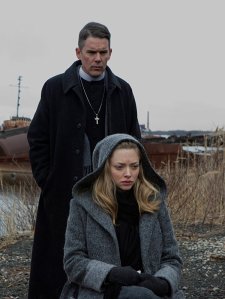 And Michael’s question “Can God forgive us for what we’ve done to this world?” messes him up even more. He defends god, but struggles privately. He takes up Michael’s obsession but continues to pollute his own body, as we watch his physical and mental health spiral downward.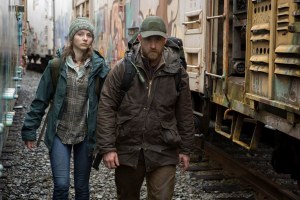
 psychological projections, so even though the movie is without dialogue, we still feel what Clyde is feeling. When in the car with his mother, we don’t hear them argue, but when a speech bubble features a bear biting off the head of a rabbit, we get the gist. Clyde’s mother is schizophrenic, and what she sees as a fun-filled family road trip from San Diego up to New York, the rest of the world views more as kidnapping. It’s a trip that will change Clyde and his family forever.
 So off they drive in a stolen Mercedes. They have a cross-country adventure that only two people determined to die could possibly have: madcap, in a non-urgent way. The script doesn’t feel compelled to follow the usual formula for a road trip movie, so it’s sprinkled with surprising pit stops and hijinks. Kenny and Lolita have nothing to lose, so anything is possible.
 book became this movie, though something was lost getting from A to B. The book pulls no punches. Her parents are complex characters, and their children have conflicted feelings toward them. The movie’s a little more pat, the trajectory a little more Hollywood. Someone decided to apply some spit shine to this story, a story that’s naturally very dark and brooding now has themes of hope and redemption that maybe don’t belong.
 illnesses, no one’s going to let an emaciated Lily Collins push a fish stick around her plate for dinner. And they’re also very difficult to treat because unlike drinking, you can’t simply give up food. You have to learn to eat in moderation. Eating disorders are often (but not always) about control. Often there is some type of childhood abuse that accounts for someone wanting very much to exert control over their bodies now.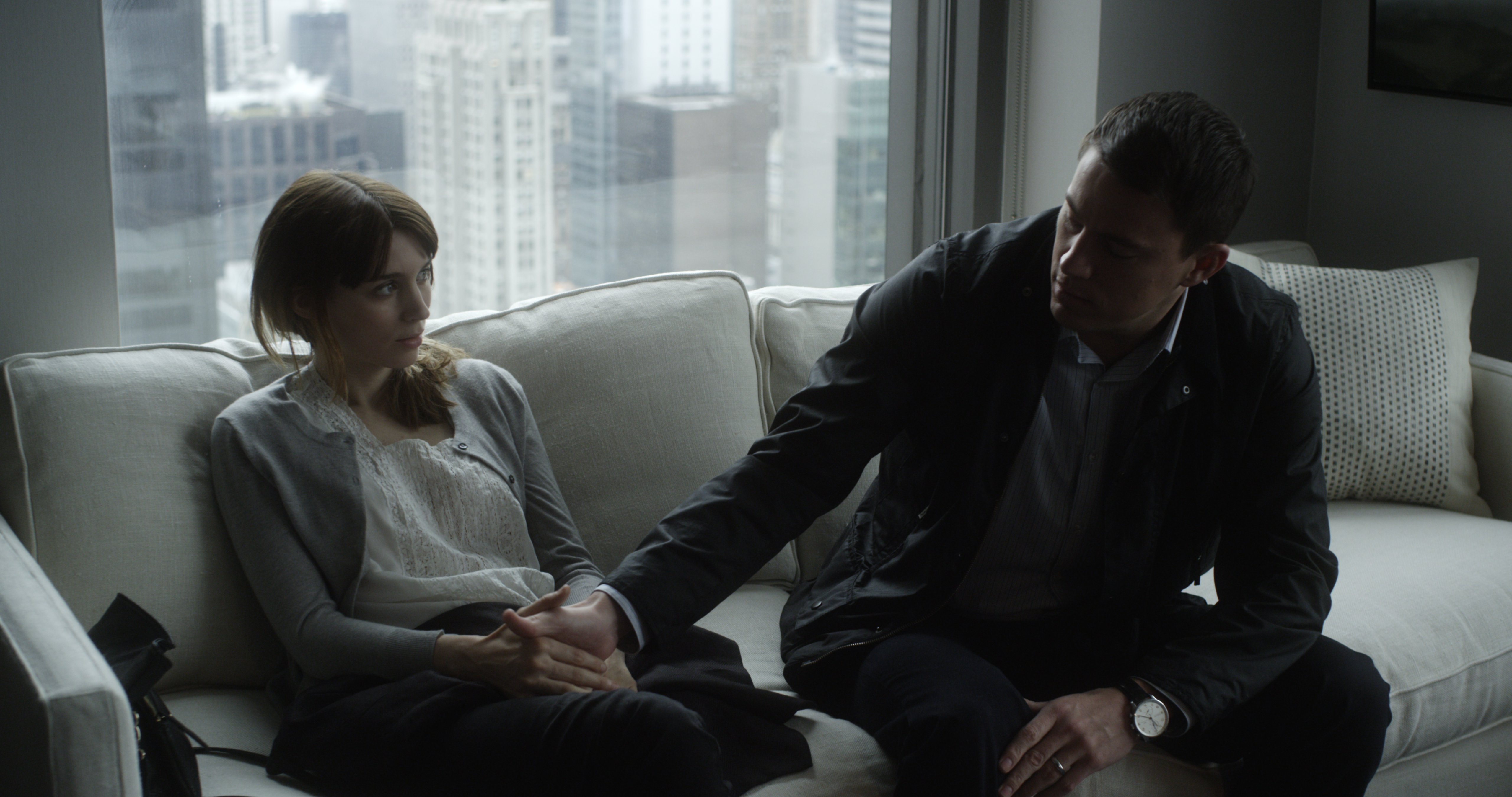
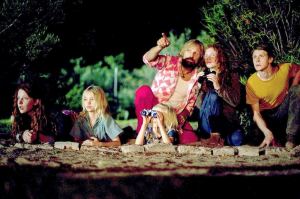 and grow food, read meaty novels by campfire light, and train their bodies strenuously, sometimes dangerously. Each kid has a unique, made-up name so they’ll be the “one and only” in the world. It sounds heavenly or lonely, depending on your perspective. Not all the kids are happy. Not all the parents are happy either, although so far I’ve only mentioned Captain Dad. Mom, as it turns out, is off in a mental health facility, and has been away from the family for several months before they learn she’s committed suicide.
 establishment values best addressed by dropping out of society? How much freedom is too much freedom for children? And what kind of risk is acceptable? And do children need to sometimes be shielded from difficult or painful concepts, or is complete honesty always the best policy?
 movie he’s made this century. And the queens (Helena Bonham-Carter and Anne Hathaway) are resplendently rendered. Somebody spent a lot of money but didn’t care that the story was just too convoluted for its own good. What was this even about? It’s certainly not from any story book I remember. And if you a) hire Bort and b) put him in tights, I have to believe you never intended for me to take this seriously. Not for one minute.
 sure, a grown woman claiming to know of an alternate universe behind a mirror where she talks to rabbits and time is enough to get her legitimately diagnosed. Her doctor, however, through out the popular female catch-all “hysteria” and it reminded me of a list I’d recently seen of actual reasons why women just like me and you were committed to asylums not so very long ago. Play along, will you, give yourself a point for every “offense” you’ve committed on this list, and leave your score in the comments (if you dare).
 ASSHOLES WATCHING MOVIES