Tag Archives: movies based on books

You Were Never Really Here

Joe (Joaquin Phoenix) is a troubled war veteran and basically a hired gun, specializing in the finding and retrieving of missing and trafficked young girls. He lives with his elderly mother (Judith Roberts), who is the only person left in his life. And once you start seeing what’s in his head, you’ll understand why. He’s haunted by flashbacks, riddled with PTSD. It’s rough stuff, and it’s hard to keep straight. It actually appears hard for him to keep straight, and as he grapples with thoughts of suicide and questions of sanity, it seems his past might be catching up with him.

But the present’s not much better. His next job is to rescue Nina, a 13 year old girl MV5BNDQwOGQyYTMtNTc2MS00Nzg3LTgyMjctOWFmM2YzZWE3YTBlXkEyXkFqcGdeQXVyNjUwNzk3NDc@._V1_being held in a brothel. Her father works for the government and doesn’t want to get police involved. And if Joe could, you know, fuck up the men who did this to her, he’d be pleased. But walking a mile in Joe’s boots is never straight forward. He’s plagued by violent images, by death, by his own abusive childhood.

Once the killing starts, it doesn’t end, and Joe is basically a zombie, barely evading death, and barely caring. Writer-director Lynne Ramsay keeps us off kilter with static-y flashbacks. We’re as unbalanced as Joe is, and we’re unable to really trust everything we see. It’s disorienting and clever, unhinged and a little scary since we never know what we’re walking into. It’s gory, or course, likely enough blood to fill an Olympic-sized swimming pool, but we start to feel anesthetized to it because Joe barely registers it. Joaquin Phoenix really sells it. He sells a man who stopped caring about himself a long time ago. Who doesn’t trust his own reality, and isn’t particularly bothered by it. He suffers from these violent memories but nothing really jolts him from his stupor. It’s a great performance. And Ramsay somehow manages to evoke sympathy for this wounded soldier. She makes this action movie something special, something worth watching, even if the finished product is rather like a nightmare.

Crazy Rich Asians

Netflix has quietly been reviving the rom-com: To All The Boys I’ve Loved Before, The Kissing Booth, and Set It Up have all drawn in big numbers for the streaming service, and to be honest, for us Assholes too, even though I didn’t like any of those movies, and was actively offended by at least one of them. Netflix was smart enough to offer a very lucrative deal to the team behind Crazy Rich Asians, but that team knew that if they were successful, they could make not just a film, but an event, a landmark, even. It’s been 25 years since we had an all Asian or Asian-American cast (with The Joy Luck Club), which is a number as astonishing as it is embarrassing. But with this summer’s indie successes for Blindspotting, Sorry To Bother You, and BlacKkKlansman, (and heck, I’d even put Eighth Grade on that list) audiences are proving that diverse casting and story-telling is more than welcome in theatres.

I read Crazy Rich Asians by Kevin Kwan some time ago and kind of loved it. It’s one of those fluffy, easy reads that was somehow elevated by the specific characters and setting. It opened the door to a hidden part of Asian culture and it made the reader feel part of the secret. So while I try my best to support diverse stories with my dollars, Crazy Rich Asians had already hooked me with its story. Could the film live up to the book?

In a word,  yes. Of course, it diverges from the book in some pretty big ways, but I think the spirit is definitely there.

MV5BNjgxZjVjOTEtODI0Mi00ZWIzLWJmOGQtMTA1M2IzNTI2NzMzXkEyXkFqcGdeQXVyNTc5OTMwOTQ@._V1_SX1777_CR0,0,1777,695_AL_

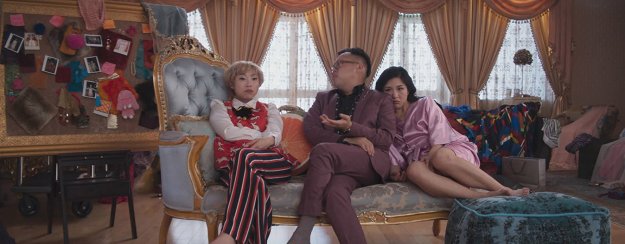
It’s about Rachel (Constance Wu), a Chinese-American who flies to Singapore with her boyfriend Nick (Henry Golding) to meet his family for the first time. Nick fails to prepare her for his family’s immense wealth, or for their insular, reclusive, snobbish lifestyle. Their rejection of her is immediate and definite. His mother (Michelle Yeoh) and aunts are downright cold, and the other young women (who perhaps fancied themselves in the running for his hand, and his inheritance) are wickedly cruel. Still, Rachel persists, determined to put on a brave face as she navigates the lavish “wedding of the century” featuring Nick’s best friend Colin as the groom and the beautiful Araminta as the stunning, head-turning bride. Rachel’s only ally is her college friend and roommate Peik Lin (Awkwafina) whose own fortune is dwarfed by the deep pockets of old money in Nick’s family.

Director Jon M. Chu has only two hours to communicate the impressive opulence that the book devotes chapter upon chapter to, and while he could never quite achieve the great wall of wealth presented in the book, he works hard visually to transplant the luxuriance and splendor directly into our brains. And of course the scene that works best for this is the wedding – a wedding that cost the bride’s parents more than Donald Trump could piss away in a lifetime. Tens of millions. It’s seriously impressive.

And so is the large ensemble cast – though because of their numbers and the obvious time crunch, we don’t get to know nearly as many of them even half as well as we do in the book. This is very much the story of Rachel and Nick, and everyone else takes a backseat. Although Rachel’s best friend, and curiously, that friend’s dad take up a fair bit more screen time than the novel would suggest. That’s because Chu has the delightful Awkwafina and zany Ken Jeong adding their signature spice to the mix, and Nico Santos as well, which means Crazy Rich Asians isn’t just romance and jaw-dropping locations – this shit is funny.

And it’s a lot of fun to watch, highly entertaining and enormously enjoyable. At times it veers almost into the fantastical, but it’s definitely the kind of movie that sweeps you away, from over-the-top sets and locations to the recognizable pop songs with an Asian twist. Even Sean, who probably likes your typical rom-com even less than I do, chuckled throughout and declared it a good deal of fun – and for once I could repay the favour by keeping him back for a mid-credits scene. The movie is, almost by definition I suppose, more formulaic than the book, but the familiarity is broken by the eye-popping setting and fresh cultural references. And if you love it, and I bet you will, that mid-credits scene hints at a possible sequel…in fact, the books make up a trilogy. Isn’t that just the best news you’ve heard all day? Get thee to a theatre for a Crazy Good Movie today.

To All The Boys I’ve Loved Before

Netflix is trying to resuscitate the rom-com. I remain unconverted. How does their latest attempt fare?

Lara Jane is about to be a junior in high school. Her older sister Margot has just left for college in Scotland, leaving behind a huge gap – a gap only grown wider because she broke up with her boyfriend Josh, literally the boy next door, before leaving, and he was an every day presence in their home – not least of all because he was Lara Jane’s friend and secret crush first. With Margot gone, it’s just Lara Jane and little sister Kitty, who isn’t afraid to call out her sister for being super lame and not having any weekend plans of her own. Their mother is dead so it’s just them and their dad.

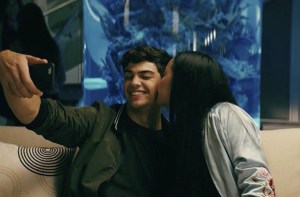
But then something weird happens. Lara Jane’s old, secret crushes all receive letters MV5BYWNhOTJiMzYtNmY5NS00ZDNkLTg4NjUtNTRhNzRkODg5MTQ4XkEyXkFqcGdeQXVyNTk5MTc3MTc@._V1_from her. Letters that she wrote eons ago when the crushes were new and exciting but never, EVER, intended to send. Josh receives one, and so does Peter, Lara Jane’s first kiss but current boyfriend of her arch-enemy. Ah, high school. But she’s so desperate to avoid Josh that she consents to have a fake relationship with Peter in order to divert attention. It’s the kind of plan that can only seem reasonable to a 16 year old.

Lana Condor is all kinds of adorable as Lara Jane. She’s sweet and charming and nearly everything you’d want in a romantic lead in 2018 (dorky, smart, independent). Is adorkable a thing? It should be. Lara Jane is it. But just as 2018 demands a new kind of romantic lead, it also needs a new kind of boyfriend. No more brooding, distant, too-cool-to-give-a-shit guys. Peter Kavinsky is not just the floppy-haired, Jeep-driving boyfriend you want, he’s the kind of teddy bear you deserve – kind and thoughtful and loving. He puts more work into a fake relationship than every mopey 80s hunk or neurotic 90s hearthrob combined. 2018’s boyfriend ideal is in touch with his feelings, and he just wants you to be happy.

The movie takes no risks and offers no surprises. The two blandly handsome possible love interests, played by Noah Centineo and Israel Broussard, look similar enough that Sean couldn’t tell them apart. Sean is no teenage girl. Teenage girls, I bet, will have no problem choosing which one to swoon over (and apparently there IS a right answer). For me, this movie felt very Disney channel, and its constant 16 Candles references didn’t really earn it any favourable comparisons (in fact, it made Sean mourn some distinct missed opportunities). To All The Boys I’ve Loved Before is not a rom-com for old ladies like me. It’s innocent in a lot of ways, but with a 2018 flavour that’s still alien to me. But I have no doubt it will find its audience – it’s just not going to be anyone born in the previous century, and not even John Corbett (no longer the leading man, relegated strictly to dad status) can change that.

Fantasia Film Festival Wrap Up

Cinderella The Cat

Um.

Where to start. This is an animated film, but do not let that that mistake you into thinking this is benign in anyway.  Mia, the “Cinderella” in question, was a little girl aboard a ship of dreams, a ship her father was going to turn into some wildly successful, hologram heavy, extremely technologically advanced…something. MV5BMjMyNTFkYzEtNmI3Mi00MGVkLTkyYTgtMTJhN2Q1MzQzMjgyXkEyXkFqcGdeQXVyMTMxODk2OTU@._V1_SY1000_CR0,0,666,1000_AL_Cruiseship? Tourist destination? Curiosity? Lab? Impossible to say because it never happens. Instead her father gets tricked into marrying an evil woman, a woman who has schemed with her evil boyfriend to steal Mia’s dad’s fortune by murdering him on their wedding day, directly after the vows. And they do. And then they for some reason have to wait 12 long years until Mia comes of age and inherits her fortune, which they’re certain she’ll sign over to them. Which makes no sense because for 12 years, Mia’s evil stepmother and her 6 evil stepsisters force her to be their maid as they all live aboard the crumbling ghost of the ship. They hate her for sure and the feeling is mutual but in this case I can’t help but think that the maid fate is actually quite lucky – stepmother forces her own daughters into prostitution.

Anyway, it’s an ugly, sordid tale that I didn’t enjoy. There were no glass slippers, though there are shoes used for drug trafficking. Did you always secretly want your Cinderella with a side of tits and guns and racial slurs? Boy have I got an Italian film for you.

Ajin: Demi Human

An Ajin is a demi-human, as in a human who comes back to life after death. Immediately. 46 are known to exist worldwide, but more are likely in hiding, because their fates are undesirable. These ‘immortals’ are being captured in Japan, by their own government, for sadistic testing. Alive while their limbs are systematically amputated, for example, they are tortured day in and day out until MV5BMzIwYzFiNWItZTM0OC00ZDE0LWE4MTktMTkxY2M2NDRmZjM4XkEyXkFqcGdeQXVyNDQxNjcxNQ@@._V1_they succumb. And then they live to do it again.

When demi-human Kei Nagai is sprung from such a lab by another Ajin and former captive, he’s only relieved for a few minutes before realizing that his saviour is going to ask something in return. Something big. But the movie doesn’t dwell on complicated facts or feelings or characters or situations. It’s time for violence! Stunning, beautifully-choreographed violence, which includes a nifty (and probably unnecessary) Ajin perk: a ghost monster who comes out of them and fights alongside them – there’s something familiar about it, maybe not quite Transformery or Pacific Rimy, because it’s smaller scale, but still. The fight scenes are crazy. And the director knows that’s all you came for, so dispenses of all the details.


The Guernsey Literary and Potato Peel Pie Society

Guernsey is a tiny island in the English Channel. It was occupied by Germans during WW2, and the people of Guernsey suffered deprivations of course. So it was the Nazis’ fault they had to form a Literary AND Potato Peel Pie Society one night, spur of the moment. For the rest of the war, five friends read books and then met to discuss them, whilst eating awful potato peel pie. With only a limited amount of books, Dawsey (Michiel Huisman) writes to a stranger in London, a name he finds randomly in one of the second-hand books he reads, to ask for the name of a bookstore from which he may order more. Juliet (Lily James), a writer and book lover herself, is quite taken by the request, and she writes back, including several titles for he and the society to enjoy. They MV5BNDE5MjM3MTg4OF5BMl5BanBnXkFtZTgwMjQ5MzE5NDM@._V1_SX1500_CR0,0,1500,999_AL_keep up a correspondence for quite some time, and when the war ends, she heads to Guernsey to meet the characters from the letters in the hopes that she may write to them.

Juliet is welcomed warmly but meets with resistance when she broaches the topic of writing. The society wish to remain anonymous. They’ve suffered more than just deprivation during the war. One of the society is missing, and the rest are secretive, protective.

I loved this book. The movie feels a little less special, not even living up to its quirky title. It’s predictable and conventionally told, but gosh darn is it pretty to look at. It’s a satisfying period romance with a great ensemble cast. It’s too bad the script plays it safe, but it’s still a sweet little movie. It’s not breaking any new ground, and you’ll have to make due with London standing in for Guernsey. But Lily James is her sparkling, charming self, so if the movie is hard to love, it’s easy to like.


The Meg

With a budget of $130 000 000(!), The Meg is probably the world’s most expensive watch commercial.

It pretends to be a movie too. It’s about a tough, gruff drunk named Jonas (Jason Statham) who wears watches while bitterly licking his wounds after losing two of his mates during a rescue mission that saved 11. He claims that something very large and unseen crushed a nuclear submarine, but doctors claim he’s crazy. Still, he’s the guy Mac (Cliff Curtis) and Zhang (Winston Chao) call on when only the best will do.

Zhang is the brilliant watch-wearing scientist running a deep underwater research lab, funded by eccentric billionaire Morris (Rainn Wilson), who loves watches almost as much as he loves sneakers. Zhang believes that there is more depth to the ocean the-meg-featurethan even Mariana’s Trench will have you believe – and a sub from their research facility proves him correct as it plunges below what was previously believed to be the bottom of the ocean. There is all sorts of undiscovered life down there (science boner!), including something big enough and antagonistic enough to ground the submarine containing 3 crew members with only their large, expensive watches to keep them company, the fairest of whom is Jonas’s ex-wife. So down he goes.

And then up he comes, but he’s not alone. It seems he’s brought something with him: a megalodon, an enormous shark previously believed to be extinct for millions of years. This time the science-boners are tempered by the fact that this fish (affectionately nicknamed ‘The Meg’) is eating all the people AND their waterproof watches.

Jason Statham is of course the perfect man for the part. His sneer of contempt is so effortless. It’s a quite sturdy cast, on the whole. Bingbing Li plays opposite Statham – not as his ex-wife, but as his future ex-wife. She’s no damsel in distress, though. She is constantly testing the warranty limits on her watch by jumping into wherever danger lurks. Ruby Rose, Page Kennedy, and Ólafur Darri Ólafsson round out the possible choice of appetizer for the shark. Kennedy was likely cast for his wonderful wrists, able to hold cups of coffee at such crazy, awkward angles to better show off the stunning watches on display there – even on the outside of his jacket cuffs, if necessary. Ruby Rose nearly drowned on set, and at one point when her character narrowly survives an encounter with the Meg, she hauls herself out of the water, and lays there heaving, her wristwatch posed for maximum admiration by viewers only tangentially concerned with her fate, probably wondering whether it’ll be an heirloom, and if so, who’s getting it in her will.

The Meg takes itself quite seriously while I expected (and maybe wanted) a campier version. One that embraced the cheese factor along with the blatant product placement. But no. And the thing is, The Meg is definitely menacing, but he’s no Jaws. Jaws is much smaller of course, capable of much less damage, but he was a better villain because he almost seemed to make it personal. The Meg is just a monster with a prehistoric brain. He can’t help himself. You could almost dredge up sympathy for the guy. I mean, he doesn’t even have wrists, how’s he going to wear a watch that lets everyone know he’s a man of distinction, a motherfucker to be reckoned with?

The Meg is a bit of dumb fun. Sean thought mostly fun, I thought mostly dumb. And also very overpriced – for that kind of money, everything should look a lot better. But there’s no amount of budget-gloss or gung-ho casting that could hide the flaws of the script, which veers drastically from its source material. I can’t say this movie disappointed me. It sank more than it swam, which is about what I expected from a story picked from the carcass of another, better shark movie.

BlacKkKlansman

Ron Stallworth is a young black man, proud to be Colorado Springs’ first African-American police officer, in 1972 (or 1979 in real life, but from these parentheses forward, please understand that though this is based on his autobiography of real events, I’ll be discussing the events in the film). He’ll be the Jackie Robinson of the PD, and like Jackie, he’s the impossibly perfect, flawless, magical black man who will need to constantly turn his cheek – not just to the racist public, but to racist colleagues as well. Life might be difficult for Ron walking the beat but he’ll never know because he’s buried in the basement records office being abused by his own fellow officers. He’s desperate to get some real police work but I bet he got more than he bargained for. When he’s partnered with a Jewish officer named Flip, the two of them together make a single perfect Klansman.

Wait, what? Yeah, true story, though it sounds like the setup of a joke with a cringe-worthy punch-line. A black guy and a Jew teamed up together, undercover, to infiltrate the KKK. Ron (John David Washington) says all the right things on the phone, all the way up to the Grand Wizard himself, David Duke (Topher Grace). Flip (Adam Driver) provides the requisite white face and trucker caps. Together nothing can stop them, except possibly guys in hooded robes.

Spike Lee directs this thing, based on Stallworth’s memoir. But the spin that Lee and the other writers bring to the movie is fantastic. While this would have been a remarkable story at any time, setting it is amidst blaxploitation movies and Nixon’s reelection 03-blackkklansman-review.w1200.h630campaign gives it a crisp edge, and the constant allusions to Trump’s eventual win, thanks in part to his KKK ties, give it a sharp one. Damn it’s smart. And also depressing. And funny. Like, really funny. And so sad. Because as astutely-observed as this stuff is, it’s astonishing and disappointing to realize that 40 years on, we haven’t made much discernible progress. White people were horrified and baffled by 45’s election, which is funny because it was obviously white people who elected him. The two kinds obviously don’t talk. But nearly every black American I’ve spoken to was not overly surprised by the result (which is a far cry from being happy about it). They knew the country’s true temperature since they live with its consequences every day. And now those things have been outed, given permission to be voiced, and suddenly 2018 is resembling 1972 is some very uncomfortable ways.

John David Washington is really great in this role. He made his movie debut at just 6 years old, playing a school kid in a movie Spike Lee made with his father, Denzel called Malcolm X…maybe you’ve heard of it? If he’s getting acting lessons at home, they’re paying off. He’s subtle and natural and the movie’s success hinges on how well he underplays events that seem so impossible. Adam Driver does well too; he knows he’s second banana, but his character undergoes an interesting arc, from “it’s just a job” to really internalizing the hated for Jews that he constantly has to endorse as part of the klan. It has to mess you up to say things against your own people, to disavow yourself from a group that is part of your essential self – we feel that every time Flip denies his religion out loud to suspicious klansman, but it’s an interesting callback to Ron’s police department interview, where he basically had to do the same. And that should give us pause. And Topher Grace gets to play David Duke because Armie Hammer’s perfect Aryan face was presumably busy playing a slave owner in some other movie.

Ron spends the movie trying to prove to himself, to his potential girlfriend, and to his superior officers, that you can work from the inside to tear something down. His lady, the president of the black student union, is a proud agitator who doesn’t believe you should belong to the system you’re trying to destroy. “Black liberation!” she shouts at him. And we clearly see his own internal struggle because on the one hand he’s a first hand witness to the system being broken, and stacked against him, but he also believes he can be an agent for change. It takes guts to be the guy on the inside. I guess after being that guy for his whole life, joining the klan maybe didn’t seem so scary.

In fact, Lee does well subtly highlight the similarities between the two groups: kops and klan. Both seemed nearly identically racist in the 70s. But what got me is that in the film, both groups refer to themselves as “family.” Very recently I was telling Sean this theory of mine that any non-family member who refers to themselves as “family” is doing it for nefarious reasons. Work “families” tend to be abusive. It means, sure they’re internal fighting. It’s fine. It’s family. In the police department it means we don’t rat on each other. If some officers are abusing their position to harass people (spoiler alert: black people!) we turn a blind eye. There are so many clever, subversive little elements that they get under your skin incredibly effectively.

And just when you’re starting to feel cutesey about all the Nazi-salute foreplay and lynching pillow talk, Lee flips the script and reminds us of our present-day truth, where we cannot hide behind our smug sense of superiority. We are not better, and there’s no better way to remind us of that than with footage from last year’s white superemacist, neo-nazi, ‘white civil rights’ rally in Charlottesville. This weekend is actually the one-year anniversary, and tensions are high. This movie will likely never reach the hearts and minds of those who could really use it, but let it be both a balm and a rallying cry for the rest of us, perhaps even an emergency flare. We need movies like this to get us through these dark days.

Before I Fall

It’s cupid day. High school student Sam, goes to school with her friends, where they all receive some mystery roses, plan for Sam to lose her virginity to boyfriend Rob later that night, and hit up a party where they drink, predictably taunt an unpopular girl. Then they get in a car and drive home. Only they don’t make it. There’s an accident, and when Sam wakes up…it’s the morning of the same day again. Cupid day is getting the Groundhog Day treatment.

MV5BNGI2ZjQ0MGUtZTQyYS00ZjNkLTg4NjctY2U1Yjg1Y2Y3MzBiXkEyXkFqcGdeQXVyNjU4MjYzMjk@._V1_By the third day she’s trying to live differently, to do things “right.” But even when she manages to avoid the accident, she still wakes up on the same morning and lives the same day. Sam (Zoey Deutch) is half right. Her ‘perfect’ life is a mystery that needs unraveling, and she’ll have to start questioning everyone and everything in it before she can begin to make adjustments. Sounds predictable, doesn’t it? I didn’t think much more highly of the book, so I wasn’t exactly in a rush to see this movie.
It’s not bad, it’s just not meant for me. This is a story intended for young adult audiences, and I guess that makes me an old adult. I’ve seen the real Groundhog Day. I remember how it counterbalances its existential angst with dark humour. This one takes itself very seriously, so it dips into melodrama, the familiar milieu of so many high school soaps. And you know, forgive me for this massively unfair comparison, but Zoey Deutch is no Bill Murray. It’s hard to make repetition feel cinematic. Feel anything but boring. But for Murray, even a twitch of the eyebrow can make a scene feel transformative. In the case of Before I Fall, Deutch doesn’t even feel well-cast as a high school student (she’s 24, but seems older than her same-age castmates). And the voice over is really just a big stick with which to beat us over the head with the message, which the director apparently does not trust to absorb otherwise. It’s actually not that deep. I think we would have managed, but now we’ll never know, unless tomorrow she wakes up and has to make this movie over again and again until she gets it right. Let’s just hope I’m not stuck in my own time loop, having to watch them.

Leave No Trace

This is a special breed of movie. In a summer of blockbusters, this quiet movie is a stand-out, a necessary refuge from the storm of testosterone and TNT playing at the local cineplex.

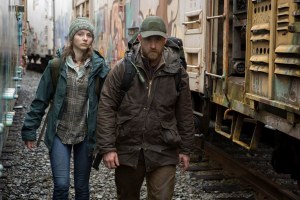
It’s about an army vet, Will (Ben Foster) who has made a home for himself and 13 year old daughter Tom (Thomasin Harcourt McKenzie) in a national park, where they read books, grow and forage food, and live a peaceful, low-stress existence. Until, that is, a small mistake trips them up and they are apprehended by park rangers and social services. Though Tom is obviously well-cared for and has been MV5BMjExNWUzZDItMTdmMS00ZjQ5LThlZTktYTE0Y2RhNzEzOWRkXkEyXkFqcGdeQXVyNzM1MTc3ODg@._V1_educated beyond her grade level, she should be in school, and have a roof over her head. At least that’s what the social worker says. But once housed and employed, things get sticky. Tom is a curious and lively teenager, making friends and thriving in her new environment. Her dad struggles to assimilate, and he’s largely unable to cope.

Trust me, I know the description sounds ordinary, but the execution is flawless.

  1. The casting is impeccable. Ben Foster isn’t a big, bankable name but he’s every casting director’s wet dream. He brings intensity and gravitas to every role he encounters, and the stoic approach he takes with Will is perfect, though few other actors would give themselves permission to try such subtlety. Opposite him, Thomasin McKenzie is fabulous. The movie is all about their dynamic and it only works if both halves of their little family unit is working in synchronicity. Tom is obviously bright but McKenzie gives her such a sense of vulnerability that we never lose sight of what’s at stake.
  2. The script, by Debra Granik and Anne Rosellini, is such a luxury. They find so much value and beauty in simplicity that I’m astonished at how much I felt for what amounts to a fairly sparse script. The difference is, they’ve edited carefully, they’ve pared it down to the essentials, and tuned them ever so carefully. What’s left is a lot of room for the actors to be comfortable and take ownership. Room for the director to make her mark. It’s so smartly-written. It would be easy to find melodrama in these circumstances but instead Granik and Rosellini consistently find empathy and dignity and it makes weepy just to write about it.
  3. The cinematography is astonishing. At times it looks like an expensive nature documentary – one that fits seamlessly into a feature film. Someone (Michael McDonough) took a lot of care with this. He films the park with such loving and patience we get the sense of how at home the characters are in this special place. By contrast, the city looks colder, less inviting.
  4. Granik’s direction is flawless. As you may be surmising from everything written so far, there isn’t much in the movie, not even silences and blank spaces, that aren’t actively working for the plot or the characters. And by keeping things trim, it forces the audience to be active too. The keys are all there, and the deft direction encourages us to pick them up, sort them out. This movie respects its characters and its audience – objectively, the events and circumstances are tragic, but they’re communicated with such restraint. It’s easy to have sympathy when no one is asking for it. Will and Tom do not describe their situation as homelessness, and the movie lovingly backs them up in this.

This movie is so thoughtful and caring and it shows a different model for living and loving with no judgment. There’s no malice, no villains. Even the social services are shown to be well-intentioned. But Will and Tom are hardly the only outcasts, and Leave No Traces embraces them as well. It has room in its heart for everyone and even though there is much to be sad about, the film is so sweetly assembled that I left the theatre with a little pocket of hope in my heart. There are no easy answers, but Granik’s gaze is fair and honest and I’m just bowled over by every inch of this movie. It’s a rare and precious thing, and though it may be called Leave No Trace, it actually leaves quite a mark.


Disobedience

Ronit and Esti were childhood friends and young lovers but their Orthodox community forced them apart and Ronit left in disgrace and scandal, shunned by her Rabbi father. Years later, she returns upon his death and finds that her mere presence sets tongues wagging and old rumours flying. Esti is still there and has forged herself a new life within the boundaries of her religion. She is married to a mutual (male) friend and it isn’t terrible.

Old passions are reignited between Ronit (Rachel Weisz), who lives as a photographer in NYC, and Esti (Rachel McAdams), who wears a wig to cover her hair and has careful, kosher sex with her husband every Shabbat. But as good and devout MV5BN2U1ZjllMWQtYzBlOC00ZGQyLTg0YTUtNWQ3YmI3ZjYwNmIzXkEyXkFqcGdeQXVyNTc5OTMwOTQ@._V1_as Esti’s present life is, even the memories of her past with Ronit are scorching enough to make everyone nervous. In their community, straight marriage is the only option, and it’s not so much an option as an obligation. Esti stayed, and conformed; Ronit left, and flourished, though she has all but abandoned her faith.

Disobedience isn’t graphic or specific of pointed. It goes about things in a rounder, softer way, nuzzling up to the subject and laying at its feet. This movie gives you two Rachels for the price of one, and they keep things on simmer for a really long time. On screen like they’re magnets; there’s an electric current between them that’s full of little zaps but no big surges. I really liked Weisz’s choices in particular, how she subtly plays with her hair, reminding us that hers is on display while Esti must cover hers up. And how the uncovering of hair then becomes an act of intimacy, a form of foreplay, a zap in the movie’s current. It’s not just sexual repression that bubbles over in Disobedience; religion and culture are enmeshed in this story. And while the cast does an admirable job of making this feel true, I’m not sure this is director Sebastián Lelio’s story to tell.

Weisz and McAdams communicate a lot through glances and silence. Lelio’s interpretation is a little literal for my taste, but the women here elevate the material and make it something special.