Despite never having read the book(s?) upon which this movie is based, it still felt all too familiar to me while watching Miss Peregrine’s Home for Peculiar Children. Could it be that we’ve finally seen the bottom of Tim Burton’s bag of tricks, and now we’re just watching the shadow of his talent?
Miss Peregrine (Eva Green) keeps the wards in her charge safe by keeping them in a 24 hour time loop, the 24 hours before their beautiful home is to be bombed by the Nazis, circa 1943. Neither she nor her peculiar children age while in the time loop, but to step  outside of it would have time catching up to them in a hurry. Inside their cozy little loop, they can be as peculiar as they like without repercussion. Or they could until a peculiar gone rogue (Samuel L. Jackson) invents monsters to hunt them. That’s why Abe (Terence Stamp) chooses to live outside the loop – true he has to leave behind his love, but he keeps her and everyone else safe by hunting the monsters in turn. But in his old age, Abe meets an ugly demise and his eyeless body is discovered by his teenaged grandson, Jake (Asa Butterfield ), the only one suspicious enough (or peculiar enough?) to avenge his grandfather’s death.
Once Jake discovers the time loop and the peculiars, Tim Burton is in his element. He’s excellent at creating worlds, giving them texture and meaning and magic, and populating them with loads and loads of white people. Oh, haven’t you heard? Tim Burton’s a racist now. Well, not so much “now” as always, it’s just that only now are we really paying attention. Tim Burton is visionary; he can conjure ghosts in cheap suits, demon barbers and talking caterpillars – but cast a person of colour as one of his peculiars? That would just be weird. That is too much of a stretch of Burton’s imagination.
If it was just the Peculiar Children who suffer from his pale proclivities, we might forgive him, but a cursory glance over his IMDB list has me horrified. Samuel L. Jackson is the first black man he’s cast in a leading role EVER, and you know he’s playing a villain. Jackson aside, Tim Burton’s casting takes on a very pale shade of white. His sets may be designed in technicolour but Tim Burton himself only dreams in caucasian. And it’s not really Tim Burton’s fault. We’re the dummies who have accepted this unthinkingly for years. He’s had huge ensemble casts with not even a tan among them and I for one haven’t even thought to question it.
We’re awake now, though, and the cat’s not getting back into the bag, no matter how many claw marks Tim Burton accrues trying to stuff the fucker back in. His words, you see, have proven even more damning than his pasty casting choices. “Things either call for things, or they don’t” he’s said, meaning, if a script says “African American”, he’ll cast an African American. But if a script says “person”, Burton reads it as “white person.” And that’s exactly the kind of inherent bias we most especially have to watch for. White tends to be the default far too often in Hollywood (and in life). But audiences are not. Audiences are made up of real people, a whole rainbow’s worth. And in 2016, we demand to see that reflected on the screen.
Tim Burton is just another old white dude defending the old guard. He wants things to stay the same. Dude with scissors for hands? Sure. Obsessive candy man? Why not. Orphan in a rubber suit playing god? As long as he’s not black, have at it!
“I remember back when I was a child watching “The Brady Bunch”and they started to get all politically correct, like, OK, let’s have an Asian child and a black — I used to get more offended by that than just — I grew up watching blaxploitation movies, right? And I said, that’s great. I didn’t go like, OK, there should be more white people in these movies.”
-Tim Burton, ladies and gentelmen
Of course his ignorant comments have done nothing but confirm the need for the very thing he’s eschewing. The truth is, for as long as this white default exists, we need to fight it consciously by countering it at every turn. If a script doesn’t demand it, society should. There is no room for lazy racism like Burton’s in 2016; it’s time to stop casting movies like they’re segregated.
Never mind that Blaxploitation movies were born in response to systemic racism and preached empowerment. Let’s just take his statement for what it is: white privilege, white ignorance, and an embarrassing amount of #alllivesmatter racist thinking. Tim Burton needs to pull his white head out of his white ass, and we all need to hold him accountable. And maybe while he’s at it he might also make a movie not so nakedly derivative of his old work. 😉

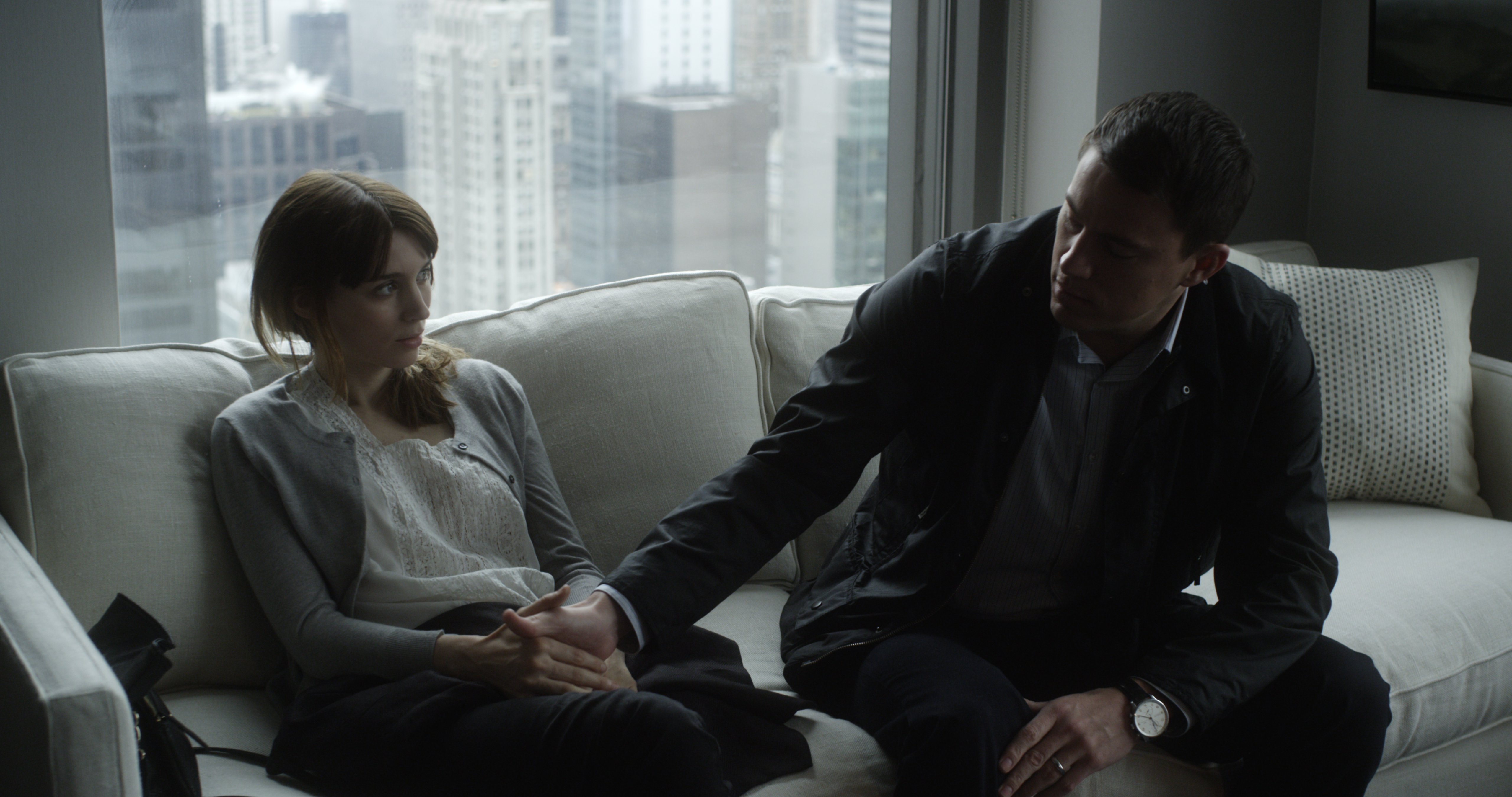 (Jude Law) who prescribes an anti-depressant called Ablixa. Ablixa’s causing some strange side effects though. Worrisome side effects. Violent side effects.
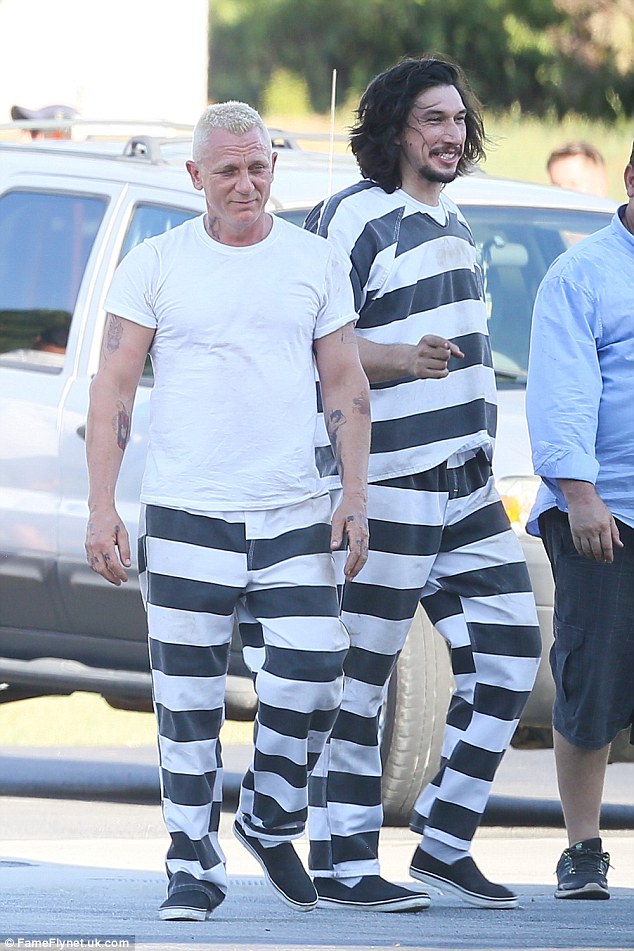 and it seemed one he could be proud to go out on. TV stuff notwithstanding. But now, at the ripe old age of 53, he’s “come out of retirement” to do Logan Lucky, the new Daniel Craig\Sebastian Stan\Channing Tatum\Katherine Heigl\Adam Driver\Hilary Swank Nascar-heist movie.
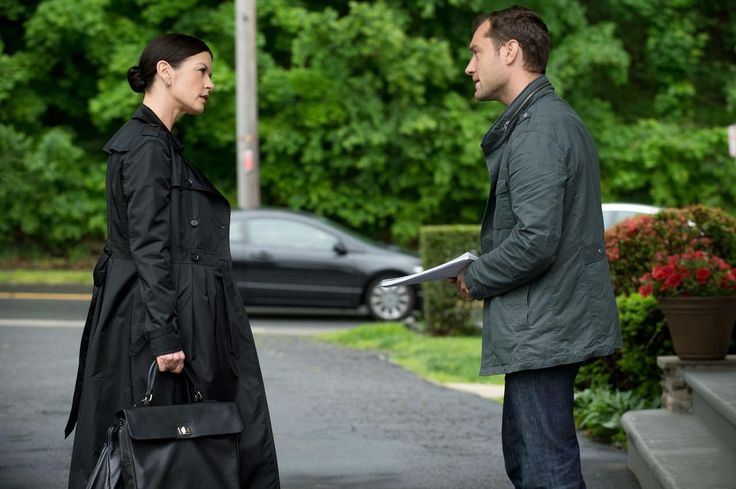 engrossing watch. The anxiety is ratcheted up expertly, with Soderbergh always in control. Rooney Mara is a terrific actress and she coasts ably over any rough terrain. Catherine Zeta-Jones and Jude Law keep up. Soderbergh stays at the top of his game as well – true, he circumnavigates truth and exploration in favour of entertainment, but it’s forgivable. It’s always forgivable when it’s this fun to watch.

 them and it’s mind-boggling to think that they’re not in fact little girls anymore, but women, and 2 of them mothers with babies of their own. Not dollies, babies. And not even babies: one nephew is already a dinosaur expert, another an enthusiastic soloist, and a third a stunt bike rider. They’re all 5 and under and as handsome as they are smart (which is inherited from the aunt, right?).
 disability for her family to handle. Now a young woman, she’s moved back home and is trying to assert her independence. Her mother, played by Diane Keaton, has never really known how to parent her. Her sisters (Poppy Montgomery, Sarah Paulson) didn’t grow up with her. It’s making friends with someone with his own challenges (Daniel, Giovanni Ribisi) that inspires Carla to aspire to a larger life.
 desert and gives us female soldiers for company. Some of them have been given jobs in name only (Daffi is a “Paper and Shredding NCO” who spends most of her time beating the high score in Minesweeper) and most are counting down the days until they return to civilian life. Their officer, Rama, however, is trying to make this her career…
 drugged out of their minds” – models, of course. So how do we punish such a misogynist? We turn him into a woman of course. Yup, it’s an identity swap movie, and there’s not even a cute cat in it to make it remotely palatable. And the worst part is that once “Sam” is turned into a woman, the misogynist bullcrap is ramped up because it’s somehow funny to have a cute girl spouting utter shit. I might, might, look past this if there was anything remotely non-disgusting in the script but in fact, all the men are dogs and all the women are shrews. Like real life! And then there’s all the implausible bits.
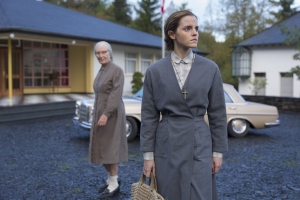 goes, putting herself at the mercy of a nutbar pedophile cult leader and his woman-beating cronies. This is the kind of movie into which you can never lose yourself entirely because you keep pulling yourself out of it to yell at the protagonists. You know in a horror movie the whole theatre is practically yelling “Don’t go in there” but of course she goes in there, even though we all knew better? And she gets diced into a million bite-sized pieces? Well this is one of those movies, except it isn’t a horror, and there’s no excuse for doing what it does. Bad writing, I suspect, and a movie that doesn’t really know what it wants to be when it grows up. With two idiot protagonists who keep making the dumbest decisions ever, you won’t care whether they live or die. And for a film that’s trying to shed some light on a pretty gruesome chapter in Chilean history, it’s also succumbing to the misplaced love story temptation. Because nothing overcomes a cruel dictator like True Love between nitwits.
 ASSHOLES WATCHING MOVIES