
Rich people problems.
Do I have a wine cellar? Yes I do. It’s quite nice. On any given day it houses exactly the number of bottles I neglected to drink last night. We are not wine snobs. We don’t even aspire to be. But as Sour Grapes will tell you, the world’s already got enough of those. Too many, maybe.
In the 90s, during the tech boom, people had too much money. “Fuck you money” they call it, the millions in excess, to be pissed away rather than spent. The kind of money I will never see and have a hard time just reading about. Riches needed to be conspicuous, so after the cars were bought and the art hung and rare coins sought out, they turned to wine, which can be literally pissed away given a certain amount of time. Wine became such a commodity that auction houses made bundles selling the stuff. Rare bottles were gobbled up; demand was high but resources extremely finite.
The “angry men” (so called because they’re the ones who bring exceptional bottles of wine to the dinner party while the rest of us just pick up whatever’s on sale at the grocery store and this makes them ANGRY) began hosting wine tastings where $200 000 worth of wine was consumed in a night. Auctioneer John Kapon pushed this new culture of big wine being sexy and exotic, and why not? It’s not like auction houses make a 20% cut on whatever they sell. And by golly did they sell: millions at a time.
Rudy Kurniawan was a buyer and a drinker. He chased the elusive bottles and dropped big cash on them. His palette was legendary. In fact, he was legendary. He was deliberately mysterious, and a mythology built up around him. But he was generous, gracious, and extremely well-liked and respected. He bought wine compulsively; some he drank, some he shared, and lots he turned around and sold for profit.
 Until Bill Koch noticed something peculiar in his wine cellar that has more square footage than my house. Among his 43 000 bottle collection (including 4 bottles reportedly owned by Thomas Jefferson for which he paid $100k per bottle) he started to notice some fakes. Those fakes were traced back to none other than Rudy Kurniawan.
It’s thanks to Koch and an honourable vintner named Ponsot that Rudy was eventually brought down (justice for Burgundy, Ponsot passionately believes). The story is pretty engrossing, and it turns out that even more fraudulent than the wine is Rudy himself.
The documentary also explores the collaboration between forgerer and dupe – obviously lots of people wanted and needed to believe their wine was real. Otherwise it’s just a bottle of vinegar the price of a Ferrari. They all wanted to possess something rare – maybe so rare that it didn’t even exist anymore. Or ever.
Bill Koch seems to have lost the taste for wine collecting since these events; he just sold 20 000 bottles for $22 million dollars at Sotheby’s. And yourself? What’s the most you’d ever pay for a bottle of wine? Go ahead and uncork (unscrew?) your favourite $10 bottle and watch this movie. It’s streaming on Netflix right now and it’s worth savouring.
“Buy ’96 champagne. If you can’t afford that buy ’02. If you can’t afford that, drink fucking beer.”
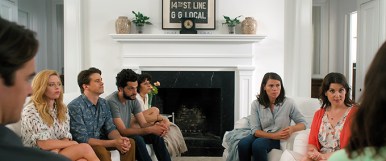 new girlfriend! Everyone thinks it’s kind of tacky that Jack (Ben Schwartz) brought a hot young date named Lola (Alia Shawkat) to the shindig, and they doubly don’t appreciate their sloppy pda all over the place. Not when Annie (Melanie Lynskey) and Matt (Jason Ritter) are on their umpteenth postponement of their wedding and Annie’s drinking again, not that anyone minds so much when her drunken outbursts break the ice during a very tense dinner.
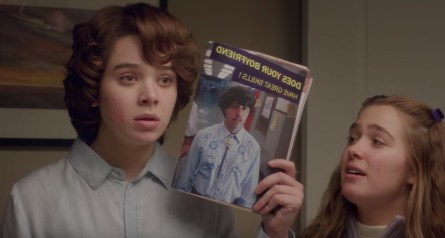 awkwardness just goes on and on. To make matters worse, her brother Darian (Blake Jenner) has it easy: perfect skin, perfect grades, the perfect apple of his mother’s eye, and a perfectly terrible person to be compared to for the rest of your life. To make matters EVEN worse, Darian starts dating Nadine’s best friend (read: only friend), which means he’s getting all the comfort that used to be hers, and she’s forced to be at war with them both while still, you know, blundering her way through life and high school, with only an irascible teacher (Woody Harrelson) in her corner – and believe me, that’s a bit iffy.
 time in one’s life.
 Moonlight is the quietest tour de force I’ve probably ever seen. Never have I rooted for a drug dealer in this way, and never have I sympathized so much with a kid who wanted to follow in that drug dealer’s footsteps. Moonlight is spectacular in its simplicity. It is also entirely different than the movie I expected.
 Chiron’s adolescence is the subject of three tightly focused vignettes. It’s a wonderful storytelling choice that perfectly explains Chiron’s choices as he grows up, without having to engage in any exposition. Moonlight is brave in many ways but to me it’s the choice to let us figure things out for ourselves that makes this film great. It makes the journey more fulfilling, the experience more real, and greatly increases our empathy for Chiron. Moonlight helps us understand Chiron to a degree that I would not have thought possible. Regardless of your race, wealth, or sexual orientation, we are all a lot like Chiron.
 Alex Hibbert, Ashton Sanders and Trevante Rhodes each take remarkable turns as Chiron and the extent to which they feel like the same person is incredible. Mahershala Ali is not the only other actor deserving of mention (the supporting cast is consistently great) but for my money his performance as the aforementioned drug dealer shapes Chiron’s life and makes us understand his growth to a degree that is virtually unmatched in film.
 appearing as the PTA mom who’s about to make Lacey Chabert’s life even more unbearable, as if being exiled to Ohio wasn’t bad enough. Now she has to put up with some old rival from high school one-upping her and flaunting the lifestyle that dentistry bought her. Some very talented directors have occasionally elicited some not-terrible performances from Carey (I’m thinking of Precious here, and I’m not sure what else) but whoever directed this monstrosity is clearly cowed by her. She’s more wooden than a nutcracker and she’s making hand gestures like she’s Celine Dion, live in concert.
 the 2016 American Election’s worst-case scenario. Misogyny and xenophobia seem to have its place in American political discourse after all- the Oval Office on weekdays and Trump Tower on the weekends. A lot of people have said a lot of things to try to make me feel better. “Geez, give him a chance. If he succeeds, we succeed,” they say. “He’s not going to do any of the things he said,” seems like a popular response, which even if true seems to miss the point. One person even made the bizarre claim “Don’t worry. Orange people never do anything”.
 “Sure, he’s unprepared and easily distracted but give him time,” would makes more sense if the world was a simple place where nothing all that important or complex were going on. Zero Days, the new documentary from Alex Gibney and the film I’m using as an excuse to talk about the feelings I can’t shake since the election, paints a scary picture of the complexity of the security threats that face the United States and the world. Specifically, Zero Days is focused on cyber security and the story of the Stuxnet virus.
 Gibney (Taxi to the Dark Side, The Armstrong Lie, Going Clear) takes his subject seriously, his documentary can’t help feeling like a Hollywood thriller and the twists can feel pretty exciting until you remember that this is real life. The director is wise to play up the suspense given that all this talk of worms and centrifuges can get a little technical and continually reminding us how high the stakes are is an excellent motivator to pay attention to all the tech talk. The interviews with the security company that discovered Stuxnet, the politicians who can neither confirm nor deny anything, and the NSA whistleblowers are all gripping.
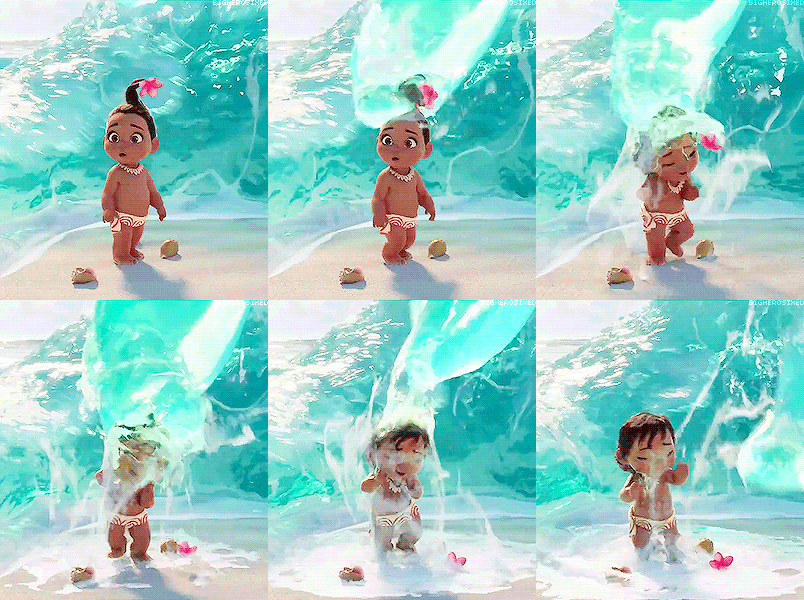 its violence. But Moana is called by the sea, and encouraged by her water-loving grandmother, she discovers that her ancestors were once voyagers who travelled the ocean in impressive “canoes” to find new islands to inhabit. With this in mind, she takes off on a self-taught sailing adventure to find the demi-god Maui and set things right for her ailing homeland.
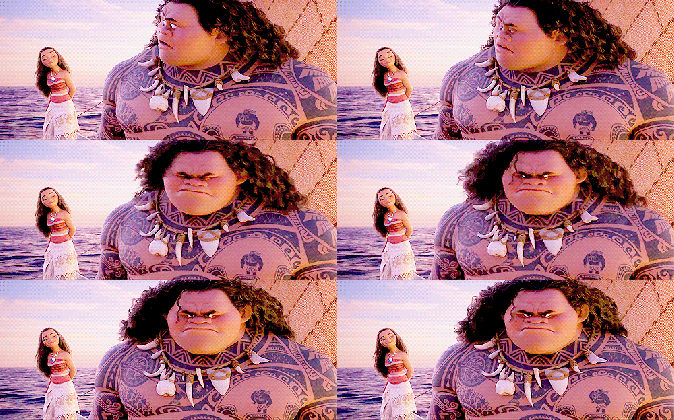 like Lilo & Stitch before it, should be celebrated for being a Hawaiian movie that actually features Hawaiian people (I’m looking at you,
  musical ventures. Jemaine Clement, playing a oversized crab, sings a song called Shiny which sounds an awful lot like something Flight of the Conchords would have done, though it is indeed written by Miranda (and performed with a David Bowie flair by Clement). And of course I’d be remiss if I didn’t mention the little girl (14 at the time of recording) who voices Moana herself, Auli’i Cravalho, who has a powerhouse of a voice, rich and full, and sounds authentic in the role too. I’m very glad to report that Disney cast this movie using a plethora of Polynesian performers, and it really pays off.
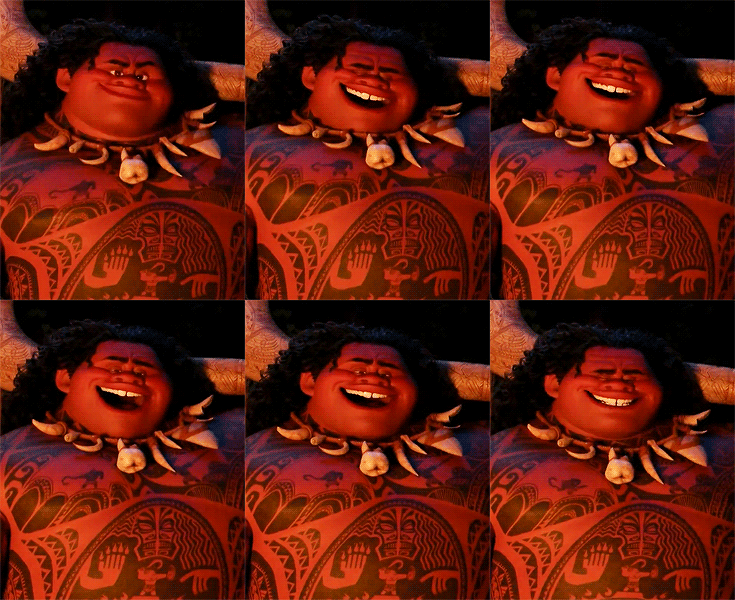
 read currents and measure the stars from the demi-god Maui, voiced by Dwayne Johnson. The animators do a really great job of bringing a few identifiable Johnson traits into Maui’s features, and Miranda carefully crafted a song that he could sing successfully, without having a traditional talent for singing (“You’re Welcome” is a heck of a song!). Maui’s body is covered in tattoos that represent acts of heroism, or particular challenges that he’s overcome. Unlike the rest of the computer-animated film, his tattoos are hand-drawn, and add an extra layer of fun to the story, as well as acting as his moral compass. Maui often pokes fun at
  Moana’s insistence that she is “not a princess”, a self-aware bit of humour from a studio known for relying on certain formulas.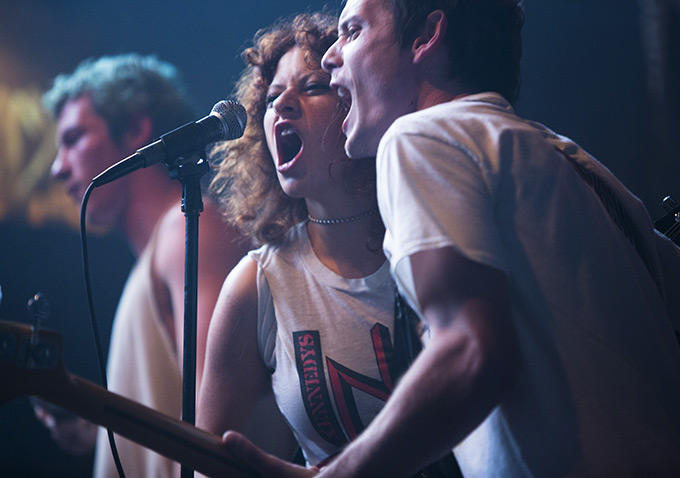
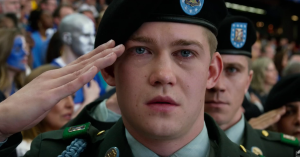 On a snowy Sunday afternoon, Jay and I found ourselves alone in a theatre watching Billy Lynn’s Long Halftime Walk. Having just been reminded on the way to the theatre that this was two time Oscar-winning director Ang Lee’s latest, I thought it was particularly odd for the theatre to be empty, even accounting for the fact that Fantastic Beasts was playing simultaneously on four or five other screens at the multiplex. But by the end of the film I got it. This is just a terrible movie. We shouldn’t have been there either.
 of Destiny’s Child so don’t get your hopes up, Beyhive.
 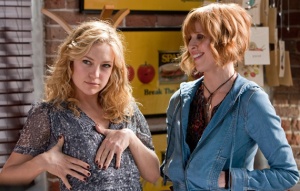 wrong. But you know what I mean: usually a pretty blonde will linger with some glamorous kind of cancer that makes you pale but otherwise untouched. Colon cancer is a mother fucker. I mean, you wouldn’t know it from the movie. She even keeps all her hair! But she does get to suffer the indignity of the old camera up the wazoo trick, and has to admit to cute guys that she’s bleeding in her poop. So that’s kind of wonderful. A laugh riot, if you will. At least that’s what they’re striving for. In reality, the movie’s quite tone deaf.
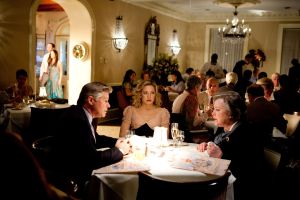 dying wish. And of course her oncologist happens to be dreamy Gael Garcia Bernal. But there are even worse travesties than this afoot. First, as she lays dying, Marley talks to “God” (Whoopi Goldberg), who apparently is in the business of granting 3 wishes, like a genie. Even more egregious is Peter Dinklage, who pops up as a little person hooker whose nickname is – you guessed it – A Little Bit of Heaven. Because when the jokes about butt cancer dry up, why not make a joke out of someone’s sexuality? Ugh.
 ASSHOLES WATCHING MOVIES