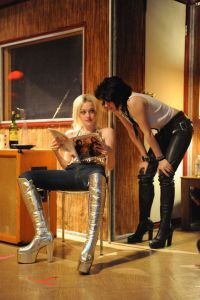
The Runaways is a biopic-ish film about the rise and fame of all-girl rock group of the same name. The film’s script is based on Cherie Currie’s memoir, and is produced by Joan Jett. Unsurprisingly, the film mostly focuses on these two women, Currie on the mic and Jett on rhythm guitar. Lots of other ladies came and went – most wanted nothing to do with the movie, and their parts are fictionalized.
Curie (Dakota Fanning) and Jett (Kristen Stewart) were pioneers, and came together under the influence of scuzzy manager Kim Fowley (Michael Shannon). Like any respectable rock band of the era, they eventually combusted, but not before releasing four albums in as many years. They never made it huge in North America but had some crazy success in Japan for a while, where their sound and aesthetic were appreciated.
The movie is just okay. The leads are phenomenal, stylish and electric performances from both Stewart and Fanning (and Michael Shannon is stellar, as always). But the “biopic” aspect is less bio, more pic. It barely scratches the surface. We don’t get to know anyone, and at any rate, Joan Jett’s post-Runaways life and music is where the real meat is. That said, it’s a clichéd ride about sex, drugs, and rock & roll, but it’s one worth watching to see Dakota Fanning get salty and Stewart own the role of rock’s first goddess. But it’s a condensed version featuring some character composites. The only member of the band besides the two front ladies that is touched upon is that of Sandy West, the drummer, but by the end they don’t give a shit about her, forgetting her in the title cards. She’d died before production began. Pesky cancer. The Runaways were revolutionary, a band about self-empowerment, but not all selves are created equally.
The year was 2002. Spider-Man, the comic, was 40 years old that year, so it was about damn time somebody finally made a good movie about a character that had been iconic for decades. The movie rights had been in limbo for years, but with Sam Raimi, a dedicated comic book collector, in the director’s chair, it finally came together.
I was married to the wrong guy at the time, and none too pleased about being dragged to the midnight viewing of a movie I was sure I wouldn’t care for. I bet lots of you were there too: Spider-Man set the record for highest gross in a single day, and then broke the record for achieving $100 million dollars the fastest – in just 3 days.
Raimi had liked Tobey Maguire in The Cider House Rules, feeling that character embodied a lot of what Peter Parker should be. The studio, however, was thinking more along the lines of Tobey’s pussy posse playmate, Leonardo DiCaprio, who James Cameron had wanted for the part when he was working on it in the 90s (Charlie Sheen campaigned hard for it, but Cameron didn’t bite). Failing that, maybe Freddie Prinze, Jr.? James Franco tried out for the part, and so did Scott Speedman. Wes Bentley was rumoured to be the favourite. Stan Lee had always envisioned John Cusack for the part, but the in end, Raimi got his way, and Tobey Maguire hit the gym.
Spider-man’s suit went through about a billion different designs before they landed on the one seen in the movie. The suit itself was one piece (except for the mask), excruciating to peel on and off; eventually the costume department relented and built in a little slit so Maguire could pee.
Kirsten Dunst got the part of Mary Jane after Kate Hudston turned it down to make Four Feathers. Alicia Witt, Mena Suvari and Elisha Cuthbert all auditioned for the role. Eliza Dushku’s screen test can be seen in the DVD’s special feature. In the end, Dunst got word that Maguire had been cast and thought the project sounded just indie enough for her taste.
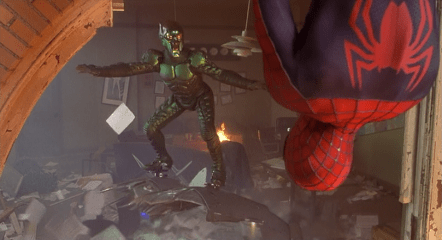
The Green Goblin was maybe hardest to cast of them all. The role was intended to be played by Billy Crudup, who dropped other projects to be available before eventually being told he was too young. Robert De Niro and John Travolta both turned down the part. Nicolas Cage and John Malkovich were also considered. Finally Bill Paxton was settled upon, but a few meetings later, Sam Raimi was convinced Willem Dafoe was right for the part, so they dyed James Franco’s hair brown to make them look more like father and son, and the rest is history. Bill Paxton got the shaft of course, but his dad still appears in the film, as the Osborns’ elderly housekeeper. The Goblin costume was no picnic either. Originally designed to be quite bulky, it was streamlined when Dafoe decided to do his own stunts (reportedly about 90% of them). In the end, the suit was made up of 580 pieces that took a teak half an hour to put on him.
JK Simmons seemed a perfect fit for J. Jonah Jameson, but it’s not who Stan Lee would have chosen. His first choice? Himself! He’s very complimentary of Simmons’ portrayal, however. And Jameson’s costume was much simpler, of course, though it did necessitate Simmons’s donning of a wig. Not content to have just one iconic comic book role, JK will soon be appearing as Commissioner Gordon in The Batman and Justice League.
Hugh Jackman was supposed to have been in the movie, in a Wolverine cameo, but on the day he showed up in NYC to film, the crew couldn’t get his costume from the X-Men set!
The CGI in this movie was really advanced for its time, and the special effects wowed the pants off audiences worldwide. Sadly, post-911, some effects had to be used to digitally remove the World Trade towers from several scenes. And a couple of scenes were done the old fashioned way. In one, Tobey Maguire magically catches Mary Jane’s tray full of food. It took 156 takes and a little crazy glue on the tray, but eventually he got it! In another, during that famous upside-down kiss that capture romantic imaginations, Maguire suffered big time, the pouring rain filling up his nostrils and flooding his nasal cavities, making it hard to breathe.
Spiderman is Sean’s favourite super hero. We didn’t get to see these films together, but we did get to see Julie Taylor’s Spiderman: Turn Off The Dark on Broadway. The mounting of it was plagued with difficulty because the stunts were so technical and precise, but seeing Spiderman actually swinging from webs and being dazzled by aerial fight scenes was worth it. With music from U2’s Bono and The Edge, it was a rock-opera-circus show, and a lot of fun. Reeve Carney played Peter Parker, who you may know from Penny Dreadful.
What Sean and I have seen is basically every other comic book movie released since we were together, including those not-very-good Amazing Spider-Man ones with Andrew Garfield. Sean is a comic book lover from way back, having spent hard-earned paper route money on them every time he could convince his dad to drive him to his favourite store in Toronto. His mother made costumes for him and his brothers, and he even got suspended from school over a comic that he drew when he was a teenager (one of his co-conspirators now writes for Marvel and has his own graphic novel series).
So what better way to celebrate Sean’s 40th birthday than with a super hero party? The dude’s in good company. Joe Manganiello, who played Flash Thompson in the 2002 Spider-Man, also turns 40 this year (and will play Deathstroke in The Batman). Corey Stoll, who played Yellowjacket in Ant-Man, turned 40 this year, and so did Michael Pena from the same film. Alicia Silverstone, aka Batgirl, turned 40, and so did Colin Farrell, who played Bullseye, a character that first appeared in the Daredevil series 40 years ago this year. Benedict Cumberbatch (Dr Strange himself) also turned 40 this year, as did Green Lantern\Deadpool, Ryan Reynolds. So it’s a big year for lots of super heroes, but I’m most proud of the one who wears a suit to work rather than tights and fights for justice in a courtroom instead of in the sky. We’ll be toasting him with cocktails like Spidey’s Love Potion, and Superman’s Kryptonite, and they’ll come in little caped cups, just a friendly neighbourhood shindig to celebrate my favourite Asshole. xo
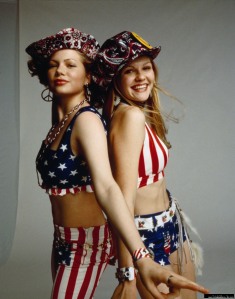
Two ditzy, boy-crazy blonde teen girls (Michelle Williams and Kirsten Dunst) are on a field trip to the White House in 1972 when they wander away only stumble upon the President himself, Richard Nixon! This film is a parody, a not-true imagining of who and what brought down Nixon with the Watergate scandal. What if Deep Throat is actually two fifteen year old girls?
In light of recent events, I suppose a film like Dick actually harkens back to simpler times, and I don’t just mean a time when Dunst would get top billing over Oscar-nominated Williams. It was a time when teenaged girls had the luxury of not thinking about the president very much.
With a cast including Harry Shearer, Dave Foley, Dan Hedaya, Will Ferrell, and Bruce McCulloch, it’s a great big serving of farce, an alternate version of history, and maybe one we could live with. I can’t help but wonder how people will rewrite the new administration, and if Trump’s legacy will eclipse Nixon’s as Biggest Joke Ever. The thing is, it seems to take at least a generation before we can find these things funny. At the time, Nixon was the guy swimming in corruption, sending your brother off to die in Vietnam. The reality of Trump as president may be even worse than that. It seems to already be inspiring some extremely gross acts of hatred.
In order to buy the girls’ silence, Nixon appoints Arlene and Betsey the official White House dog walkers. Meanwhile, Trump’s shoe-horning his kids into his cabinet is an even scarier prospect. Since when can a 70 year old man not do business with being able to ask his kids for advice? I guess that’s what you get for electing a dude with no experience. His kids are probably the least scary amid the many “contestants” he’s considering for staffing the White House.
As Nixon’s “secret youth advisors”, Arlene and Betsey have the president’s ear, and manage to influence a lot of his policies. Which has more positive outcomes for America than, say, Putin’s input will, or the KKK’s. And eventually it’s these sweet, optimistic young women who reveal the truth, which is a stirring reminder that the youth can indeed make a difference (whether or not they accidentally witness majorly classified evidence of wrongdoing).
Actually, I read an article recently that really broke my heart. It was about the fracture between young women and their fathers. The fathers, middle-aged white men, are the demographic who voted Trump in. Their daughters, however, not only abhor him, but will suffer the consequences of his actions for years to come. It feels like a betrayal to learn that their fathers so devalue their worth, their health, their bodies, and their prospects. That the men who raised them can also vote for a racist, a bigot, and a misogynist, a candidate who violates almost every lesson we teach our children from the youngest age. If you want to give it a read, you can find it here. And if you want to give yourself some hope that this too shall pass, watch Dick, a movie that re-writes a painful political past.
A sex addiction therapist endures a severe kick in the nuts that leads to a hospital visit, that leads to the discovery of a brain tumor. That’s the good news. The brain tumor is benign, and has been leaning heavily on his pituitary gland this whole time, which means 30 year old Peter (Johnny Simmons) has NEVER gone through puberty. Buckle up, folks: he’s about to!
And he’s pleased as punch. He’ll finally get to have sex! Finally know the joys of erections and masturbation and third base! The opening title card warns us we’re in for “some ridiculously fucked up shit” and they’re not wrong. They took a “true story”, made it unbelievable and yet generically raunchy, and stripped it of any humour. The situation is bursting with potential but director Kevin Pollack decided nah, let’s just be basic and boring about it. And be sure to completely waste the supporting cast while we’re at it.
It feels like the stuff that Judd Apatow left on the cutting room floor after editing The 40 Year Old Virgin, and the fact that Jane Lynch is in both is just a painful reminder that this subject actually CAN be funny, should be funny, and in fact probably took a lot of effort to screw up this badly. How much effort, you ask? Well, by my count: there are 2 credited with “story by” and FIVE credited with screenwriting. Five! All dudes, naturally. Dudes who like visual jokes about morning wood and sneaky semen. And that doesn’t even count the guy who wrote the book, you know, the REAL guy that this actually happened to.
His name is Ken Baker. The real dude spent one season as pro hockey’s “oldest rookie” and is a “journalist” who has worked for People magazine and the E! network. He is not and never has been a sex therapist, which is an unnecessary layer added by lazy writers who thought it would be funny and in fact is just plain stupid. How someone smart enough to earn a PhD would refuse to see a doctor about his condition but deem it a good idea to give advice to people about an act of intimacy he’s never done himself and is in fact biologically incapable of completing is just unacceptable. Do not insult me with such stupidity.
If you surf by this one on Netflix, don’t be fooled by the recognizable cast. It is not worthy of your time. It will fail to incite a single laugh. It should be flushed down the toilet like a used condom.
Bacchus ladies are elderly Korean prostitutes, a fact of which The Bacchus Lady kindly informs the viewer. We are introduced to So-young, the titular bacchus lady, as she enters her doctor’s office and learns she has gonorrhea, which obviously is bad for her business. As she leaves the clinic, she happens on a young boy and takes him in because his mother has just become indisposed (due to her stabbing the doctor), setting us up for some odd-couple-style hijinks between this mismatched pair who are separated by 60-odd years. Or so I thought.
It turns out that this is not a comedy. Not even a little bit. The Bacchus Lady is a melancholy look at aging where the little boy and all other characters younger than 60 are incidental, and the characters over 60 are longing for death. The Bacchus Lady is tragic in so many ways. Through the eyes of So-young, we encounter many seniors who live without joy, love, or purpose. So-young brings brief respite using her special skills, but the feeling is fleeting and leaves everyone wanting more, including So-young herself.
Sadness abounds in The Bacchus Lady, even before she makes an abrupt transition from prostitute to a grimmer kind of service provider. I was rooting for her to find a glimmer of hope somewhere but her surroundings didn’t provide it and she couldn’t have seized it anyway. She was in too deep to begin with and everything she encountered only drove her deeper into the muck, from the kid, to her clients, to a chance encounter at a KFC.
So-young’s story is simply heartbreaking. Not only is she a castaway in a sea of regret, she is just one of many old souls who are adrift. It is almost unbearable, and the worst part is that The Bacchus Lady makes you wonder how many real-life seniors are feeling the same way as So-young and her clients. I guarantee that The Bacchus Lady will make you want to hug your grandmother, so give her a call and meet her for tea after the show.
If you are facing a life-threatening disease, finding a bone marrow match for donation may be life-saving, even a cure, but as we all know, people languish on lists waiting for matches and sometimes die before they ever find one. For people of mixed race, finding that match is so much harder, akin to finding a needle in a haystack.
Mixed Marrow is an organization that helps people find those elusive matches. It is dedicated to finding bone marrow and blood cell donors for patients of multiethnic descent. Before I watched this documentary, I didn’t understand that these matches tend to be found within one’s own race, and how limiting that can be for all kinds of people. Multi-ethnic backgrounds are the fastest-growing demographic, but the waiting lists aren’t keeping up, leaving multi-racial patients struggling to surmount complex genetics on top of everything else. It’s already tragically unlucky to be struck by a stupid disease, but to fail to find a match because you’re losing at a numbers game? That’s just unacceptable.
Mixed Match is a solid documentary by Vancouver filmmaker Jeff Chiba Stearns, one that blends medical research and personal stories that make sure we remember that this topic is literally life and death. Brave patients and families share their stories, some of triumph, some of heartbreak, to help educate us while also personalizing the urgency. Cute animation helps us break down some of the more challenging science. But nothing makes a sick kid okay. That’s never easy to watch, nor the helpless of desperate parents.
Mixed Match, more than just a documentary, is a call to action. The only way to achieve more happy stories of survival is to expand the donor registry. Race is part of medicine. Our genetics have something to do with our ancestry, and where we come from. And we’re all multi-racial, in way or another. Lots of us don’t even know all the combinations that may be forgotten within our lineage.
Mixed Match, while dealing with a serious subject, is very hopeful in its heart. There’s an answer here, and the film exuberantly charges us to be part of the solution.
American Honey is one of those rare American movies that are so beautiful that even Shia LaBeouf couldn’t ruin it.
I’m not exaggerating. It really is that good. In fact, Shia’s in it. And he’s really good. Really, really good.
American Honey works neither in spite of or because of his performance. Instead, he is just one of many important parts of an impressive cast of mostly non-actors with not a single weak link in the bunch. Jake (LaBeouf) leads a team of about a dozen runaway youths who earn their living by travelling across the United States selling magazine door-to-door. Their newest recruit Star (Sasha Lane) isn’t so sure that she is comfortable with the lies that her new colleagues use to sell their product but, having seemingly nowhere else to go and having quickly fallen for Jake, she starts to feel at home with them anyway.
I struggle to communicate what it is that works so well about American Honey. My writer’s block was so bad that I went to see it a second time, quite a commitment with its 163-minute running time. All I’ve really learnt from two sittings is that writer-director Andre Arnold creates a believable world around these characters and makes it easy for the audience to feel like they’re a part of it. (Well, maybe I should just speak for myself. At my first screening, the film had lost over half its audience by the end).
To keep from getting too bored or discouraged while on the road, Jake’s team engage in any number of traditions and rituals that are often somehow both unsettling and charming. Their favourite songs, games, and chants serve the film well in helping create a subculture that we can believe and relate to. Beautifully naturalistic performances from an exceptionally well-chosen cast, great choice of music, and some terrific (though sometimes elf-indulgent) cinematography help bring their world to life.
It’s hard to describe what works about American Honey because it works mostly on an emotional level. Intellectually, I’m not sure if it’s really “about” anything other than an unusually honest and surreal coming of age story but the power of the filmmaking gave me chills.
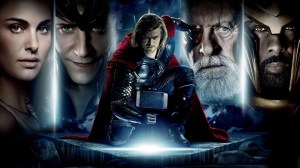
I finally saw Thor and to be honest, I’m not entirely sure what happened. I know Thor got hit by Natalie Portman’s car a couple of times after being banished to Earth for being a dick. Then he learned a lesson and could pick up his hammer again, so he smashed a rainbow bridge to save a planet. But then he couldn’t see Natalie anymore because he wrecked the bridge.
Except I know he got back to Earth somehow in time to appear in the Avengers but he didn’t bother to check in with Natalie. That doesn’t bode well for them and yet she’s in Thor: The Dark World so I guess she didn’t hold much of a grudge.
Thor felt different than the other Marvel movies, which is sort of a good thing except in being different it felt much less super-heroey than the others. Then again, that might be my anti-Thor bias showing. I never cared much for Thor in the comics. I always found him snooty and boring. He’s no Spider-Man, that’s for sure.
So while kudos may be due to Kenneth Branagh for trying to put a fantasy spin on Thor’s cinematic debut, I guess I would rather have seen him fight the Hulk than some random fire-breathing robot. The good news is that I might get my wish now that Taika Waititi has been handed the franchise’s reins! November 2017 can’t come soon enough, as Thor: Ragnarok is arguably my most anticipated Marvel film yet.
While I’m waiting, I suppose I could take in the other Thor movie between now and then. After being underwhelmed by Thor, I’m in no real rush to take in Thor: The Dark World. I’m far more likely to rewatch Hunt for the Wilderpeople instead. Because unlike Thor, Ricky Baker is definitely my kind of superhero.
Continuing the “proud” tradition of Paul Blart: Mall Cop, True Memoirs of an International Assassin is a movie that is so uninspired, it will make you search for other ways to pass the time. After about five minutes, Jay started cleaning out our closet and is now showing me shirts I had forgotten I owned. It turns out I have a lot of nice clothes!
True Memoirs of an International Assassin is not exactly a terrible movie. It’s just a totally predictable and generic one to the point that it will drive you to housecleaning. I think there was an attempt at a plot but it just felt like a blend of twenty other better movies, and even those “better” movies weren’t all that great. This is another tale of South American dictators and guerrillas and druglords and corrupt CIA agents and one man standing up to them for the greater good. When that one man is Kevin James, it is for some reason harder to swallow than when a fifty-something Harrison Ford did basically the same thing in Clear and Present Danger. All the imaginary fight sequences in the world couldn’t make me believe that Kevin James could take anyone in a fight.
This movie might have been tolerable if Kevin James had delivered some comedy, of any kind. Spoiler alert: he doesn’t. This is not a comedy or a spoof. It is an action movie starring a comedian which delivers mediocre and forgettable action from start to finish. There is punching and shooting and jumping out of helicopters and it all feels flat and staged, but since there’s no satire to be found my only option was to try and enjoy the action for what it was. I didn’t. Again, it’s just stuff that we’ve all seen in a bunch of other movies, only not as good.
We are now back to rewatching Gilmore Girls in preparation for the reunion shows. And even though by now I find all the Gilmores completely unbearable (we’re well into season six), at least they are making me laugh. That’s all I expected from True Memoirs of an International Assassin and I was left wanting. Don’t bother with this one.
It’s funny how animated movies from this vintage have aged so badly compared to classically-drawn stuff like Snow White. Old Disney has a timeless feel whereas the dawning days of CGI just looks goofy and amateurish. But I can remember at the time thinking it looked slick as shit. Actually, as early as 1991, Steven Spielberg held the rights to this film and thought he’d do hand-drawn animation through Amblin studios, with Bill Murray as Shrek and Steve Martin as Donkey. Just imagine that.
Shrek came out in 2001. Animated movies took so long to make that voice actors were cast years in advance. Nicolas Cage was offered the part of Shrek but turned it down, not wanting to be drawn as an ugly ogre (he apparently missed the whole point of the movie, unsurprisingly). Chris Farley was then cast as Shrek but at his death in 1997, producers decided to recast the role and it went to SNL alum Mike Myers (you can hear Farley’s work here). Farley’s gone but not forgotten – if you look closely, you might just see a few of Shrek’s movements that were inspired by Farley, notably his use of “air quotes” just like a certain Farley character. And that’s a bit of a miracle, because when Mike Myers came on board, he demanded a complete re-write of the script, not wanting any of Farley’s influences to contaminate his own performances. Another result of Farley’s death was the dropping of Janeane Garofalo from the cast. She was supposed to play Fiona opposite Farley’s Shrek, but she was dropped like a hot potato after his death, no explanation given.
Janeane Garfalo wasn’t the film’s only disappearing act: Jimmy Fallon had recorded the dating game show portion as the Magic Mirror, but in the film that hit theatres (and your DVD shelf), it’s just storyboard artist Christopher Miller.
Like Farley, Myers recorded his role in his normal speaking voice. When he saw the movie with test audiences, he realized something crucial was missing, so he drew on the Scottish accent his mother would use when reading bedtime stories to re-record the lines. That little decision cost the studio $4 million dollars. Do you think it was worth it? All the actors recorded separately, as was the custom at the time. John Lithgow (Lord Farquaad) lamented never being able to meet let alone work with Myers, Eddie Murphy (Donkey) or Cameron Diaz (Princess Fiona). Don’t feel too bad for them though – they’ve had several red carpets to schmooze each other since. Mike Myers did a lot of ad-libbing which comes as no surprise, but it seems that Cameron Diaz also added a lot to her role. Like her character, Diaz had studied kung fu (she was a Charlie’s Angel, after all) and recorded that part in full exertion (occasionally breaking out in Cantonese). Producers also scrambled to add Fiona’s burping scene after Diaz let one rip after drinking a Coke.
Because the film took so long to make (they started work in 1996), it features a lot of references that would have seemed fresh at the time (The Matrix, for example), and some that seemed almost immediately dated (the Macarena, and Riverdance, for example). It also gave the Dreamworks lawyers plenty of time to go over the film with a fine tooth comb: no one wanted to get sued by Disney for the many satirical pokes and jabs at their theme parks.
Of course we all know that Donkey is the best character in Shrek, and he was memorably voiced by Eddie Murphy, like no other could. In fact, Murphy received a BAFTA nomination for his voice-over performances, the first of its kind. Murphy knows it’s some of his best work, and firmly believes that when he does, the obit will run with a picture of a donkey beside it. “Donkey is a really positive character. He’s always looking at the bright side of everything, trying to work it out. A happy-go-lucky donkey.” How can you not love a sensitive, hyperactive donkey with a sweet tooth for waffles and parfait? And if you think he looks a little too cute and cuddly for a donkey, you’re right – although he’s modeled after a real-life miniature donkey named Perry who lives in Palo Alto, near DreamWorks, his movements mimic that of a dog rather than a hooved animal.
Shrek was released to enormous success. They immediately went to work on a second (which led to an ill-advised 3rd, and then a 4th that’s not much better). But in 2001, Shrek was animation gold. It was the first animated American film screened at Cannes since Peter Pan in 1953. It also won the inaugural Oscar for Best Animated Film when the Academy Award added it in 2001 (it beat out Pixar’s Monsters, Inc!). It was the 3rd highest grossing movie of the year, behind some Harry Potter and some other Lord of the Rings (and just edging out Monsters, Inc, in fact). So even if the animation looks a little busted today, it’s got a pretty solid spot in animated history.

 and came together under the influence of scuzzy manager Kim Fowley (Michael Shannon). Like any respectable rock band of the era, they eventually combusted, but not before releasing four albums in as many years. They never made it huge in North America but had some crazy success in Japan for a while, where their sound and aesthetic were appreciated.
 more pic. It barely scratches the surface. We don’t get to know anyone, and at any rate, Joan Jett’s post-Runaways life and music is where the real meat is. That said, it’s a clichéd ride about sex, drugs, and rock & roll, but it’s one worth watching to see Dakota Fanning get salty and Stewart own the role of rock’s first goddess. But it’s a condensed version featuring some character composites. The only member of the band besides the two front ladies that is touched upon is that of Sandy West, the drummer, but by the end they don’t give a shit about her, forgetting her in the title cards. She’d died before production began. Pesky cancer. The Runaways were revolutionary, a band about self-empowerment, but not all selves are created equally.
 too: Spider-Man set the record for highest gross in a single day, and then broke the record for achieving $100 million dollars the fastest – in just 3 days.
 Nicolas Cage and John Malkovich were also considered. Finally Bill Paxton was settled upon, but a few meetings later, Sam Raimi was convinced Willem Dafoe was right for the part, so they dyed James Franco’s hair brown to make them look more like father and son, and the rest is history. Bill Paxton got the shaft of course, but his dad still appears in the film, as the Osborns’ elderly housekeeper. The Goblin costume was no picnic either. Originally designed to be quite bulky, it was streamlined when Dafoe decided to do his own stunts (reportedly about 90% of them). In the end, the suit was made up of 580 pieces that took a teak half an hour to put on him.
 JK Simmons seemed a perfect fit for J. Jonah Jameson, but it’s not who Stan Lee would have chosen. His first choice? Himself! He’s very complimentary of Simmons’ portrayal, however. And Jameson’s costume was much simpler, of course, though it did necessitate Simmons’s donning of a wig. Not content to have just one iconic comic book role, JK will soon be appearing as Commissioner Gordon in The Batman and Justice League.
 remove the World Trade towers from several scenes. And a couple of scenes were done the old fashioned way. In one, Tobey Maguire magically catches Mary Jane’s tray full of food. It took 156 takes and a little crazy glue on the tray, but eventually he got it! In another, during that famous upside-down kiss that capture romantic imaginations, Maguire suffered big time, the pouring rain filling up his nostrils and flooding his nasal cavities, making it hard to breathe.
 In light of recent events, I suppose a film like Dick actually harkens back to simpler times, and I don’t just mean a time when Dunst would get top billing over Oscar-nominated Williams. It was a time when teenaged girls had the luxury of not thinking about the president very much.
 the official White House dog walkers. Meanwhile, Trump’s shoe-horning his kids into his cabinet is an even scarier prospect. Since when can a 70 year old man not do business with being able to ask his kids for advice? I guess that’s what you get for electing a dude with no experience. His kids are probably the least scary amid the many “contestants” he’s considering for staffing the White House.
 Year Old Virgin, and the fact that Jane Lynch is in both is just a painful reminder that this subject actually CAN be funny, should be funny, and in fact probably took a lot of effort to screw up this badly. How much effort, you ask? Well, by my count: there are 2 credited with “story by” and FIVE credited with screenwriting. Five! All dudes, naturally. Dudes who like visual jokes about morning wood and sneaky semen. And that doesn’t even count the guy who wrote the book, you know, the REAL guy that this actually happened to.
 multiethnic descent. Before I watched this documentary, I didn’t understand that these matches tend to be found within one’s own race, and how limiting that can be for all kinds of people. Multi-ethnic backgrounds are the fastest-growing demographic, but the waiting lists aren’t keeping up, leaving multi-racial patients struggling to surmount complex genetics on top of everything else. It’s already tragically unlucky to be struck by a stupid disease, but to fail to find a match because you’re losing at a numbers game? That’s just unacceptable.
 . Really, really good.
 I struggle to communicate what it is that works so well about American Honey. My writer’s block was so bad that I went to see it a second time, quite a commitment with its 163-minute running time. All I’ve really learnt from two sittings is that writer-director Andre Arnold creates a believable world around these characters and makes it easy for the audience to feel like they’re a part of it. (Well, maybe I should just speak for myself. At my first screening, the film had lost over half its audience by the end).
 any number of traditions and rituals that are often somehow both unsettling and charming. Their favourite songs, games, and chants serve the film well in helping create a subculture that we can believe and relate to. Beautifully naturalistic performances from an exceptionally well-chosen cast, great choice of music, and some terrific (though sometimes elf-indulgent) cinematography help bring their world to life.
 I finally saw Thor and to be honest, I’m not entirely sure what happened. I know Thor got hit by Natalie Portman’s car a couple of times after being banished to Earth for being a dick. Then he learned a lesson and could pick up his hammer again, so he smashed a rainbow bridge to save a planet. But then he couldn’t see Natalie anymore because he wrecked the bridge.
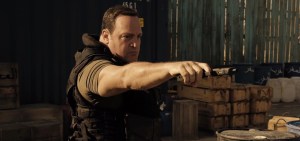 Continuing the “proud” tradition of
  years in advance. Nicolas Cage was offered the part of Shrek but turned it down, not wanting to be drawn as an ugly ogre (he apparently missed the whole point of the movie, unsurprisingly). Chris Farley was then cast as Shrek but at his death in 1997, producers decided to recast the role and it went to SNL alum Mike Myers (you can hear Farley’s work
  dating game show portion as the Magic Mirror, but in the film that hit theatres (and your DVD shelf), it’s just storyboard artist Christopher Miller.
 references that would have seemed fresh at the time (The Matrix, for example), and some that seemed almost immediately dated (the Macarena, and Riverdance, for example). It also gave the Dreamworks lawyers plenty of time to go over the film with a fine tooth comb: no one wanted to get sued by Disney for the many satirical pokes and jabs at their theme parks.
 he looks a little too cute and cuddly for a donkey, you’re right – although he’s modeled after a real-life miniature donkey named Perry who lives in Palo Alto, near DreamWorks, his movements mimic that of a dog rather than a hooved animal.
 ASSHOLES WATCHING MOVIES