
It’s that time of year again: Sean and I have fled cold, snowy Ottawa to celebrate his birthday in warmer or at least more exotic climes. Last year we were in Hawaii but this year we’ve set our sights on New Orleans, so you can count on the next several reviews carrying on in that theme.
Interview with the Vampire: The Vampire Chronicles came out in 1994, which means it may be older than some of you. Based on the best selling novel by Anne Rice, herself a New Orleans native.
So the premise is this: a reporter (Christian Slater) is interviewing a 200 year old vampire, Louis (Brad Pitt). He was formerly a plantation owner who lost his wife in childbirth, which threw him into a depression. This is when he met a vampire named Lestat (Tom Cruise), who turned him and taught him vampire ways.
Tom Cruise was not supposed to have been cast; when Rice wrote it in 1976, she had Rutger Hauer in mind. The book was optioned a few years later with John Travolta attached but a glut of other vampire movies (Dracula, Nosferatu the Vampyre, and Love at First Bite, all in 1979) put the project on pause. When the wheels started turning again, Travolta was deemed too old. Rice met with Tom Hanks instead, but 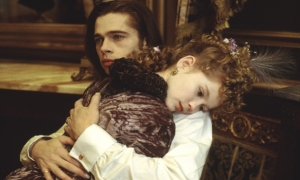 he turned it down for Forrest Gump. Daniel Day-Lewis was cast but then dropped out just weeks before filming. Then it was offered to Johnny Depp, who turned it down. And finally it went to Tom Cruise, which made Anne Rice livid, certain he could not handle the part. Of Cruise’s casting, she said “it’s so bizarre; it’s almost impossible to imagine how it’s going to work” and “the worst crime in the name of casting since The Bonfire of the Vanities.” Rice recused herself from the production but when she eventually forced herself to watch it, she was so impressed by Cruise’s performance that she wrote him a letter of apology.
Jeremy Irons had also turned down the part because he didn’t want to spend hours in the makeup chair again, and he wasn’t wrong. The vampire makeup took hours to do, in part because the actors were required to hang upside down for up to 30 minutes at a time, allowing the blood to rush into their faces, making veins bulge out. The makeup artists would then trace the veins to create the vampire’s look. But then the blood would disperse and the process would have to be repeated several times. To keep the vampire look secret, Tom Cruise ordered the set to be completely private, necessitating tunnels to be built to shuttle the stars to and from the set.
Makeup is not the only reason Brad Pitt was completely miserable on the set and tried his darndest to get out of the contract. He also hated his costumes and coloured contacts, but most of all he hated playing second fiddle to Tom Cruise – ahem – both on and off the set.
Christina Ricci, Julia Stiles, Evan Rachel Wood, and Natalie Portman all tried out for the part of Claudia but it was a young Kirsten Dunst who won the role. She had her first on-screen kiss in the film – her 12 year old self to Brad Pitt’s 30 years. She wasn’t even allowed to watch the film when it came out; it was R-rated, and her parents thought her too young.
Speaking of age discrepancies, there was also a height discrepancy, and it forced Tom Cruise to act atop crates to try to appear level with the other vampires. Cruise has said that he watched videos of lions eating zebras to prepare for the role. In unrelated news: Tom Cruise is a strange man.
Christian Slater took over the role of Malloy upon the death of River Phoenix. In his honour, Slater donated his salary to two of Phoenix’s favourite charities. The film has a dedication to him at the end of the credits.
Rice was originally worried that the movie would never get made because the novel contained allusions to a possible sexual relationship between Lestat and Louis. Not only was she prepared to write this out of the script completely, for a while she even turned the part of Louis into a woman, and had Cher in mind to play her. Ultimately the two roles remained male, and Cruise and Pitt earned a Razzie for worst screen couple. Conversely, the movie was also nominated for two Oscars, but lost those – Best Art/Set Direction went to The Madness of King George, and Best Original Score went to The Lion King. Cher had actually written a song for the movie, called Lovers Forever, but because of that dicey word Lovers, it was rejected – but eventually appeared on an album of hers in 2013!
The film supposedly inspired a real life crime shortly after the film’s release. On November 17, 1994, Daniel Sterling and his girlfriend Lisa Stellwagen watched the film together. The next day, Sterling stabbed Stellwagen seven times in her chest and back and sucked the blood from her wounds. Stellwagen survived the multiple stab wounds and Sterling was arrested. He claimed the film influenced his plan but the jury convicted him of attempted first-degree murder, among several other charges.
Lots of the 1700s vampire stuff was filmed in and around New Orleans. River scenes were fudged by removing modern items like the Greater New Orleans Bridge and surrounding radio towers in post-production. The Old Coliseum Theatre was used for on-location shooting but sadly burned down in 2006 so Sean and I won’t be able to visit. The city and the businesses were quite cooperative to the film crew – they agreed to turn out their lights for the duration of the filming to preserve the illusion of the film’s time period.
You may recall that the film ends up in San Francisco, where Malloy drives across the Golden Gate Bridge. Sean and I are not visiting that esteemed city this trip but we have before, and reviewed the movies to prove it. The crew received permission to shut down 2 lanes of traffic on that bridge, which is reportedly very hard to get.
Have you ever been to New Orleans? What are your favourite spots? Any favourite movies set in the city? Predictions as to what I’ll review next? Be sure to check our Twitter feed for updates from the city – @assholemovies
 her to write a ransom note for $5,000 and then threw her off a bridge. Papers called her accused assailant the “Negro chauffeur” or “colored servant” but his name was Joseph Spell, and he claimed he was innocent. Lucky for him, his case caught the attention of the NAACP and Marshall was dispatched to try his case. Only he couldn’t; the racist judge wouldn’t let him on the grounds that he was “from out of town” so Marshall had to team with another lawyer and somehow stay silent through the infuriating trial.
 Kaufman just didn’t give a fuck – but Jim? The documentary has a tonne of footage from the set of the movie, which was filmed 20 years ago. A documentary was planned at the time (shot by an old girlfriend of Andy’s) but Universal pulled the plug, for fear that the public would discover their beloved Jim Carrey to be an asshole. Cut to 2017 and the cat’s pretty much out of the bag. And maybe asshole’s not even the right word, but there is no one right word: he’s a space cadet, a depressive, a nonsensical philosopher. And those things are all apparent in the documentary, which also features an interview with him present day. And it’s hard to know who to detest and pity more: the Jim Carrey on the set of Man on the Moon was was never Jim Carrey at all because he was so deep in the character Jim never showed up to work, or the Jim Carrey today who at times seems downright bewildered even in his own skin. He talks about fugue states and telepathy, but bottom line, he believes that the spirit of Kaufman inhabited his body during filming. When director Milos Forman or colleagues like Danny De Vito or Paul Giamatti tried to address Jim on the set, “Andy” would be angry and\or defensive. “Andy” was always on, and always creating a ruckus. You can see how that would wear thin. The real Jim Carrey, whoever that is, has recently claimed to have had a spiritual awakening, and depending how woke you are yourself, what he spouts is either enlightened or crazy.
 Brad and Dusty are in a pretty healthy place since we left them in the
 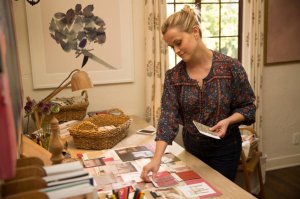 Sheen) and newly single mother to two girls who are having a hard time with their transition to L.A. Their adjustment period gets both better and worse when Alice brings home not one but three very young men on the occasion of her 40th birthday (it’s not nearly as slutty as it sounds). Aspiring film makers, they’re thrilled to crash on her couch while they take “meetings” about their “project” but even more psyched when they find out the house belonged to her father, a famous movie director, and that her mother (Candice Bergen), muse and movie star, often hangs around to make them breakfast.
 selling single of all time. It also served to “de-Christ Christmas”, restyling the birth of Jesus into a holiday about snow that also evokes nostalgia for home and for childhood, concepts we can all relate to.
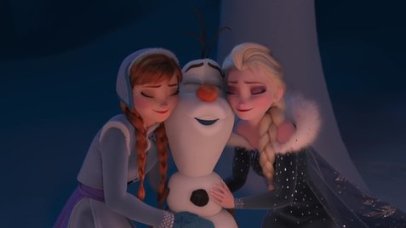 non-Pixar short is in front of a Pixar film (the first time, for Toy Story, was the Roger Rabbit short, Roller Coaster Rabbit) but like any blended family, the Disney-Pixar merger has now been solidified, and when better to spend time together than the holidays? In fact, the two do seem to be appropriate companions since they’re both about appreciating different cultures. However, audiences in Mexico were less than thrilled with the “short” (it’s 21 minutes!); impatient to get to the movie that pays homage to their country, they rebelled until theaters dumped the short altogether.
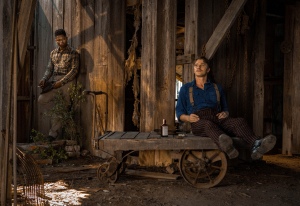 distinguish between different levels of abject poverty, but there’s no question that the white McAllan family will always be in a better position than the black Jacksons (yeah, I feel weird writing that, so go ahead and feel weird reading it). Ronsel is having trouble adjusting to this country that demands that he risk his life defending it but then will spit in his eye the moment he’s back on American soil. Tough blow.
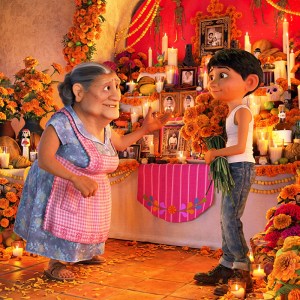 Of course, this being a movie and all, things do not go smoothly. Miguel’s pursuit of his passion means he accidentally crosses into the land of the dead himself, and he needs the help of his dead ancestors (possibly including that cur, his great, great-grandfather) in order to return home.
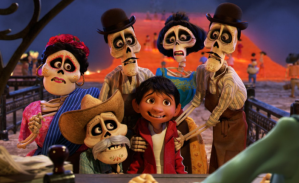 fine line between paying tribute to another culture, and appropriating it. Coco was originally set to be titled Dia de los Muertos, and of course Disney tried to copyright that name. You can imagine the uproar this caused – so much so that Pixar belatedly brought some Mexican ‘consultants’ on board just to make sure they didn’t step in any more shit, and as you can tell, they quickly made a name change. At any rate, the movie felt quite respectful to me, but I’m not really the one who gets final say on that. I will say that it feels like a nice offering by an American studio in the age of Donald Trump and his egregious wall.
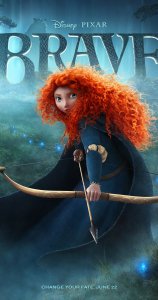 first woman to direct an animated feature from a major studio with a personal favourite of mine, The Prince of Egypt. She came aboard Pixar in 2003. There were NO women at all in the story department and they needed her to fix the one-dimentionality of the female characters in Cars (they were too far along in production for her to have much impact). Next, she conceived Brave and directed the project until they replaced her because of “creative differences.” Since they still had to give her co-director credit, she became the first woman to win an Oscar for (co) directing an animated film. She left Pixar and went on to LucasFilm and back to Dreamworks. Of her exit, she has said “I made the right decision to leave and firmly closed that door. I have no desire to go back there. The atmosphere and the leadership doesn’t fit well with me.” And I can’t help but read that “me” as “women” generally. “This was a story that I created, which came from a very personal place, as a woman and a mother. To have it taken away and given to someone else, and a man at that, was truly distressing on so many levels.”
 ASSHOLES WATCHING MOVIES