Yearly Archives: 2018

Skyscraper

It’s no Die Hard.

That’s my four-word review of Dwayne “the Rock” Johnson’s latest action film, in which he plays an ex-FBI agent turned security consultant who has to rescue his family from the world’s tallest building when it’s set on fire by robbers.

The fact it’s no Die Hard is not entirely a bad thing, because at least it isn’t a blatant rip-off of one of the best action movies ever. But it’s partly a bad thing, because Die Hard is amazing and Skyscraper clearly wants to remind me of it (Skyscraper may also be trying to remind me of other movies like The Towering Inferno if I’d ever seen it, but since I haven’t, you get to hear only about Die Hard).

Skyscraper falls well short of Die Hard for a lot of reasons, but the main difference is this: while both movies are ridiculous, Die Hard fully embraces its implausibility. Bruce Willis is right there with us when we’re thinking that it should never have come to him jumping off a hundred story building with a fire hose tied around his waist. Conversely, the Rock is not with us at those moments, because he’s The Rock, a character that can do anything. When the Rock pulls a very similar stunt to Willis, as far as the Rock is concerned, it is not because things have escalated beyond the point of believability.  It is because that is one of the things the Rock can do that no one else would even try (and, incidentally, whether one is brave enough to attempt a stunt like that is not a measure of one’s love for family, because if you really want to save your family, you have to NOT DIE, and by my count any real human being died about eight different times during the Rock’s rescue effort).

As well, it is an unfortunate sign of our times that the two-minute rope sequence, like almost every other dramatic moment in this movie, somehow is captured live on news cameras, for the benefit of a cheering and live-streaming crowd, and also on monitors throughout the very building that the Rock is trying to sneak into and rescue his family from. This not only adds about 15 minutes of pointless  crowd footage to a movie that feels much, much longer than its 1 hour 49 minute run time, but it also takes away from the cat-and-mouse dynamic because at all times the bad guys can easily find the Rock in this massive 220 story building by watching 30 seconds of live news.

Even then, I was tolerating this movie and willing to give it a pass until the end, when everyone involved had run out of half-baked ideas and just hit the reset button to find a way out of the fire. I shouldn’t have expected any more than that, so don’t ask me why I got my hopes up, and now I owe an apology to Ant-Man and the Wasp.

The Feels

Andi and Lu are being celebrated at their joint bachelorette party. Andi’s friends are fun but their clique is perhaps intimidating to those on the outside – which number only Lu, and her one friend Helen, the only friend of hers to show up (the elusive Nikki is forever “on her way” and “almost there”). Of course Helen is a notable odd duck, would be odd no matter which pond she was quacking in, the type of forward, abrasive character you’d expect Melissa McCarthy or Fortune Feimster to play (though in this case played by Ever Mainard).

When Nikki does finally arrive, she brings Ecstasy, and conflict, and it’s hard to say which is ultimately worse for the group. Secrets come out, secrets GET TOLD. Like, for example, the fact that Lu (Angela Trimbur) has never had an orgasm and fiancee Andi MV5BNDkxODNhNTQtMDgyNy00YjM5LWE5NzEtMjk1YThmZTc4MzBmXkEyXkFqcGdeQXVyNTEzNDY5MjM@._V1_(Constance Wu) is the last to know because Lu’s been faking this whole time. Which, you can imagine, is not a great thing to be learning when you’re mere moments away from marrying the person. And in the company of everyone you know. So that it becomes THE topic of conversation for the rest of the weekend, which is fucking awkward, dude!

The Feels isn’t bursting with originality. It isn’t bursting with anything. It’s a pretty low-key movie. But in between Helen’s bouts of inappropriateness, the ladies talk some real talk, which is kind of refreshing; taboo subjects get a full airing here. It’s a safe place for women to dish about their sexuality, and more. But despite some great inter-cast chemistry, a safe space for feelings does not necessarily a fun or exciting movie make. It was all right, but in the end, easily forgotten, which is not something I imagined I’d be saying about a movie about the mysteries of the female orgasm ACTUALLY TOLD FROM THE FEMALE PERSPECTIVE.

Birthmarked

Catherine and Ben are a couple of brilliant scientists who decide to distinguish their research from the pack by becoming field scientists like no one ever has before. They get an enthusiastic financial backer and retreat to a cabin in the woods where they’ll put nature vs nurture to the ultimate test, asking: could we ever have been anyone other than who we are?

Catherine (Toni Collette) is pregnant, and she and Ben (Matthew Goode) plan to raise their son contrary to his genetic predisposition; the son of scientists will be nurtured toward the artistic. To flesh out their research, they adopt two more children, a girl from dimwit parents who will be nurtured to have high intellect, and a boy adopted from BirthmarkedFeat-1300x867violent people who will be ushered toward pacifism. Thus pass 12 years. But as time goes by, it seems evident that the kids aren’t tending toward any kind of genius. They’re mediocre, leaning toward their natural tendencies. Their benefactor isn’t pleased with the results. And with competing research on the brink of publishing, he’s pushing for things to be rather brought to a head, without seeming to realize that these are actual children we’re talking about. And though Catherine is properly horrified by the thought, Ben is perhaps slower to protest.

Birthmarked is an interesting premise, and well-acted; aside from Toni Collette, who is an absolute boss and can do no wrong, never has, I was particularly pleased by a pop-up role from Xavier Dolan muse and frequent collaborator, Suzanne Clement. But these extremely talented folk seem to ramble around in a script that needed a lot of tightening. Rambling to no particular avail, either – blink and you’ll miss the “climax” which is not a word that adequately describes something simply ending. Birthmarked felt a lot like Captain Fantastic‘s ugly cousin – looser, less successful. And since it falls way short of the oddball charm I hope like heck it was aiming for, the whole thing feels a lot more like…well, child abuse. None of the characters is the true star, so the whole thing feels rather pointless and lusterless, and I can’t help but wish it was directed by nearly anyone else since nearly everyone else has a point of view, and that’s what I missed the most in this movie with a good idea and zero execution.

Ant-Man and the Wasp

ant man and the waspThe very definition of superhero fatigue is seeing the latest Marvel instalment and having nothing to say. Not a speck of inspiration. Is that Ant-Man’s fault? Only partially. It’s very by-the-numbers, it doesn’t add anything to the ongoing MCU saga, and it’s hard to go back in time prior to Avengers: Infinity War, when we know half of these people will soon be dust (and also, soon after that, not dust anymore so the MCU can keep churning out sequels).

But also, when we’ve had a run of Marvel movies with spectacular visuals and fresh takes on flagship heroes (Thor: Ragnarok), timely and thoughtful takes on nationalism with a fully realized villain (Black Panther), and massive, galaxy spanning tales crammed with practically every hero there is (Infinity War), Ant-Man feels so small. While that’s entirely fitting for Ant-Man, it is a drastic change of pace from those three prior MCU films in particular, and the one-upping arms race that has been the MCU since the start.

Jay said some time ago (maybe on the site, maybe just to me) that the coming-of-age moment for superhero movies was when subgenres started popping up – superhero satire (Deadpool), superhero western (Logan), even superhero rom-com (this movie!). So maybe it’s time to get past this shared universe thing and evaluate Ant-Man as an actual movie. And on its own, it’s a team effort featuring a lot of memorable characters, a nice will-they, won’t-they featuring charismatic leads (and equals), and an entertaining way to spend two hours at the movies.

Overall, though, it’s a good thing we have a break in the MCU schedule until next spring, because I badly need one. Of course, you can be sure that I’ll be in line when the next superhero movie comes out, dragging Jay along like always.  What can I say? I’m addicted, always have been, but it’s to the point where I need something stronger to feel as good about these films as I did in the early days.


To Each, Her Own

Simone and Claire are celebrating their 3rd anniversary together. Simone promises that should she blow out all the candles at once, she’ll finally come out to her family. She gives good blow, but can she keep her word?

Simone (Sarah Stern) insists that she’s ready, in fact beyond ready, to come out: the problem is her family. And when we meet them, well, it may be true. Her mom already treats her like an odd duck because she’s a non-practicing Jew. Of course, all the idiosyncrasies that Simone nitpicks about her mother are also true of her, she just can’t see it yet. Give it some time. We all turn into our mothers, ESPECIALLY the crazy ones. And it turns out there’s already a disappointment in the family; Simone’s brother is gay, and her father is very clear on the “fact” that homosexuality is a IMG_20180624_123946disease, one that he does not want brought into his home. Simone fears that a second coming-out will prompt a heart attack, but her father’s health concerns seem, frankly, a bit brought on by himself. Perhaps worst of all, her oldest brother operates a Jewish dating site, and neither he nor his mother can think of a better way to marry her off, with or without her consent.
Does all of this create problems for poor Simone? Of course it does. But, um, so does the handsome Senegalese chef (Jean-Christophe Folly) at her favourite restaurant. The way things are going, Simone may not have a Claire (Julia Piaton) to come home to for much longer. Is this movie merely masquerading as queer cinema? It feels a tad, I don’t know, homophobic at times, like it really doesn’t respect lesbians or their relationships very much at all.

What To Each, Her Own boils down to is a lot of stereotypes and a lot of ideas that don’t quite amount to much, and certainly not to a very satisfying conclusion. If this is a comedy, it isn’t an overly comedic one, but it’s certainly not super romantic either, so it kind of waffles about in the farcical gray zone, sort of toying with stepping over the line in racial, religious, and sexual spheres, so in that way it’s a real triple threat. Or a triple non-threat. A triple mistake. A triple cringe. I guess this is me not really recommending this movie at all, unless you’re that rare, self-hating gay Jew who enjoys taunting fathers into cardiac arrest.


Columbus

Jin is summoned from Korea to Columbus, Ohio by Eleanor when his estranged father collapses. Jin impatiently waits out his father’s coma, and seems to prefer death over recovery, for selfish reasons. He can’t bear to to sit by his father’s hospital bed, and he’s not going to speak to him now since the two haven’t spoken in a year. So he wanders about, trying to appreciate what his father loved about Columbus’s unique architecture.

This is how Jin (John Cho) meets Casey (Haley Lu Richardson), a young woman stayed in Columbus to take care of her addict mother rather than pursuing her own dreams in college and beyond.

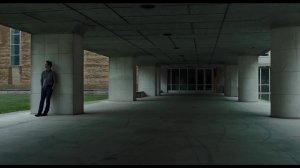
The cool thing about Columbus is its cinematography, which is surprisingly beautiful in such a small, independent film. It frames the architecture well – except scratch that, I’m embarrassed by this underwhelming sentiment. Because the truth is, the way the buildings are framed and posed and shown and hidden – it made me feel MV5BZjNjY2Q2NjAtOWI0My00ZDg3LTljNzEtNzhiYzkzNzUwMTI0XkEyXkFqcGdeQXVyMzI3NjY2ODc@._V1_SX1777_CR0,0,1777,999_AL_things about architecture. The photography is just as kind to its human characters, but the way it treats the artistry of the buildings turns them into characters as well, characters that reflect and mirror or juxtapose and contrast. It’s clear that writer-director Kogonada has put a lot of thought and time and research into his baby.

Columbus isn’t an ambition story, it’s just two people, fairly dissimilar, who cross paths as they kill time in different ways. They’re both waiting on parents, and probably shouldn’t be. They’re both learning what that means and who it makes them as people and what effect they’ll allow the past to have on their futures. It’s mostly quiet and introspective, but the composition and structure and the precision of the visuals come together – not to overcome the silence, but to act in synchronicity. Kogonada finds serenity in stasis but that doesn’t mean his film doesn’t pack an emotional punch. It’s just a minimalist canvas upon which you can project a lot of your own feelings, and come away feeling just a bit refreshed, and just a tiny bit hopeful.

Half Magic

Heather Graham has made a feminist movie about trying to get a feminist movie made,

Honey (Graham) meets two new friends at a female empowerment workshop where they compliment each other’s bodacious tatas and decorate their pussies. Candy (Stephanie Beatriz) is a self-styled “hope-ologist” who helps the ladies cast a spell for hot sex with someone who’s really nice to them (really, really low-bar stuff). Eva (Angela Kinsey) is a designer with access to fun parties and a failed marriage she’s still bummed about.

MV5BMTUyNjUzNTE0N15BMl5BanBnXkFtZTgwOTEwMjkwNDI@._V1_SY1000_CR0,0,1498,1000_AL_But you know what? They should have been summoning their own self esteem instead. Nice men are fine, but it’s still assigning your own happiness to someone else. Agency, ladies!

Anyway, it’s nice to see a movie about female friendship where they actually love and support each other, and men are just a sidebar. And I think real talk about female sexuality is invaluable, and so rarely seen in movies. These women are old enough to know their bodies and their preferences. But like lots of women, they haven’t always gotten what they wanted, or felt comfortable asking for it. And that’s a real shame, isn’t it? That Heather Graham had to write material for herself, had to write what might be the only script that says things like: lick it!

Half Magic isn’t a great movie but it isn’t half bad (har har). It made me want to join these ladies for a glass of wine and some bawdy talk. That’s what it gets right: believable female characters. And it’s amazing how rarely I say those 3 words in that order.


The Ornithologist

Ornithologists: a strange bunch. Imagine being so enthralled by the mere sight of a bird that you allow your kayak to get sucked into life-endangering rapids. Obviously there are lots of branches of zoology and people get off on studying all kinds of weird and wonderful creatures. I just have a hard time imagining an entomologist (a person who studies insects) getting half as nutty and obsessive about ants as the average bird watcher is about anything.

Fernando (Paul Hamy) is an ornithologist who seems to relish the solitary aspects of quietly pursing winged friends. But one day his quest to lay eyes on a black stork MV5BNzdiOTM4MjctN2VhOS00M2FiLTg0OGUtNjgxNDMzYTRhMzNjXkEyXkFqcGdeQXVyMjAyMzAyMw@@._V1_SX1777_CR0,0,1777,999_AL_goes too far and it gets him into serious trouble. I have trouble feeling sorry for him, because if he was going to half the effort to watch an ex-girlfriend, we’d call it stalking and throw him in jail. Am I really to believe it’s any less creepy when the subject of his intensity is a bird? In my book, that makes it worse. Luckily for him, a) I’m not the bird police, and b) a couple of lady hikers rescue him when the bird poop hits the fan.

The Ornithologist sets a strange tone right away. I don’t trust it because the camera focuses on certain things and I don’t know why. It sets me on edge straight away. Before the story has even begun, this movie is talking to me. Its angles, and especially through his binoculars, give such a restricted view it makes me nervous.

Unfortunately, the slightly odd, “good Christian” Chinese hikers are lost, and they beg Fernando to stay with them as they are quite afraid of the forest. I concur, ladies. These woods are scary – though perhaps not half threatening as the people in them.

The Ornithologist is a deeply strange movie and it absolutely will not appeal to everyone. Director João Pedro Rodrigues mixes Catholic symbolism with Portuguese mythology to make a muddy, opaque picture that will allow you to discover new facets of yourself, even as Fernando does the same on screen. Personally, I developed a new mantra while watching The Ornithologist. I was at the 1h16m mark when I realized I was quietly chanting whatthefuckishappening over and over. I still don’t know the answer but I do know I have an impressive capacity for audacious meditation.

The Laws of Thermodynamics

The actual laws of thermodynamics, in case you need a refresher:

  • energy cannot be created or destroyed
  • the entropy of any isolated system always increases
  • the entropy of a system approaches a constant value as the temperature approaches absolute zero

Manel, a neurotic scientist, is out of his depth when he dates his dream girl, Elena, a MV5BNDdmOGMyNzUtY2JjMi00OGIzLThmYmItNWJlMTg3ZGU5Nzk0XkEyXkFqcGdeQXVyMTA0MjU0Ng@@._V1_beautiful model. So he seeks comfort in his precious laws of thermodynamics to reassure himself that love is just another quantifiable thing, an equation he can puzzle out and make sense of. But the more that real life seeps in, the harder he has to spin things to keep the laws working for him.

Using the rules of thermodynamics as a construct for “solving” love is interesting, at least at first. Eventually it involves more shoe-horning than any script worth its salt really should, and the effort becomes tiresome.

Vito Sanz and Berta Vazquez are perfectly charming and thanks to them, I can kind of see how a playing, witty movie like this might have worked. But whatever lightning bot of creativity struck at the outset, it faded quite quickly and it fails even at sustaining what it started with. I was unconvinced and unimpressed by this film unfortunately – maybe it works in theory, but the proof is kind of painful to watch.

Disobedience

Ronit and Esti were childhood friends and young lovers but their Orthodox community forced them apart and Ronit left in disgrace and scandal, shunned by her Rabbi father. Years later, she returns upon his death and finds that her mere presence sets tongues wagging and old rumours flying. Esti is still there and has forged herself a new life within the boundaries of her religion. She is married to a mutual (male) friend and it isn’t terrible.

Old passions are reignited between Ronit (Rachel Weisz), who lives as a photographer in NYC, and Esti (Rachel McAdams), who wears a wig to cover her hair and has careful, kosher sex with her husband every Shabbat. But as good and devout MV5BN2U1ZjllMWQtYzBlOC00ZGQyLTg0YTUtNWQ3YmI3ZjYwNmIzXkEyXkFqcGdeQXVyNTc5OTMwOTQ@._V1_as Esti’s present life is, even the memories of her past with Ronit are scorching enough to make everyone nervous. In their community, straight marriage is the only option, and it’s not so much an option as an obligation. Esti stayed, and conformed; Ronit left, and flourished, though she has all but abandoned her faith.

Disobedience isn’t graphic or specific of pointed. It goes about things in a rounder, softer way, nuzzling up to the subject and laying at its feet. This movie gives you two Rachels for the price of one, and they keep things on simmer for a really long time. On screen like they’re magnets; there’s an electric current between them that’s full of little zaps but no big surges. I really liked Weisz’s choices in particular, how she subtly plays with her hair, reminding us that hers is on display while Esti must cover hers up. And how the uncovering of hair then becomes an act of intimacy, a form of foreplay, a zap in the movie’s current. It’s not just sexual repression that bubbles over in Disobedience; religion and culture are enmeshed in this story. And while the cast does an admirable job of making this feel true, I’m not sure this is director Sebastián Lelio’s story to tell.

Weisz and McAdams communicate a lot through glances and silence. Lelio’s interpretation is a little literal for my taste, but the women here elevate the material and make it something special.