Category Archives: Kick-ass!

The highest honour we can bestow on a film. Anyrhing in this category is a must-see.

Patti Cake$

Patricia, aka Patti Cake$, aka Killa P, is a wannabe rapper who’s finding it hard to escape the shitty confines of New Jersey. She’s only 23 but is already feeling like a failure. She works 2 jobs just to keep drowning in debt from her Nan’s medical bills. Her mother, a washed-up, alcoholic, hasbeen singer, is rife with jealousy rather than support. And the local rap community sees her as a non-starter and a bit of a joke. She’s got one friend, a pharmacist named Jheri, who believes in her dreams even as he pursues his own. But it’s only when they meet the mysterious Basterd, master of sick beats, that the music starts to really come together.

Patti (Danielle Macdonald) is an interesting character; her complexity means it takes a little convincing, but hanging in there pays off. Macdonald fills the character up the way MV5BZjc5YzhkOTQtZWY1ZS00OTJkLWE2MTctMmU4NTdlM2YyNmQwXkEyXkFqcGdeQXVyNjk1Njg5NTA@._V1_Beyonce fills out a bodysuit. She’s just spectacular in this: spectacular, spectacular. You can’t make a movie like this without the perfect lead, and Danielle Macdonald is this movie’s soul mate, its one and only. But the rest of the cast falls into place perfectly too. Siddharth Dhananjay as Jheri is Patti’s perfect partner; perhaps an unlikely duo, but if the rap game is going to turn a cold shoulder on a white girl from Jersey, so too will it be tough for a brown boy pharmacist. But disenfranchised is disenfranchised and director Geremy Jasper paints an unflinching portrait. Meanwhile, Mamoudou Athie had already won my heart in Unicorn Store, so seeing him again here as Basterd solidifies his probable and swift rise to fame. Bridget Everett, Amy Schumer’s right hand man of comedy, rounds out the cast of Patti’s desperate mother, and strikes the right, harsh notes.

This is a classic underdog story that works its way through some familiar turns of plot. And sometimes it’s trying too hard. And  yet I found there was very little I could not forgive this film. That’s how much it spoke to me, how very enchanted I was by Patti and her world. And if you like slightly offbeat films with offbeat characters, this is a fun indulgence.

Thor: Ragnarok

post_master-thor-960x540The Marvel Cinematic Universe is so bloated by this point that it’s a full-time job to keep up with what’s going on.  Thankfully, Thor: Ragnarok doesn’t get bogged down in what’s come before.  Instead, the third installment in the Thor franchise tells a self-contained story and shifts Thor’s segment of the universe from dreary fantasy mode to action-comedy mode.  From a cameo by Matt Damon that I totally missed, to a Taika-Waititi-voiced blue rock monster, to Hulk and Thor arguing over everything and anything, Ragnarok is the funniest apocalypse movie you will likely ever see (sorry, Zombieland!).

My only complaint, really, is that the plot got in the way of the fun.  Every time the scene shifted to the problems Cate Blanchett’s Hela was creating in Asgard, all I wanted was to get back to the wacky trash world where Thor and Hulk had crash-landed.  I guess this movie had to justify its existence by advancing the plot and having big stakes but I would have gladly spent the whole run time hanging out with my new favourite Avengers (who I am happy to report have now started their own spin-off team).

Anyone who has enjoyed Taika Waititi’s past work will not be disappointed by Thor: Ragnarok.  If you haven’t enjoyed Waititi’s work, you’re probably on the wrong site, and if you haven’t seen his other stuff, then do!!!  Start with Thor: Ragnarok and go from there.

As he always does, Waititi will introduce you to madcap supporting characters whose main purpose is to make you laugh, and even better, he will show us that Thor and Hulk have actual personalities.  Purists may take issue as those two characters are notoriously dull, but I thought it was a fantastic improvement that should be carried forward into the next 40 or 50 Marvel movies that apparently are still to come.  Comic book movies should be bright, colourful and fun, and Thor: Ragnarok is all of those things from start to finish.  Go see it!


NHFF 2017: An Exceptional Year for Documentaries (Part 1)

Last year, the New Hampshire Film Festival was as swept up in the 2016 election drama as I was. They featured an impressive selection of politically themed documentaries and even hosted a standing-room only panel discussion on Politics in Film. I couldn’t get enough last year and took in as much of it as I could.

The documentary selection this year was noticeably less overtly political, presumably because the NHFF is as burnt out on American politics as I am at this point. Still, in keeping with tradition, the New Hampshire Film Festival remains the one time of year that I favour documentaries. The four docs I saw this year have very little in common in either subject or structure but are all challenging and depressing in their own way.

sacred cod

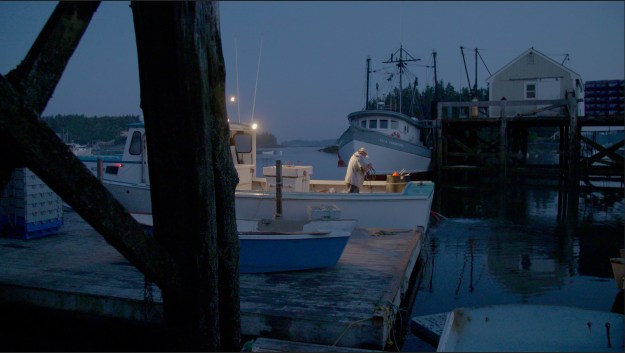
Sacred Cod: The Fight for a New England Tradition– Due to climate change and overfishing, the cod population in the Gulf of Maine has been dwindling like never before. As a result, fishing communities in New England that have thrived for generations are now struggling as many are forced to sell their boats.

Far from being just another climate change documentary, Sacred Cod focuses instead on the people who are affected by federal government restrictions that severely limit the number of cod that they can catch. To many of them, it feels like government over-regulation is costing them not just their livelihood but their way of life and proud community traditions. Some even doubt the science that the government is citing, given that you can still cherry pick areas that are still rich with cod.

Of the documentaries I saw at the festival, Sacred Cod is the most traditional in style but is exceptional in its compassion. The decreasing cod population and the necessity of government intervention is indisputable at this point and directors Steve Liss, Andy Laub, and David Abel know it but they show as much empathy to those affected by the quotas as they do commitment to the facts.

the reagan show

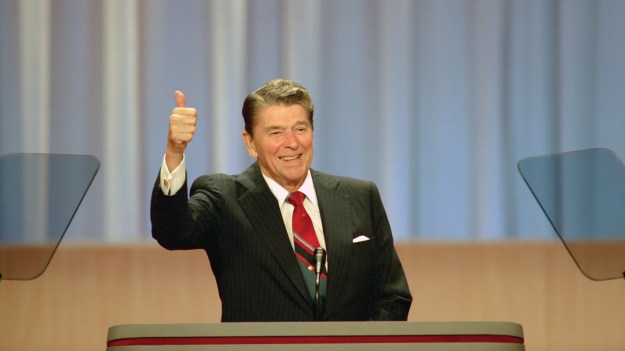
The Reagan Show– “So, what is a Canadian doing in New Hampshire watching a documentary about our greatest president?”. A young guy I met in line asked me this before The Reagan Show and I have no idea whether he was being sarcastic or not about that last part.

Nor can I tell you with any confidence what the filmmakers behind The Reagan Show thought of America’s 40th president. There are no narrators or even original interviews with which they can betray their political biases. They rely exclusively on footage from the White House archives and TV news segments to tell their story. Specifically, they’re focused on the story of how Reagan exceeded the expectations of most critics in his arms race negotiations with then Soviet Union President Mikhail Gorbachev.

If The Reagan Show has a point of view, it’s that Reagan was the first President to really understand television and how to play to the cameras in shaping the public’s perception of him. As far as politics goes, your own point of view will likely be challenged. I went in with an anti-Reagan bias and found that point of view challenged just as I’m sure the Reagan enthusiast I talked to earlier had his challenged too.

24 Snow

We encountered all kinds of interesting documentaries at the Planet in Focus film festival, but I’m admitting a soft spot for 24 Snow.

I have a passion for documentaries anyway. A camera can actually be a transportation device, carrying us away to a world that looks and feels entirely different from our own. Sometimes the lens looks upon a piece of fiction that’s been created to jar your senses (like Blade Runner 2049), other times it encourages you to take a second look at something that’s quite familiar (like The Florida Project), but documentaries can do both while actually reflecting real life back at you.

24 Snow isn’t fiction but it definitely felt foreign to me, and its foreignness informed me on a world I knew little about. With this documentary, we travel to the Siberian Russian territory of Yakutia. I didn’t know there were Russian Inuits, yet there they MV5BOGRkMDk5NjctMmMwZC00YjUxLWExM2QtZDdlY2Y5MzcyZjIzXkEyXkFqcGdeQXVyNTA3MzMxMTg@._V1_SX1777_CR0,0,1777,999_AL_were, surviving in that beautiful but frigid (-70C) land. We are introduced to one main in particular: Sergei is a horse breeder, and even his horses will look strange to you. The Yakutian horse has of course evolved to weather the icy temperatures. They are small but sturdy animals, with shaggy coats that hopefully keep them warm. Their thick hair and manes are not unlike those of Shetland ponies but when you see one completely coated in ice, you know you’re in unfamiliar territory. The breeders de-ice the horses the way I de-ice my windshield. It’s a way of life I can’t really comprehend: solitary, isolated. No telephone, no electricity. No cash. No cars (none that can run you through ice and snow anyway – sleds get the job done).

These harsh conditions are a real test of one’s limits and it’s interesting to get to know the kind of person this job attracts. I live in Canada and am not unfamiliar with snowy, even permafrosted terrain, but the Yakutia is something else entirely. It’s stunning if you can separate it from its harshness, and the lush cinematography here certainly helps. The people and beasts of 24 Snow completely captivated me; it’s a fascinating documentary by Mikhail Barynin that’s as informative as it is beautiful.

Lucky

Lucky is an old man, a washed up cowboy who’s living out his remaining years in a small town where his routine means everything to him: a daily glass of milk, some exercise, coffee and crosswords at the local diner, devotion to his game shows. Just because he’s alone doesn’t mean he’s lonely. But then a brush with his mortality reminds him that death comes for all of us, and he starts reevaluating a thing or two.

We missed seeing Lucky at SXSW this year; our schedule was packed and we had to hds_photocredit_stefaniarosinichoose between several old-guy movies (we ended up seeing The Hero and The Ballad of Lefty Brown). We can’t regret seeing either of those movies, both are good, but there is one mitigating factor. Harry Dean Stanton, star of Lucky, died last month at the age of 91. And there is, I believe, a difference between watching an old man come to grips with his age and death’s proximity, and watching a man who we know was actually met his maker be confronted with his expiration date on screen and admit to us all that he is scared. Oof.

How does a 90 year old atheist feel about death’s encroachment? You’ll see it all on Stanton’s face. The years have visibly burdened him, he walks with a heavy but purposeful gait, his shoulders sloping under the effects of time and the weight of the unknown. And though he makes various connections, a surprisingly diverse variety of connections for a man of his generation, we’re very much aware that in the end, everyone dies alone. This film has moments of genuine warmth and delight, but it’ll also make you feel his emptiness, his isolation, his fear. And if that’s not enough to completely gut you, director John Carroll Lynch wrenches the very last drops of our humanity from us with the help of my favouritest favourite Johnny Cash song. So you just can’t help be hollowed out. But Lucky also fills you up. The script accounts for more than a few quirky characters, but it’s Lucky’s persistence and courage that fill us up with hope.

There aren’t enough words to say what a great performance we have here from Stanton. It’s superb. Lucky isn’t the talkiest of fellows but Stanton delivers a meditation on mortality that is the perfect legacy to his lengthy career. He’s magnetic. And we’re all a little luckier having seen this film.


Can You Dig This?

Inspired by the OG gangster gardener, Ron Finley, film maker Delila Vallot gets to know the people taking up gardening in South Central Los Angeles and follows them for a year to see if the simple act of growing things can in fact transform someone’s life.

Can You Dig This? is Planet In Focus Film Festival’s closing night film and it’s one you’ll enjoy watching as much as you enjoy learning from it.

Compton is a food desert – the neighbourhoods are packed with fast food joints and liquor stores, but the sale of healthful food is rare. Ron Finley thought it reasonable that he should therefore get to growing some right in his very own yard, but doing soslide-1 attracted the ire of a neighbour who reported him. A cease and desist letter from the city made him think twice – not about the rightness of gardening his own land, but about the rightness of this world. Never before motivated to activism, Finley took up the cause, providing free soil so that others could plant too. Now you’ll find the neighbourhoods dotted with planters, and if you think that’s interesting, just wait until you meet the people who are cultivating them.

The film follows a high school dropout cum drug dealer, a woman who is gang-affiliated, a little girl who wants to grow greens for her diabetic dad (and wouldn’t mind making some cash on the side!), and a few elderly men living in a halfway house after extensive prison sentences. These are terrific subjects, each one revealing a little bit about their neighbourhood. You might not expect something as innocuous as gardening to stir up a lot of emotions, but when the film starts unpacking issues like the legacy of slavery contributing to the black community’s loss of contact with the soil, you start to realize how impactful this seemingly small act can be. Gardening as subversion? Yes, actually.

Not only is this documentary well done, it’s a fun and funny watch too. And inspiring, I don’t mind saying.
CAN YOU DIG THIS? plays at the Planet In Focus film festival in Toronto
Sunday 22 October, 7:45pm ­ Hot Docs Ted Rogers Cinema
Ron Finlay will be in attendance

The Florida Project

Thank you New Hampshire Film Festival for bringing this beautiful film to us. We missed seeing it at TIFF and it got huge buzz. HUGE. Director Sean Baker is following up his crazy-good Tangerine and we’ve been collectively, societally waiting with baited breath for his next effort. It feels like Sean Baker is doing important work without all the trumpets and majorettes and fanfare. But I sort of hope that maybe I can blow the horn a bit here, wave a flag or two: The Florida Project is fucking awesome.

6 year old Moonee has the run of the crummy Orlando motel where she and her mother live in “extended stays.” Halley, her mom, can’t get work at Disney and has no other MV5BYjZhMDZmZjItNjcyZC00ZWY2LTkzMzUtZWM0ZDgyYzM2Nzg2XkEyXkFqcGdeQXVyNDg2MjUxNjM@._V1_SY1000_CR0,0,1333,1000_AL_options, so you can imagine some of the crazy things they do for money. It’s a destitute, desperate kind of life but you’d never know it to see Mooney adventuring around free-range with her comrades.
Sean Baker is a master of society’s fringes, and the near-homelessness of the people constantly scrounging for rent between scrapes with the law or family services is about as marginal as you get. Situate that beside the self-proclaimed “happiest place on earth” where the wealthy tourists stay in much nicer digs and it’s an uncomfortable reminder that the rich get richer and the poor get poorer.

Moonee, meanwhile, is seemingly untouched by her circumstances. Intellectually, you know it’s not true: that of course she’s affected by what she sees and hears and eats and meets and experiences, and that she’ll find it hard to climb above her mother’s station. But for now she’s a happy-go-lucky kid who rarely faces consequences, although that’s largely thanks to the motel’s manager and de-facto babysitter, Bobby, who is the eyes, ears, caregiver and mediator when parents just aren’t up to snuff. And believe me, this is a building where neglect rules the day. I felt real tension watching these kids be unwatched.

Halley, barely more than a kid herself, and scarcely more responsible, is tattooed with bad decisions but not without sympathy. Bria Vinaite, who plays her, really understands Halley’s sharp corners and soft underbelly. Willem Dafoe gives Bobby a complexity and edge that make his character fascinating. He’s like the beating heart of the building he supervises. But it’s little Brooklynn Prince as Moonee who just about steals the whole gosh darn movie. She is so real and raw it often feels like you’re watching a documentary, and that the stakes are indeed life-altering. Child actors can make or break a movie but Sean Baker has found not one but a trio of incredibly spirited, natural, and talented kids that make this movie what it is.

The Florida Project is audacious, authentic, absorbing. And it’s begging to be watched.

Blade Runner 2049

blade4Has there ever been a more beautiful vision of a dystopian society than what Denis Villeneuve and Roger Deakins serve up in Blade Runner 2049?  Even a photo of a dead tree will be captivating to those around you.  Nuclear wastelands, city-sized garbage dumps, and coastal dams will all amaze.  Visually, this is exactly the sequel that Blade Runner deserved.

Story-wise, Blade Runner 2049 is probably the sequel that Blade Runner deserved as well, though that’s not necessarily a compliment.  The story is muddled right from the hard-to-read title cards that try to bring us up to date on what’s happened in that world’s last 30 years.

The facts in the title cards turn out to be quite important to keep up in Blade Runner 2049’s world as we follow an LAPD officer (Ryan Gosling) trying to solve a 30-year-old mystery involving our old friend Deckard (Harrison Ford).  Though it is unfortunate that the title cards are as dense as they are, I would not have wanted the movie to try to retell its background story, as the 163 minute run time is plenty long enough already!

Refreshingly, Blade Runner’s world is not our world.  It is an alternative future, so there is no attempt to revise the original’s timeline (as you may recall, Blade Runner is set in 2019 in a world where robot slaves are fighting space battles and colonizing other planets for humans, so things did not exactly turn out in our world as the first film predicted).  Interestingly, those differences make it easier for the view to focus on the similarities between their world and ours.  Villeneuve has delivered another very thoughtful, deliberate and satisfying sci-fi film, and it’s easy to analogize to our world every time a replicant is treated as disposable property (which happens a lot).  The film also offers a lot to chew on regarding memory and the nature of reality.  Honestly, I’m still digesting it all as a I write, while also trying to sort out a few of the story’s finer points, and this film is one that I’m going to have to watch again to get everything sorted.

It’s remarkable how closely this sequel resembles the first movie,  in style and substance, despite being released 35 years later.  More remarkably, at the same time it is paying tribute to the original, Blade Runner 2049 is telling a fresh story set in this familiar world, and manages to leave the original movie’s largest question unanswered in a surprisingly satisfying way.  So while Blade Runner 2049 is not the best movie of 2017, it is a good movie made great by its technical excellence, which naturally makes it the perfect sequel to Blade Runner.

Maudie

Maudie was born “funny” – sharp in her mind but infirm in her body. She is discounted, invisible to the world. Abused then neglected by her brother, his monthly sum to her caretaker aunt doesn’t mean the aunt is nice to her, not at all. So it shouldn’t be surprising when Maudie seeks to improve her situation by lending herself out as a housemaid. The only person who’d have her is an ornery (possibly autistic, in a time way before that would be diagnosed) fishmonger who lives out in rural Nova Scotia.

maudie_01Maudie (Sally Hawkins) and Everett (Ethan Hawke) are a couple of odd socks – the world has discarded them and they do not belong together but for lack of anything better have somehow become a pair. Their relationship doesn’t exactly blossom into romance but their mutual tolerance and sometime thoughtfulness or generosity does translate into a partnership of sorts, and marriage. And while Maudie may neglect her household chores, she blossoms in Everett’s house as a painter. Her arthritis makes it increasingly hard to even hold a brush but her joyful spirit paints their modest, one-room home in bright, colourful designs. Soon the community around her will embrace her for it. Maud Lewis (1903-1970) is one of Canada’s best known folk artists.
Sally Hawkins is phenomenal. She underplays everything because she can, because she can rely upon her talent to communicate big things in small ways. Her eyebrows alone are Oscar worthy. Her smile is reminiscent of the real Maud – wide and innocent. She gives such dignity to this character who really led a simple life, a life of poverty, but a life that was more than enough for a woman who needed only some space and a paint brush in her hand to feel happy. Maudie is not just a tribute to the artist, but to her way of life. I was moved by this film, for Maud specifically and women generally, for anyone who was marginalized and squashed and found a way to bloom anyway.

The Breadwinner

Not all men are bad, not even all Afghan men. That’s important to remember. Not all of them want to treat women like garbage, but the taliban sure does. It’s not enough to cover women head to toe in burqas, but new rules in Afghanistan prohibit them from leaving the house at all, except in rare cases when accompanied by a father, husband, or brother.

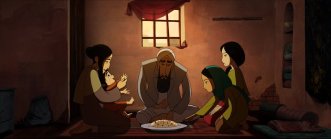
Parvana’s older sister hasn’t left the house in so long she’s forgetting what it was like. Parvana is “lucky” because her father lost his leg in the war and his livelihood more recently, so she assists him down to the market where they try to sell their possessions in order to eat. Her father respects his daughters, educated them, and wants better things for them, things he can no longer give them with the oppressive taliban regime patrolling with guns and indignation. When the taliban inevitably hauls him off to prison for no reason, suddenly the family is left without an escape clause. Parvana’s mother andMV5BMDg0ODM5NTYtMjNkMS00NDQ3LWI5MGYtMDg3ZTQ5MDE0OTRlL2ltYWdlXkEyXkFqcGdeQXVyMjQ1NjA0ODM@._V1_ sister and baby brother could literally starve to death waiting for a man to come release them from their own home so Parvana does the only thing she can think of to save them: she cuts off her hair, wears the clothes of her dead brother, and to taliban eyes, becomes a boy.

You may recognize The Breadwinner as a recent high-profile screening at TIFF; Angelina Jolie is a producer and her red carpet appearance really shined the spotlight on this important film. People were equally excited to celebrate it at the Ottawa International Animation Festival. It played to a packed house and I imagine it will again on Saturday so if you haven’t got your tickets, get on it!

The Breadwinner’s animation is stunning.  Stunning. Like, I want to get tattoos of it on my body. That’s really the highest praise you can give, or that I can give, an animated movie, a compliment I haven’t given before or even thought to. The story is kind of perfection. It’s by no means an exact replica of the book. It diverges significantly from it but still feels like an authentic and spiritual distillation of it.

If The Breadwinner isn’t talked about come Oscar time, I’ll be shocked and outraged. Not taliban guy seeing a woman “calling attention to herself” by merely being outdoors outraged, but outraged. It’s a great story coupled with the most amazing animation but it also could not be more essential viewing at this moment in time.