When Angelina Jolie directed herself in By The Sea, they called it a vanity project. When Barbra Streisand starred in a remake of A Star Is Born, they called that a vanity project too. Bradley Cooper directs himself in yet another remake of A Star Is Born, and: crickets. Nobody says toot about no vanity project. And it’s not that I begrudge him this project at all; we all choose to do things that will show us in the best light. We just need to be more careful about the language we use when women do the same thing that men have always done.
Have you seen any or all of the previous remakes? This one is really well-done in a lot of ways. Bradley Cooper plays Jack, the established rockstar who can’t get through a show, or life, sober. But one night, in search of his next gin & tonic, he sees Ally (Lady Gaga) perform in a drag show and he’s a goner. Ally’s been unable to break into the music business because of her “looks” (ugh) so he gives her her first big break…and then regrets it? Her star shoots up while his pummels down. His hearing loss and his drinking problem and his anger get in the way of his career, but he still finds time to be condescending about Ally’s career trajectory, which he deems less authentic than his own (ugh again). And well, if you haven’t see the previous remakes, I won’t spoil it for you (yet), but: ugh.
Bradley Cooper turns out to be an excellent director who’s hooked up with an excellent cinematographer, Matthew Libatique. And he’s terrific in this. I was particularly astonished in the earlier scenes in which he’s a charming, functional alcoholic. It’s very subtle what he does, and very right – nothing big and sloppy, but there are tell-tale tics suggesting a man who has spent decades drunk. It’s brilliant. And Sam Elliott is fantastic, truly, tearfully terrific. And Dave Chappelle is great for what little he’s in it. And Anthony Ramos manages to stand out amongst all these stars – his face, beaming with pride for his friend, feels so honest. And okay, yes, Lady Gaga is good. Not great, but she doesn’t flub anything up, she’s not wooden, and she’s not even a big distraction. And of course when she’s singing she’s on fire. It’s disingenuous to cast her of course – the biggest thing to happen to pop music since Elvis. It’s insulting to brunettes everywhere (anywhere from 75%-97% of the world’s population) that they just made her hair a little mousy and suddenly the woman whose music cannot be separated from her style, her beauty, her glamourous image, is playing a woman discriminated against on the basis of looks? Let’s take a moment just to remember but a few of the low-key looks she sported to this very movie’s premiere, and ask ourselves again if she was really the best choice for the role.

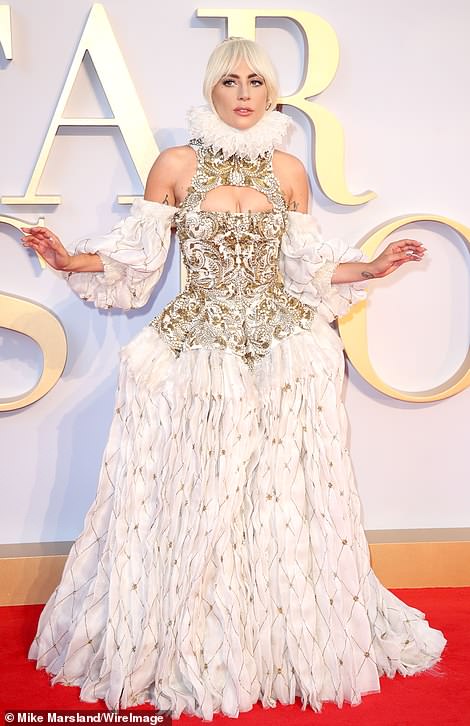
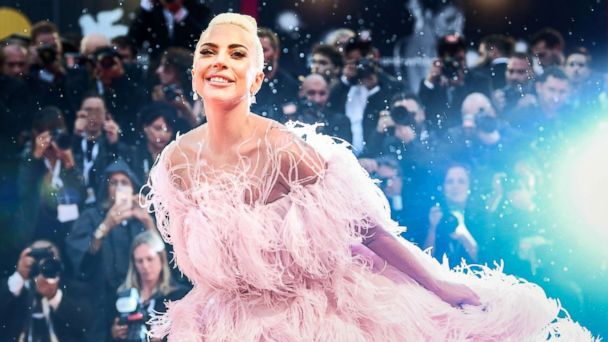
And to have her particular hang-up be her nose in this remake, the remake following Barbra Streisand‘s…it’s just rich. Barbra has her own kind of beauty of course, but a much less conventional one. It meant something. Putting Lady Gaga in this role almost makes me feel like they’re laughing at us. And every time they do their “cute” reference to her being ugly, my stomach turns. In fact, this whole idea that a big, rich star could fall for an ugly duckling, could see past her looks and discover talent…it’s quite patronizing. Meanwhile, if my eyes do not deceive me, this imperfect woman has glowing skin and luscious locks and a tight, size-0 figure. And yes he still deigns to look down on her when her career necessitates a makeover. But what does he know of such things? He gets to show up in the same sweat-stained hat every day. The privilege! The privilege to not even recognize that gender divide, to not even have it occur to you. But that brand of career has never been viable for a woman, not in 1937 with the first A Star Is Born, and not in 2018.
[Spoilers ahead]
This movie is ostensibly about how fame is a trap, how Hollywood can eat you up and spit you out, but in the end, it’s still portrayed as the only dream worth having. Ally accuses her father of being a star-fucker but their relationship spontaneously brightens as she gets famous, and she brings him to the Grammys as her date. This is the story Hollywood loves to tell about itself (obviously, they can’t stop remaking it). But the truth is, these ideas are toxic as hell.
Like in all the remakes, when she gets her makeover, her beau is quick to wipe her face clean. We’re so trained to think of this as somehow empowering or worse, romantic, that Bradley Cooper has even admitted to doing the same thing to Lady Gaga in real life. But there’s nothing empowering about a man deciding what your face should look like, and it’s never his place to wipe your face like a child. I was so upset when I heard him repeat this story in the press it made me not want to watch this movie. Lady Gaga’s makeup has never obscured her art – it is her art, or part of it.
I’m not sure how long Cooper and company kicked this movie around before it eventually made it into production, but it feels like it’s about 20 years late to the conversation. If anything, it’s a death sentence for grizzled old guys like Jack; those who cannot change with the times will be left behind. Of course, I realized right from the opening credits that this movie was never going to get anything right about the music industry. I called it when I spotted the studio behind it: Live Nation Productions. You know, the people who merged with Ticketmaster and forever ruined your actual concert-going experiences? Their service and “convenience” fees add half as much again to ticket prices even though you do all the work yourself, online, and then print out the ticket at home, with your own ink. Since the merger ticket prices have risen 142%, and that’s just for the tickets that scalpers buy up in rigged advanced offerings. In 2018, there isn’t a single venue that Jack could play and not be selling out himself. But the movie of course looks the other way.
Meanwhile, Ally is no cowering Vicki Lester. When the label pushes her, she pushes back. Yes, sometimes she compromises, but she’s paying her dues, she’s happy to be there, and her career is a collaboration in which she has final say.
[Serious spoilers ahead]
Except even in 2018, the man is determined to take that choice away from her.
Ally is ready to sacrifice her career in order to stay home with him, stabilize him. When he realizes this, he kills himself rather than hold her back. Now think about your own loved one deciding that for you – deciding to commit suicide in order to preserve your job. In most fairy tales, we believe in love above all else, but not Hollywood. In Hollywood, fame may be cannibalizing, but career is king. It’s everything. Jack would rather end his own life and break his beloved’s heart rather than risk her tour in Europe. He believes he is saving her from herself. It’s so many flavours of fucked up it made me sick.
I think this movie tried to say something real. It knows that music legends like Jackson Maine are already a thing of the past (is there a single modern-day equivalent?) but even as it pokes holes in the cloudy mythology, it can’t help but place value in his “integrity.” But even as he positions his own career path as the only legitimate one, his jealousy and fear are activated. He, and this film, and the 3 before it, are fueled by the Hollywood fear that for every new star, an old one is pushed out. He rails against it, but his subconscious has a firm grip – “Maybe it’s time to let the old ways die” – and Jackson dies along with them.
There are a lot of good elements to this movie and I get that many of you will enjoy it. I’m just finding that 2018 has left me angry, really angry, and I can’t watch movies without that filter of rage and indignation. Movies are the stories we tell of our time, and I don’t really like what this one is saying.

 with her own life, and I’m not sure she believes she deserves that level of happiness anyway. In fact, the closer she gets to good things, the more she sabotages them. Ultimately she’ll have a bit of a meltdown on stage that results in a viral video of some powerful truth-telling that her audience may not be ready for. Just about the only thing that video doesn’t threaten is her strength.
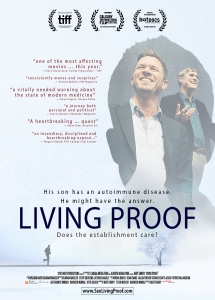 naturally, he developed a diet for his son to follow. Matt eats unprocessed food – no gluten, no dairy – mostly fruit, veg, and lean meats. And since MS occurs more often in northern countries, like Canada, he takes a big ole dose of Vitamin D, like sunshine in a bottle. Yes, it’s a strict diet and requires constant preparation and vigilance. But if you’ve known someone cut down by MS, their bodies just literally abandoning them, you’d probably find such a possibility to be suitably motivating. And thanks to this lifestyle, Matt is still symptom-free, TWENTY YEARS after diagnosis. He has never taken any medication, but he has had a procedure called CCSVI – many people with MS have significant blockages in their jugular vein, which means not enough blood flows through to the brain.
 omic book roots of the character as a human and alien united by their hate of Spidey.
 Her teenage daughter is skeptical, but her husband Neal (Courtney B. Vance) is downright wary. Not only has he also put up with Ben’s ups and downs, he’s been the one putting his family back together afterward. But with Ben’s sponsor’s blessing, they come up with some boundaries and agree that Ben can stay for 24 hours of holiday magic and memories.
 charming and sweet, handsome and approachable. Franky doesn’t question his identity, he just absorbs it as part of it. It doesn’t need a label or a judgement. But there is a complication: Franky’s father (Kyle MacLachlan) has recently left the family because he’s gay. Franky’s resentment is mostly due to the abandonment and not the sexuality, but his feelings are complicated and confused and it makes dealing with this just a little harder than it has to be.
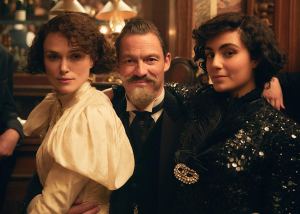 criticizes it for being too feminine and “full of adjectives” he signs his name to it and sends it off to be published. Of course it gets gobbled right up. Does Willy eat crow? He does not. He celebrates “his” success without a trace of irony and then gets mad at his wife for “implying” that she wrote it. Which, again, she did. This book does worlds better than any of his ever did so he’s eager to keep the gravy train going (imagine an actual gravy train! what a weird expression, especially since the carafe gravy is traditionally served in is called a boat). Anyway. He can’t help but lock her in a room until she produces another best-seller. It’s only logical! And she does. And when, oodles of success later, it begins to chafe and she suggests getting at least partial credit, her name alongside his, he bucks. Preposterous! Women writers don’t sell, he reminds her.
 about it. It’s a documentary about two guys who discover, quite by accident, that they are twins, separated at birth. They were both adopted and had no idea they had a look-alike brother until mutual friends confused them when they both wound up at the same college, which is amazing enough. Their story goes national: it’s the feel-good story of the year, two 19 year old boys jubilantly reunited. And of the millions who catch sight of their front-page story is a third identical stranger. They are not twins, but triplets.
 Lee’s flair for the dramatic meant he put on a damn good fashion show. Between his theatrical catwalks and his astonishing creations, he made a name for himself very quickly, very young. London loved to call him their own fashion bad boy, but he was nearly rejected by couture’s real epicentre, Paris, for being of the wrong cut. He was crass, he was lower class. He didn’t look the part or dress the part. Luckily fashion icon Isabella Blow discovered him, and through her, so did the world.
 with the ostracizing and vilification of Abigail. Mr. Woods sees a lot of quiet talent in Abigail, and his singling her out for praise and attention only drives Melissa to more cruelty. But it’s ice to see Abigail being appreciated by someone, even if it’s her teacher. Until it’s her teacher’s, um, lips doing the appreciating, and that becomes problematic. Mostly for Melissa, oddly, who is insane with jealousy. To be clear, Melissa has every guy in school running after her, and she doesn’t want Mr. Woods. She just doesn’t want Abigail to have anything except Melissa-inflicted misery. And maybe she can’t stand to have anyone choose someone besides her. You’d have to invent a word above self-involved for the likes of Melissa.
