Martin Scorsese and I had very different reactions whilst reading Shusaku Endo’s acclaimed novel, Silence. He thought: this will make a great movie, even if it takes me 28 years to bring it to theatres (and it did). I, however, got through the book like one gets through a prison sentence: head down, one day at a time, putting in my time, hoping it 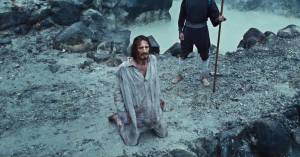 doesn’t kill me. Having read the book, I knew exactly what we were in for with the movie, and I warned anyone who would listen, but that doesn’t mean I didn’t want to see it. It’s Scorsese. I mean, that alone is enough. But I also know that Martin Scorsese has something to say about spirituality, and if he’s gotten away from it with his last few movies, this one is a major reinvigoration of his theme.
Little Marty was friends with a loving and influential priest growing up, and this encouraged him to join a seminary to become a priest himself. Lacking a true calling to the vocation, Scorsese flunked out, but he never stopped asking himself how a priest got past his own ego, his own pride, to put the needs of his parishioners first.
In many ways, that’s exactly what the film Silence asks of its main protagonist Father Rodrigues (Andrew Garfield), a Christian missionary sent to Japan in the 1600s, when Christianity was outlawed, and his presence forbidden. He and Father Garrpe (Adam Driver), in search of their mentor Father Ferreira (Liam Neeson), make the voyage to a land unknown. They haven’t heard from him directly in years, but there are rumours that he has renounced his faith. Certain that this cannot be true, the two young missionaries vow to find and rescue him, while restoring the faith of their underground followers.
Praise be to Scorsese’s cinematographer, Rodrigo Prieto, who helps create this world with so many natural touches: fog allowed to hide and obscure, fire reminding us of the hell 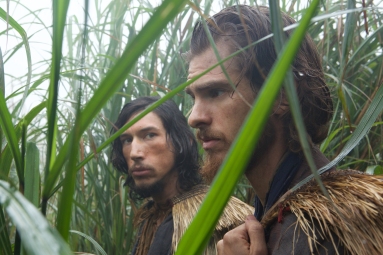 that Rodrigues faces, or the hell that he’s in now. Even though the movie is relentlessly brutal, you’ll still be wowed by the images, the beauty lurking within the swamp.
Silence is uncomfortable – truly, truly uncomfortable. The tortures are otherworldly. What’s the takeaway from these 161 minutes of quiet pierced with merciless violence? Silence leaves you with more questions than answers, and how you feel about it will depend on how filled with god’s love your heart is going in. Yes it’s a meditation on religion and spirituality, but it isn’t afraid to point-blank ask us whether we’ve heard or felt god in the silence. Is he there, quietly observing his people be tortured and killed? Is he there, silently allowing persecution and murder? Does silence sow seeds of doubt?
For the most part, Scorsese seems to be fairly neutral in the plight of Christians vs. Japan. I definitely felt the strong whiff of colonization, the belief that the stories white people tell each other about their god and heaven are somehow more true than the stories the Japanese have been telling for centuries. Not just more true but The Truth. These might be 17th century problems, but they sound very familiar – almost like those same problems are here in the 21st century as well.
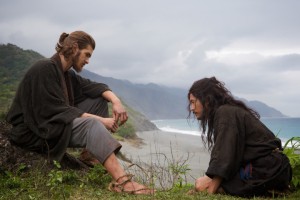 This Asshole Atheist really noticed the distinction between religion and faith – religion being something a government can choose to eradicate; faith, however, is much more difficult. Silence is really a question of belief, not just what you believe, but how strongly you believe it, how strongly you think others should believe it, how far you’re willing to go to impose those beliefs, how much pain you can endure before you abandon those beliefs. And if god himself can hide in silence, can belief dwell there also?
With Martin Scorsese at the helm, you already know this is a disciplined and wondrous exercise in film making, perhaps a masterpiece among masterpieces from this celebrated auteur. But Silence is best discussed by the feelings it evokes in the viewer. It’s meant to be thought-provoking. If god is love, is it better to love god even in the face of threat, or is it better to love our fellow man even when it means denying god? One gruesome scene marches into another, never quite glorifying the martyr, never quite condemning the oppressor. Maybe the point is that there is no point. Silence is a theological debate that grants permission to test the limits of faith, to ask the unanswerables. It is difficult to watch and difficult to process but I believe that Silence is meaningful even to the non-believer: it’s just that good a film.

 just taught, but tested. Melanie (Sennia Nanua) is test subject #1. She’s a very sweet young girl until flesh is nearby, and then her jaws start chomping involuntarily.
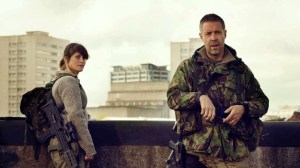 human. Newcomer Sennia Nanua is very compelling in her role; Melanie is a monster, but Nanua gives her a sense of humanity that transforms this horror film into something more urgent, more terrifyingly relatable.
 cartoonish, but McAvoy gives each personality a distinctive flavour without ever resorting to stereotypes. And that’s hard work period, never mind the fact that he’s fighting Shyamalan’s confused script, that seems to want to have something meaningful to say about this controversial disorder, but also really just wants to be an exploitative horror film. You can’t have it both ways.
 having introduced any of his characters. He bestows back stories on two of them through flashbacks, hoping it’s not too late. The rest remain paper thin. The girls (Anya Taylor-Joy, Haley Lu Richardson, Jessica Sula) are mostly there to scream on cue, and to wear progressively less clothing.
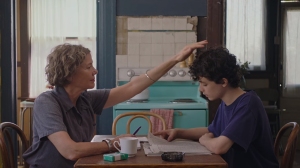 Mills, feel very much like real people because their problems are so distinct. The women don’t bleed into each other; they are each accorded with specific neuroses, anxieties, passions, and influences. We know a little about how they were born, and how they will die, but mostly we know how they are living. 20th Century Women is not plot-driven; nothing “happens” except truth is revealed through meticulous character study.
 better endorsement for a film that couldn’t be further from his own experience. And that’s what’s so remarkable. Though its genius is in the details, the specificity of the characters, it’s all somehow very relatable. And any movie that’s also a mirror is definitely worth its salt.
 I suppose it was to be expected that Ray Kroc, the “founder” of McDonald’s, was an asshole. But, wow, was he ever an asshole. He died well before this movie was made but it seems he would have agreed with that assessment and been fine with it since it got him where he wanted to be – it made him rich, eventually.
 victory. But only until the movie starts, because so far, about 5 minutes into each movie I proudly show to Jay, she wonders why I bothered to beg her to watch this one, asking things like, “Do you remember it being this bad?” when the flying cars first come into view.
 Still, there is something to be said about Blade Runner and something reassuring about its continued relevance. A big reason that the movie feels thin today is because it has been so influential. We’ve seen so many films build on what Blade Runner started, and in comparison, Blade Runner is like a wheel made out of stone. In that way, it’s important but if choosing between the original or the best that the genre has to offer today, the modern film is going to be the better one. But there is still room in my heart for the rickety original, the one that was ahead of its time (and ahead of ours, as Blade Runner is set in the “distant” future of 2019).
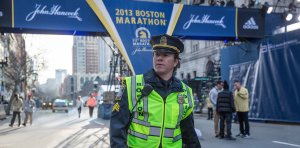 Terrorists are despicable. They take lives or limbs and create chaos and fear, sometimes in support of twisted ideology, sometimes just for kicks, and always demonstrate a complete lack of humanity. Sensational as their actions are, what deserves recognition are not the acts themselves, but the responses by the terrorists’ targets.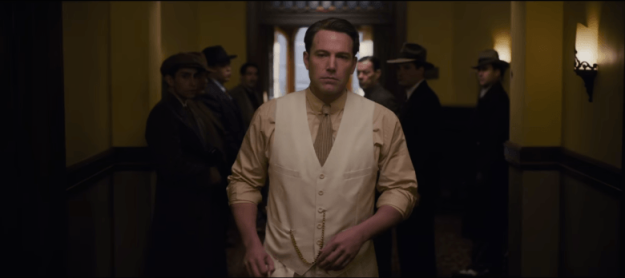
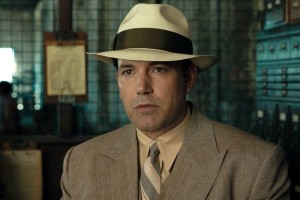 e if nothing else the role he has created for himself is a terrible one. The lead character is remarkably unsympathetic and no amount of teary-eyed inner conflict or monotone monologuing in voiceover form (because this character doesn’t like to express feelings aloud) can change that. On top of that, his hats make him look ridiculous, and there are so many hats.
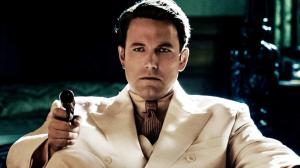 aniacs shooting at each other that leave the viewer unclear as to who’s on whose side (spoiler alert: the guys doing the killing are the ones on Affleck’s character’s side). Affleck also completely wastes Brendan Gleeson, Zoe Saldana, Chris Cooper, Elle Fanning, and most egregiously Agent Coulson (though Jay took Chris Messina’s bad teeth and pot belly hardest but at least Messina got a decent amount of screen time).
 of people who are grieving even as she still lives, dealing with a loss that is still happening before their very eyes.
 started turning things around. But Molly Shannon was a break-out, and some of her characters even got movie deals. I just didn’t like them. I thought she was brash, over the top, and obnoxious. I still do. But in this movie, as they dying mother, she’s none of those things. I still don’t like her, but she was easier to stomach when he’s mostly occupied evacuating hers. Is that a terrible thing to say? Yes it is. But it’s the truth.
