First, understand that OJ Simpson, to me, is the murderer. I was a kid when he killed his ex-wife and her friend, so I hadn’t known him as a football player or movie star or celebrity before then. The first I ever knew of him was when his white Bronco interrupted my Saved By The Bell marathoning.
This documentary doesn’t just seek to illustrate the life and times of one Orenthal James Simpson; rather it places his career and his crime within the context of L.A.’s race wars in the 1980s and 1990s. While the things you thought you knew about his sensational murder  trial aren’t wrong, they’re explored with new understanding, through a lens of his being a black man, sort of, but not really.
What on earth do I mean by that? OJ grew up in the projects, as he is fond of saying when it’s convenient. He dreamed not of glory or achievement or wealth, but of fame, of being known. Certainly his football career granted him that. He was a big deal in college football circa 1968, kept his nose clean, stayed out of politics, and earned himself the Heisman trophy. He was drafted to the NFL where he suffered a bit of a slump but had a rebirth by 1973 when he set a record rushing for 2000 yards in one season. I walk my dog further than that nearly every day, but apparently that’s some sort of accomplishment in football.
OJ became a star athlete and celebrity whose fame transcended his race. White American embraced him, and OJ played his part. He courted white culture and did his best to never remind anyone that he was still technically a black man. He was the first national black spokesperson, for Hertz rental cars, and that meant he’d arrived. When he retired from football, he traded in his black wife for a white one and transitioned to Hollywood.
Yeah sure he beat his wife on the reg, but with a wink and an autograph the cops would be slapping him on the back, making no reports, casting no aspersions. Life was good until Nicole up and left him and his jealousy surged. The one night Nicole was found dead, nearly decapitated in fact, in a small ocean’s worth of her blood. A friend who had had the misfortune of stopping by at the wrong time, Ronald Goldman, was also killed. And this time the cops couldn’t deny that the crime had OJ’s name all over it.
We all know that OJ was acquitted, but this documentary shows his acquittal as an act of vengeance. The jury was stacked largely with poor black people who had seen members of  the LAPD be acquitted in he Rodney King beating. Here was a chance to right that wrong and make the system work for a black man for once. Everyone conveniently forgot that OJ had spent his entire adult life distancing himself from the black community and they made him a civil rights hero. His lawyer, Johnnie Cochran, played the race card and he played it hard “dealt it from the bottom of the deck” it’s said. And he got off. But instead of relishing his incredible good luck, OJ’s life continued to derail until he found himself in court once again, this time found guilty and sentenced to some 33 years in prison, whether or not his crimes truly warranted it. This, again, was retaliation rather than justice.
At 467 minutes, this documentary achieves a depth we haven’t seen before and earns itself an Academy Award nomination – but is this fair? It had a qualifying run in theatres (though who would pay to sit for nearly 8 hours is a mystery to me) but it was produced and aired on television, in 5 parts on ESPN. Every other documentary had to play by different rules, hovering around that 90 minute mark that makes a film viable and marketable. This is the longest film to ever receive a best documentary nomination, and I can’t help but wonder if this will change things moving forward.
I can’t ignore that this film is very effective, juxtaposing the American dream with American reality, pinning OJ’s circumstances in a time and place that were far from ideal. It is balanced and cheese almighty is it ever thorough, complete with Marcia Clark in a redemptive hairdo. Glory be! It doesn’t waste any of its 467 minutes, nor are any redundant. There is much ground to cover and the film makes clear that OJ is not just a man of his own making, but an idol that a whole culture had a hand in creating (and destroying). There are so many insights here that I sent constant missives to Sean, just venting my hurt and frustration. I’ve come away with a breadth of understanding that his filled a gulch I didn’t even know existed in my awareness of this epic and polarizing event. There are discoveries to be made here, if you’re willing to follow director Ezra Edelman’s trail of breadcrumbs for the requisite 7 hours and change.

 movie immediately, and for a while, I do. But this Chris guy just keeps getting into such dumb situations and I suppose his character is less sympathetic so I’m just annoyed. My tolerance for dumb shit is not as high as is required to enjoy this movie. I may have laughed a couple of times but mostly I just thought things like: I wonder if any aps on my phone need updating? and Is this the perfect time to finally hook up all my single socks? and Holy mother of pearl, why are there still 20 agonizing minutes left?
 retiring music throughout, but manages to speak directly to your heart. That’s sort of the catch with this film, you have to let go of the normal film-going experience, and just feel your way through this one.
 Paterson (Adam Driver) is a conscientious bus driver. He doesn’t even loathe his passengers, which I find hard to believe. He’s not exactly immune to daydreaming; he writes poetry, thinks it up while driving, writes it down on his breaks in his secret notebook. My first impression was that he isn’t much of a poet – writing words in an uneven column does not a poet make. But he chews on them, refines them, until they start to sound like true beauty.
 berries, the fat being anything from whitefish, or reindeer tallow, or moose, or walrus, or cariboo, plus sugar, milk, and Crisco.]
 known for the white helmets they wear while rushing into the crumbling buildings and raging fires left after an airstrike. They live in and around Aleppo, and are committed to saving as many of the innocent but somehow still targeted civilians that get attacked every single day in Syria.
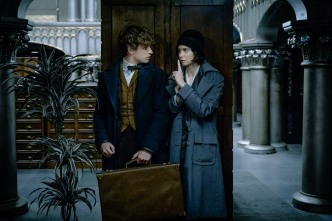 we’re used to, and the Magical Congress of the United States of America (MACUSA) is riding the barrier between magical and non-magical as well as they can. Scamander, however, believes that the beasts in his case are harmless and deserve a chance to be safe and free. This attitude puts him at odds with the MACUSA in general, and Graves (Colin Farrell) in particular. Luckily, a young woman a little lower on the chain, Tina (Katherine Waterson), takes him in, and a non-maj (non-magical person, or muggle) who’s been caught up in the whole thing as well (Jacob, Dan Fogler).
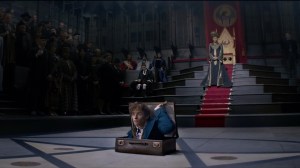 day world and theirs. There’s a whole subplot involving the evil things that happen when someone tries to suppress who they truly are.

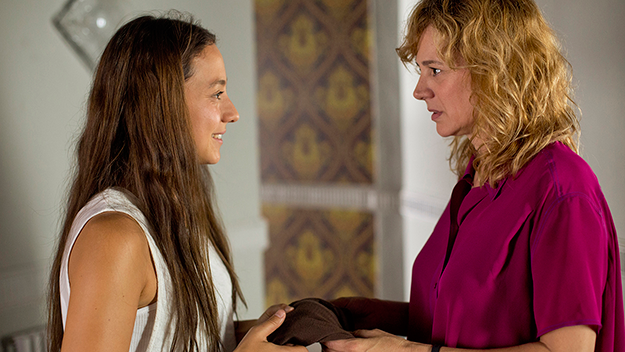
 mother. She has exes, lovers, and erotic fixations. Some of them may surprise you. She reminds us that there are many ways to respond to this kind of violation, and none of them are necessarily wrong. But victimhood does not sit well with Michèle; Michèle plots revenge. Michèle’s complexity is a welcome layer to this psychological thriller, and it’s superbly executed by Isabelle Huppert. Huppert won the
  footage and deliberate storytelling that allows us to consider what documentary can do. It is urgent, imaginative and necessary filmmaking.” Meryl, love ya, but I respectfully disagree.
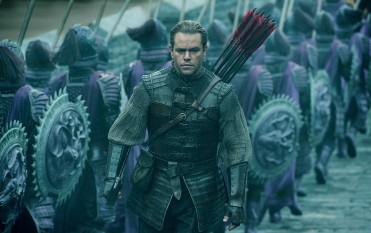 the ambiguous white guy who’s been roaming around with a group looking for black powder. Lots of his men have been picked off and they should have turned back, but instead the remaining men run into a scary beast that eats all but two. Then William and his pal get picked up by the Chinese army near the wall and are more or less taken prisoner, but it seems only so that the white guys can be really impressed by all the Chinese ingenuity.
 Certainly director Zhang Yimou has a visual flair but this movie overly relies on effects and imagery at the expense of literally everything else. Zhang Yimou’s special spice blend is missing. There’s no subtlety. There’s no sensitivity. And the story is just plain lacking. It starts to feel repetitive even within its 104 minutes. But it’s gloriously explody. It is that. Kaboom.
