
Requiem for the American Dream opens with Noam Chomsky reminiscing about the good ol’ days of the Great Depression. As bad as it got during the Depression, he recalls a shared understanding among the people that this shall pass. Now things are bad again, he claims, and this time nobody seems as optimistic that things will get any better. Of course, it’s perfectly normal that the outlook of a young boy packing into the back of the family truck with Grandma, Grandpa, Ma, Pa, and Uncle Tom and heading to California looking for work (assuming of course that his childhood was exactly like The Grapes of Wrath, which is my only point of reference) is probably a little rosier than that of a cranky 85 year-old linguist but he has my attention. He claims that the disparity between the rich and poor in the US has never been higher, predicting the death of the American Middle Class. Which worries me a little, as a member of said Middle Class.
It all started with America’s beloved forefathers, who understood Democracy’s biggest problem. In a true democracy, with poor people having the right to vote, what’s to stop the underprivileged from voting to take the big fancy houses away from the rich? Hardly seems fair, doesn’t it, since the rich worked so hard for said property? So they were left with two choices: take steps to reduce inequality or to limit democracy. So, according to Chomsky, begins the process of building a system that limits the access of the underprivileged to the highest office in the land.
Honestly, I’m not a fan of documentaries like these. Requiem features four years worth of interviews with Chomsky. Visually, we’re offered only tight close-ups of the renowned political activist’s face that even the most vain of starlets would never agree to along with the occasional stock footage of skyscrapers and highways. The filmmakers seek no other opinions, neither dissenting or complementary, and Chomsky’s lecture is accompanied only by an irritating score from Malcolm Francis.
So it’s not much of a documentary. That doesn’t mean its subject isn’t worth listening to. His observations are as alarming as they are timely. Even better, he has the decency to offer some hope for the future, reminding the American people that their system is set up so that regular people can bring about real change as long as they stop fighting amongst themselves and stand up and make themselves heard. Still, the documentary has nothing to offer but the words of Noam Chomsky. So you’re probably better off just reading some Chomsky.
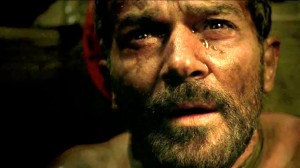 guy who should have been off but begged to work (all together now: oh, the irony!), and most importantly, the evil, greedy boss on whom we can pin all our hatred and frustration.
 country depends on mining as their primary industry. So who really cares for the miners? It took 100 years to drill down as deeply as they have, and they have about a half a can of tuna per man. How quickly can they be reached, and will they be corpses when (and if) they are? The miners are afraid their families will have graves up before they’ve even breathed their last down there.
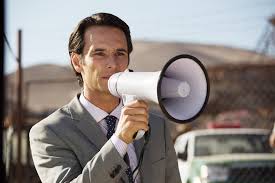 actors are Indian, Columbian, English, American. Actual Chileans are tough to spot but they’re banking on us not knowing, or caring, about the difference.
 I’ll take Phoning It In for 500, Alex.
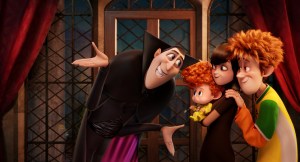
 Dracula is back, the proprietor of a high-end hotel catering exclusively to monster guests. His daughter Mavis (Selena Gomez) has just married her human sweetheart Jonathan (Adam Samberg) and they’ve got a sweet little baby boy, the apple of Dracula’s eye. The only thing is, nobody knows yet whether the baby will turn out to be vampire or human. There’s a slight allegory here, something about “mixed families” but it’s not exactly groundbreaking stuff.
 Kattan, and Jon Lovitz; Sandler mainstays Kevin James, Steve Buscemi, Nick Swardson, and Allen Covert; and a rather inspired addition – Mel Brooks as Vlad, grumpy great-grandpa who doesn’t approve of vampire-human relations. My favourite of course, are Nick Offerman and Megan Mullaly, who together voice Jonathan’s super-square parents who get thrown into a crash-course in monsterdom when their son introduces them to vampiric in-laws and a “half-blood” grandson.
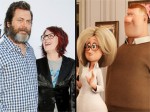 Offerman and Mullaly are a real-life couple who met while doing a play. He was a lowly carpenter, and she was a TV star still in the throes of her Will & Grace fame. Over the course of their relationship, she’s seen his star rise as well due to a similarly iconic role on Parks & Recreation. We Assholes were lucky enough to catch them doing another play toget
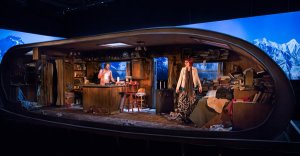 her, this time on Broadway, called Annapurna. It was a simple, 2-person play, deeply intense and emotional, and a real joy to watch two master thespians up close and personal. It’s clear that they love working together, even if it’s on a shitty kids’ movie.
 ask a kid, chances are they loved it. The sequel was a veritable monster at the box office, if you’ll forgive the pun, setting records as the biggest September opening, the biggest Sandler opening, and the biggest for Sony Pictures Animation as well. It grossed $469 million worldwide, and it just beat out
  And it doesn’t have much of a plot that I can summarize for you; it’s an unambitious slice of life. It’s about a guy (Nick Kroll) who shows up at his sister’s door in suburbia, looking for a place to live. He’s had some major setbacks and he’s feeling way too old to start his whole life over again. She’s (Rose Byrne) not in a much better place, kind of not sure about her job, her marriage, or even where to be or who to be. They’re listless. But the interesting thing about the movie, to me, is that they’re not painted as losers. They’ve just had some bad luck and some hard times, and that’s life.
 thoughtful and mature this movie is – maybe one of the more realistic movies about adult family relationships I’ve seen in a long while. Byrne and her on-screen husband, Bobby Cannavale, are a real-life couple, and they play well together. Throwing funny man Nick Kroll into the mix as a more or less straight-man is a bold and surprisingly effective choice. Everyone is some degree of flawed in this movie but we don’t make monsters out of any of them. They’re very relatable, and there’s a
  quiet generosity in the characterization, a forgiveness I’m not used to see in movies that was really refreshing and kind of a relief.
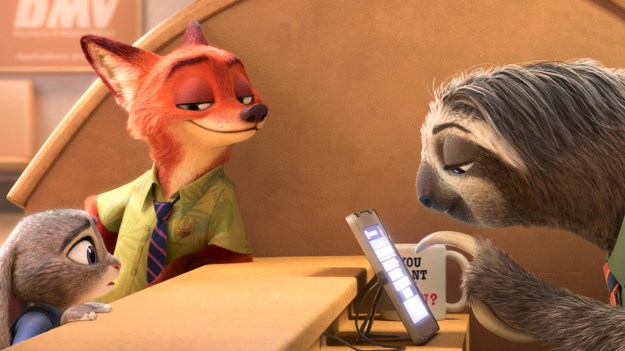 In 2006, Disney purchased Pixar for the equivalent of $7.4 billion dollars. It’s becoming more and more clear how good a deal that was for Disney. Every Disney animated movie since has been amazing, from Wreck-It-Ralph to
  Not only is Zootopia another success for Disney, it may be the best of the bunch since John Lasseter and Pixar came on board, and that’s probably the best endorsement I can give.
 Disney has picked up the torch from Pixar in that area and is doing it as well as Pixar ever did. Zootopia is literally a movie that all ages will enjoy. So it’s one up on LEGO!
 choose someone who wants to
 h no real need for anything to swing from (he swung across the Everglades at one point, above all the trees)! I am humming the theme song right now and hopefully so are you. I truly can’t imagine a better intro to a cartoon or a better gateway drug into the world of comic book consumerism.
 a thing for sharp and feisty young women, and the two are a love match and plan to be at Oxford at the same time (unchaperoned, even). But every great love story needs an obstacle and feminism wasn’t enough, so along came The Great War to shake things up.
 hool to become a nurse.
 epic, called Birdsong (based on the Faulks of the same name). He plays a young man who goes off to war remembering the affair he had with his French (married) sweetheart. Clemence Poesy is beautiful as ever, but this one may leave you feeling faintly unsatisfied.
 ASSHOLES WATCHING MOVIES