The Judge

When his mother dies, a successful big city lawyer returns his the small town to which he swore he’d never return. Despite vowing to leave first thing the next morning, his stay gets extended when his father (a respected judge in his community) is charged with murder. Father and son haven’t spoken in years and neither one likes the idea of working together very much but the The Judgejudge is going to need the best lawyer her can find to keep from going to jail.

Both the prodigal son and the courtroom drama are pretty played out so I wasn’t expecting anything great but when the father and son are played by Robert Duvall and Robert Downey Jr, I didn’t see how it could be bad.

Unfortunately, not much in The Judge feels real. The town doesn’t feel like a real place. The family doesn’t feel like a real family. The court case doesn’t play out like a real trial, with the family drama even playing out on the witness stand in a scene that I couldn’t believe I was watching.

More importantly though, nothing really satisfies. We have to wait until the end of the movie to find out what really happened, both between fathThe Judge 2er and son and the night of the murder. And we should have to wait. All the best payoffs come that way. Our patience doesn’t pay off here though, neither with the family drama or the trial. Even Downey, the king of outalking someone, cross examing witnesses isn’t as much of a treat as it really should be.

The good news is that it’s not all bad. Robert Duvall is a nominee for this year’s academy award for Best Supporting Actor partly because he’s gotten pretty old and it’s been awhile since his last nomination but also because he is just pretty awesome. The best scenes in the movie are all his. His shower scene with Downey manages to be heart-wrenching, tender, and funny and I nearly cried in another scene where he meets his granddaughter. And even if Downey’s return home isn’t as compelling as I would like it to be, his return to real movies is more than welcome. He’s pretty much played no one but Iron Man or Sherlock Holmes for the last five years so even a drama as trite as The Judge is a nice change.

Dear White People

dearwhitepeople2This movie tackles race in the microcosm of an ivy league college. The film focuses on four black characters as they live and learn on a predominantly white campus. One of them, Sam, uses her radio show to point out the racist sins of her fellow students – “Dear white people: The minimum requirement of black friends needed to not seem racist has just been raised to two. Sorry, but your weed man Tyrone does not count.”

It is by no means a perfect movie but it does spark a very important conversation, and you may have noticed by now that one of my barometers for a “good” movie is one that provokes a discussion.  The film fearlessly points out the prejudice not just of the white students, but of the black students even toward each other. It’s a real meditation on what racism means in American in 2014 and culminates in a big party where white kids are encouraged to “liberate their inner Negro” and boy do they. This is satire and not satire because of course these events have actually taken place on many real campuses, not 50 years ago, but maybe 50 days ago.

Recently, Benedict Cumberbatch has had to apologize for using the term “coloured” in an dearwhitepeopleinterview. He immediately took responsibility for his mistake, but this too has opened up the debate. What he actually said was: “I think as far as coloured actors go, it gets really different in the UK, and a lot of my friends have had more opportunities here [in America] than in the UK, and that’s something that needs to change.” His terminology is outdated and offensive, at least to some. But it also highlights the fact that we still, as a society, don’t know the right answer here – because Cumberbatch wasn’t meaning to offend. Dear White People uses the term “coloured”  a couple of times, actually, and that may add to our confusion.

At the end of the day, Cumberbatch’s assessment IS correct: Idris Elba, Thandie Newton, David Oyelowo, and Chiwetel Ejiofor have all had more success in the American market. David Oyelowo in particular has just this year appeared in Interstellar, Selma, and A Most Violent Year. The small part he played in Interstellar was not a “black” part, and that’s a step in the right direction. Now we just need about 100 more steps, because the #OscarsSoWhite problem doesn’t start at the Oscars, it ends there (note: Cumberbatch is nominated for best actor for his work in The Imitation Game while Oyelowo was overlooked for his brilliant performance in Selma). The problem begins on casting couches. There isn’t enough diversity on any screen (big or small) and David Oyelowo, coming to Cumberbatch’s defense, said that there was “absolutely” an issue with diversity within the film industry, which Cumberbatch was decrying. And while language is definitely something we should continue to re-evaluate, it’s only one part of the bigger picture. That’s why films like Dear White People are so important, and why Hollywood serves as a scapegoat for society. This stuff  still makes us uncomfortable. We don’t always know how to talk about it. But I hope that at the very least, we can all agree that we must keep talking. And it proves why movies like Dear White People have value: as a white person, I want very much to be an ally, but clearly our good intentions need to be steered. I don’t know what the answers are, but this movie helped ignite conversation, and it’s clear that white people need to shut up and do some serious listening.


John Wick

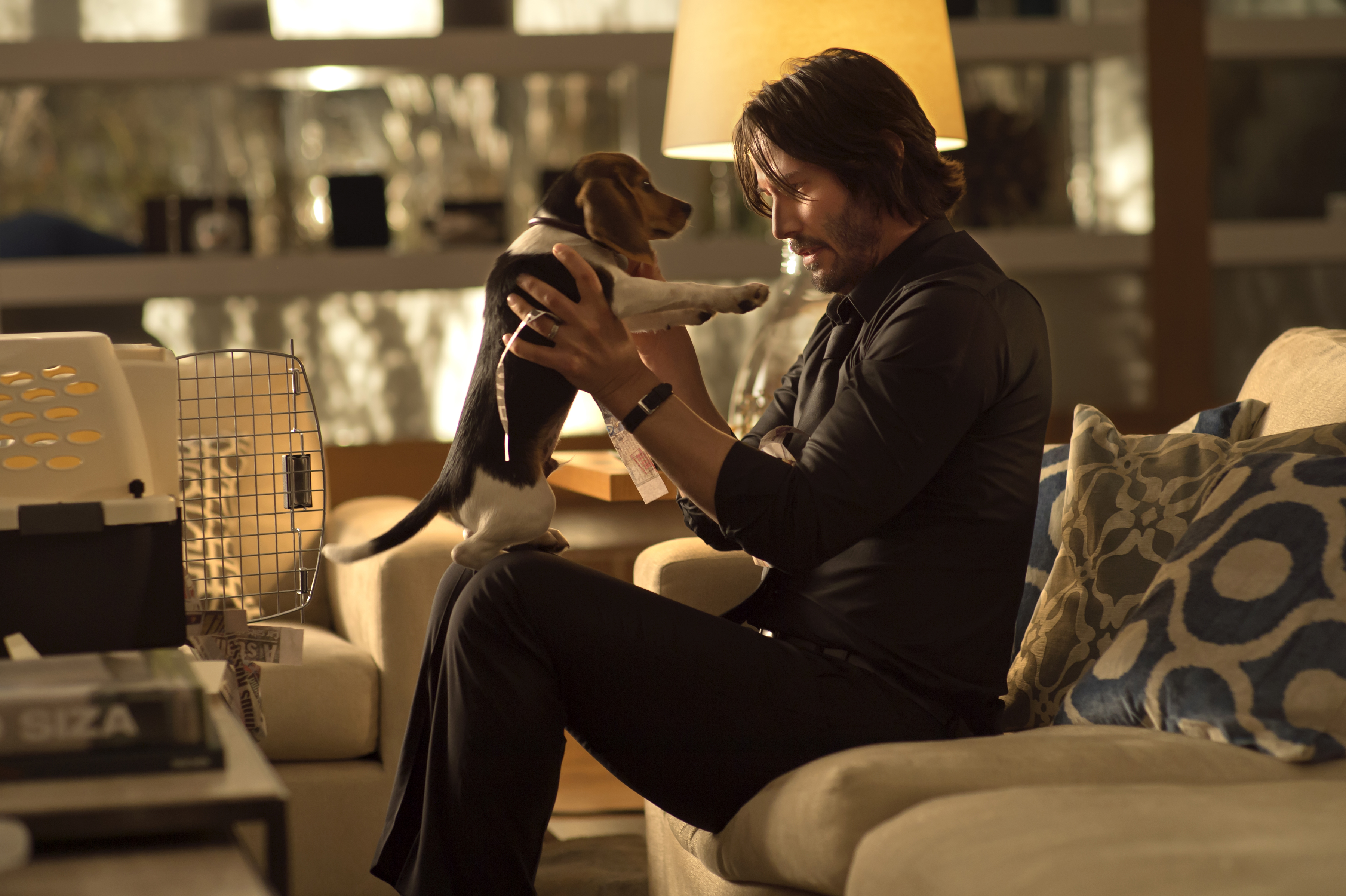
John Wick (Keanu Reeves) has a dead wife and a cool car. That much we can all agree on. The freshly dead wife has sent him a gift posthumously (dear movies: can we stop with the deliveriesTMN_8943.NEF from beyond the grave now? it creeps me out) – a puppy to help him grieve. Wick’s initially not much of a fan of Daisy, but when he spends the day with her, cruising around in his cool car, they bond. But then something terrible happens: he runs out of gas. And we all know what happens when we stop to pump gas – we run into Russian mobsters. Okay, well, that hardly ever happens to me, but I gas up at Canadian Tire. But Keanu stopped at Shell or some such, and so of course his life is threatened when he refuses to sell his car for no apparent reason – and his little dog too.

Russian mobsters are infamous for not taking no for an answer, so they follow him home and wage a sneak attack when he’s sleeping to steal his car and kick his dog. Poor Daisy dies in the attack, and that dead dog is the impetus for all that unfolds next.

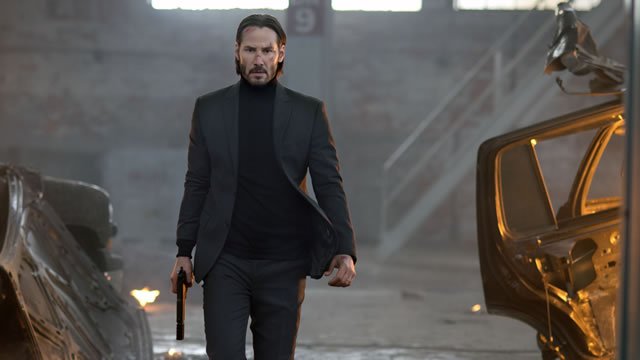
john_wick2The dog was apparently the last shred of his old life that was holding him together. Turns out he used to be a bad dude, as evidenced by the arsenal he digs up from his basement. He learns that the kid who killed his dog is actually the son of his old boss, head of Russian mob. The mob guy learns that John Wick, his most accomplished assassin, is coming out of retirement on behalf of his dead dog, gunning for his only son, and freaks out. There’s a $4 million bounty on John’s head, which he deals with by checking into some sort of hit-man hotel where apparently you’re not allowed to kill people, but that’s assuming that criminals can follow the rules, which we all know they can’t.

And that’s where I lost the thread. It’s just pretty much plotless revenge-fuelled action movie after that, constant movement, lots of shattered glass. Body count: 119, 78 by Keanu’s hand. It doesn’t sound like much, and it isn’t, but I’m pretty positive that if you like watching people kill for karma, cash, or just plain bloodlust, you’re going to want to see this movie.

The Best of Sundance 2015

The Sundance Film Festival has been crazy busy this year, and tonnes of great movies have already debuted (and many bought for distribution!). Here’s a short list of some of the most-talked-about and highly anticipated movies to come out of the festival so far.

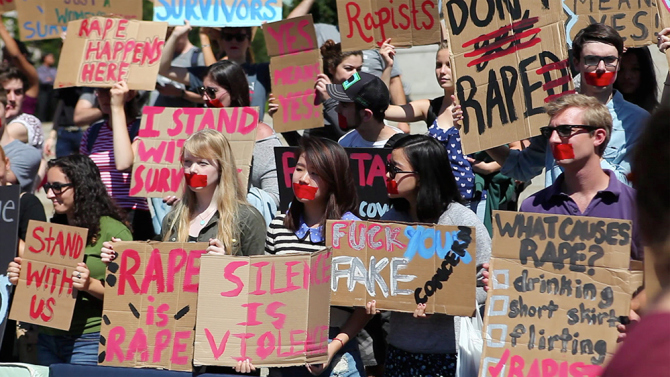
The Hunting Ground , a documentary by Kirby Dick who also did Invisible War a couple of years thehuntingground3ago. The Hunting Ground is a powerfully charged film about rape on college campuses, a timely topic (sadly) that had audiences gasping audibly at the mockery of universities’ investigations into sexual assault. The film takes a hard look at fraternity culture, and also serves as a warning to the NFL about Florida State quarterback Jameis Winston – accused of rape he has yet to be formally charged but his accuser speaks out publicly for the first time, and it’s chilling. This movie also features the most talked about song at Sundance this year, Lady Gaga’s “Til It Happens To You”, co-written by the esteemed and venerable Diane Warren. The Hunting Ground is slated for release March 20 and will air later this year on CNN.

Going Clear is another documentary of note this year, this one directed by Alex Gibney (who goingclearyou may remember from Taxi to the Dark Side). This one’s about Scientology and you can bet it’s ruffling plenty of feathers (HBO famously hired 160 lawyers to vet the thing). Gibney’s got lots of former scientologists on deck, including disillusioned former leaders, delivering first-hand accounts of what it’s really like behind closed doors. This doc lands bombshells about the torture of members in a prison known as “the hole”, the harassment of those who have left, and the intentional breaking up of Tom Cruise’s marriage to Nicole Kidman (and even wire-tapping her phones). Going Clear: Scientology and the Prison of Belief airs March 16 on HBO.

IFC Films laid out $3 million for the rights to Jack Black’s new comedy, The D Train, where he dtrainplays a loser who tries to save his high school reunion by recruiting the class’s favourite and most famous student (James Marsden), an actor in a successful Banana Boat commercial, to attend.


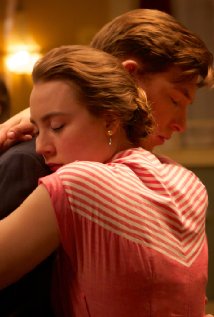
brooklynBrooklyn looks like another one to look out for – a romantic drama based on a best-selling book (by Colm Toibin) with a screenplay adaptation by Nick Hornby.  If memory serves correctly, it’s about a young woman who emigrates from Ireland to Brooklyn and faces homesickness and heartbreak as she chooses between 2 men and 2 countries. Something like that. 🙂


The End of The Tour sounds a little like Almost Famous but for book worms as opposed to endofthetourgroupies. It follows Rolling Stone writer David Lipsky (played by Jesse Eisenberg, who I’m a little wary of at this point) on a five-day road trip with David Foster Wallace (brought to the big screen by Jason Segel). Wallace committed suicide a few years back and apparently his family aren’t pleased about the movie, so it’s sure to create some chatter when released later this year.

Zachary_Quinto_James_Franco_I_Am_Michael_jpg_CROP_promovar-mediumlargeI am not sure, though, that anything will create quite as much controversy as James Franco’s new movie, I Am Michael, based on the life of gay activist Michael Glatze who co-founded an LGBT teen magazine only to renounce his sexuality and become a Christian pastor. Zachary Quinto and Emma Watson also star.


For those of you worried about having too much fun at the movies this year, here’s one that’s stockholmsure to be a downer: in Stockholm, Pennsylvania, Saoirse Ronan plays a young woman who was kidnapped as a young child and held captive for 17 years. Recently returned home to her family, she must now reconcile her haunting past with the reality of parents (Cynthia Nixon and David Warshofsky) who are pretty much strangers, and a world she didn’t know existed.

JonahHillJamesFrancoTrueStory1And if you’re in the mood for a couple of chuckle-heads turned dramatic, Jonah Hill slips on his serious glasses to play Michael Finkel, a disgraced journalist who learns an obsessive murderer (James Franco) captured in Mexico is stealing his identity. Finkel travels to interview the prisoner in hopes of restoring his integrity. True Story has a limited release set for April 10.


Which ones are you most excited to see?

The Grand Budapest Hotel 2

Lots of directors are said to have their signature styles but Wes Anderson may be the only director in Hollywood that no one seems to even dare try to copy. The colours, the music, the low–key performances, and the sense of timing in his movies are uniquely his.

The Grand Budapest Hotel has everything we’ve come to expect from a Wes Anderson movie. I’ve seen it four times and the more I see it the higher I rank it in relation to his other films. Despite some of its more poetic moments, TGBH isn’t quite as bittersweet as The Royal Tenenbaums or Moonrise Kingdom (my two favourites) but it makes up for that with some of the most outrageous comedy we’ve ever seen from him. It also boasts his biggest cast yet of both new faces and at least ten familiar ones from other Anderson films.

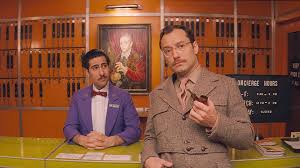
There were so many great cameos and there wasn’t nearly enough time to give everyone the attention that they deserved. Before the movie even really gets going, we are introduced to the Grand Budapest Hotel in 1968 where it’s already past its prime through the point of view of a young writer played by Jude Law.

grand budapest hotel 2

“What few guests we were had quickly come to recognize each other by sight as the only living souls residing in the vast establishment. Although I do not believe any acquaintance among our number had proceeded beyond the brief nods we exchanged as we passed in the palm court, in the Arabian baths, and onboard the colonnade funicular. We were a very reserved group it seemed and, without exception, solitary”.

Before long, we are introduced to Zero as an old man played by F. Murray Abraham and he tells the story of how he came to own the hotel, bringing us to the 1930s where the rest of the film is set. As much as I loved the rest of the movie, part of me wished that we got to hang around longer in the run-down 1968 version of the Grand Budapest Hotel, which I think would have made a great setting for a movie of its own. Maybe a murder mystery? Or a love story?

I’m just putting it out there to the universe that we get to see the first ever Wes Anderson sequel starring Law, Abraham, and Jason Schwartzman as the lazy mustached concierge. Maybe even past Wes Anderson characters like Steve Zissou from Life Aquatic or the family from Moonrise Kingdom can come stay at the hotel.

It probably won’t happen but I can dream. If you’re out there, Wes Anderson, please make Return to the Grand Budapest Hotel.

Women in Hollywood

Russell Crowe is an ass. Everyone knows this. So when he recently went on a rant about how there are plenty of parts for women in movies so they should just shut their yaps and “act their age” no one was surprised by the medium or the message. As long as there’s been movies, there’s been sexism  and by god, where sexism goes so does ageism.

Looking at this year’s Oscar nominations it was pretty clear to me that meatier roles go to men, but I’m not going to sit here and lament the missed opportunities when instead I could be celebrating the success.ghostbusters

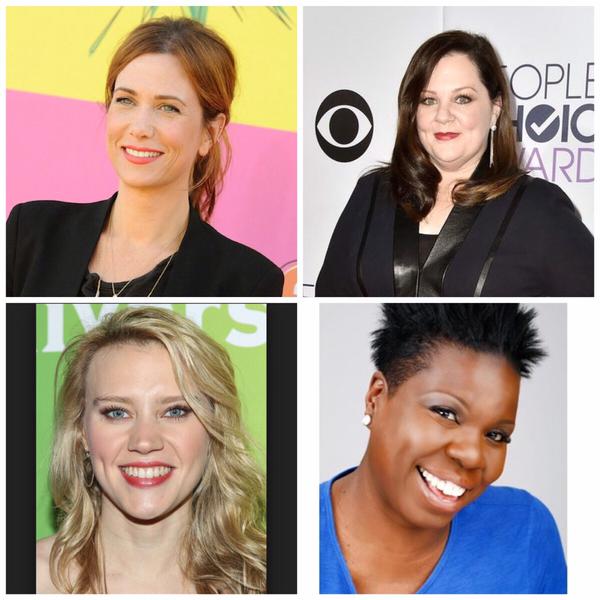
Earlier today, Paul Feig posted an untitled photo to Twitter featuring Kristen Wiig, Melissa McCarthy, Kate McKinnon, and Leslie Jones. Feig provided absolutely  no comment but fans were quick to speculate that this was the cast of his much-discussed reboot of The Ghostbusters franchise. McKinnon and Jones are both current members of SNL while Wiig and McCarthy are already Feig collaborators, having co-starred in Bridesmaids, the highest grossing domestic R-rated female comedy of all time, edging out Sex and the City (2008).

Meanwhile, at Sundance,  Emily Nussbaum, award-winning critic for the New Yorker, moderated a panel of “Serious Ladies” featuring the uber-talented Wiig, Jenji Kohan (who wrote for Sex and mindy-kaling-cover-ftrthe City and Gilmore Girls before creating Orange Is the New Black and Weeds), Lena Dunham (creator and star of Girls) and Mindy Kaling (writer\producer\star of The Mindy Project). Although they’re all at the top of their game, they all shared stories about how tough it was to break in. Kohan recalled male-dominated writers’ rooms where one cave-dweller told her  “If God had meant women to be in a writer’s room he wouldn’t have made breasts so distracting.” Kaling discussed the pressure to be a role-model versus the artist’s craving to push the envelope and maybe even offend. Sometimes feminism means creating a female character that isn’t necessarily “likeable.”

Dunham, who recently released a memoir, spoke about the difficulty women face in being dunham-lena-podcast-sl-hollywoodmistaken for the characters they play (and wondered why Woody Allen and Larry David don’t get pigeonholed in quite the same way). She hopes to one day see women outnumber men in their profession – “That would be my favourite, if guys some day were to say, ‘It’s impossible to get into Hollywood! It’s a women’s club!’ ”

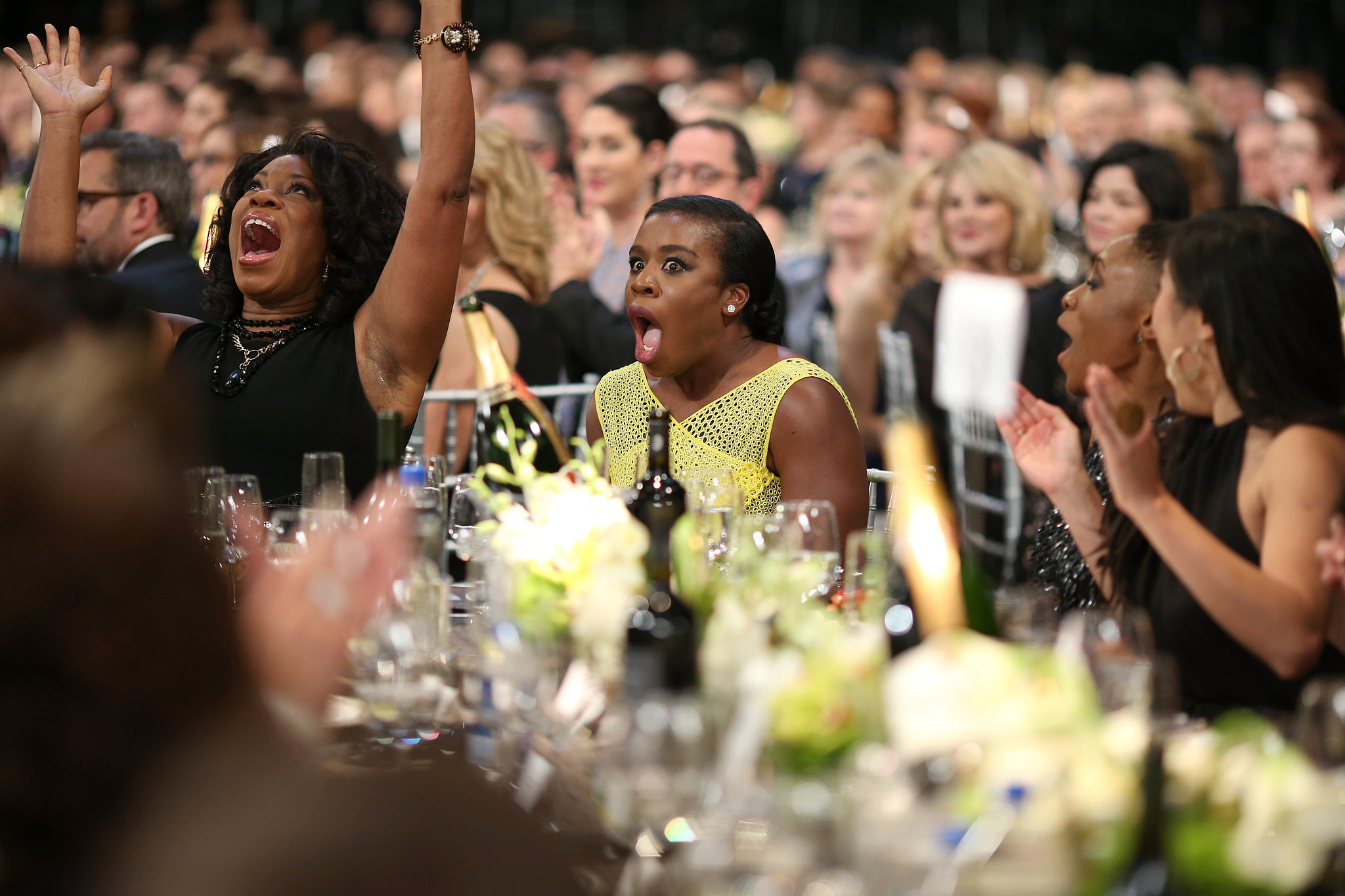
Jenji Kohan pointed out that she was still expected to write material about weddings and uzomotherhood, a notion she challenges with the huge success of her show, Orange Is The New Black. That series, a Netflix original, won big at the Screen Actors Guild awards on Sunday. Uzo Aduba took home Outstanding Performance by a Female Actor in a Comedy Series that night (she plays “Crazy Eyes), and gave a heartfelt speech. But the best part was the love and support coming from the OITNBUZO ADUBA OF THE NETFLIX SERIES "ORANGE IS THE NEW BLACK" ACCEPTS THE AWARD FOR OUTSTANDING PERFORMANCE BY AN ENSEMBLE IN A COMEDY SERIES ALONG WITH HER FELLOW CAST MEMBERS AT THE 21ST ANNUAL SCREEN ACTORS GUILD AWARDS IN LOS ANGELES table – it’s always heartening to see women cheering each other on. Aduba was back on stage before long – the show also won Outstanding Performance by an Ensemble in a Comedy Series, wrestling away the honour from Modern Family. What a great sight to see so many strong and talented ladies on the stage at once.

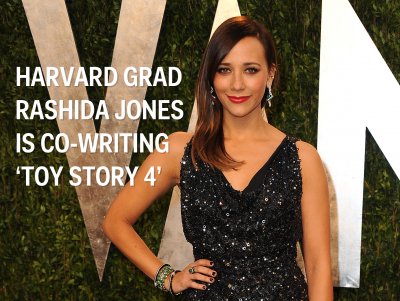
There are still mountains to climb for women in Hollywood, but if you look around (or follow our Twitter feed – @assholemovies ) you’ll find rashidajonestoystorybrave mountaineers everywhere. Just today it was announced that Toy Story 4 would be making its way to theatres in 2017 and that Rashida Jones and her writing partner Will McCormack would be tapped for the screenplay. Although they only have one previous credit to their names (Celeste and Jesse Forever), John Lasseter insists he “wanted to get a strong female voice in the writing of this.” This is a nice change from Pixar’s usually male-dominated animated lineup (Buzz, Woody, Nemo, Mike, Sully, Wall-E, etc) and a step in the right direction for us all.

Fury

Another WW2 movie released in 2014 – see my reviews of Unbroken and The Monuments Men – that didn’t get a whole lot of attention. Is it possible the American film-going population is finally sick of movies about old wars? None of these movies is great but neither are they bad, which to my mind place them above American Sniper, which showcases a more recent war effort but alsofurybradpitt glorifies it.

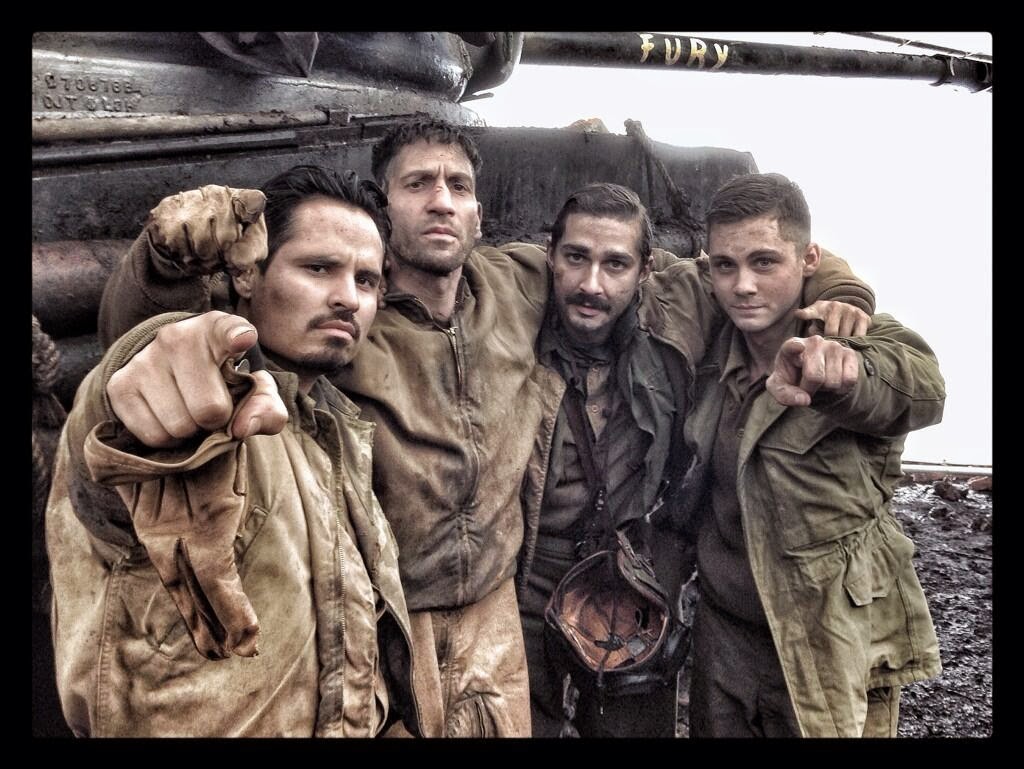
Fury is about a tank crew in the final days of the war. Brad Pitt plays “Wardaddy”, an aging staff sergeant to a veteran crew: “Bible” (Shia LeBoeuf), “Coon-Ass” (Jon Bernthal), and “Gordo” (Michael Pena), who credit him with keeping them all alive. They’ve recently lost their fifth man so newbie Norman (Logan Lerman), a typist who’s never seen the inside of a tank let alone the ravages of war is drafted to join the gang. Pitt’s in charge of his tank, nicknamed Fury, but it’s obvious that the fury also comes from inside him. He’s angry at what he’s seen and takes comfort in abusing prisoners and killing Nazis. He counsels young Norman to do the same, but Norman doesn’t think killing prisoners is “right” and refuses.

fury-movie-2014After discussing the moral relativism inherent in A Most Violent Year, this movie had me thinking more along the lines of righteousness, and whether those ideals apply to wartime at all. The film does a brutally stirring job of showing good Nazis, bad Allies, sympathetic Germans, ignorant Americans, and everything in between. THIS is truth. This isn’t Clint Eastwood’s fanatical fanboy version of war, this is the real and harsh and horrid. One man may be both hero and monster. Both sides believe in what they are doing. Everyone’s afraid.

Director David Ayer put his actors through a controversial process, starting with boot camp, but also forcing them to live together in the tank, encouraging them to fight each other physically on set, and hurl verbal abuse at each other, while swearing them all to absolute secrecy. Shia LeBoeuf, never a stranger to controversy himself, took things a step further, pulling out his ownfury tooth, cutting himself repeatedly, and refusing to shower for the duration of the shoot.

Did all of this make for a better movie? Certainly the tank stands in for their “home” and the crew as their “family”, with all the dysfunction and closeness and claustrophobia that brings. The violence is relentless. The tension is gut-clenching. But it’s the middle act that stabbed at me – how the Greatest Generation is merciful and merciless at war. Unfortunately, we get a little glimpse of anyone’s life pre- (or post) war and the characters feel a little one-note. Brad Pitt, kind of old to be a non-commissioned officer at this point, may also be a WW1 veteran, but in Fury, nothing outside the tank matters – or maybe they’ve just been at it so long they’ve forgotten who they used to be. Watching them go from one act of savagery to the next, it’s easy to believe that whoever they once were, they aren’t anymore. When we sent these men home (if they made it home at all), they were changed.


Available on DVD and Blu-Ray today.

Before I Go To Sleep

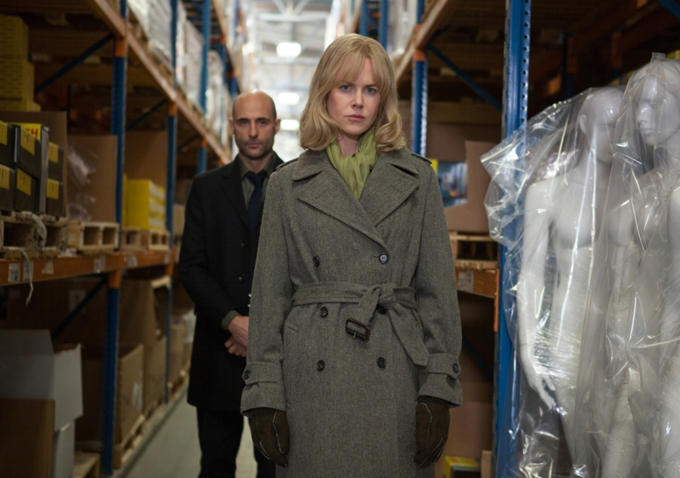
Nicole Kidman plays a woman who wakes up peacefully in bed with her husband (Colin Firth), only she has no memory of him, or how she got there, or, come to think of it, of the past several years. Turns out, she’s had an accident that stops her from making any new memories, so every time she sleeps, she wipes out the day before and wakes up a stranger in her own body.BIGTS-0408-0758.tiff

The most embarrassing thing about this movie is that I’d forgotten I’d already seen it. It’s bad news to watch a movie about an amnesiac and not realize you’re actually rewatching it.

Anyway, it sounds, on paper, a lot like 50 First Dates, except things aren’t as rosy for Nicole as they were for Drew. There are holes in her story that even someone with a brain injury can see through, so there’s a little Momento mixed in, just for fun. A mysterious doctor and a friend from her past show up to help her solve the question mark, but she can’t be sure who to trust, beforebannerand neither can you. The brain trauma thing is kind of overused for such a rare disease, but it does put the viewer on equal footing with our poor, disoriented heroine. Her confusion makes for an unreliable narrator if ever there was one and so the who-dunnit unravels in darkness for her like it does for us.

The genre is tired and this one’s not adding much to the mix. It feels like it’s taken a page from sleep-plasticGone Girl, but lacks Fincher’s balls with the follow-through. The story demands more of our attention while actually deserving less. It does silly, unforgivable things like using the old “I have something important to tell you, but not over the phone!” and even worse, the old, “I’m being attacked and fear for my life but won’t yell for help.” Plus, director Rowan Joffe has these little tells, like constantly showing us a close-up of Kidman’s blood-shot eyes, that get annoying real quick. It’s a thriller that’s so banal and (ironically) forgettable, I accidentally watched it twice.


Muscle Shoals

muscleshoalsThis documentary isn’t terribly structured but it does offer some brilliant insight into the making of some of the best records of all time: Percy Sledge, Aretha Franklin, Wilson Pickett, The Rolling Stones…and what do they all have in common? They were all produced and recorded in small town Muscle Shoals, Alabama. You may not know the studio, but you definitely know the music.

Everyone gives lively, reminiscent interviews, including Bono, who just loves to hear his own voice because in actual fact he never recorded there. But everyone who’s anyone has, and most showed up to praise the sound coming out of the south.wilsonpicket-4_3

What struck me the most was that, without any effort, just born out of one musician’s respect for another, more was done for race relations on vinyl in those studios than anywhere else. Black and white musicians worked together to make a cohesive sound that both describe as “funky.” This was rural Alabama in the 1960s but what was happening out there couldn’t mess with what was happening in the studio. It was magic.

Three Assholes Talk A Most Violent Year

Matt: For a movie called A Most Violent Year, there wasn’t much actual violence with at least two people exiting the Coliseum last night calling it simply “slow”. Did A Most Violent Year hold your attention?

Jay: Yes, actually, it did. I agree that it was “slow” but I kind of liked the control of the pacing. It was very deliberate, which helped build the tension. I also agree that A Most Violent Year was neither terribly violent nor actually a year (the script keeps reminding us, actually, of a strict 30-day countdown, but I suppose “A Pretty Shitty Month” is a less compelling title).

Matt: I actually like A Pretty Shitty Month! The film is set in statistically one of the most violent years in New York’s history. I was born in 1981 and had no idea until now that I was born in A Most Violent Year.most violent year 1

Jay:  The scenes of NYC were unrecognizable to me (and I assume to us) – subways filled with graffiti, garbage overflowing onto the streets – and the movie was shot in a really hazy palette of colour. There was snow, obviously, but also just this bleakness, like everything was beige or maybe sepia is a better word. How did that grittiness add to your understanding of the movie?

Sean: I think the bleakness helped set the tone for the movie. There was no real happy ending other than Abel is a bigger player and maybe as a result he could bribe the DA into giving him a better deal.

Matt: Time and place is everything. This is a very different New York than the one that we know, the one that people talk about from the early 80s. Abel’s world is a dangerous one and director J. C. Chandor immerses us in it. He doesn’t have to show much violence. The mood he creates reminds us of the danger.

Jay: Abel is certainly guilty of fraud and tax evasion, among other charges. Does his refusal to pick up a weapon make him a “good” man? most violent year 2
Sean:  No, his choice not to use guns does not redeem him. He seemed to like to think he was better than his peers because of it but he was not a good guy.

Matt: I went into A Most Violent Year expecting a gangster film. What I got was almost an anti-gangster film with Abel doing almost anything to avoid becoming a gangster. He prides himself up until the end on walking a righteous path. Is he as morally superior as he would seem to like to believe? Is he more interested in avoiding the appearance of wrongdoing than he is actual wrongdoing?

Jay: I don’t think he kids himself that it was righteous, just “the most right”, and picking the most right of two wrongs doesn’t exactly equal righteous. He seems to have some interior moral code that he’s following, but mobsters often do have exactly that, a strict code, but one that’s just terribly skewed toward their own ends. Abel aspires to be more of a white-collar criminal rather than a gangster, but that’s just semantics. He doesn’t want to pull the trigger himself, but he doesn’t seem above putting out a hit on someone. He’s all about growing his business, and he seems willing to do that by any means necessary. He’s chasing after the American dream, so appearances do matter. I also think he’s smart; he’s not against committing crimes, and he’s definitely not innocent, but he thinks about consequences.

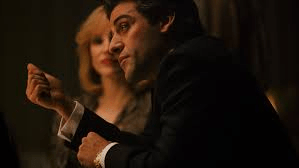
Jessica Chastain plays a wife who seems to challenge her husband to push his moral compass to the limit in order to “support the family.” Can you relate to these characters? Is there ever a time when, as a husband, you’ve felt that pressure?

Sean: I could not relate to either of the characters. I feel a drive to succeed but not to compromise my values in doing that, and I want to do well for my wife but don’t feel I am pressured to attain anything specific by her in order to support our family.

Jay:  Really? Then I think you’ve misunderstood some things…

most violent year 4Matt: Uh-oh. So…. Is she the devil on her husband’s shoulder or is their dynamic more complicated than that?

Jay: You know, that’s a really smart question and I couldn’t have put it so well myself. Clearly she’s a little less scrupulous, but she’s also a little less smart. Not to say that she’s dumb. This may be 1981 but she’s no housewife. She’s ambitious and cut-throat and has her own ideas about how to provide for her family. She basically accuses him of being a coward so I’m surprised their marriage isn’t rockier. Ultimately I think he needs her, she’s the one who pushes him to greater heights, she’s partly what motivates him but she’s also what forces him into situations that make him uncomfortable. But as he says early on, “When it feels scary to jump that is exactly when you jump, otherwise you end up staying at the same place your whole life.

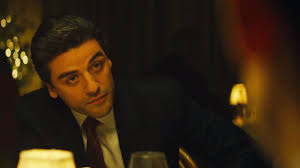
Matt: When the Oscar nominations were announced earlier this month, the list of Best Supporting Actress nominees were mostly identical to that of the Golden Globes with Jessica Chastain being replaced by Laura Dern. Should she have been included? According to IMDB, she’s received 18 nominations for her performance while the excellent Oscar Isaac has 3. Why do you think he hasn’t gotten more attention?

Jay: I’m not terribly upset she was left out, but I can’t say that Laura Dern was more worthy. I don’t have a particular appreciation for Jessica Chastain, but there were a couple of scenes that were show-stopping. Plus, anyone who can act through the 80s bangs and the big gaudy earrings and still be noticed has to be doing something right.

As for Oscar Isaac, it is a bit of a mystery. I remember when I first started seeing previews for most violent year 3this film in theatres, it took me a while to place Chastain. The shoulder pads were distracting, I guess, not to mention the press-on nails, and I had to go through a rolodex of actresses in my mind before I got to her name and it clicked. Him I recognized right away, but in the movie he seemed way more transformed. Maybe it’s because the last big movie I saw (and loved) him in was Inside Llewyn Davis, and the difference is astonishing. He comports himself like a don, like his empire is vast and his future assured. We know that’s not necessarily the case, but there’s never a hair out of place or a stray piece of lint on his ubiquitous camel coat. Appearances clearly mean a lot to this man; he wants to make it clear he’s risen above his station. And I believe it. I believed his pride, his hubris, his sense of “right.” So I don’t know why he hasn’t been singled out, although considering the #OscarsSoWhite controversy, maybe I have an idea why.